Leaf structure 
By Martin Samaj
Leaf basics 
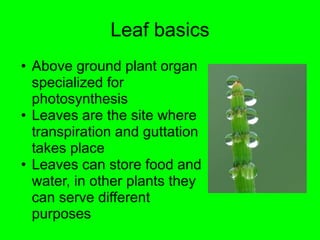
• Above ground plant organ 
specialized for 
photosynthesis 
• Leaves are the site where 
transpiration and guttation 
takes place 
• Leaves can store food and 
water, in other plants they 
can serve different 
purposes
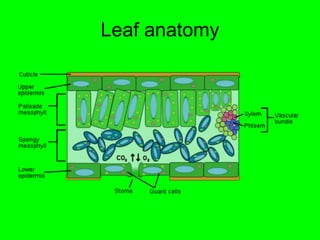
Leaf anatomy 
• Leaf of an angiosperm consists of: 
 Petiole (leaf stem) 
 Lamina (leaf blade) 
 Stipules 
• Leaf consists of the following tissues: 
 Epidermis 
 Mesophyll 
 Arrangement of veins
Leaf anatomy
Epidermis 
• Outer layer of cells covering the leaf, 
covered by a thick waxy cuticle 
• It isolates the plant’s inner parts from the 
outside 
• Serves several functions: regulation of 
gas exchange, secretion of metabolic 
compounds, prevents water loss from 
the upper surface
Mesophyll 
• Palisade mesophyll consists of densely 
packed cylindrical cells with many 
chloroplasts 
• Palisade mesophyll is the main 
photosynthetic tissue and is positioned 
where the light intensity is the highest 
• Spongy mesophyll consists of loosely 
packed cells with few chloroplast 
• This tissue provides the main gas 
exchange surface
Leaves and transpiration 
• Photosynthesis depends on gas exchange 
over a moist surface. 
• Spongy mesophyll cells provide this 
surface 
• Water often evaporates from the surface 
and is lost and this process is called 
transpiration 
• Transpiration is the loss of water vapor 
from the leaves and stems of plants
Factors affecting transpiration 
• The rate of water loss through 
transpiration depends on internal and 
external conditions 
• Abiotic factors that have effect on the rate 
of transpiration 
• There are 4 main factors: Light, 
Temperature, Humidity and Wind
The 4 abiotic factors 
• Light - gurad cells close the stomata in the night = greater 
rate of transpiration 
• Temperature - as the temperature rises the rate of 
transpiration increases 
• Humidity - The lower the humidity outside the leaf the faster 
the rate of transpiration 
• Wind - Wind blows the saturated air away and so increases 
the rate of transpiration

Leaf structure-

  • 1.
    Leaf structure ByMartin Samaj
  • 2.
    Leaf basics •Above ground plant organ specialized for photosynthesis • Leaves are the site where transpiration and guttation takes place • Leaves can store food and water, in other plants they can serve different purposes
  • 3.
    Leaf anatomy •Leaf of an angiosperm consists of:  Petiole (leaf stem)  Lamina (leaf blade)  Stipules • Leaf consists of the following tissues:  Epidermis  Mesophyll  Arrangement of veins
  • 4.
  • 5.
    Epidermis • Outerlayer of cells covering the leaf, covered by a thick waxy cuticle • It isolates the plant’s inner parts from the outside • Serves several functions: regulation of gas exchange, secretion of metabolic compounds, prevents water loss from the upper surface
  • 6.
    Mesophyll • Palisademesophyll consists of densely packed cylindrical cells with many chloroplasts • Palisade mesophyll is the main photosynthetic tissue and is positioned where the light intensity is the highest • Spongy mesophyll consists of loosely packed cells with few chloroplast • This tissue provides the main gas exchange surface
  • 7.
    Leaves and transpiration • Photosynthesis depends on gas exchange over a moist surface. • Spongy mesophyll cells provide this surface • Water often evaporates from the surface and is lost and this process is called transpiration • Transpiration is the loss of water vapor from the leaves and stems of plants
  • 8.
    Factors affecting transpiration • The rate of water loss through transpiration depends on internal and external conditions • Abiotic factors that have effect on the rate of transpiration • There are 4 main factors: Light, Temperature, Humidity and Wind
  • 9.
    The 4 abioticfactors • Light - gurad cells close the stomata in the night = greater rate of transpiration • Temperature - as the temperature rises the rate of transpiration increases • Humidity - The lower the humidity outside the leaf the faster the rate of transpiration • Wind - Wind blows the saturated air away and so increases the rate of transpiration