
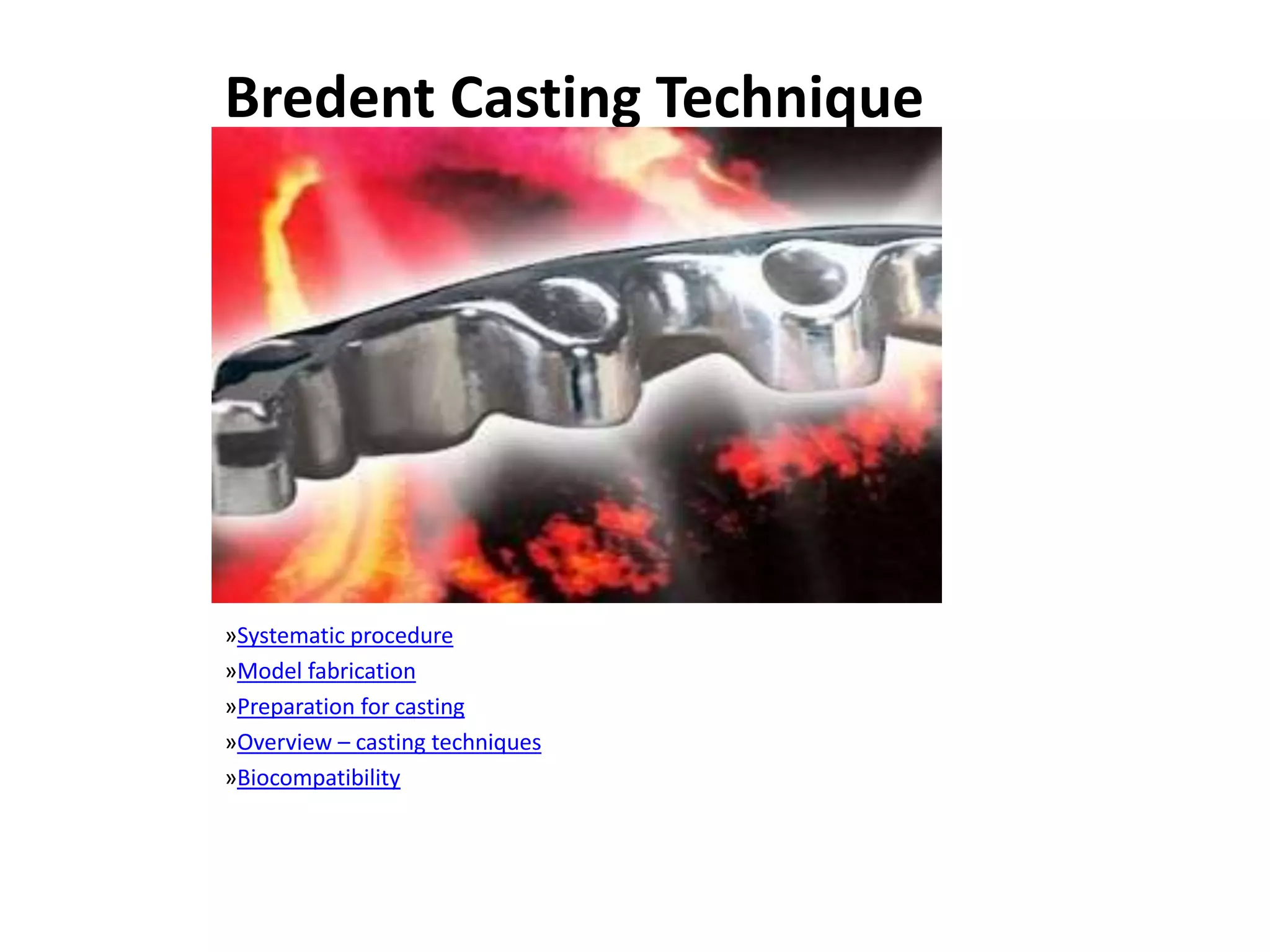
Bredent Casting Technique
»Systematic procedure
»Model fabrication
»Preparation for casting
»Overview – casting techniques
»Biocompatibility
Bredent Casting Technique
 The bredent group is an internationally-active, family-run company.
 It develops and produces optimally coordinated stand-alone products,
system solutions (e.g. in implant prosthetics) and "Made in Germany"
treatment concepts.
 These enable dentists and dental technicians to produce and maintain
high-quality, precision, cost-effective aesthetic restorations that ensure
periodontal hygiene.
The bredent casting technique includes all work processes required for
the production of casting moulds and the chemical-physical processes
during melting, casting and the re-solidification of materials. Materials
that are perfectly matched with this technique and the processes are
found in the certified symbiotic system (css).
Systematic procedure
Planning and effects
 A single biocompatible
material does not guarantee
biocompatible dental
restorations. High-quality,
biocompatible dental
restorations require thorough planning.
 The bredent casting technique takes all essential components of the
combination "Patient – Materials – Production" into consideration.
Systematic procedure
bredent quality
• The bredent casting technique
is based on the commitment
to quality and the requirements
of a responsible patient for
biocompatible dental
restorations under the aspect of long-term biocompatibility.
Systematic procedure
advantages
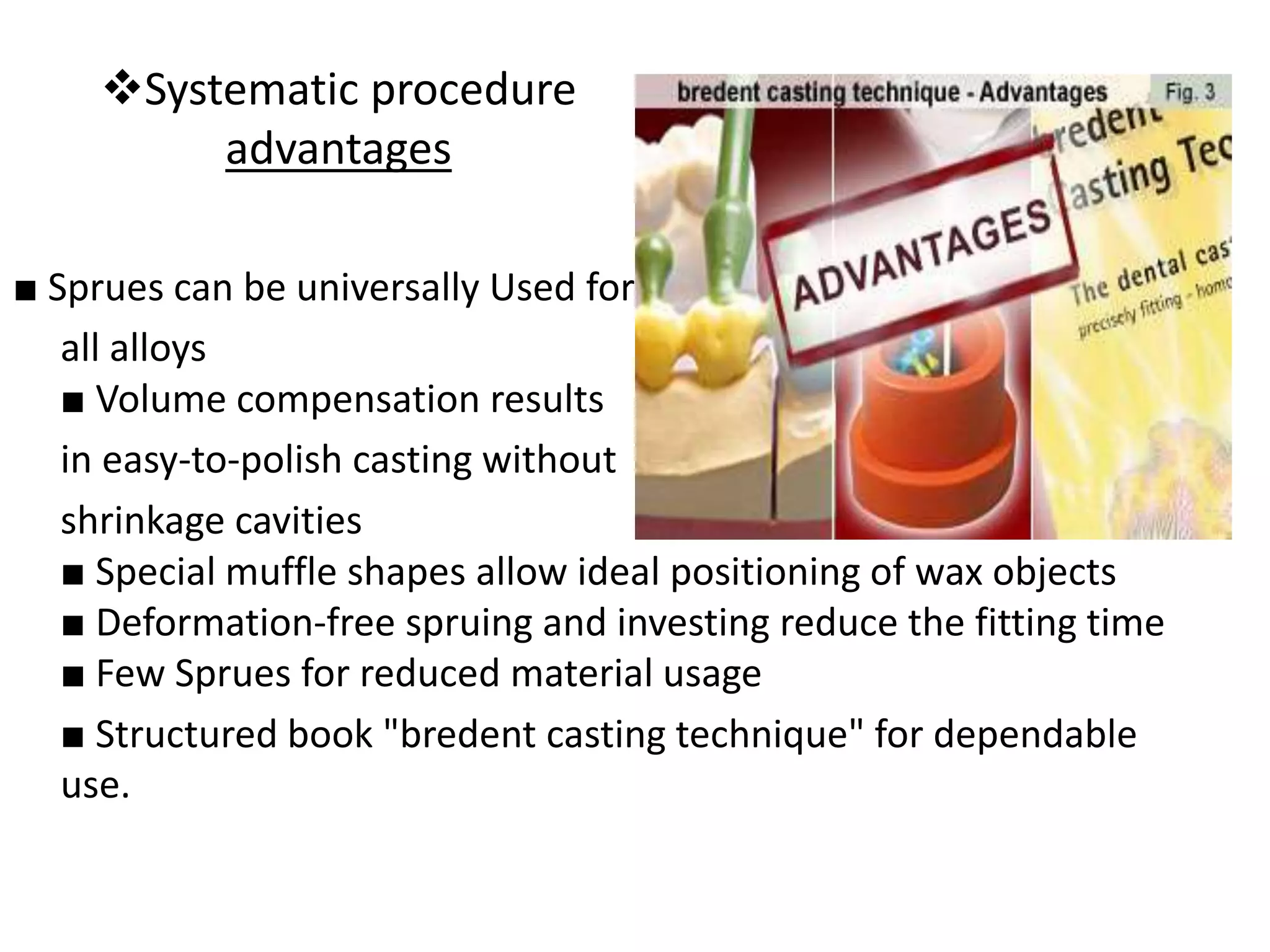
■ Sprues can be universally Used for
all alloys
■ Volume compensation results
in easy-to-polish casting without
shrinkage cavities
■ Special muffle shapes allow ideal positioning of wax objects
■ Deformation-free spruing and investing reduce the fitting time
■ Few Sprues for reduced material usage
■ Structured book "bredent casting technique" for dependable
use.
Systematic procedure
Development
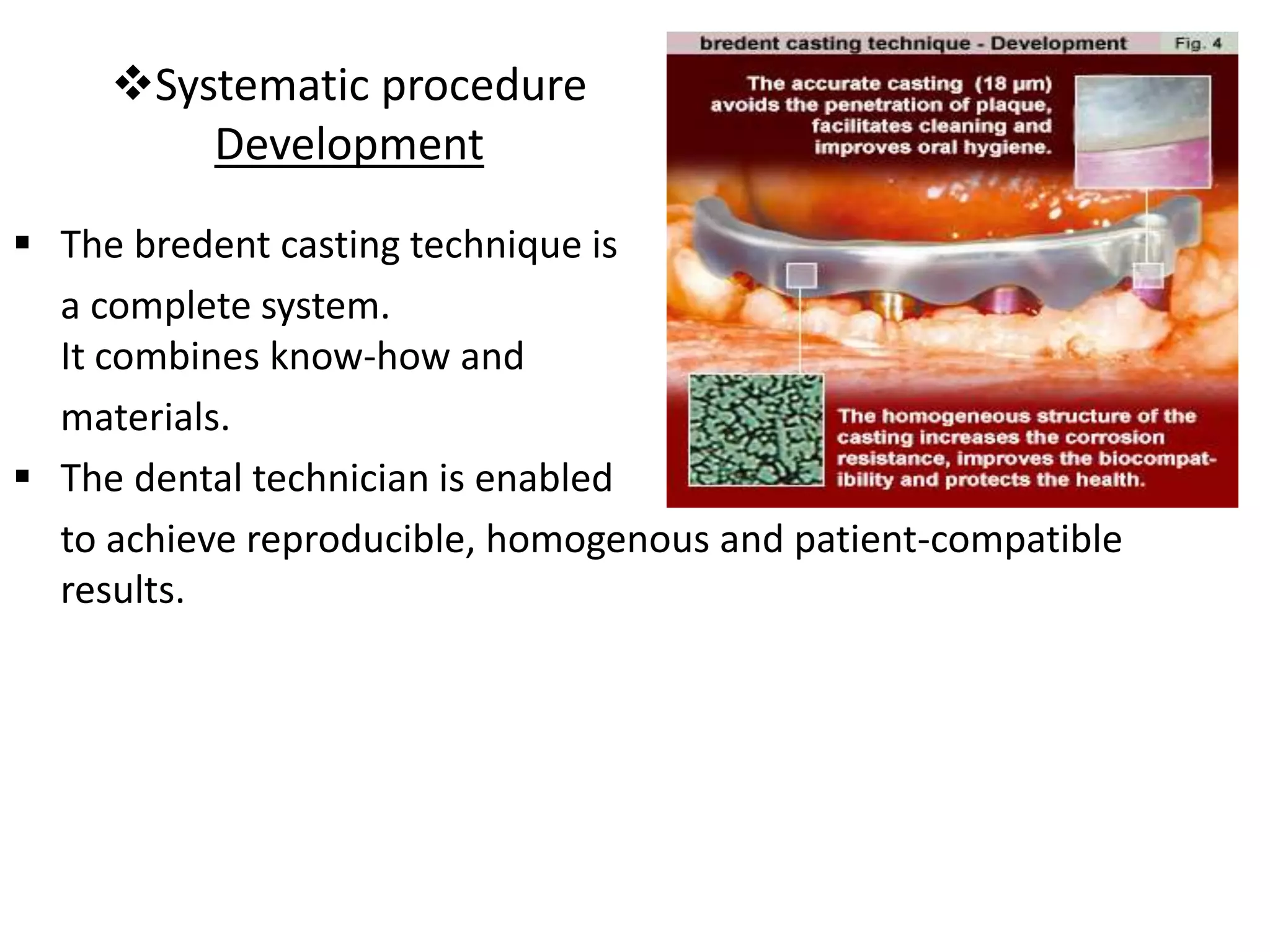
 The bredent casting technique is
a complete system.
It combines know-how and
materials.
 The dental technician is enabled
to achieve reproducible, homogenous and patient-compatible
results.
Systematic procedure
Laboratory situation
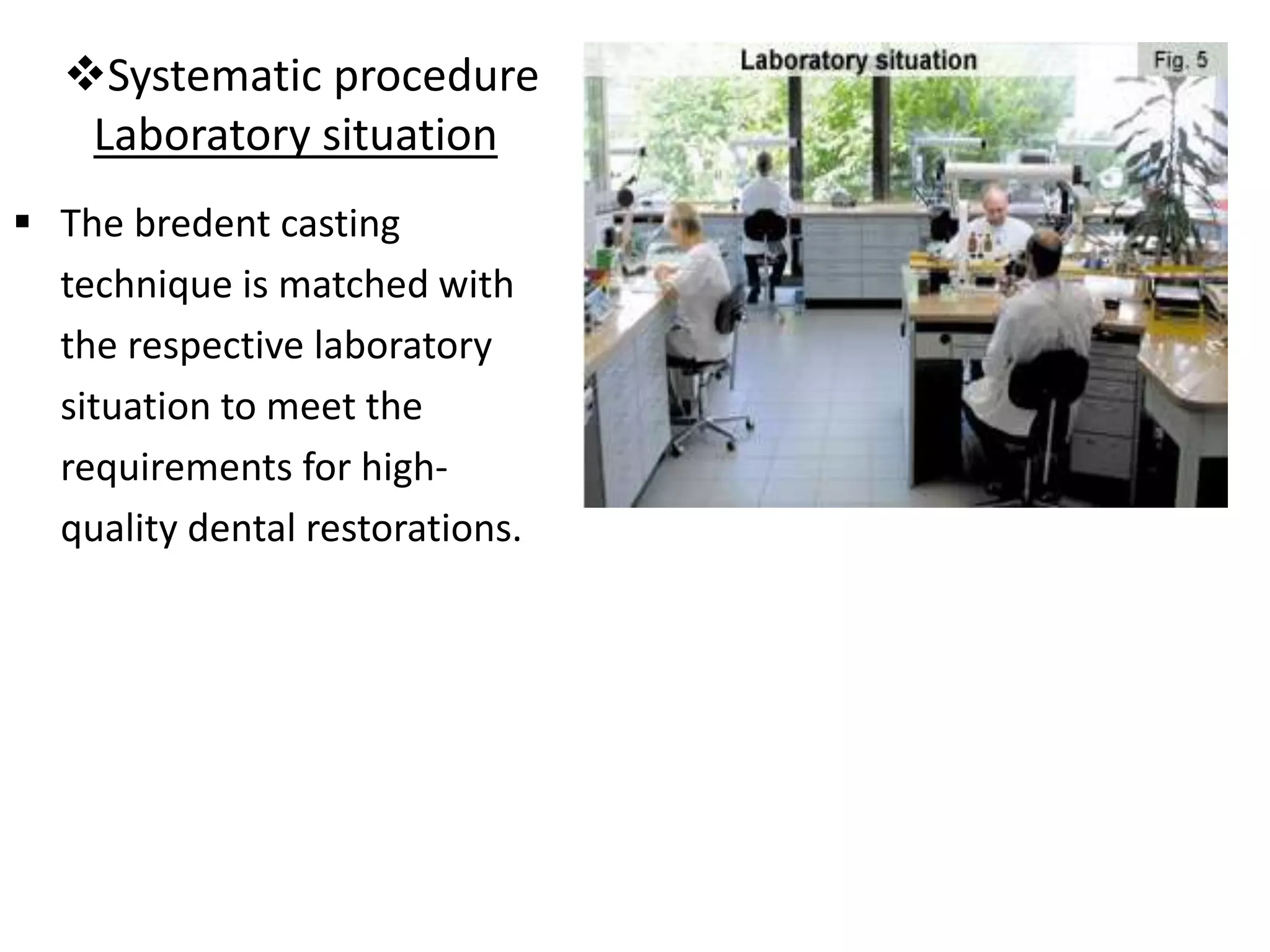
 The bredent casting
technique is matched with
the respective laboratory
situation to meet the
requirements for high-
quality dental restorations.
Systematic procedure
Basic requirements
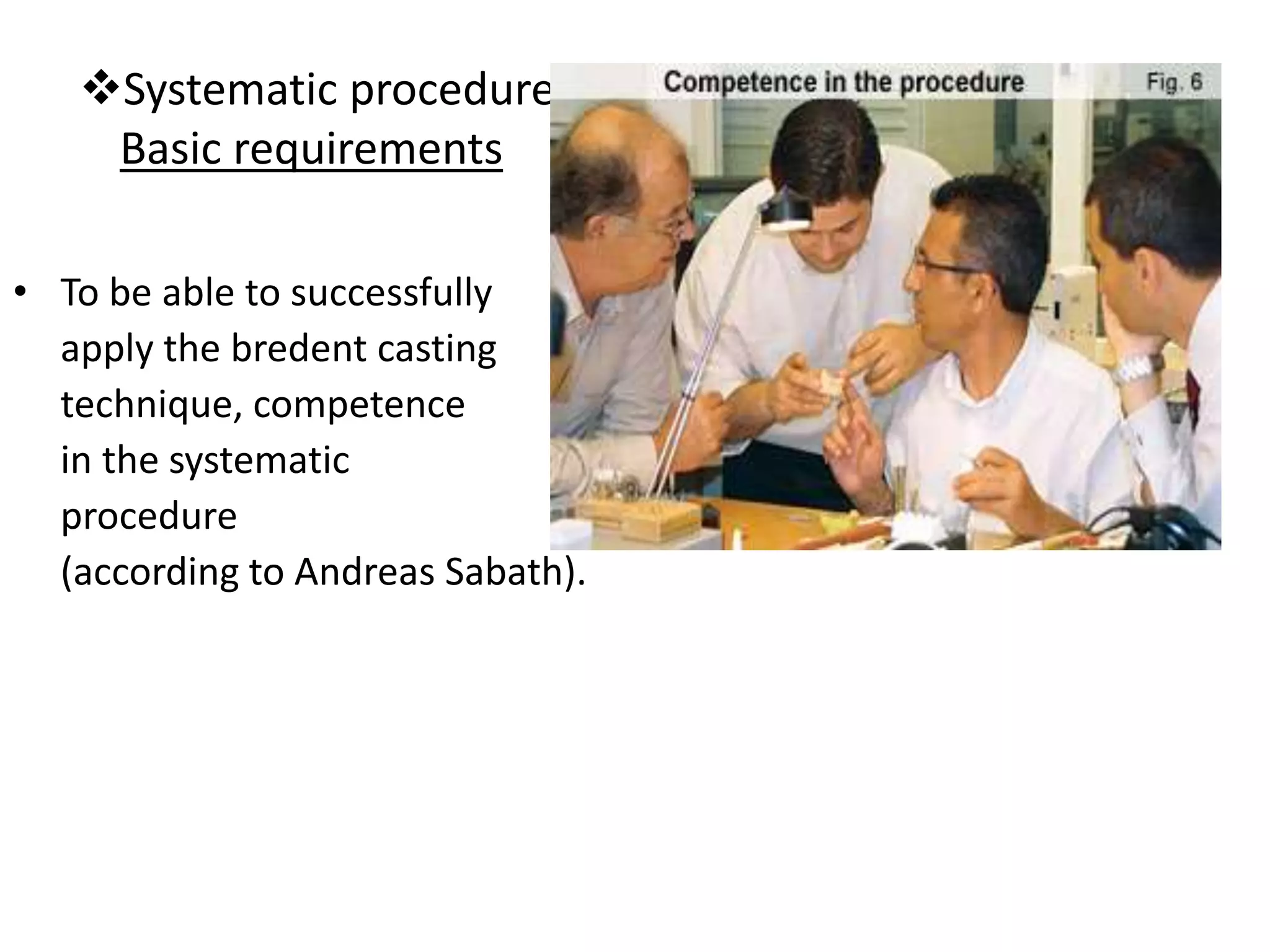
• To be able to successfully
apply the bredent casting
technique, competence
in the systematic
procedure
(according to Andreas Sabath).
Model fabrication
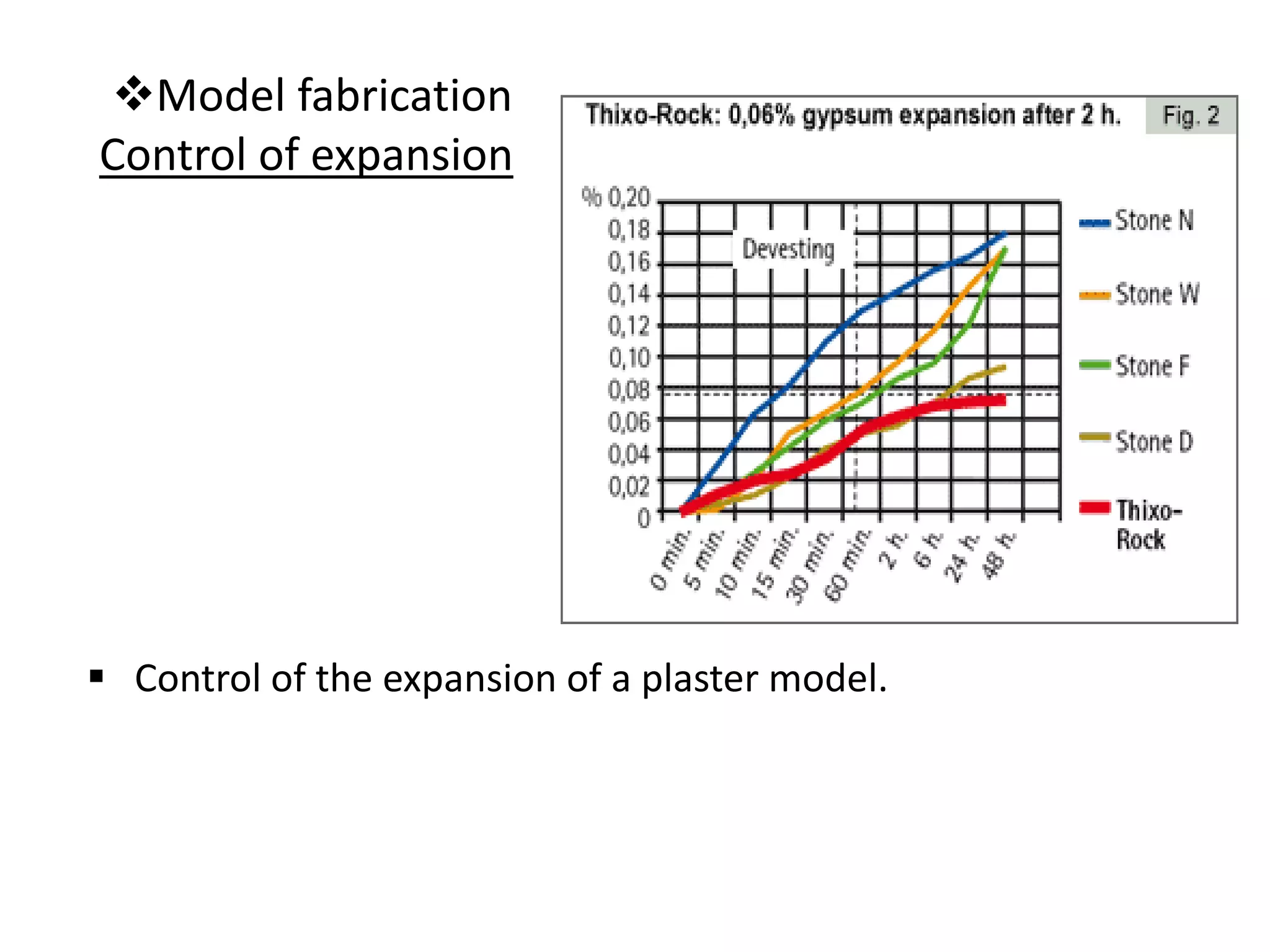
Thixo-Rock class IV
super-hard stone
 The low expansion is just
0.06 % after two hours
and the limit is 0.08 %.
 This stone allows
reproduction of all details
of the original situation
and the fabrication of highly accurate dentures.
 Thixo-Rock is available in brown, ivory and grey.
Model fabrication
Control of expansion
 Control of the expansion of a plaster model.
Model fabrication
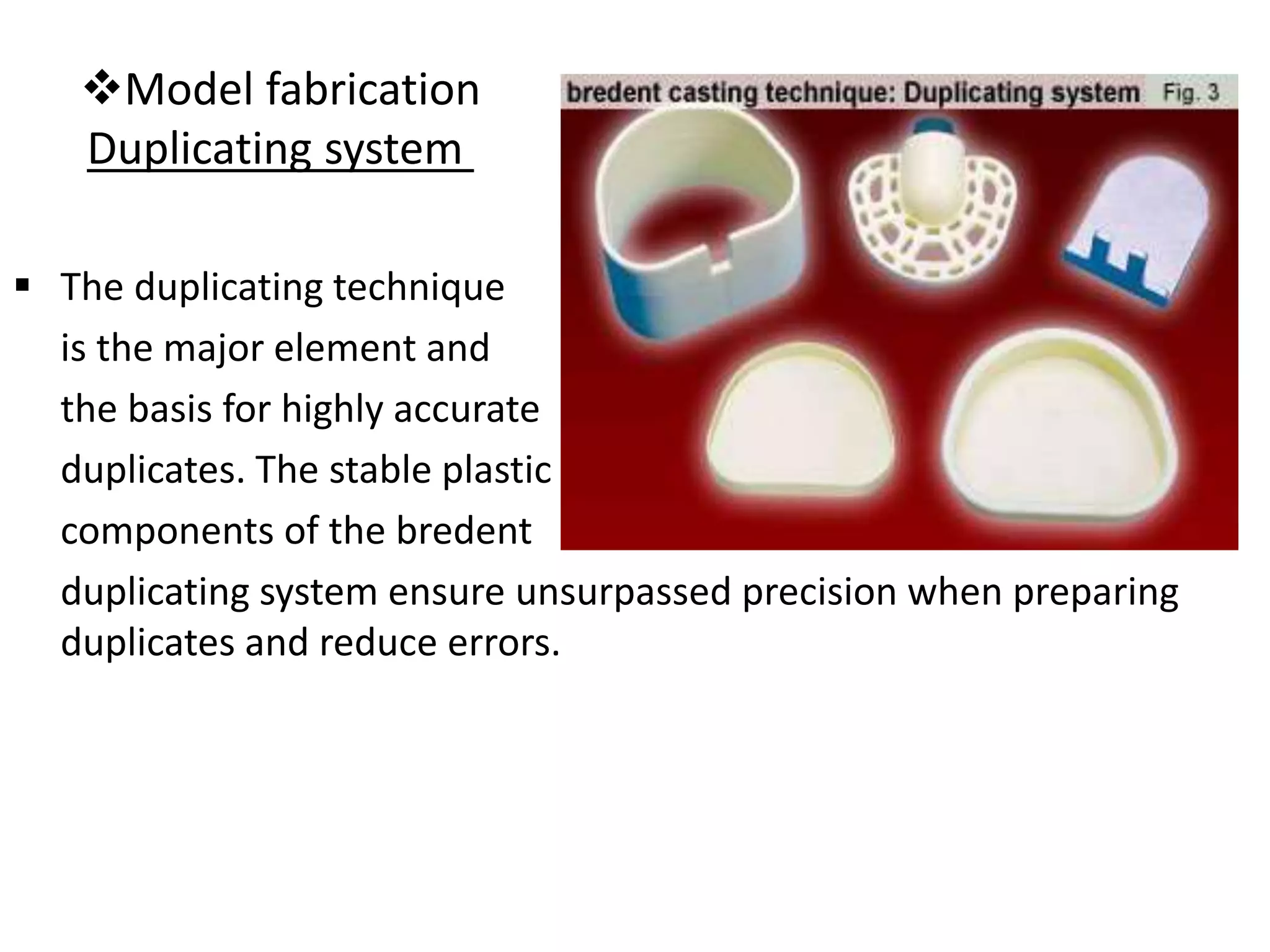
Duplicating system
 The duplicating technique
is the major element and
the basis for highly accurate
duplicates. The stable plastic
components of the bredent
duplicating system ensure unsurpassed precision when preparing
duplicates and reduce errors.
Model fabrication
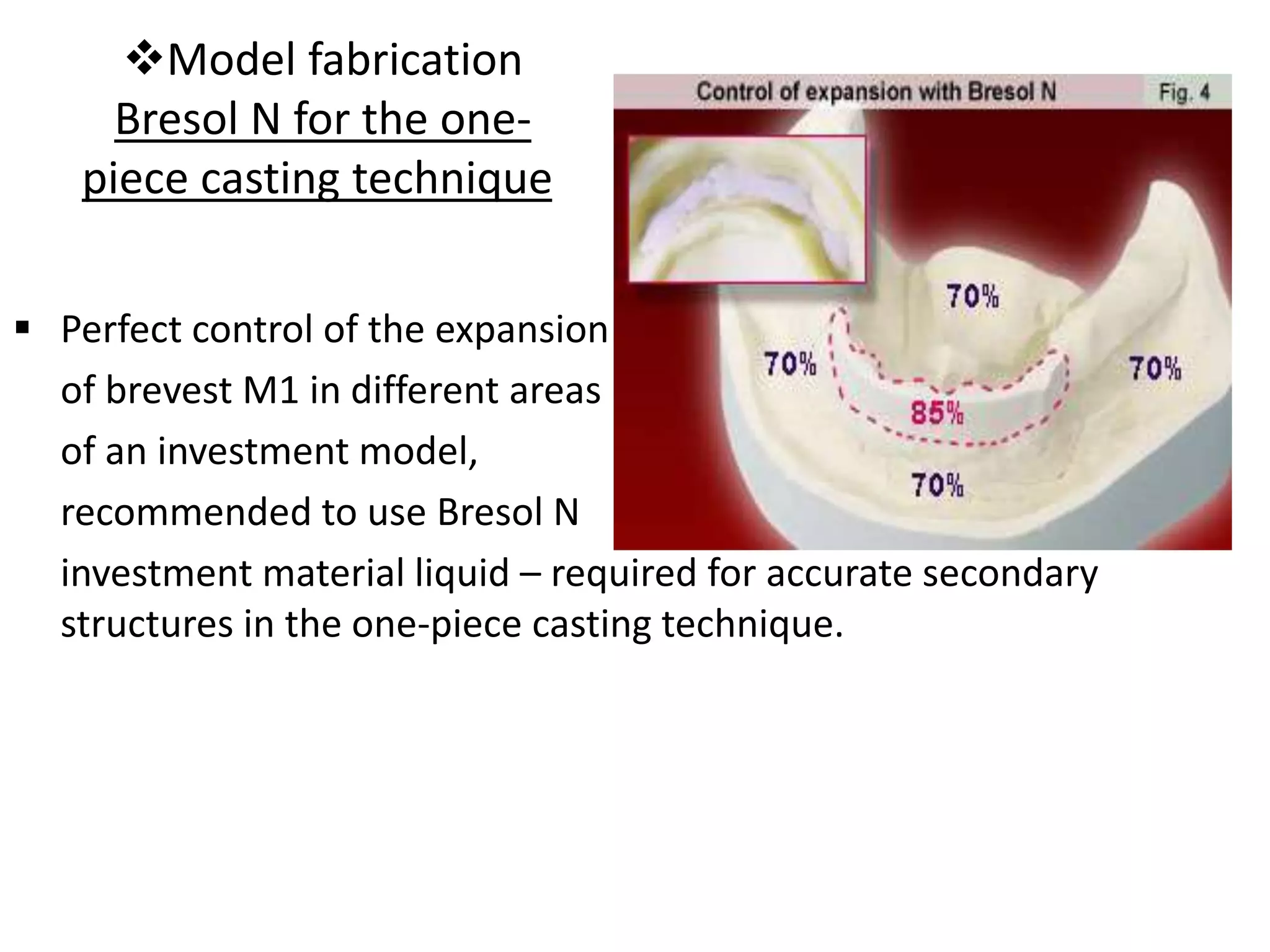
Bresol N for the one-
piece casting technique
 Perfect control of the expansion
of brevest M1 in different areas
of an investment model,
recommended to use Bresol N
investment material liquid – required for accurate secondary
structures in the one-piece casting technique.
Model fabrication
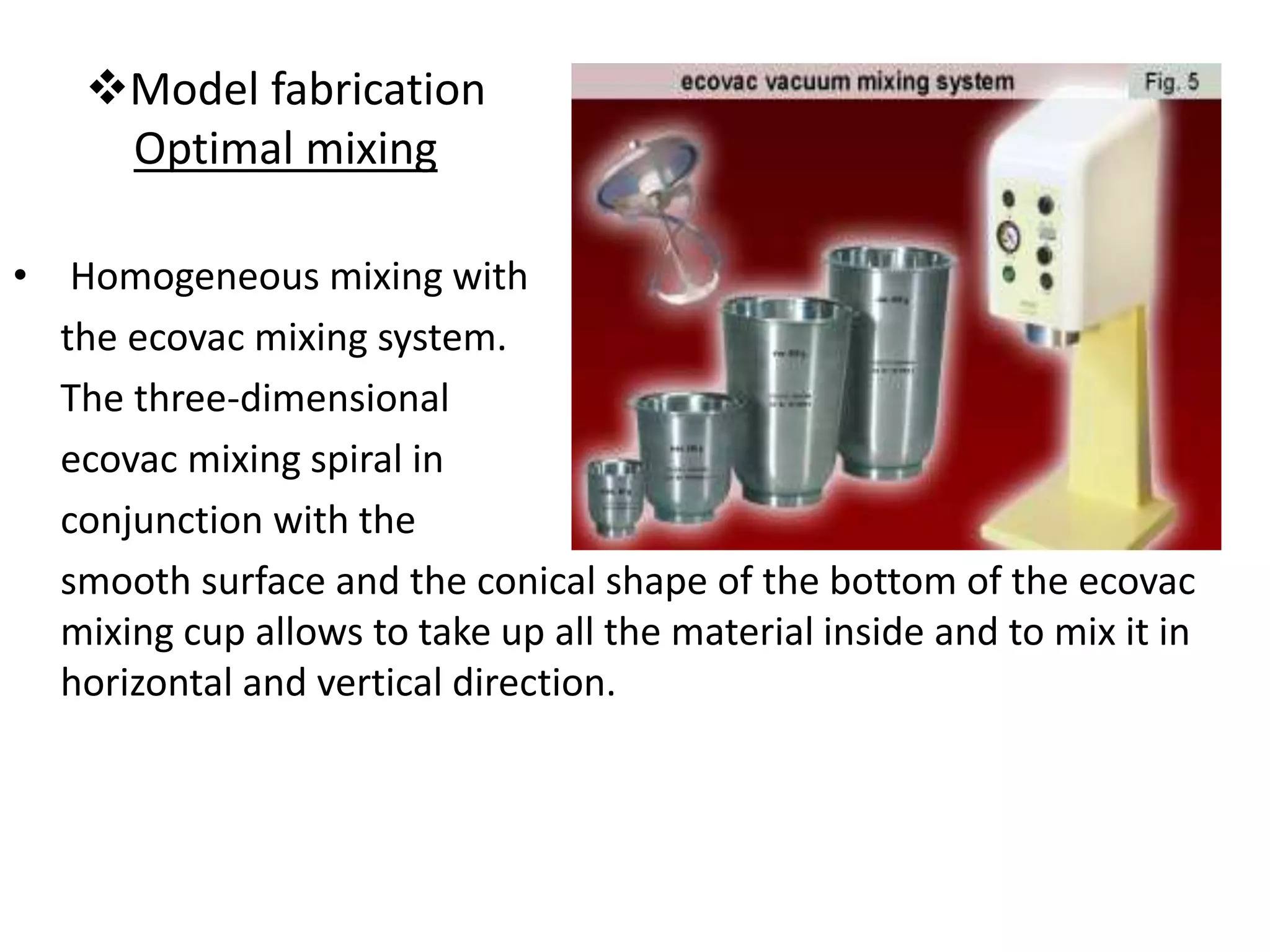
Optimal mixing
• Homogeneous mixing with
the ecovac mixing system.
The three-dimensional
ecovac mixing spiral in
conjunction with the
smooth surface and the conical shape of the bottom of the ecovac
mixing cup allows to take up all the material inside and to mix it in
horizontal and vertical direction.
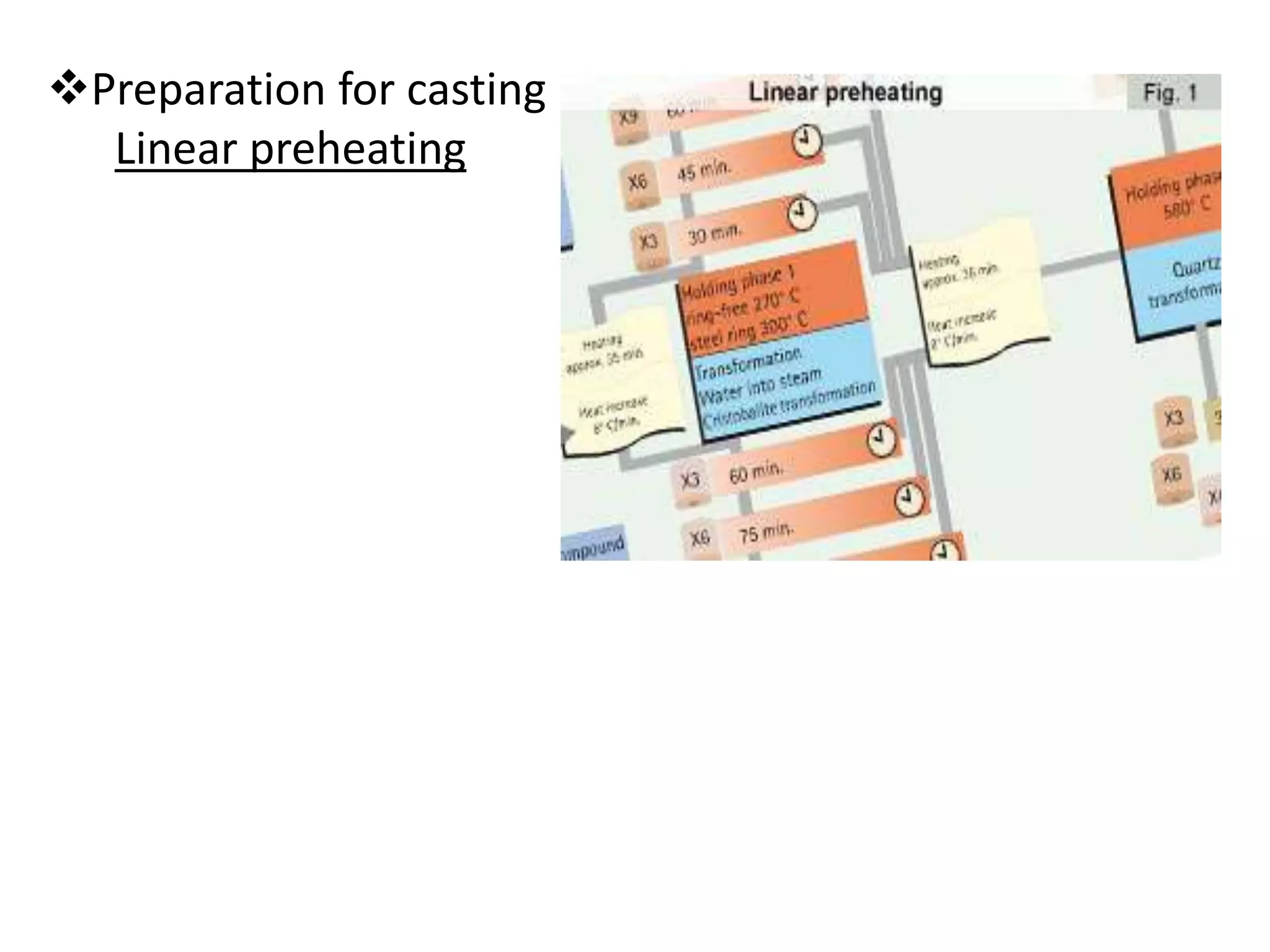
Preparation for casting
Linear preheating
Preparation for casting
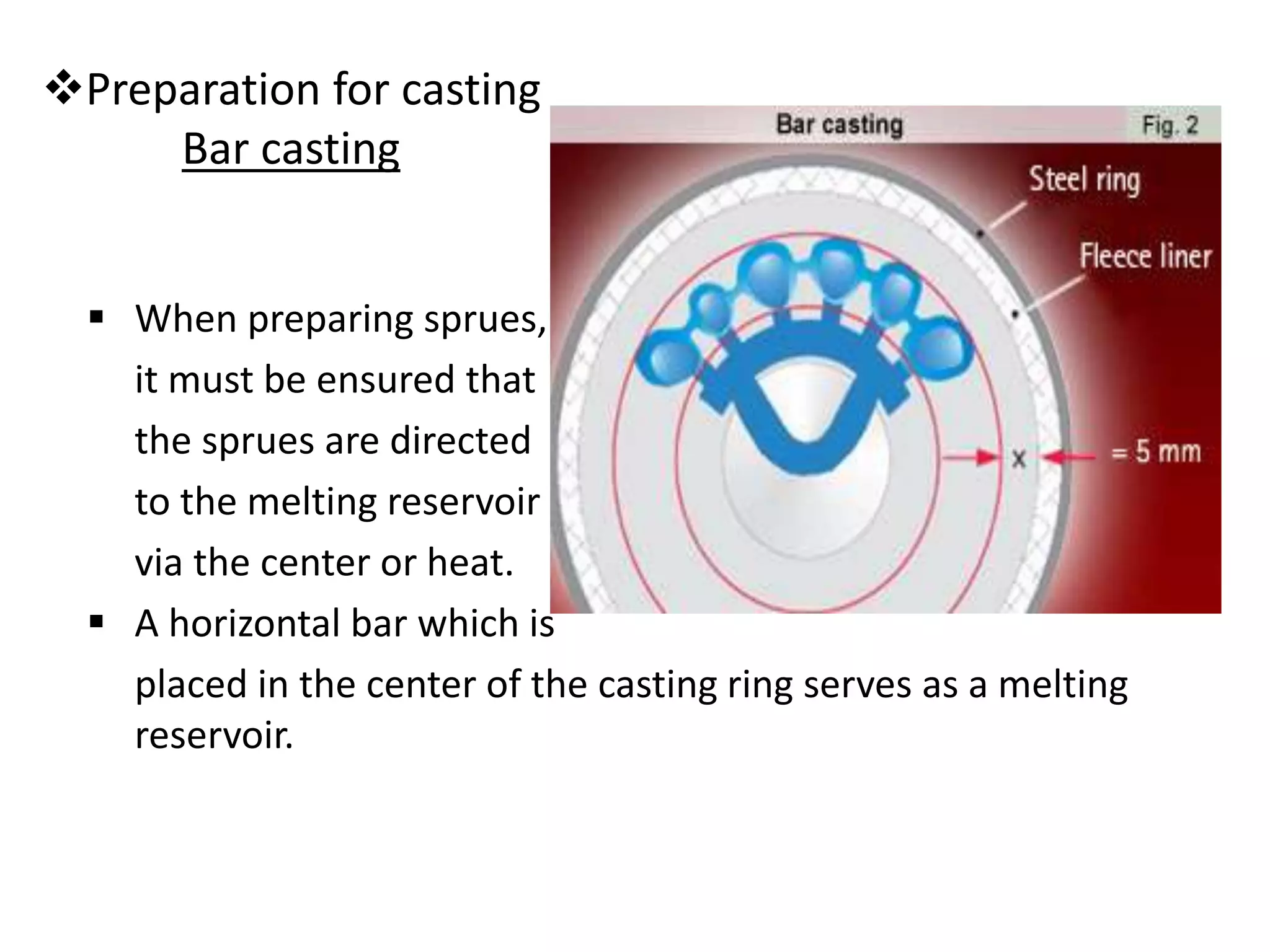
Bar casting
 When preparing sprues,
it must be ensured that
the sprues are directed
to the melting reservoir
via the center or heat.
 A horizontal bar which is
placed in the center of the casting ring serves as a melting
reservoir.
Preparation for casting
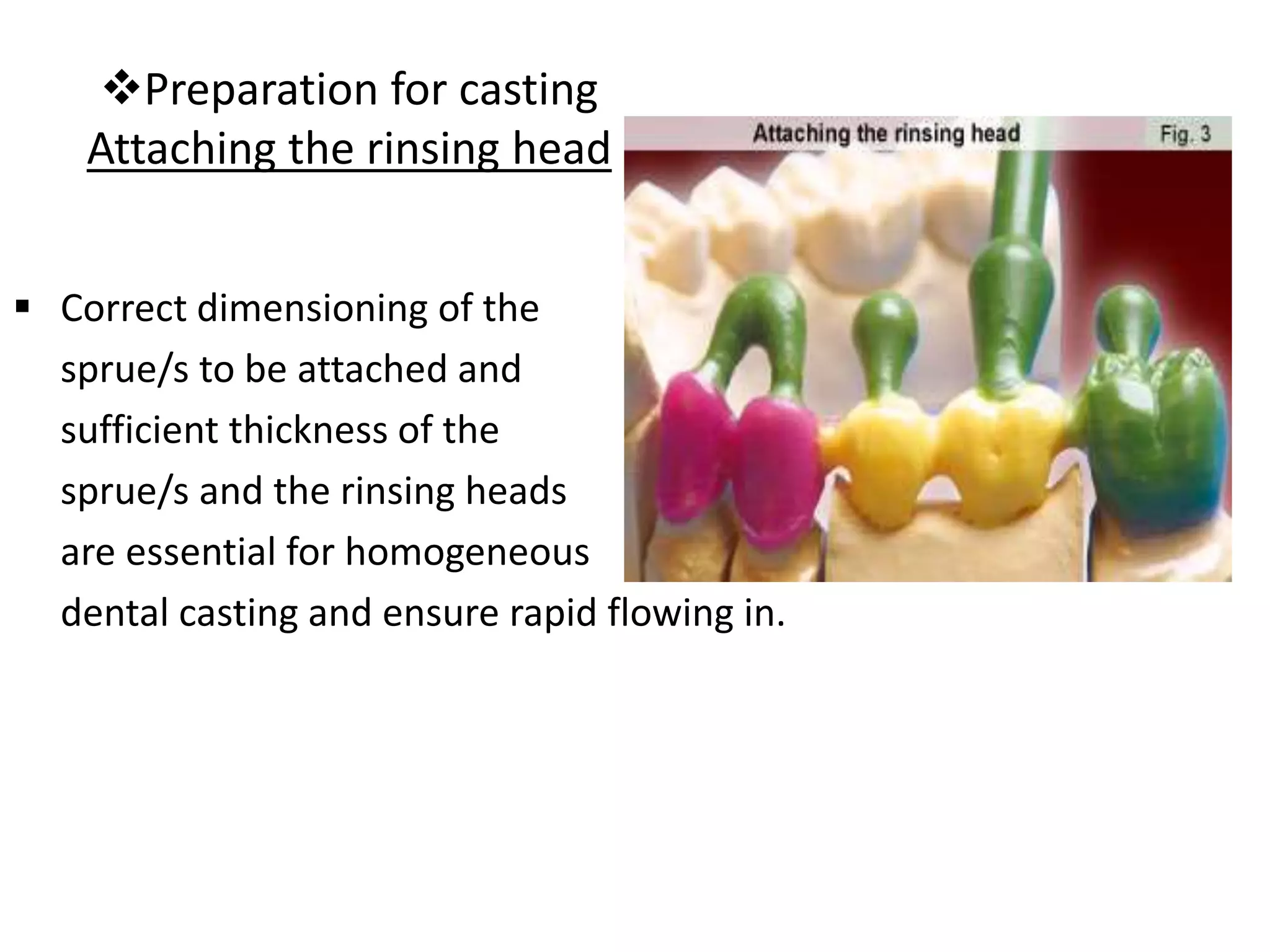
Attaching the rinsing head
 Correct dimensioning of the
sprue/s to be attached and
sufficient thickness of the
sprue/s and the rinsing heads
are essential for homogeneous
dental casting and ensure rapid flowing in.
Preparation for casting
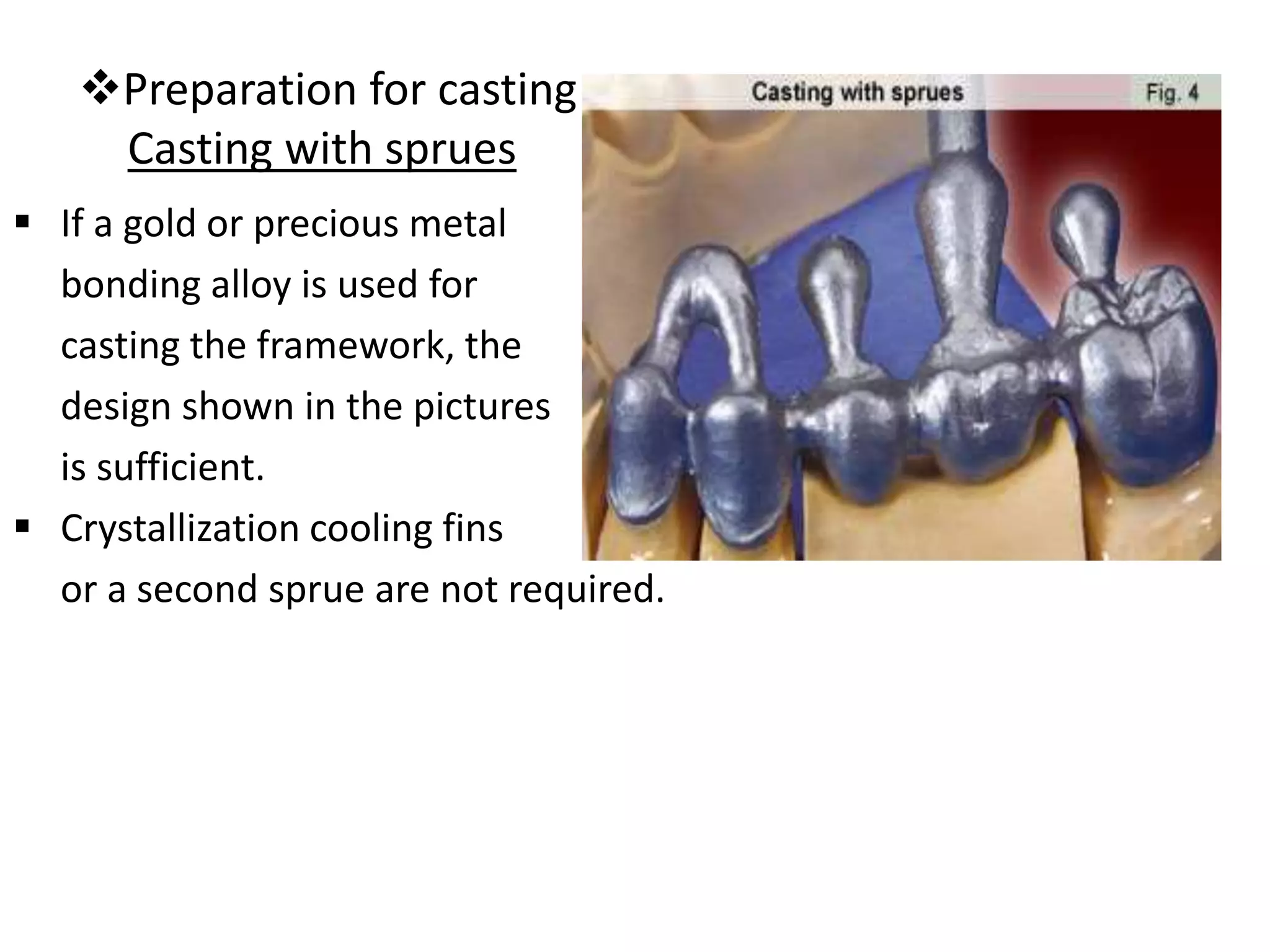
Casting with sprues
 If a gold or precious metal
bonding alloy is used for
casting the framework, the
design shown in the pictures
is sufficient.
 Crystallization cooling fins
or a second sprue are not required.
Preparation for casting
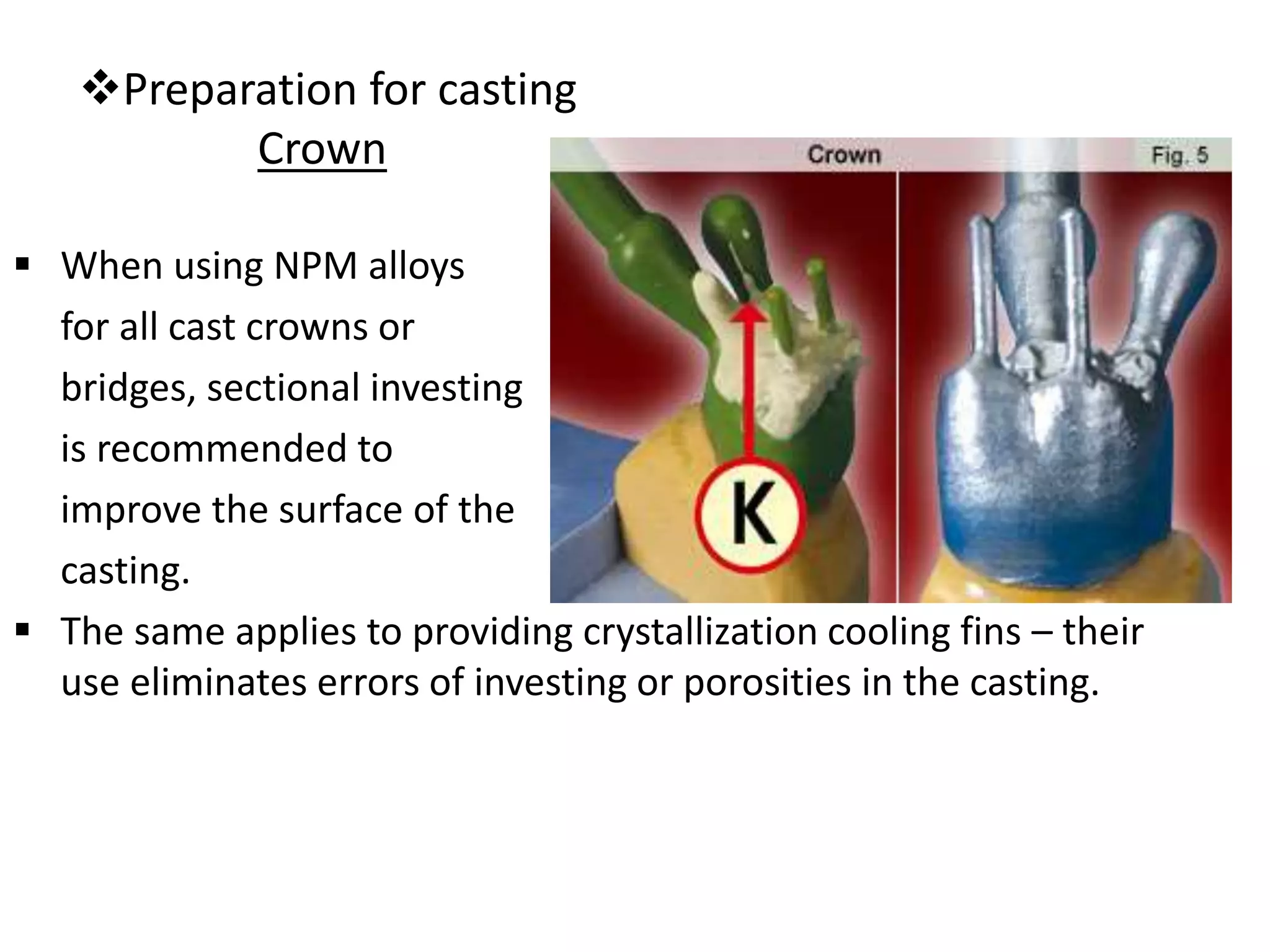
Crown
 When using NPM alloys
for all cast crowns or
bridges, sectional investing
is recommended to
improve the surface of the
casting.
 The same applies to providing crystallization cooling fins – their
use eliminates errors of investing or porosities in the casting.
Preparation for casting
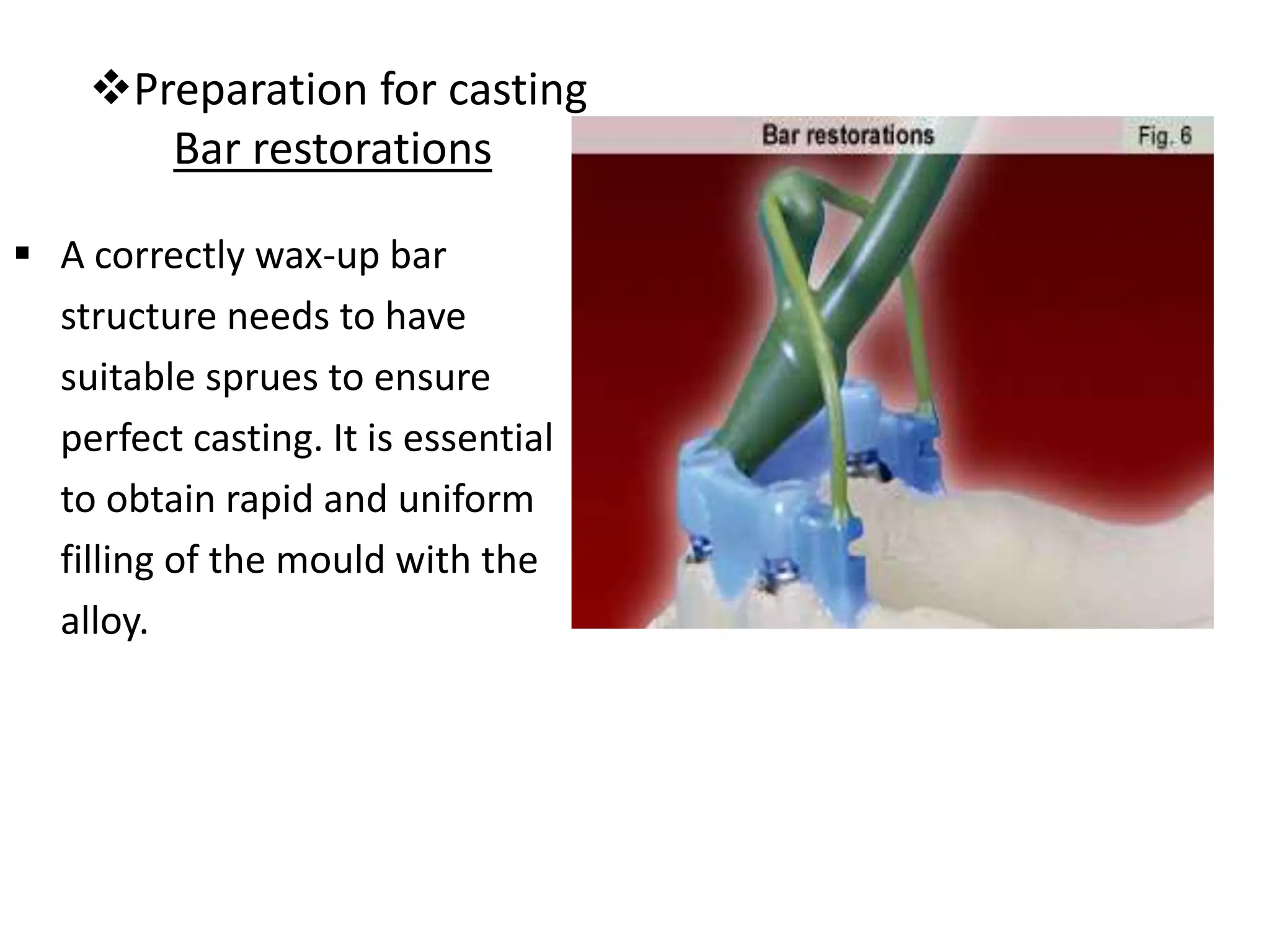
Bar restorations
 A correctly wax-up bar
structure needs to have
suitable sprues to ensure
perfect casting. It is essential
to obtain rapid and uniform
filling of the mould with the
alloy.
Preparation for casting
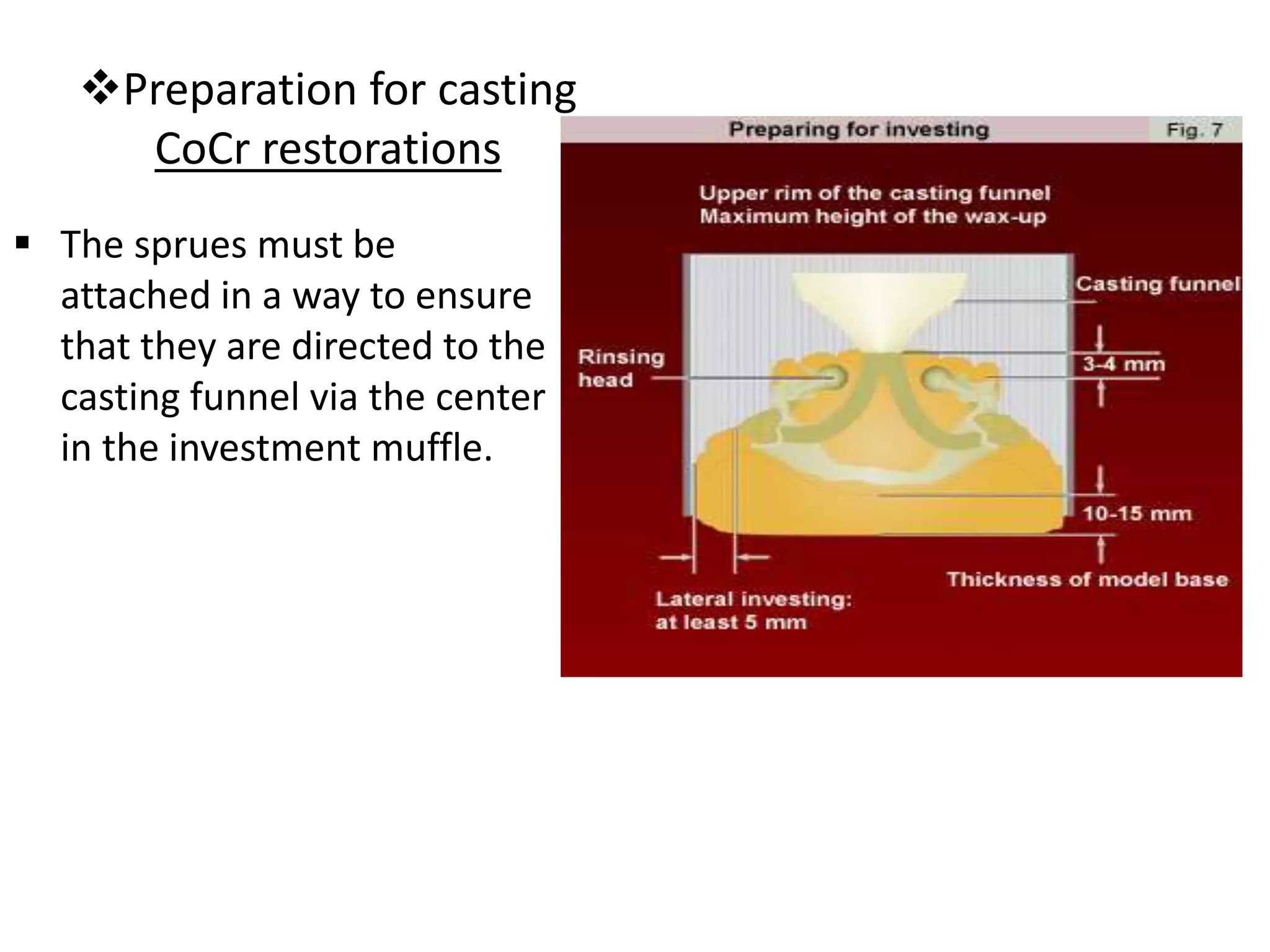
CoCr restorations
 The sprues must be
attached in a way to ensure
that they are directed to the
casting funnel via the center
in the investment muffle.
Overview – casting technique
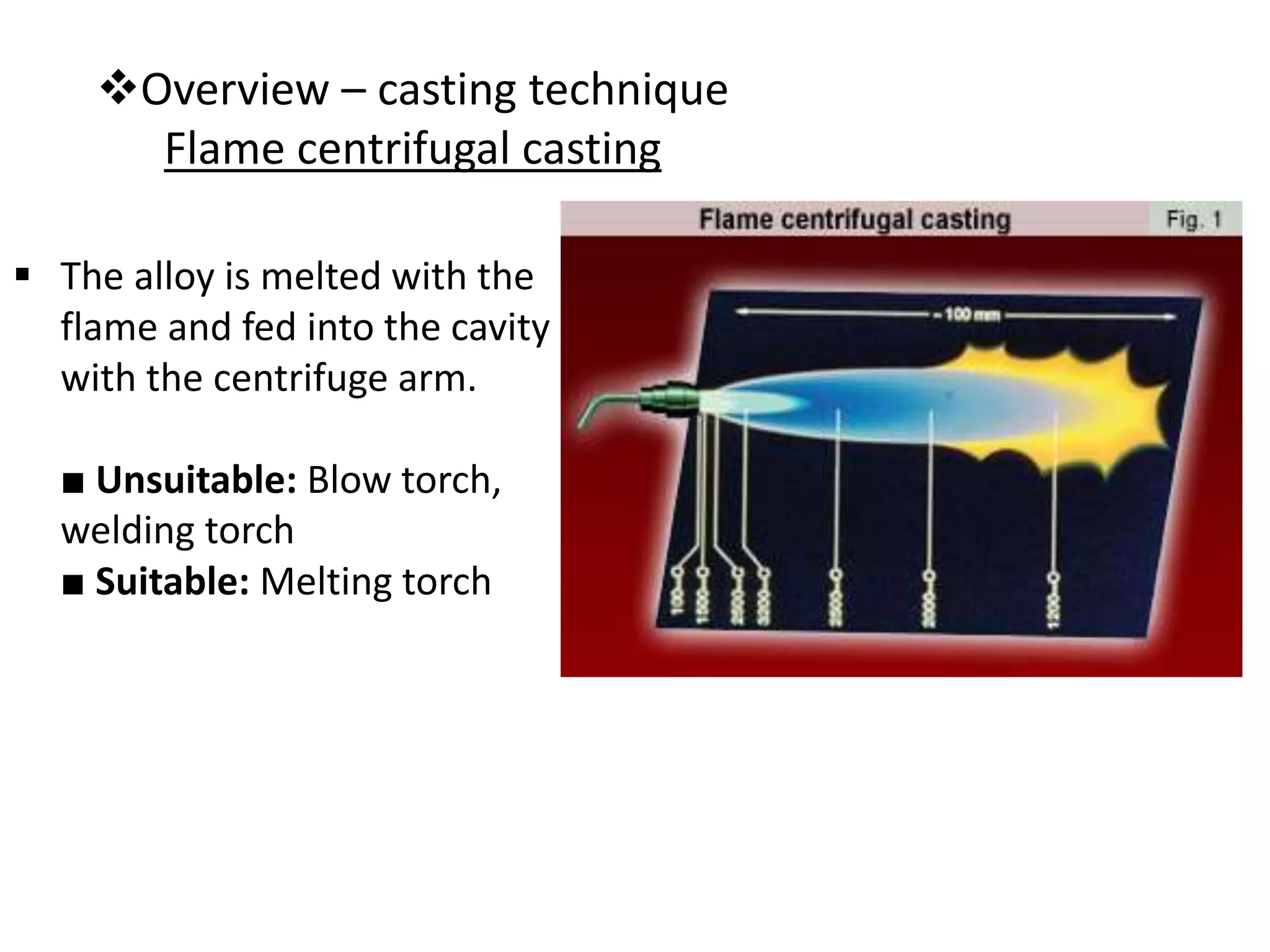
Flame centrifugal casting
 The alloy is melted with the
flame and fed into the cavity
with the centrifuge arm.
■ Unsuitable: Blow torch,
welding torch
■ Suitable: Melting torch
Overview – casting techniques
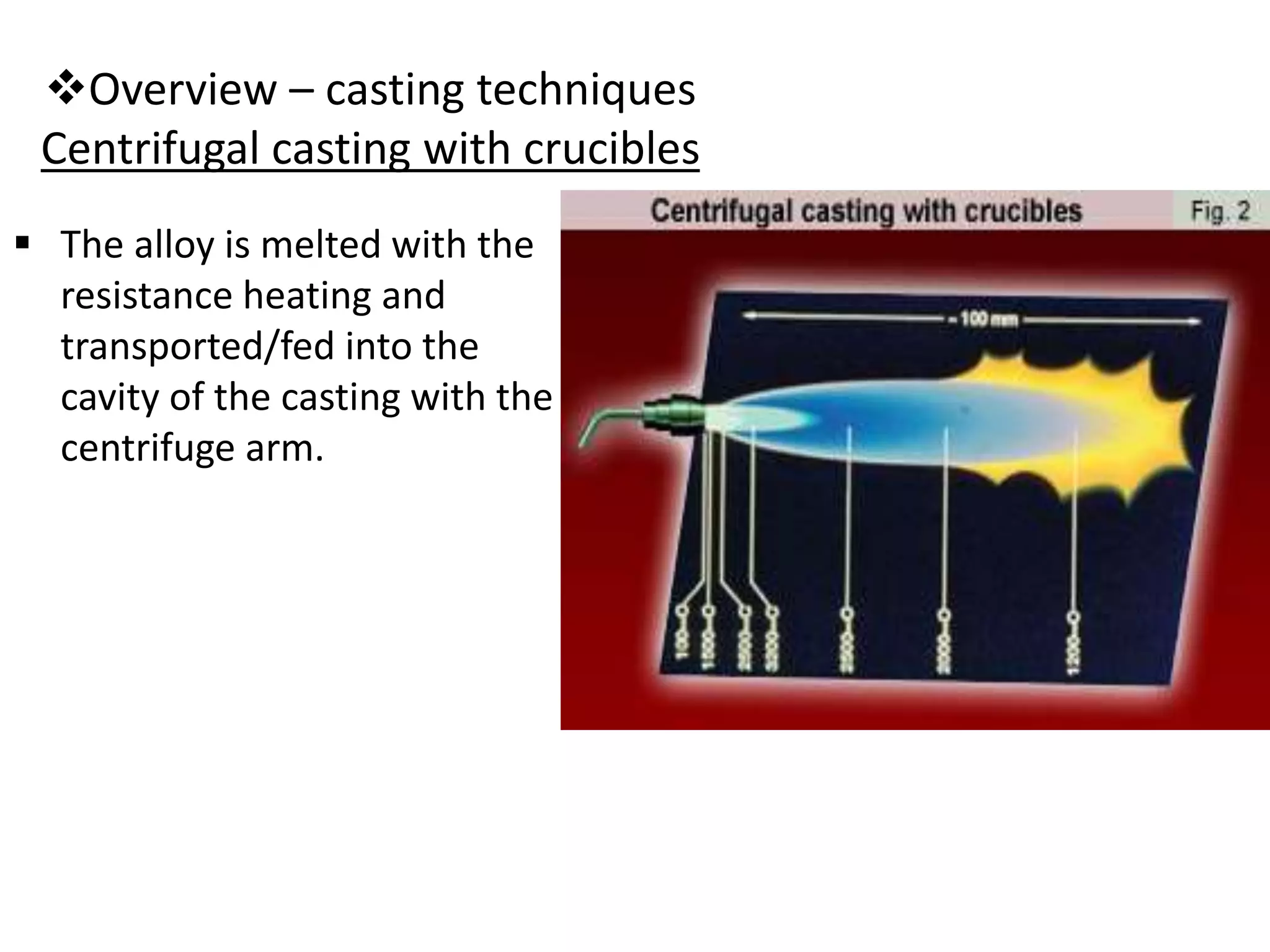
Centrifugal casting with crucibles
 The alloy is melted with the
resistance heating and
transported/fed into the
cavity of the casting with the
centrifuge arm.
Overview – casting techniques
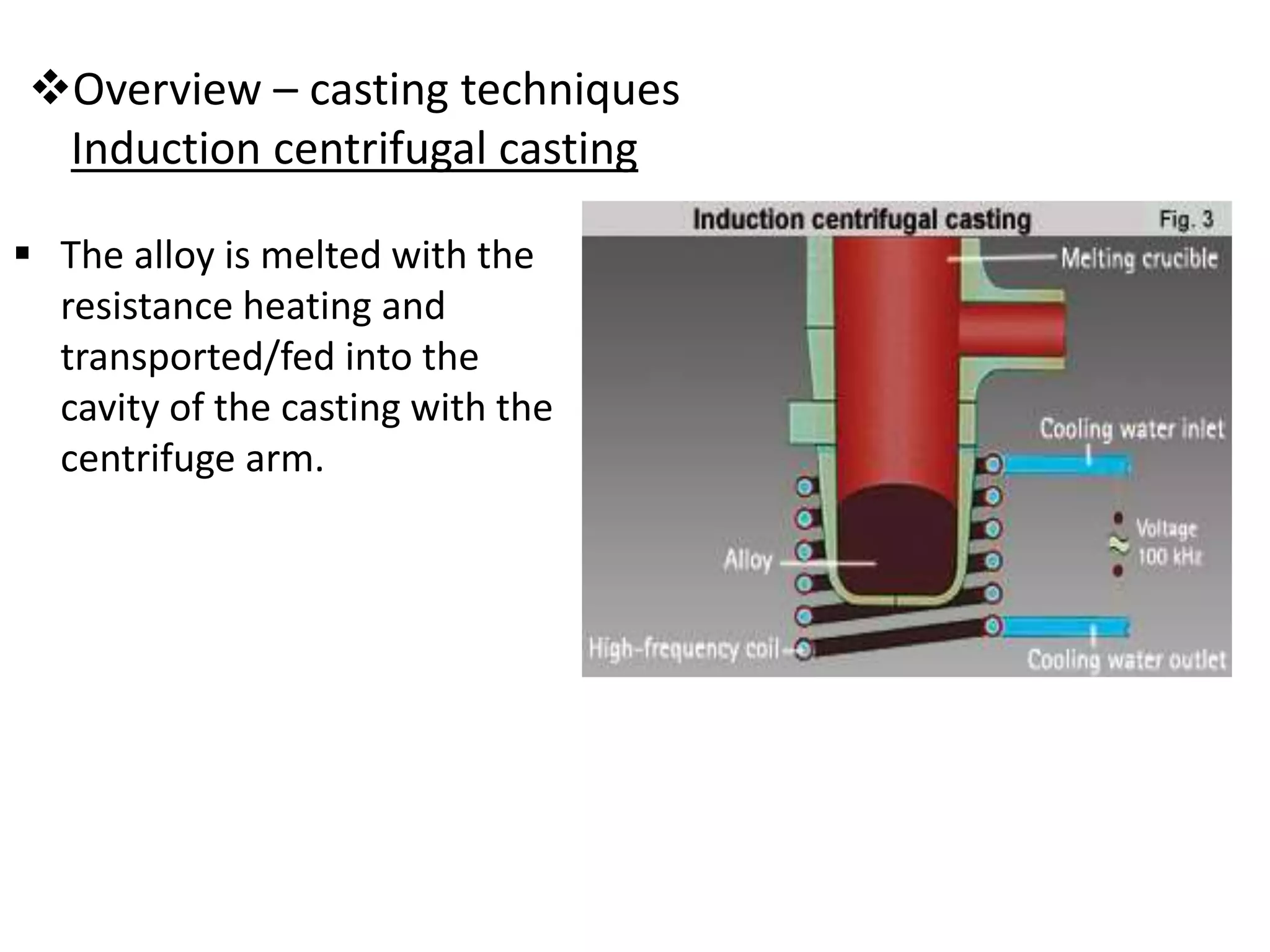
Induction centrifugal casting
 The alloy is melted with the
resistance heating and
transported/fed into the
cavity of the casting with the
centrifuge arm.
Overview – casting techniques
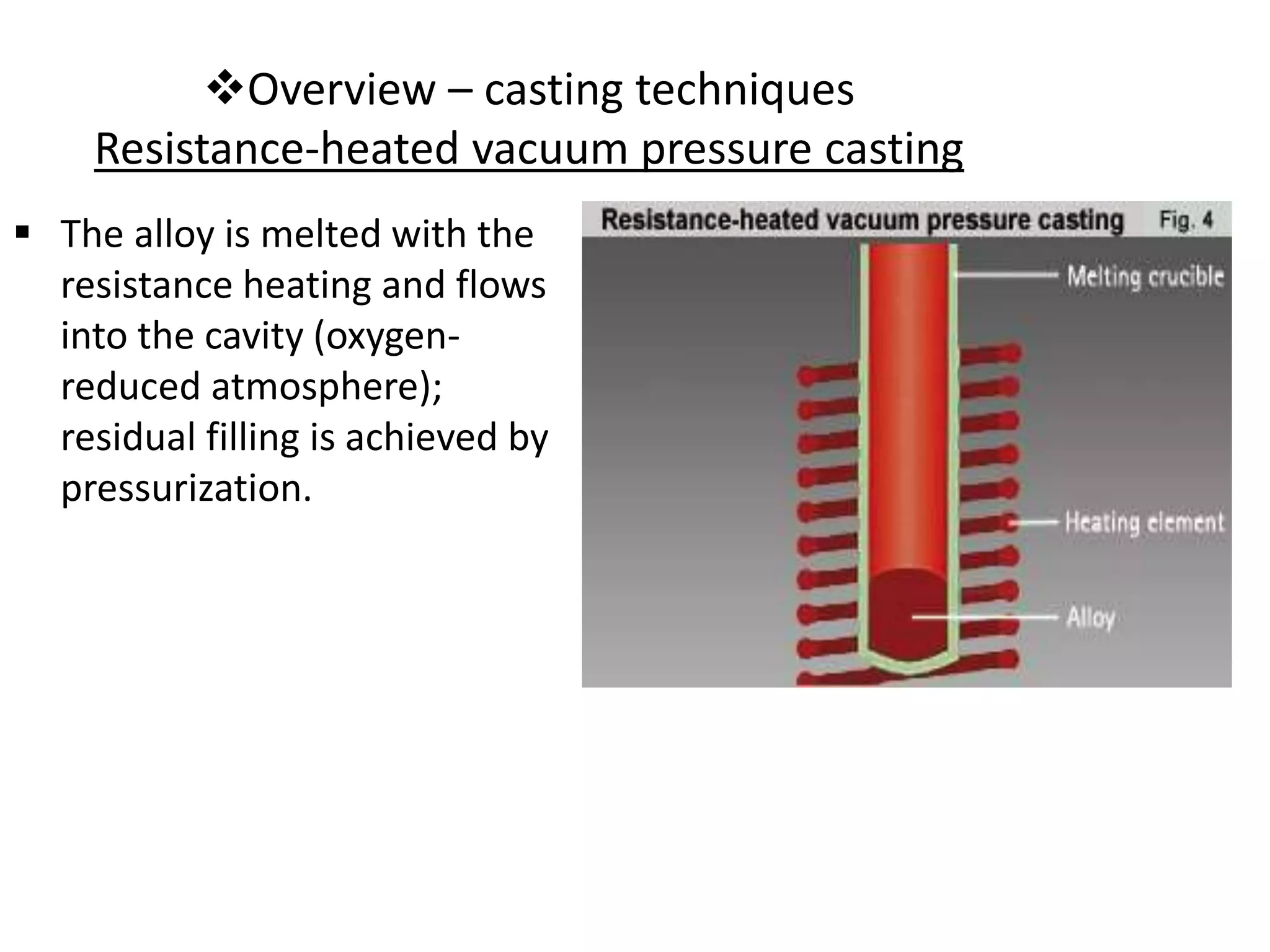
Resistance-heated vacuum pressure casting
 The alloy is melted with the
resistance heating and flows
into the cavity (oxygen-
reduced atmosphere);
residual filling is achieved by
pressurization.
Overview – casting techniques
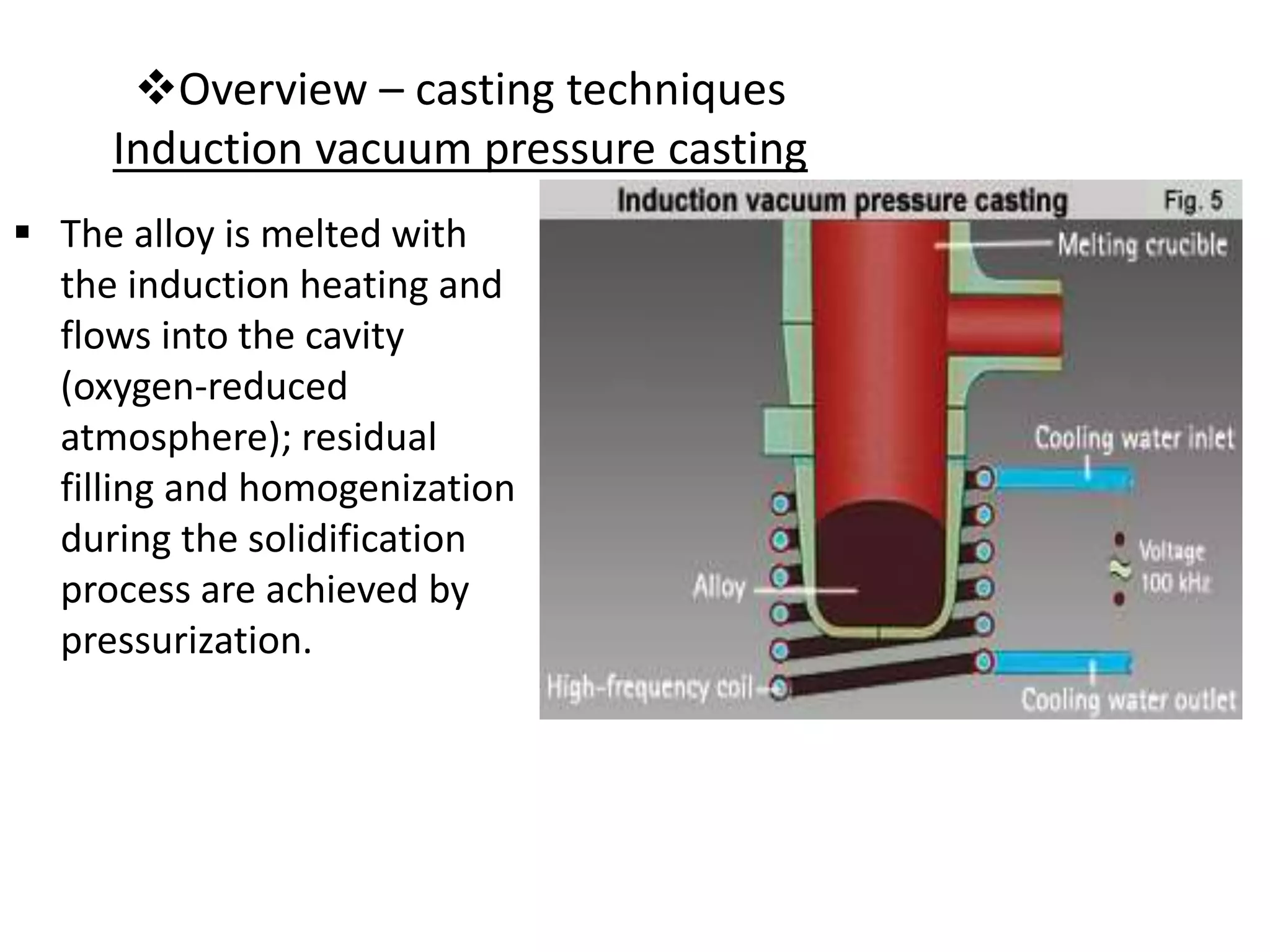
Induction vacuum pressure casting
 The alloy is melted with
the induction heating and
flows into the cavity
(oxygen-reduced
atmosphere); residual
filling and homogenization
during the solidification
process are achieved by
pressurization.
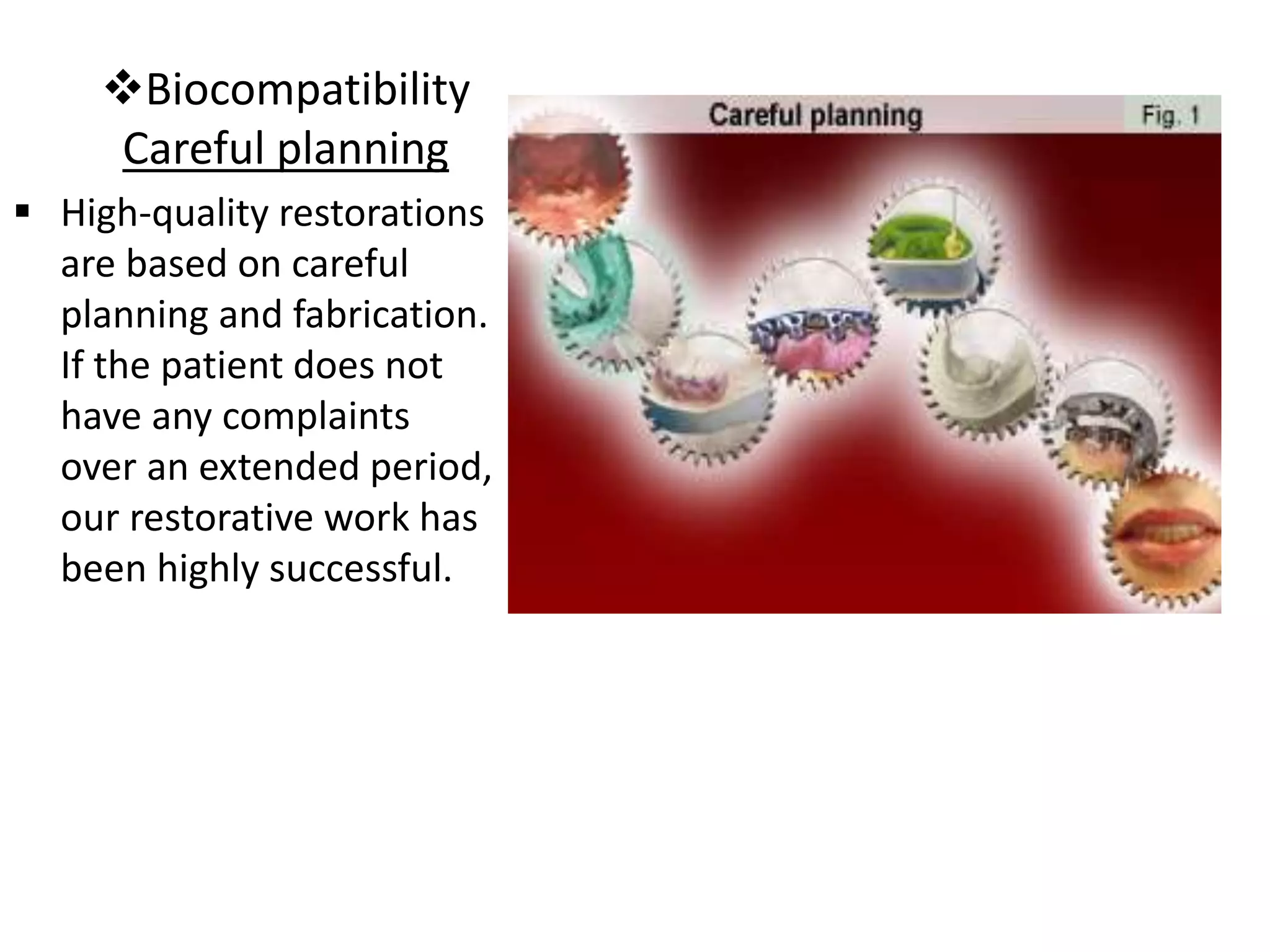
Biocompatibility
Careful planning
 High-quality restorations
are based on careful
planning and fabrication.
If the patient does not
have any complaints
over an extended period,
our restorative work has
been highly successful.
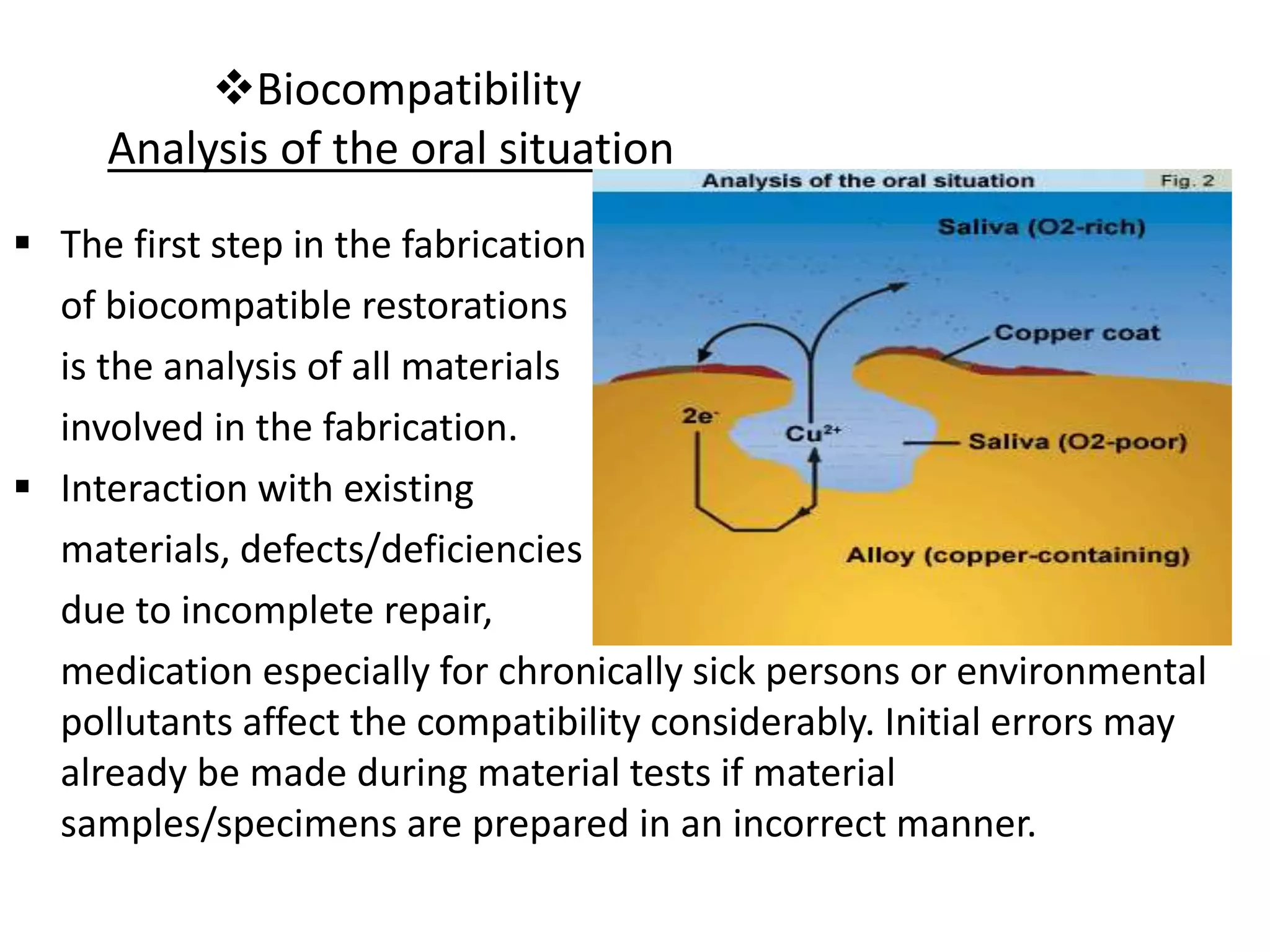
Biocompatibility
Analysis of the oral situation
 The first step in the fabrication
of biocompatible restorations
is the analysis of all materials
involved in the fabrication.
 Interaction with existing
materials, defects/deficiencies
due to incomplete repair,
medication especially for chronically sick persons or environmental
pollutants affect the compatibility considerably. Initial errors may
already be made during material tests if material
samples/specimens are prepared in an incorrect manner.
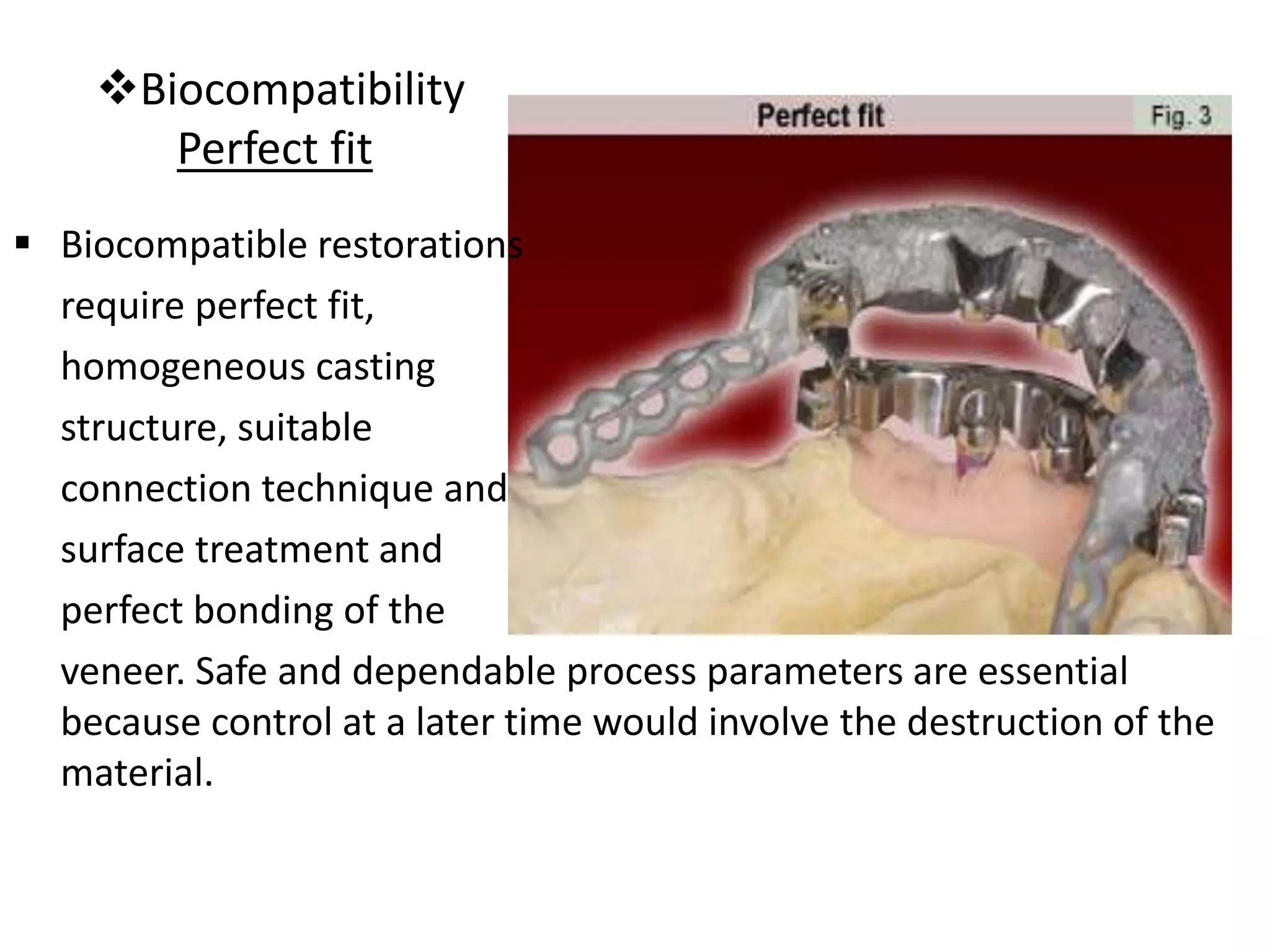
Biocompatibility
Perfect fit
 Biocompatible restorations
require perfect fit,
homogeneous casting
structure, suitable
connection technique and
surface treatment and
perfect bonding of the
veneer. Safe and dependable process parameters are essential
because control at a later time would involve the destruction of the
material.
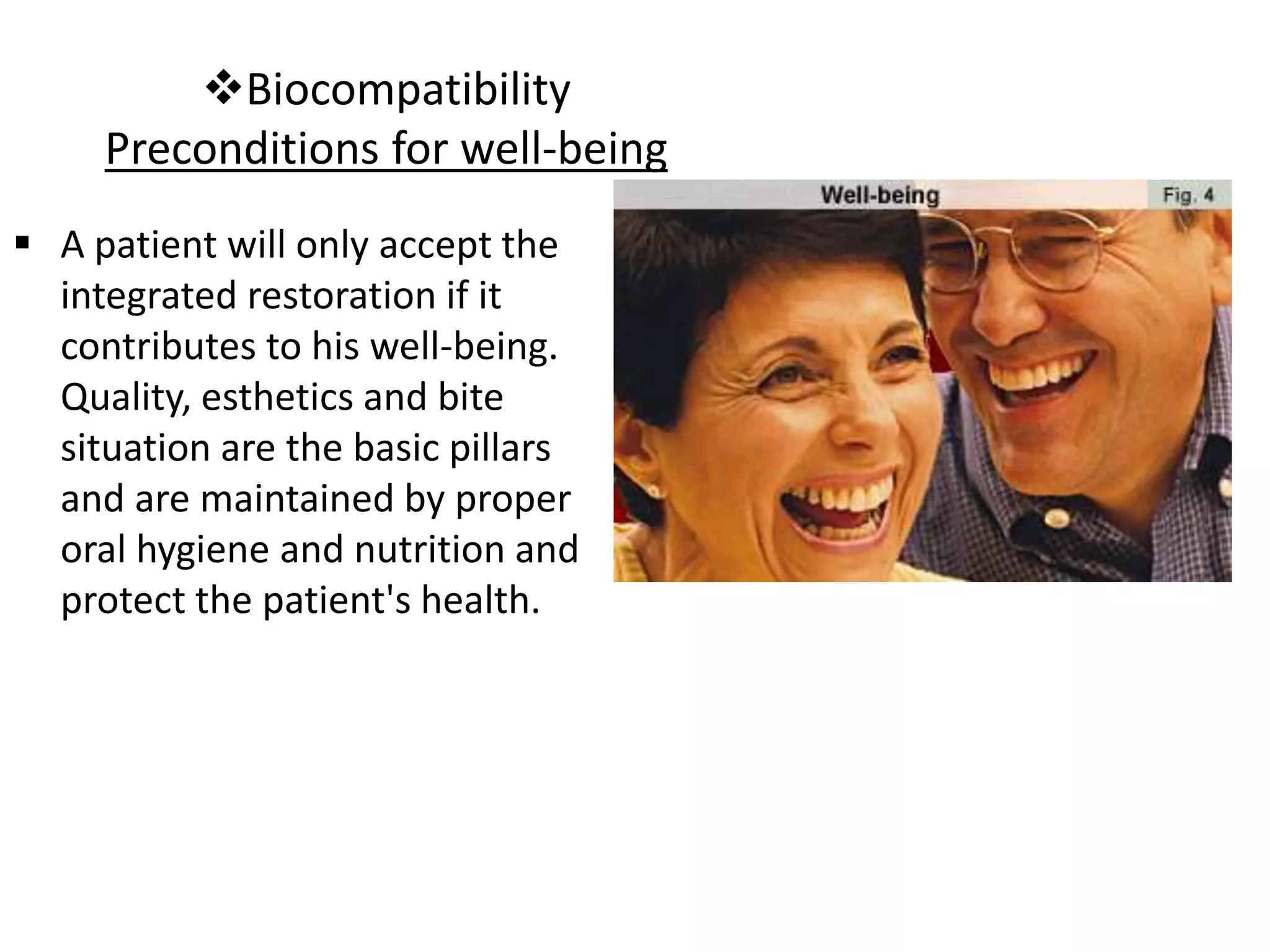
Biocompatibility
Preconditions for well-being
 A patient will only accept the
integrated restoration if it
contributes to his well-being.
Quality, esthetics and bite
situation are the basic pillars
and are maintained by proper
oral hygiene and nutrition and
protect the patient's health.
THANK YOU
FOR
LISTENING

Bredent casting technique

  • 2.
    Bredent Casting Technique »Systematicprocedure »Model fabrication »Preparation for casting »Overview – casting techniques »Biocompatibility
  • 3.
    Bredent Casting Technique The bredent group is an internationally-active, family-run company.  It develops and produces optimally coordinated stand-alone products, system solutions (e.g. in implant prosthetics) and "Made in Germany" treatment concepts.  These enable dentists and dental technicians to produce and maintain high-quality, precision, cost-effective aesthetic restorations that ensure periodontal hygiene. The bredent casting technique includes all work processes required for the production of casting moulds and the chemical-physical processes during melting, casting and the re-solidification of materials. Materials that are perfectly matched with this technique and the processes are found in the certified symbiotic system (css).
  • 4.
    Systematic procedure Planning andeffects  A single biocompatible material does not guarantee biocompatible dental restorations. High-quality, biocompatible dental restorations require thorough planning.  The bredent casting technique takes all essential components of the combination "Patient – Materials – Production" into consideration.
  • 5.
    Systematic procedure bredent quality •The bredent casting technique is based on the commitment to quality and the requirements of a responsible patient for biocompatible dental restorations under the aspect of long-term biocompatibility.
  • 6.
    Systematic procedure advantages ■ Spruescan be universally Used for all alloys ■ Volume compensation results in easy-to-polish casting without shrinkage cavities ■ Special muffle shapes allow ideal positioning of wax objects ■ Deformation-free spruing and investing reduce the fitting time ■ Few Sprues for reduced material usage ■ Structured book "bredent casting technique" for dependable use.
  • 7.
    Systematic procedure Development  Thebredent casting technique is a complete system. It combines know-how and materials.  The dental technician is enabled to achieve reproducible, homogenous and patient-compatible results.
  • 8.
    Systematic procedure Laboratory situation The bredent casting technique is matched with the respective laboratory situation to meet the requirements for high- quality dental restorations.
  • 9.
    Systematic procedure Basic requirements •To be able to successfully apply the bredent casting technique, competence in the systematic procedure (according to Andreas Sabath).
  • 10.
    Model fabrication Thixo-Rock classIV super-hard stone  The low expansion is just 0.06 % after two hours and the limit is 0.08 %.  This stone allows reproduction of all details of the original situation and the fabrication of highly accurate dentures.  Thixo-Rock is available in brown, ivory and grey.
  • 11.
    Model fabrication Control ofexpansion  Control of the expansion of a plaster model.
  • 12.
    Model fabrication Duplicating system The duplicating technique is the major element and the basis for highly accurate duplicates. The stable plastic components of the bredent duplicating system ensure unsurpassed precision when preparing duplicates and reduce errors.
  • 13.
    Model fabrication Bresol Nfor the one- piece casting technique  Perfect control of the expansion of brevest M1 in different areas of an investment model, recommended to use Bresol N investment material liquid – required for accurate secondary structures in the one-piece casting technique.
  • 14.
    Model fabrication Optimal mixing •Homogeneous mixing with the ecovac mixing system. The three-dimensional ecovac mixing spiral in conjunction with the smooth surface and the conical shape of the bottom of the ecovac mixing cup allows to take up all the material inside and to mix it in horizontal and vertical direction.
  • 15.
  • 16.
    Preparation for casting Barcasting  When preparing sprues, it must be ensured that the sprues are directed to the melting reservoir via the center or heat.  A horizontal bar which is placed in the center of the casting ring serves as a melting reservoir.
  • 17.
    Preparation for casting Attachingthe rinsing head  Correct dimensioning of the sprue/s to be attached and sufficient thickness of the sprue/s and the rinsing heads are essential for homogeneous dental casting and ensure rapid flowing in.
  • 18.
    Preparation for casting Castingwith sprues  If a gold or precious metal bonding alloy is used for casting the framework, the design shown in the pictures is sufficient.  Crystallization cooling fins or a second sprue are not required.
  • 19.
    Preparation for casting Crown When using NPM alloys for all cast crowns or bridges, sectional investing is recommended to improve the surface of the casting.  The same applies to providing crystallization cooling fins – their use eliminates errors of investing or porosities in the casting.
  • 20.
    Preparation for casting Barrestorations  A correctly wax-up bar structure needs to have suitable sprues to ensure perfect casting. It is essential to obtain rapid and uniform filling of the mould with the alloy.
  • 21.
    Preparation for casting CoCrrestorations  The sprues must be attached in a way to ensure that they are directed to the casting funnel via the center in the investment muffle.
  • 22.
    Overview – castingtechnique Flame centrifugal casting  The alloy is melted with the flame and fed into the cavity with the centrifuge arm. ■ Unsuitable: Blow torch, welding torch ■ Suitable: Melting torch
  • 23.
    Overview – castingtechniques Centrifugal casting with crucibles  The alloy is melted with the resistance heating and transported/fed into the cavity of the casting with the centrifuge arm.
  • 24.
    Overview – castingtechniques Induction centrifugal casting  The alloy is melted with the resistance heating and transported/fed into the cavity of the casting with the centrifuge arm.
  • 25.
    Overview – castingtechniques Resistance-heated vacuum pressure casting  The alloy is melted with the resistance heating and flows into the cavity (oxygen- reduced atmosphere); residual filling is achieved by pressurization.
  • 26.
    Overview – castingtechniques Induction vacuum pressure casting  The alloy is melted with the induction heating and flows into the cavity (oxygen-reduced atmosphere); residual filling and homogenization during the solidification process are achieved by pressurization.
  • 27.
    Biocompatibility Careful planning  High-qualityrestorations are based on careful planning and fabrication. If the patient does not have any complaints over an extended period, our restorative work has been highly successful.
  • 28.
    Biocompatibility Analysis of theoral situation  The first step in the fabrication of biocompatible restorations is the analysis of all materials involved in the fabrication.  Interaction with existing materials, defects/deficiencies due to incomplete repair, medication especially for chronically sick persons or environmental pollutants affect the compatibility considerably. Initial errors may already be made during material tests if material samples/specimens are prepared in an incorrect manner.
  • 29.
    Biocompatibility Perfect fit  Biocompatiblerestorations require perfect fit, homogeneous casting structure, suitable connection technique and surface treatment and perfect bonding of the veneer. Safe and dependable process parameters are essential because control at a later time would involve the destruction of the material.
  • 30.
    Biocompatibility Preconditions for well-being A patient will only accept the integrated restoration if it contributes to his well-being. Quality, esthetics and bite situation are the basic pillars and are maintained by proper oral hygiene and nutrition and protect the patient's health.
  • 31.