By
Sara Zaky
Terminology to know ..
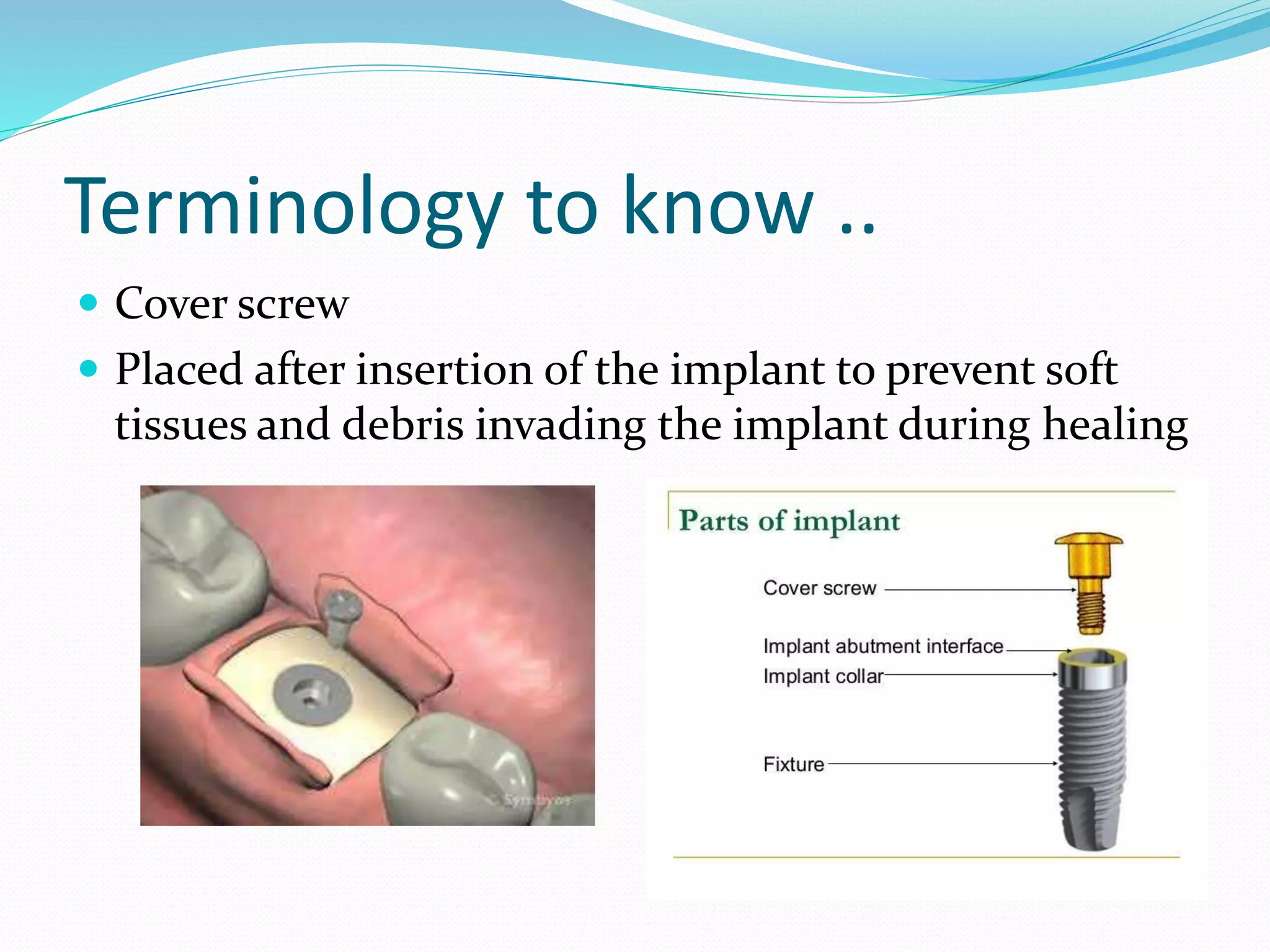
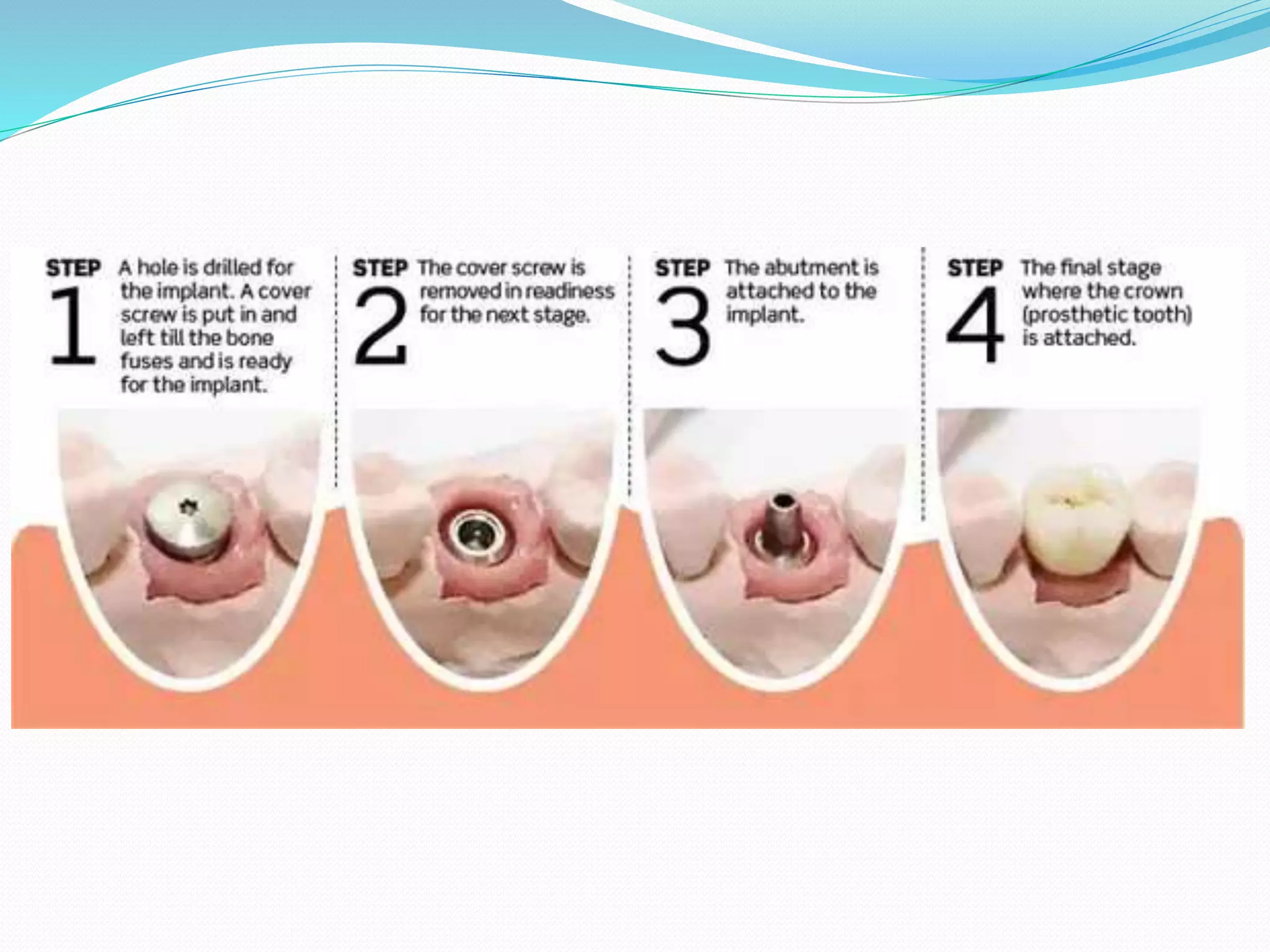
 Cover screw
 Placed after insertion of the implant to prevent soft
tissues and debris invading the implant during healing
 Healing cap
 Temporary cover facilities placement of surgical pack
and healing
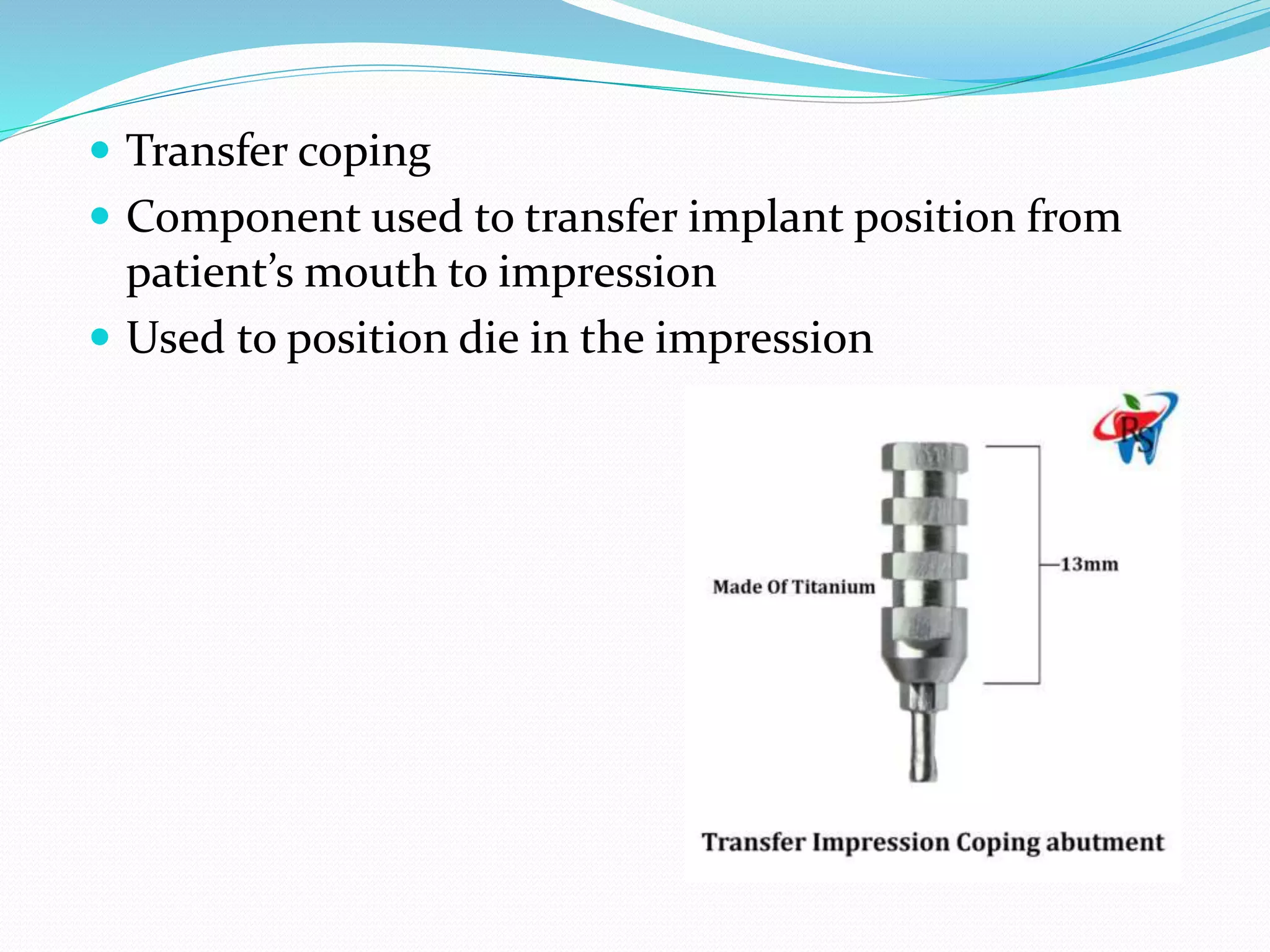
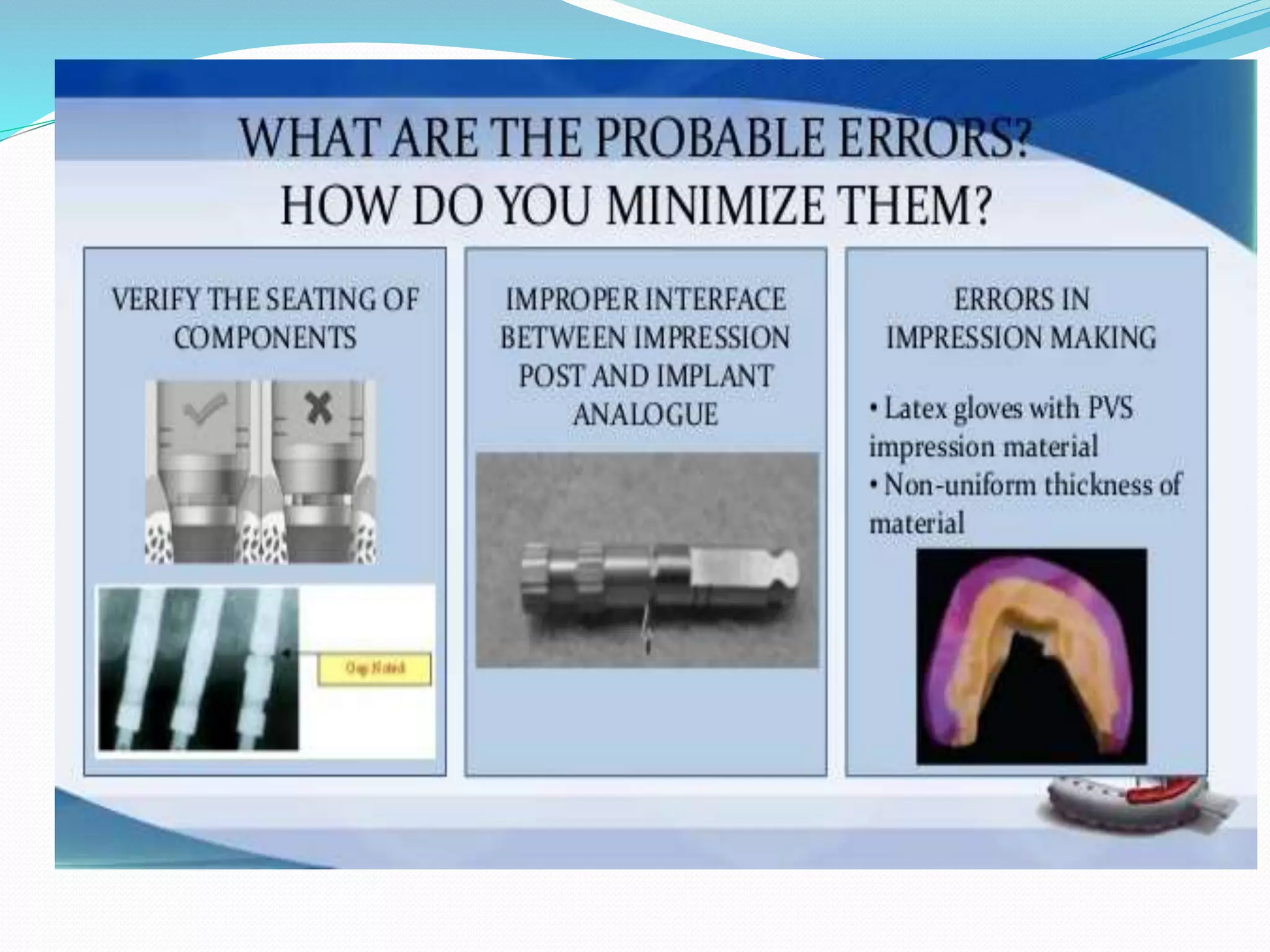
 Transfer coping
 Component used to transfer implant position from
patient’s mouth to impression
 Used to position die in the impression
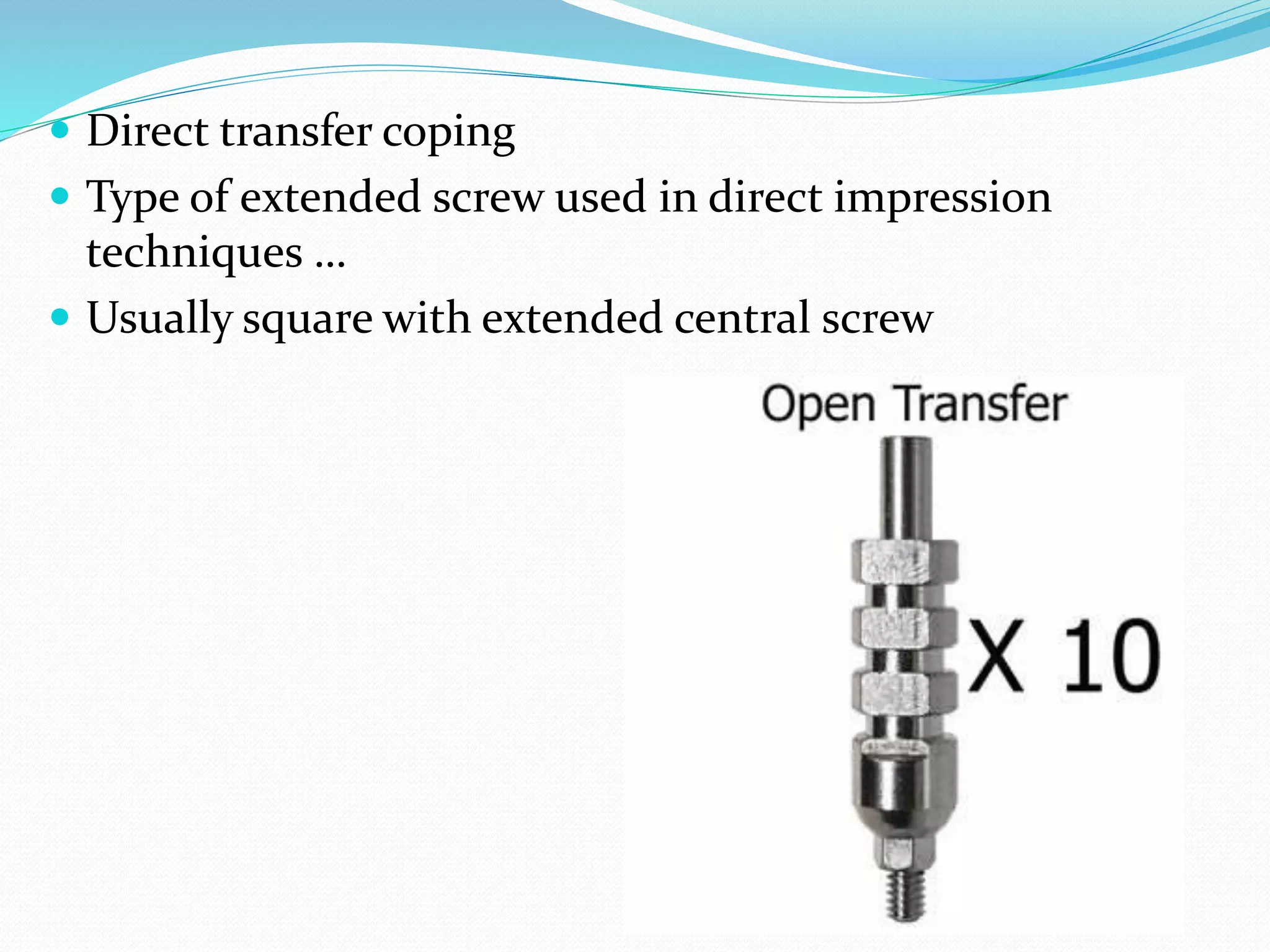
 Direct transfer coping
 Type of extended screw used in direct impression
techniques …
 Usually square with extended central screw
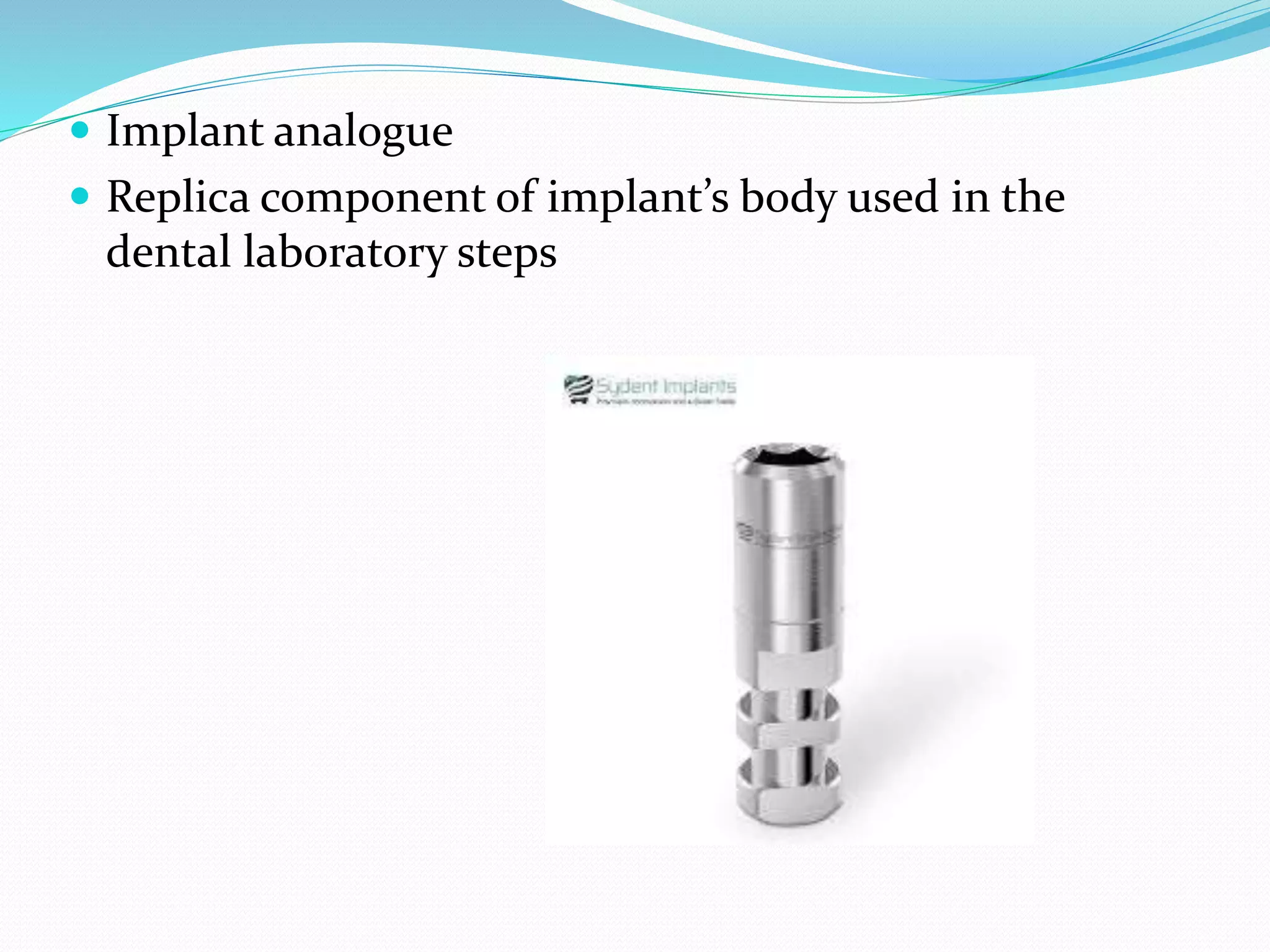
 Implant analogue
 Replica component of implant’s body used in the
dental laboratory steps
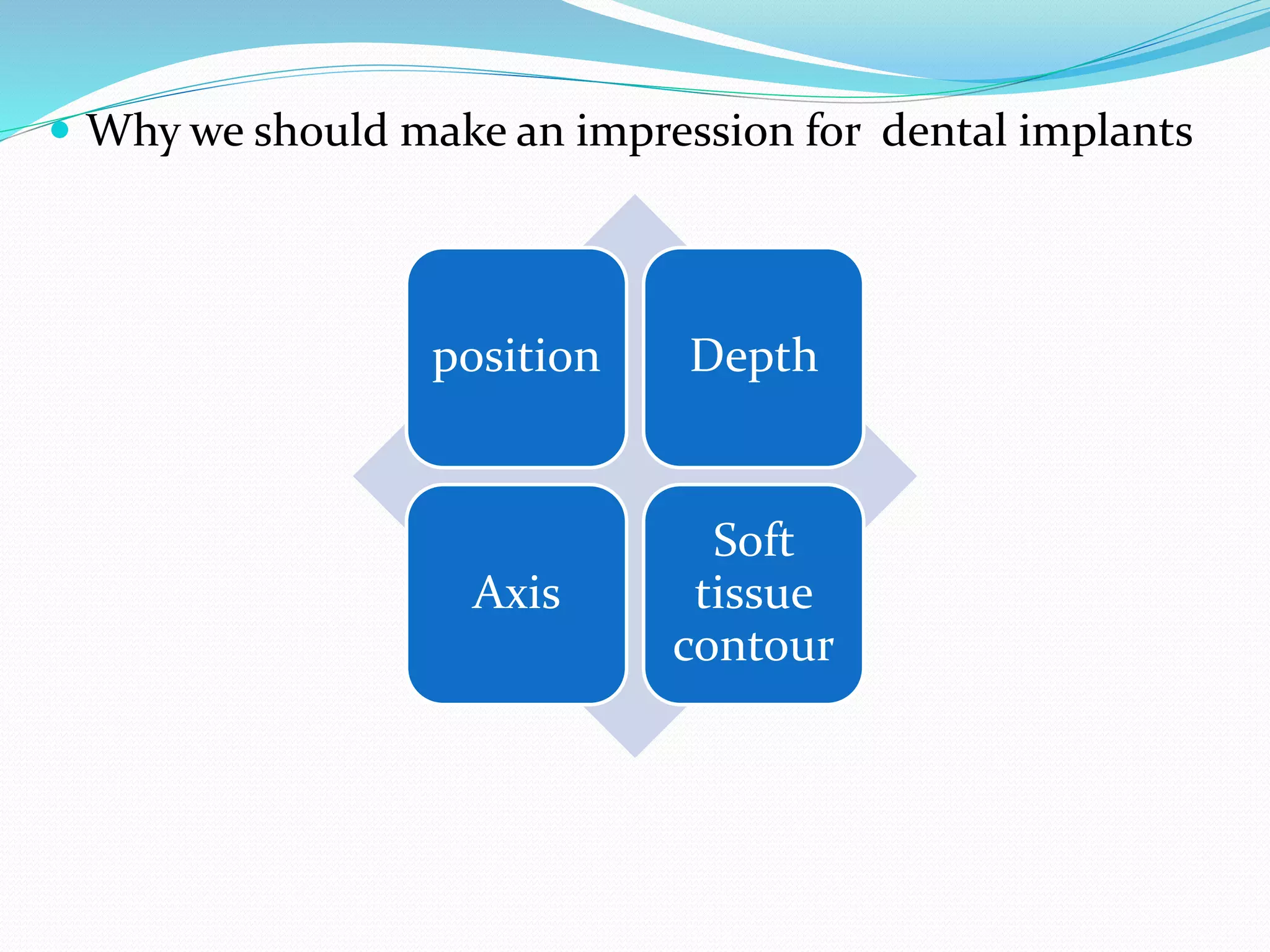
 Why we should make an impression for dental implants
position Depth
Axis
Soft
tissue
contour
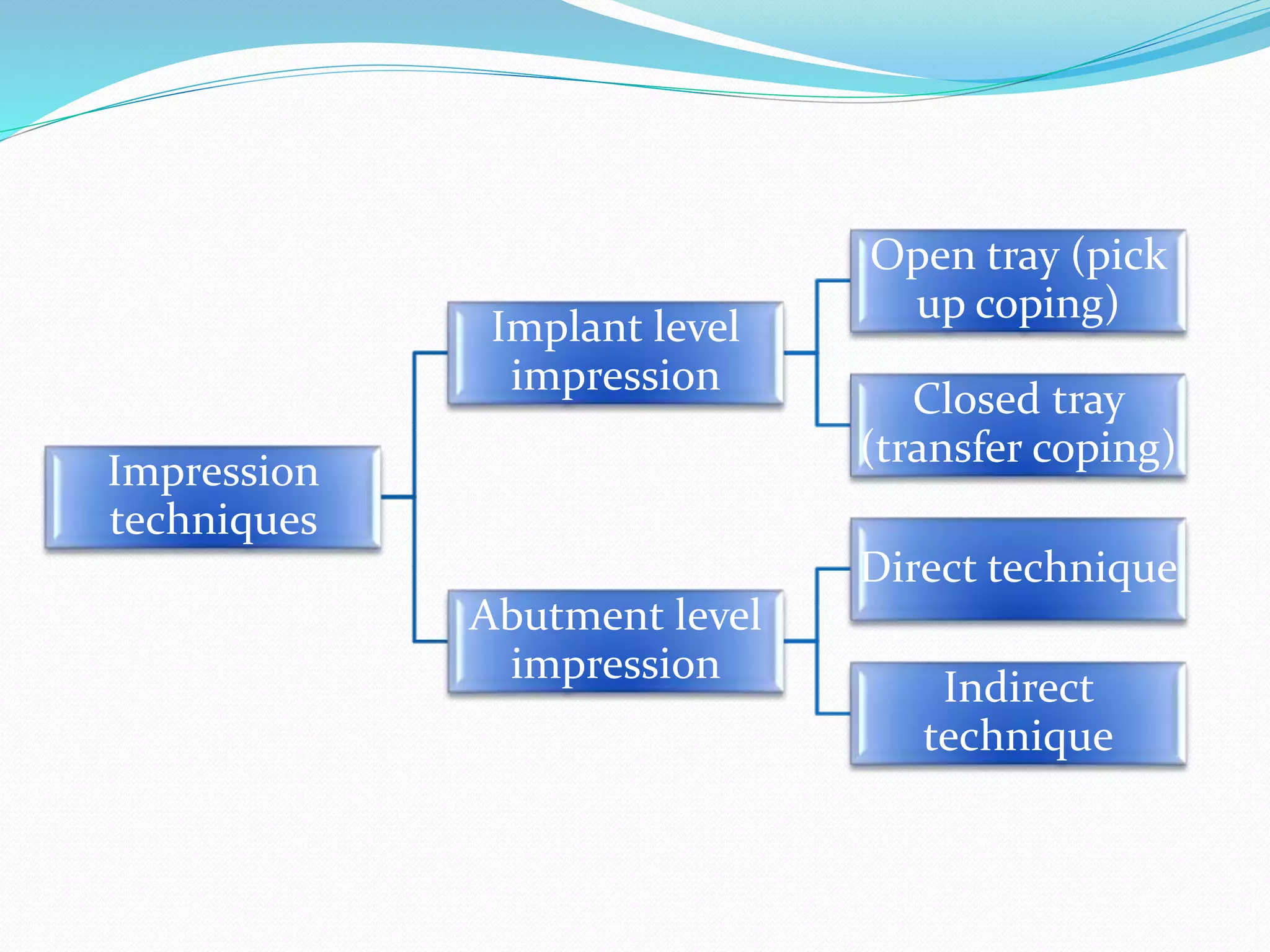
Impression
techniques
Implant level
impression
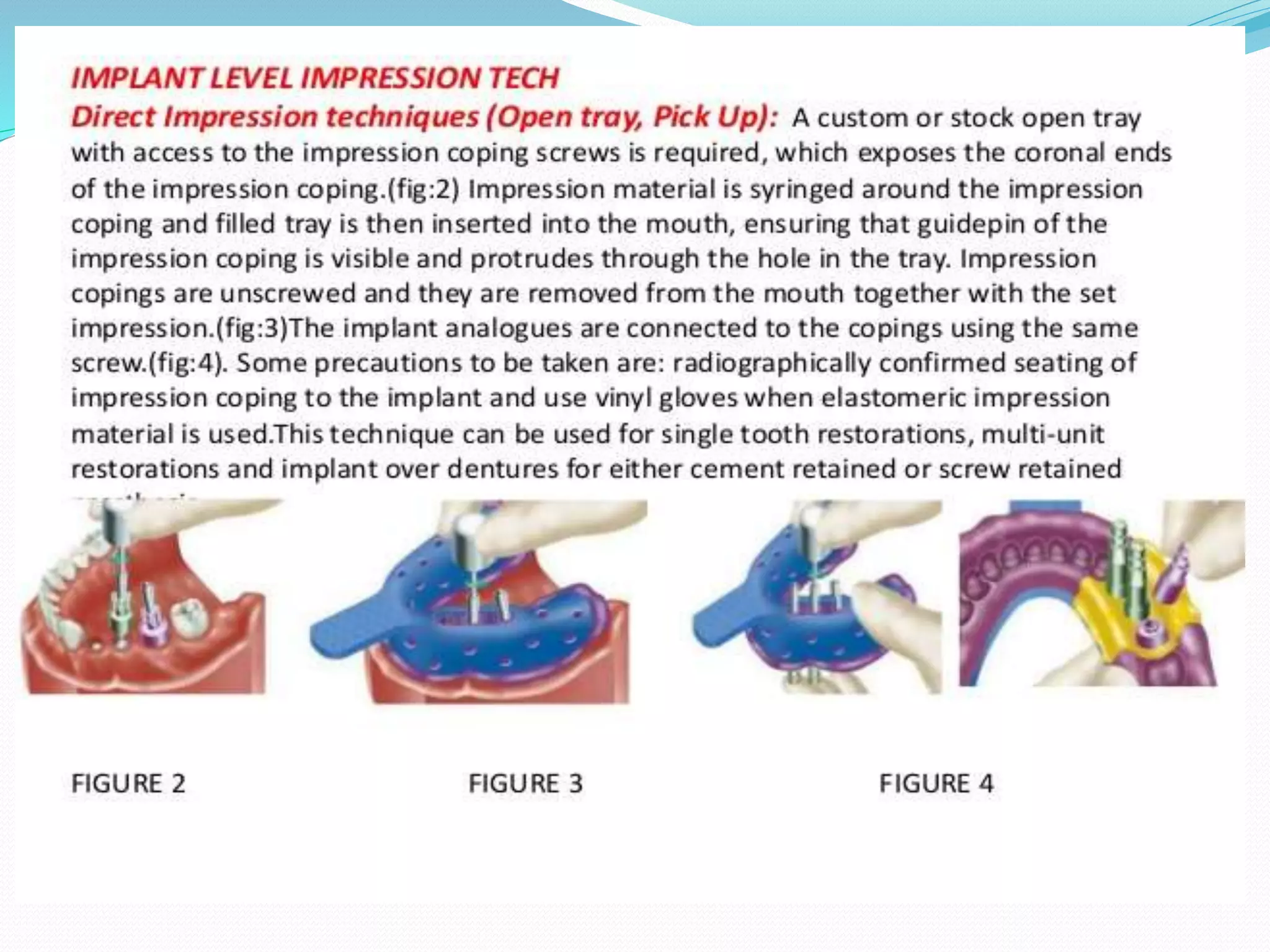
Open tray (pick
up coping)
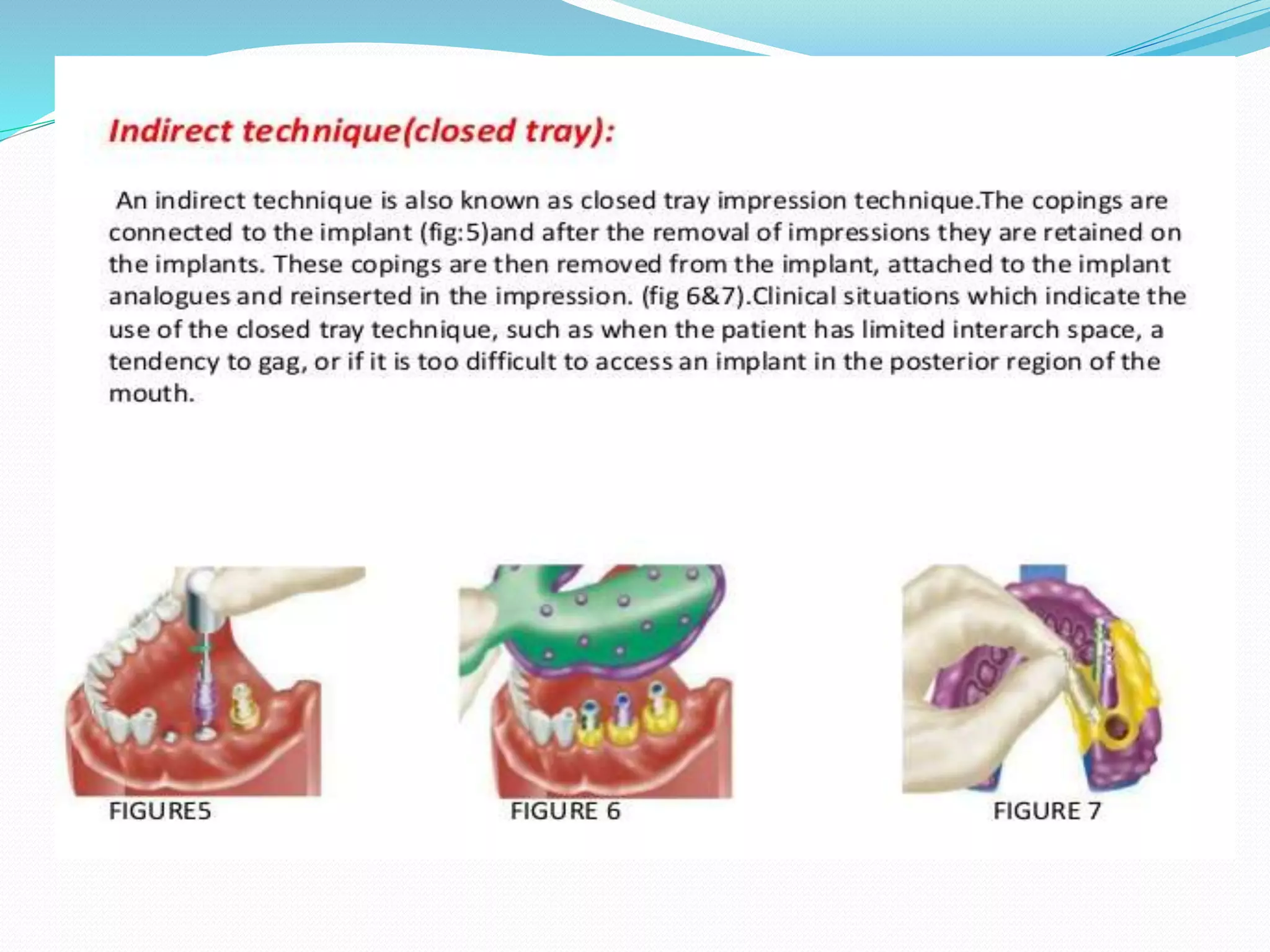
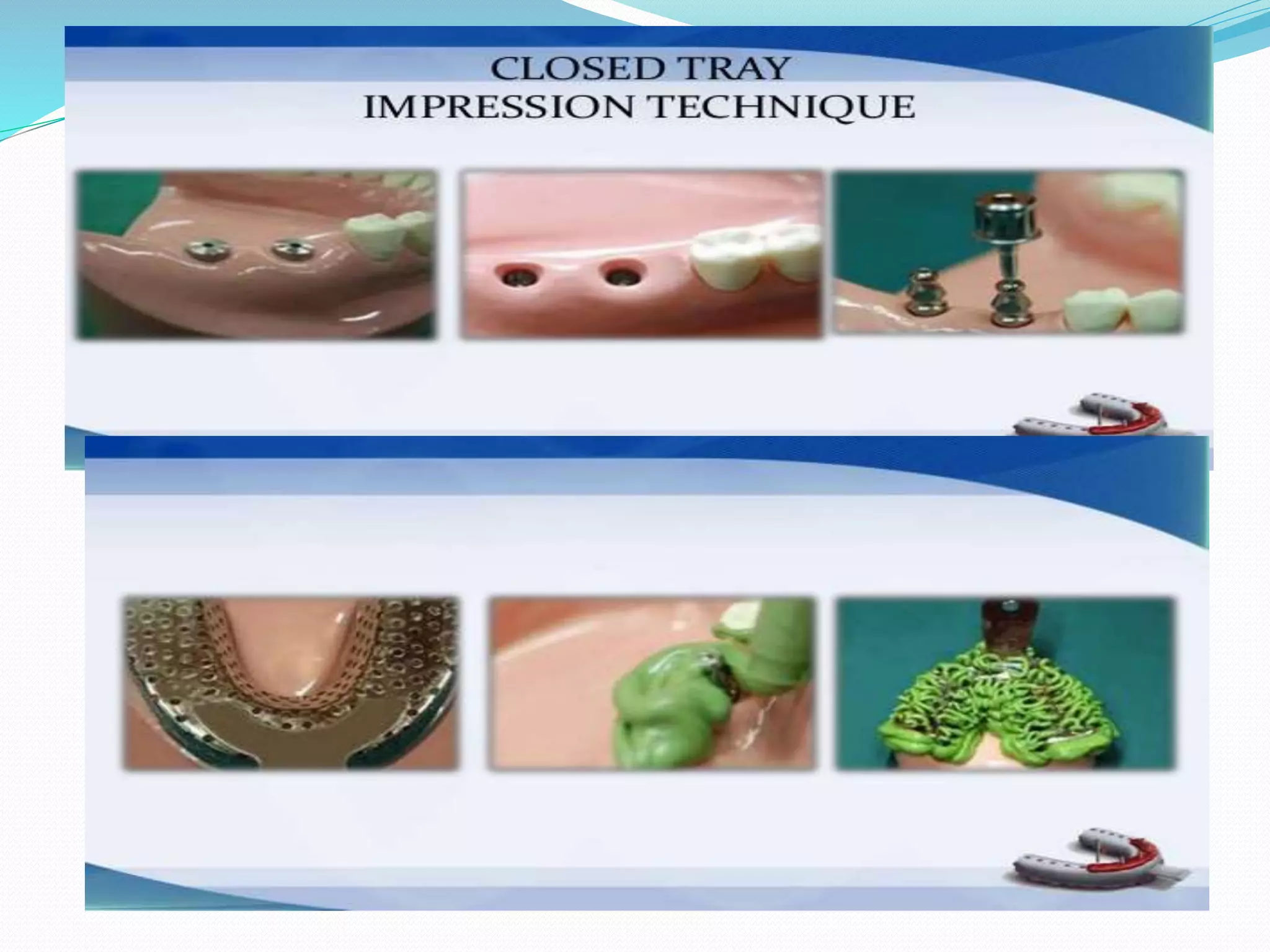
Closed tray
(transfer coping)
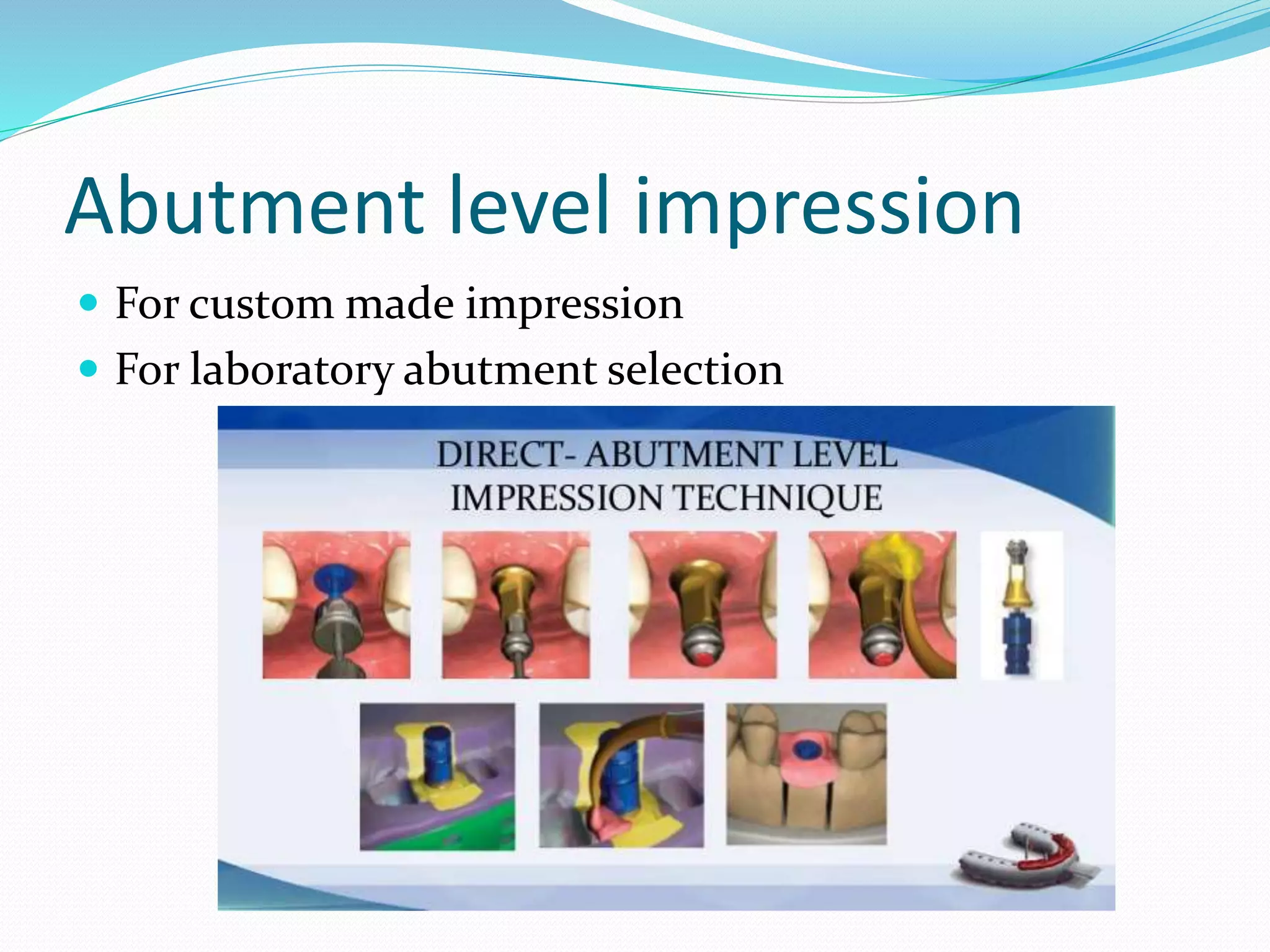
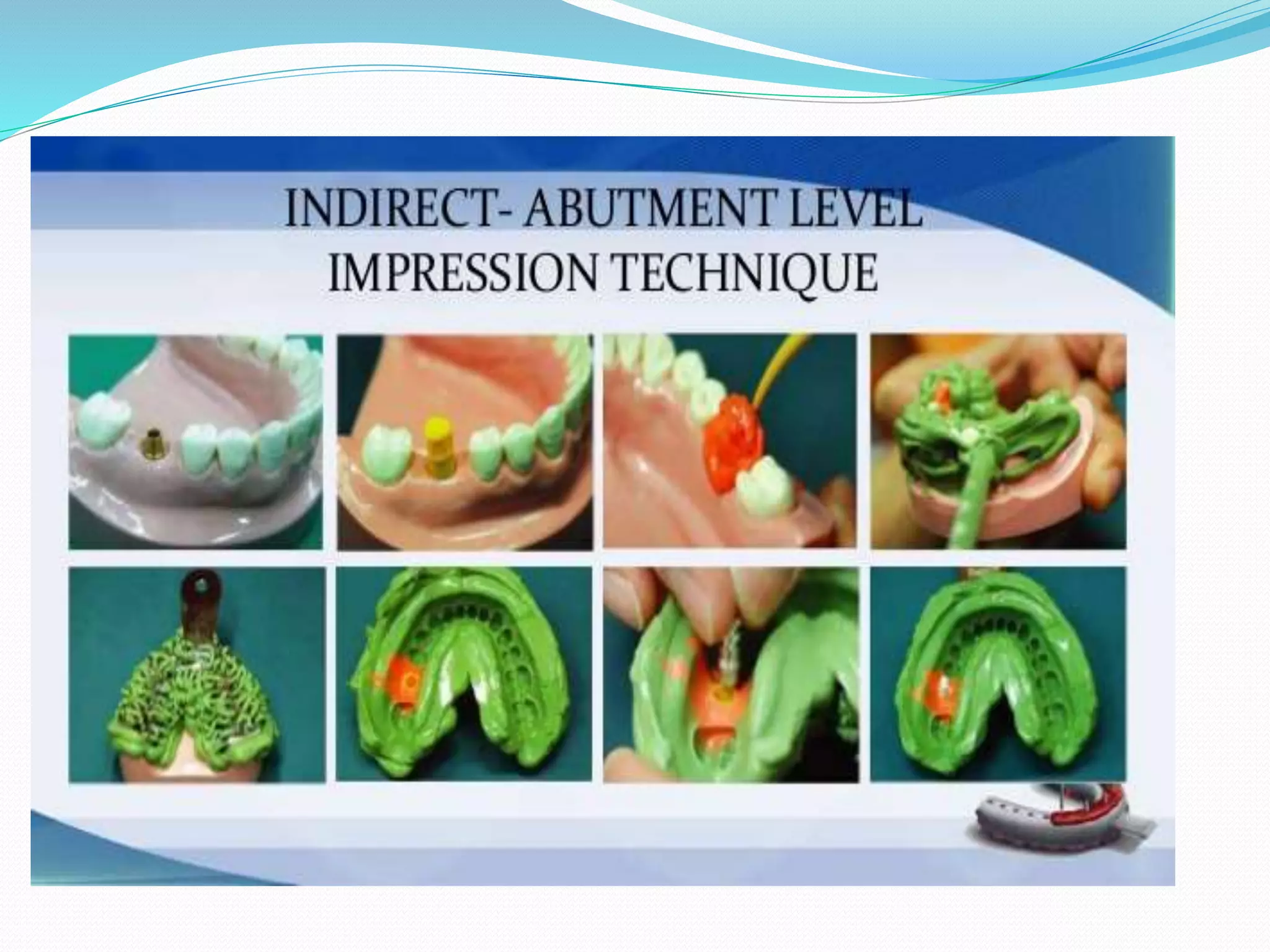
Abutment level
impression
Direct technique
Indirect
technique
Open tray technique
Advantage :
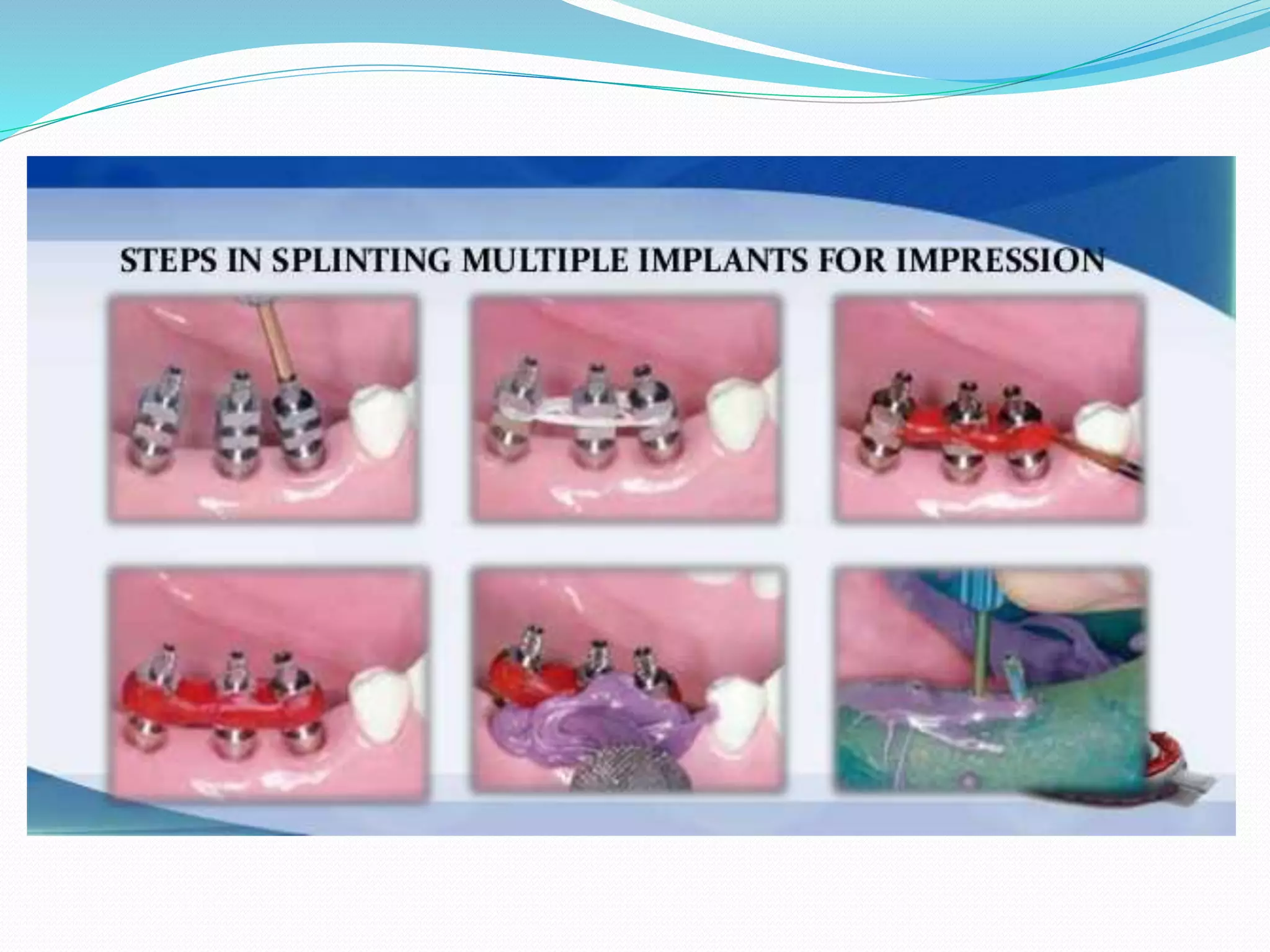
Used with multiple implants
Reduce the effect of implant
angulation
Blind attachment
Movement of the screw during
impression taking may occur
Closed tray technique
Advantage
Suitable with decreased inter-
arch space
Decreased gaging reflex
easier
difficult to be used with non-
parallel implants
Human variation during
application
Abutment level impression
 For custom made impression
 For laboratory abutment selection
Gingival simulation :
 Technique used to simulate the shape or form of the
soft tissue around the implant and its abutment.
 Help the technician a d dentist to visulaize the soft
tissue surrondings
Thank you

dental implant impression technique

  • 1.
  • 3.
    Terminology to know..  Cover screw  Placed after insertion of the implant to prevent soft tissues and debris invading the implant during healing
  • 4.
     Healing cap Temporary cover facilities placement of surgical pack and healing
  • 5.
     Transfer coping Component used to transfer implant position from patient’s mouth to impression  Used to position die in the impression
  • 6.
     Direct transfercoping  Type of extended screw used in direct impression techniques …  Usually square with extended central screw
  • 7.
     Implant analogue Replica component of implant’s body used in the dental laboratory steps
  • 9.
     Why weshould make an impression for dental implants position Depth Axis Soft tissue contour
  • 10.
    Impression techniques Implant level impression Open tray(pick up coping) Closed tray (transfer coping) Abutment level impression Direct technique Indirect technique
  • 16.
    Open tray technique Advantage: Used with multiple implants Reduce the effect of implant angulation Blind attachment Movement of the screw during impression taking may occur Closed tray technique Advantage Suitable with decreased inter- arch space Decreased gaging reflex easier difficult to be used with non- parallel implants Human variation during application
  • 17.
    Abutment level impression For custom made impression  For laboratory abutment selection
  • 21.
    Gingival simulation : Technique used to simulate the shape or form of the soft tissue around the implant and its abutment.  Help the technician a d dentist to visulaize the soft tissue surrondings
  • 24.