 Four main types of products form the group of
impression materials classified as non-elastic
materials:
 Impression compound
 Impression plaster
 Impression waxes
 Zinc Oxide impression pastes = Cavex
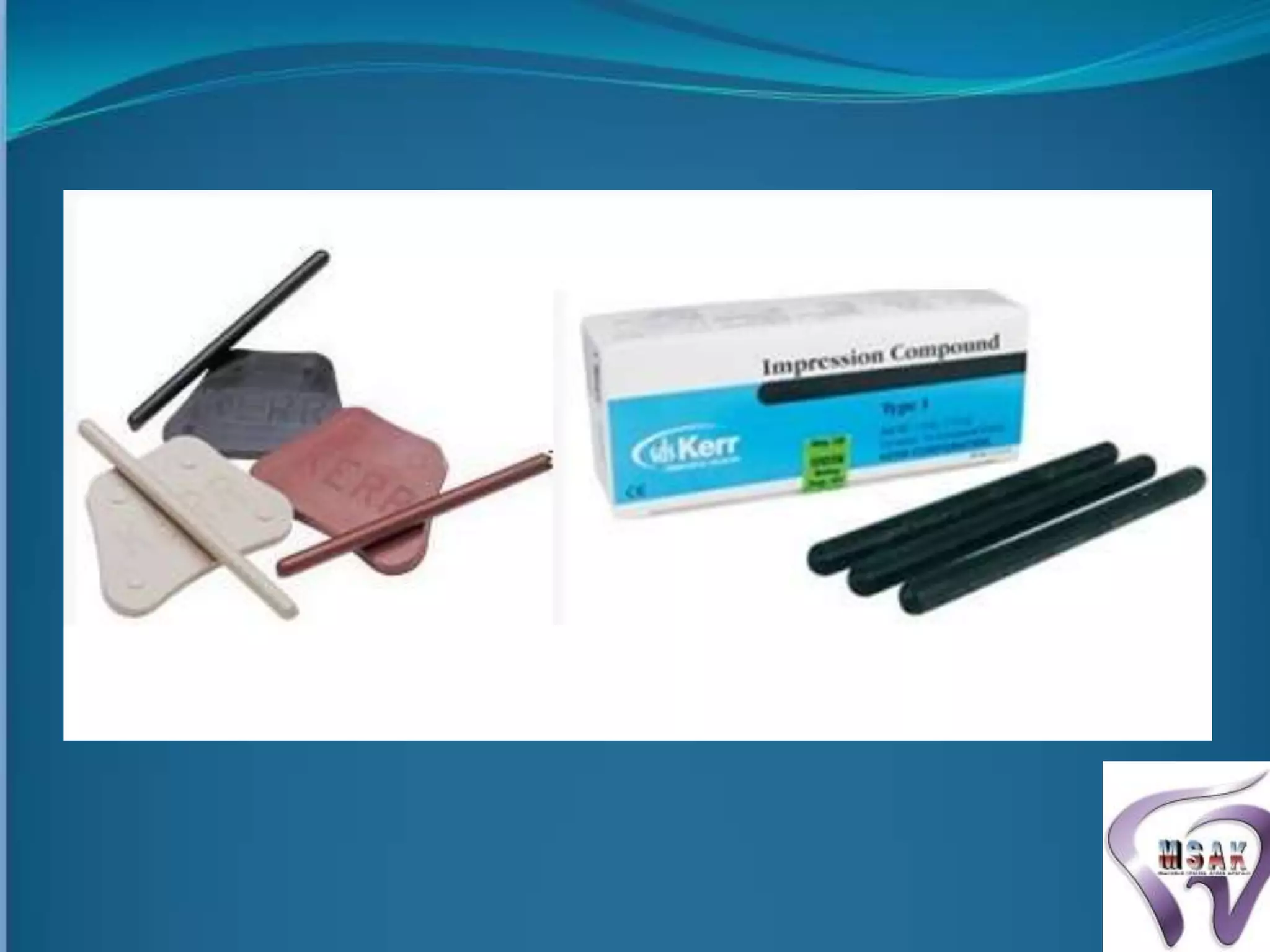
Impression Compounds
High fusing
 Usually red color cakes/ discs
 Easily breakable – brittle
 Material is softened in temp of up to 85ºC
 It is kneaded to remove folds and then adapted to tray
Low fusing
 Ideal for recording peripheries in custom trays
 Material is softened over flame and applied in a
uniform thickness
 It must be tempered in hot water bath before placing
into patients mouth
 Used to build up periphery of stock or custom trays
 Material is brought to recordable state by heating over
a flame
 The soft material is adjusted on the tray periphery
then “tempered” in a hot water bath before placing
into patients mouth
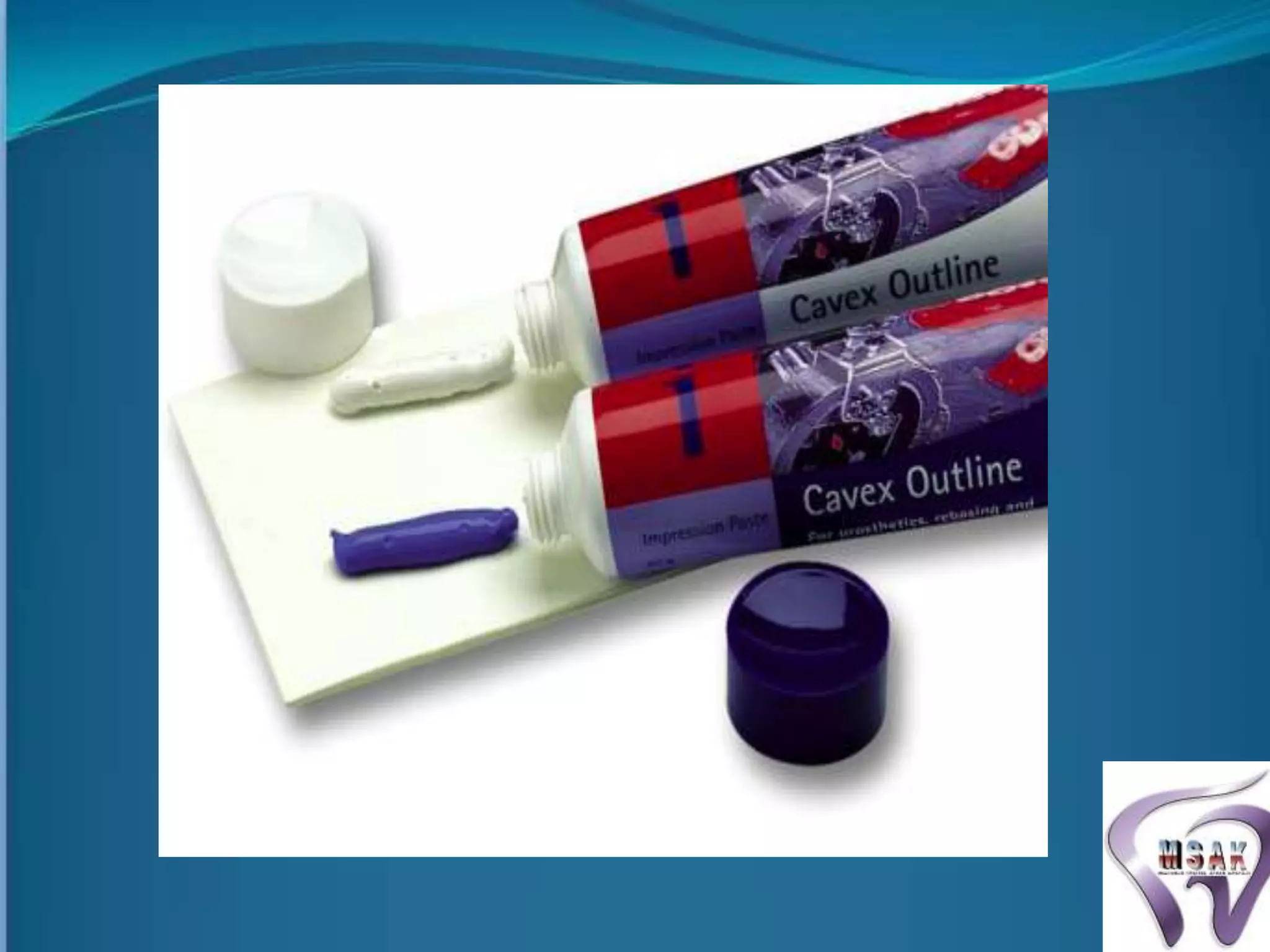
ZnO paste
 Supplied as 2 pastes system
 White paste – base
 Blue paste – initiator, catalyst
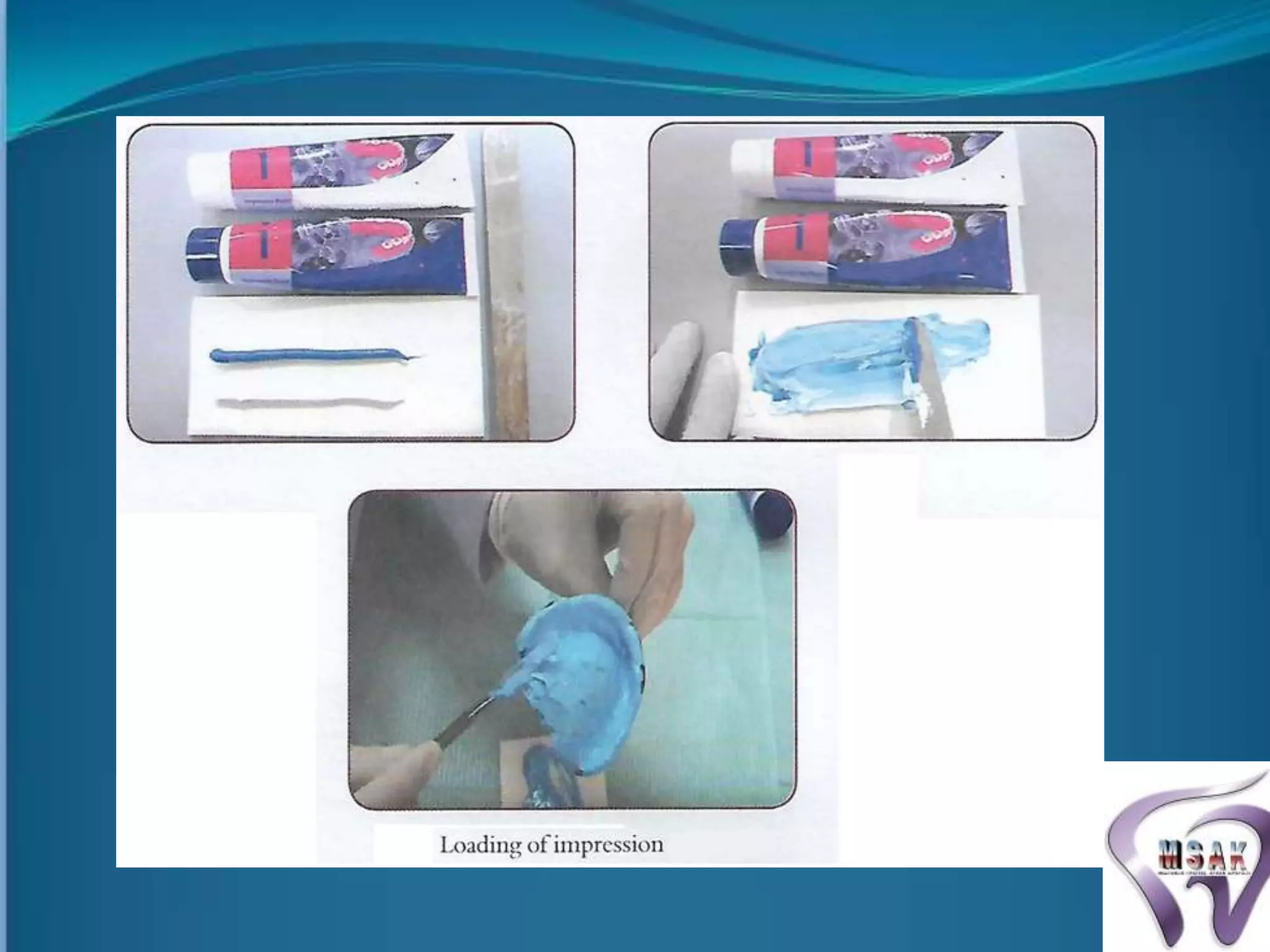
 This material is used for recording edentulous ridges in a
close fitting “custom”/ “special tray” or the patients existing
dentures (if they are not be used further). The material is
mixed in a 1:1 (equal) paste ratio and used in thin sections
only (2-3mm) as a wash impression. Vaseline is used as a
separating agent on those areas requiring protection (soft
tissues, teeth etc). Firm pressure is used during impression
taking.
 Also used to check extension of custom tray periphery
accurate/ over extended/ under-extended)
 Composition
 The white paste
 metallic oxides : app. 80 %
 vegetable oil : app. 20 %
The dark blue paste
fatty acid : app. 69 %
fillers : app. 21 %
natural waxes : app. 3 %
organic acid : app. 6 %
pigment : < 1 %
BASE PASTE - white
 Zinc oxide
 Inert oils (plasticizer)
 Hydrogenated resins (increases setting time and
improves cohesion)
REACTOR PASTE - blue
 Zinc acetate (accelerator)
 Fillers (talc or kaolin)
PROPERTIES
 Non toxic
 Adherence to tissues
 Mucostatic or muco - displacive (depending on brand
used)
 Good surface detail in thin section
 Good dimensional stability (little or no dimensional
change on setting, 0.1% dimensional change during
setting)
 Can be added to.
 Stable on storage and good shelf life
ADVANTAGES
 1. Dimensional stability
2. Good surface detail
3. Can be added to
4. Mucostatic or muco-displacive
DISADVANTAGES
 1. Cannot be used in undercuts
2. Only sets quickly in thin section
Impression plaster
 Impression plaster is similar in composition to the
dental plaster used to construct models and dies
 It consists of calcined, β-calcium sulphate
hemihydrate which when mixed with water reacts to
form calcium sulphate dihydrate.
 The material is used at a higher water/powder ratio
than is normally used for modeling plasters
 Salt can be added as accelerator
 It has mucostatic properties. The setting expansion of
dental plaster is reduced to minimal proportions by
using anti-expansion agents e.g. Potassium sulphate
 Very fine details can be recorded in impression plaster
but its use is limited
Limitations
 Cannot be used in undercuts
 Easily fractured
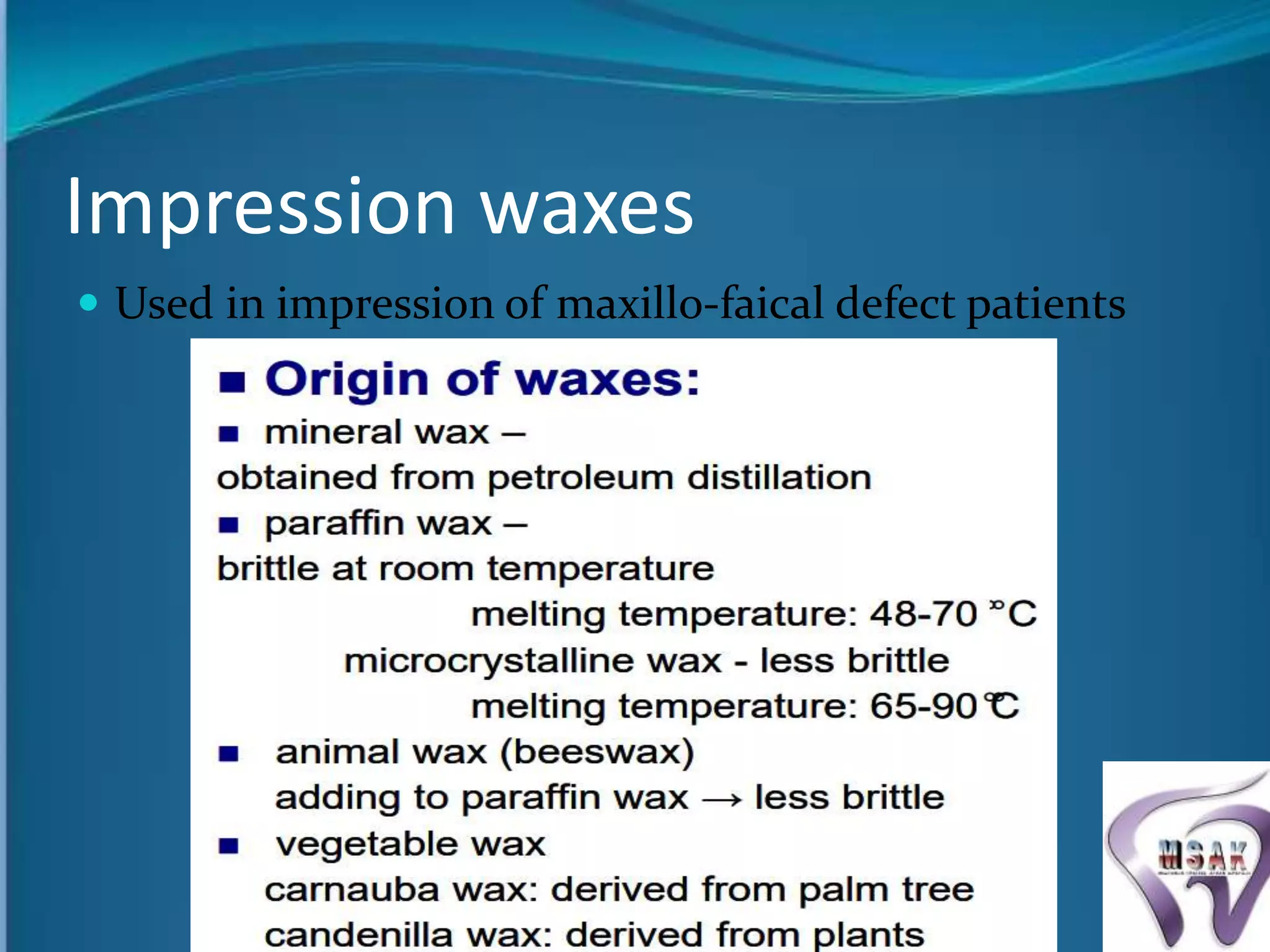
Impression waxes
 Used in impression of maxillo-faical defect patients
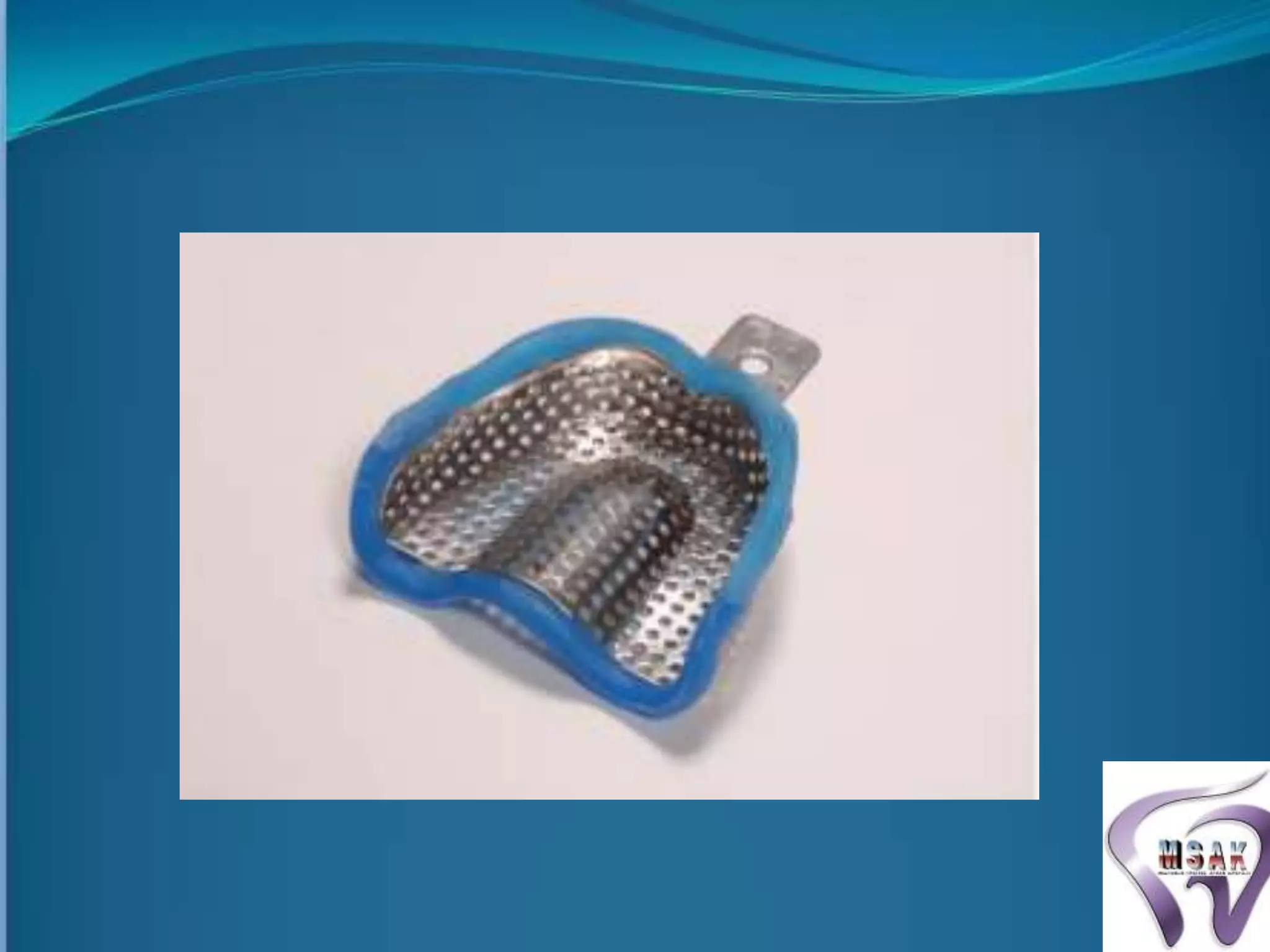
 Periphery wax can be used with all types of impression
materials for making wax stops, post-damming and
lining the periphery of trays. Surgident Periphery wax
is a soft, tacky wax that is easily shaped at room
temperature.
Non elastic/ rigid impression materials

Non elastic/ rigid impression materials

  • 2.
     Four maintypes of products form the group of impression materials classified as non-elastic materials:  Impression compound  Impression plaster  Impression waxes  Zinc Oxide impression pastes = Cavex
  • 3.
  • 5.
    High fusing  Usuallyred color cakes/ discs  Easily breakable – brittle  Material is softened in temp of up to 85ºC  It is kneaded to remove folds and then adapted to tray
  • 10.
    Low fusing  Idealfor recording peripheries in custom trays  Material is softened over flame and applied in a uniform thickness  It must be tempered in hot water bath before placing into patients mouth
  • 12.
     Used tobuild up periphery of stock or custom trays  Material is brought to recordable state by heating over a flame  The soft material is adjusted on the tray periphery then “tempered” in a hot water bath before placing into patients mouth
  • 14.
    ZnO paste  Suppliedas 2 pastes system  White paste – base  Blue paste – initiator, catalyst  This material is used for recording edentulous ridges in a close fitting “custom”/ “special tray” or the patients existing dentures (if they are not be used further). The material is mixed in a 1:1 (equal) paste ratio and used in thin sections only (2-3mm) as a wash impression. Vaseline is used as a separating agent on those areas requiring protection (soft tissues, teeth etc). Firm pressure is used during impression taking.  Also used to check extension of custom tray periphery accurate/ over extended/ under-extended)
  • 15.
     Composition  Thewhite paste  metallic oxides : app. 80 %  vegetable oil : app. 20 % The dark blue paste fatty acid : app. 69 % fillers : app. 21 % natural waxes : app. 3 % organic acid : app. 6 % pigment : < 1 %
  • 23.
    BASE PASTE -white  Zinc oxide  Inert oils (plasticizer)  Hydrogenated resins (increases setting time and improves cohesion) REACTOR PASTE - blue  Zinc acetate (accelerator)  Fillers (talc or kaolin)
  • 24.
    PROPERTIES  Non toxic Adherence to tissues  Mucostatic or muco - displacive (depending on brand used)  Good surface detail in thin section  Good dimensional stability (little or no dimensional change on setting, 0.1% dimensional change during setting)  Can be added to.  Stable on storage and good shelf life
  • 25.
    ADVANTAGES  1. Dimensionalstability 2. Good surface detail 3. Can be added to 4. Mucostatic or muco-displacive DISADVANTAGES  1. Cannot be used in undercuts 2. Only sets quickly in thin section
  • 26.
    Impression plaster  Impressionplaster is similar in composition to the dental plaster used to construct models and dies  It consists of calcined, β-calcium sulphate hemihydrate which when mixed with water reacts to form calcium sulphate dihydrate.  The material is used at a higher water/powder ratio than is normally used for modeling plasters
  • 27.
     Salt canbe added as accelerator  It has mucostatic properties. The setting expansion of dental plaster is reduced to minimal proportions by using anti-expansion agents e.g. Potassium sulphate  Very fine details can be recorded in impression plaster but its use is limited
  • 28.
    Limitations  Cannot beused in undercuts  Easily fractured
  • 29.
    Impression waxes  Usedin impression of maxillo-faical defect patients
  • 32.
     Periphery waxcan be used with all types of impression materials for making wax stops, post-damming and lining the periphery of trays. Surgident Periphery wax is a soft, tacky wax that is easily shaped at room temperature.