
R. PUSHPAKALAMBIGA,
M.SC (NURSING)1ST YEAR,
DEPT OF CHN.
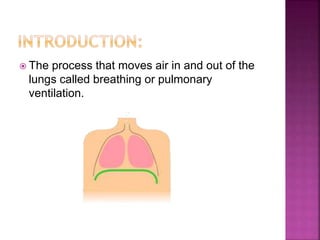
 The process that moves air in and out of the
lungs called breathing or pulmonary
ventilation.
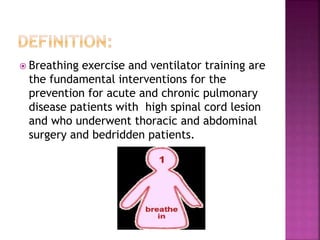
 Breathing exercise and ventilator training are
the fundamental interventions for the
prevention for acute and chronic pulmonary
disease patients with high spinal cord lesion
and who underwent thoracic and abdominal
surgery and bedridden patients.
 Improve ventilation.
 Increase the effectiveness of cough and
promote airway clearance
 To prevent post operative pulmonary
complications
 Maintain and improve chest and thoracic
spine mobility
 Promote relaxation and relive stress
 To teach the patient how to deal with
episodes of dyspnea.
 Assisting in removal of secretions.
 Correct abnormal breathing pattern and
decrease the work of breathing.
 Area of exercises
 Explanation and instruction to the patient
 Patients position
 Evaluate the patient
 Demonstration the exercise
 Patient practice
 Cystic fibrosis
 Bronchietasis
 Atelectasis
 Lung abscess
 Pneumonias
 Acute lung disease
 Copd
 After surgery (thoracic/ abdominal surgery)
 Severe pain and discomfort
 Acute medical or surgical emergency
 Patient with reduced conscious level
 Increases ICP
 Unstable head or neck injury
 Uncontrolled hypertension.
 Anticoagulation
 Rib or vertebral fractures
 Acute asthma
 Patients who have recently experienced a
heart attack
 Recent meal or tube feed
 Untreated pneumothorax
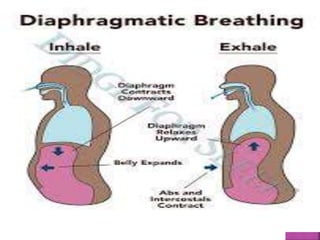
 Diaphragmatic breathing
 Glossophryngeal breathing
 Pursed lip breathing
 Segmental breathing
 Apical breathing
 Lateral costal expansion
 Posterior basal expansion
 Diaphragm is the primary muscle for
breathing
 It controls breathing at an involuntary a
patient with primary pulmonary disease like
COPD
 Prepare the patient in relaxed and comfortable
position in which the gravity assist the
diaphragm such as semifowlers position.
 If you notice any accessory muscle activation
stop him and do relaxation technique
 Place your hands over the rectus abdominis just
below the anterior coastal margin ask the
patient to breath slowly relaxed and deeply via
nose by keeping the shoulder relaxed and upper
chest quiet allowing the abdominal to rise now
ask him to slowly let all the air out using
controlled expiration through mouth.
 Have him to practice this for 2-4 times
 For self monitor have the patients hand over
the anterior costal margin and feel the
movement by placing one hand over
abdomen he can also feel the contraction of
abdominal muscles which occurs with
controlled expiration or coughing.
 After he understands and able to do the
controlled breathing using a diaphragmatic
pattern keep the shoulder relaxed and
practice in varity of positions and during
activity.
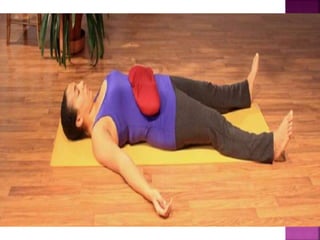
 Use small weight such as sand bag to strengthen
and improve the endurance of the diaphragm
 Have the patient in a head up position
 Place a small weight (1.30-2.20kg) over the
epigastric region of his abdomen
 Tell the patient to breath in deeply while trying
to keep the upper chest quiet
 Gradually increase the time that the patient
breaths against the resistance of weight
 Weight can be increased when he can sustain
diaphragmatic breathing pattern with out the
use of any accessory muscles of inspiration for 15
minutes.
 It is means of increasing a patients
inspiratory capacity when there is a severe
weakness of the muscle of inspiration.
 It is taught to patients who have difficulty in
deep breathing
 It is used primarily for ventilator dependent
patients due to absent or incomplete
innervations of diaphragm because of high
cervical cord injury or neuro muscular
disorders.
Glossopharyngeal breathing with inspiratory
action of neck muscles can reduce
ventilatory dependence or can be used as an
emergency procedure for malfunctioning of
ventilator
 Patient take several gulp of air (6-10) then
by closing the mouth the tomgue pushes the
air back and trap it in the pharynx the air in
the forced to lungs when the glottis is
opened
 This increase the depth of inspiration and
patients inspiratory and vital capacity.
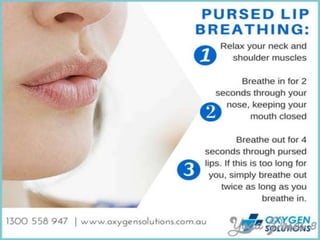
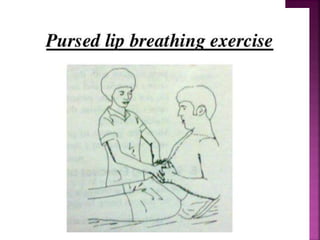
 It is a strategy that involves lightly pursing
the lips together during controlled
exhalation.
 Taught to patients with COPD to deal with
episodes of dyspnea
 It helps to improves ventilation and relaeses
trapped air in the lungs
 Keep the airways open longer and prolonged
exhalation slows the breathing rate.
 It moves old air out of the lungs and allow
new air to the lungs.
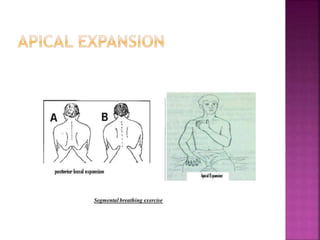
 It is performed on a segment of lung or a
section of chest wall that needs increased
ventilation or movement.
 Hypoventilation occur in certain areas of the
lungs because of chest wall fibrosis, pain
after surgery, trauma to chest wall.
 Therefore it will ne important to emphasize
expansion of such areas of the lungs and
chest wall
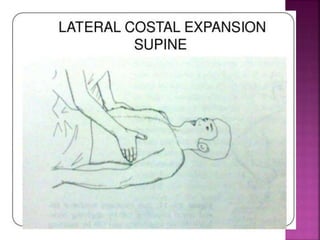
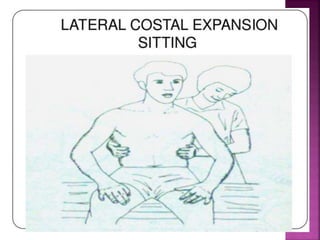
 Lateral coastal expansion
 the patient may be sitting or in a hook lying
position
 Place your hands along the lateral aspect of
the lower ribs
 Ask the patient to breathe out and feel the
rib cage move downward and inward
 As the patient breathes out ,place firm
downward pressure into ribs with the palms
of your hands.
 Have the patient sit and lean forward on a
pillow slightly bending the hips.
 Place the PT hand over the posterior aspect
of the lower rib and do the same procedure
in lateral costal expansion
Breathing exercise
Breathing exercise

Breathing exercise

  • 1.
  • 2.
     The processthat moves air in and out of the lungs called breathing or pulmonary ventilation.
  • 3.
     Breathing exerciseand ventilator training are the fundamental interventions for the prevention for acute and chronic pulmonary disease patients with high spinal cord lesion and who underwent thoracic and abdominal surgery and bedridden patients.
  • 4.
     Improve ventilation. Increase the effectiveness of cough and promote airway clearance  To prevent post operative pulmonary complications  Maintain and improve chest and thoracic spine mobility  Promote relaxation and relive stress
  • 5.
     To teachthe patient how to deal with episodes of dyspnea.  Assisting in removal of secretions.  Correct abnormal breathing pattern and decrease the work of breathing.
  • 6.
     Area ofexercises  Explanation and instruction to the patient  Patients position  Evaluate the patient  Demonstration the exercise  Patient practice
  • 7.
     Cystic fibrosis Bronchietasis  Atelectasis  Lung abscess  Pneumonias  Acute lung disease  Copd  After surgery (thoracic/ abdominal surgery)
  • 8.
     Severe painand discomfort  Acute medical or surgical emergency  Patient with reduced conscious level  Increases ICP  Unstable head or neck injury  Uncontrolled hypertension.
  • 9.
     Anticoagulation  Ribor vertebral fractures  Acute asthma  Patients who have recently experienced a heart attack  Recent meal or tube feed  Untreated pneumothorax
  • 10.
     Diaphragmatic breathing Glossophryngeal breathing  Pursed lip breathing  Segmental breathing  Apical breathing  Lateral costal expansion  Posterior basal expansion
  • 11.
     Diaphragm isthe primary muscle for breathing  It controls breathing at an involuntary a patient with primary pulmonary disease like COPD
  • 12.
     Prepare thepatient in relaxed and comfortable position in which the gravity assist the diaphragm such as semifowlers position.  If you notice any accessory muscle activation stop him and do relaxation technique  Place your hands over the rectus abdominis just below the anterior coastal margin ask the patient to breath slowly relaxed and deeply via nose by keeping the shoulder relaxed and upper chest quiet allowing the abdominal to rise now ask him to slowly let all the air out using controlled expiration through mouth.
  • 13.
     Have himto practice this for 2-4 times  For self monitor have the patients hand over the anterior costal margin and feel the movement by placing one hand over abdomen he can also feel the contraction of abdominal muscles which occurs with controlled expiration or coughing.  After he understands and able to do the controlled breathing using a diaphragmatic pattern keep the shoulder relaxed and practice in varity of positions and during activity.
  • 15.
     Use smallweight such as sand bag to strengthen and improve the endurance of the diaphragm  Have the patient in a head up position  Place a small weight (1.30-2.20kg) over the epigastric region of his abdomen  Tell the patient to breath in deeply while trying to keep the upper chest quiet  Gradually increase the time that the patient breaths against the resistance of weight  Weight can be increased when he can sustain diaphragmatic breathing pattern with out the use of any accessory muscles of inspiration for 15 minutes.
  • 17.
     It ismeans of increasing a patients inspiratory capacity when there is a severe weakness of the muscle of inspiration.  It is taught to patients who have difficulty in deep breathing  It is used primarily for ventilator dependent patients due to absent or incomplete innervations of diaphragm because of high cervical cord injury or neuro muscular disorders.
  • 18.
    Glossopharyngeal breathing withinspiratory action of neck muscles can reduce ventilatory dependence or can be used as an emergency procedure for malfunctioning of ventilator
  • 19.
     Patient takeseveral gulp of air (6-10) then by closing the mouth the tomgue pushes the air back and trap it in the pharynx the air in the forced to lungs when the glottis is opened  This increase the depth of inspiration and patients inspiratory and vital capacity.
  • 20.
     It isa strategy that involves lightly pursing the lips together during controlled exhalation.  Taught to patients with COPD to deal with episodes of dyspnea  It helps to improves ventilation and relaeses trapped air in the lungs  Keep the airways open longer and prolonged exhalation slows the breathing rate.  It moves old air out of the lungs and allow new air to the lungs.
  • 23.
     It isperformed on a segment of lung or a section of chest wall that needs increased ventilation or movement.  Hypoventilation occur in certain areas of the lungs because of chest wall fibrosis, pain after surgery, trauma to chest wall.  Therefore it will ne important to emphasize expansion of such areas of the lungs and chest wall
  • 24.
     Lateral coastalexpansion  the patient may be sitting or in a hook lying position  Place your hands along the lateral aspect of the lower ribs  Ask the patient to breathe out and feel the rib cage move downward and inward  As the patient breathes out ,place firm downward pressure into ribs with the palms of your hands.
  • 27.
     Have thepatient sit and lean forward on a pillow slightly bending the hips.  Place the PT hand over the posterior aspect of the lower rib and do the same procedure in lateral costal expansion