Dr. Kapil Rastogi
MPT
(Cardiopulmonary)
Breathing exercises
Breathing exercises
 Breathing exercises and ventilatory training are
fundamental interventions for the prevention or
comprehensive management of impairments related to
acute or chronic pulmonary disorders.
Muscle of inspiration & expiration
 Inspiratory
 Diaphragm
 Scalene
 Sternocleidomastoid
 Serratus anterior
 External intercostal
 Expiratory
 External oblique
 Rectoabdominal
 Internal oblique
 Transverse abodomial
Principles of breathing exercise
Area of exercise
Explanation & instructions to the patient
Patient’s position
Evaluate the patient
Demonstration of exercise
Patient practice
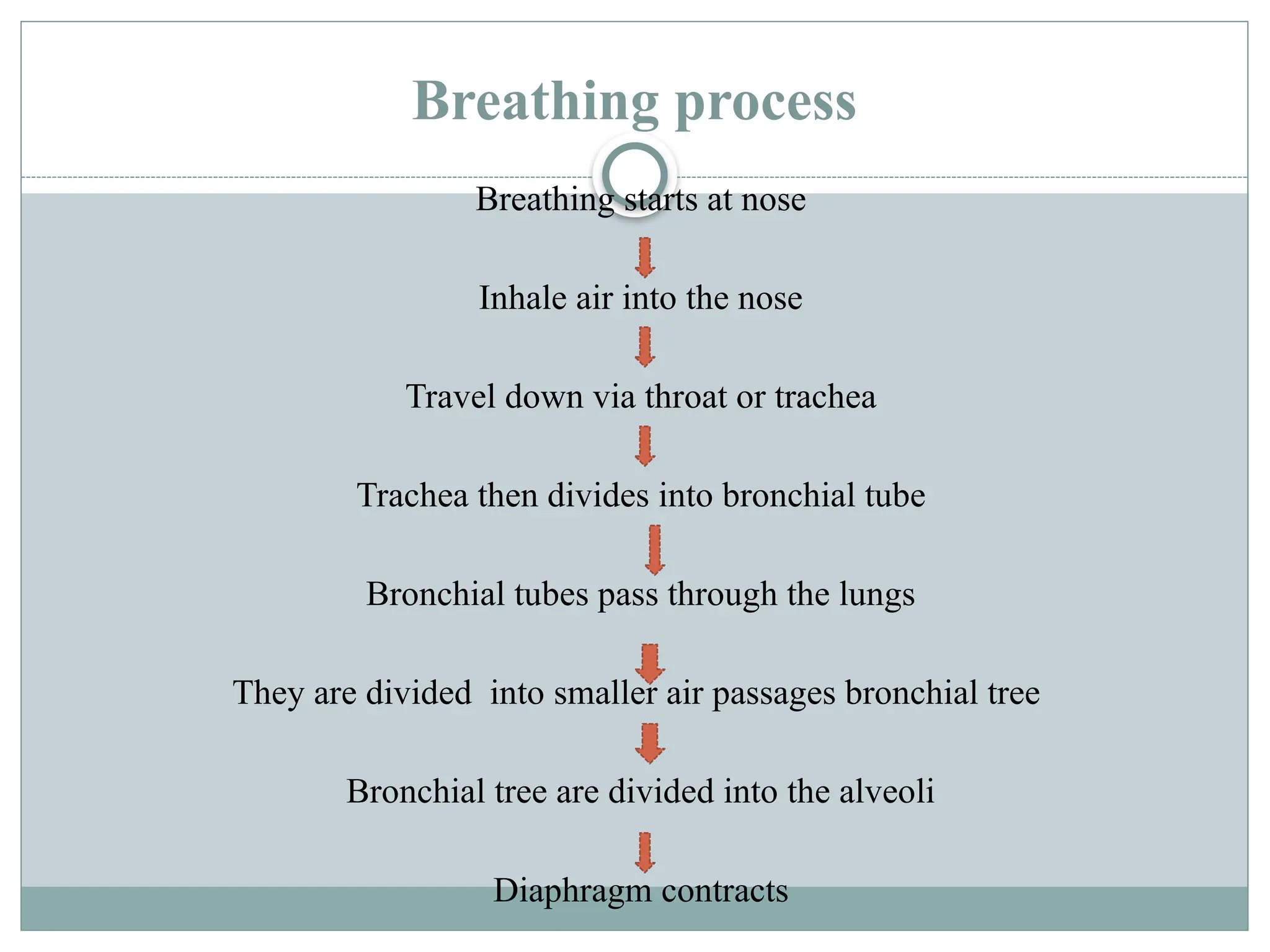
Breathing process
Breathing starts at nose
Inhale air into the nose
Travel down via throat or trachea
Trachea then divides into bronchial tube
Bronchial tubes pass through the lungs
They are divided into smaller air passages bronchial tree
Bronchial tree are divided into the alveoli
Diaphragm contracts
Aims
 To strengthen the muscles of respiration
 To improve ventilation
 To improve oxygenation
 To improve gas exchange
 To lessen the work of the breathing
 To facilitate deep breathing
 To stimulate the cough reflex
 To improve pulmonary status
 To improve patients overall endurance
 To promote relaxation
 To prevent pulmonary impairment
 To improve patients overall functional capacity
Precautions
 Never allow a patient to force expiration.
 Expiration should be relaxed or lightly controlled
 Do not allow a patient to take a highly prolonged
expiration.
 This causes the patient to gasp with the next inspiration.
 Advise the patient that the upper chest should be
relatively quiet during breathing.
 Allow the patient to perform deep breathing for only
three or four inspirations and expirations at a time to
avoid hyperventilation
Types of breathing exercises
 Diaphragmatic breathing
 Glossophryneal breathing
 Pursed lip breathing
 Segmental breathing (costal expansion exercise)
a) Apical breathing
b) Lateral costal expansion
c) Posterior basal expansion
Diaphragmatic breathing
‘Diaphragmatic’ breathing concentrates on forward
movement of the whole abdominal wall. The diaphragm is
the main muscle of respiration.
 Techniques
Therapist hands should be placed on the rectus abdominis
just below the anterior costal margin.
 Ask the patient to breathe in slowly and deeply manner
through the nose.
 After that, ask the patient to slowly let all the air out
using controlled expiration.
Diaphragmatic breathing
Glossopharygeal breathing
It is a means of increasing a patients inspiratory capacity
when there is a severe weakness of the muscle of
inspiration
 Techniques
Ask the patient to takes in several “gulps” of air.
After that closes the mouth and pushes the tongue, so air
in back and traps in the pharynx.
Suddenly open the glottis.
Pursed-lip breathing
Pursed-lip breathing is a strategy that involves lightly
pursing the lips together during controlled exhalation.
 Techniques
Ask the patient for slow and deep breathing.
Then have the patient loosely purse the lips and exhale.
Segmental breathing
It is performed on a segment of lung, or a section of chest
wall that needs increased ventilation or movement.
 Apical breathing
 Techniques
Therapist applied pressure, below the clavicle using the
tips of fingers.
Ask the patients to breathe in and expand the chest
upwards against pressure.
Posterior basal segment
This form of segmental breathing is important for post
surgical patients.
 Techniques
Therapist should place hands over the posterior aspect of
the lower ribs.
Follow the same technique just described for lateral costal
expansion
Lateral costal expansion
Lateral basal segment and may done unilaterally or
bilaterally.
 Techniques
Therapist hand should be placed in the mid axillary line
over the 7th and 8th ribs.
Ask the patient to relax and breathe out.
At the end of expiration, therapist should apply firm
pressure against chest and ask the patients, to expand the
lower ribs against his/her hand with next inspiration.
Indication
Pre and post-operative cardiac surgery conditions
Acute lung diseases
Chronic lung conditions
Spinal cord injury
Muscular dystrophy
Kyphosis
Scoliosis
Stress management
Relaxation.
Contraindication
 Severe pain and discomfort
 Patients with reduced conscious level
 Increased ICP
 Unstable head or neck injury
 Flail chest
 Acute asthma or TB
 Patients with skin grafts
 Untreated pneumothorax
 Haemoptysis
 Pleuritic pain
 Osteoporosis.
Thank you

Breathing exercises physiotherapy 1.pptx

  • 1.
  • 2.
    Breathing exercises  Breathingexercises and ventilatory training are fundamental interventions for the prevention or comprehensive management of impairments related to acute or chronic pulmonary disorders.
  • 3.
    Muscle of inspiration& expiration  Inspiratory  Diaphragm  Scalene  Sternocleidomastoid  Serratus anterior  External intercostal  Expiratory  External oblique  Rectoabdominal  Internal oblique  Transverse abodomial
  • 4.
    Principles of breathingexercise Area of exercise Explanation & instructions to the patient Patient’s position Evaluate the patient Demonstration of exercise Patient practice
  • 5.
    Breathing process Breathing startsat nose Inhale air into the nose Travel down via throat or trachea Trachea then divides into bronchial tube Bronchial tubes pass through the lungs They are divided into smaller air passages bronchial tree Bronchial tree are divided into the alveoli Diaphragm contracts
  • 7.
    Aims  To strengthenthe muscles of respiration  To improve ventilation  To improve oxygenation  To improve gas exchange  To lessen the work of the breathing  To facilitate deep breathing  To stimulate the cough reflex  To improve pulmonary status  To improve patients overall endurance  To promote relaxation  To prevent pulmonary impairment  To improve patients overall functional capacity
  • 8.
    Precautions  Never allowa patient to force expiration.  Expiration should be relaxed or lightly controlled  Do not allow a patient to take a highly prolonged expiration.  This causes the patient to gasp with the next inspiration.  Advise the patient that the upper chest should be relatively quiet during breathing.  Allow the patient to perform deep breathing for only three or four inspirations and expirations at a time to avoid hyperventilation
  • 9.
    Types of breathingexercises  Diaphragmatic breathing  Glossophryneal breathing  Pursed lip breathing  Segmental breathing (costal expansion exercise) a) Apical breathing b) Lateral costal expansion c) Posterior basal expansion
  • 10.
    Diaphragmatic breathing ‘Diaphragmatic’ breathingconcentrates on forward movement of the whole abdominal wall. The diaphragm is the main muscle of respiration.  Techniques Therapist hands should be placed on the rectus abdominis just below the anterior costal margin.  Ask the patient to breathe in slowly and deeply manner through the nose.  After that, ask the patient to slowly let all the air out using controlled expiration.
  • 11.
  • 12.
    Glossopharygeal breathing It isa means of increasing a patients inspiratory capacity when there is a severe weakness of the muscle of inspiration  Techniques Ask the patient to takes in several “gulps” of air. After that closes the mouth and pushes the tongue, so air in back and traps in the pharynx. Suddenly open the glottis.
  • 14.
    Pursed-lip breathing Pursed-lip breathingis a strategy that involves lightly pursing the lips together during controlled exhalation.  Techniques Ask the patient for slow and deep breathing. Then have the patient loosely purse the lips and exhale.
  • 16.
    Segmental breathing It isperformed on a segment of lung, or a section of chest wall that needs increased ventilation or movement.  Apical breathing  Techniques Therapist applied pressure, below the clavicle using the tips of fingers. Ask the patients to breathe in and expand the chest upwards against pressure.
  • 19.
    Posterior basal segment Thisform of segmental breathing is important for post surgical patients.  Techniques Therapist should place hands over the posterior aspect of the lower ribs. Follow the same technique just described for lateral costal expansion
  • 20.
    Lateral costal expansion Lateralbasal segment and may done unilaterally or bilaterally.  Techniques Therapist hand should be placed in the mid axillary line over the 7th and 8th ribs. Ask the patient to relax and breathe out. At the end of expiration, therapist should apply firm pressure against chest and ask the patients, to expand the lower ribs against his/her hand with next inspiration.
  • 22.
    Indication Pre and post-operativecardiac surgery conditions Acute lung diseases Chronic lung conditions Spinal cord injury Muscular dystrophy Kyphosis Scoliosis Stress management Relaxation.
  • 23.
    Contraindication  Severe painand discomfort  Patients with reduced conscious level  Increased ICP  Unstable head or neck injury  Flail chest  Acute asthma or TB  Patients with skin grafts  Untreated pneumothorax  Haemoptysis  Pleuritic pain  Osteoporosis.
  • 24.