Brand Architecture
Strategy
Prepared By : Ana Jelveh
Types of Brand Architecture Structures
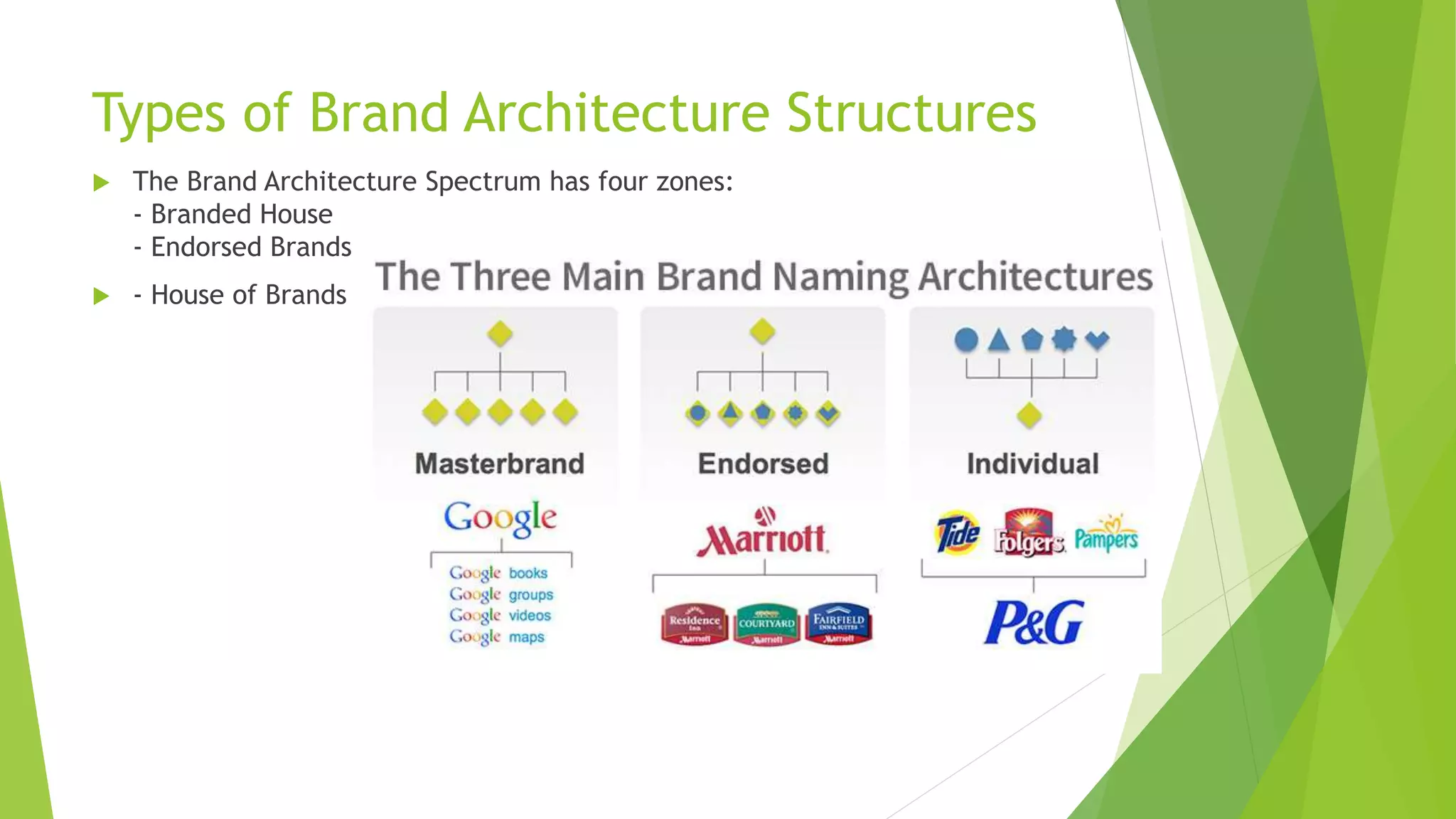
 The Brand Architecture Spectrum has four zones:
- Branded House
- Endorsed Brands
 - House of Brands
Branded House Variations
 A Masterbrand structure is characterised by a single, recognizable brand
name that aligns individual products under the corporate entity’s brand
positioning. These products typically span multiple product categories (Eg:
FedEx).
Branded House
Endorsed Brand
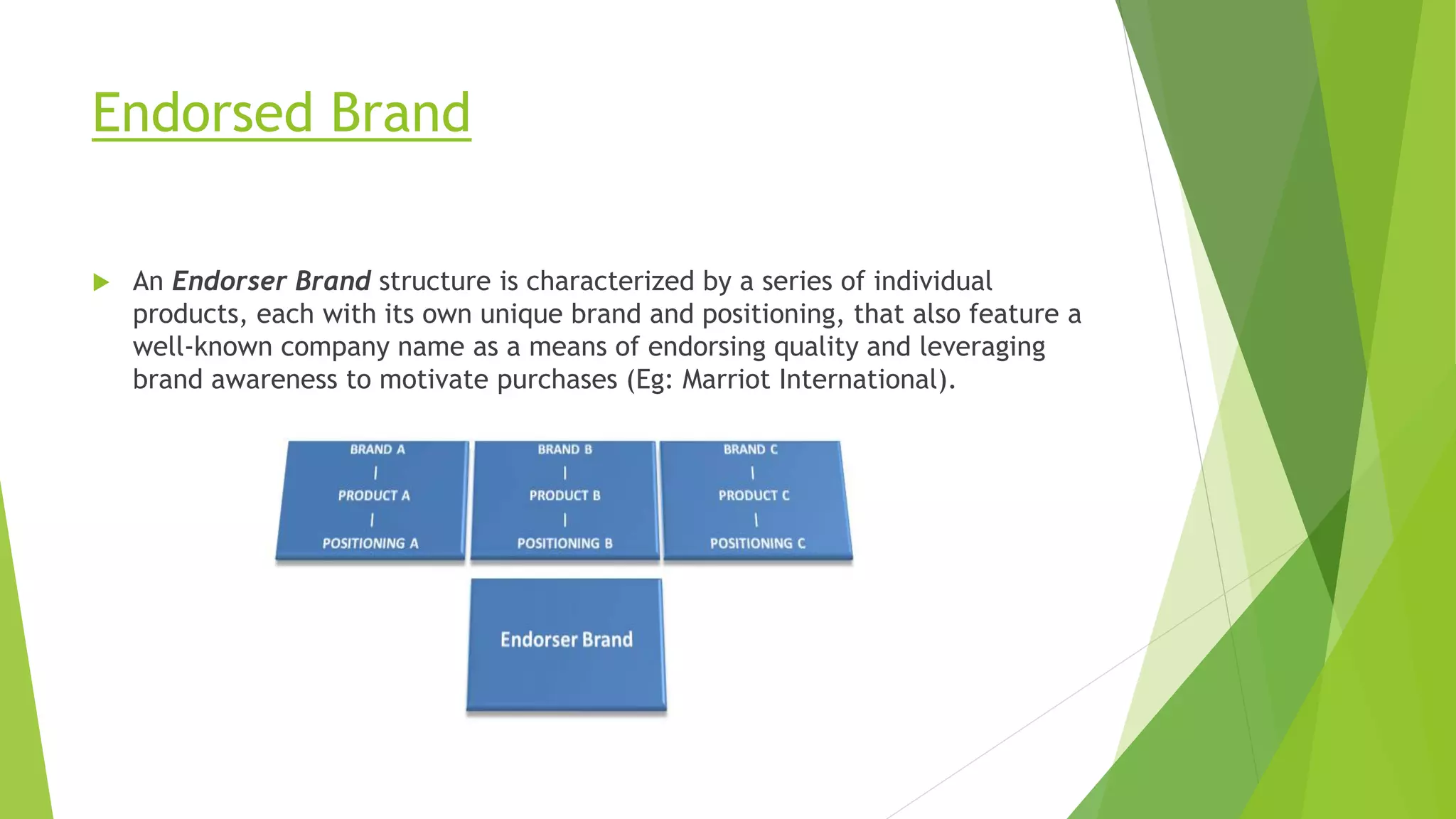
 An Endorser Brand structure is characterized by a series of individual
products, each with its own unique brand and positioning, that also feature a
well-known company name as a means of endorsing quality and leveraging
brand awareness to motivate purchases (Eg: Marriot International).
Endorsed Brand
House of Brands
 A Product/Service Brand structure is characterized by uniquely branded
product lines, each with their own unique positioning, where no equity or
awareness is leveraged from the parent corporate brand i.e. it remains
hidden (Eg: Procter & Gamble).
House of Brands
Key Steps to defining right brand
strategy
Example:
Its your time !
Clarify below items together:
 Value proposition
 Meaningful and actionable segmentation
 Relevant brand pillars
 Key brand benefits
 Portfolio domains
 Service offering
 Compelling RTBs (reasons-to-believe)
Its time to find expansion reason
 1. What is the purpose of adding the brand?
2. How does this expansion align with our growth and business strategies?
3. Is our parent brand strong enough and stable enough to add another brand
to our portfolio?
4. Why will this additional brand succeed?
5. How will the addition of this brand help to strengthen relationships with
customers and partners?
6. How will the addition of this brand make us more attractive to investors?
7. How will the brand and its relationship to the parent brand be introduced
to employees, customers and our partners?
8. What is the brand strategy behind this expansion?
9. What is the marketing strategy behind this expansion?
10. What are the risks if the expansion fails?
11. What is our brand recovery strategy if the expansion fails?
 12.How much is our budget for introducing this new brand?
Benchmarking in Education Category
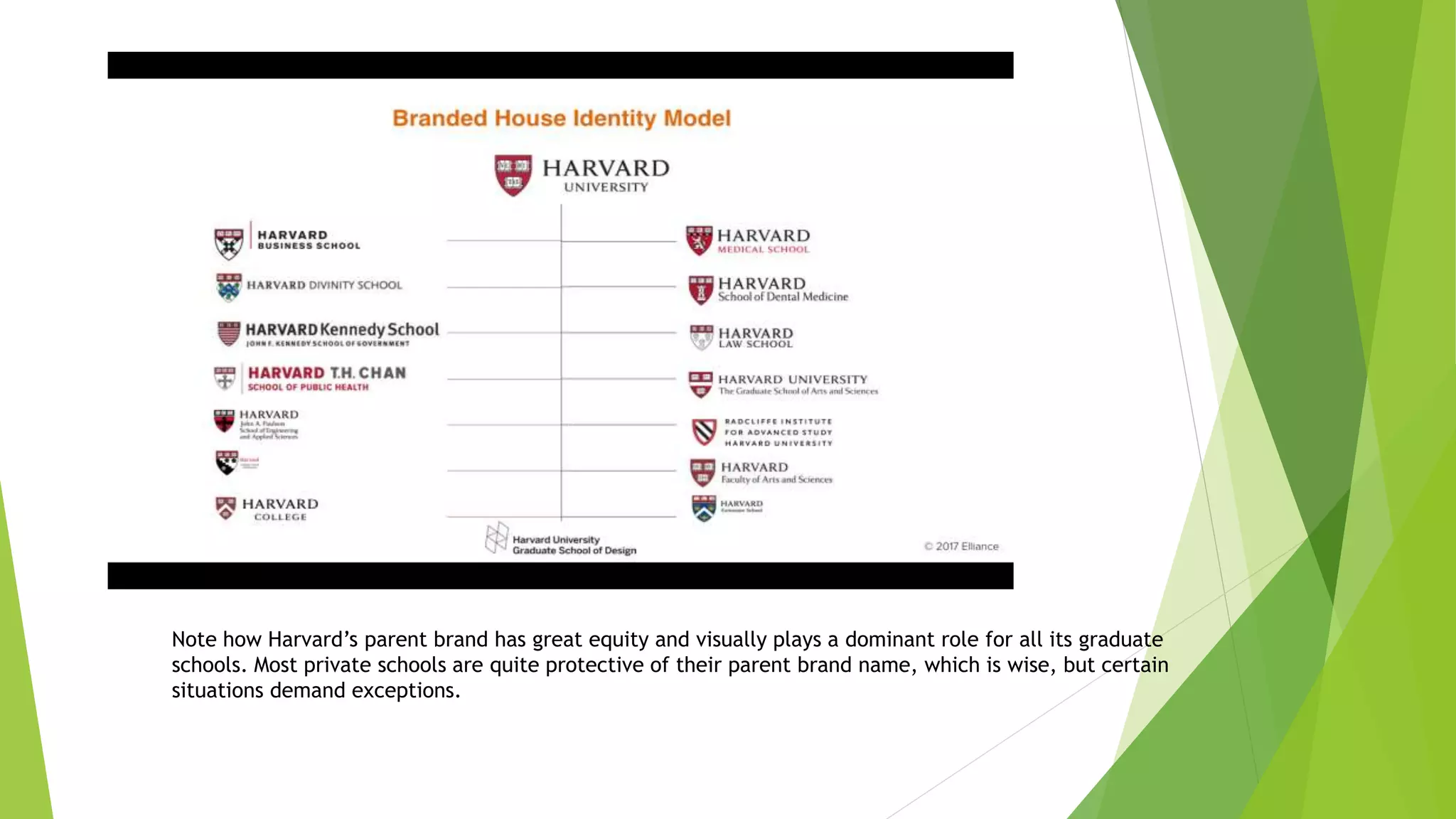
Note how Harvard’s parent brand has great equity and visually plays a dominant role for all its graduate
schools. Most private schools are quite protective of their parent brand name, which is wise, but certain
situations demand exceptions.
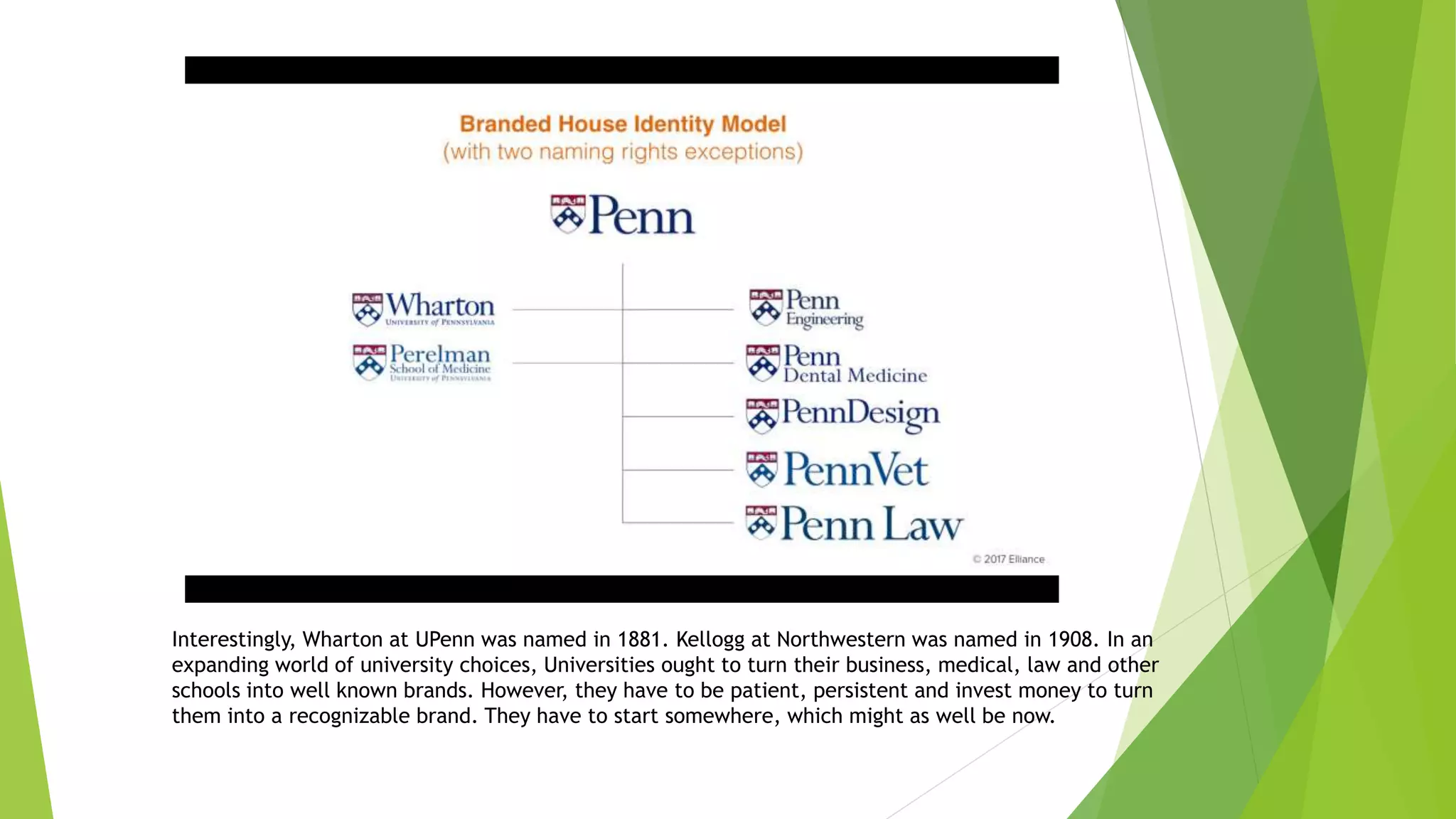
Interestingly, Wharton at UPenn was named in 1881. Kellogg at Northwestern was named in 1908. In an
expanding world of university choices, Universities ought to turn their business, medical, law and other
schools into well known brands. However, they have to be patient, persistent and invest money to turn
them into a recognizable brand. They have to start somewhere, which might as well be now.
The for-profit schools, driven by efficiency and effectiveness, are usually quite smart and create a
portfolio of non-overlapping brands. They try to buy/operate their brand portfolios in different markets,
different segments, and own different positions.
Unlike for-profits, public university systems were historically restricted to operate within a state and
their portfolio of overlapping brand overlapped with each other significantly. However, that’s changing
fast as more of them are being unfettered due to cuts in state support. Increasingly, we are seeing them
operate like private colleges and universities – unafraid to cross state and country boundaries.
Interesting times ahead.

Brand architecture strategy

  • 1.
  • 2.
    Types of BrandArchitecture Structures  The Brand Architecture Spectrum has four zones: - Branded House - Endorsed Brands  - House of Brands
  • 3.
    Branded House Variations A Masterbrand structure is characterised by a single, recognizable brand name that aligns individual products under the corporate entity’s brand positioning. These products typically span multiple product categories (Eg: FedEx).
  • 4.
  • 5.
    Endorsed Brand  AnEndorser Brand structure is characterized by a series of individual products, each with its own unique brand and positioning, that also feature a well-known company name as a means of endorsing quality and leveraging brand awareness to motivate purchases (Eg: Marriot International).
  • 6.
  • 7.
    House of Brands A Product/Service Brand structure is characterized by uniquely branded product lines, each with their own unique positioning, where no equity or awareness is leveraged from the parent corporate brand i.e. it remains hidden (Eg: Procter & Gamble).
  • 8.
  • 9.
    Key Steps todefining right brand strategy
  • 11.
  • 12.
  • 13.
    Clarify below itemstogether:  Value proposition  Meaningful and actionable segmentation  Relevant brand pillars  Key brand benefits  Portfolio domains  Service offering  Compelling RTBs (reasons-to-believe)
  • 14.
    Its time tofind expansion reason
  • 15.
     1. Whatis the purpose of adding the brand? 2. How does this expansion align with our growth and business strategies? 3. Is our parent brand strong enough and stable enough to add another brand to our portfolio? 4. Why will this additional brand succeed? 5. How will the addition of this brand help to strengthen relationships with customers and partners? 6. How will the addition of this brand make us more attractive to investors? 7. How will the brand and its relationship to the parent brand be introduced to employees, customers and our partners? 8. What is the brand strategy behind this expansion? 9. What is the marketing strategy behind this expansion? 10. What are the risks if the expansion fails? 11. What is our brand recovery strategy if the expansion fails?  12.How much is our budget for introducing this new brand?
  • 16.
  • 17.
    Note how Harvard’sparent brand has great equity and visually plays a dominant role for all its graduate schools. Most private schools are quite protective of their parent brand name, which is wise, but certain situations demand exceptions.
  • 18.
    Interestingly, Wharton atUPenn was named in 1881. Kellogg at Northwestern was named in 1908. In an expanding world of university choices, Universities ought to turn their business, medical, law and other schools into well known brands. However, they have to be patient, persistent and invest money to turn them into a recognizable brand. They have to start somewhere, which might as well be now.
  • 19.
    The for-profit schools,driven by efficiency and effectiveness, are usually quite smart and create a portfolio of non-overlapping brands. They try to buy/operate their brand portfolios in different markets, different segments, and own different positions.
  • 20.
    Unlike for-profits, publicuniversity systems were historically restricted to operate within a state and their portfolio of overlapping brand overlapped with each other significantly. However, that’s changing fast as more of them are being unfettered due to cuts in state support. Increasingly, we are seeing them operate like private colleges and universities – unafraid to cross state and country boundaries. Interesting times ahead.