ARVINDPANDEY
MCA 5TH SEM.
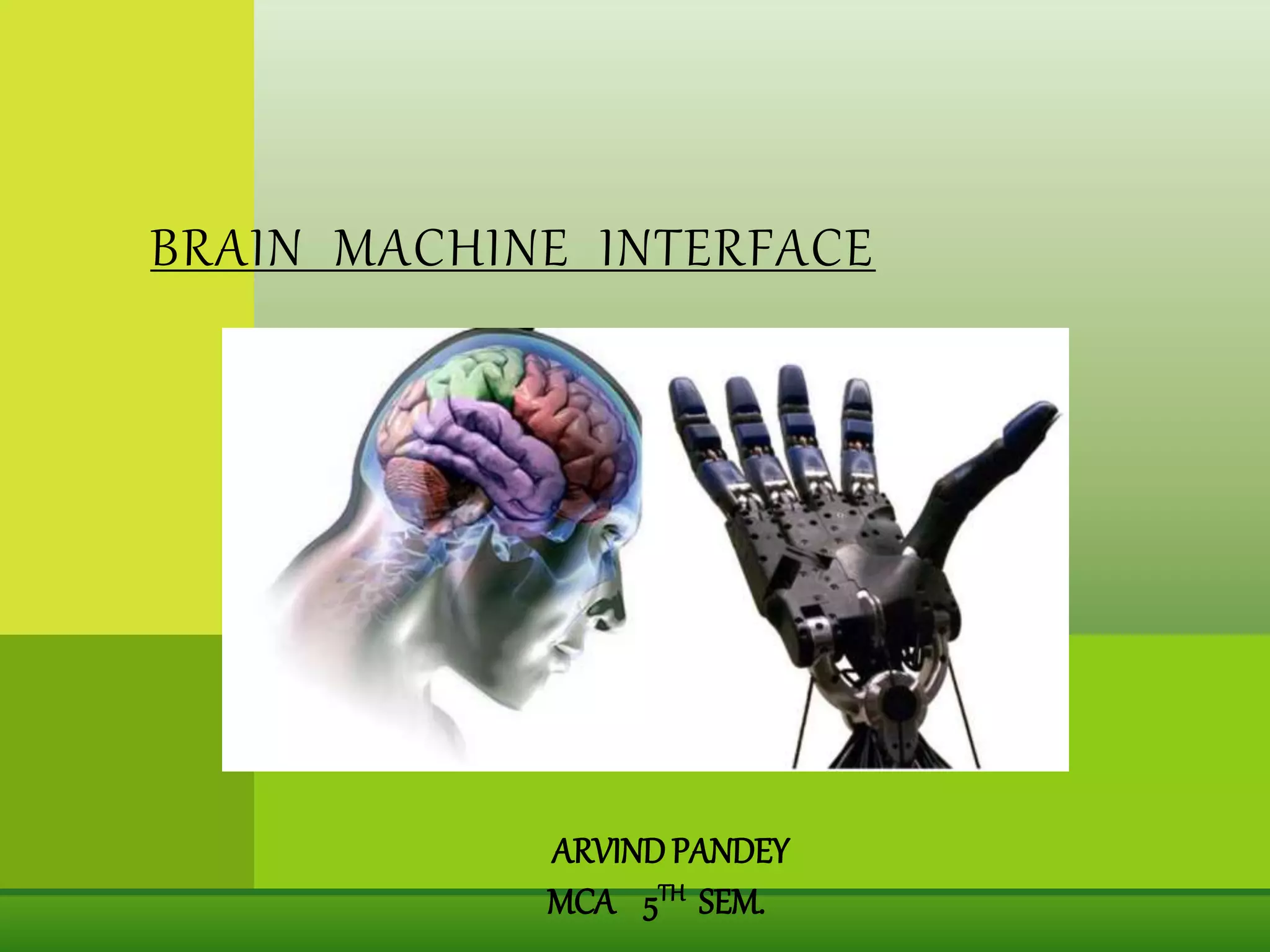
BRAIN MACHINE INTERFACE
 WHAT IS BRAIN MACHINE INTERFACE
 NEED OF BRAIN MACHINE INTERFACE
 MAIN PRINCIPLE AND WORKING
 CHALLENGES
 FUTURE EXPANSION
INTRODUCTION
 Brain machine interface has several name like direct
neural interface , brain–computer interface and it is a
direct communication link between a brain and the
outside world.
 BMI uses brain activity to command, control, activate
and communicate with the world by using peripheral
devices and systems.
UNDERSTANDING
BMI
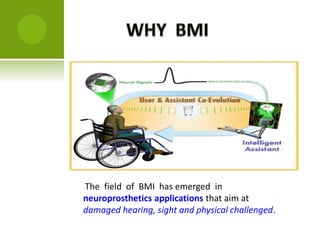
The field of BMI has emerged in
neuroprosthetics applications that aim at
damaged hearing, sight and physical challenged.
BMI PLATFORM
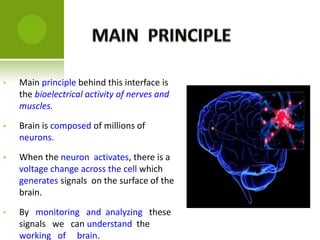
• Main principle behind this interface is
the bioelectrical activity of nerves and
muscles.
• Brain is composed of millions of
neurons.
• When the neuron activates, there is a
voltage change across the cell which
generates signals on the surface of the
brain.
• By monitoring and analyzing these
signals we can understand the
working of brain.
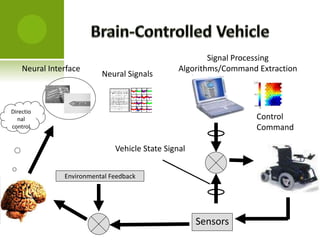
Neural Interface
Neural Signals
Signal Processing
Algorithms/Command Extraction
Control
Command
Vehicle State Signal
Sensors
Environmental Feedback
Directio
nal
control
BLOCK DIAGRAM
 IMPLANT DEVICE
 SIGNAL PROCESSING SECTION
 EXTERNAL DEVICE
 FEEDBACK SECTION
 Multichannel Acquisition Systems
 Spike Detection
 Signal Analysis
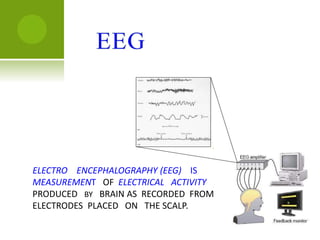
ELECTRO ENCEPHALOGRAPHY (EEG) IS
MEASUREMENT OF ELECTRICAL ACTIVITY
PRODUCED BY BRAIN AS RECORDED FROM
ELECTRODES PLACED ON THE SCALP.
IMPLANT DEVICE
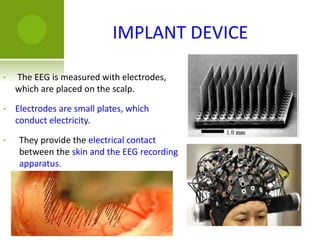
• The EEG is measured with electrodes,
which are placed on the scalp.
• Electrodes are small plates, which
conduct electricity.
• They provide the electrical contact
between the skin and the EEG recording
apparatus.
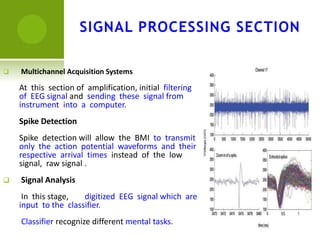
 Multichannel Acquisition Systems
At this section of amplification, initial filtering
of EEG signal and sending these signal from
instrument into a computer.
Spike Detection
Spike detection will allow the BMI to transmit
only the action potential waveforms and their
respective arrival times instead of the low
signal, raw signal .
 Signal Analysis
In this stage, digitized EEG signal which are
input to the classifier.
Classifier recognize different mental tasks.
SIGNAL PROCESSING SECTION
 EXTERNAL DEVICE
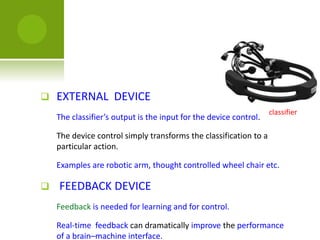
The classifier’s output is the input for the device control.
The device control simply transforms the classification to a
particular action.
Examples are robotic arm, thought controlled wheel chair etc.
 FEEDBACK DEVICE
Feedback is needed for learning and for control.
Real-time feedback can dramatically improve the performance
of a brain–machine interface.
classifier
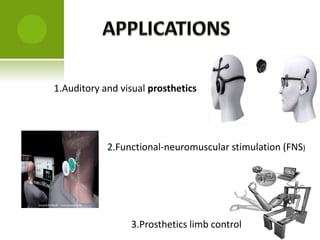
1.Auditory and visual prosthetics
2.Functional-neuromuscular stimulation (FNS)
3.Prosthetics limb control
CHALLENGES
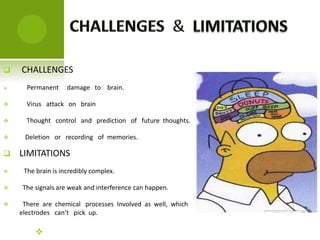
 CHALLENGES
 Permanent damage to brain.
 Virus attack on brain
 Thought control and prediction of future thoughts.
 Deletion or recording of memories.
 LIMITATIONS
 The brain is incredibly complex.
 The signals are weak and interference can happen.
 There are chemical processes Involved as well, which
electrodes can’t pick up.

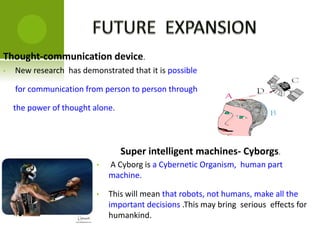
Thought-communication device.
Super intelligent machines- Cyborgs.
• New research has demonstrated that it is possible
for communication from person to person through
the power of thought alone.
• A Cyborg is a Cybernetic Organism, human part
machine.
• This will mean that robots, not humans, make all the
important decisions .This may bring serious effects for
humankind.
THANK YOU !!!
ANY QUERIES??

brain.ppts

  • 1.
  • 2.
     WHAT ISBRAIN MACHINE INTERFACE  NEED OF BRAIN MACHINE INTERFACE  MAIN PRINCIPLE AND WORKING  CHALLENGES  FUTURE EXPANSION
  • 3.
  • 4.
     Brain machineinterface has several name like direct neural interface , brain–computer interface and it is a direct communication link between a brain and the outside world.  BMI uses brain activity to command, control, activate and communicate with the world by using peripheral devices and systems. UNDERSTANDING BMI
  • 5.
    The field ofBMI has emerged in neuroprosthetics applications that aim at damaged hearing, sight and physical challenged.
  • 6.
  • 7.
    • Main principlebehind this interface is the bioelectrical activity of nerves and muscles. • Brain is composed of millions of neurons. • When the neuron activates, there is a voltage change across the cell which generates signals on the surface of the brain. • By monitoring and analyzing these signals we can understand the working of brain.
  • 8.
    Neural Interface Neural Signals SignalProcessing Algorithms/Command Extraction Control Command Vehicle State Signal Sensors Environmental Feedback Directio nal control
  • 9.
    BLOCK DIAGRAM  IMPLANTDEVICE  SIGNAL PROCESSING SECTION  EXTERNAL DEVICE  FEEDBACK SECTION  Multichannel Acquisition Systems  Spike Detection  Signal Analysis
  • 10.
    ELECTRO ENCEPHALOGRAPHY (EEG)IS MEASUREMENT OF ELECTRICAL ACTIVITY PRODUCED BY BRAIN AS RECORDED FROM ELECTRODES PLACED ON THE SCALP.
  • 11.
    IMPLANT DEVICE • TheEEG is measured with electrodes, which are placed on the scalp. • Electrodes are small plates, which conduct electricity. • They provide the electrical contact between the skin and the EEG recording apparatus.
  • 12.
     Multichannel AcquisitionSystems At this section of amplification, initial filtering of EEG signal and sending these signal from instrument into a computer. Spike Detection Spike detection will allow the BMI to transmit only the action potential waveforms and their respective arrival times instead of the low signal, raw signal .  Signal Analysis In this stage, digitized EEG signal which are input to the classifier. Classifier recognize different mental tasks. SIGNAL PROCESSING SECTION
  • 13.
     EXTERNAL DEVICE Theclassifier’s output is the input for the device control. The device control simply transforms the classification to a particular action. Examples are robotic arm, thought controlled wheel chair etc.  FEEDBACK DEVICE Feedback is needed for learning and for control. Real-time feedback can dramatically improve the performance of a brain–machine interface. classifier
  • 14.
    1.Auditory and visualprosthetics 2.Functional-neuromuscular stimulation (FNS) 3.Prosthetics limb control
  • 15.
  • 16.
     CHALLENGES  Permanentdamage to brain.  Virus attack on brain  Thought control and prediction of future thoughts.  Deletion or recording of memories.  LIMITATIONS  The brain is incredibly complex.  The signals are weak and interference can happen.  There are chemical processes Involved as well, which electrodes can’t pick up. 
  • 17.
    Thought-communication device. Super intelligentmachines- Cyborgs. • New research has demonstrated that it is possible for communication from person to person through the power of thought alone. • A Cyborg is a Cybernetic Organism, human part machine. • This will mean that robots, not humans, make all the important decisions .This may bring serious effects for humankind.
  • 18.