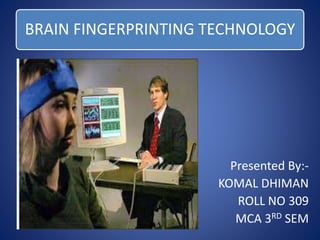
BRAIN FINGERPRINTING TECHNOLOGY 
Presented By:- 
KOMAL DHIMAN 
ROLL NO 309 
MCA 3RD SEM
INTRODUCTION 
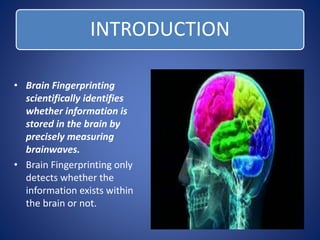
• Brain Fingerprinting 
scientifically identifies 
whether information is 
stored in the brain by 
precisely measuring 
brainwaves. 
• Brain Fingerprinting only 
detects whether the 
information exists within 
the brain or not.
WHY IS IT NAMED SO? 
Brain fingerprinting was so named because like 
fingerprinting it detects a match between 
evidence from the crime scene and evidence on 
the person of the suspect.
HISTORY 
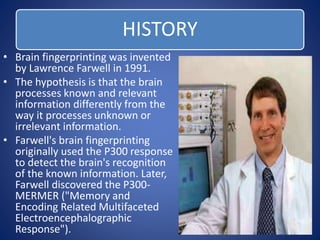
• Brain fingerprinting was invented 
by Lawrence Farwell in 1991. 
• The hypothesis is that the brain 
processes known and relevant 
information differently from the 
way it processes unknown or 
irrelevant information. 
• Farwell's brain fingerprinting 
originally used the P300 response 
to detect the brain's recognition 
of the known information. Later, 
Farwell discovered the P300- 
MERMER ("Memory and 
Encoding Related Multifaceted 
Electroencephalographic 
Response").
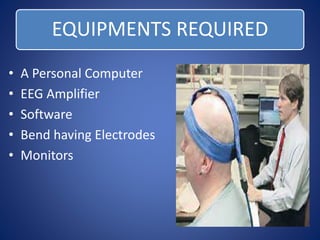
EQUIPMENTS REQUIRED 
• A Personal Computer 
• EEG Amplifier 
• Software 
• Bend having Electrodes 
• Monitors
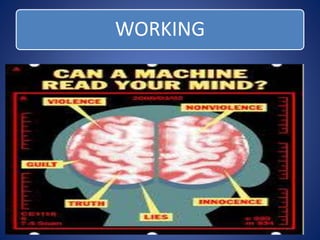
WORKING
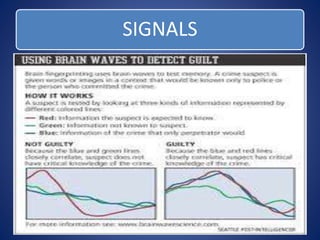
SIGNALS
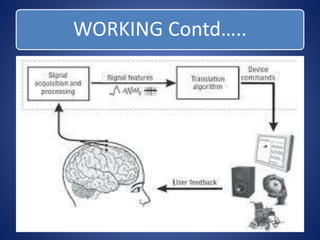
WORKING Contd…..
APPLICATIONS 
• NATIONAL SECURITY 
• LAW ENFORCEMENT 
• BORDER SECURITY 
• HUMAN AND DRUG TRAFFICING 
• IMMIGRATION
ADVANTAGES 
• A powerful and proven forensic tool 
• Fast and cost-effective way to determine the truth 
• Identifies the guilty…exonerates the innocent. 
• Differs from polygraph and other lie detector tests 
• Over 99% accuracy 
• Highly scientific 
• Virtually eliminates deception 
• Far more accurate than a polygraph
SUCCESS STORIES 
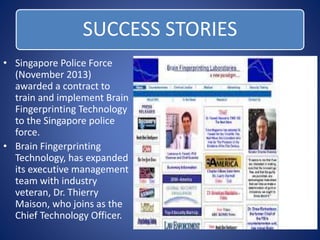
• Singapore Police Force 
(November 2013) 
awarded a contract to 
train and implement Brain 
Fingerprinting Technology 
to the Singapore police 
force. 
• Brain Fingerprinting 
Technology, has expanded 
its executive management 
team with industry 
veteran, Dr. Thierry 
Maison, who joins as the 
Chief Technology Officer.
THANK YOU

Brain Fingerprinting Technology

  • 1.
    BRAIN FINGERPRINTING TECHNOLOGY Presented By:- KOMAL DHIMAN ROLL NO 309 MCA 3RD SEM
  • 2.
    INTRODUCTION • BrainFingerprinting scientifically identifies whether information is stored in the brain by precisely measuring brainwaves. • Brain Fingerprinting only detects whether the information exists within the brain or not.
  • 3.
    WHY IS ITNAMED SO? Brain fingerprinting was so named because like fingerprinting it detects a match between evidence from the crime scene and evidence on the person of the suspect.
  • 4.
    HISTORY • Brainfingerprinting was invented by Lawrence Farwell in 1991. • The hypothesis is that the brain processes known and relevant information differently from the way it processes unknown or irrelevant information. • Farwell's brain fingerprinting originally used the P300 response to detect the brain's recognition of the known information. Later, Farwell discovered the P300- MERMER ("Memory and Encoding Related Multifaceted Electroencephalographic Response").
  • 5.
    EQUIPMENTS REQUIRED •A Personal Computer • EEG Amplifier • Software • Bend having Electrodes • Monitors
  • 6.
  • 7.
  • 8.
  • 9.
    APPLICATIONS • NATIONALSECURITY • LAW ENFORCEMENT • BORDER SECURITY • HUMAN AND DRUG TRAFFICING • IMMIGRATION
  • 10.
    ADVANTAGES • Apowerful and proven forensic tool • Fast and cost-effective way to determine the truth • Identifies the guilty…exonerates the innocent. • Differs from polygraph and other lie detector tests • Over 99% accuracy • Highly scientific • Virtually eliminates deception • Far more accurate than a polygraph
  • 11.
    SUCCESS STORIES •Singapore Police Force (November 2013) awarded a contract to train and implement Brain Fingerprinting Technology to the Singapore police force. • Brain Fingerprinting Technology, has expanded its executive management team with industry veteran, Dr. Thierry Maison, who joins as the Chief Technology Officer.
  • 12.