Downloaded 50 times


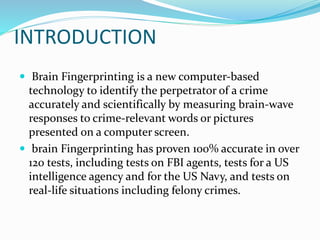

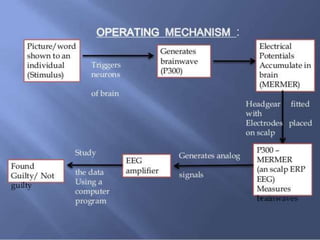
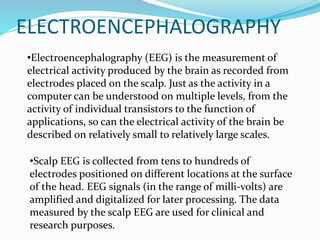

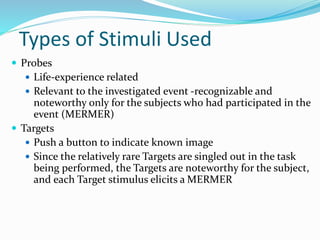
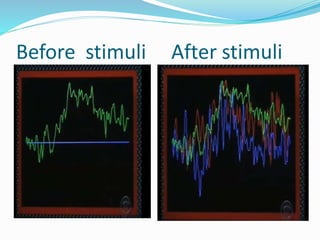
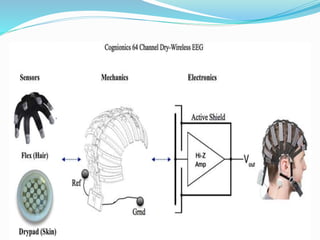


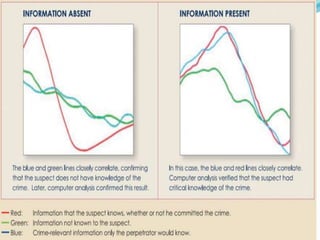





Brain fingerprinting is a technique that uses electroencephalography (EEG) to measure brain wave responses when a subject is exposed to crime-relevant stimuli. It aims to identify perpetrators based on the premise that details of crimes they committed will be stored in their brain, triggering a P300 brain signal. The technique has been shown to be 100% accurate in tests. It can help identify criminals, terrorists, and members of criminal groups by accessing crime evidence stored in their brain. However, it only detects what information is stored, not how it got there or if the subject is lying.


