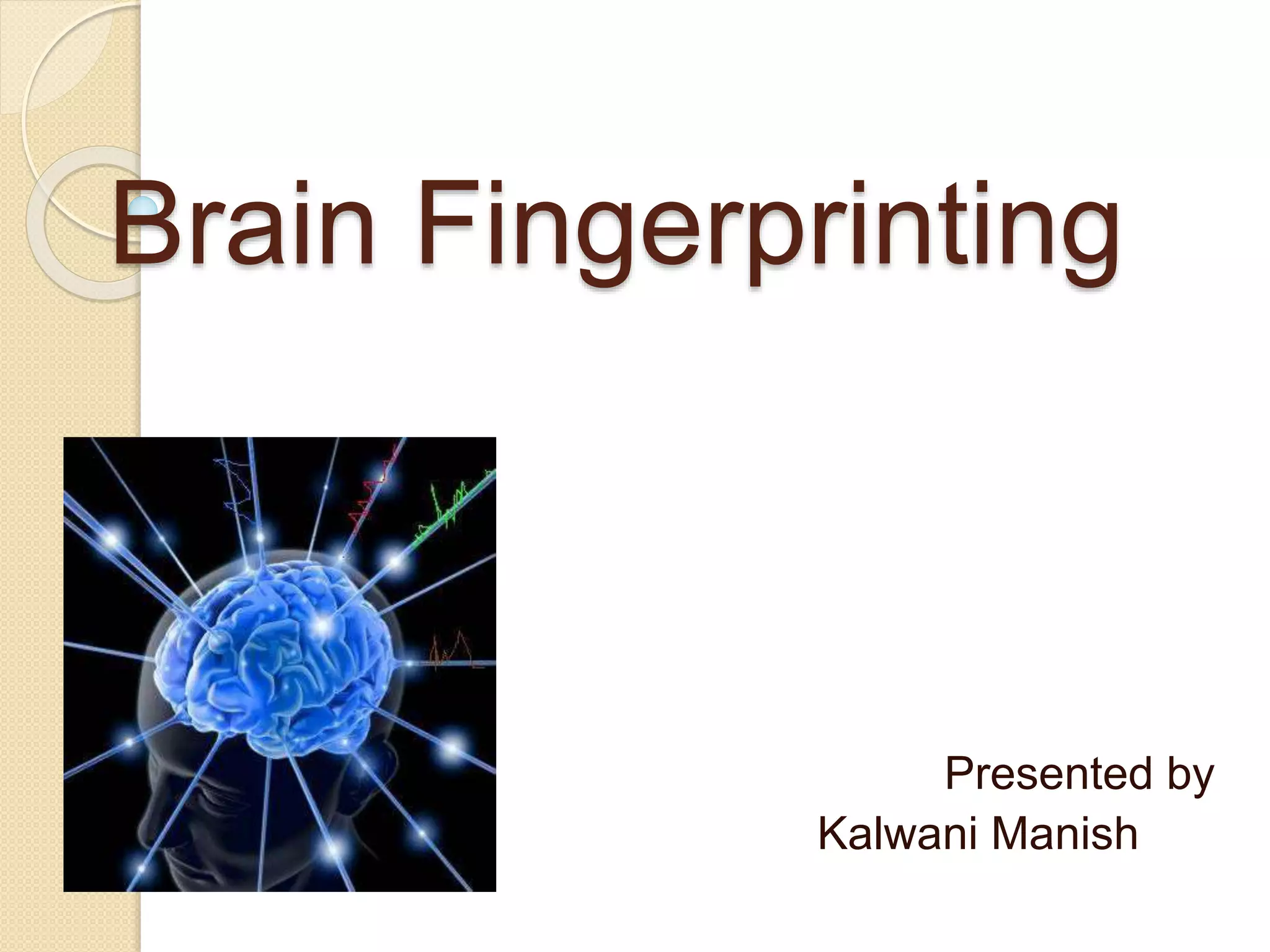
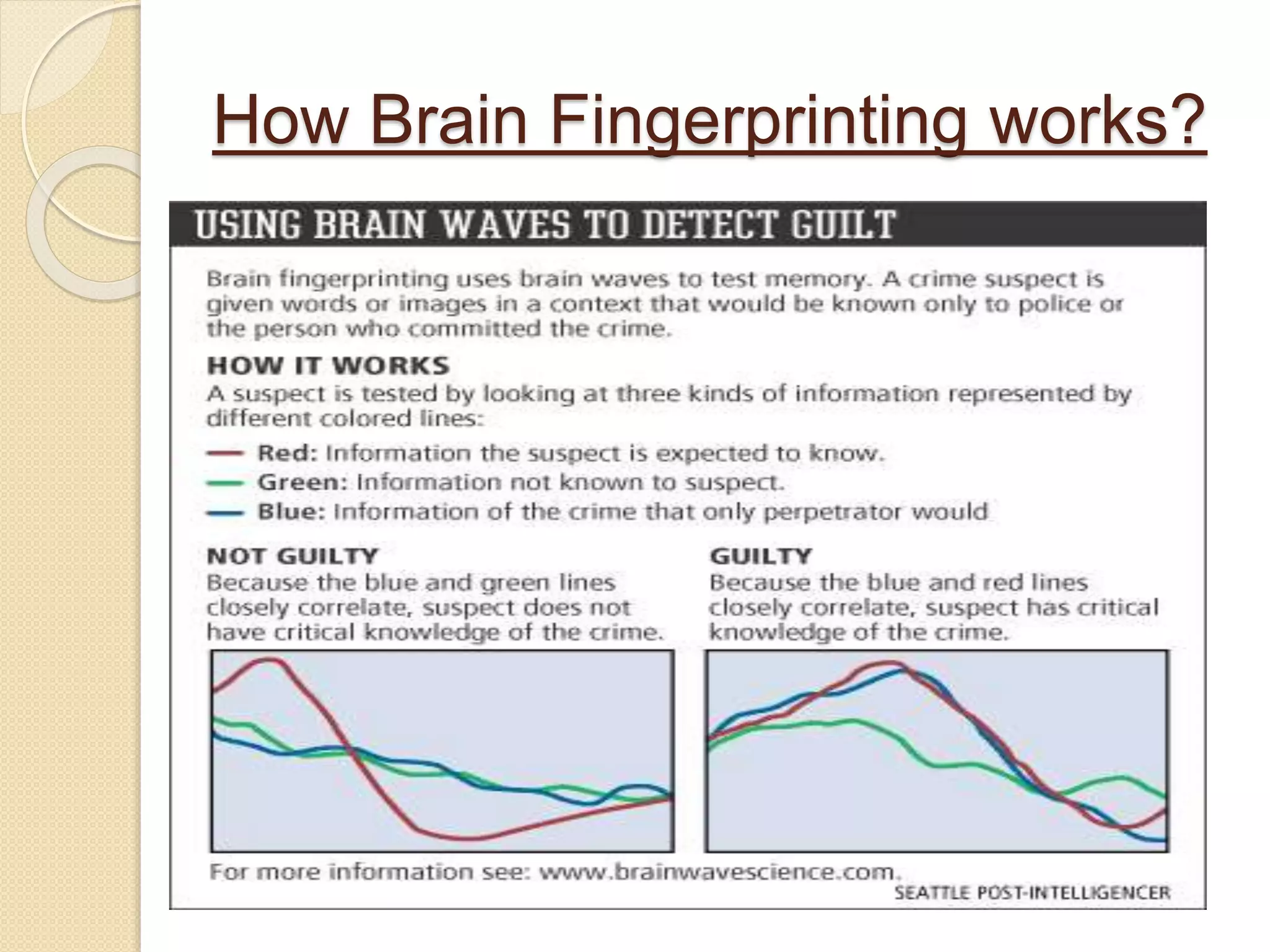
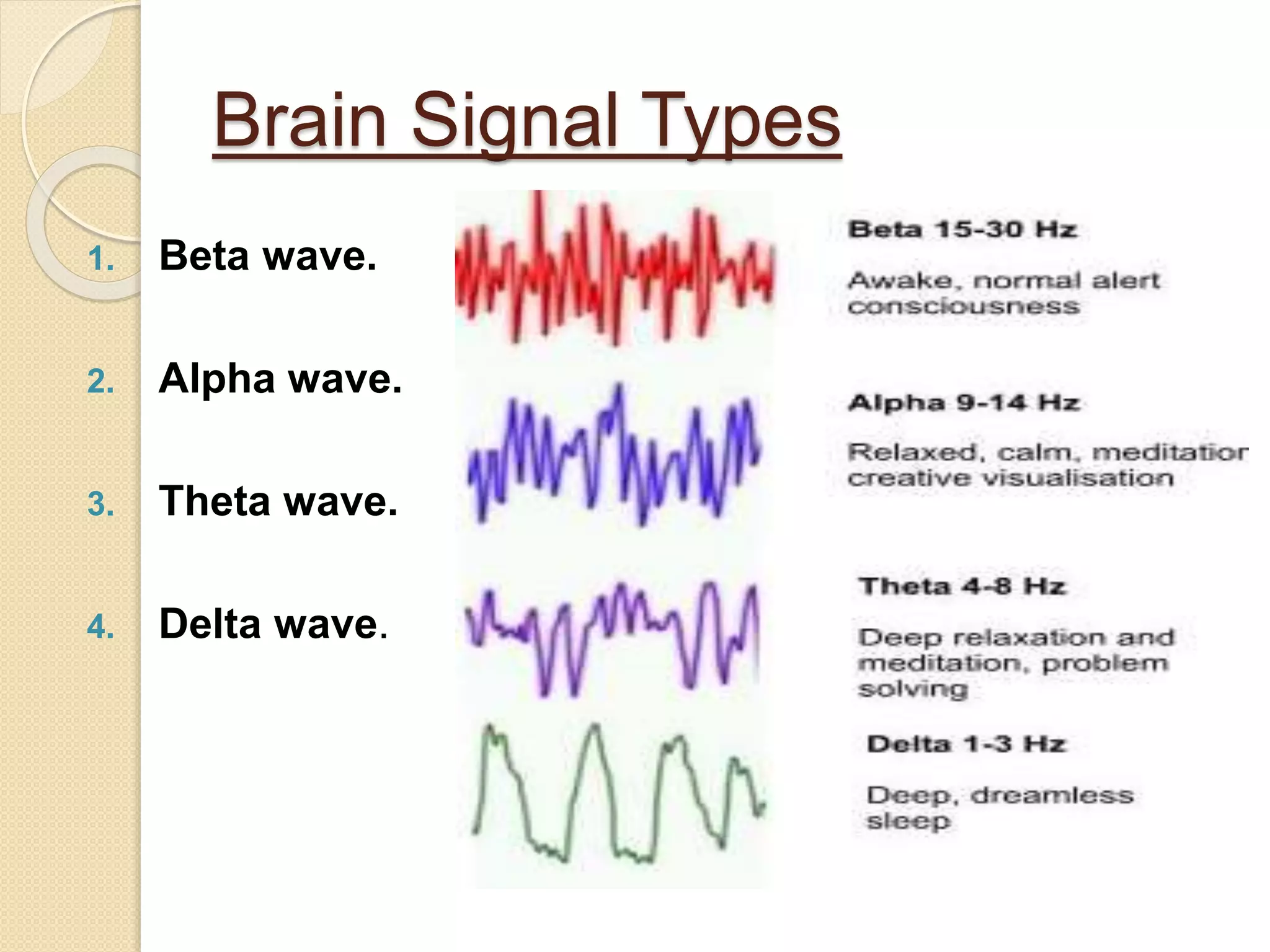
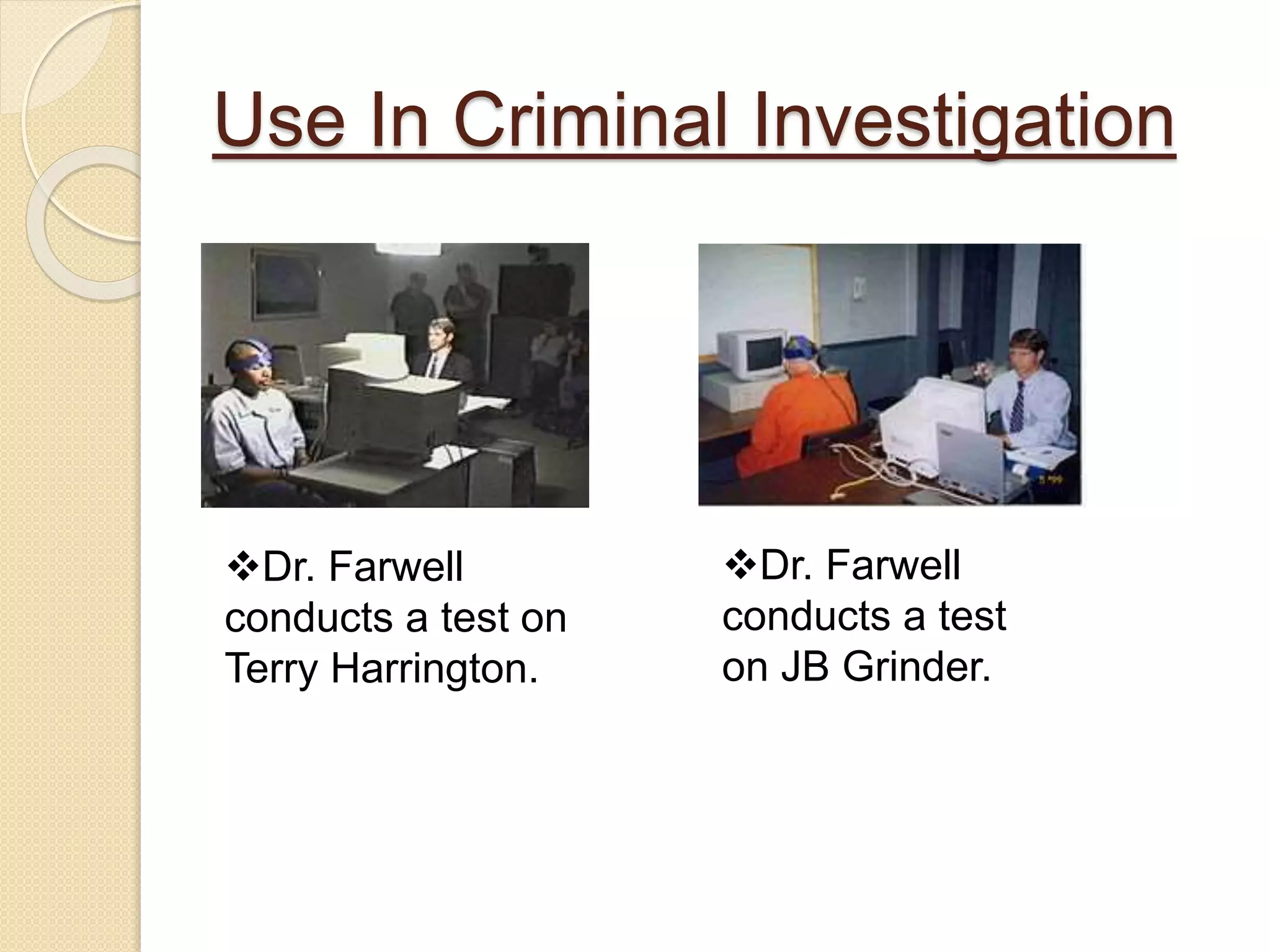
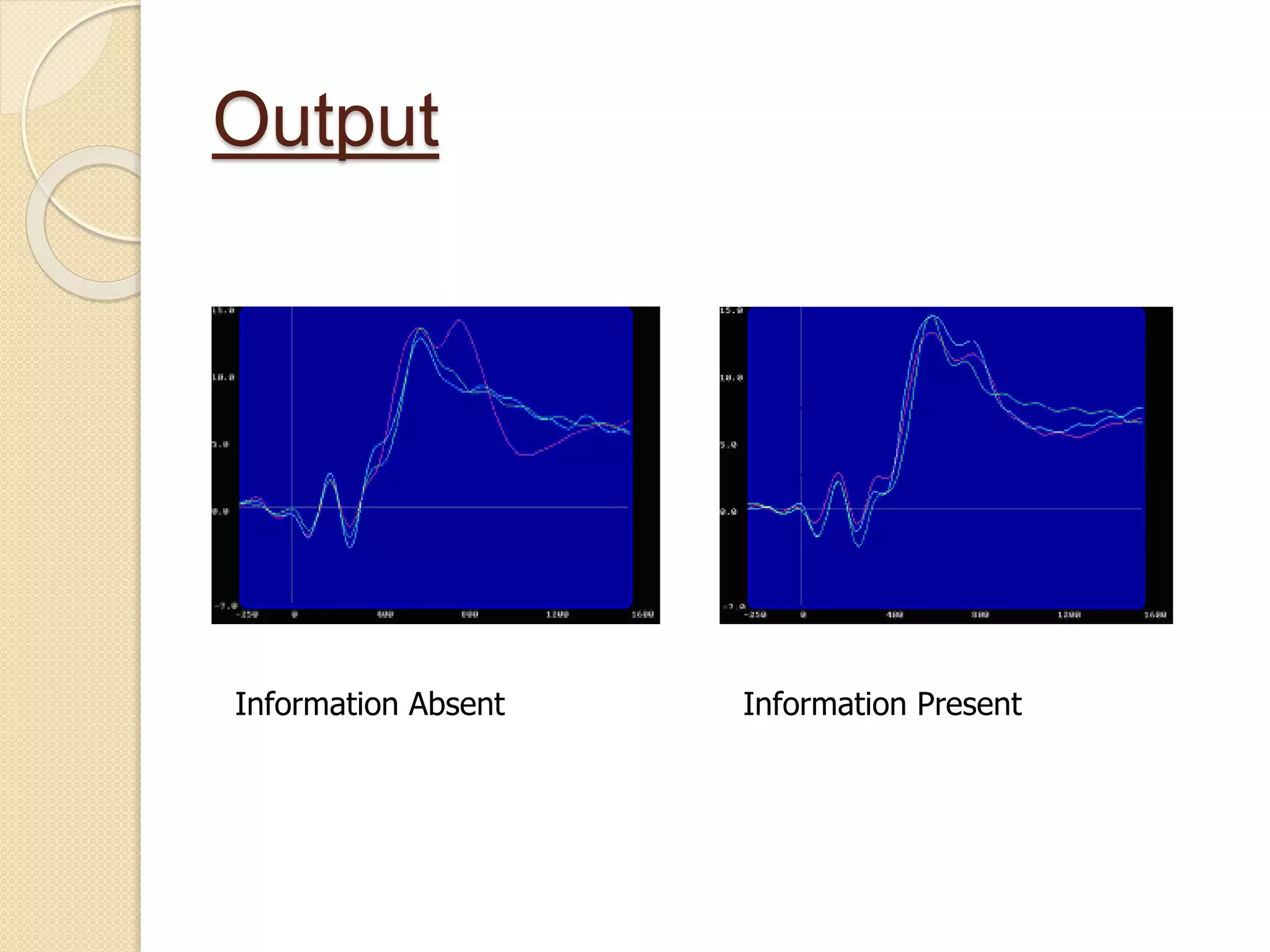
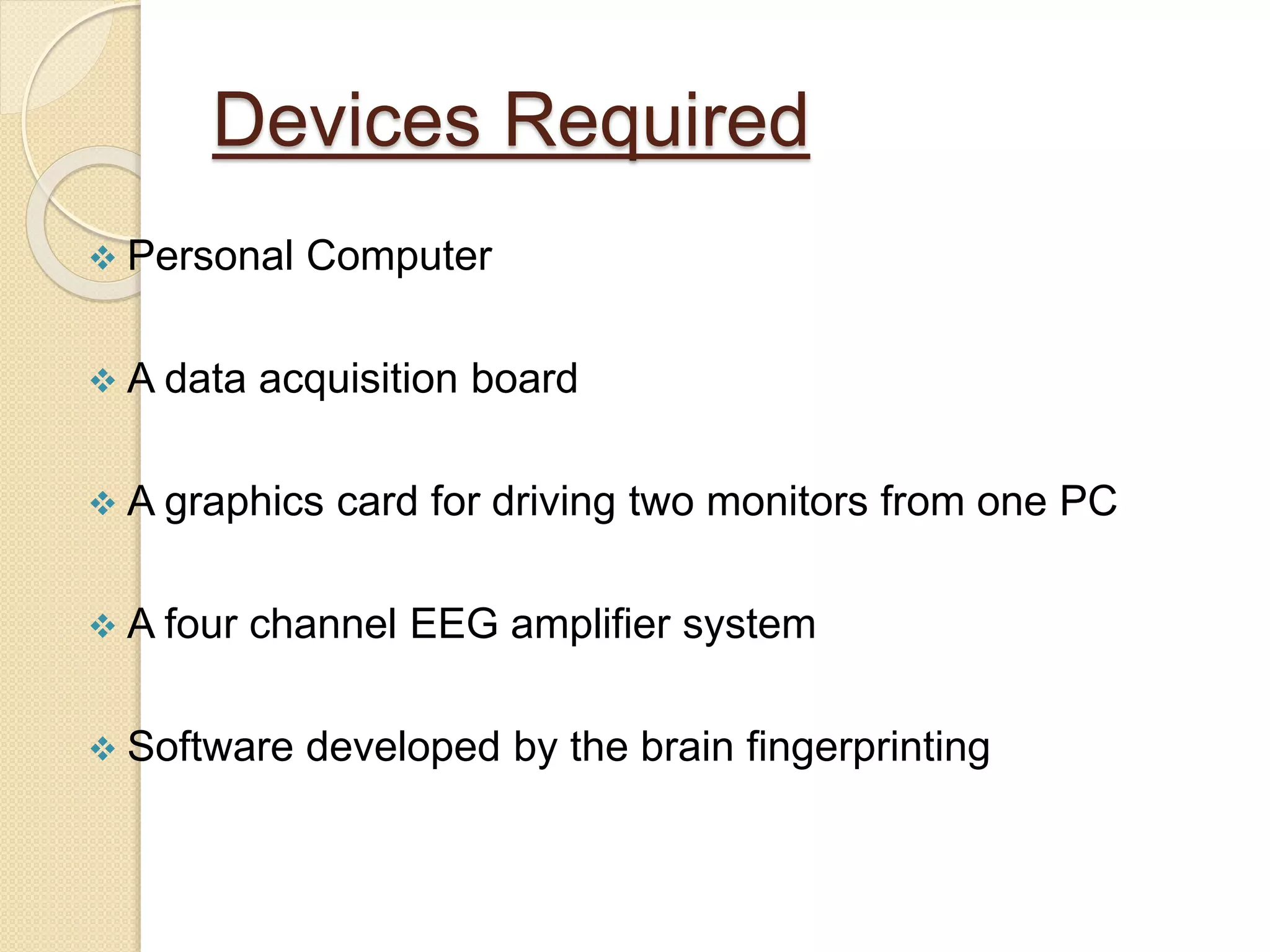
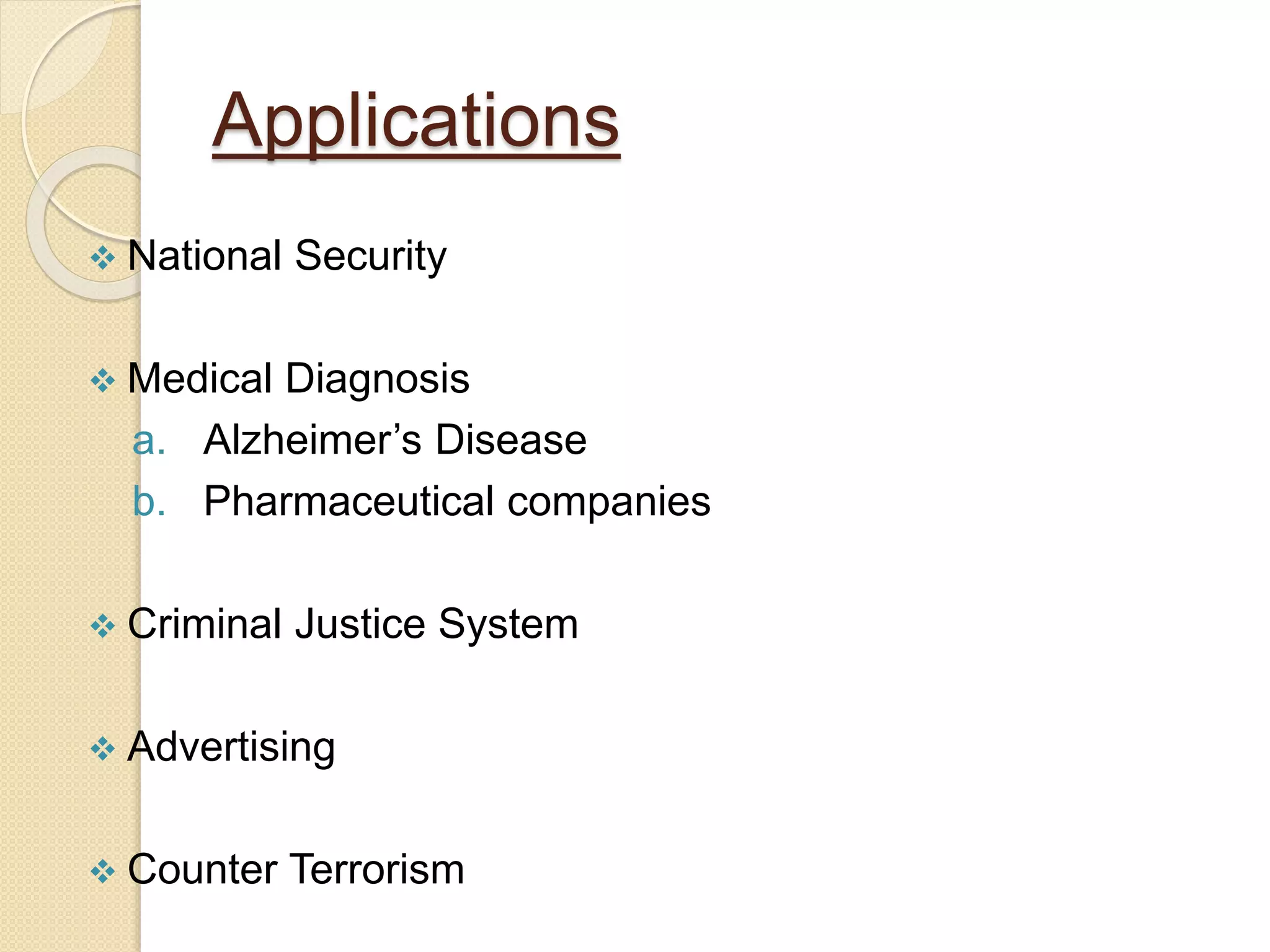
Brain fingerprinting is a forensic technique that uses EEG to detect if specific crime-related information is stored in a subject's brain. It works by measuring brainwave responses when subjects are shown crime-related words or images. The technique was invented in 1995 and uses cognitive brain responses, rather than emotions, to identify if information about a crime is present or absent in the brain. It has potential applications in criminal justice, national security, and medical diagnosis.


![Coded Agents – with UiPath SDK + LangGraph [Virtual Hands-on Workshop]](https://cdn.slidesharecdn.com/ss_thumbnails/codedagentsdeck-251215155422-5497c599-thumbnail.jpg?width=640&height=640&fit=bounds)


