Downloaded 2,037 times

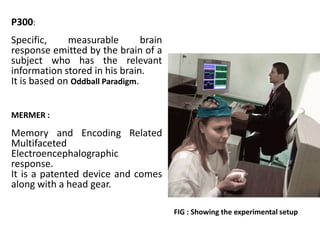
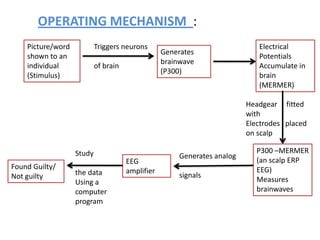
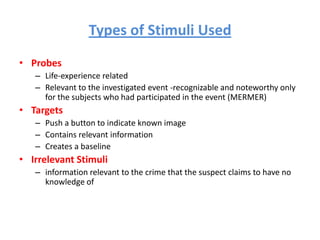
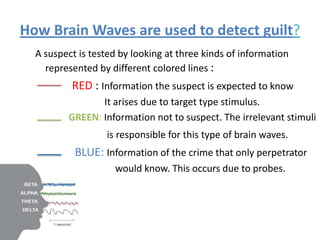
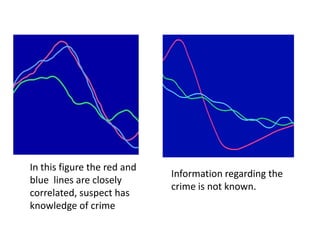
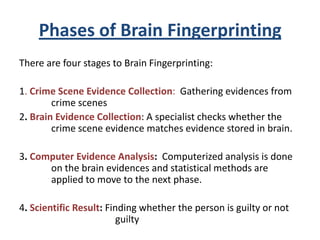
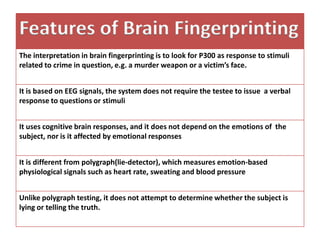


This document summarizes a seminar presentation on brain fingerprinting technology. Brain fingerprinting uses EEG to measure electrical brain wave responses, specifically the P300 wave, to stimuli presented on a computer in order to determine if individuals have hidden information stored in their brains. It works by presenting probes, targets, and irrelevant stimuli and analyzing the brain's differential response. There are four phases: evidence collection, brain evidence collection, computer analysis, and determining guilt or innocence. Unlike polygraph tests, it does not rely on physiological responses but on cognitive brain responses. Case studies showed it correctly identified information stored in a murder suspect's brain and its potential use in identifying trained terrorists.


