



AMIT SHUKLA
CS,3rd YEAR
(1209710902)
 Introduction
 History
 Block Diagram
 Merits
 Demerits
 Conclusion
Table of contents
Introduction
 Brain fingerprinting: technique used to
determine scientifically what information is,
or is not stored in a particular brain
 Not a measure of guilt or innocence
 Measures the response to visual or audio
stimulus
 It uses p300 mermer.
History
• Invented By Dr. Lawrence A. Farwell in august
1999.
• It’s a patented technique of proven accuracy in
US government tests.
• It has a record of 100% Accuracy.
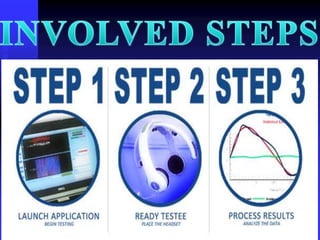
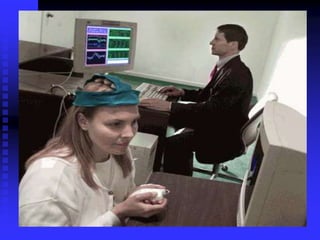
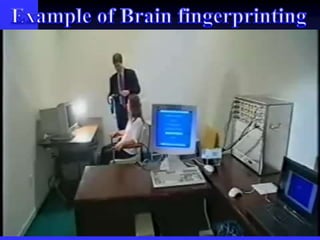
• A sequence of words, phrases, or pictures
is presented on a video monitor to the
subject, wearing a special headband
designed for detecting the brain wave
responses.
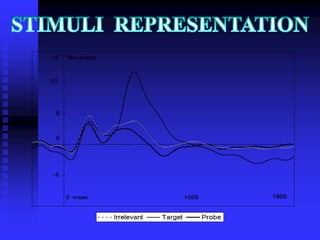
• Target : The target stimuli are made
relevant and noteworthy to all subjects.
• Irrelevant : These have no relation to the
situation under investigation.
• Probes : Probes are the stimuli that are
relevant to the situation under investigation.
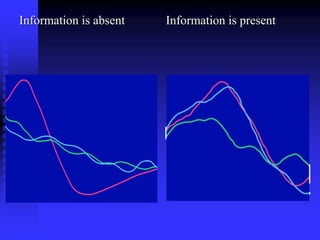
Information is absent Information is present
• personal computer
• a data acquisition board
• a graphics card for driving two monitors from
one PC
• a four-channel EEG amplifier system
• software developed by the Brain Fingerprinting
Laboratories for data acquisition and analysis.
 Advertising
 National security
 Medical diagnosis
 Alzheimer’s Disease
 Criminal justice system
 Security Testing ,etc.
• Fingerprints and DNA are available in only 1%
of crimes. The brain and the evidence recorded
in it are always there.
• No questions are asked and no answers are
given during Farwell Brain Fingerprinting.
• Brain Fingerprinting technology depends only on
brain information processing, it does not depend
on the emotional response of the subject.
 Identify criminals quickly and scientifically
 Record of 100% accuracy
 Identify terrorists and members of gangs,
criminal and intelligence organizations
 Reduce expenditure of money and other
resources in law enforcement
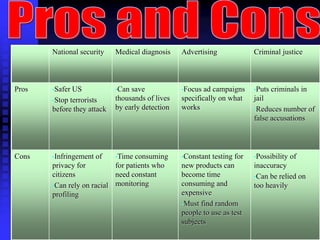
National security Medical diagnosis Advertising Criminal justice
Pros •Safer US
•Stop terrorists
before they attack
•Can save
thousands of lives
by early detection
•Focus ad campaigns
specifically on what
works
•Puts criminals in
jail
•Reduces number of
false accusations
Cons •Infringement of
privacy for
citizens
•Can rely on racial
profiling
•Time consuming
for patients who
need constant
monitoring
•Constant testing for
new products can
become time
consuming and
expensive
•Must find random
people to use as test
subjects
•Possibility of
inaccuracy
•Can be relied on
too heavily
 http://www.larryfarwell.com/brain-fingerprinting-
overview-dr-larry-farwell-dr-lawrence-
farwell.html
 http://brainwavescience.com
 http://news.nationalgeographic.com/news/2001/0
7/0705_wirelies.html
Brain Fingerprinting Technology

Brain Fingerprinting Technology

  • 1.
  • 2.
     Introduction  History Block Diagram  Merits  Demerits  Conclusion Table of contents
  • 3.
    Introduction  Brain fingerprinting:technique used to determine scientifically what information is, or is not stored in a particular brain  Not a measure of guilt or innocence  Measures the response to visual or audio stimulus  It uses p300 mermer.
  • 4.
    History • Invented ByDr. Lawrence A. Farwell in august 1999. • It’s a patented technique of proven accuracy in US government tests. • It has a record of 100% Accuracy.
  • 6.
    • A sequenceof words, phrases, or pictures is presented on a video monitor to the subject, wearing a special headband designed for detecting the brain wave responses.
  • 8.
    • Target :The target stimuli are made relevant and noteworthy to all subjects. • Irrelevant : These have no relation to the situation under investigation. • Probes : Probes are the stimuli that are relevant to the situation under investigation.
  • 10.
    Information is absentInformation is present
  • 11.
    • personal computer •a data acquisition board • a graphics card for driving two monitors from one PC • a four-channel EEG amplifier system • software developed by the Brain Fingerprinting Laboratories for data acquisition and analysis.
  • 12.
     Advertising  Nationalsecurity  Medical diagnosis  Alzheimer’s Disease  Criminal justice system  Security Testing ,etc.
  • 13.
    • Fingerprints andDNA are available in only 1% of crimes. The brain and the evidence recorded in it are always there. • No questions are asked and no answers are given during Farwell Brain Fingerprinting. • Brain Fingerprinting technology depends only on brain information processing, it does not depend on the emotional response of the subject.
  • 14.
     Identify criminalsquickly and scientifically  Record of 100% accuracy  Identify terrorists and members of gangs, criminal and intelligence organizations  Reduce expenditure of money and other resources in law enforcement
  • 15.
    National security Medicaldiagnosis Advertising Criminal justice Pros •Safer US •Stop terrorists before they attack •Can save thousands of lives by early detection •Focus ad campaigns specifically on what works •Puts criminals in jail •Reduces number of false accusations Cons •Infringement of privacy for citizens •Can rely on racial profiling •Time consuming for patients who need constant monitoring •Constant testing for new products can become time consuming and expensive •Must find random people to use as test subjects •Possibility of inaccuracy •Can be relied on too heavily
  • 17.