BRAIN FINGER PRINTING
TECHNOLOGY
Presented by :
DIVYAPRATHAPRAJU.DERANGULA
CONTENTS
1) Introduction
2) Instrumental Requirements
3) How does it work?
4) EEG
5) What is MERMER?
6) MERMER methodology
7) Application
8) Advantages & Disadvantages
9) Conclusion
INTRODUCTION
• Brain fingerprinting is a scientific technique to determine whether or not specific
information is stored in an individual's brain.
• Brain fingerprinting was invented by Dr. Lawrence Farwell
• Brain Fingerprinting technique used to determine scientifically what information
is, or is not stored in a particular brain.
• Not a measure of guilt or innocence.
• Measures the response to visual or audio stimulus
INTRODUCTION
INSTRUMENTAL REQUIREMENTS
Personal computer
A data acquisition board
A graphics card for driving two monitors from one PC
A four-channel EEG amplifier system
Software developed by the brain fingerprinting lab.
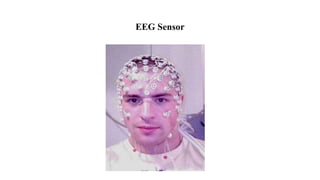
EEG (Electroencephalography )
• Electroencephalography (EEG) is the recording of electrical activity
along the scalp.
• EEG measures voltage fluctuations resulting from activation of
neurons of the brain.
• In this way, in our technique we use EEG sensors to detect
brainwaves.
EEG Sensor
WHAT IS MERMER?
• A MERMER is a part of the brainwave observed in response to information that is
related to case under investigation.
• When the brain recognizes some event, neurons are activated, that denotes
changes in brain activity.
• When a person is exposed to a information, there is increase in neuron activity
which results in an increase in voltage.
• Typically within 300–1000msec after the stimulus.
• That response with increase in voltage is known as P300.
• However, the P300 has only a 87.5% success rate in revealing the presence of
relevant information in one’s brain.
WHAT IS MERMER?
HOW DOES IT WORK?
• Brain Fingerprinting method uses a signal which is known as MERMER i.e.
Memory and Encoding Related Multifaceted Electroencephalographic.
• A sequence of words, phrases, or pictures is presented on a video monitor to the
subject, wearing a special headband designed for detecting the brain wave
responses.
• Actually when brain recognizes something then there is some changes in the
neurons activity ,due to which there is changes in brainwave signals .On the basis
of these changes in brain wave signals scientists determine that a particular
information is present in the subject mind or not
• The entire Brain Fingerprinting system is under computer control, including
presentation of the stimuli, recording of electrical brain activity, a mathematical
data analysis algorithm that compares the responses of stimuli and produces a
determination of "information absent“.
HOW DOES IT WORK?
MERMER METHODOLOGY
MERMER METHODOLOGY incorporates following procedure:
A sequence of words, phrases, or pictures is presented on a video monitor to the
subject, wearing a special headband designed for detecting the brainwave responses.
Three types of stimuli are presented:
1) Target
2) Irrelevant
3) Probe
TARGET : The target stimuli are made relevant and noteworthy to all subjects.
IRRELEVANT : These have no relation to the situation under investigation.
PROBES : Probes are the stimuli that are relevant to the situation under
investigation.
MERMER METHODOLOGY
• A subject lacking specific information relevant to the situation under investigation
recognizes only two types of stimuli: targets & irrelevants.
• A subject with specific information relevant to the situation under investigation,
however, recognizes all three types of stimuli: targets, irrelevants & probes.
MERMER METHODOLOGY
A suspect is tested by looking at three kinds of information represented by different
colored lines:
Red: Information the suspect is expected to know(target)
Green: Information not known to suspect(irrelevant)
Blue: Information of the crime that only suspect would know(probe)
MERMER METHODOLOGY
SUBJECT IS GUILTY:
MERMER METHODOLOGY
SUBJECT IS NOT GUILTY:
MERMER METHODOLOGY
ADVANTAGES
Identify criminals quickly and scientifically
Record of 100% accuracy
Identify terrorists and members of gangs, criminal and intelligence organizations
Reduce expenditure of money and other resources in law enforcement
Reduce evasion of justice.
DISADVANTAGES
 Not applicable for general screening.
It does not indicate intent of the crime.
Takes a fair amount of time to set up and conduct properly .
Difficult to distinguish the criminal and a witness who saw all the criminal activity
happen.
APPLICATIONS
The various applications are as follows:
ADVERTISING
COUNTER TERRORISM
MEDICALAPPLICATIONS
Advertising: How effective is the product branding strategy?
Counter Terrorism : Determining who has participated in terrorist acts, directly
or indirectly.
Medical Application : Determines more quickly the effects of new medicines.
APPLICATIONS
CONCLUSION
• Brain fingerprinting is a revolutionary new scientific technology for solving
crimes, identifying perpetrator and exonerating innocent suspects.
• The technology fulfills an urgent need for governments, law enforcement
agencies, corporations, investigators, crime victims.
THANK YOU.. !

BRAIN FINGERPRINTING TECHNOLOGY

  • 1.
    BRAIN FINGER PRINTING TECHNOLOGY Presentedby : DIVYAPRATHAPRAJU.DERANGULA
  • 2.
    CONTENTS 1) Introduction 2) InstrumentalRequirements 3) How does it work? 4) EEG 5) What is MERMER? 6) MERMER methodology 7) Application 8) Advantages & Disadvantages 9) Conclusion
  • 3.
    INTRODUCTION • Brain fingerprintingis a scientific technique to determine whether or not specific information is stored in an individual's brain. • Brain fingerprinting was invented by Dr. Lawrence Farwell
  • 4.
    • Brain Fingerprintingtechnique used to determine scientifically what information is, or is not stored in a particular brain. • Not a measure of guilt or innocence. • Measures the response to visual or audio stimulus INTRODUCTION
  • 5.
    INSTRUMENTAL REQUIREMENTS Personal computer Adata acquisition board A graphics card for driving two monitors from one PC A four-channel EEG amplifier system Software developed by the brain fingerprinting lab.
  • 6.
    EEG (Electroencephalography ) •Electroencephalography (EEG) is the recording of electrical activity along the scalp. • EEG measures voltage fluctuations resulting from activation of neurons of the brain. • In this way, in our technique we use EEG sensors to detect brainwaves.
  • 7.
  • 8.
    WHAT IS MERMER? •A MERMER is a part of the brainwave observed in response to information that is related to case under investigation. • When the brain recognizes some event, neurons are activated, that denotes changes in brain activity. • When a person is exposed to a information, there is increase in neuron activity which results in an increase in voltage.
  • 9.
    • Typically within300–1000msec after the stimulus. • That response with increase in voltage is known as P300. • However, the P300 has only a 87.5% success rate in revealing the presence of relevant information in one’s brain. WHAT IS MERMER?
  • 10.
    HOW DOES ITWORK? • Brain Fingerprinting method uses a signal which is known as MERMER i.e. Memory and Encoding Related Multifaceted Electroencephalographic. • A sequence of words, phrases, or pictures is presented on a video monitor to the subject, wearing a special headband designed for detecting the brain wave responses.
  • 11.
    • Actually whenbrain recognizes something then there is some changes in the neurons activity ,due to which there is changes in brainwave signals .On the basis of these changes in brain wave signals scientists determine that a particular information is present in the subject mind or not • The entire Brain Fingerprinting system is under computer control, including presentation of the stimuli, recording of electrical brain activity, a mathematical data analysis algorithm that compares the responses of stimuli and produces a determination of "information absent“. HOW DOES IT WORK?
  • 12.
    MERMER METHODOLOGY MERMER METHODOLOGYincorporates following procedure: A sequence of words, phrases, or pictures is presented on a video monitor to the subject, wearing a special headband designed for detecting the brainwave responses. Three types of stimuli are presented: 1) Target 2) Irrelevant 3) Probe
  • 13.
    TARGET : Thetarget stimuli are made relevant and noteworthy to all subjects. IRRELEVANT : These have no relation to the situation under investigation. PROBES : Probes are the stimuli that are relevant to the situation under investigation. MERMER METHODOLOGY
  • 14.
    • A subjectlacking specific information relevant to the situation under investigation recognizes only two types of stimuli: targets & irrelevants. • A subject with specific information relevant to the situation under investigation, however, recognizes all three types of stimuli: targets, irrelevants & probes. MERMER METHODOLOGY
  • 15.
    A suspect istested by looking at three kinds of information represented by different colored lines: Red: Information the suspect is expected to know(target) Green: Information not known to suspect(irrelevant) Blue: Information of the crime that only suspect would know(probe) MERMER METHODOLOGY
  • 16.
  • 17.
    SUBJECT IS NOTGUILTY: MERMER METHODOLOGY
  • 18.
    ADVANTAGES Identify criminals quicklyand scientifically Record of 100% accuracy Identify terrorists and members of gangs, criminal and intelligence organizations Reduce expenditure of money and other resources in law enforcement Reduce evasion of justice.
  • 19.
    DISADVANTAGES  Not applicablefor general screening. It does not indicate intent of the crime. Takes a fair amount of time to set up and conduct properly . Difficult to distinguish the criminal and a witness who saw all the criminal activity happen.
  • 20.
    APPLICATIONS The various applicationsare as follows: ADVERTISING COUNTER TERRORISM MEDICALAPPLICATIONS
  • 21.
    Advertising: How effectiveis the product branding strategy? Counter Terrorism : Determining who has participated in terrorist acts, directly or indirectly. Medical Application : Determines more quickly the effects of new medicines. APPLICATIONS
  • 22.
    CONCLUSION • Brain fingerprintingis a revolutionary new scientific technology for solving crimes, identifying perpetrator and exonerating innocent suspects. • The technology fulfills an urgent need for governments, law enforcement agencies, corporations, investigators, crime victims.
  • 23.