BOTANY
AN OVERVIEW


              - Dr Nidhi Sharma
BOTANY

“Study of plants”


        Dr Nidhi Sharma
Includes
   Bacteria & viruses
   Fungi
   Algae
   Bryophyta
   Pteridophyta
   Gymnosperms
   Angiosperms
                         Dr Nidhi Sharma
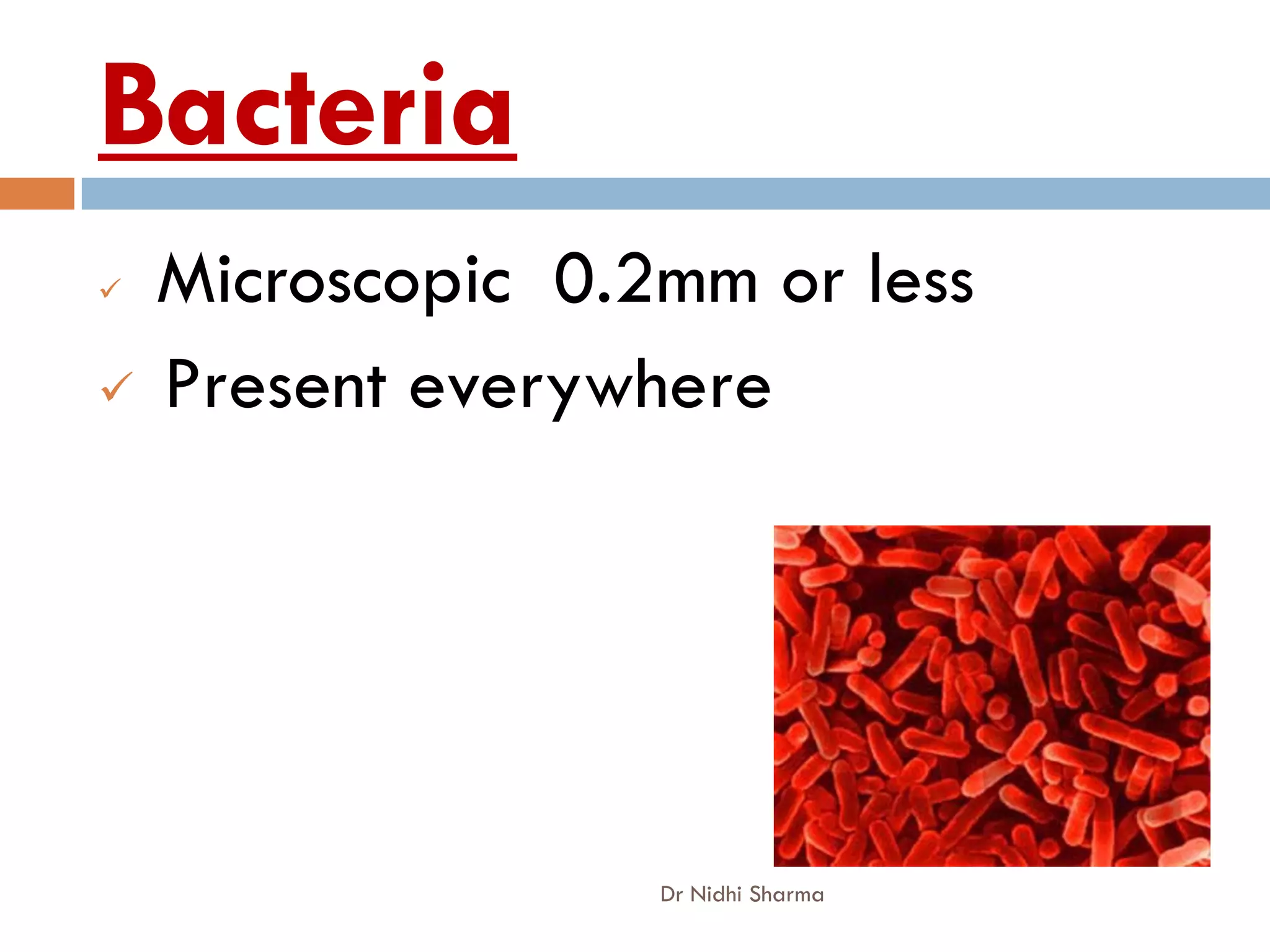
Bacteria
 Microscopic 0.2mm or less
 Present everywhere


                 Dr Nidhi Sharma
Economic importance-Useful aspect
   Products in our day to day life are the result of
    bacteria
   Curd
   Cheese
   Antibiotics
   Streptomycin
   Amoxicillin


                             Dr Nidhi Sharma
Economic importance-Harmful aspect
   Diseases in human being
   Tuberculosis – Mycobacterium tuberculosis
   Syphilis- Tryponema pallidum
   Gonorrhoea- Neisseria gonnorhoea
   Diphtheria- Corynebacterium diphtheriae
   Tetanus- Clostridium tetani
   Whooping cough- Bordetella pertussis
   Anthrax-Bacillus anthracis

                             Dr Nidhi Sharma
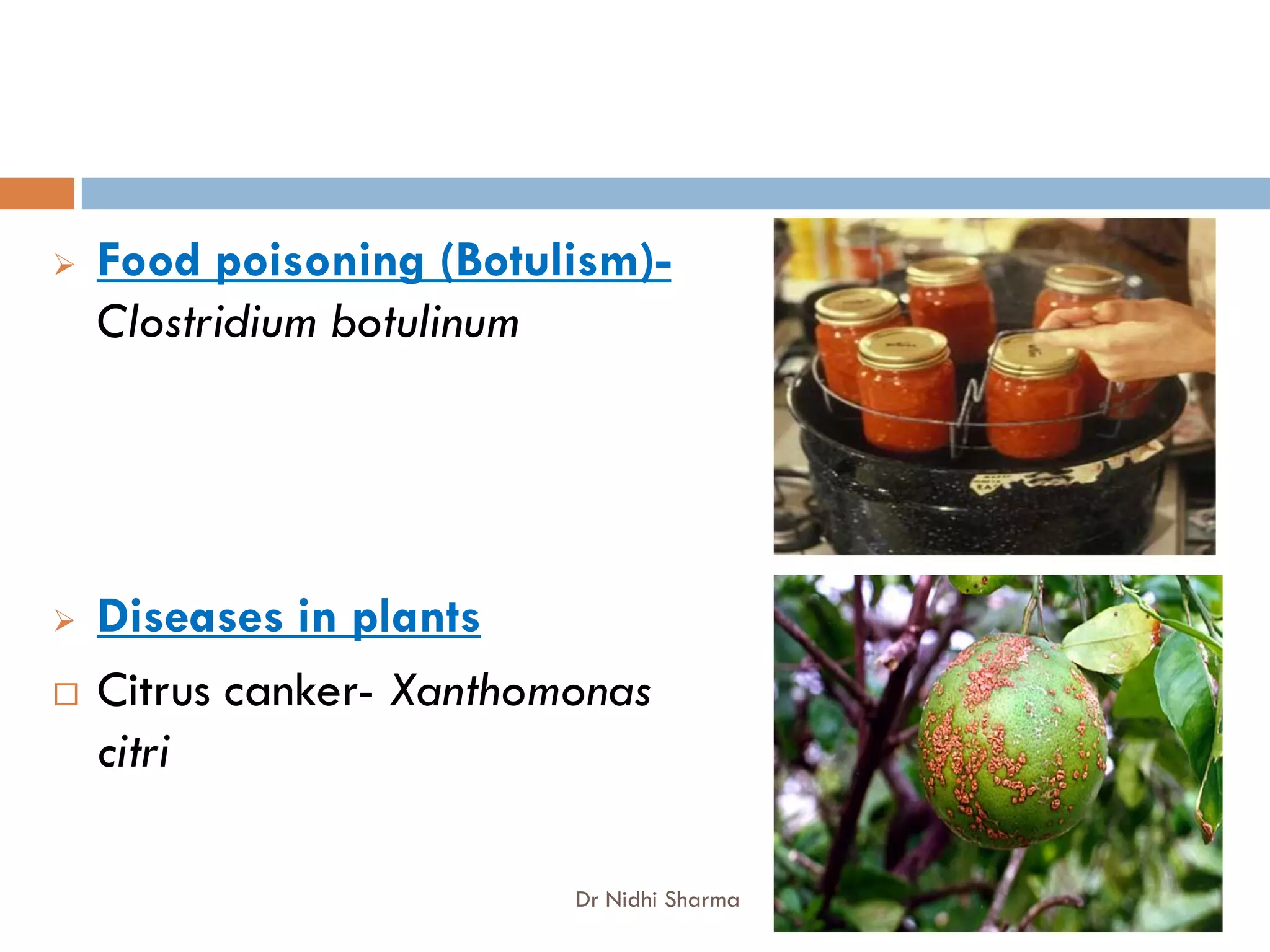
   Food poisoning (Botulism)-
    Clostridium botulinum


   Diseases in plants
   Citrus canker- Xanthomonas
    citri

                          Dr Nidhi Sharma
Viruses
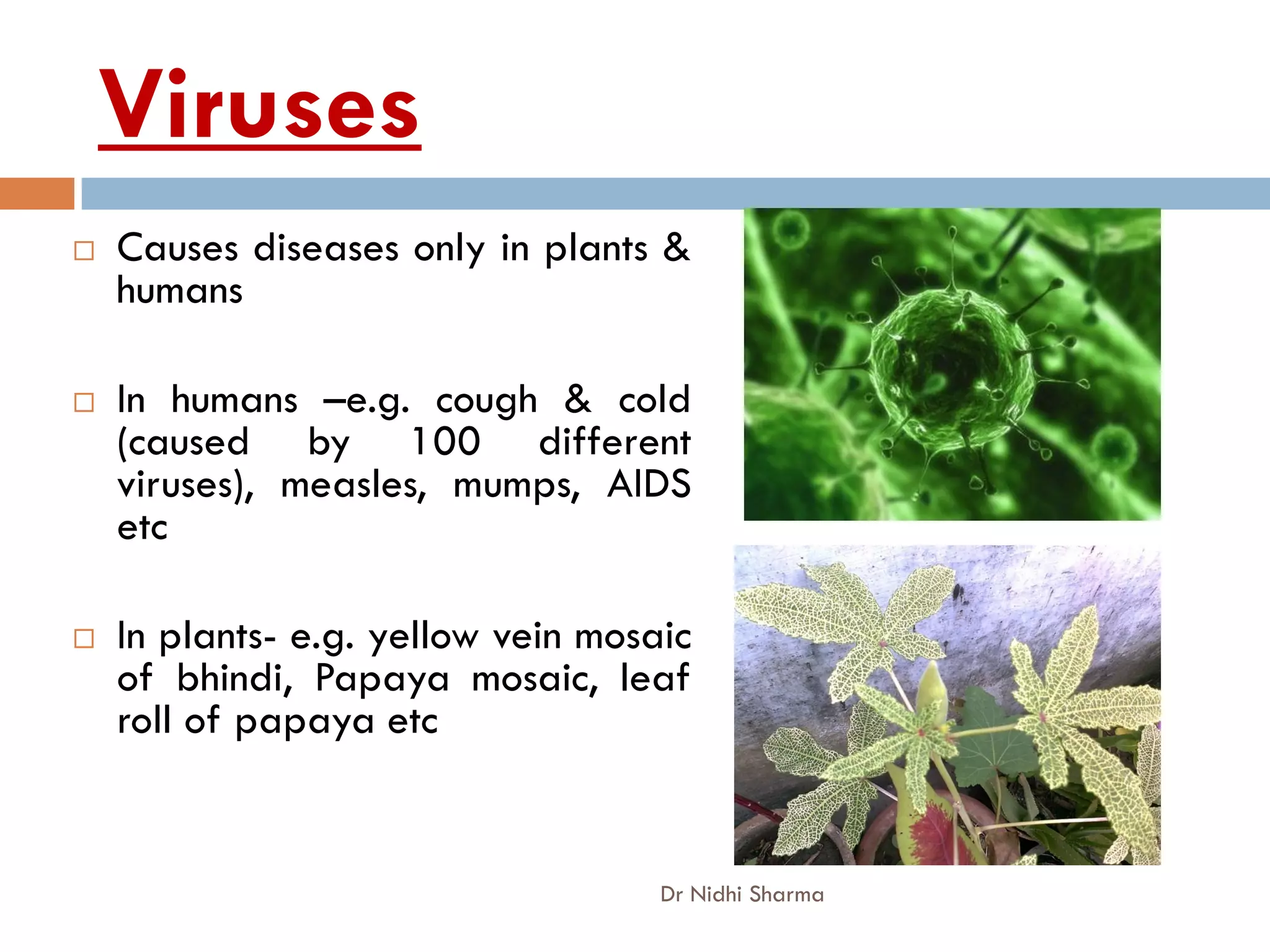
   Causes diseases only in plants &
    humans

   In humans –e.g. cough & cold
    (caused by 100 different
    viruses), measles, mumps, AIDS
    etc

   In plants- e.g. yellow vein mosaic
    of bhindi, Papaya mosaic, leaf
    roll of papaya etc


                                    Dr Nidhi Sharma
FUNGI
   Non green plants
   Grow on dead & decaying organic matter and absorb
    food from it
   Microscopic form to large ones with big fruiting bodies
   Common example is mushroom


              Microscopic form              Macroscopic form
                                   Dr Nidhi Sharma
Forms which you have seen
   Edible mushroom
   Poisonous mushroom like toadstool
   Bread mould-Aspergillus, Penicillium, Mucor etc
   On the leaves of sarso, muli etc as black rounded
    spots
   Yeast –baking, brewing (bread, beer, wine)
   Antibiotics- Penicillin & Cephalosporin
   Cheese- Roquefort & Camembert

                              Dr Nidhi Sharma
Economic importance- useful aspect

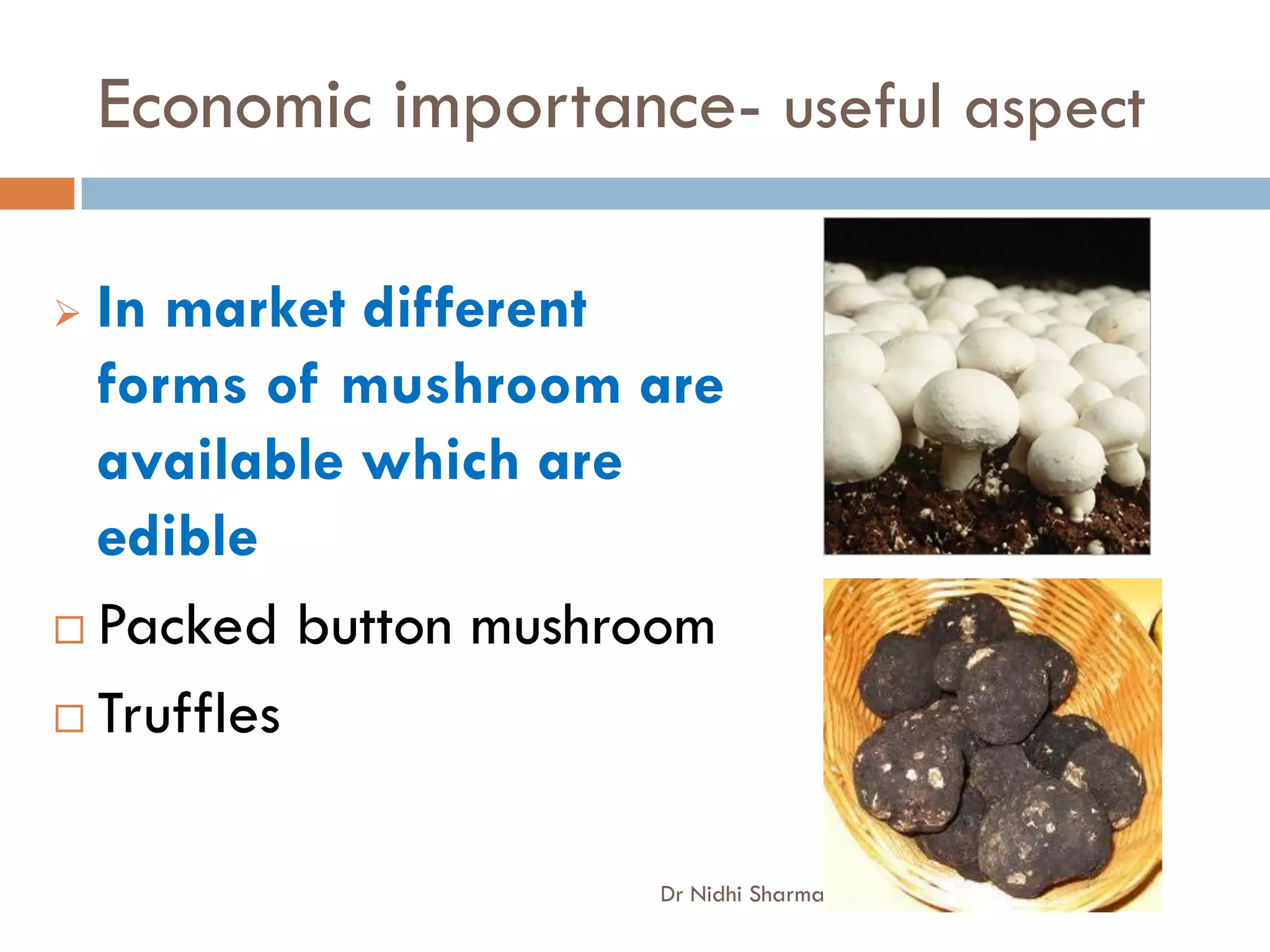
 In market different
  forms of mushroom are
  available which are
  edible
 Packed button mushroom

 Truffles


                      Dr Nidhi Sharma
Economic importance- useful aspect


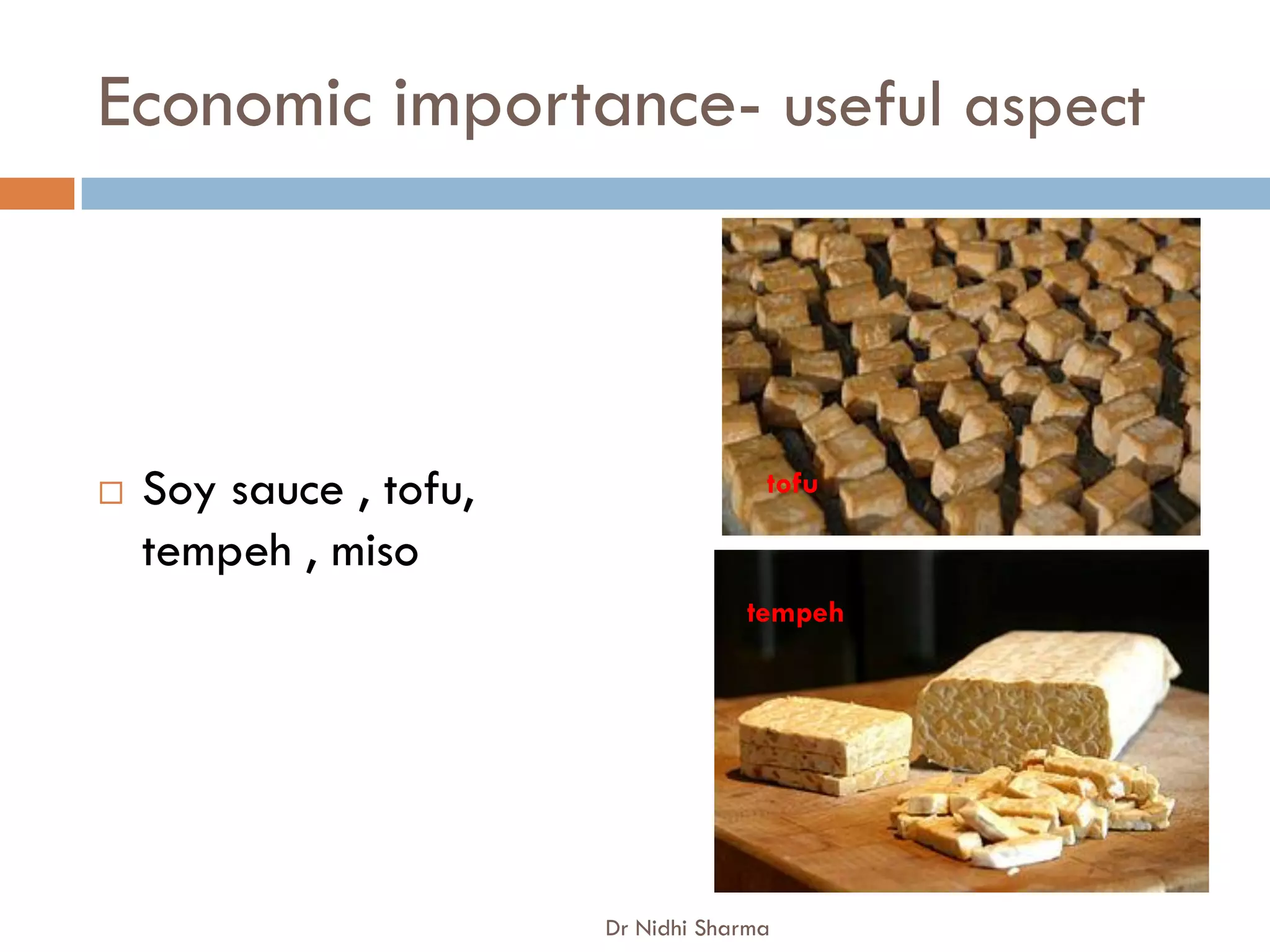
   Soy sauce , tofu,                 tofu

    tempeh , miso
                                    tempeh


                        Dr Nidhi Sharma
Economic importance- useful aspect


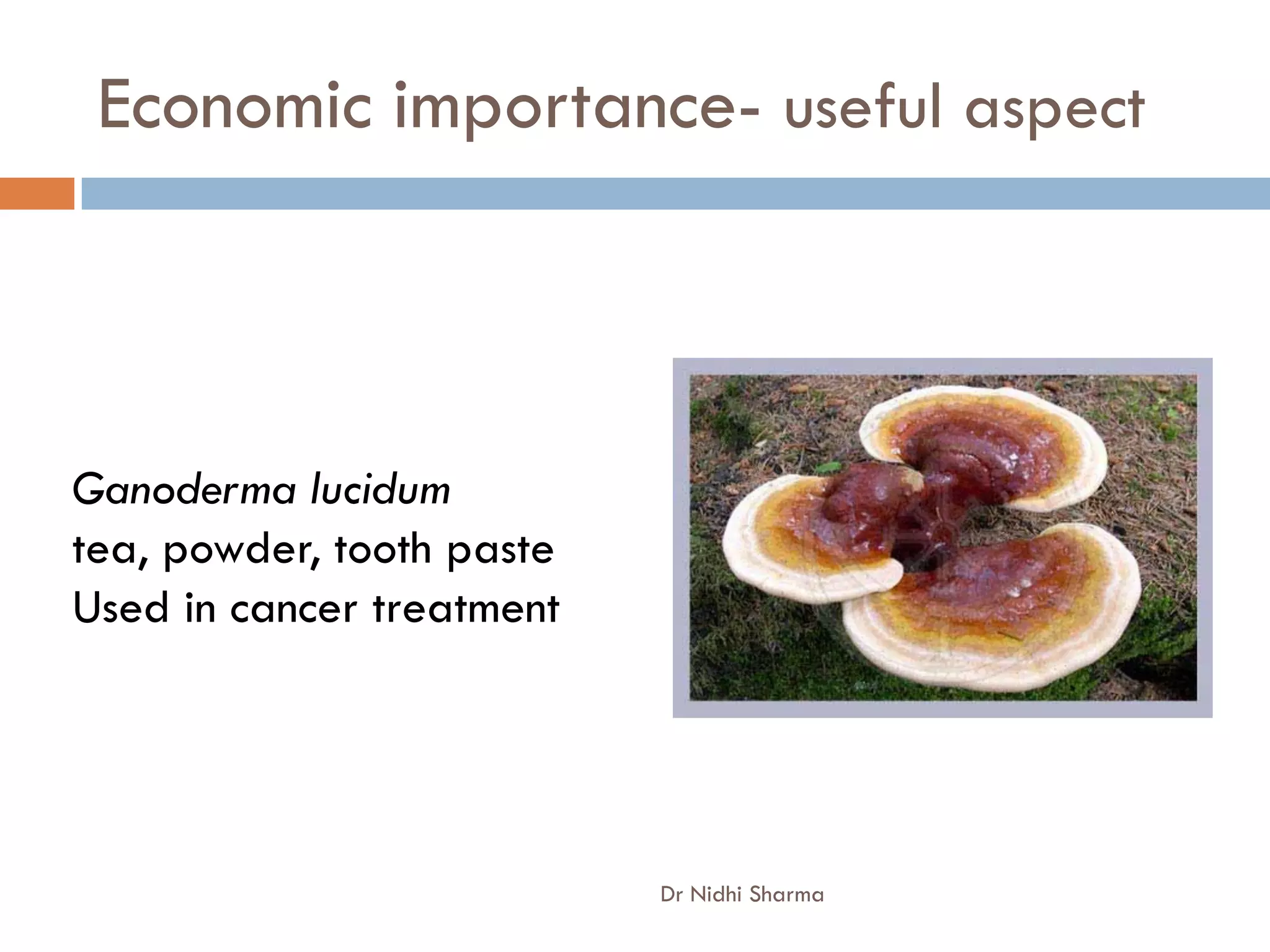
Ganoderma lucidum
tea, powder, tooth paste
Used in cancer treatment


                           Dr Nidhi Sharma
Economic importance- harmful aspect
   Crop diseases- e.g.
    potato blight (cause of
    irish famine in 1845)


   Dandruff in human
    beings-Malassezia furfur

                               Dr Nidhi Sharma
Economic importance- harmful aspect


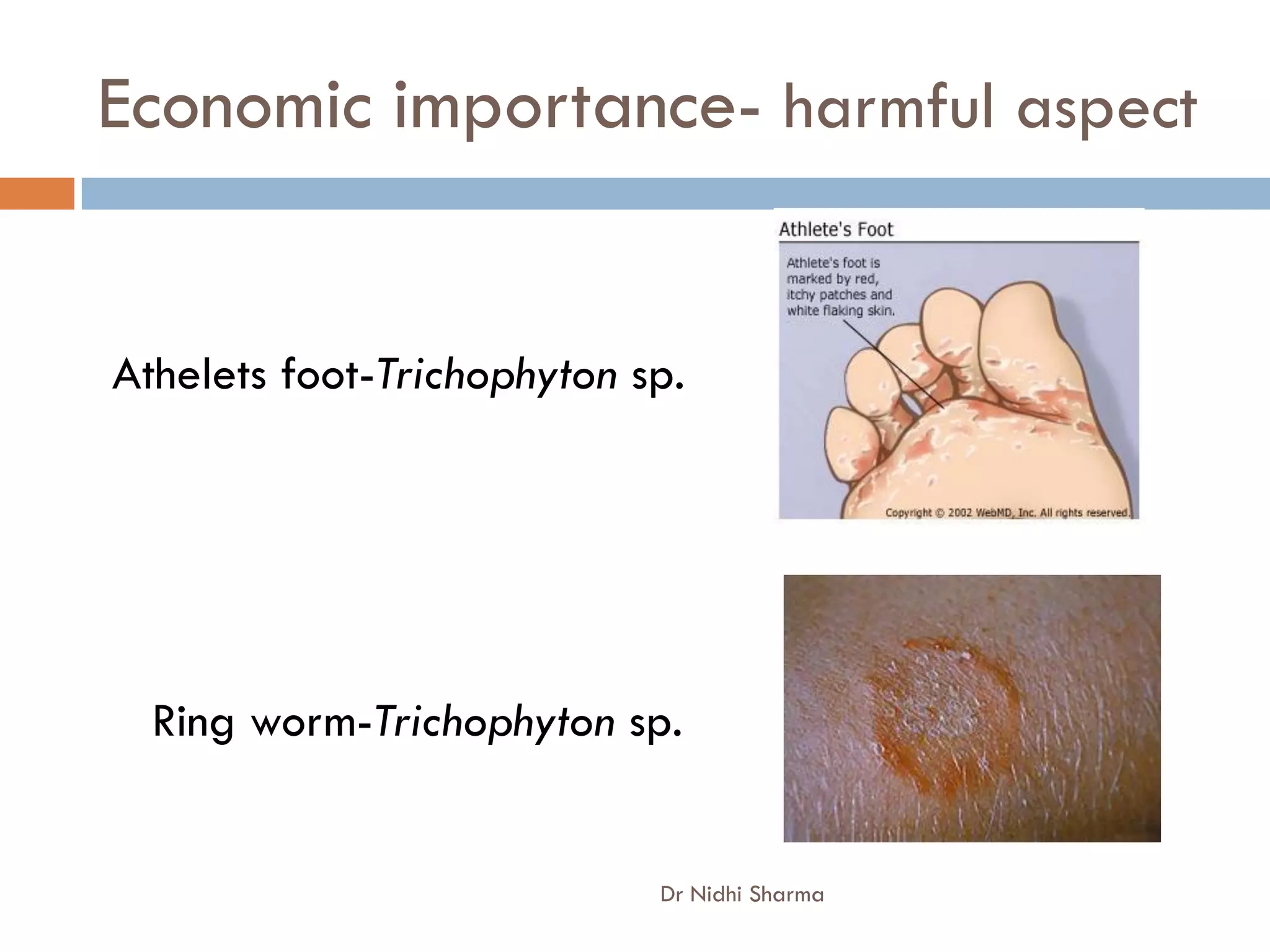
Athelets foot-Trichophyton sp.


  Ring worm-Trichophyton sp.


                            Dr Nidhi Sharma
ALGAE
   Largest producer of
    carbohydrate
   Range from microscopic
    to giant forms
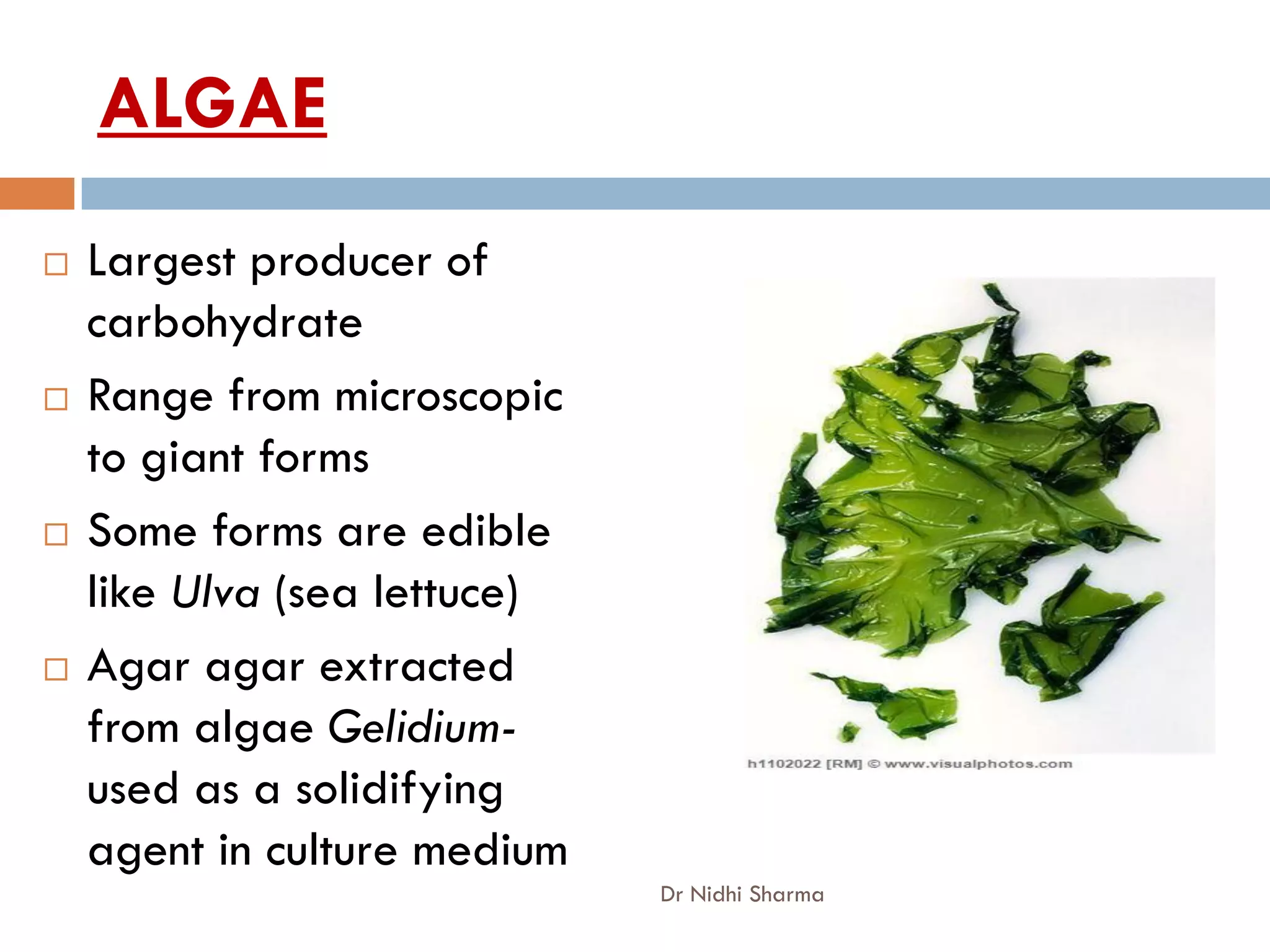
   Some forms are edible
    like Ulva (sea lettuce)
   Agar agar extracted
    from algae Gelidium-
    used as a solidifying
    agent in culture medium
                              Dr Nidhi Sharma
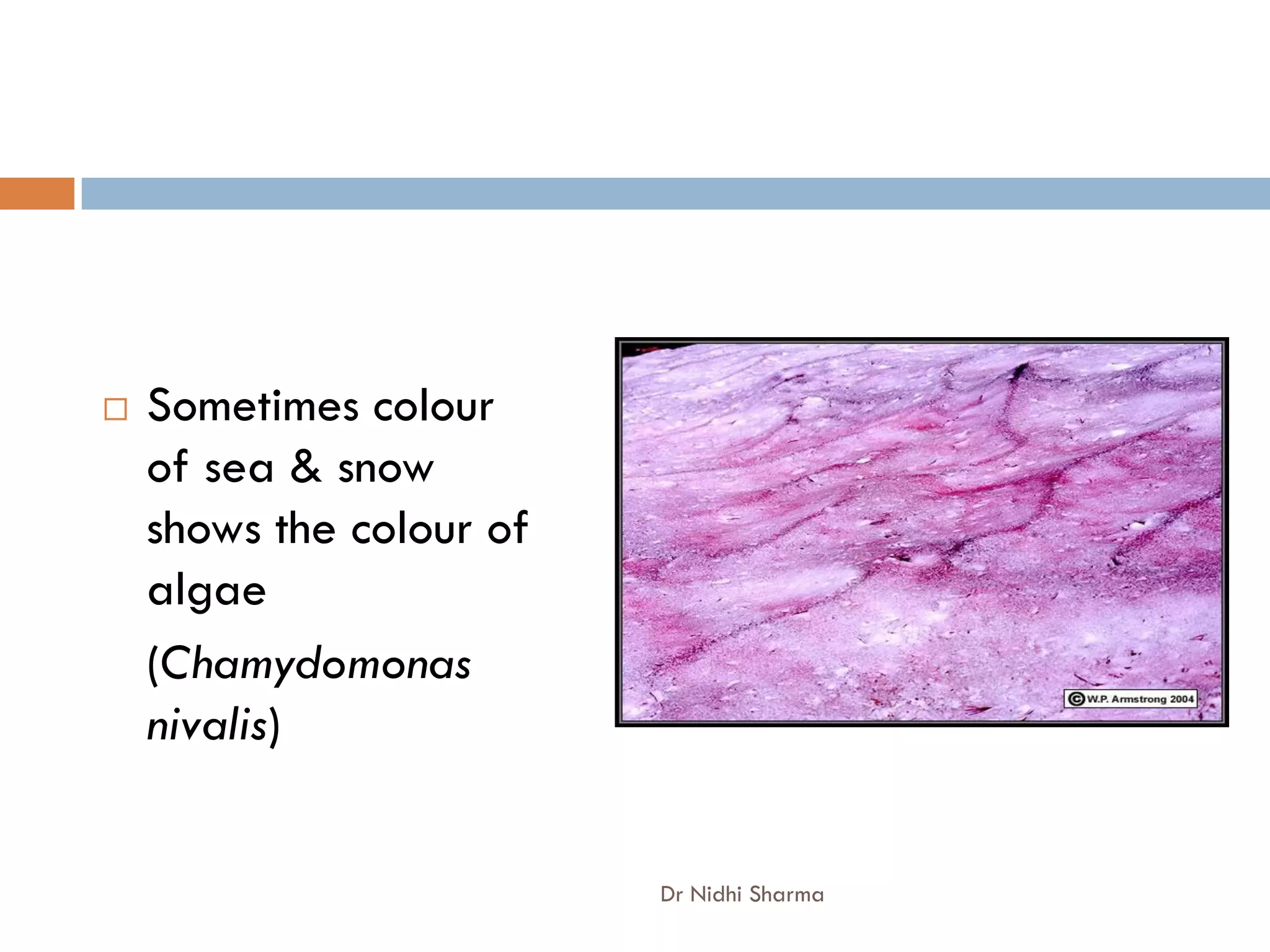
   Sometimes colour
    of sea & snow
    shows the colour of
    algae
    (Chamydomonas
    nivalis)


                          Dr Nidhi Sharma
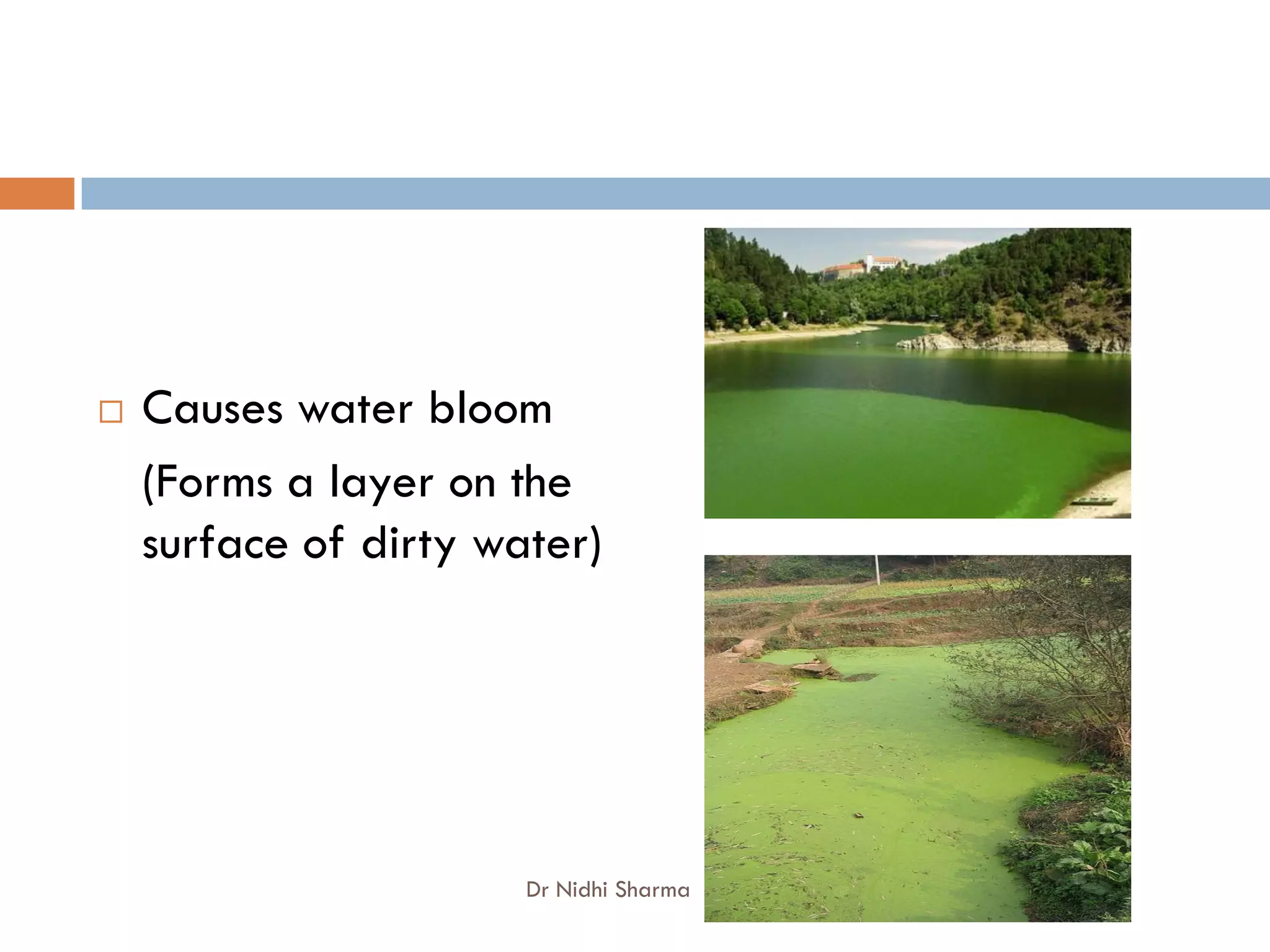
   Causes water bloom
    (Forms a layer on the
    surface of dirty water)


                       Dr Nidhi Sharma
BRYOPHYTA
                                       Marcantia


 Amphibious
  plant
 Grows on land
                                       Anthoceros

  as well as water


                     Dr Nidhi Sharma
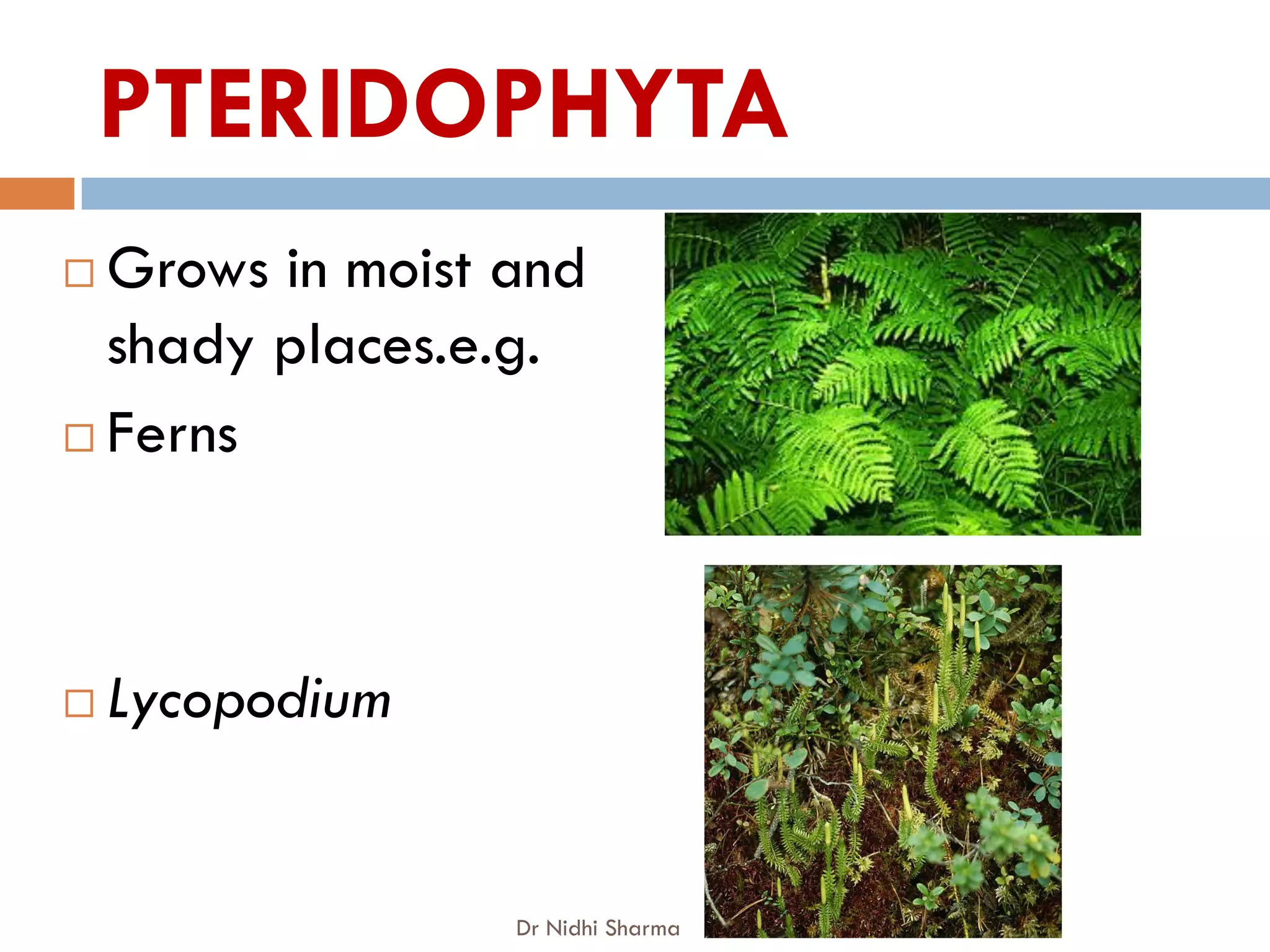
PTERIDOPHYTA
 Grows in moist and
  shady places.e.g.
 Ferns


   Lycopodium


                 Dr Nidhi Sharma
GYMNOSPERMS
   Do not produce flowers but
    form seeds
   Seeds are naked. Fruits not
    formed
   E.g. Cycas, Pinus, Ephedra
   Terpentine oil is extracted from
    Pinus
   Chilgoza is the seed of Pinus
    gerardiana
   Cycas (sago palm) is a source
    of sago
   Ephedra is a source of medicine
    Ephedrine
                                 Dr Nidhi Sharma
ANGIOSPERMS


 Flowering plants
 Produce seeds in fruit


                           Dr Nidhi Sharma
BRANCHES OF BOTANY
   Taxonomy- science that finds, describes, classifies,
    identifies, and names plants on the basis of
    external features, internal features & showing
    relatedness
   Anatomy- study of the internal structure of plants.
   Embryology- the science of the origin and
    formation of new plants
   Genetics- studies heredity and variation in plants.

                              Dr Nidhi Sharma
   Ecology- deals with the distribution and abundance of
    plants, the interactions among and between members of
    plant species and their interaction with their environment.
   Physiology- concerned with the functioning or physiology
    of plants.
   Biochemistry- Deals with the structure, function and
    interaction of cellular components such as proteins,
    carbohydrates, lipids, nucleic acids and other
    biomolecules

                                 Dr Nidhi Sharma
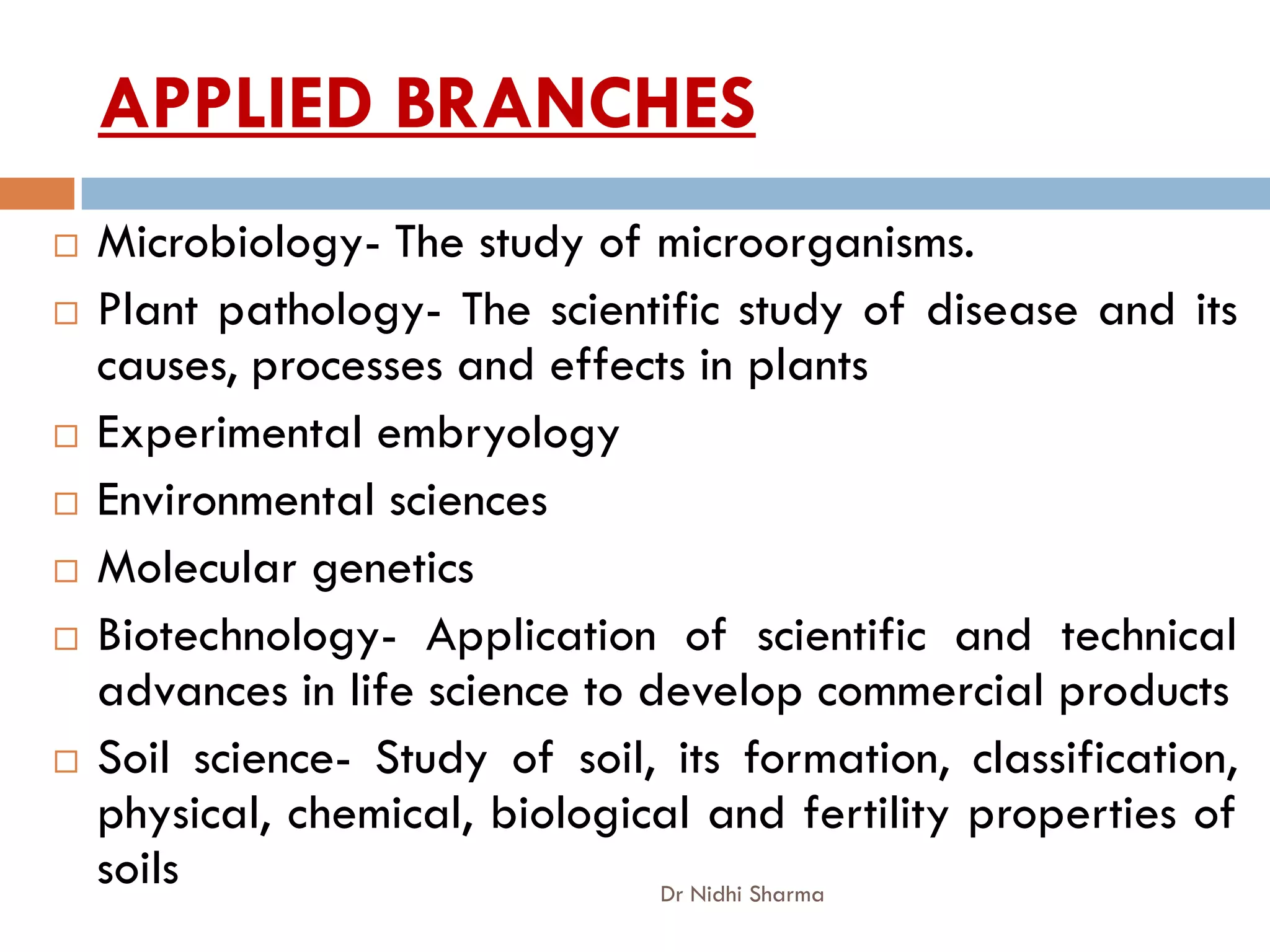
APPLIED BRANCHES
   Microbiology- The study of microorganisms.
   Plant pathology- The scientific study of disease and its
    causes, processes and effects in plants
   Experimental embryology
   Environmental sciences
   Molecular genetics
   Biotechnology- Application of scientific and technical
    advances in life science to develop commercial products
   Soil science- Study of soil, its formation, classification,
    physical, chemical, biological and fertility properties of
    soils                        Dr Nidhi Sharma
Dr Nidhi Sharma

Botany an overview

  • 1.
    BOTANY AN OVERVIEW - Dr Nidhi Sharma
  • 2.
  • 3.
    Includes  Bacteria & viruses  Fungi  Algae  Bryophyta  Pteridophyta  Gymnosperms  Angiosperms Dr Nidhi Sharma
  • 4.
    Bacteria  Microscopic 0.2mmor less  Present everywhere Dr Nidhi Sharma
  • 5.
    Economic importance-Useful aspect  Products in our day to day life are the result of bacteria  Curd  Cheese  Antibiotics  Streptomycin  Amoxicillin Dr Nidhi Sharma
  • 6.
    Economic importance-Harmful aspect  Diseases in human being  Tuberculosis – Mycobacterium tuberculosis  Syphilis- Tryponema pallidum  Gonorrhoea- Neisseria gonnorhoea  Diphtheria- Corynebacterium diphtheriae  Tetanus- Clostridium tetani  Whooping cough- Bordetella pertussis  Anthrax-Bacillus anthracis Dr Nidhi Sharma
  • 7.
    Food poisoning (Botulism)- Clostridium botulinum  Diseases in plants  Citrus canker- Xanthomonas citri Dr Nidhi Sharma
  • 8.
    Viruses  Causes diseases only in plants & humans  In humans –e.g. cough & cold (caused by 100 different viruses), measles, mumps, AIDS etc  In plants- e.g. yellow vein mosaic of bhindi, Papaya mosaic, leaf roll of papaya etc Dr Nidhi Sharma
  • 9.
    FUNGI  Non green plants  Grow on dead & decaying organic matter and absorb food from it  Microscopic form to large ones with big fruiting bodies  Common example is mushroom Microscopic form Macroscopic form Dr Nidhi Sharma
  • 10.
    Forms which youhave seen  Edible mushroom  Poisonous mushroom like toadstool  Bread mould-Aspergillus, Penicillium, Mucor etc  On the leaves of sarso, muli etc as black rounded spots  Yeast –baking, brewing (bread, beer, wine)  Antibiotics- Penicillin & Cephalosporin  Cheese- Roquefort & Camembert Dr Nidhi Sharma
  • 11.
    Economic importance- usefulaspect  In market different forms of mushroom are available which are edible  Packed button mushroom  Truffles Dr Nidhi Sharma
  • 12.
    Economic importance- usefulaspect  Soy sauce , tofu, tofu tempeh , miso tempeh Dr Nidhi Sharma
  • 13.
    Economic importance- usefulaspect Ganoderma lucidum tea, powder, tooth paste Used in cancer treatment Dr Nidhi Sharma
  • 14.
    Economic importance- harmfulaspect  Crop diseases- e.g. potato blight (cause of irish famine in 1845)  Dandruff in human beings-Malassezia furfur Dr Nidhi Sharma
  • 15.
    Economic importance- harmfulaspect Athelets foot-Trichophyton sp. Ring worm-Trichophyton sp. Dr Nidhi Sharma
  • 16.
    ALGAE  Largest producer of carbohydrate  Range from microscopic to giant forms  Some forms are edible like Ulva (sea lettuce)  Agar agar extracted from algae Gelidium- used as a solidifying agent in culture medium Dr Nidhi Sharma
  • 17.
    Sometimes colour of sea & snow shows the colour of algae (Chamydomonas nivalis) Dr Nidhi Sharma
  • 18.
    Causes water bloom (Forms a layer on the surface of dirty water) Dr Nidhi Sharma
  • 19.
    BRYOPHYTA Marcantia  Amphibious plant  Grows on land Anthoceros as well as water Dr Nidhi Sharma
  • 20.
    PTERIDOPHYTA  Grows inmoist and shady places.e.g.  Ferns  Lycopodium Dr Nidhi Sharma
  • 21.
    GYMNOSPERMS  Do not produce flowers but form seeds  Seeds are naked. Fruits not formed  E.g. Cycas, Pinus, Ephedra  Terpentine oil is extracted from Pinus  Chilgoza is the seed of Pinus gerardiana  Cycas (sago palm) is a source of sago  Ephedra is a source of medicine Ephedrine Dr Nidhi Sharma
  • 22.
    ANGIOSPERMS  Flowering plants Produce seeds in fruit Dr Nidhi Sharma
  • 23.
    BRANCHES OF BOTANY  Taxonomy- science that finds, describes, classifies, identifies, and names plants on the basis of external features, internal features & showing relatedness  Anatomy- study of the internal structure of plants.  Embryology- the science of the origin and formation of new plants  Genetics- studies heredity and variation in plants. Dr Nidhi Sharma
  • 24.
    Ecology- deals with the distribution and abundance of plants, the interactions among and between members of plant species and their interaction with their environment.  Physiology- concerned with the functioning or physiology of plants.  Biochemistry- Deals with the structure, function and interaction of cellular components such as proteins, carbohydrates, lipids, nucleic acids and other biomolecules Dr Nidhi Sharma
  • 25.
    APPLIED BRANCHES  Microbiology- The study of microorganisms.  Plant pathology- The scientific study of disease and its causes, processes and effects in plants  Experimental embryology  Environmental sciences  Molecular genetics  Biotechnology- Application of scientific and technical advances in life science to develop commercial products  Soil science- Study of soil, its formation, classification, physical, chemical, biological and fertility properties of soils Dr Nidhi Sharma
  • 26.