BOREAL FORREST BIOME
     By Jonah Hicks
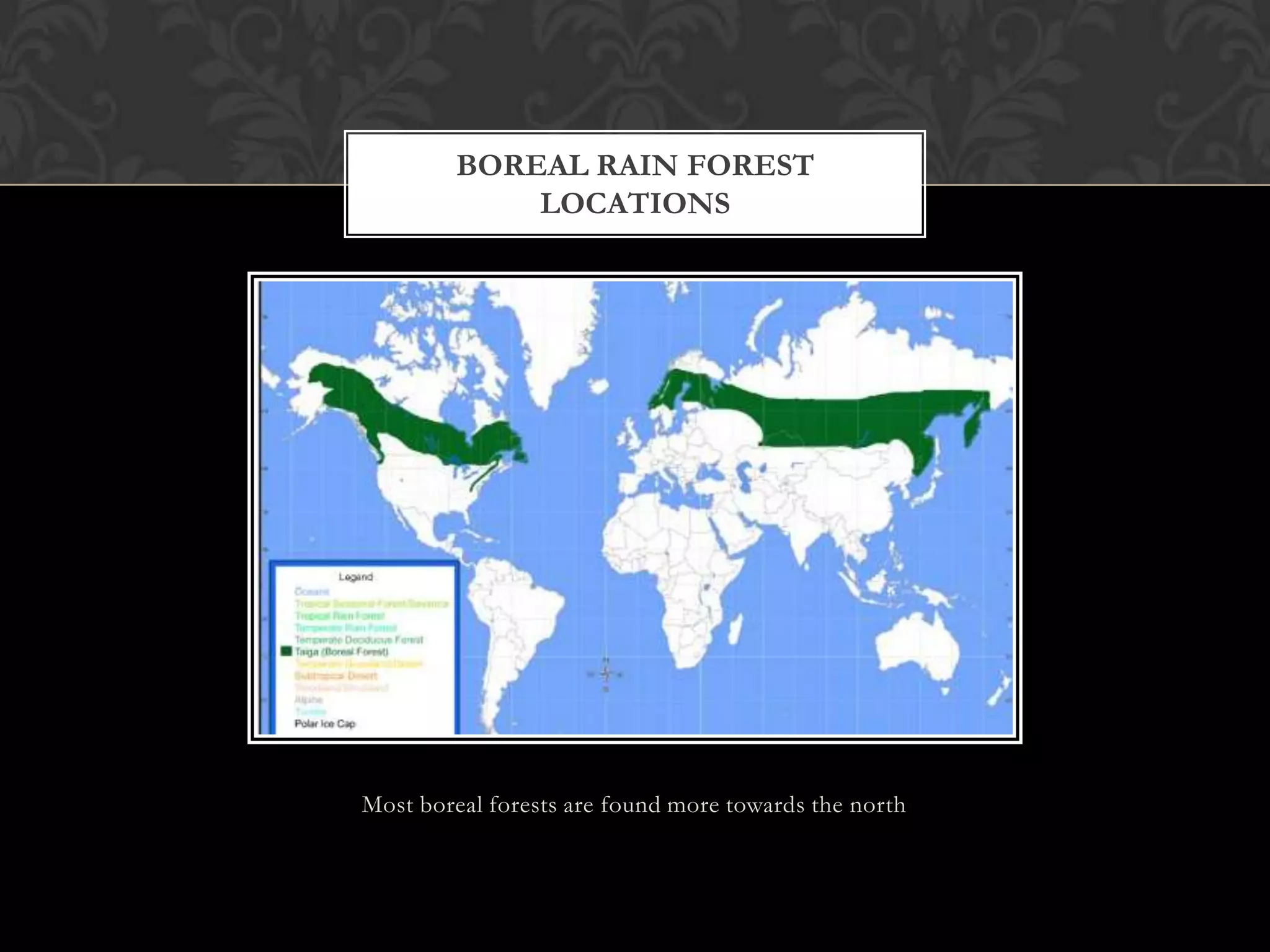
BOREAL RAIN FOREST
             LOCATIONS


Most boreal forests are found more towards the north
PLANT ADAPTIONS


   Pine needles- are well-adapted, with thick waxy coatings and small
     surface area, to resist cold conditions and minimize water loss
  coniferous trees- dominate in the cold taiga climate the broad leaves
are much more efficient, so if conditions are favorable(warm and moist)
                     they are the preferred leaf type.
CLIMATE


  Climate in the taiga is cold, with average annual temperatures from
                             about +5c to -5c .
     Yellowstone National Park in Wyoming, has an average annual
   temperature of only 1c. Precipitation varies, from about 20 cm of
precipitation per year to over 200 cm. Much of the precipitation is in the
                               form of snow.
ANIMAL ADAPTIONS


Bobcat- thick fur that naturally changes during year and insulated thick pads.
Porcupines-It has hairless soles on its feet that help it climb trees. The most
             recognizable feature of the porcupine is its quills
  Grizzly bears- The big muscles that make the hump is an adaptations for
digging and for attaining bursts of speed necessary for capture of moose or
  caribou . Hibernating is a behavioral adaptation, the bears behavior has
        changed from being active everyday to hibernating everyday.
PREDATOR-PREY


If a coyote eats a rabbit it gets energy from the rabbit the rabbits eat grass and
   coyote waste fertilizes grass. If there is no coyote to eat the rabbit rabbits
would over populate and if there were no rabbits for coyote to eat the coyotes
                                   would die off.
COMPETITION


Consider two different of species of fish inside of a fish tank. If you were to
stop feeding the fish eventually one will attack the other to eat. Competition
   will produce one stronger fish. That's the fish that has the advantage or
                               ecological niche.
FOOD CHAIN


Plants need oxygen to grow and the plants get eaten by dear and the dear gets
   eaten by a grizzly when the grizzly dies it is eaten by bacteria and bugs.
RENEWABLE RESOURCES


   Renewable- Trees
        Bear
        Dear
    Huckleberries
        Ferns
   Nonrenewable- oil
       Copper
        Iron
        Gold
         zinc
BIOTIC AND ABIOTIC


Biotic- Without bears most prey animals would over populate and cause over
                                    grazing
     Abiotic- without water all living creatures would die from drought.

Boreal forrest biome

  • 1.
    BOREAL FORREST BIOME By Jonah Hicks
  • 2.
    BOREAL RAIN FOREST LOCATIONS Most boreal forests are found more towards the north
  • 3.
    PLANT ADAPTIONS Pine needles- are well-adapted, with thick waxy coatings and small surface area, to resist cold conditions and minimize water loss coniferous trees- dominate in the cold taiga climate the broad leaves are much more efficient, so if conditions are favorable(warm and moist) they are the preferred leaf type.
  • 4.
    CLIMATE Climatein the taiga is cold, with average annual temperatures from about +5c to -5c . Yellowstone National Park in Wyoming, has an average annual temperature of only 1c. Precipitation varies, from about 20 cm of precipitation per year to over 200 cm. Much of the precipitation is in the form of snow.
  • 5.
    ANIMAL ADAPTIONS Bobcat- thickfur that naturally changes during year and insulated thick pads. Porcupines-It has hairless soles on its feet that help it climb trees. The most recognizable feature of the porcupine is its quills Grizzly bears- The big muscles that make the hump is an adaptations for digging and for attaining bursts of speed necessary for capture of moose or caribou . Hibernating is a behavioral adaptation, the bears behavior has changed from being active everyday to hibernating everyday.
  • 6.
    PREDATOR-PREY If a coyoteeats a rabbit it gets energy from the rabbit the rabbits eat grass and coyote waste fertilizes grass. If there is no coyote to eat the rabbit rabbits would over populate and if there were no rabbits for coyote to eat the coyotes would die off.
  • 7.
    COMPETITION Consider two differentof species of fish inside of a fish tank. If you were to stop feeding the fish eventually one will attack the other to eat. Competition will produce one stronger fish. That's the fish that has the advantage or ecological niche.
  • 8.
    FOOD CHAIN Plants needoxygen to grow and the plants get eaten by dear and the dear gets eaten by a grizzly when the grizzly dies it is eaten by bacteria and bugs.
  • 9.
    RENEWABLE RESOURCES Renewable- Trees Bear Dear Huckleberries Ferns Nonrenewable- oil Copper Iron Gold zinc
  • 10.
    BIOTIC AND ABIOTIC Biotic-Without bears most prey animals would over populate and cause over grazing Abiotic- without water all living creatures would die from drought.