BONE PHYSIOLOGY AND
CALCIUM HOMEOSTASIS
Prepared by: Supervised by:
Dr. Abdullah K. Ghafour Dr. Ali Abdunabi Alwan
3rd year IBFMS trainee
20th September 2017
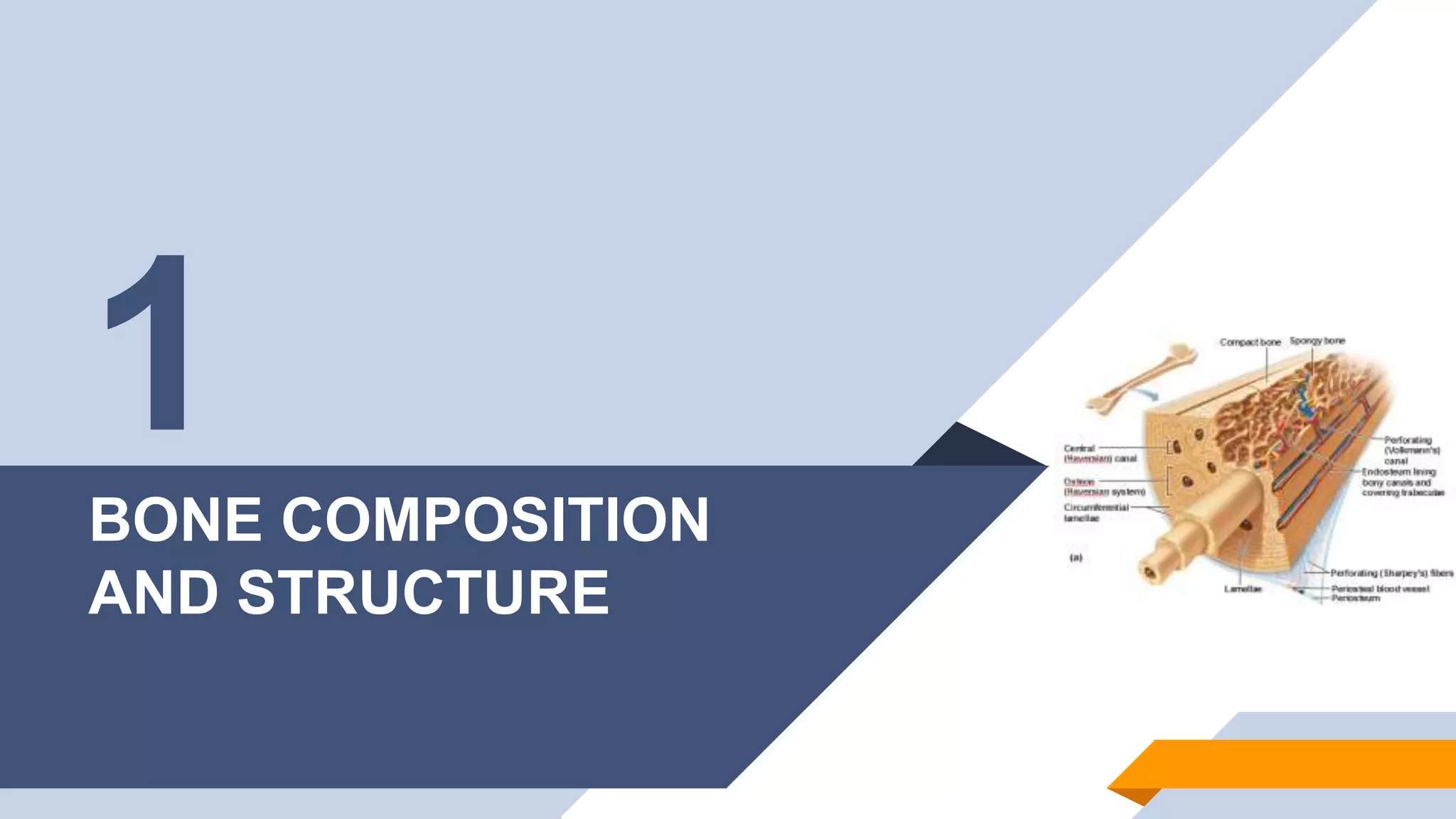
BONE COMPOSITION
AND STRUCTURE
1
BONE COMPOSITION AND STRUCTURE
▰Bone is a highly specialized supporting framework of the body,
characterized by its rigidity, hardness, and power of regeneration and
repair.
▰It protects the vital organs, provides an environment for marrow ,acts as a
mineral reservoir for calcium homeostasis and a reservoir of growth factors
and cytokines, and also takes part in acid–base balance.
▰Bone constantly undergoes modeling (reshaping) during life to help it
adapt to changing biomechanical forces, as well as remodeling to remove
old, micro-damaged bone and replace it with new, mechanically stronger
bone to help preserve bone strength.
BONE COMPOSITION AND STRUCTURE
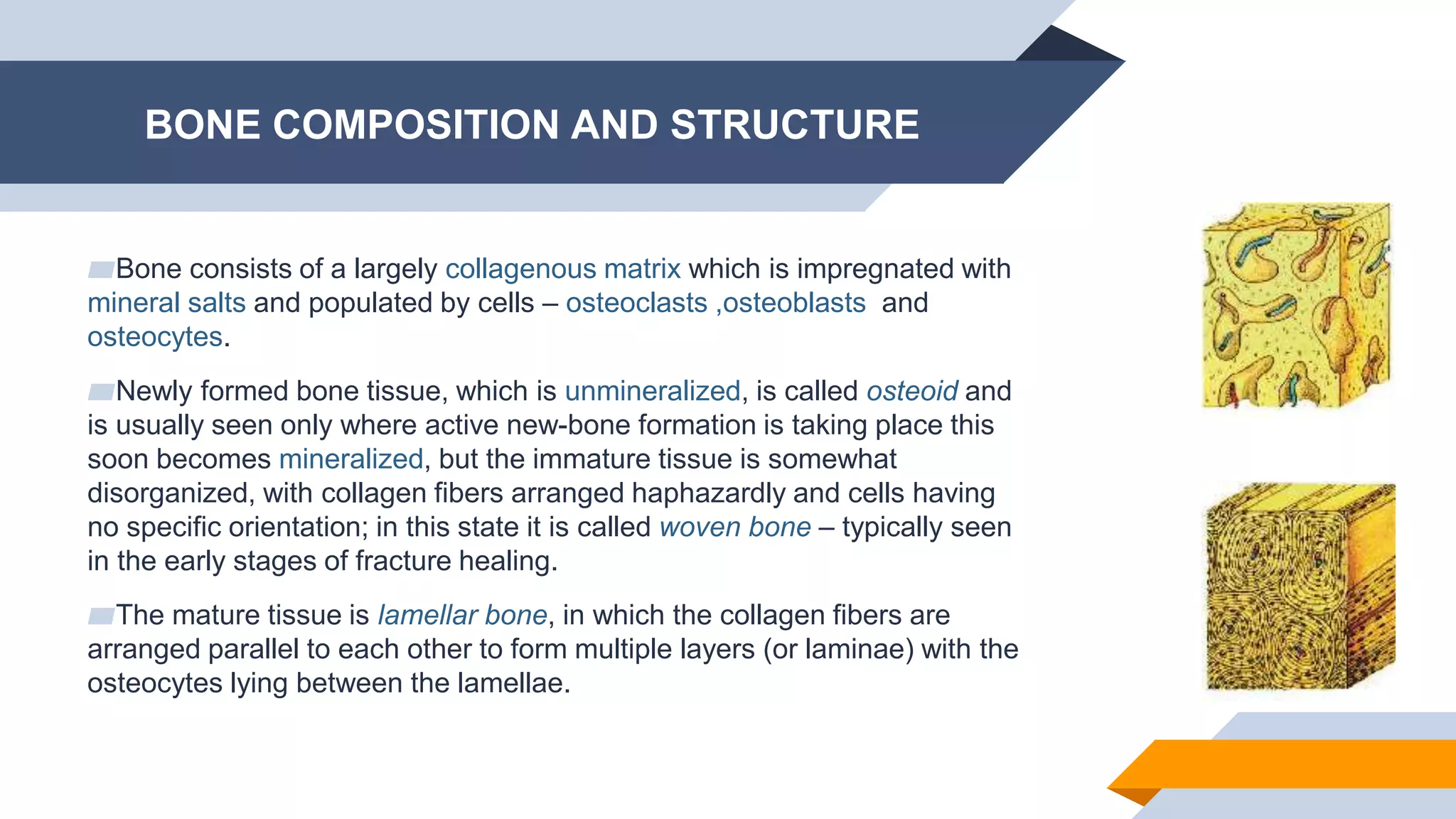
▰Bone consists of a largely collagenous matrix which is impregnated with
mineral salts and populated by cells – osteoclasts ,osteoblasts and
osteocytes.
▰Newly formed bone tissue, which is unmineralized, is called osteoid and
is usually seen only where active new-bone formation is taking place this
soon becomes mineralized, but the immature tissue is somewhat
disorganized, with collagen fibers arranged haphazardly and cells having
no specific orientation; in this state it is called woven bone – typically seen
in the early stages of fracture healing.
▰The mature tissue is lamellar bone, in which the collagen fibers are
arranged parallel to each other to form multiple layers (or laminae) with the
osteocytes lying between the lamellae.
BONE COMPOSITION AND STRUCTURE
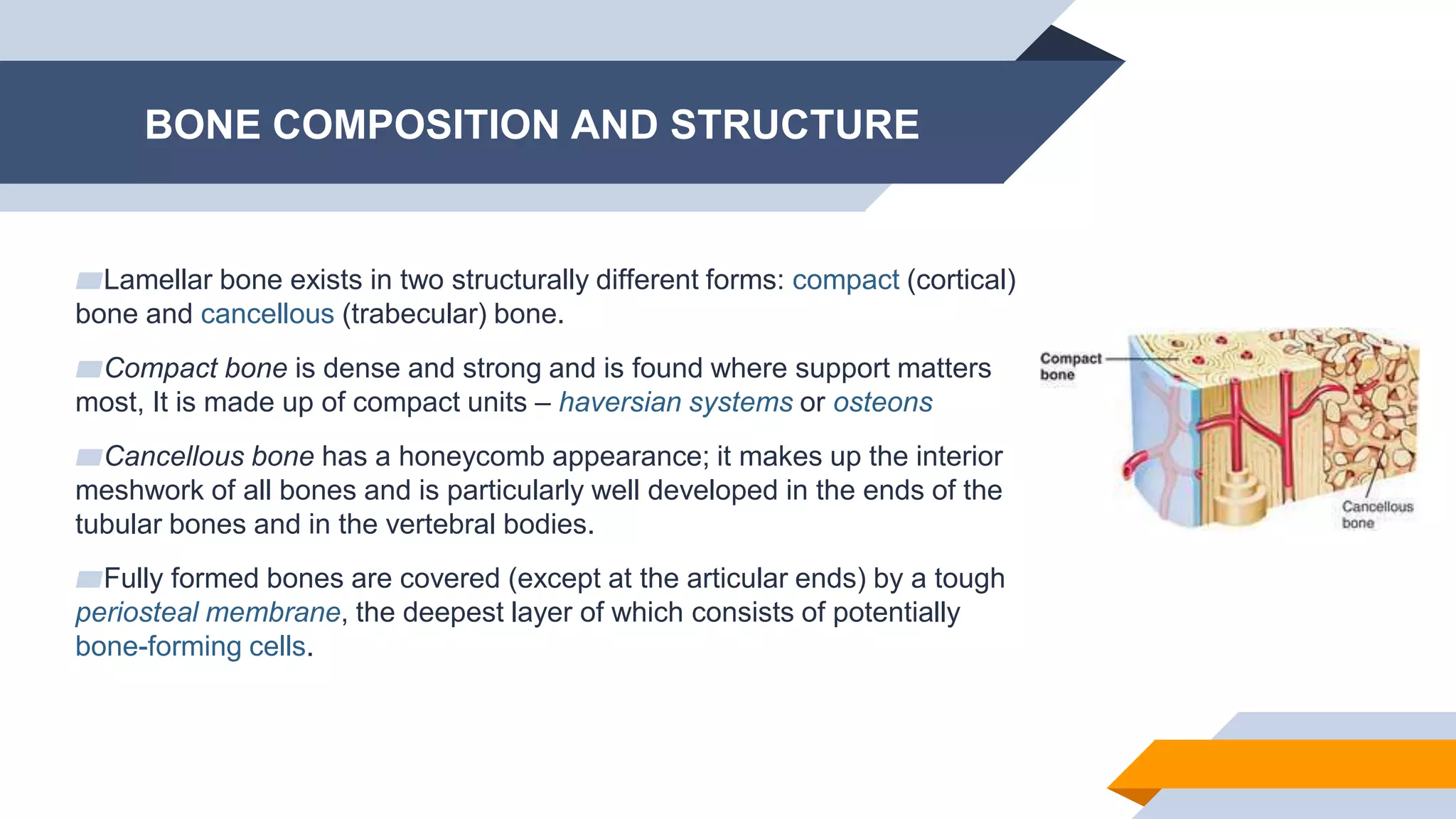
▰Lamellar bone exists in two structurally different forms: compact (cortical)
bone and cancellous (trabecular) bone.
▰Compact bone is dense and strong and is found where support matters
most, It is made up of compact units – haversian systems or osteons
▰Cancellous bone has a honeycomb appearance; it makes up the interior
meshwork of all bones and is particularly well developed in the ends of the
tubular bones and in the vertebral bodies.
▰Fully formed bones are covered (except at the articular ends) by a tough
periosteal membrane, the deepest layer of which consists of potentially
bone-forming cells.
BONE COMPOSITION AND STRUCTURE
▰Bone cells are of three types: osteoblasts, osteocytes and osteoclasts.
▰Osteoblasts are concerned with bone formation and osteoclast activation.
They develop from mesenchymal precursors in the bone marrow and
beneath the periosteum.
▰Differentiation is controlled by a number of interacting growth factors,
including bone morphogenetic proteins (BMPs). Prompted by parathyroid
hormone (PTH) PTH), osteoblasts also play an important role in the
initiation and control of osteoclastic activity.
▰At the end of each bone-forming cycle the osteoblasts either remain on
the newly formed bone surface as quiescent lining cells or they become
embedded in the matrix as ‘resting’ osteocytes.
BONE COMPOSITION AND STRUCTURE
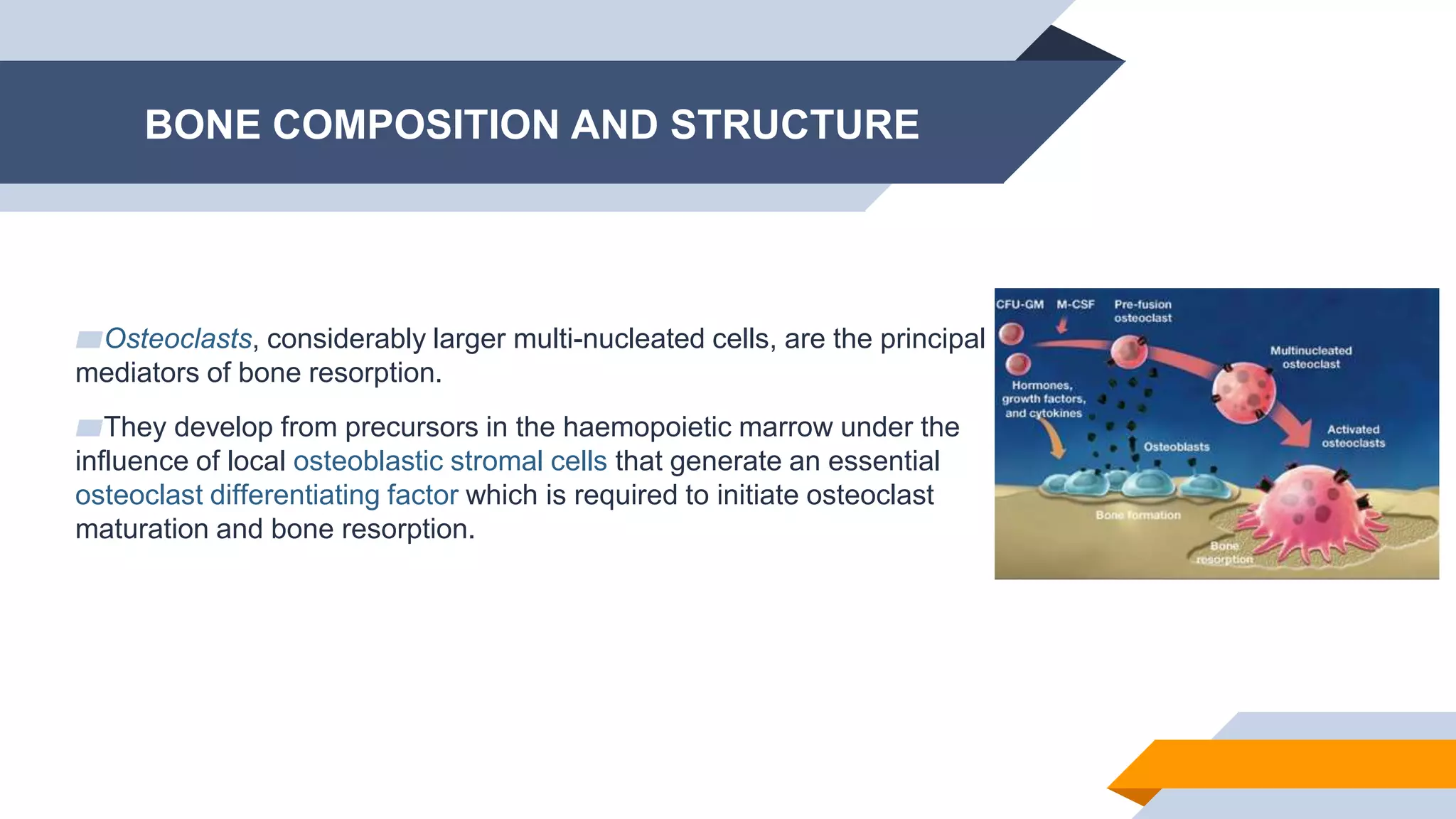
▰Osteoclasts, considerably larger multi-nucleated cells, are the principal
mediators of bone resorption.
▰They develop from precursors in the haemopoietic marrow under the
influence of local osteoblastic stromal cells that generate an essential
osteoclast differentiating factor which is required to initiate osteoclast
maturation and bone resorption.
BONE COMPOSITION AND STRUCTURE
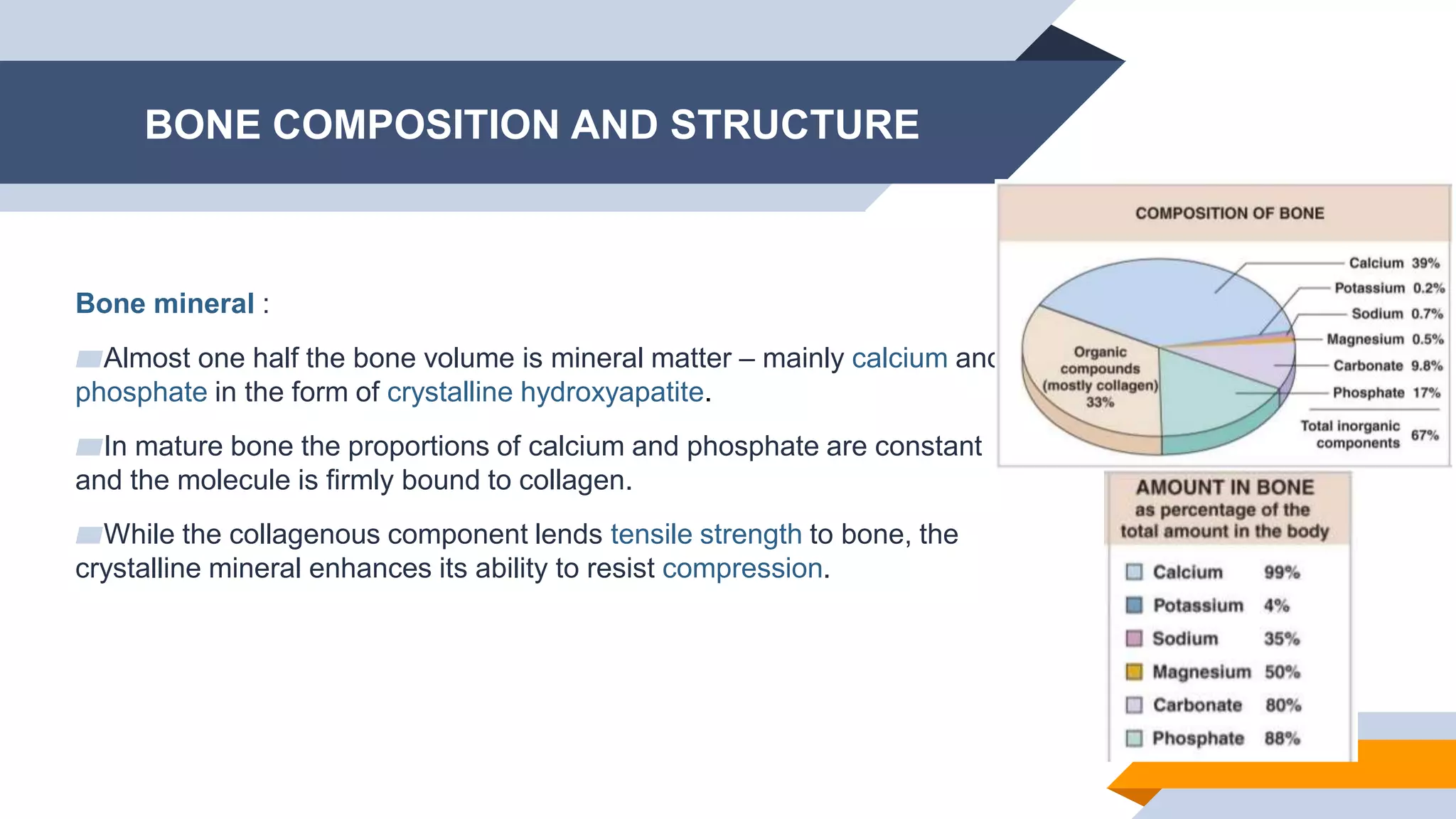
Bone mineral :
▰Almost one half the bone volume is mineral matter – mainly calcium and
phosphate in the form of crystalline hydroxyapatite.
▰In mature bone the proportions of calcium and phosphate are constant
and the molecule is firmly bound to collagen.
▰While the collagenous component lends tensile strength to bone, the
crystalline mineral enhances its ability to resist compression.
BONE COMPOSITION AND STRUCTURE
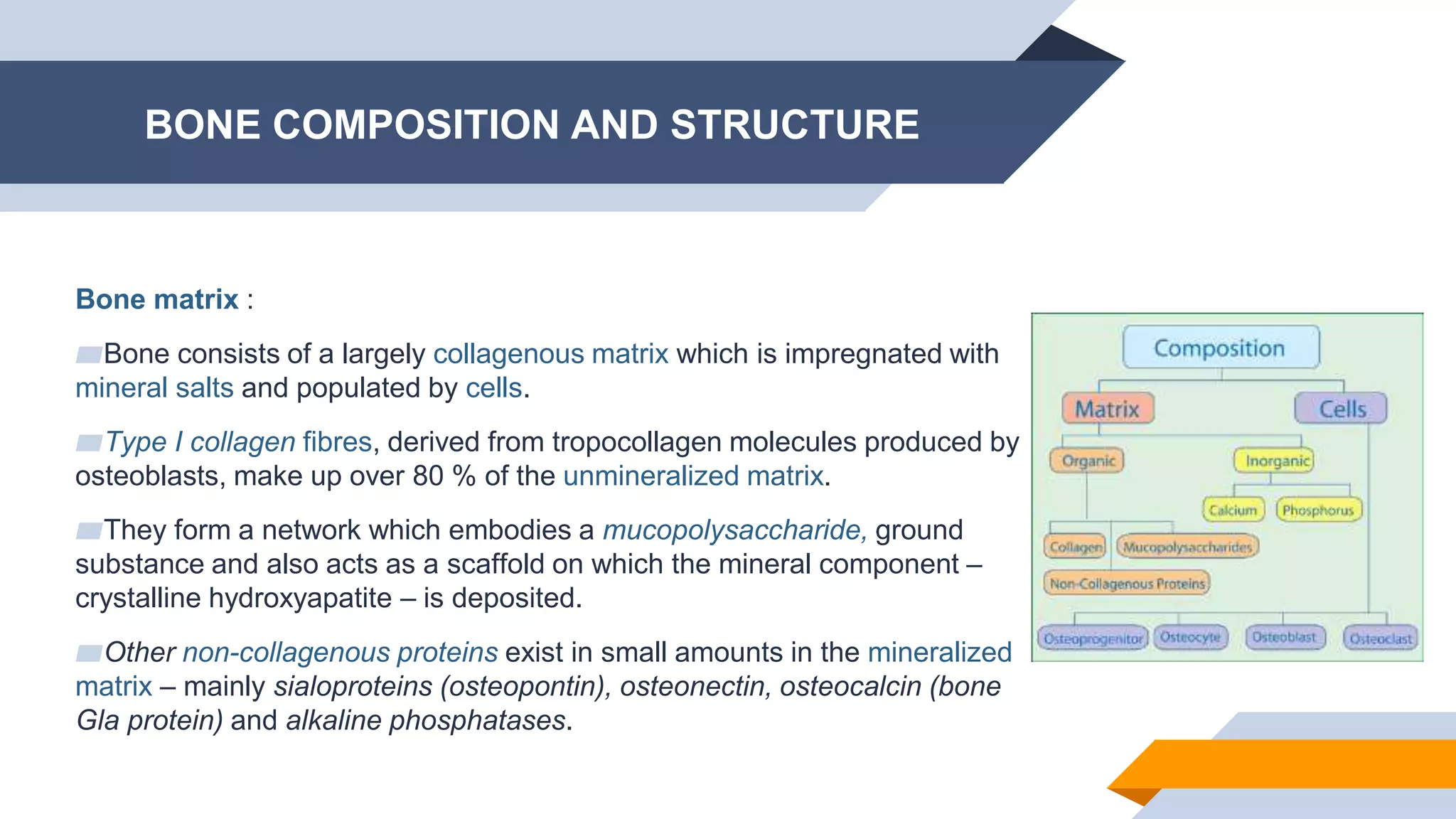
Bone matrix :
▰Bone consists of a largely collagenous matrix which is impregnated with
mineral salts and populated by cells.
▰Type I collagen fibres, derived from tropocollagen molecules produced by
osteoblasts, make up over 80 % of the unmineralized matrix.
▰They form a network which embodies a mucopolysaccharide, ground
substance and also acts as a scaffold on which the mineral component –
crystalline hydroxyapatite – is deposited.
▰Other non-collagenous proteins exist in small amounts in the mineralized
matrix – mainly sialoproteins (osteopontin), osteonectin, osteocalcin (bone
Gla protein) and alkaline phosphatases.
BONE DEVELOPMENT
AND GROWTH
2
BONE DEVELOPMENT AND GROWTH
▰Bones develop in two different ways: by ossification of a prior cartilage
model (endochondral ossification) and by direct (intramembranous
ossification).
▰Endochondral ossification is the usual manner in which tubular bones
develop.
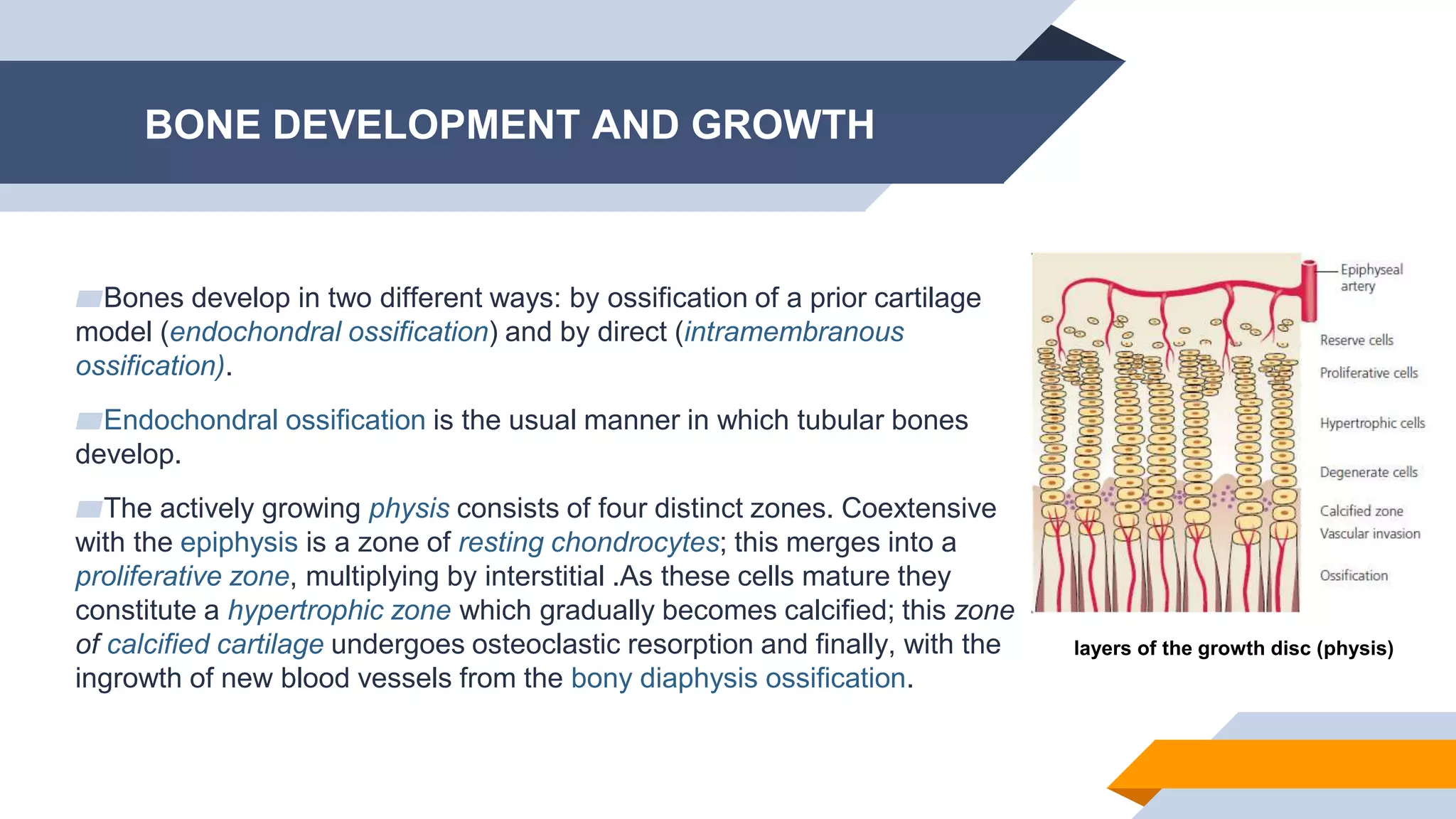
▰The actively growing physis consists of four distinct zones. Coextensive
with the epiphysis is a zone of resting chondrocytes; this merges into a
proliferative zone, multiplying by interstitial .As these cells mature they
constitute a hypertrophic zone which gradually becomes calcified; this zone
of calcified cartilage undergoes osteoclastic resorption and finally, with the
ingrowth of new blood vessels from the bony diaphysis ossification.
layers of the growth disc (physis)
BONE DEVELOPMENT AND GROWTH
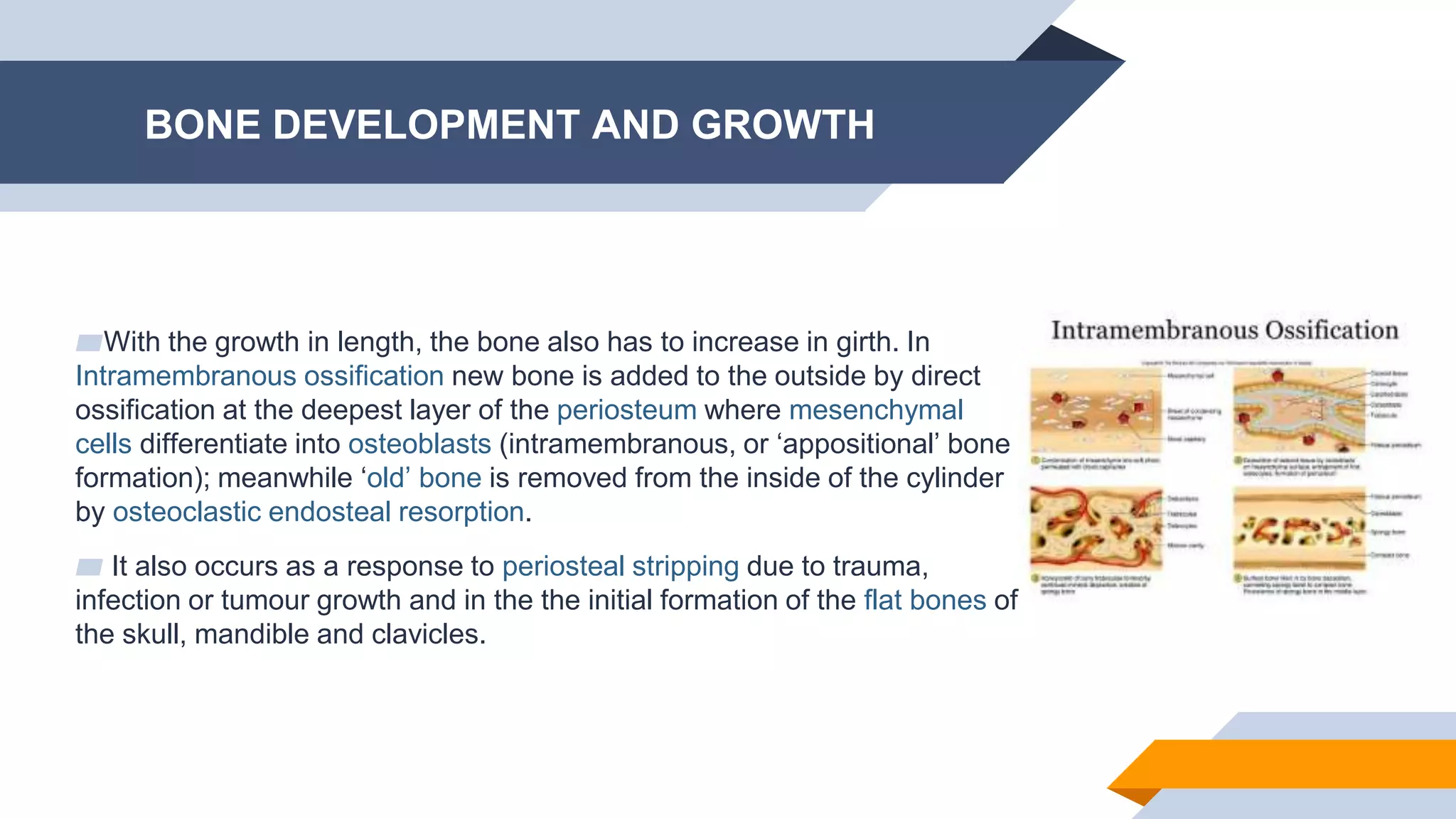
▰With the growth in length, the bone also has to increase in girth. In
Intramembranous ossification new bone is added to the outside by direct
ossification at the deepest layer of the periosteum where mesenchymal
cells differentiate into osteoblasts (intramembranous, or ‘appositional’ bone
formation); meanwhile ‘old’ bone is removed from the inside of the cylinder
by osteoclastic endosteal resorption.
▰ It also occurs as a response to periosteal stripping due to trauma,
infection or tumour growth and in the the initial formation of the flat bones of
the skull, mandible and clavicles.
BONE DEVELOPMENT AND GROWTH
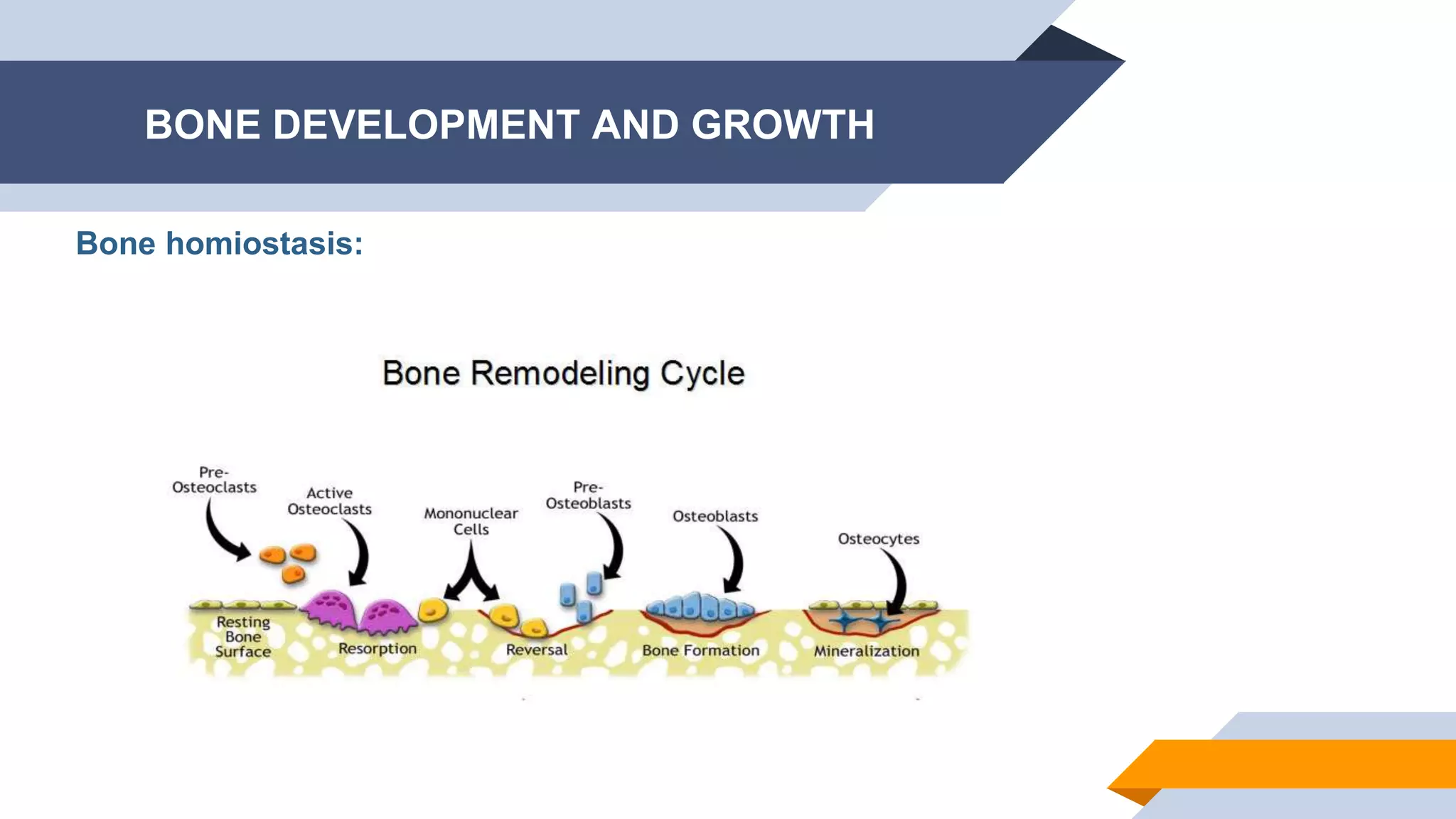
Bone homiostasis:
▰REMODELING is the ongoing replacement of old bone tissue by new bone
tissue. It takes place at different rates in various parts of body.
▰Osteoclasts are responsible for bone resorption (destruction of matrix). A
delicate homeostasis exists between the actions of the osteoclasts in removing
minerals and collagen and of osteoblasts in depositing them.
▰Bone remodeling cycle: ACTIVATION- osteoclasts are activated & begin
secreting acids to resorb bone. RESORPTION- osteoclastic resoprtion occurs.
REVERSAL- resorption stops & osteoblast take over. FORMATION- osteoblast
form bone on the opposing surface to complete the bone reforming process.
▰This cycle takes about 100 days in Compact bone & 200 days in Spongy
bone.
BONE DEVELOPMENT AND GROWTH
Bone homiostasis:
Value of continual bone remodeling:
▰ Bone adjusts its strength in proportion to degree of bone stress.
▰ the shape of the bone can be rearranged for proper support of
mechanical forces in accordance with stress patterns.
▰ new organic matrix is needed as the old organic matrix degenerates.
Wolff’s Law : “Every change in the function of a bone is followed by certain
definite changes in its internal architecture and its external conformation.”
BONE DEVELOPMENT AND GROWTH
Bone homiostasis:
The thickest trabeculae are arranged
along the trajectories of greatest stress
Factors affecting bone remodeling:
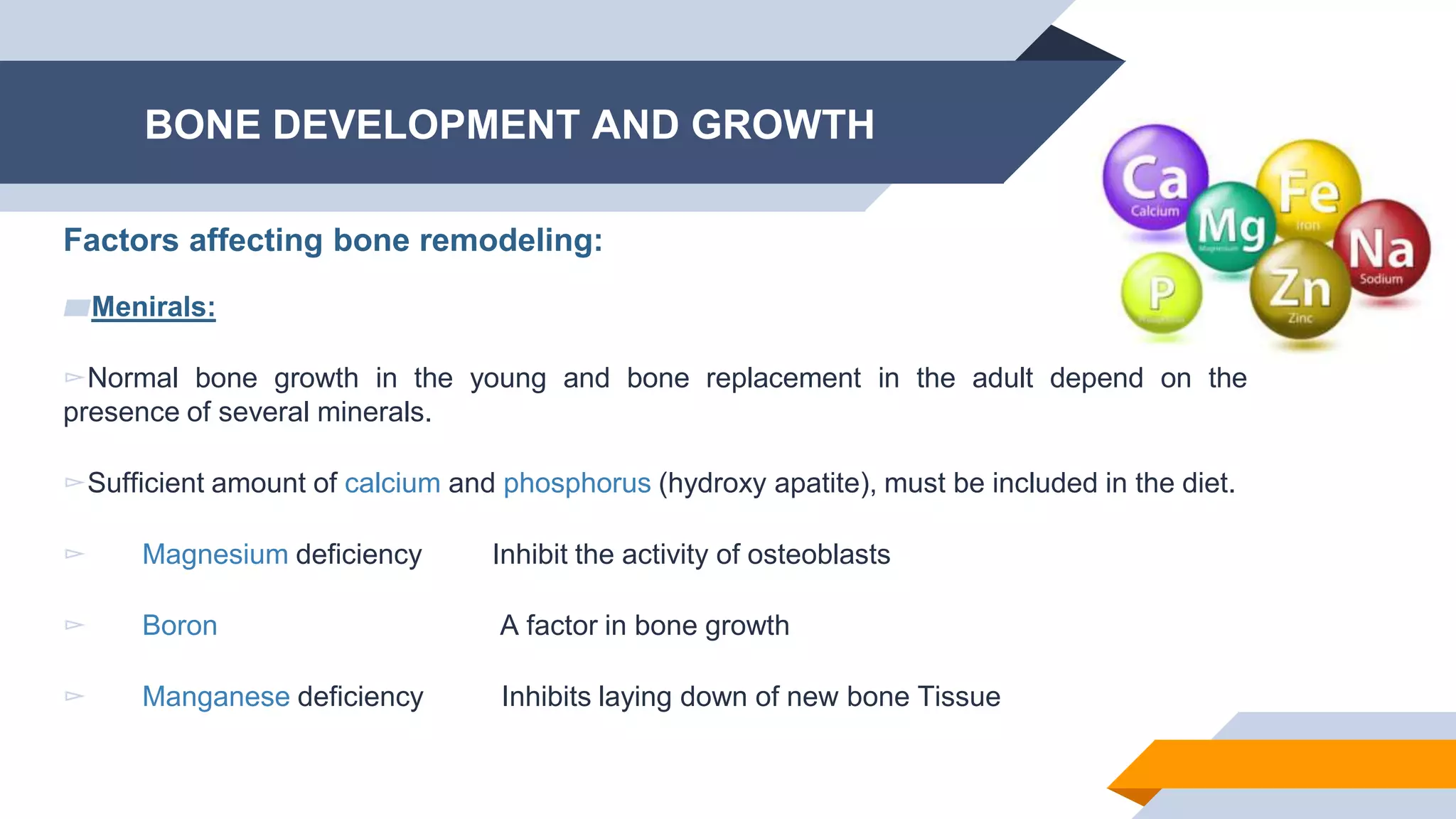
▰Menirals:
▻Normal bone growth in the young and bone replacement in the adult depend on the
presence of several minerals.
▻Sufficient amount of calcium and phosphorus (hydroxy apatite), must be included in the diet.
▻ Magnesium deficiency Inhibit the activity of osteoblasts
▻ Boron A factor in bone growth
▻ Manganese deficiency Inhibits laying down of new bone Tissue
BONE DEVELOPMENT AND GROWTH
Factors affecting bone remodeling:
▰vitamins:
▻Several vitamins like vitamins D, C, A, and B12, play a role in bone remodeling.
▻The most active form of vitamin D is calcitriol promotes removal of calcium from bone. On the
other hand,it retards calcium loss in urine, which makes it available for deposit in bone matrix.
▻Vit C deficiency causes decrease collagen production, which retards bone growth and delays
fracture healing .
▻Vit A helps to control the activity , distribution, and co-ordination of osteoblasts and
osteoclasts during development. Its deficiency results in a decreased rate of growth in the
skeleton.
▻Vit B12 may play a role in osteoblast activity.
BONE DEVELOPMENT AND GROWTH
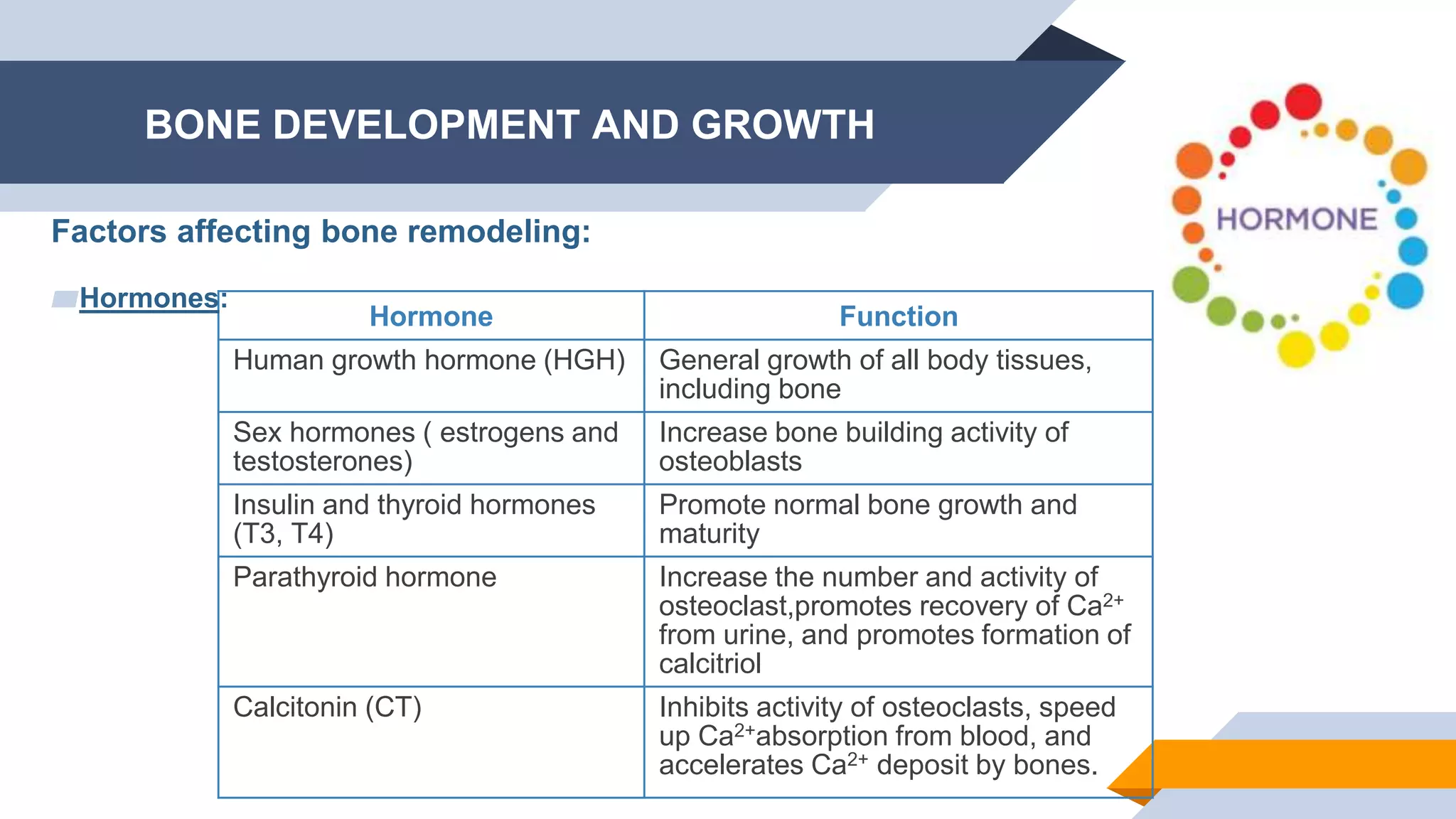
Hormone Function
Human growth hormone (HGH) General growth of all body tissues,
including bone
Sex hormones ( estrogens and
testosterones)
Increase bone building activity of
osteoblasts
Insulin and thyroid hormones
(T3, T4)
Promote normal bone growth and
maturity
Parathyroid hormone Increase the number and activity of
osteoclast,promotes recovery of Ca2+
from urine, and promotes formation of
calcitriol
Calcitonin (CT) Inhibits activity of osteoclasts, speed
up Ca2+absorption from blood, and
accelerates Ca2+ deposit by bones.
Factors affecting bone remodeling:
▰Hormones:
BONE DEVELOPMENT AND GROWTH
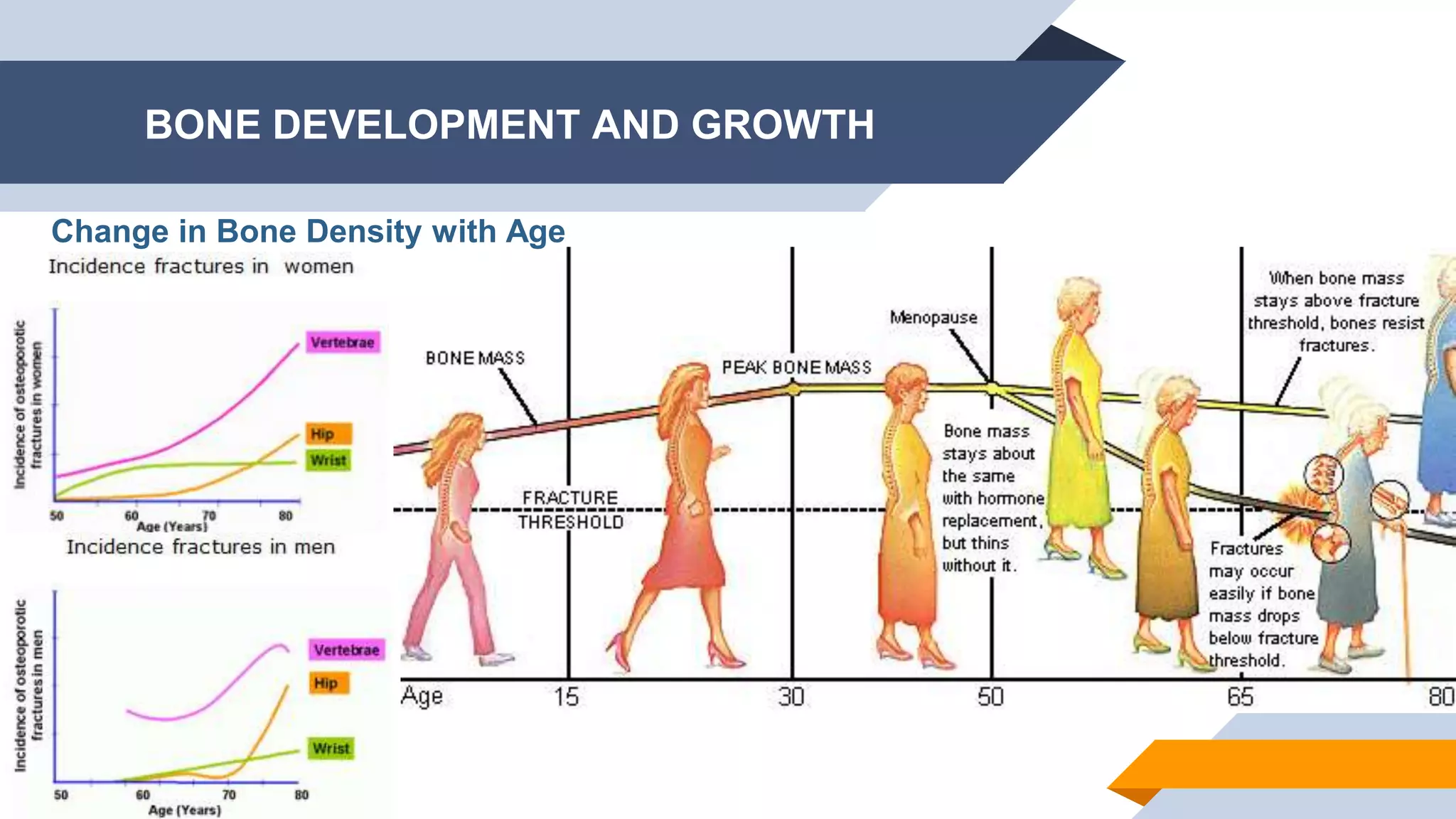
Change in Bone Density with Age
CALCIUM
HOMEOSTASIS
3
CALCIUM HOMEOSTASIS
Total Ca++
100 %
Protein bond
40 %
Ultrafilterable
60 %
Complexed to
anion
10 %
Ionized ca++
50 %
Body
content
Bone intracellular extracellular
Calcium 1300
gm
99% 1% 0.1%
▻Total plasma [Ca++] = 2.5mmol/L
▻Range is 2.1 to 2.6 mmol/L  (8.8–10.4 mg/dL)
▻Very tightly controlled
▻Only free, ionized Ca2+ is biologically active.
▻Forms of Ca++ in the blood
CALCIUM HOMEOSTASIS
Factors affecting calcium concentration:
▰ Changes in plasma protein concentration
Increased [protein]  increased total [Ca2+]
▰ Changes in anion concentration
Increased [anion]  increased fraction of Ca2+ that is complexed
 decrease ionized [Ca2+]
▰ Acid base abnormality
CALCIUM HOMEOSTASIS
Functions of calcium :
▰ Preserving bone density
construction, formation and maintenance of bone and. This
function helps reduce the occurrence of osteoporosis
▰ hemostasis
activation of clotting enzyme is the plasma
CALCIUM HOMEOSTASIS
Functions of calcium :
▰ Nerve and muscle functions
Increase in intracellular Ca2+  Ca2+ binds to troponin C  moves
tropomyosin out of the way  permitting the binding of actin to the
myosin heads leading cross-bridge formation and the muscle
contraction.
▰ Neurotransmitter release
-Arrival of action potential to axonal terminalopening of voltage
gated calcium channelscalcium influx into the terminal 
transmitter vesicle fuse with the release sites  release of
transmitters into the cleft
CALCIUM HOMEOSTASIS
Functions of calcium :
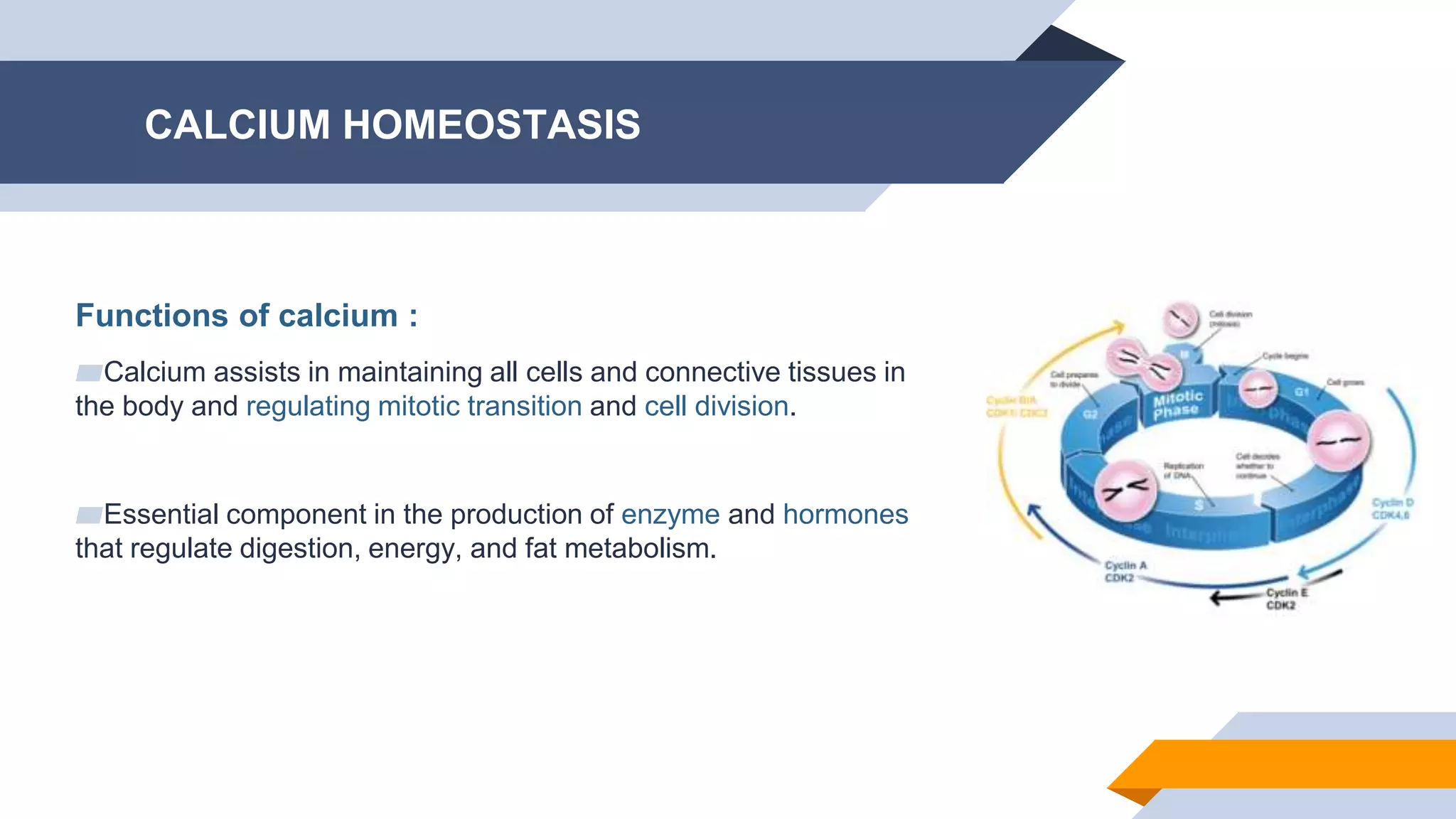
▰Calcium assists in maintaining all cells and connective tissues in
the body and regulating mitotic transition and cell division.
▰Essential component in the production of enzyme and hormones
that regulate digestion, energy, and fat metabolism.
CALCIUM HOMEOSTASIS
Calcium regulation:
▰Blood calcium is tightly regulated by:
1) Principle organ systems:
▻ Intestine
▻ Bone
▻ Kidney
2) Hormones:
▻ Parathyroid hormone (PTH)
▻ Vitamin D
▻ Calcitonin
CALCIUM HOMEOSTASIS
Parathyroid hormone PTH:
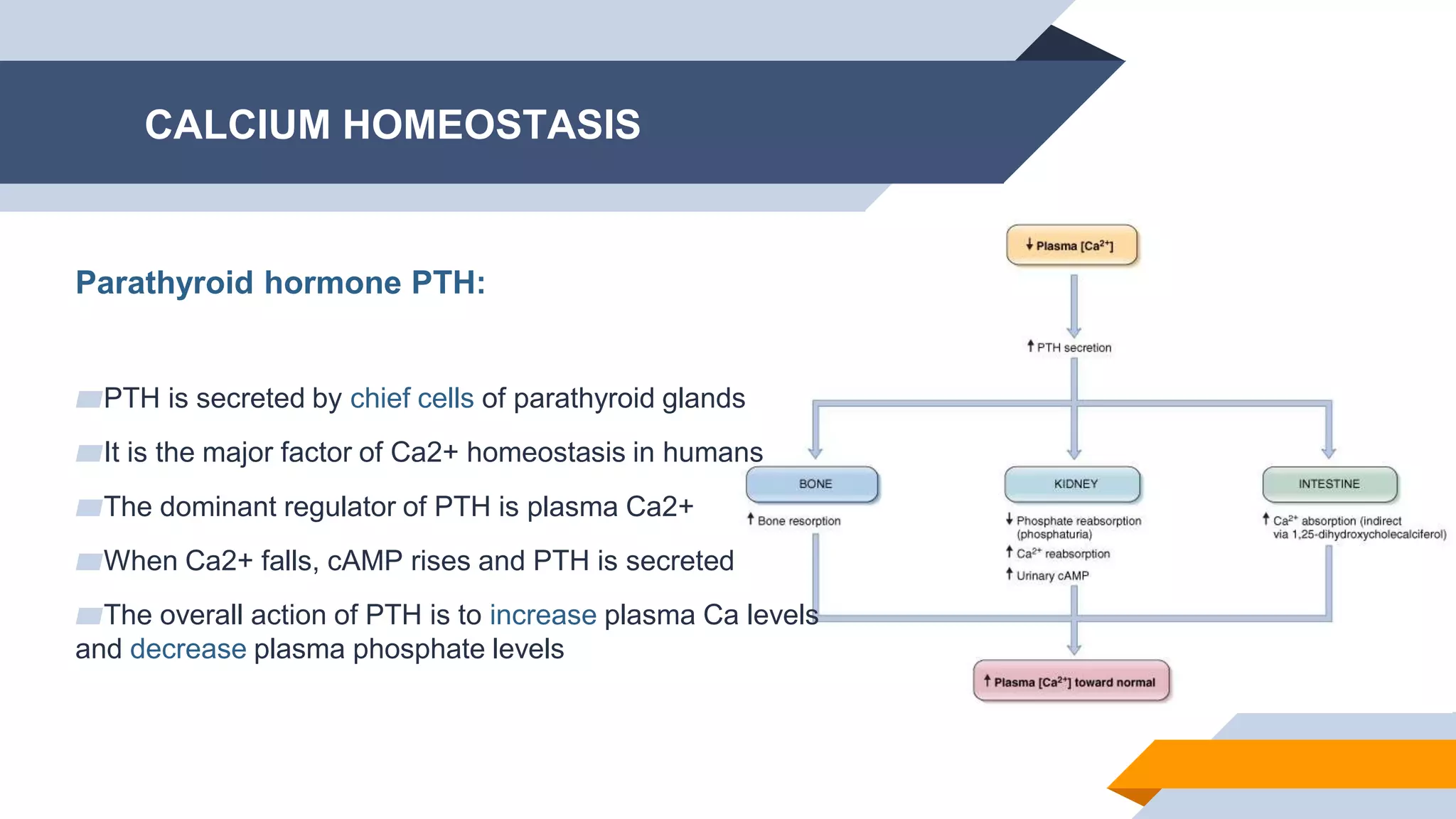
▰PTH is secreted by chief cells of parathyroid glands
▰It is the major factor of Ca2+ homeostasis in humans
▰The dominant regulator of PTH is plasma Ca2+
▰When Ca2+ falls, cAMP rises and PTH is secreted
▰The overall action of PTH is to increase plasma Ca levels
and decrease plasma phosphate levels
CALCIUM HOMEOSTASIS
Vitamin D :
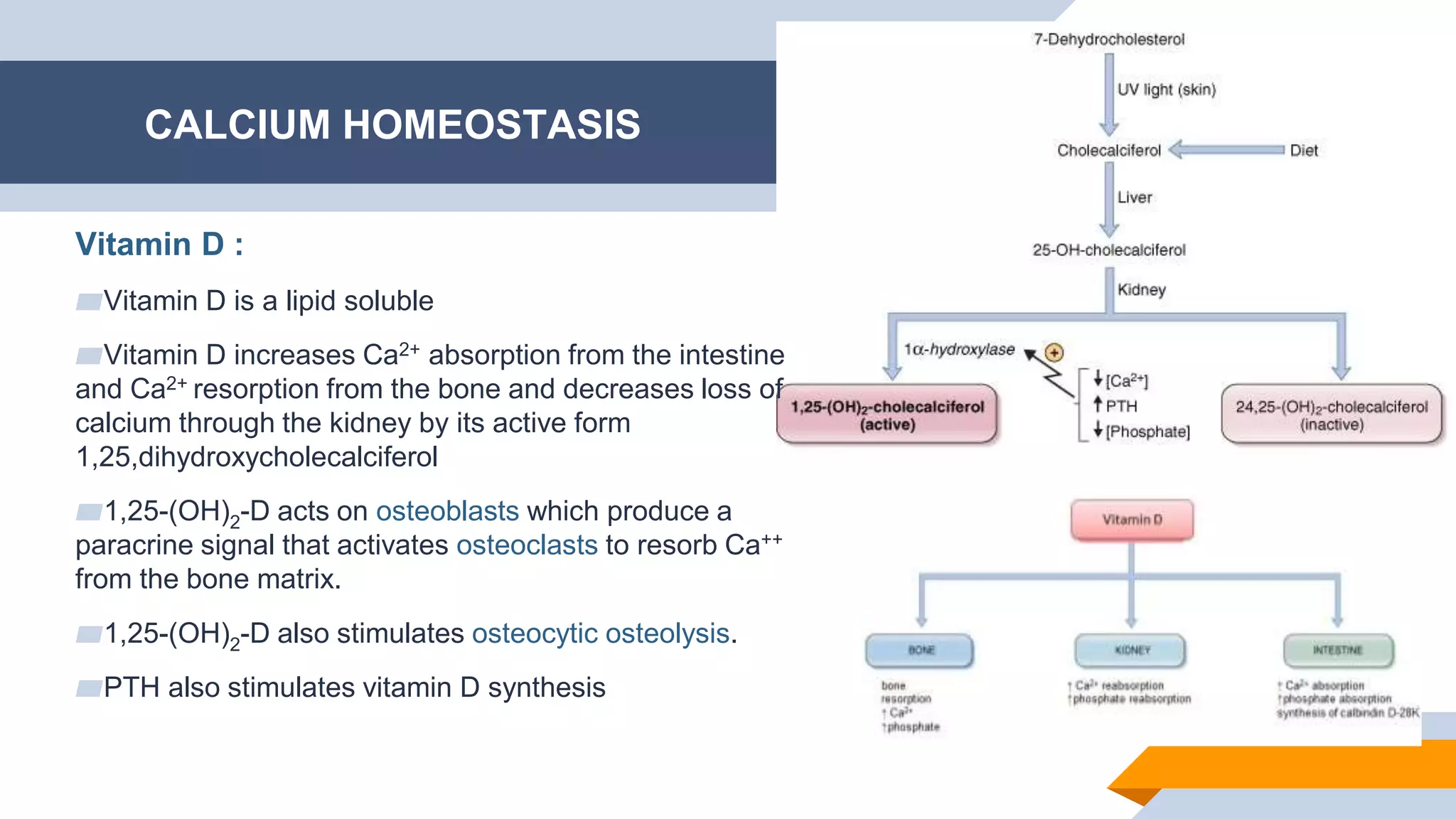
▰Vitamin D is a lipid soluble
▰Vitamin D increases Ca2+ absorption from the intestine
and Ca2+ resorption from the bone and decreases loss of
calcium through the kidney by its active form
1,25,dihydroxycholecalciferol
▰1,25-(OH)2-D acts on osteoblasts which produce a
paracrine signal that activates osteoclasts to resorb Ca++
from the bone matrix.
▰1,25-(OH)2-D also stimulates osteocytic osteolysis.
▰PTH also stimulates vitamin D synthesis
CALCIUM HOMEOSTASIS
Calcitonin :
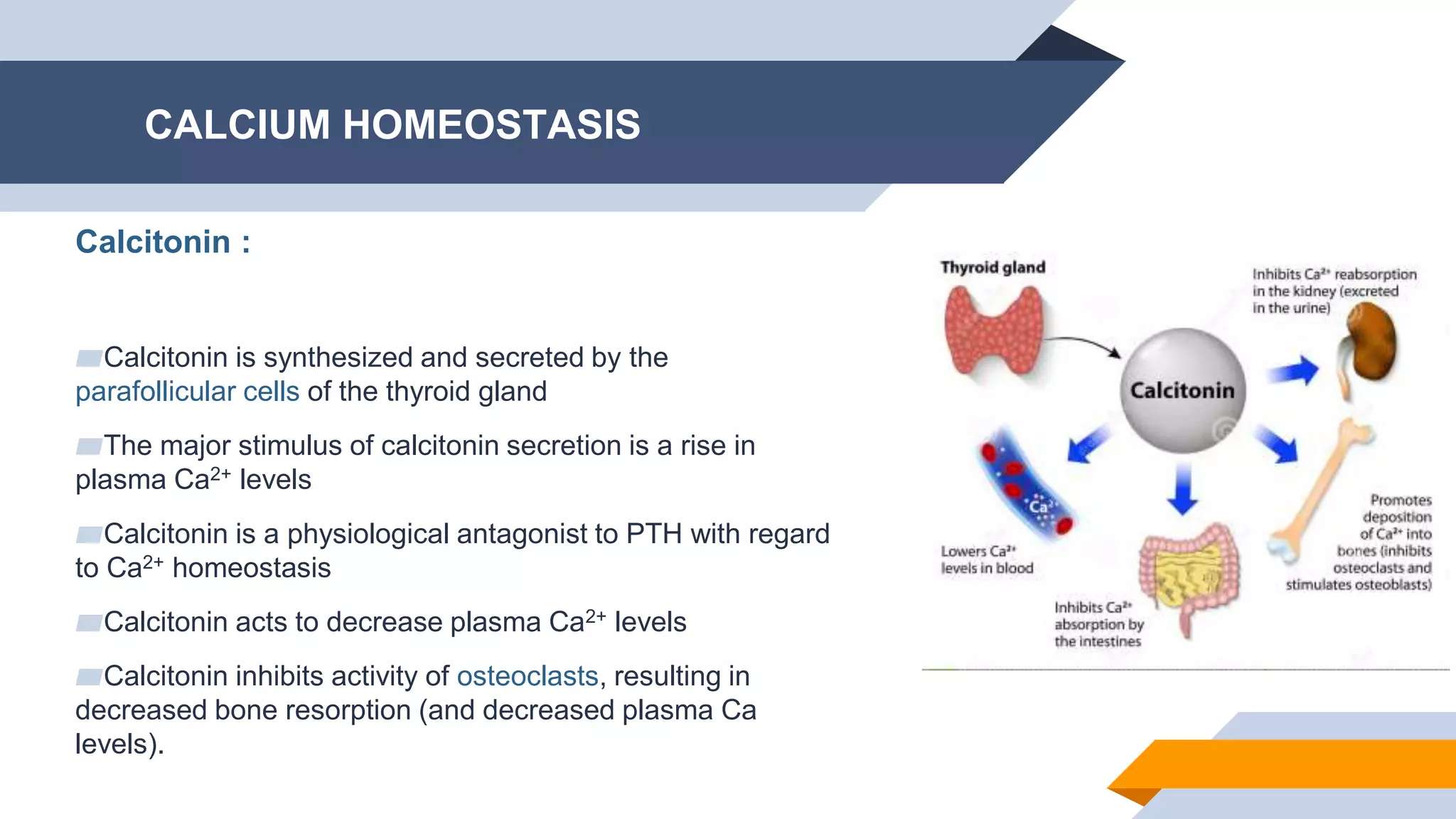
▰Calcitonin is synthesized and secreted by the
parafollicular cells of the thyroid gland
▰The major stimulus of calcitonin secretion is a rise in
plasma Ca2+ levels
▰Calcitonin is a physiological antagonist to PTH with regard
to Ca2+ homeostasis
▰Calcitonin acts to decrease plasma Ca2+ levels
▰Calcitonin inhibits activity of osteoclasts, resulting in
decreased bone resorption (and decreased plasma Ca
levels).
REFRENCES
4
REFERENCES
▰ Linda S. Costanzo ,[2017] Physiology, 6th ed. by Elsevier, Inc. Richmond,
Virginia, USA.
▰ Solomon L., Warwick D. , Nayagam S.,[2010] Apley’s System of Orthopaedics
and Fractures, 9th ed. Hodder Arnold comp. ,London, UK.
▰ Fogelman I., Gnanasegaran G., [2012] Radionuclide and Hybrid Bone Imaging,
1st ed. Springer-Verlag Berlin Heidelberg, Berlin, Germany.
▰ John E. Hall Arthur C. Guyton, [2013] Textbook Of Medical Physiology, 13th ed.
By Mosby, An Imprint of Elsevier , Tennessee, USA.
▰ Khosla S1, Riggs BL.[2005] Pathophysiology Of Age-related Bone Loss And
Osteoporosis, Endocrinol Metab Clin N Am 34 (2005) 1015–1030
THANKS!
Any questions?
You can find this and all other my seminars at:
https://www.slideshare.net/Abdulla1986/presentations

Bone physiology and calcium homeostasis

  • 1.
    BONE PHYSIOLOGY AND CALCIUMHOMEOSTASIS Prepared by: Supervised by: Dr. Abdullah K. Ghafour Dr. Ali Abdunabi Alwan 3rd year IBFMS trainee 20th September 2017
  • 2.
  • 3.
    BONE COMPOSITION ANDSTRUCTURE ▰Bone is a highly specialized supporting framework of the body, characterized by its rigidity, hardness, and power of regeneration and repair. ▰It protects the vital organs, provides an environment for marrow ,acts as a mineral reservoir for calcium homeostasis and a reservoir of growth factors and cytokines, and also takes part in acid–base balance. ▰Bone constantly undergoes modeling (reshaping) during life to help it adapt to changing biomechanical forces, as well as remodeling to remove old, micro-damaged bone and replace it with new, mechanically stronger bone to help preserve bone strength.
  • 4.
    BONE COMPOSITION ANDSTRUCTURE ▰Bone consists of a largely collagenous matrix which is impregnated with mineral salts and populated by cells – osteoclasts ,osteoblasts and osteocytes. ▰Newly formed bone tissue, which is unmineralized, is called osteoid and is usually seen only where active new-bone formation is taking place this soon becomes mineralized, but the immature tissue is somewhat disorganized, with collagen fibers arranged haphazardly and cells having no specific orientation; in this state it is called woven bone – typically seen in the early stages of fracture healing. ▰The mature tissue is lamellar bone, in which the collagen fibers are arranged parallel to each other to form multiple layers (or laminae) with the osteocytes lying between the lamellae.
  • 5.
    BONE COMPOSITION ANDSTRUCTURE ▰Lamellar bone exists in two structurally different forms: compact (cortical) bone and cancellous (trabecular) bone. ▰Compact bone is dense and strong and is found where support matters most, It is made up of compact units – haversian systems or osteons ▰Cancellous bone has a honeycomb appearance; it makes up the interior meshwork of all bones and is particularly well developed in the ends of the tubular bones and in the vertebral bodies. ▰Fully formed bones are covered (except at the articular ends) by a tough periosteal membrane, the deepest layer of which consists of potentially bone-forming cells.
  • 6.
    BONE COMPOSITION ANDSTRUCTURE ▰Bone cells are of three types: osteoblasts, osteocytes and osteoclasts. ▰Osteoblasts are concerned with bone formation and osteoclast activation. They develop from mesenchymal precursors in the bone marrow and beneath the periosteum. ▰Differentiation is controlled by a number of interacting growth factors, including bone morphogenetic proteins (BMPs). Prompted by parathyroid hormone (PTH) PTH), osteoblasts also play an important role in the initiation and control of osteoclastic activity. ▰At the end of each bone-forming cycle the osteoblasts either remain on the newly formed bone surface as quiescent lining cells or they become embedded in the matrix as ‘resting’ osteocytes.
  • 7.
    BONE COMPOSITION ANDSTRUCTURE ▰Osteoclasts, considerably larger multi-nucleated cells, are the principal mediators of bone resorption. ▰They develop from precursors in the haemopoietic marrow under the influence of local osteoblastic stromal cells that generate an essential osteoclast differentiating factor which is required to initiate osteoclast maturation and bone resorption.
  • 8.
    BONE COMPOSITION ANDSTRUCTURE Bone mineral : ▰Almost one half the bone volume is mineral matter – mainly calcium and phosphate in the form of crystalline hydroxyapatite. ▰In mature bone the proportions of calcium and phosphate are constant and the molecule is firmly bound to collagen. ▰While the collagenous component lends tensile strength to bone, the crystalline mineral enhances its ability to resist compression.
  • 9.
    BONE COMPOSITION ANDSTRUCTURE Bone matrix : ▰Bone consists of a largely collagenous matrix which is impregnated with mineral salts and populated by cells. ▰Type I collagen fibres, derived from tropocollagen molecules produced by osteoblasts, make up over 80 % of the unmineralized matrix. ▰They form a network which embodies a mucopolysaccharide, ground substance and also acts as a scaffold on which the mineral component – crystalline hydroxyapatite – is deposited. ▰Other non-collagenous proteins exist in small amounts in the mineralized matrix – mainly sialoproteins (osteopontin), osteonectin, osteocalcin (bone Gla protein) and alkaline phosphatases.
  • 10.
  • 11.
    BONE DEVELOPMENT ANDGROWTH ▰Bones develop in two different ways: by ossification of a prior cartilage model (endochondral ossification) and by direct (intramembranous ossification). ▰Endochondral ossification is the usual manner in which tubular bones develop. ▰The actively growing physis consists of four distinct zones. Coextensive with the epiphysis is a zone of resting chondrocytes; this merges into a proliferative zone, multiplying by interstitial .As these cells mature they constitute a hypertrophic zone which gradually becomes calcified; this zone of calcified cartilage undergoes osteoclastic resorption and finally, with the ingrowth of new blood vessels from the bony diaphysis ossification. layers of the growth disc (physis)
  • 12.
    BONE DEVELOPMENT ANDGROWTH ▰With the growth in length, the bone also has to increase in girth. In Intramembranous ossification new bone is added to the outside by direct ossification at the deepest layer of the periosteum where mesenchymal cells differentiate into osteoblasts (intramembranous, or ‘appositional’ bone formation); meanwhile ‘old’ bone is removed from the inside of the cylinder by osteoclastic endosteal resorption. ▰ It also occurs as a response to periosteal stripping due to trauma, infection or tumour growth and in the the initial formation of the flat bones of the skull, mandible and clavicles.
  • 13.
    BONE DEVELOPMENT ANDGROWTH Bone homiostasis: ▰REMODELING is the ongoing replacement of old bone tissue by new bone tissue. It takes place at different rates in various parts of body. ▰Osteoclasts are responsible for bone resorption (destruction of matrix). A delicate homeostasis exists between the actions of the osteoclasts in removing minerals and collagen and of osteoblasts in depositing them. ▰Bone remodeling cycle: ACTIVATION- osteoclasts are activated & begin secreting acids to resorb bone. RESORPTION- osteoclastic resoprtion occurs. REVERSAL- resorption stops & osteoblast take over. FORMATION- osteoblast form bone on the opposing surface to complete the bone reforming process. ▰This cycle takes about 100 days in Compact bone & 200 days in Spongy bone.
  • 14.
    BONE DEVELOPMENT ANDGROWTH Bone homiostasis:
  • 15.
    Value of continualbone remodeling: ▰ Bone adjusts its strength in proportion to degree of bone stress. ▰ the shape of the bone can be rearranged for proper support of mechanical forces in accordance with stress patterns. ▰ new organic matrix is needed as the old organic matrix degenerates. Wolff’s Law : “Every change in the function of a bone is followed by certain definite changes in its internal architecture and its external conformation.” BONE DEVELOPMENT AND GROWTH Bone homiostasis: The thickest trabeculae are arranged along the trajectories of greatest stress
  • 16.
    Factors affecting boneremodeling: ▰Menirals: ▻Normal bone growth in the young and bone replacement in the adult depend on the presence of several minerals. ▻Sufficient amount of calcium and phosphorus (hydroxy apatite), must be included in the diet. ▻ Magnesium deficiency Inhibit the activity of osteoblasts ▻ Boron A factor in bone growth ▻ Manganese deficiency Inhibits laying down of new bone Tissue BONE DEVELOPMENT AND GROWTH
  • 17.
    BONE DEVELOPMENT ANDGROWTH Factors affecting bone remodeling: ▰vitamins: ▻Several vitamins like vitamins D, C, A, and B12, play a role in bone remodeling. ▻The most active form of vitamin D is calcitriol promotes removal of calcium from bone. On the other hand,it retards calcium loss in urine, which makes it available for deposit in bone matrix. ▻Vit C deficiency causes decrease collagen production, which retards bone growth and delays fracture healing . ▻Vit A helps to control the activity , distribution, and co-ordination of osteoblasts and osteoclasts during development. Its deficiency results in a decreased rate of growth in the skeleton. ▻Vit B12 may play a role in osteoblast activity.
  • 18.
    BONE DEVELOPMENT ANDGROWTH Hormone Function Human growth hormone (HGH) General growth of all body tissues, including bone Sex hormones ( estrogens and testosterones) Increase bone building activity of osteoblasts Insulin and thyroid hormones (T3, T4) Promote normal bone growth and maturity Parathyroid hormone Increase the number and activity of osteoclast,promotes recovery of Ca2+ from urine, and promotes formation of calcitriol Calcitonin (CT) Inhibits activity of osteoclasts, speed up Ca2+absorption from blood, and accelerates Ca2+ deposit by bones. Factors affecting bone remodeling: ▰Hormones:
  • 19.
    BONE DEVELOPMENT ANDGROWTH Change in Bone Density with Age
  • 20.
  • 21.
    CALCIUM HOMEOSTASIS Total Ca++ 100% Protein bond 40 % Ultrafilterable 60 % Complexed to anion 10 % Ionized ca++ 50 % Body content Bone intracellular extracellular Calcium 1300 gm 99% 1% 0.1% ▻Total plasma [Ca++] = 2.5mmol/L ▻Range is 2.1 to 2.6 mmol/L  (8.8–10.4 mg/dL) ▻Very tightly controlled ▻Only free, ionized Ca2+ is biologically active. ▻Forms of Ca++ in the blood
  • 22.
    CALCIUM HOMEOSTASIS Factors affectingcalcium concentration: ▰ Changes in plasma protein concentration Increased [protein]  increased total [Ca2+] ▰ Changes in anion concentration Increased [anion]  increased fraction of Ca2+ that is complexed  decrease ionized [Ca2+] ▰ Acid base abnormality
  • 23.
    CALCIUM HOMEOSTASIS Functions ofcalcium : ▰ Preserving bone density construction, formation and maintenance of bone and. This function helps reduce the occurrence of osteoporosis ▰ hemostasis activation of clotting enzyme is the plasma
  • 24.
    CALCIUM HOMEOSTASIS Functions ofcalcium : ▰ Nerve and muscle functions Increase in intracellular Ca2+  Ca2+ binds to troponin C  moves tropomyosin out of the way  permitting the binding of actin to the myosin heads leading cross-bridge formation and the muscle contraction. ▰ Neurotransmitter release -Arrival of action potential to axonal terminalopening of voltage gated calcium channelscalcium influx into the terminal  transmitter vesicle fuse with the release sites  release of transmitters into the cleft
  • 25.
    CALCIUM HOMEOSTASIS Functions ofcalcium : ▰Calcium assists in maintaining all cells and connective tissues in the body and regulating mitotic transition and cell division. ▰Essential component in the production of enzyme and hormones that regulate digestion, energy, and fat metabolism.
  • 26.
    CALCIUM HOMEOSTASIS Calcium regulation: ▰Bloodcalcium is tightly regulated by: 1) Principle organ systems: ▻ Intestine ▻ Bone ▻ Kidney 2) Hormones: ▻ Parathyroid hormone (PTH) ▻ Vitamin D ▻ Calcitonin
  • 27.
    CALCIUM HOMEOSTASIS Parathyroid hormonePTH: ▰PTH is secreted by chief cells of parathyroid glands ▰It is the major factor of Ca2+ homeostasis in humans ▰The dominant regulator of PTH is plasma Ca2+ ▰When Ca2+ falls, cAMP rises and PTH is secreted ▰The overall action of PTH is to increase plasma Ca levels and decrease plasma phosphate levels
  • 28.
    CALCIUM HOMEOSTASIS Vitamin D: ▰Vitamin D is a lipid soluble ▰Vitamin D increases Ca2+ absorption from the intestine and Ca2+ resorption from the bone and decreases loss of calcium through the kidney by its active form 1,25,dihydroxycholecalciferol ▰1,25-(OH)2-D acts on osteoblasts which produce a paracrine signal that activates osteoclasts to resorb Ca++ from the bone matrix. ▰1,25-(OH)2-D also stimulates osteocytic osteolysis. ▰PTH also stimulates vitamin D synthesis
  • 29.
    CALCIUM HOMEOSTASIS Calcitonin : ▰Calcitoninis synthesized and secreted by the parafollicular cells of the thyroid gland ▰The major stimulus of calcitonin secretion is a rise in plasma Ca2+ levels ▰Calcitonin is a physiological antagonist to PTH with regard to Ca2+ homeostasis ▰Calcitonin acts to decrease plasma Ca2+ levels ▰Calcitonin inhibits activity of osteoclasts, resulting in decreased bone resorption (and decreased plasma Ca levels).
  • 30.
  • 31.
    REFERENCES ▰ Linda S.Costanzo ,[2017] Physiology, 6th ed. by Elsevier, Inc. Richmond, Virginia, USA. ▰ Solomon L., Warwick D. , Nayagam S.,[2010] Apley’s System of Orthopaedics and Fractures, 9th ed. Hodder Arnold comp. ,London, UK. ▰ Fogelman I., Gnanasegaran G., [2012] Radionuclide and Hybrid Bone Imaging, 1st ed. Springer-Verlag Berlin Heidelberg, Berlin, Germany. ▰ John E. Hall Arthur C. Guyton, [2013] Textbook Of Medical Physiology, 13th ed. By Mosby, An Imprint of Elsevier , Tennessee, USA. ▰ Khosla S1, Riggs BL.[2005] Pathophysiology Of Age-related Bone Loss And Osteoporosis, Endocrinol Metab Clin N Am 34 (2005) 1015–1030
  • 32.
    THANKS! Any questions? You canfind this and all other my seminars at: https://www.slideshare.net/Abdulla1986/presentations