BONE CANCER
Presented by
Mr. B kalyan kumar Msc (N)
Dept of MSN
INTRODUCTION
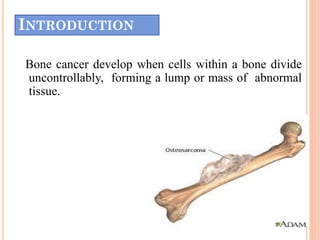
Bone cancer develop when cells within a bone divide
uncontrollably, forming a lump or mass of abnormal
tissue.
DEFINITION
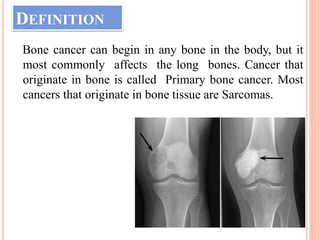
Bone cancer can begin in any bone in the body, but it
most commonly affects the long bones. Cancer that
originate in bone is called Primary bone cancer. Most
cancers that originate in bone tissue are Sarcomas.
TYPES OF BONE CANCER
 Benign bone tumors: Benign bone tumor include
osteomas, osteoblastomas, osteoidosteoma,
osteochondroma, and giant cell tumor
(Osteoclastoma).
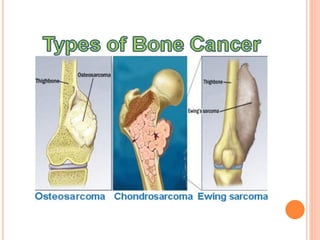
 Malignant bone tumor: The most common bone
tumors include Osteosarcoma, Ewing’s sarcoma,
chondrosarcoma, fibrosarcoma.
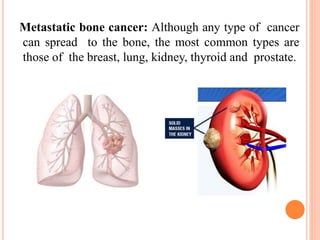
Metastatic bone cancer: Although any type of cancer
can spread to the bone, the most common types are
those of the breast, lung, kidney, thyroid and prostate.
CAUSES AND RISK FACTORS
 Inherited genetic syndrome
 Chemotherapy: some including alkylating agents used
to treat cancer may increase the risk of developing a
secondary cancer, usually osteosarcoma.
 Benign tumors: Paget’s disease may cause
osteosarcoma. Other benign bone disease such as
fibrous dysplasia, may increase the risk of
osteosarcoma.
 Previous radiation therapy .
CLINICAL MANIFESTATIONS
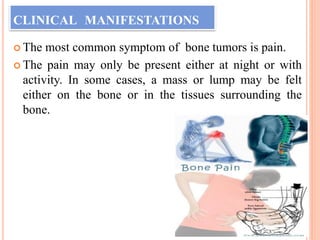
 The most common symptom of bone tumors is pain.
 The pain may only be present either at night or with
activity. In some cases, a mass or lump may be felt
either on the bone or in the tissues surrounding the
bone.
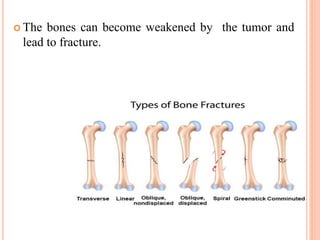
 The bones can become weakened by the tumor and
lead to fracture.
 Fever
 Chills
 Night sweats
 Anemia
 Anorexia
 Fatigue
 Tenderness
 Weight loss can occur but are less common.
MANAGEMENT
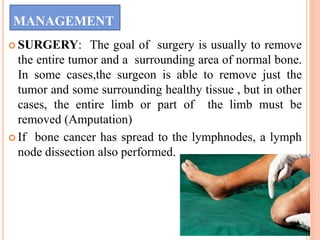
 SURGERY: The goal of surgery is usually to remove
the entire tumor and a surrounding area of normal bone.
In some cases,the surgeon is able to remove just the
tumor and some surrounding healthy tissue , but in other
cases, the entire limb or part of the limb must be
removed (Amputation)
 If bone cancer has spread to the lymphnodes, a lymph
node dissection also performed.
 Reconstructive surgery
 Chemotherapy – Doxorubicin, Cyclophosphamide,
Cisplatin, Vincristin .
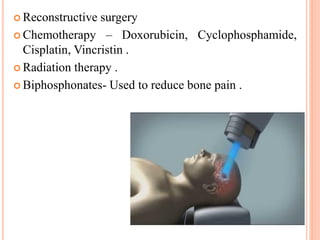
 Radiation therapy .
 Biphosphonates- Used to reduce bone pain .
NURSING MANAGEMENT
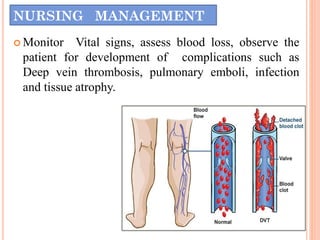
 Monitor Vital signs, assess blood loss, observe the
patient for development of complications such as
Deep vein thrombosis, pulmonary emboli, infection
and tissue atrophy.
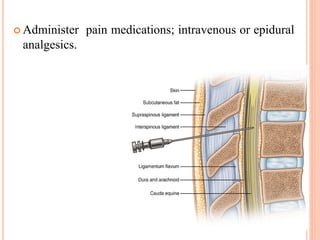
 Administer pain medications; intravenous or epidural
analgesics.
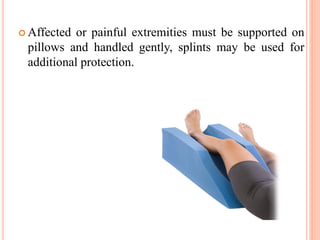
 Affected or painful extremities must be supported on
pillows and handled gently, splints may be used for
additional protection.
 Support joints when repositioning patient
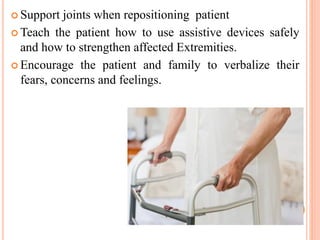
 Teach the patient how to use assistive devices safely
and how to strengthen affected Extremities.
 Encourage the patient and family to verbalize their
fears, concerns and feelings.
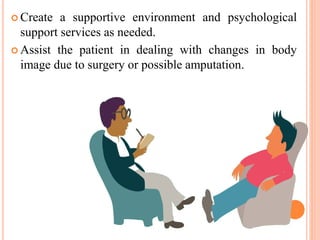
 Create a supportive environment and psychological
support services as needed.
 Assist the patient in dealing with changes in body
image due to surgery or possible amputation.
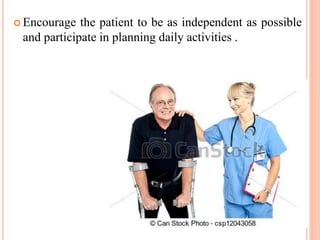
 Encourage the patient to be as independent as possible
and participate in planning daily activities .
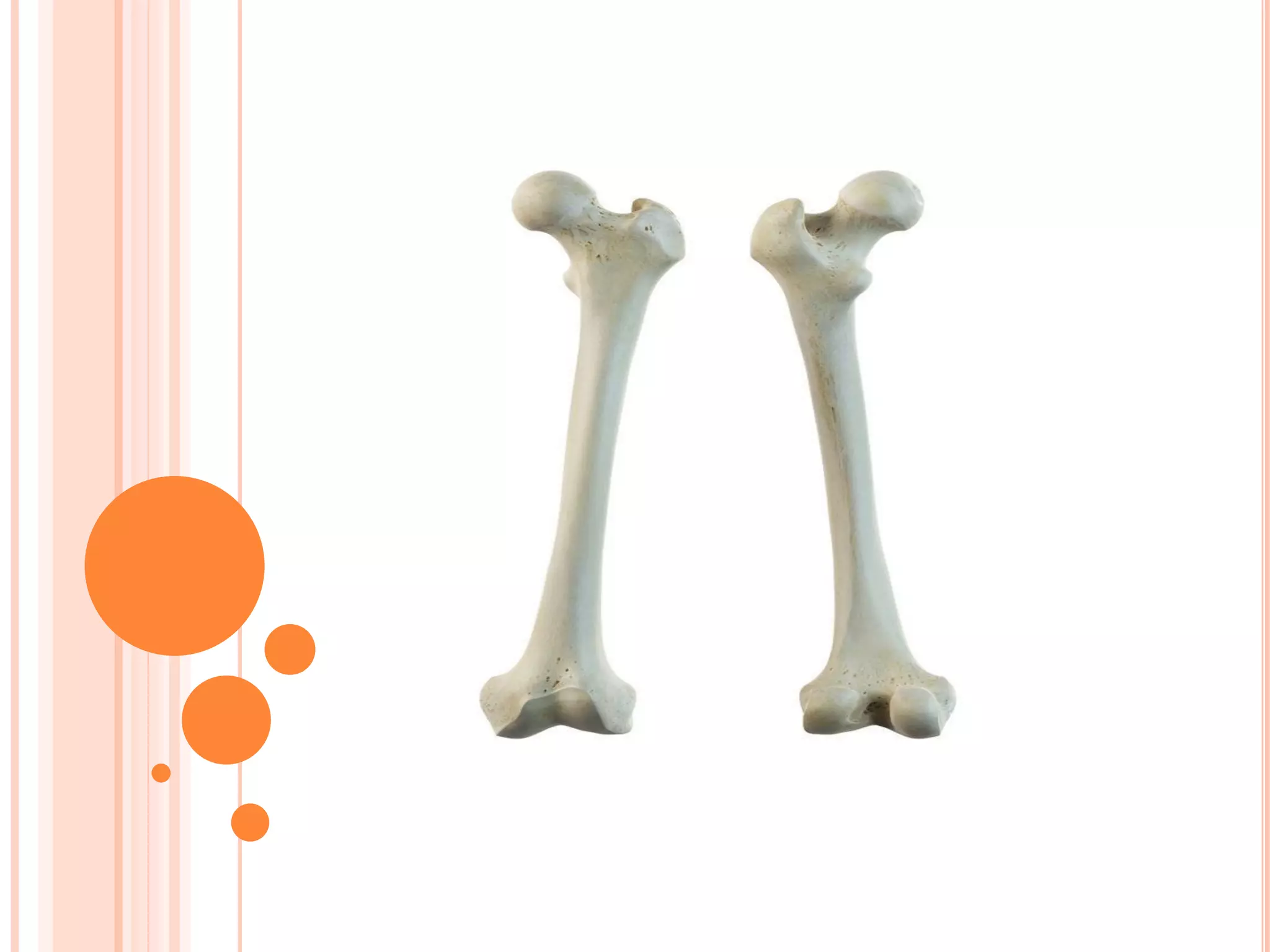
Draw the Femur and label the
parts
Bone cancer

Bone cancer

  • 2.
    BONE CANCER Presented by Mr.B kalyan kumar Msc (N) Dept of MSN
  • 4.
    INTRODUCTION Bone cancer developwhen cells within a bone divide uncontrollably, forming a lump or mass of abnormal tissue.
  • 5.
    DEFINITION Bone cancer canbegin in any bone in the body, but it most commonly affects the long bones. Cancer that originate in bone is called Primary bone cancer. Most cancers that originate in bone tissue are Sarcomas.
  • 6.
    TYPES OF BONECANCER  Benign bone tumors: Benign bone tumor include osteomas, osteoblastomas, osteoidosteoma, osteochondroma, and giant cell tumor (Osteoclastoma).  Malignant bone tumor: The most common bone tumors include Osteosarcoma, Ewing’s sarcoma, chondrosarcoma, fibrosarcoma.
  • 7.
    Metastatic bone cancer:Although any type of cancer can spread to the bone, the most common types are those of the breast, lung, kidney, thyroid and prostate.
  • 8.
    CAUSES AND RISKFACTORS  Inherited genetic syndrome  Chemotherapy: some including alkylating agents used to treat cancer may increase the risk of developing a secondary cancer, usually osteosarcoma.  Benign tumors: Paget’s disease may cause osteosarcoma. Other benign bone disease such as fibrous dysplasia, may increase the risk of osteosarcoma.  Previous radiation therapy .
  • 9.
    CLINICAL MANIFESTATIONS  Themost common symptom of bone tumors is pain.  The pain may only be present either at night or with activity. In some cases, a mass or lump may be felt either on the bone or in the tissues surrounding the bone.
  • 10.
     The bonescan become weakened by the tumor and lead to fracture.
  • 11.
     Fever  Chills Night sweats  Anemia  Anorexia  Fatigue  Tenderness  Weight loss can occur but are less common.
  • 12.
    MANAGEMENT  SURGERY: Thegoal of surgery is usually to remove the entire tumor and a surrounding area of normal bone. In some cases,the surgeon is able to remove just the tumor and some surrounding healthy tissue , but in other cases, the entire limb or part of the limb must be removed (Amputation)  If bone cancer has spread to the lymphnodes, a lymph node dissection also performed.
  • 13.
     Reconstructive surgery Chemotherapy – Doxorubicin, Cyclophosphamide, Cisplatin, Vincristin .  Radiation therapy .  Biphosphonates- Used to reduce bone pain .
  • 14.
    NURSING MANAGEMENT  MonitorVital signs, assess blood loss, observe the patient for development of complications such as Deep vein thrombosis, pulmonary emboli, infection and tissue atrophy.
  • 15.
     Administer painmedications; intravenous or epidural analgesics.
  • 16.
     Affected orpainful extremities must be supported on pillows and handled gently, splints may be used for additional protection.
  • 17.
     Support jointswhen repositioning patient  Teach the patient how to use assistive devices safely and how to strengthen affected Extremities.  Encourage the patient and family to verbalize their fears, concerns and feelings.
  • 18.
     Create asupportive environment and psychological support services as needed.  Assist the patient in dealing with changes in body image due to surgery or possible amputation.
  • 19.
     Encourage thepatient to be as independent as possible and participate in planning daily activities .
  • 22.
    Draw the Femurand label the parts