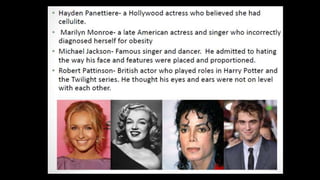




BODY DYSMORPHIC DISORDER
Dr Shazeena Qaiser
CONTENTS
 INTRODUCTION
 HISTORY
 PREVALENCE
 ONSET
 ETIOLOGY
 DIAGNOSIS
 MANAGEMENT
 CONCLUSION
Body Dysmorphic Disorder
A psychological disorder in which the affected person is
excessively concerned about and preoccupied by a perceived
defect in his or her physical features (body image).
dysmorphophobia/ body dysmorphia/
dysmorphic syndrome)
“Body dysmorphic disorder (BDD) is an under-diagnosed and under-treated
psychiatric disorder and patients are likely to present to dental practices,
especially those advertising themselves as ‘aesthetic’ or ‘cosmetic. ”
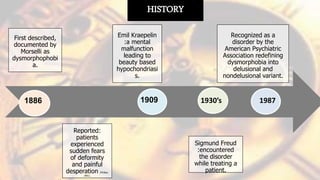
HISTORY
First described,
documented by
Morselli as
dysmorphophobi
a.
Reported:
patients
experienced
sudden fears
of deformity
and painful
desperation (Phillips,
2001).
Emil Kraepelin
:a mental
malfunction
leading to
beauty based
hypochondriasi
s.
Sigmund Freud
:encountered
the disorder
while treating a
patient.
Recognized as a
disorder by the
American Psychiatric
Association redefining
dysmorphobia into
delusional and
nondelusional variant.
1886 1909 1930’s 1987
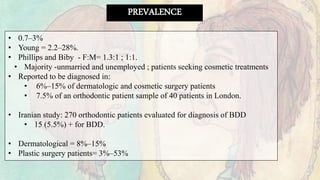
PREVALENCE
• 0.7–3%
• Young = 2.2–28%.
• Phillips and Biby - F:M= 1.3:1 ; 1:1.
• Majority -unmarried and unemployed ; patients seeking cosmetic treatments
• Reported to be diagnosed in:
• 6%–15% of dermatologic and cosmetic surgery patients
• 7.5% of an orthodontic patient sample of 40 patients in London.
• Iranian study: 270 orthodontic patients evaluated for diagnosis of BDD
• 15 (5.5%) + for BDD.
• Dermatological = 8%–15%
• Plastic surgery patients= 3%–53%
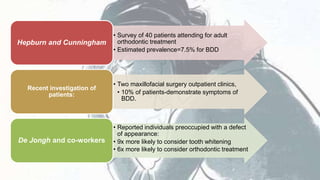
• Survey of 40 patients attending for adult
orthodontic treatment
• Estimated prevalence=7.5% for BDD
Hepburn and Cunningham
• Two maxillofacial surgery outpatient clinics,
• 10% of patients-demonstrate symptoms of
BDD.
Recent investigation of
patients:
• Reported individuals preoccupied with a defect
of appearance:
• 9x more likely to consider tooth whitening
• 6x more likely to consider orthodontic treatment
De Jongh and co-workers
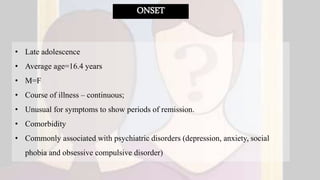
• Late adolescence
• Average age=16.4 years
• M=F
• Course of illness – continuous;
• Unusual for symptoms to show periods of remission.
• Comorbidity
• Commonly associated with psychiatric disorders (depression, anxiety, social
phobia and obsessive compulsive disorder)
ONSET
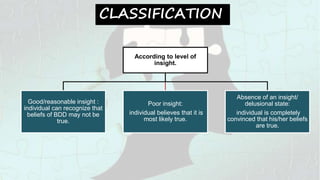
CLASSIFICATION
According to level of
insight.
Good/reasonable insight :
individual can recognize that
beliefs of BDD may not be
true.
Poor insight:
individual believes that it is
most likely true.
Absence of an insight/
delusional state:
individual is completely
convinced that his/her beliefs
are true.
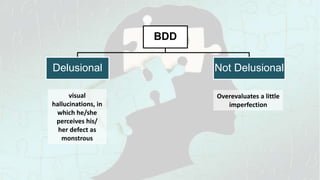
BDD
Delusional Not Delusional
visual
hallucinations, in
which he/she
perceives his/
her defect as
monstrous
Overevaluates a little
imperfection
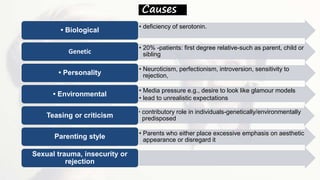
Causes
• deficiency of serotonin.
• Biological
• 20% -patients: first degree relative-such as parent, child or
siblingGenetic
• Neuroticism, perfectionism, introversion, sensitivity to
rejection,• Personality
• Media pressure e.g., desire to look like glamour models
• lead to unrealistic expectations
• Environmental
• contributory role in individuals-genetically/environmentally
predisposedTeasing or criticism
• Parents who either place excessive emphasis on aesthetic
appearance or disregard itParenting style
Sexual trauma, insecurity or
rejection
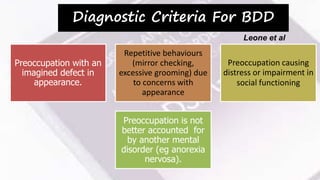
Diagnostic Criteria For BDD
Leone et al
Preoccupation with an
imagined defect in
appearance.
Repetitive behaviours
(mirror checking,
excessive grooming) due
to concerns with
appearance
Preoccupation causing
distress or impairment in
social functioning
Preoccupation is not
better accounted for
by another mental
disorder (eg anorexia
nervosa).
Common Symptoms
Sufferer may complain
of several specific
features or a single
feature, or a vague
feature or general
appearance
Pychological distress -
severe depression,
anxiety, development of
other anxiety disorders,
social withdrawal or
complete social
isolation.
Orthodontists may
encounter patients with
disorder- mentally
disturbed- magnify their
tiny flaws, believe that
they are too ugly.
• Men: preoccupied with their height, hair and body build,
• Women: preoccupied with their weight, legs
• Individuals have thoughts and concerns that everyone is staring at them
• Up to 77% of people with BDD could be said to be delusional in their beliefs at some
point in their disorder.
Hair Nose Skin Eyes
Teeth Lips
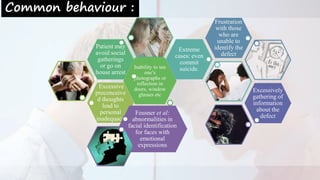
Common behaviour :
Excessive
preconceive
d thoughts
lead to
personal
inadequacy
Inability to see
one’s
photographs or
reflection in
doors, window
glasses etc
Patient may
avoid social
gatherings
or go on
house arrest
Extreme
cases: even
commit
suicide.
Frustration
with those
who are
unable to
identify the
defect
Excessively
gathering of
information
about the
defect
Feusner et al:
abnormalities in
facial identification
for faces with
emotional
expressions
• May engage in a variety of compulsive behaviours in relation to his/her body part.
• Behaviours termed ‘compulsive’ ;occur at very high rates and are repetitive.
• Examples include:
– Checking in the mirror;
– Comparing the self to others;
– ‘Skin picking
– Applying make up
– Camouflaging the body part with clothes.
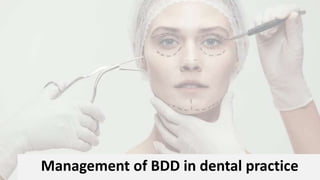
Management of BDD in dental practice
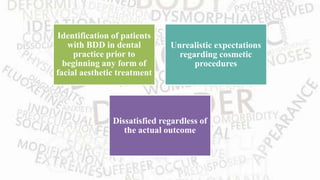
Identification of patients
with BDD in dental
practice prior to
beginning any form of
facial aesthetic treatment
Unrealistic expectations
regarding cosmetic
procedures
Dissatisfied regardless of
the actual outcome
• Isolated reports of physical threats towards surgeons from patients with BDD
• 10–40% of surgeons reported: received threats of legal action from BDD sufferers.
• Based on the evidence, physical violence towards clinicians from patients suffering with BDD are
exceptionally rare (and often complicated by other psychiatric conditions and confounding factors such
as anabolic steroid use)
• BDD patients are at far greater risk of harming themselves than others.
• Recent meta-analysis reported:
– rates of suicidal thoughts= 17–77% making these thoughts 4x more likely in BDD compared to
non-BDD sufferers,
– rates of suicide attempts =3–63% with sufferers 2.6 times more likely to have attempted suicide
than controls.
• Patients totally unsuitable for cosmetic procedures
• Mild-to-moderate BDD, no significant functional impairment, localised aesthetic
concerns and realistic expectations may benefit from aesthetic procedures.
• The gold standard for a diagnosis of BDD: 24-question structured clinical interview
which may take 15 minutes to several hours to complete and this makes it highly
impractical in a busy clinical environment.
1. Do you worry a lot about the way you look and wish you could think about it
less?
2. What specific concerns do you have about your appearance?
3. On a typical day, how many hours per day is your appearance on your mind?
(more than 1 hour per day is considered excessive)
4. What effect does it have on your life?
5. Does it make it hard to do your work or be with friends?
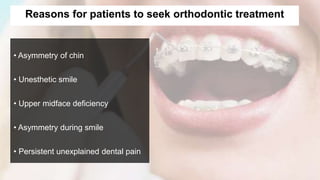
Reasons for patients to seek orthodontic treatment
• Asymmetry of chin
• Unesthetic smile
• Upper midface deficiency
• Asymmetry during smile
• Persistent unexplained dental pain
Management strategies for people with BDD
Pharmacological
treatment
Use of selective
serotonin reuptake
inhibitors (fluoxetine,
paroxetine,
clomipramine,
fluvoxamine)
Cognitive
behavioural therapy
Patient constructing a
hierarchy of these
symptoms and
keeping a body image
diary during
treatment, which is
exposure therapy to
overcome
self-consciousness
and response to
decrease checking
behaviour.
Surgery
Patient rarely satisfied
with surgery: defect is
mostly imagined; is
emotional, rather
physical
Recent study:
reported 32 of 41
patients who did
undergo were highly
satisfied with the
outcome.
• Appears to be of little benefit to patient
• Crerand et al : 91% of procedures administered to people with BDD resulted in no
change in BDD symptoms.
• High levels of dissatisfaction with treatment.
• Leads to further treatment or the shifting of the preoccupation to another part of the
body.
• Numerous possible adverse effects for the treating clinician if he/she provides
cosmetic treatments for people with BDD
Provision of the requested cosmetic treatment
• Patients diagnosed with BDD should not undergo the cosmetic treatment requested.
• Instead, in a sensitive yet straightforward manner, clinicians should discuss with the
patient that the cosmetic treatment is not in the patient’s best interest and recommend
referral to psychological or psychiatric services for pharmacological or psychological
treatment.
CONCLUSION
• Patients with BDD are likely to present for aesthetic or cosmetic dental treatment.
• This is potentially problematic since aesthetic dental treatment has little benefit for
people with BDD and has potentially negative consequences for patient and the treating
clinician.
• Clinicians should be aware of this possibility and be familiar with specific strategies to
recognize and assess people with suspected BDD and appropriately manage them by
referral to specialist services
REFERENCES
• James M, Clarke P, Darcey R Body dysmorphic disorder and facial aesthetic treatments
in dental practice BDJ 2019; 227 (10) 929-933
• Patricia Tatiana Soler, Cristina Michiko Harada Ferreira, Jefferson da Silva Novaes and
Helder Miguel Fernandes Body Dysmorphic Disorder: Characteristics, Psychopathology,
Clinical Associations, and Influencing Factors Intech Open 2018
• Ahluwalia R, Bhatia NK, Kumar PS, Kaur P. Body dysmorphic disorder: Diagnosis,
clinical aspects and treatment strategies. Indian J Dent Res 2017;28:193-7.
• Suzanne E Scott and J Tim Newton, Body Dysmorphic Disorder and Aesthetic Dentistry
Dent Update 2011; 38: 112–118
THANK YOU

Body Dysmorphic Disorder (BDD)

  • 1.
  • 2.
    CONTENTS  INTRODUCTION  HISTORY PREVALENCE  ONSET  ETIOLOGY  DIAGNOSIS  MANAGEMENT  CONCLUSION
  • 3.
    Body Dysmorphic Disorder Apsychological disorder in which the affected person is excessively concerned about and preoccupied by a perceived defect in his or her physical features (body image). dysmorphophobia/ body dysmorphia/ dysmorphic syndrome)
  • 4.
    “Body dysmorphic disorder(BDD) is an under-diagnosed and under-treated psychiatric disorder and patients are likely to present to dental practices, especially those advertising themselves as ‘aesthetic’ or ‘cosmetic. ”
  • 5.
    HISTORY First described, documented by Morsellias dysmorphophobi a. Reported: patients experienced sudden fears of deformity and painful desperation (Phillips, 2001). Emil Kraepelin :a mental malfunction leading to beauty based hypochondriasi s. Sigmund Freud :encountered the disorder while treating a patient. Recognized as a disorder by the American Psychiatric Association redefining dysmorphobia into delusional and nondelusional variant. 1886 1909 1930’s 1987
  • 6.
    PREVALENCE • 0.7–3% • Young= 2.2–28%. • Phillips and Biby - F:M= 1.3:1 ; 1:1. • Majority -unmarried and unemployed ; patients seeking cosmetic treatments • Reported to be diagnosed in: • 6%–15% of dermatologic and cosmetic surgery patients • 7.5% of an orthodontic patient sample of 40 patients in London. • Iranian study: 270 orthodontic patients evaluated for diagnosis of BDD • 15 (5.5%) + for BDD. • Dermatological = 8%–15% • Plastic surgery patients= 3%–53%
  • 7.
    • Survey of40 patients attending for adult orthodontic treatment • Estimated prevalence=7.5% for BDD Hepburn and Cunningham • Two maxillofacial surgery outpatient clinics, • 10% of patients-demonstrate symptoms of BDD. Recent investigation of patients: • Reported individuals preoccupied with a defect of appearance: • 9x more likely to consider tooth whitening • 6x more likely to consider orthodontic treatment De Jongh and co-workers
  • 8.
    • Late adolescence •Average age=16.4 years • M=F • Course of illness – continuous; • Unusual for symptoms to show periods of remission. • Comorbidity • Commonly associated with psychiatric disorders (depression, anxiety, social phobia and obsessive compulsive disorder) ONSET
  • 9.
    CLASSIFICATION According to levelof insight. Good/reasonable insight : individual can recognize that beliefs of BDD may not be true. Poor insight: individual believes that it is most likely true. Absence of an insight/ delusional state: individual is completely convinced that his/her beliefs are true.
  • 10.
    BDD Delusional Not Delusional visual hallucinations,in which he/she perceives his/ her defect as monstrous Overevaluates a little imperfection
  • 11.
    Causes • deficiency ofserotonin. • Biological • 20% -patients: first degree relative-such as parent, child or siblingGenetic • Neuroticism, perfectionism, introversion, sensitivity to rejection,• Personality • Media pressure e.g., desire to look like glamour models • lead to unrealistic expectations • Environmental • contributory role in individuals-genetically/environmentally predisposedTeasing or criticism • Parents who either place excessive emphasis on aesthetic appearance or disregard itParenting style Sexual trauma, insecurity or rejection
  • 12.
    Diagnostic Criteria ForBDD Leone et al Preoccupation with an imagined defect in appearance. Repetitive behaviours (mirror checking, excessive grooming) due to concerns with appearance Preoccupation causing distress or impairment in social functioning Preoccupation is not better accounted for by another mental disorder (eg anorexia nervosa).
  • 13.
    Common Symptoms Sufferer maycomplain of several specific features or a single feature, or a vague feature or general appearance Pychological distress - severe depression, anxiety, development of other anxiety disorders, social withdrawal or complete social isolation. Orthodontists may encounter patients with disorder- mentally disturbed- magnify their tiny flaws, believe that they are too ugly.
  • 14.
    • Men: preoccupiedwith their height, hair and body build, • Women: preoccupied with their weight, legs • Individuals have thoughts and concerns that everyone is staring at them • Up to 77% of people with BDD could be said to be delusional in their beliefs at some point in their disorder. Hair Nose Skin Eyes Teeth Lips
  • 15.
    Common behaviour : Excessive preconceive dthoughts lead to personal inadequacy Inability to see one’s photographs or reflection in doors, window glasses etc Patient may avoid social gatherings or go on house arrest Extreme cases: even commit suicide. Frustration with those who are unable to identify the defect Excessively gathering of information about the defect Feusner et al: abnormalities in facial identification for faces with emotional expressions
  • 16.
    • May engagein a variety of compulsive behaviours in relation to his/her body part. • Behaviours termed ‘compulsive’ ;occur at very high rates and are repetitive. • Examples include: – Checking in the mirror; – Comparing the self to others; – ‘Skin picking – Applying make up – Camouflaging the body part with clothes.
  • 18.
    Management of BDDin dental practice
  • 19.
    Identification of patients withBDD in dental practice prior to beginning any form of facial aesthetic treatment Unrealistic expectations regarding cosmetic procedures Dissatisfied regardless of the actual outcome
  • 20.
    • Isolated reportsof physical threats towards surgeons from patients with BDD • 10–40% of surgeons reported: received threats of legal action from BDD sufferers. • Based on the evidence, physical violence towards clinicians from patients suffering with BDD are exceptionally rare (and often complicated by other psychiatric conditions and confounding factors such as anabolic steroid use) • BDD patients are at far greater risk of harming themselves than others. • Recent meta-analysis reported: – rates of suicidal thoughts= 17–77% making these thoughts 4x more likely in BDD compared to non-BDD sufferers, – rates of suicide attempts =3–63% with sufferers 2.6 times more likely to have attempted suicide than controls.
  • 21.
    • Patients totallyunsuitable for cosmetic procedures • Mild-to-moderate BDD, no significant functional impairment, localised aesthetic concerns and realistic expectations may benefit from aesthetic procedures. • The gold standard for a diagnosis of BDD: 24-question structured clinical interview which may take 15 minutes to several hours to complete and this makes it highly impractical in a busy clinical environment.
  • 22.
    1. Do youworry a lot about the way you look and wish you could think about it less? 2. What specific concerns do you have about your appearance? 3. On a typical day, how many hours per day is your appearance on your mind? (more than 1 hour per day is considered excessive) 4. What effect does it have on your life? 5. Does it make it hard to do your work or be with friends?
  • 24.
    Reasons for patientsto seek orthodontic treatment • Asymmetry of chin • Unesthetic smile • Upper midface deficiency • Asymmetry during smile • Persistent unexplained dental pain
  • 25.
    Management strategies forpeople with BDD Pharmacological treatment Use of selective serotonin reuptake inhibitors (fluoxetine, paroxetine, clomipramine, fluvoxamine) Cognitive behavioural therapy Patient constructing a hierarchy of these symptoms and keeping a body image diary during treatment, which is exposure therapy to overcome self-consciousness and response to decrease checking behaviour. Surgery Patient rarely satisfied with surgery: defect is mostly imagined; is emotional, rather physical Recent study: reported 32 of 41 patients who did undergo were highly satisfied with the outcome.
  • 26.
    • Appears tobe of little benefit to patient • Crerand et al : 91% of procedures administered to people with BDD resulted in no change in BDD symptoms. • High levels of dissatisfaction with treatment. • Leads to further treatment or the shifting of the preoccupation to another part of the body. • Numerous possible adverse effects for the treating clinician if he/she provides cosmetic treatments for people with BDD Provision of the requested cosmetic treatment • Patients diagnosed with BDD should not undergo the cosmetic treatment requested. • Instead, in a sensitive yet straightforward manner, clinicians should discuss with the patient that the cosmetic treatment is not in the patient’s best interest and recommend referral to psychological or psychiatric services for pharmacological or psychological treatment.
  • 28.
    CONCLUSION • Patients withBDD are likely to present for aesthetic or cosmetic dental treatment. • This is potentially problematic since aesthetic dental treatment has little benefit for people with BDD and has potentially negative consequences for patient and the treating clinician. • Clinicians should be aware of this possibility and be familiar with specific strategies to recognize and assess people with suspected BDD and appropriately manage them by referral to specialist services
  • 29.
    REFERENCES • James M,Clarke P, Darcey R Body dysmorphic disorder and facial aesthetic treatments in dental practice BDJ 2019; 227 (10) 929-933 • Patricia Tatiana Soler, Cristina Michiko Harada Ferreira, Jefferson da Silva Novaes and Helder Miguel Fernandes Body Dysmorphic Disorder: Characteristics, Psychopathology, Clinical Associations, and Influencing Factors Intech Open 2018 • Ahluwalia R, Bhatia NK, Kumar PS, Kaur P. Body dysmorphic disorder: Diagnosis, clinical aspects and treatment strategies. Indian J Dent Res 2017;28:193-7. • Suzanne E Scott and J Tim Newton, Body Dysmorphic Disorder and Aesthetic Dentistry Dent Update 2011; 38: 112–118
  • 30.

Editor's Notes

  • #2 Good Morning Respected Staff and my dear collegaues . My topic for the presentation today is Body Dysmorphic Disorder and ERA
  • #3 I’ll be covering under the following headings In the context of a society where beauty is directly related to success and simultaneously hard to achieve, this is the background for the manifestation of most of the appearance disorders. Among them, we observe the body dysmorphic disorder (BDD), classified as the most fragilizing and afflictive pathology related to body image
  • #4 Body dysmorphic disorder (BDD) is currently understood as an obsessive‑compulsive related disorder which encompasses pathological fear of ugliness regarding certain aspects of appearance that are considered “not right” or even “hideous” although no defect is observed by others or are thought to be slight.
  • #6 Despite its historical relevance, BDD was eventually recognized as a disorder in 1987 by the American Psychiatric Association[6] in the Diagnostic and Statistical Manual of Mental Disorders IV (DSM IV) and International Classification of Diseases‑10[7] redefining dysmorphobia into delusional and nondelusional variant. The delusional variant is classified as psychotic disorder with the exceptions of delusions exclusively appearance related and no other psychotic symptoms. Nondelusional variant is classified as BDD. Also, a new criterion to report the prevalence rates of BDD based on a DSM‑5 diagnosis has been defined. According to DSM‑5, BDD is now classified under obsessive‑compulsive and related disorders requiring the presence of repetitive behaviors or mental acts in response to appearance concernswhich was previously classified under somatoform disorders as per DSM IV
  • #7 Despite the common belief that BDD is a strictly western phenomenon with females, the disorder is equally distributed across gender and culture.[9] It is difficult to diagnose and is usually under diagnosed. One of the main difficulties in determining the exact prevalence of BDD in adolescents in both community and clinical settings is the elevated rate of comorbidity.[10] It occurs in both the sexes although reports of sex bias are variable. Phillips[11] and Biby[12] quote a ratio of 1.3:1 female to male but in a recent study is said to be 1:1. Majority of the BDD patients are unmarried and unemployed which may reflect the damage done to their personalities.[13] The prevalence of BDD has been estimated to be 1%–2% in the general population of United States. However, BDD is more frequent among patients seeking cosmetic treatments and has been reported to be diagnosed in 6%–15% of dermatologic and cosmetic surgery patients[14] and in 7.5% of an orthodontic patient sample of 40 patients in London.[15] Recently, in an Iranian study,[16] a total of 270 orthodontic patients were evaluated for the diagnosis of BDD. Fifteen patients (5.5%) were screened positive for BDD. Prevalence of BDD in dermatological and plastic surgery patients have beenThe treatments most commonly undergone were rhinoplasty, liposuction, minimally invasive procedures were also common (collagen injections, tooth whitening).
  • #8 Hepburn and Cunningham15 conducted a survey of 40 patients attending for adult orthodontic treatment and found an estimated prevalence of 7.5% for BDD, suggesting that individuals with BDD are likely to seek orthodontic treatment. This is supported by a recent investigation of patients presenting to two maxillofacial surgery outpatient clinics, where 10% of patients were found to demonstrate symptoms of BDD.16 De Jongh and co-workers17 surveyed a community sample about their intentions to receive cosmetic dental treatment and found that those who reported being preoccupied with a defect of appearance were nine times more likely to consider tooth whitening and six times more likely to consider orthodontic treatment, compared to those without such a preoccupation. It follows that clinicians working in the field of aesthetic dentistry are likely to be visited by patients with BDD and, as such, need to be aware of this condition and how to assess and manage patients suspected of having BDD. suggesting that individuals with BDD are likely to seek orthodontic treatment compared to those without such a preoccupation. It follows that clinicians working in the field of aesthetic dentistry are likely to be visited by patients with BDD and, as such, need to be aware of this condition and how to assess and manage patients suspected of having BDD
  • #9 The onset of BDD typically begins in early adolescence, although it has been shown to develop in mid late childhood.[10] BDD is often present with depressive disorders, social phobias and obsessive compulsive disorders.[21,22]
  • #10 The BDD can be classified according to the level of insight. In the good or reasonable insight, the individual can recognize that the beliefs of BDD may not be true. In the case of poor insight, the individual believes that it is most likely true. In the absence of an insight or a 4 Pathophysiology - Altered Physiological States delusional state, the individual is completely convinced that his/her beliefs are true. The degree of compromise affects the treatment of the patient [9, 12].
  • #11 BDD can also be divided into delusional and not delusional. The delusional type is more severe because the individual presents visual hallucinations, in which he/she perceives his/ her defect as monstrous, whereas in the non-delusional mode, the subject only overevaluates a little imperfection, which was already there. It is believed that 36–60% of the cases of BDD are delusional [13]. However, both BDD delusional and non-delusional usually have good treatment response to the same type of therapeutic. Nevertheless, it is important to establish the differential diagnostics in order to determine the severity of the disease, the comorbidities, and the risk factors [13, 14].
  • #12 The exact cause is unknown. The various theories are: One of the possible factors involved with BDD- is an imbalance in serotnonin levels—which resembles someone woth that of depression-- Serotonin is one of the brains neurotransmitters involved in mood , emotions sensory perception and pain. Personality- personaliyy traits =--tendency towards anxiety depression, negative feelings Environemnttal-society pressure—for appearance These cases are difficult for orthodontist to treat[9]
  • #13  In the most recent edition of Diagnostic and statistical manual of mental disorders BDD is included in the obsessive-compulsive and related disorders spectrum and has four criteria to support a diagnosis: Repetitive behaviours such as mirror checking and excessive grooming due to concerns with appearance Preoccupation with perceived defects in physical appearance that are not observable or appear slight to others Preoccupation causing distress or impairment in social functioning A preoccupation with appearance that isn’t explained by concerns with weight in an individual with symptoms of an eating disorder.4 If a slight physical anomaly is present, the person’s concern is markedly excessive in relation to the nature of the defect. BDD is underdiagnosed, though it has been described for more than 100 years and relatively common disorder that is associated with high rates of occupational and social impairment, hospitalization, and suicide attempts.[24] In order to correctly diagnose BDD a series of questions are asked to the patient to determine if they are consumed with distress about a seemingly small or unnoticeable flaw.
  • #15 Preoccupation with perceived defects. Feature felt to be unbearably ugly High levels of shame, distress and low levels of self-esteem. Common location of the defect in facial region: Concerns may be specific to particular body parts or a more pervasive vague concern about something ‘not being right’. Focus of preoccupation- skin (eg blemishes and moles), hair and nose, face is frequently involved.
  • #16 Excessive preconceived thoughts lead to personal inadequacy • Usage of strategies like camouflage by applying makeup and wearing concealing clothes[22] • Fixation or avoidance of mirrors, for people with BDD, gazing in a mirror, regardless of duration, might act as an immediate trigger for an abnormal mode of processing and associated distress, and that this association has developed from past excessive mirror gazing[27] • Inability to see one’s photographs or reflection in doors, window glasses etc. • Patient may avoid social gatherings or go on house arrest. In extreme cases they can even commit suicide. The patients may show • Frustration with those who are unable to identify the defect • Obsession with the perceived effect like touching it or measuring it • Social boycott – patient start avoiding social gatherings like frequent absents from school[26,28] • Excessively gathering of information about the defect • Feusner et al. reported individuals with BDD have abnormalities in facial identification for faces with emotional expressions.[
  • #17 ’ (seeking to remove the blemish by plucking it or scratching it);
  • #20 Whether BDD reduces a patient’s capacity to make an informed decision, and therefore affects the validity of any consent given to cosmetic dental treatment, is debatable, but is likely to be a very individual consideration for each patient. There have been recent legal cases in which the patient’s ability to give consent has been brought into question due to a diagnosis of BDD Identification of patients with BDD in dental practice prior to beginning any form of facial aesthetic treatment is essential. Patients with BDD often have unrealistic expectations regarding cosmetic procedures and are thus dissatisfied regardless of the actual outcome13,14 which can have devastating effects on the patient and clinician.
  • #22 There is currently controversy as to whether BDD is a contraindication to surgical and non-surgical cosmetic procedures.32,33 Bouman et al.: conducted an online survey of 173 members of Dutch professional associations for aesthetic plastic surgery, dermatology and cosmetic medicine and reported that approximately two thirds of dermatologic surgeons considered BDD a contraindication for cosmetic procedures. These physicians argued that BDD is essentially an underlying unhappiness with the self, thus cosmetic procedures will yield little to no improvement. Identification of BDD is a difficult task, a survey of the members of the American Society for Aesthetic Plastic Surgery showed that 84% of plastic surgeons had unknowingly operated on patients with BDD. However, clinicians are known to be inferior at screening for BDD compared with standardised surveys
  • #23 It was also developed in the psychiatric setting and hasn’t been validated in the cosmetic surgery setting. Only two screening tools exist that have been validated in the cosmetic surgery setting, the BDD Questionnaire (BDDQ) and Dysmorphic Concern Questionnaire (DCQ) The BDDQ (Appendix 1, see online supplementary material) is a validated, self-administered, 12-minute duration screening instrument. The questionnaire was developed in the psychiatric setting but has been validated in a facial plastic surgery patient population. In the surgical setting the BDDQ is reported to have a sensitivity of 100% and specificity of 89%. The DCQ (Appendix 2, see online supplementary material) is a relatively complex psychiatric screening measure and it does not assess the severity or range of symptoms that are specific to BDD. It has seven questions, each with a variable number of points with a total score of 11 used as a cut-off point for suspicion of a BDD diagnosis. The DCQ is reported to have a sensitivity of 72% and a specificity of 90.7%.1
  • #24 Areas to cover in an interview with a patient who is suspected to have BDD.18
  • #25 Facial appearance is vital for human recognition and communication. Today people are majorly concerned about their looks as everyone wants to look aesthetically pleasing. With growing a wareness and o pportunities, more and more number of people are seeking orthodontic treatment to improve aesthetics. Thus, for patients seeking orthodontic treatment body image plays an important role. The psychological assessment of patients requesting orthodontic treatment is a vital and integral part of the overall assessment procedure. It allows identification of potential problems at an early stage before irreversible decisions have been made.[1] We as orthodontists are well aware of patients who undergo orthodontic treatment for small nonexistent deformities and are unsatisfied with complete treatment and request to undergo further treatment. For some patients worries about appearance become extreme and upsetting, interfering with their lives. Both the cases may suggest diagnosis of BDD.
  • #26 The treatment of patients who are suspected of having BDD should be delayed until they have had a full mental health assessment and, if needed, treatment. Treatment for BDD usually consists of cognitive behavioural therapy and/or pharmacological therapy, with the idea to understand the factors that have led to the patient’s current difficulties. This approach aims to allow the patient and mental health professional to explore whether a cosmetic procedure would be effective. Following this approach would ideally help guide the dental surgeon to appropriate treatment, if any. This collaboration is currently used prior to bariatric surgery where psychological assessments are mandatory and in cases where it is deemed that disordered eating is symptomatic of a psychological issue, bariatric surgery may not be recommended on the grounds that it would not treat the underlying problem.45,46 A collaborative approach, such as that used in bariatric surgery, would require close communication between mental health and dental teams, something that can be difficult with both services financially stretched, but should be worked towards as a gold standard. The general dental practitioner should take confidence from the knowledge that awareness of BDD is increasing amongst patients and professionals. Many patients are likely to respond positively to a clinician’s concerns for their holistic health and general medical practitioners are likely to take seriously a dentist’s concerns, providing they have used a validated screening method. A sensitive conversation between the dentist and patient, underpinned by the use of appropriate screening measures and helpful open questions as noted, may also highlight broader concerns about patient mental health – wider than BDD – which can then be flagged accordingly to the patient’s general medical practitioner. Upon a positive diagnosis of BDD being made by a mental health team the prudent dentist would work closely with the mental health team to provide a holistic plan for the patient’s operative and psychological needs, which would be heavily influenced by the patient’s realistic/unrealistic expectations of the treatment outcome. Pharmacotherapy and psychotherapy may be effective in the treatment of BDD. Psychological management of BDD, specifically cognitive behavioural therapy (CBT) is recommended as the first line of management by the National Institute for Health and Clinical Excellence CBT: based on the premise that the emotions, such as anxiety and distress, are affected by thoughts (or ‘cognitions’) and beliefs, and by behaviour. CBT works by encouraging the reassessment of thoughts and actions. CBT often includes exposure to the feared stimulus (eg social setting) and response prevention whereby the patient is encouraged to face his/ her anxiety without engaging in repetitive ritual. This process is repeated until the patient no longer feels anxious. CBT can also involve changing beliefs connected to patients’ dissatisfaction with their body, teaching stress management techniques and provision of information about the condition. Randomized controlled trials have indicated that, for example, reports that 55% of patients in a CBT group improve, in comparison, none of the no treatment control group improved and 14% were symptomatically worse. Anti-depressive drugs in people with BDD. Randomized controlled trials of selective serotonin reuptake inhibitors (eg fluoxetine. clomipramine) indicate that, on average, 53% of individuals with BDD improved compared to 18% in the placebo control group. Given the prevalence of delusions amongst people with BDD, it has been suggested that anti-psychotic agents might be prescribed. However, there is no evidence for the effectiveness of antipsychotic agents in patients with BDD, even when delusions are present.
  • #27 Once a formal diagnosis of BDD has been made, it is not advisable to commence with cosmetic treatment.
  • #28 A flowchart (Fig. 1) method for the management of patients requesting aesthetic improvements is ideal for identifying, referring and managing the aesthetic treatment desires of such patients.
  • #29 There is a relatively high prevalence of BDD and it is known that this patient group regularly and frequently visit dentists, especially those who advertise themselves as cosmetic or aesthetic practices.. A flowchart (Fig. 1) method for the management of patients requesting aesthetic improvements is ideal for identifying, referring and managing the aesthetic treatment desires of such patients. It is also known that the possible sequalae of treating the perceived aesthetic flaw of someone with BDD could range from trivial to exceptionally severe. Identification of patients with potential BDD in a clinical setting is far more predictable with the use of a validated questionnaire The BDD Questionnaire (BDDQ) (Appendix 1, see online supplementary material) and Dysmorphic Concern Questionnaire (DCQ) (Appendix 2, see online supplementary material) are both quick and reliable measures for identifying those patients who may have BDD and alert the clinician as to the inappropriate nature of treating these patients without the appropriate mental health assessment, definitive diagnosis and input into treatment planning decisions.