Download to read offline
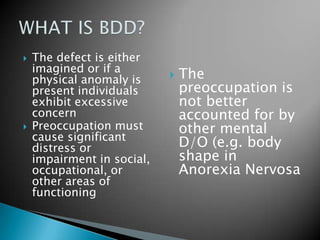







Body Dysmorphic Disorder (BDD) is characterized by an excessive preoccupation with perceived defects in physical appearance, leading to significant distress and impairment in daily functioning. It often co-occurs with other mental health issues and typically begins in adolescence, affecting about 1-2% of the population equally across genders. Treatment involves cognitive therapy and medication, notably SSRIs, with a focus on managing symptoms and preventing relapse, as untreated BDD can lead to severe complications such as depression and social isolation.


