Dr. Manoj K. Bangadkar
SSJ College Arjuni / Mor
BLOOD PRESSURE (BP)
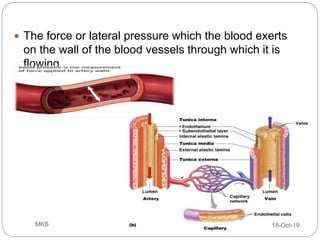
 The force or lateral pressure which the blood exerts
on the wall of the blood vessels through which it is
flowing
18-Oct-19MKB
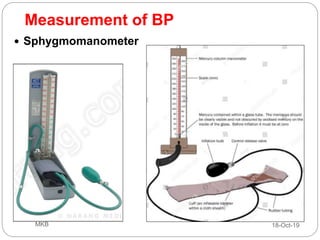
Measurement of BP
 Sphygmomanometer
18-Oct-19MKB
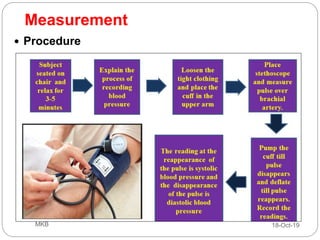
Measurement
 Procedure
18-Oct-19MKB
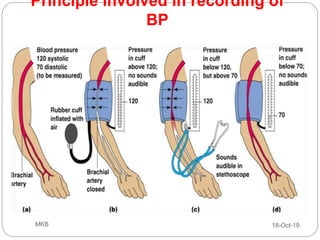
Principle involved in recording of
BP
18-Oct-19MKB
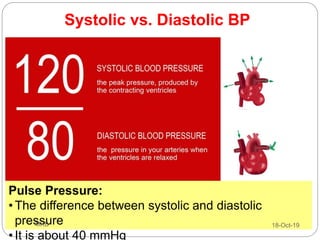
Systolic vs. Diastolic BP
Pulse Pressure:
• The difference between systolic and diastolic
pressure
• It is about 40 mmHg
18-Oct-19MKB
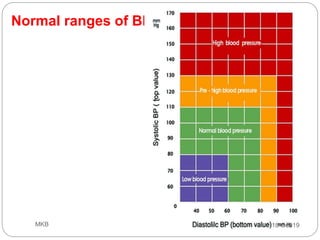
Normal ranges of BP
18-Oct-19MKB
Factors affecting BP
18-Oct-19MKB
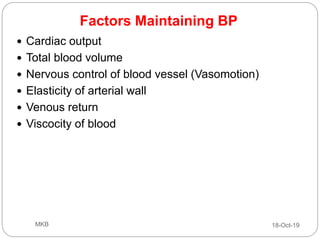
Factors Maintaining BP
 Cardiac output
 Total blood volume
 Nervous control of blood vessel (Vasomotion)
 Elasticity of arterial wall
 Venous return
 Viscocity of blood
18-Oct-19MKB
Normal functions of BP
 Maintain a sufficient pressure head to keep blood
flowing
 Filtration at capillary bed
 The height of blood pressure gives correct information
about the state of a circulatory system as a whole and
also about the functional conditions of the tissue cells
and organs
18-Oct-19MKB
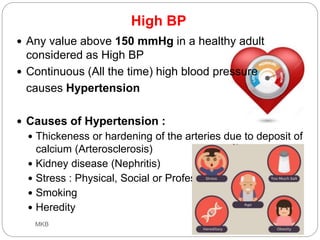
High BP
 Any value above 150 mmHg in a healthy adult
considered as High BP
 Continuous (All the time) high blood pressure
causes Hypertension
 Causes of Hypertension :
 Thickeness or hardening of the arteries due to deposit of
calcium (Arterosclerosis)
 Kidney disease (Nephritis)
 Stress : Physical, Social or Professional
 Smoking
 Heredity
18-Oct-19MKB
 Symptoms of Hypertension :
 Headache, Throbbing of head, Tiredness, Fatigue,
Dizziness and pulpation of heart
 Heart, brain and kidney may be affected
 May arise apolectic stroke
 Prevention and Treatment of Hypertension :
 Mild excersise
 Avoiding beverages
 Reduce salt
 Reserpine obtained from the roots of herb
Rouwolfia
18-Oct-19MKB
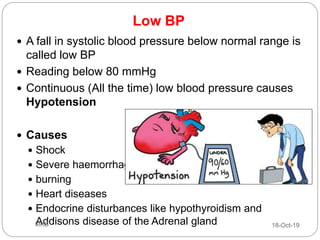
Low BP
 A fall in systolic blood pressure below normal range is
called low BP
 Reading below 80 mmHg
 Continuous (All the time) low blood pressure causes
Hypotension
 Causes
 Shock
 Severe haemorrhage
 burning
 Heart diseases
 Endocrine disturbances like hypothyroidism and
Addisons disease of the Adrenal gland 18-Oct-19MKB
 Symptoms :
 Tired
 Worn out attitude
 Prevention and Treatment :
 Sufficient rest
 Mild exercise
 Consumption of bevarages
18-Oct-19MKB

Blood pressure

  • 1.
    Dr. Manoj K.Bangadkar SSJ College Arjuni / Mor BLOOD PRESSURE (BP)
  • 2.
     The forceor lateral pressure which the blood exerts on the wall of the blood vessels through which it is flowing 18-Oct-19MKB
  • 3.
    Measurement of BP Sphygmomanometer 18-Oct-19MKB
  • 4.
  • 5.
    Principle involved inrecording of BP 18-Oct-19MKB
  • 6.
    Systolic vs. DiastolicBP Pulse Pressure: • The difference between systolic and diastolic pressure • It is about 40 mmHg 18-Oct-19MKB
  • 7.
    Normal ranges ofBP 18-Oct-19MKB
  • 8.
  • 9.
    Factors Maintaining BP Cardiac output  Total blood volume  Nervous control of blood vessel (Vasomotion)  Elasticity of arterial wall  Venous return  Viscocity of blood 18-Oct-19MKB
  • 10.
    Normal functions ofBP  Maintain a sufficient pressure head to keep blood flowing  Filtration at capillary bed  The height of blood pressure gives correct information about the state of a circulatory system as a whole and also about the functional conditions of the tissue cells and organs 18-Oct-19MKB
  • 11.
    High BP  Anyvalue above 150 mmHg in a healthy adult considered as High BP  Continuous (All the time) high blood pressure causes Hypertension  Causes of Hypertension :  Thickeness or hardening of the arteries due to deposit of calcium (Arterosclerosis)  Kidney disease (Nephritis)  Stress : Physical, Social or Professional  Smoking  Heredity 18-Oct-19MKB
  • 12.
     Symptoms ofHypertension :  Headache, Throbbing of head, Tiredness, Fatigue, Dizziness and pulpation of heart  Heart, brain and kidney may be affected  May arise apolectic stroke  Prevention and Treatment of Hypertension :  Mild excersise  Avoiding beverages  Reduce salt  Reserpine obtained from the roots of herb Rouwolfia 18-Oct-19MKB
  • 13.
    Low BP  Afall in systolic blood pressure below normal range is called low BP  Reading below 80 mmHg  Continuous (All the time) low blood pressure causes Hypotension  Causes  Shock  Severe haemorrhage  burning  Heart diseases  Endocrine disturbances like hypothyroidism and Addisons disease of the Adrenal gland 18-Oct-19MKB
  • 14.
     Symptoms : Tired  Worn out attitude  Prevention and Treatment :  Sufficient rest  Mild exercise  Consumption of bevarages 18-Oct-19MKB