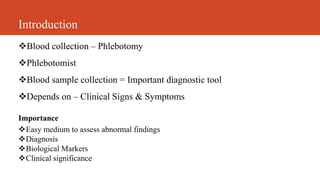
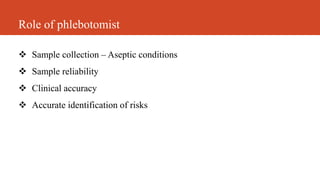
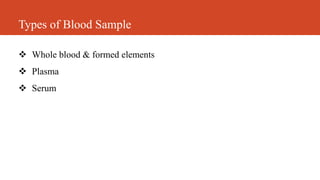
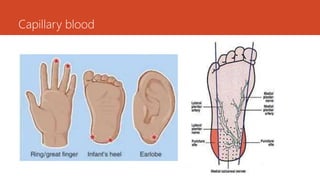
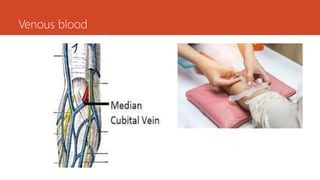
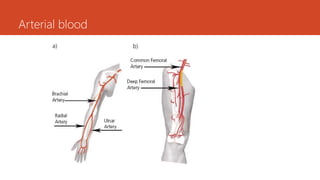
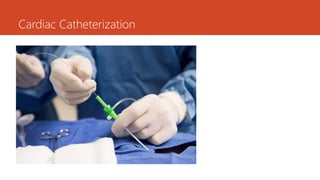
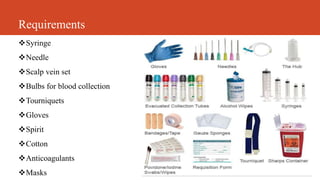
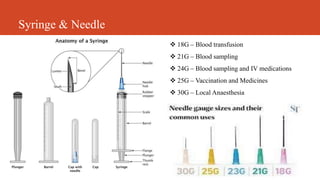
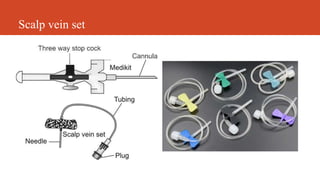
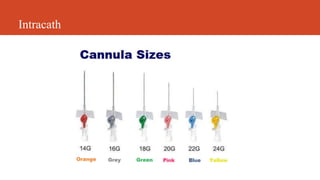
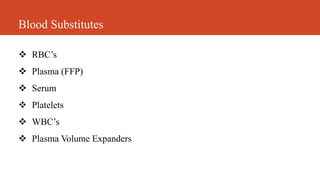
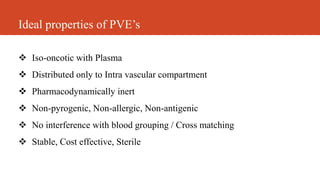


This document provides an introduction to blood collection and hematology. It discusses the importance of blood collection as a diagnostic tool and the role of the phlebotomist in ensuring sample reliability and clinical accuracy. It describes the different types of blood samples that can be collected, including whole blood, plasma, and serum. The main methods of collection are by syringe and needle, scalp vein set, or lancet. Accepted sites for collection include capillary, venous, and arterial blood as well as cardiac catheterization. Requirements for collection and different needle sizes are also outlined. The document concludes by listing common blood substitutes and ideal properties of plasma volume expanders.


![Hypothalamus short ppt by Dr. Neha [PT].pptx](https://cdn.slidesharecdn.com/ss_thumbnails/hypothalamusbydr-260124145759-b9f94a93-thumbnail.jpg?width=640&height=640&fit=bounds)

