Afie Yuliana
Dwi Rahayu
Endiana Dwi Muharani
Samsu Bahri
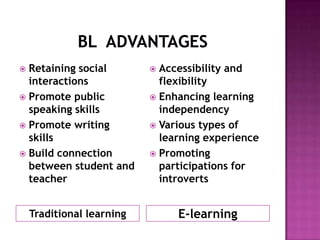
Traditional learning E-learning
 Retaining social
interactions
 Promote public
speaking skills
 Promote writing
skills
 Build connection
between student and
teacher
 Accessibility and
flexibility
 Enhancing learning
independency
 Various types of
learning experience
 Promoting
participations for
introverts
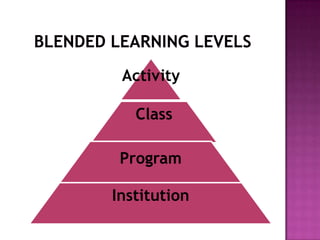
Activity
Class
Program
Institution
 Accessibility and flexibility
 Enhancing learning independency
 Various types of learning experience
 Retaining social interactions with students
 Promoting participations for introverts
 It is the answer to fulfill
learning needs in an effective
and efficient way
 It purposes to intersect best
aspects of face-to-face with
online learning
Graham, Allen, and Ure (2005) states that
commonly people choose blended learning
because:
1) blended learning is improving education,
2) access and flexibility, and
3) cost efficiency
Bonk, Olson, Wisher, & Orvis mentioned
advantages of blended learning are:
 Accessibility and flexibility
 Less face-to-face learning
 Enhancing learning independency
 Various types of learning experiences
 Retaining social interaction between students
 Promoting participation for introverts
 full provision of module related documents in
electronic format,
 regular formative assessment with feedback,
opportunities to learn from each other
collaboratively,
 electronic personal development planning,
 the opportunity to submit all appropriate
summative assessment electronically,
 All face-to-face learning is interactive.
Blended E-Learning Cooperative Approach
(BeLCA)
It comprises three aspects:
1) e-learning
2) Face-to-face
3) Cooperative learning
This approach combines face-to-face learning,
the utilization of technology in learning, and
learning activity in pairs or groups.
It emphasizes on various learning processes in
order to promote cooperative learning.
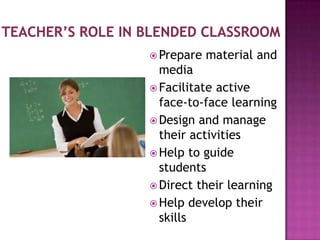
 Prepare material and
media
 Facilitate active
face-to-face learning
 Design and manage
their activities
 Help to guide
students
 Direct their learning
 Help develop their
skills
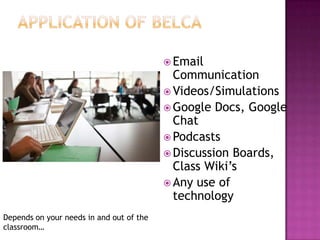
 Email
Communication
 Videos/Simulations
 Google Docs, Google
Chat
 Podcasts
 Discussion Boards,
Class Wiki’s
 Any use of
technology
Depends on your needs in and out of the
classroom…
 Internet cost
 Computer availability in a great number of
schools
 Many teachers do not have enough
technology literacy
 Student readiness
 Teacher’s workload
 Institution support
 Internet abuse anxiety
 Egypt has supported teachers so that they are
used to delivering on-line course and
developing website which enable them to
exchange information, comments,
suggestions and materials (Wanchaver,2004)
 on-line courses
 content development training
 e-learning management
 e-learning services and devices
 Equipped a large number of school with
computers, internet, human resources,
software and professional development
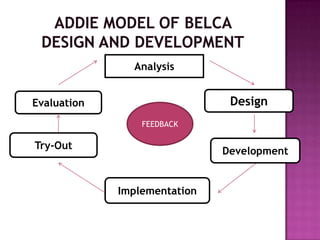
Analysis
FEEDBACK
Design
Development
Implementation
Try-Out
Evaluation
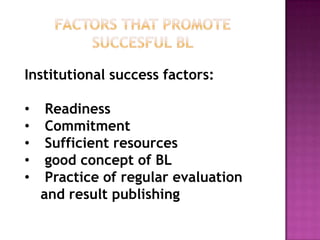
Institutional success factors:
• Readiness
• Commitment
• Sufficient resources
• good concept of BL
• Practice of regular evaluation
and result publishing
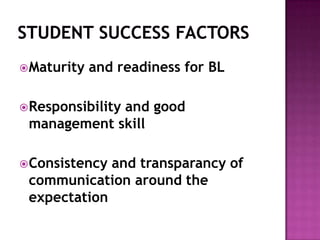
Maturity and readiness for BL
Responsibility and good
management skill
Consistency and transparancy of
communication around the
expectation
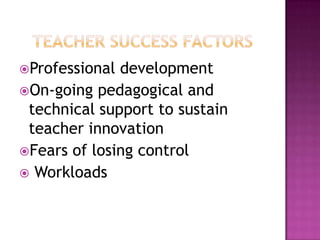
Professional development
On-going pedagogical and
technical support to sustain
teacher innovation
Fears of losing control
 Workloads
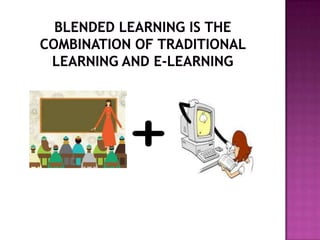
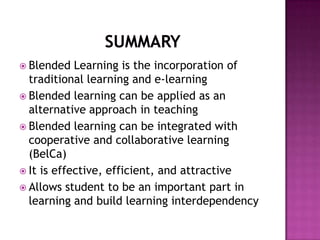
 Blended Learning is the incorporation of
traditional learning and e-learning
 Blended learning can be applied as an
alternative approach in teaching
 Blended learning can be integrated with
cooperative and collaborative learning
(BelCa)
 It is effective, efficient, and attractive
 Allows student to be an important part in
learning and build learning interdependency
Blended learning edited

Blended learning edited

  • 1.
    Afie Yuliana Dwi Rahayu EndianaDwi Muharani Samsu Bahri
  • 5.
    Traditional learning E-learning Retaining social interactions  Promote public speaking skills  Promote writing skills  Build connection between student and teacher  Accessibility and flexibility  Enhancing learning independency  Various types of learning experience  Promoting participations for introverts
  • 6.
  • 7.
     Accessibility andflexibility  Enhancing learning independency  Various types of learning experience  Retaining social interactions with students  Promoting participations for introverts
  • 8.
     It isthe answer to fulfill learning needs in an effective and efficient way  It purposes to intersect best aspects of face-to-face with online learning
  • 9.
    Graham, Allen, andUre (2005) states that commonly people choose blended learning because: 1) blended learning is improving education, 2) access and flexibility, and 3) cost efficiency
  • 10.
    Bonk, Olson, Wisher,& Orvis mentioned advantages of blended learning are:  Accessibility and flexibility  Less face-to-face learning  Enhancing learning independency  Various types of learning experiences  Retaining social interaction between students  Promoting participation for introverts
  • 11.
     full provisionof module related documents in electronic format,  regular formative assessment with feedback, opportunities to learn from each other collaboratively,  electronic personal development planning,  the opportunity to submit all appropriate summative assessment electronically,  All face-to-face learning is interactive.
  • 12.
    Blended E-Learning CooperativeApproach (BeLCA) It comprises three aspects: 1) e-learning 2) Face-to-face 3) Cooperative learning
  • 13.
    This approach combinesface-to-face learning, the utilization of technology in learning, and learning activity in pairs or groups. It emphasizes on various learning processes in order to promote cooperative learning.
  • 14.
     Prepare materialand media  Facilitate active face-to-face learning  Design and manage their activities  Help to guide students  Direct their learning  Help develop their skills
  • 15.
     Email Communication  Videos/Simulations Google Docs, Google Chat  Podcasts  Discussion Boards, Class Wiki’s  Any use of technology Depends on your needs in and out of the classroom…
  • 16.
     Internet cost Computer availability in a great number of schools  Many teachers do not have enough technology literacy  Student readiness  Teacher’s workload  Institution support  Internet abuse anxiety
  • 17.
     Egypt hassupported teachers so that they are used to delivering on-line course and developing website which enable them to exchange information, comments, suggestions and materials (Wanchaver,2004)
  • 18.
     on-line courses content development training  e-learning management  e-learning services and devices  Equipped a large number of school with computers, internet, human resources, software and professional development
  • 19.
  • 20.
    Institutional success factors: •Readiness • Commitment • Sufficient resources • good concept of BL • Practice of regular evaluation and result publishing
  • 21.
    Maturity and readinessfor BL Responsibility and good management skill Consistency and transparancy of communication around the expectation
  • 22.
    Professional development On-going pedagogicaland technical support to sustain teacher innovation Fears of losing control  Workloads
  • 23.
     Blended Learningis the incorporation of traditional learning and e-learning  Blended learning can be applied as an alternative approach in teaching  Blended learning can be integrated with cooperative and collaborative learning (BelCa)  It is effective, efficient, and attractive  Allows student to be an important part in learning and build learning interdependency