An Interesting of
Bladder Dysfunction
Dr.Arul Selvan.V. L Unit
Presenter : Dr.M.Ramesh Babu
Brief Hx
• 73 yrs Old gentleman, DM/ HTN presented With ℅
• Urinary Incontinence - 6 months
• Weakness of Rt. UL & LL - 6months
HOPI
• PWAN - 6 months back when he developed sudden onset of Rt. Sided
weakness of both UL& LL with dizziness & vomiting, without facial
weakness
• H/o Urinary Incontinence since then in the form of Urgency, increased
frequency with interrupted flow, used to strain during voiding and in
ability to hold to urine, no hesitancy. He is able to feel the bladder.
• He was evaluated in a local hospital and found to have acute stroke Rt.
H hemiparesis and started on antiplatelets and statins
• No h/o fever with chills / evening rise of temp./ night sweats
• He was catheterised and he is on catheter till date and came here for
further evaluation.
• Past Hx: H/o BPH - used to strain during micturition- few
months, DM & HTN - 8 yrs on Rx.
• Family Hx : Nil Significant
• Personal Hx: Not smoker / alcoholic/ tobacco chewer, Bowels
regular
• Treatment Hx: On antiplatelets, statins, OHA, anti hypertensives
- showed improvement in Rt.sided weakness but continues have
to have urinary symptoms, on catheterisation.
History Summary
• 73 yrs old gentleman k/c/o DM/HTN with recent acute stroke -
Rt. Hemiparesis with voiding LUTS, on Foley’s catheter , on the
background of BPH.
• Diagnosis: Acute Stroke with BOO
O/E
• Well built and moderately nourished
• No pallor/cyanosis/clubbing/pedal oedema/lymphadenopathy/thyroid swelling
• Vitals - PR-78/min, B.P - 140/80mm of hg
• CNS - Examination:
• Conscious, alert , well oriented
• HMF - N
• Speech - N
• Cranial Nerves - Mild facial lag on Rt.side
• Rt. Spastic hemiparesis - 4/5
• Plantar - Lt. Extensor
• No sensory deficit
• No cerebellar signs
• Neck supple
• Gait - Hemiplegic gait
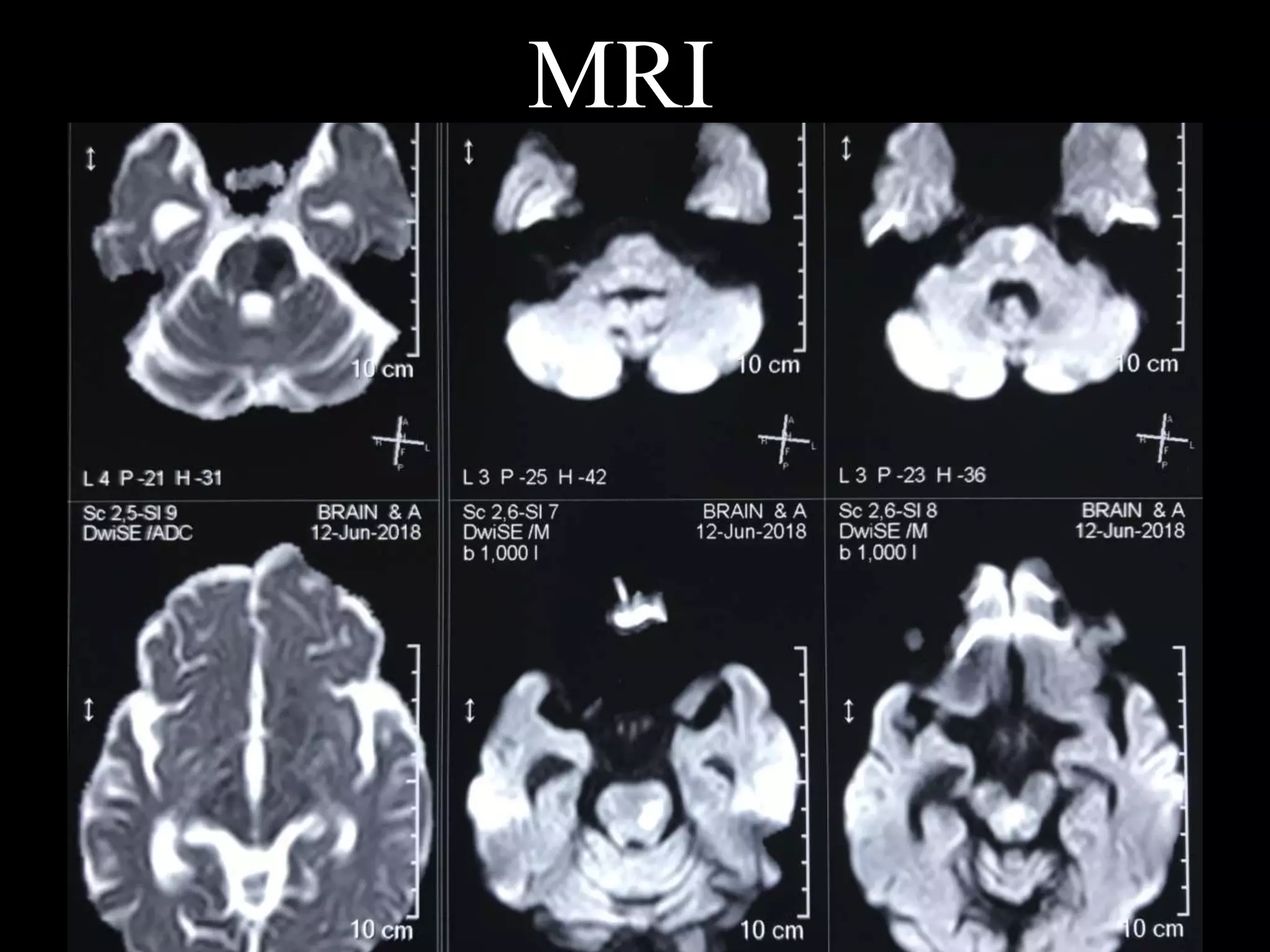
MRI
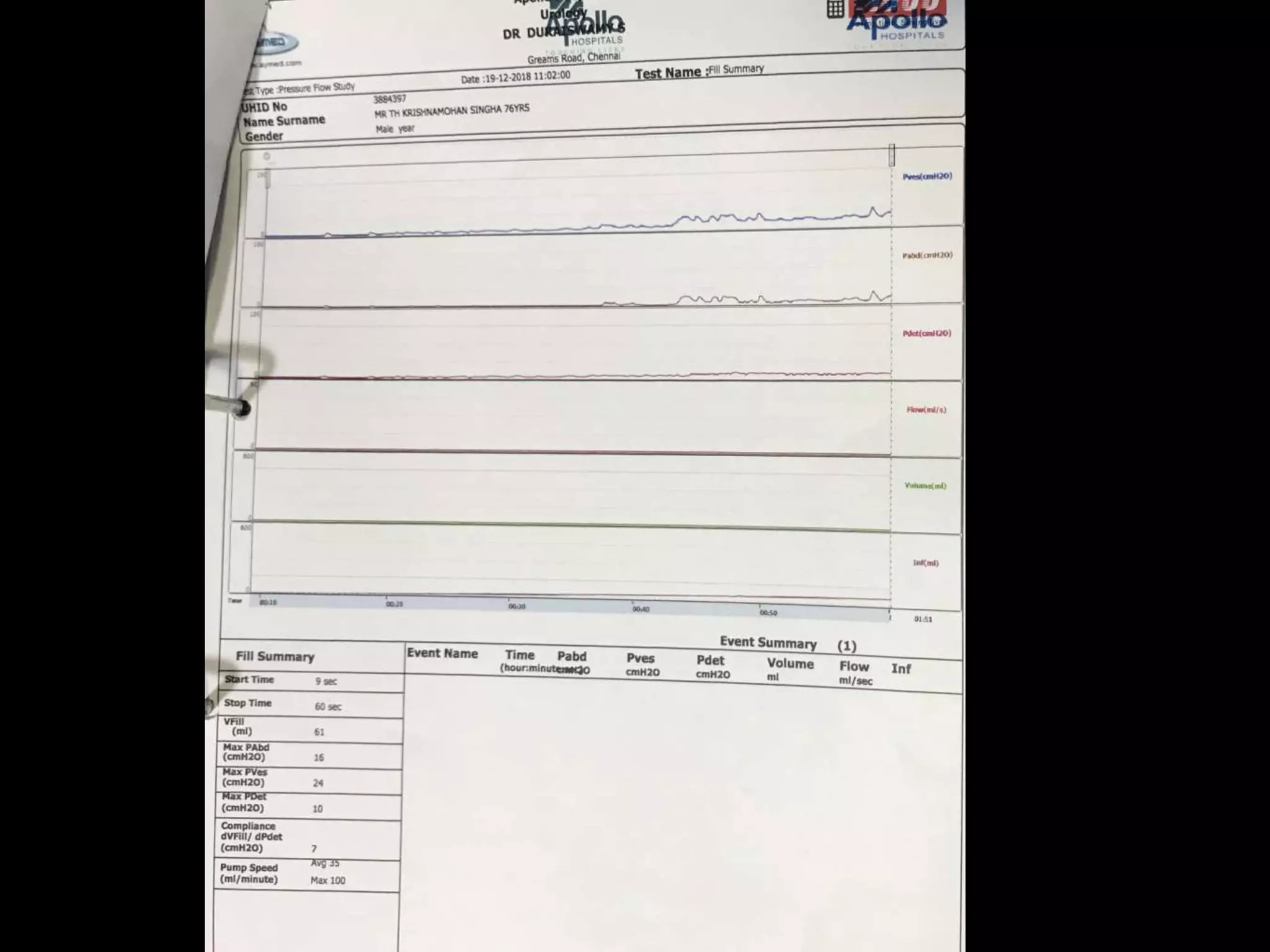
• Pabd - N
• Pves - N
• Pdet - 6-8 cm
h20 - minimal
contraction
• F/S/O
Hypotonic
bladder
LUT
Storage
symptoms
• Frequency
• Urgency
• Urge incontinence
• Precipitancy
LUT
Voiding
symptoms
• Hesitancy
• Poor flow ( unimproved
by straining)
• Continuous dribbling
• Post micturition
dribbling
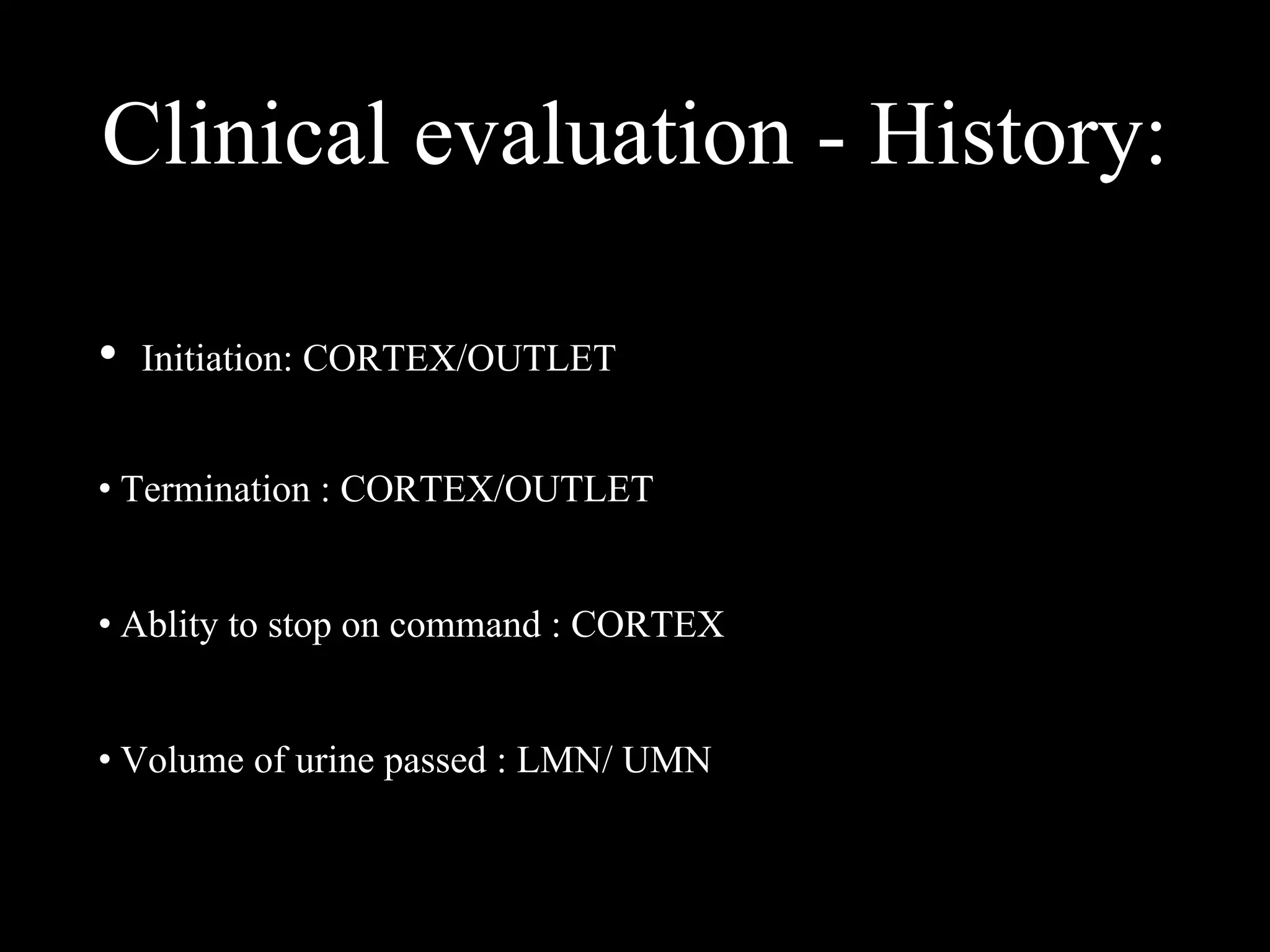
Clinical evaluation - History:
• Initiation: CORTEX/OUTLET
• Termination : CORTEX/OUTLET
• Ablity to stop on command : CORTEX
• Volume of urine passed : LMN/ UMN
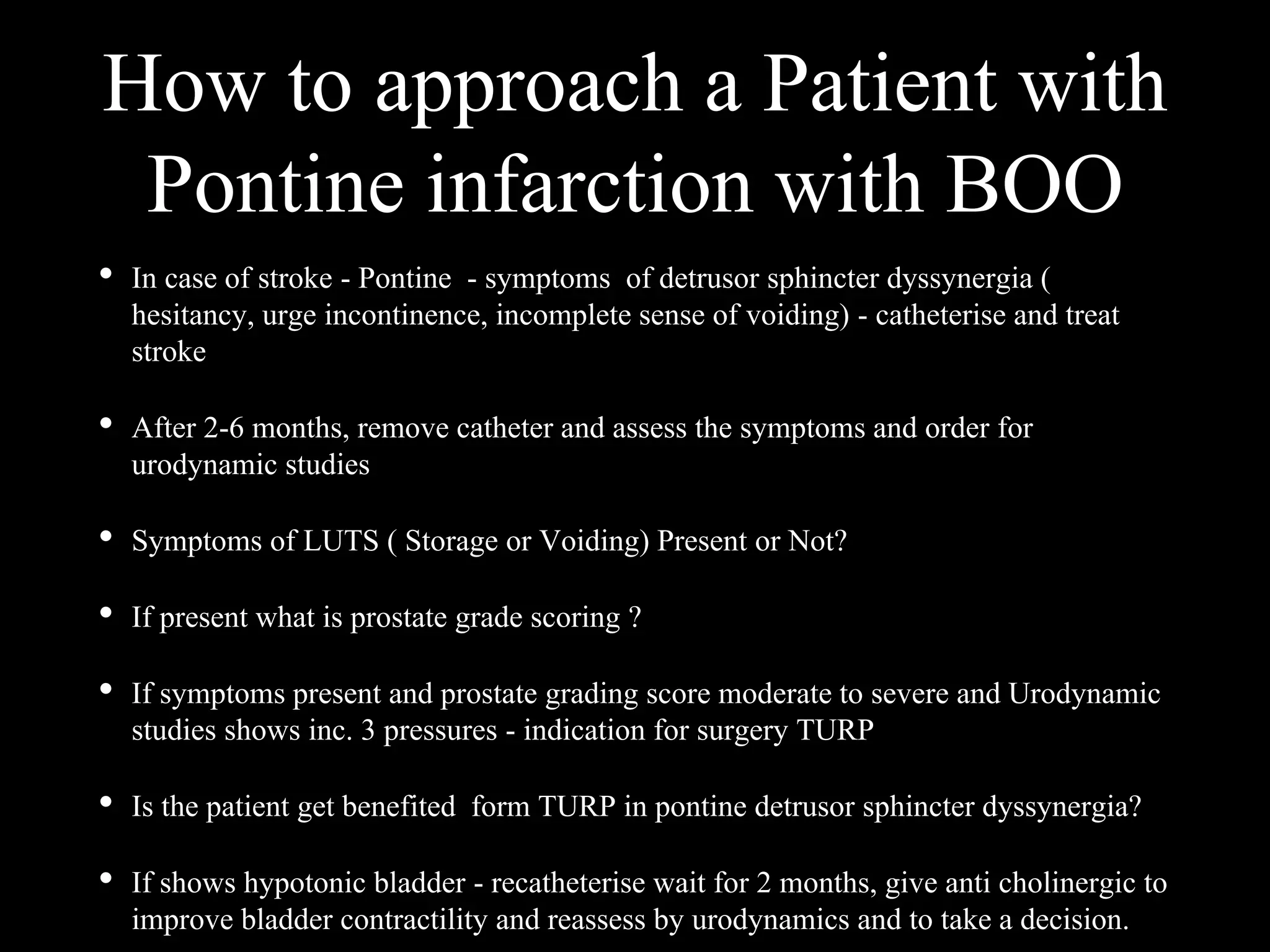
How to approach a Patient with
Pontine infarction with BOO
• In case of stroke - Pontine - symptoms of detrusor sphincter dyssynergia (
hesitancy, urge incontinence, incomplete sense of voiding) - catheterise and treat
stroke
• After 2-6 months, remove catheter and assess the symptoms and order for
urodynamic studies
• Symptoms of LUTS ( Storage or Voiding) Present or Not?
• If present what is prostate grade scoring ?
• If symptoms present and prostate grading score moderate to severe and Urodynamic
studies shows inc. 3 pressures - indication for surgery TURP
• Is the patient get benefited form TURP in pontine detrusor sphincter dyssynergia?
• If shows hypotonic bladder - recatheterise wait for 2 months, give anti cholinergic to
improve bladder contractility and reassess by urodynamics and to take a decision.
• Urodynamics - 3 graphs of pressures :
• Pabd , Pves, Pdet
• Normal Pdet - in males >50 cm of H2o, in females - > 40cm of
H2o.
• Usually in BOO - Pdet > 50
• In our case Pdet is 5-10 cmm of H2o
• Is the patient get benefited by surgery or not ?
Bladder Physiology
• The Urinary bladder is a smooth muscle chamber functions as a
temporary store house of urine which gets emptied through the
urethra at appropriate time and place.
• First urge to pass urine occurs at 150ml.
• Marked sense of full bladder at 400ml.
• Reflex bladder contractions occurs at 300-400ml.
• Bladder capacity 500-700ml
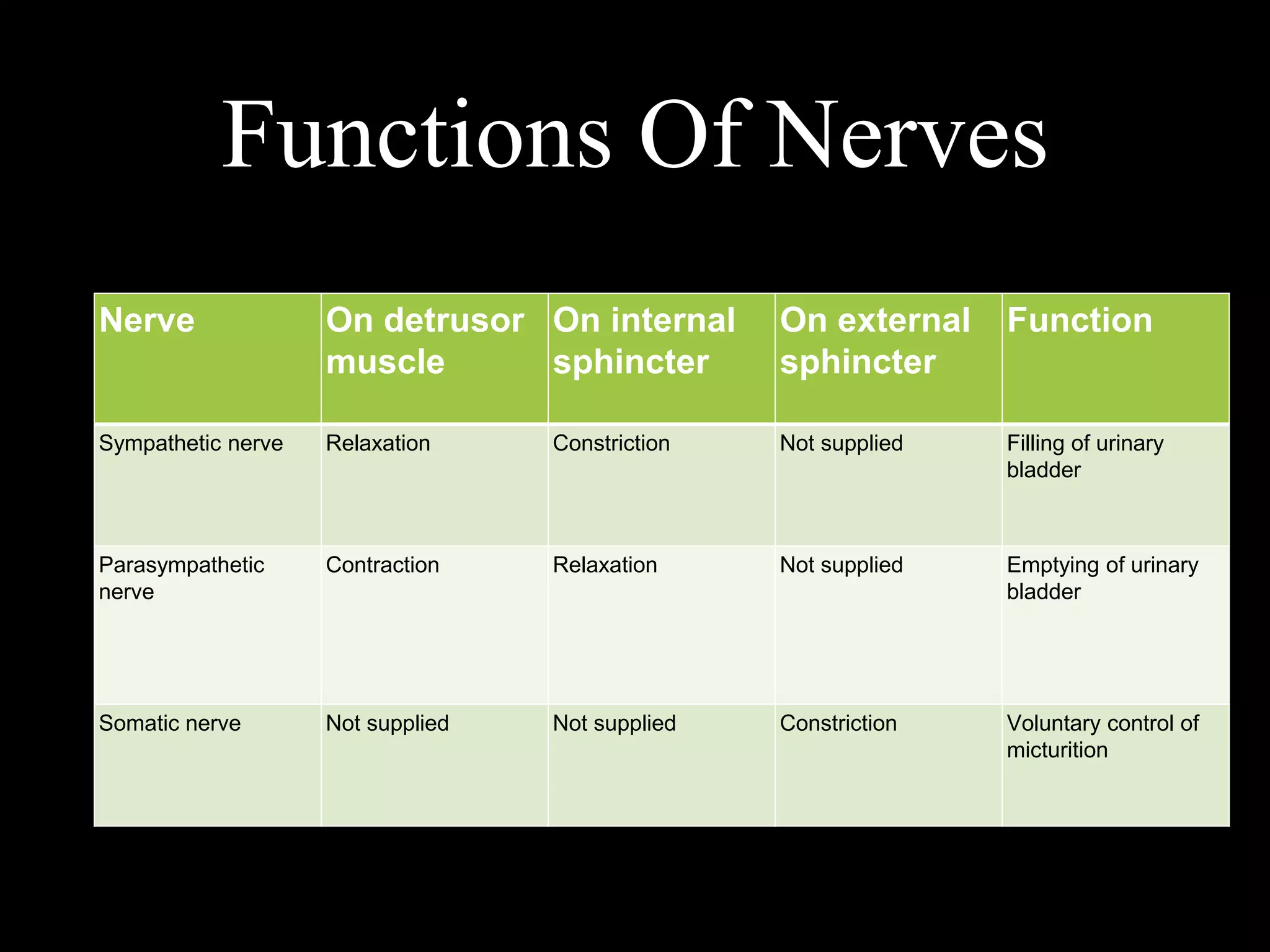
Functions Of Nerves
Nerve On detrusor
muscle
On internal
sphincter
On external
sphincter
Function
Sympathetic nerve Relaxation Constriction Not supplied Filling of urinary
bladder
Parasympathetic
nerve
Contraction Relaxation Not supplied Emptying of urinary
bladder
Somatic nerve Not supplied Not supplied Constriction Voluntary control of
micturition
Bradley’s 5 Loops of Bladder
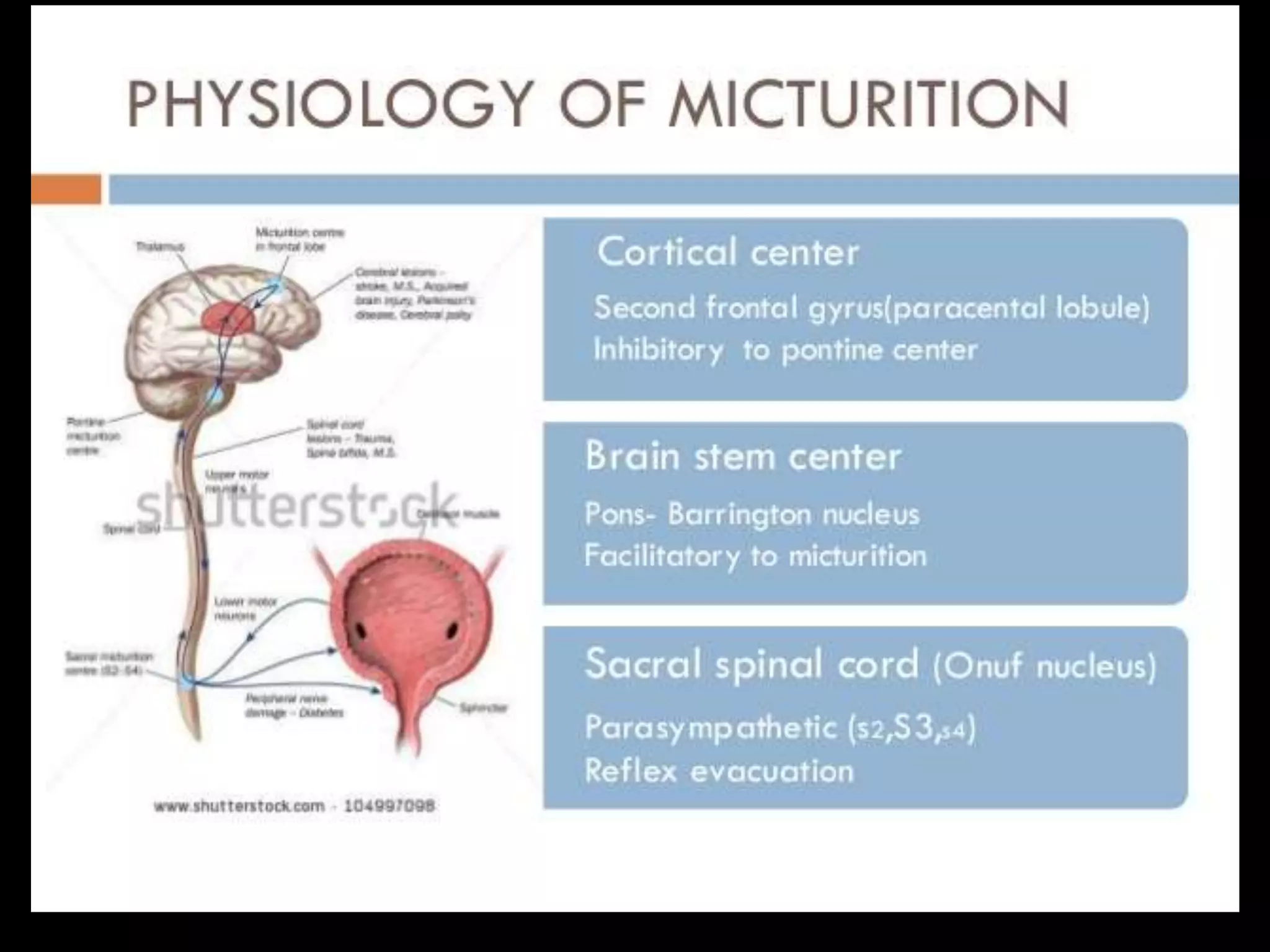
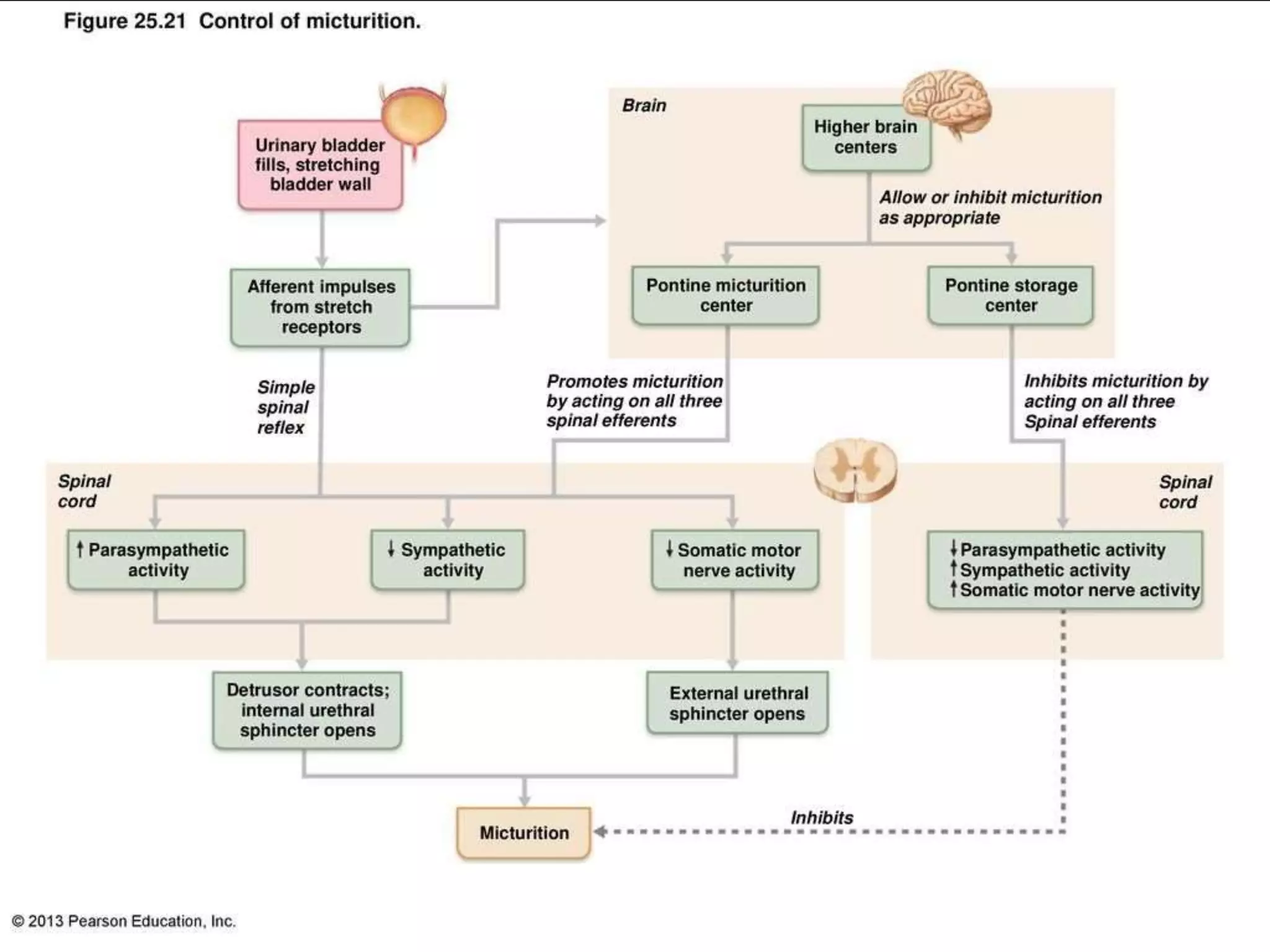
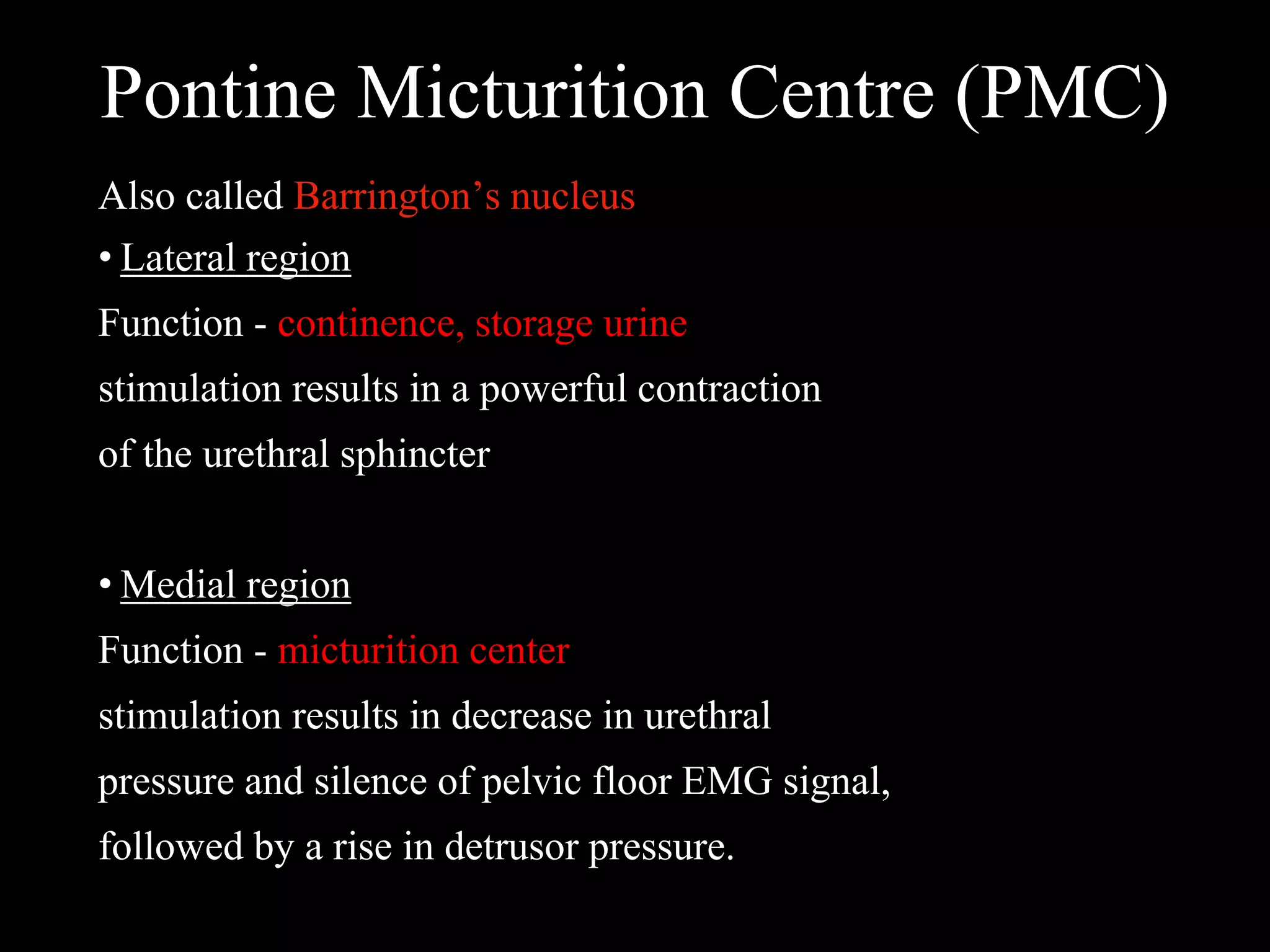
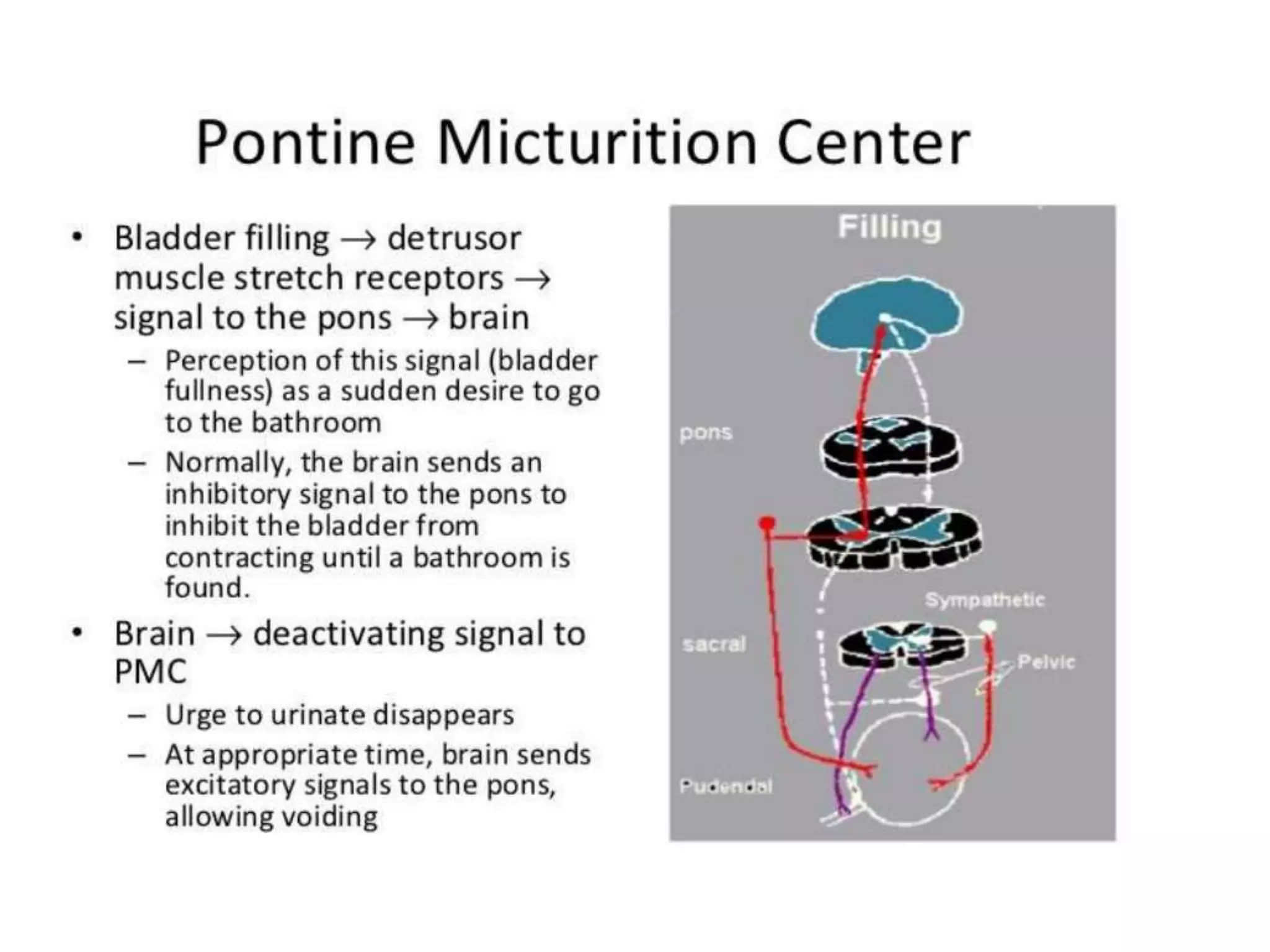
Pontine Micturition Centre (PMC)
Also called Barrington’s nucleus
• Lateral region
Function - continence, storage urine
stimulation results in a powerful contraction
of the urethral sphincter
• Medial region
Function - micturition center
stimulation results in decrease in urethral
pressure and silence of pelvic floor EMG signal,
followed by a rise in detrusor pressure.
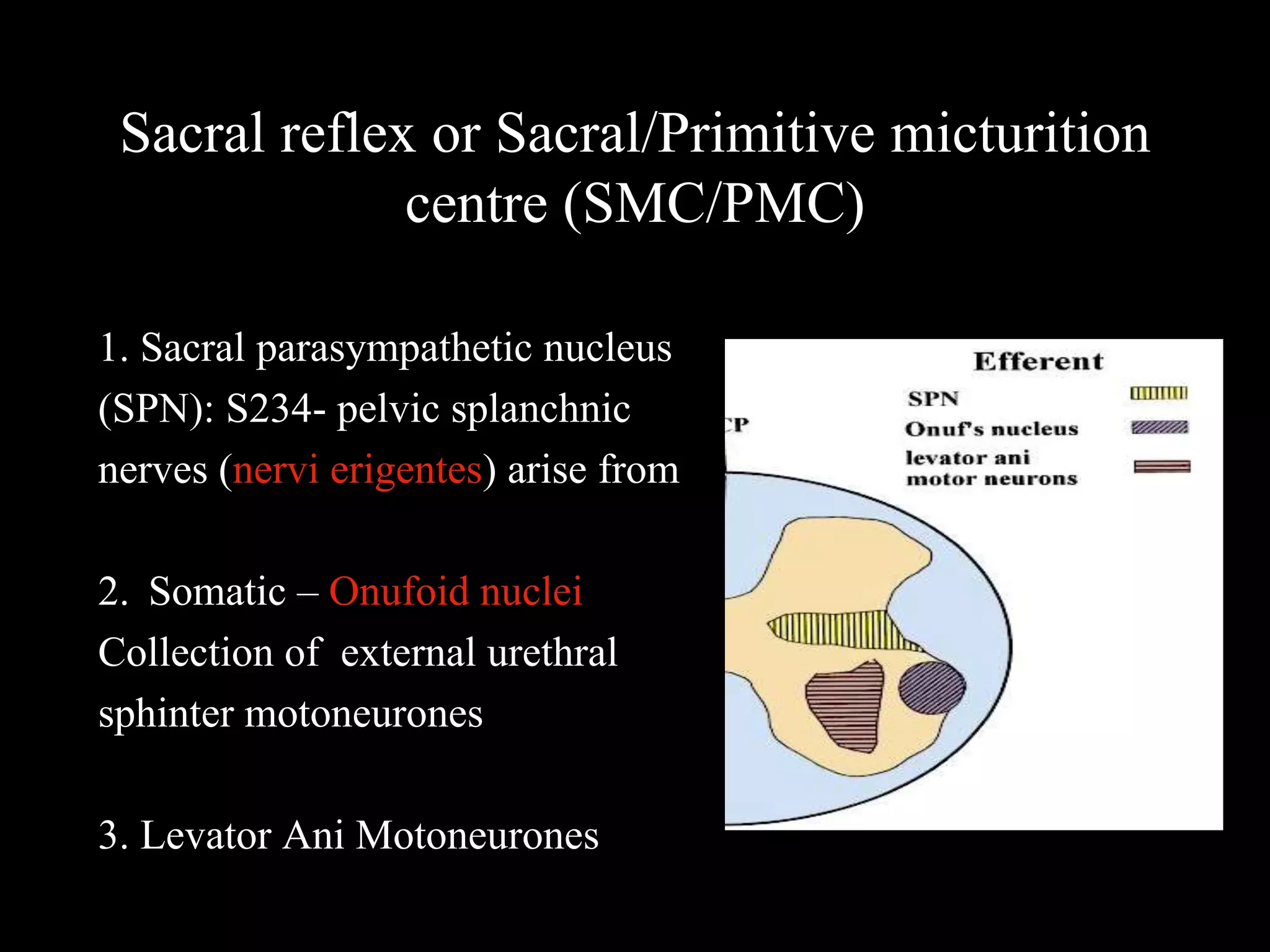
Sacral reflex or Sacral/Primitive micturition
centre (SMC/PMC)
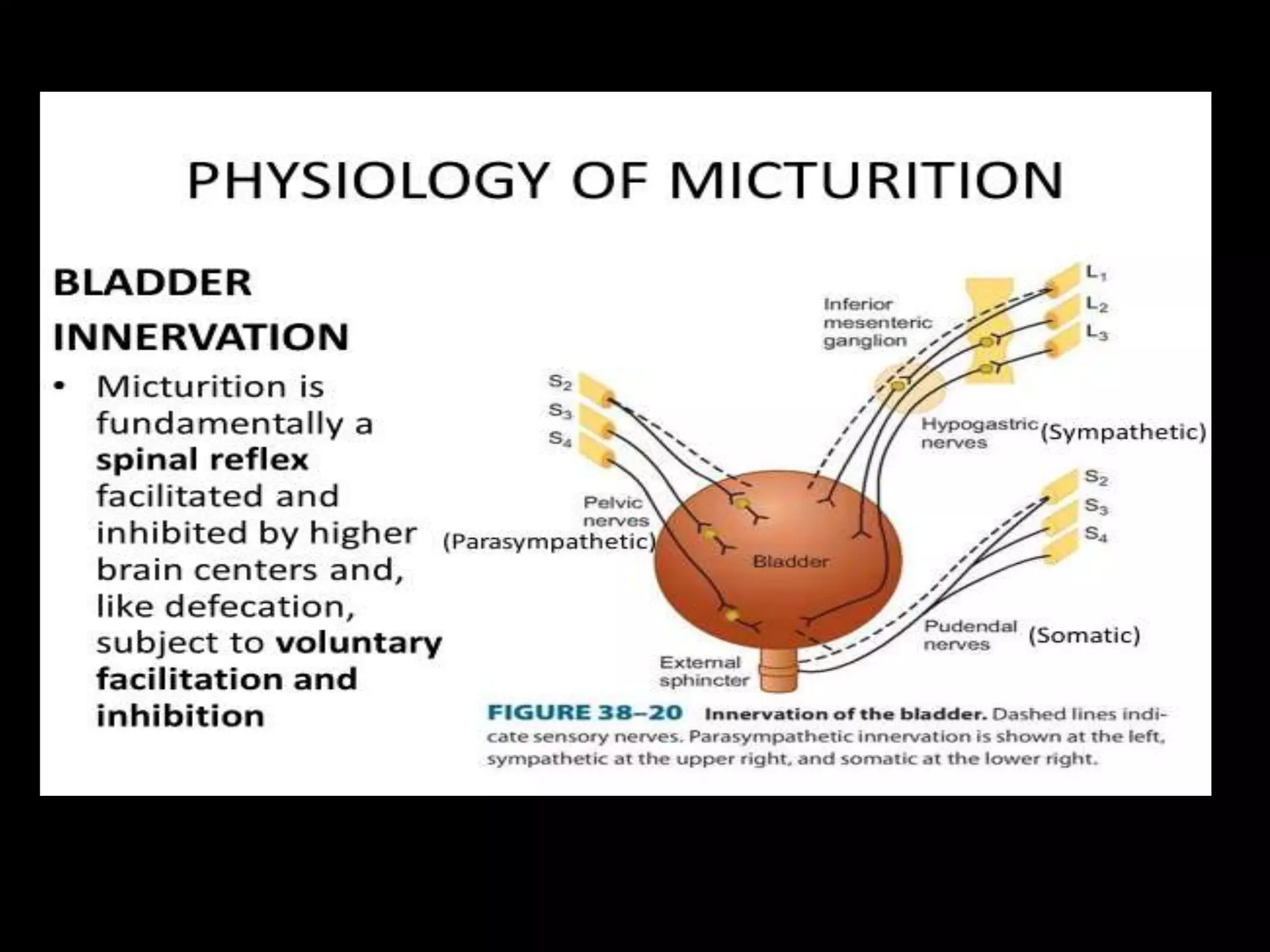
1. Sacral parasympathetic nucleus
(SPN): S234- pelvic splanchnic
nerves (nervi erigentes) arise from
2. Somatic – Onufoid nuclei
Collection of external urethral
sphinter motoneurones
3. Levator Ani Motoneurones
Bladder - UMN Versus LMN bladder

Bladder - UMN Versus LMN bladder

  • 1.
    An Interesting of BladderDysfunction Dr.Arul Selvan.V. L Unit Presenter : Dr.M.Ramesh Babu
  • 2.
    Brief Hx • 73yrs Old gentleman, DM/ HTN presented With ℅ • Urinary Incontinence - 6 months • Weakness of Rt. UL & LL - 6months
  • 3.
    HOPI • PWAN -6 months back when he developed sudden onset of Rt. Sided weakness of both UL& LL with dizziness & vomiting, without facial weakness • H/o Urinary Incontinence since then in the form of Urgency, increased frequency with interrupted flow, used to strain during voiding and in ability to hold to urine, no hesitancy. He is able to feel the bladder. • He was evaluated in a local hospital and found to have acute stroke Rt. H hemiparesis and started on antiplatelets and statins • No h/o fever with chills / evening rise of temp./ night sweats • He was catheterised and he is on catheter till date and came here for further evaluation.
  • 4.
    • Past Hx:H/o BPH - used to strain during micturition- few months, DM & HTN - 8 yrs on Rx. • Family Hx : Nil Significant • Personal Hx: Not smoker / alcoholic/ tobacco chewer, Bowels regular • Treatment Hx: On antiplatelets, statins, OHA, anti hypertensives - showed improvement in Rt.sided weakness but continues have to have urinary symptoms, on catheterisation.
  • 5.
    History Summary • 73yrs old gentleman k/c/o DM/HTN with recent acute stroke - Rt. Hemiparesis with voiding LUTS, on Foley’s catheter , on the background of BPH. • Diagnosis: Acute Stroke with BOO
  • 6.
    O/E • Well builtand moderately nourished • No pallor/cyanosis/clubbing/pedal oedema/lymphadenopathy/thyroid swelling • Vitals - PR-78/min, B.P - 140/80mm of hg • CNS - Examination: • Conscious, alert , well oriented • HMF - N • Speech - N • Cranial Nerves - Mild facial lag on Rt.side • Rt. Spastic hemiparesis - 4/5 • Plantar - Lt. Extensor
  • 7.
    • No sensorydeficit • No cerebellar signs • Neck supple • Gait - Hemiplegic gait
  • 8.
  • 10.
    • Pabd -N • Pves - N • Pdet - 6-8 cm h20 - minimal contraction • F/S/O Hypotonic bladder
  • 12.
    LUT Storage symptoms • Frequency • Urgency •Urge incontinence • Precipitancy LUT Voiding symptoms • Hesitancy • Poor flow ( unimproved by straining) • Continuous dribbling • Post micturition dribbling
  • 13.
    Clinical evaluation -History: • Initiation: CORTEX/OUTLET • Termination : CORTEX/OUTLET • Ablity to stop on command : CORTEX • Volume of urine passed : LMN/ UMN
  • 14.
    How to approacha Patient with Pontine infarction with BOO • In case of stroke - Pontine - symptoms of detrusor sphincter dyssynergia ( hesitancy, urge incontinence, incomplete sense of voiding) - catheterise and treat stroke • After 2-6 months, remove catheter and assess the symptoms and order for urodynamic studies • Symptoms of LUTS ( Storage or Voiding) Present or Not? • If present what is prostate grade scoring ? • If symptoms present and prostate grading score moderate to severe and Urodynamic studies shows inc. 3 pressures - indication for surgery TURP • Is the patient get benefited form TURP in pontine detrusor sphincter dyssynergia? • If shows hypotonic bladder - recatheterise wait for 2 months, give anti cholinergic to improve bladder contractility and reassess by urodynamics and to take a decision.
  • 16.
    • Urodynamics -3 graphs of pressures : • Pabd , Pves, Pdet • Normal Pdet - in males >50 cm of H2o, in females - > 40cm of H2o. • Usually in BOO - Pdet > 50 • In our case Pdet is 5-10 cmm of H2o • Is the patient get benefited by surgery or not ?
  • 17.
    Bladder Physiology • TheUrinary bladder is a smooth muscle chamber functions as a temporary store house of urine which gets emptied through the urethra at appropriate time and place. • First urge to pass urine occurs at 150ml. • Marked sense of full bladder at 400ml. • Reflex bladder contractions occurs at 300-400ml. • Bladder capacity 500-700ml
  • 19.
    Functions Of Nerves NerveOn detrusor muscle On internal sphincter On external sphincter Function Sympathetic nerve Relaxation Constriction Not supplied Filling of urinary bladder Parasympathetic nerve Contraction Relaxation Not supplied Emptying of urinary bladder Somatic nerve Not supplied Not supplied Constriction Voluntary control of micturition
  • 23.
  • 24.
    Pontine Micturition Centre(PMC) Also called Barrington’s nucleus • Lateral region Function - continence, storage urine stimulation results in a powerful contraction of the urethral sphincter • Medial region Function - micturition center stimulation results in decrease in urethral pressure and silence of pelvic floor EMG signal, followed by a rise in detrusor pressure.
  • 25.
    Sacral reflex orSacral/Primitive micturition centre (SMC/PMC) 1. Sacral parasympathetic nucleus (SPN): S234- pelvic splanchnic nerves (nervi erigentes) arise from 2. Somatic – Onufoid nuclei Collection of external urethral sphinter motoneurones 3. Levator Ani Motoneurones