University of Mosul
College of Veterinary Medicine
Department of Pathology and Poultry
Disease
Black Head
Prepared by MSc student
Mohammed Sayfaden
Supervisser
Dr. Mohammed Ghasan
Histomoniasis
(Enterohepatitis, Blackhead)
• Histomoniasis is caused by the protozoan
mainly characterized by ulceration and
inflammation of the cecal walls,
engorgement of the ceca with large
caseouse casts, inflammation of the
mesenteries, and extensive focal necrosis
of the liver.
• Most important in turkeys.
CAUSATIVE AGENT
• Histomonas meleagridis - a one-celled
organism/parasite
INCUBATION PERIOD
• From 7–12 days and Death may occur 11–14
days post infection (PI)
COURSE OF DISEASE
• Subacute: 10 days to 2 weeks
• Chronic: Several weeks
METHOD OF SPREAD
• The common cecal worm, H. gallinarum, is the only
worm known to serve as an intermediate host.
• Direct contact between susceptible and infected birds.
• Earthworms can serve as transport hosts in which
heterakid eggs hatch and survive.
Heterakis gallinarum Heterakis eggs
MORTALITY
• Poults - may reach 80 to 90% when
affected before 4 weeks of age
• Older poults - 20-25% or less
• Chicks and chickens - mortality varies
CLINICAL SIGNS
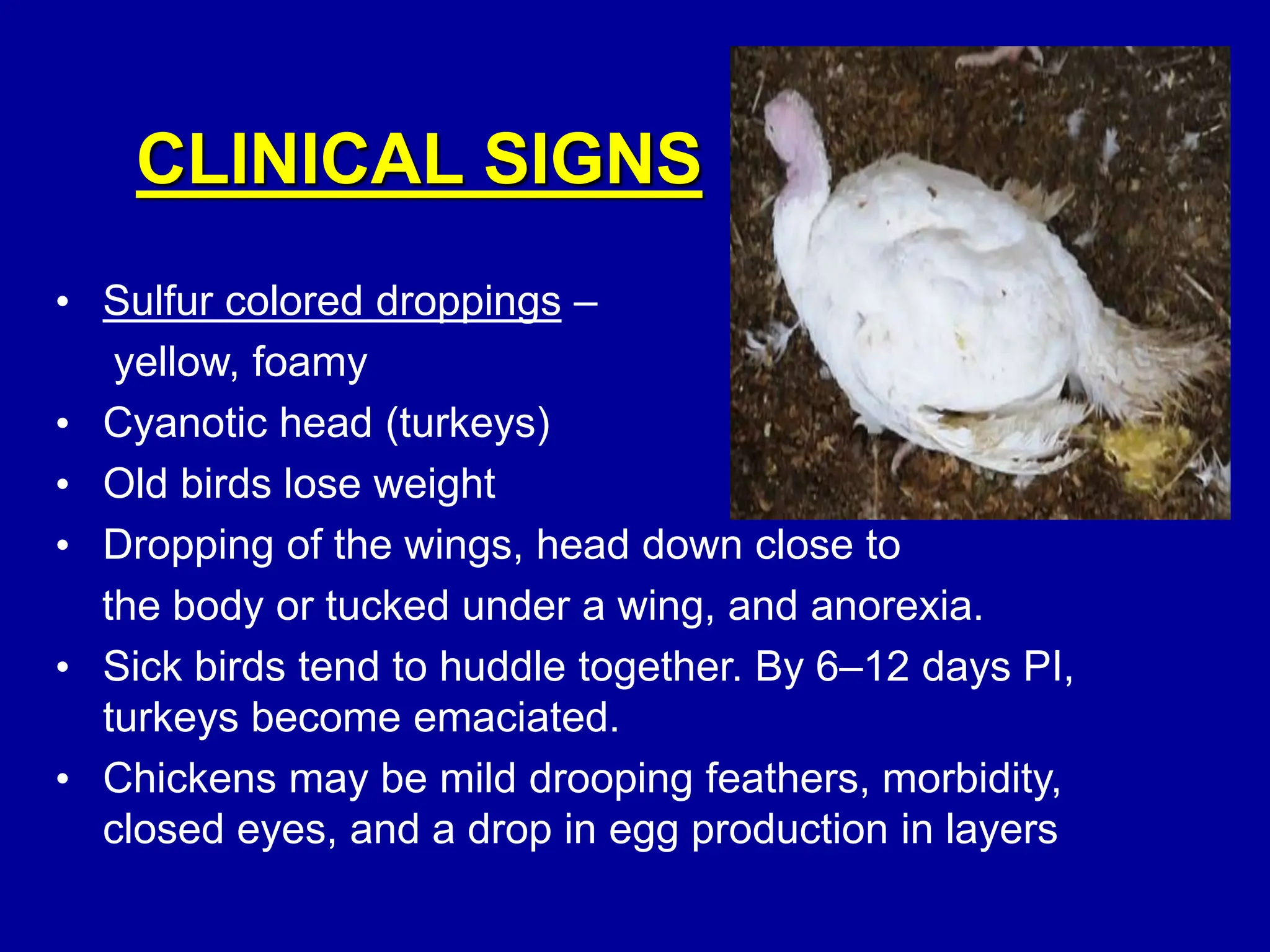
• Sulfur colored droppings –
yellow, foamy
• Cyanotic head (turkeys)
• Old birds lose weight
• Dropping of the wings, head down close to
the body or tucked under a wing, and anorexia.
• Sick birds tend to huddle together. By 6–12 days PI,
turkeys become emaciated.
• Chickens may be mild drooping feathers, morbidity,
closed eyes, and a drop in egg production in layers
Typical liver lesions
round sunken lesions
Cecal lesions
cheesy core
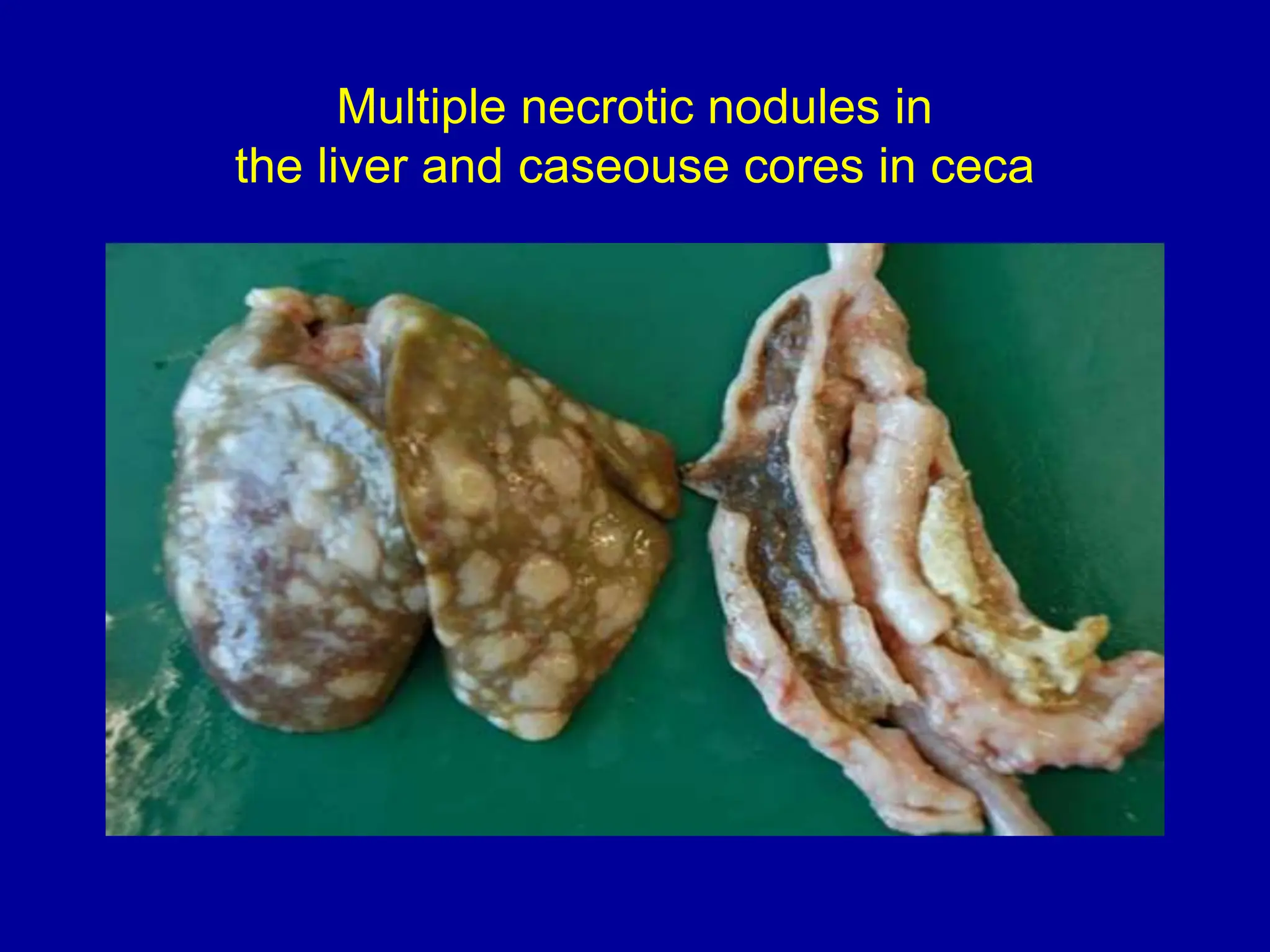
Multiple necrotic nodules in
the liver and caseouse cores in ceca
DIAGNOSIS
SUGGESTIVE DIAGNOSIS
• Typical lesions in ceca and liver.
POSITIVE DIAGNOSIS
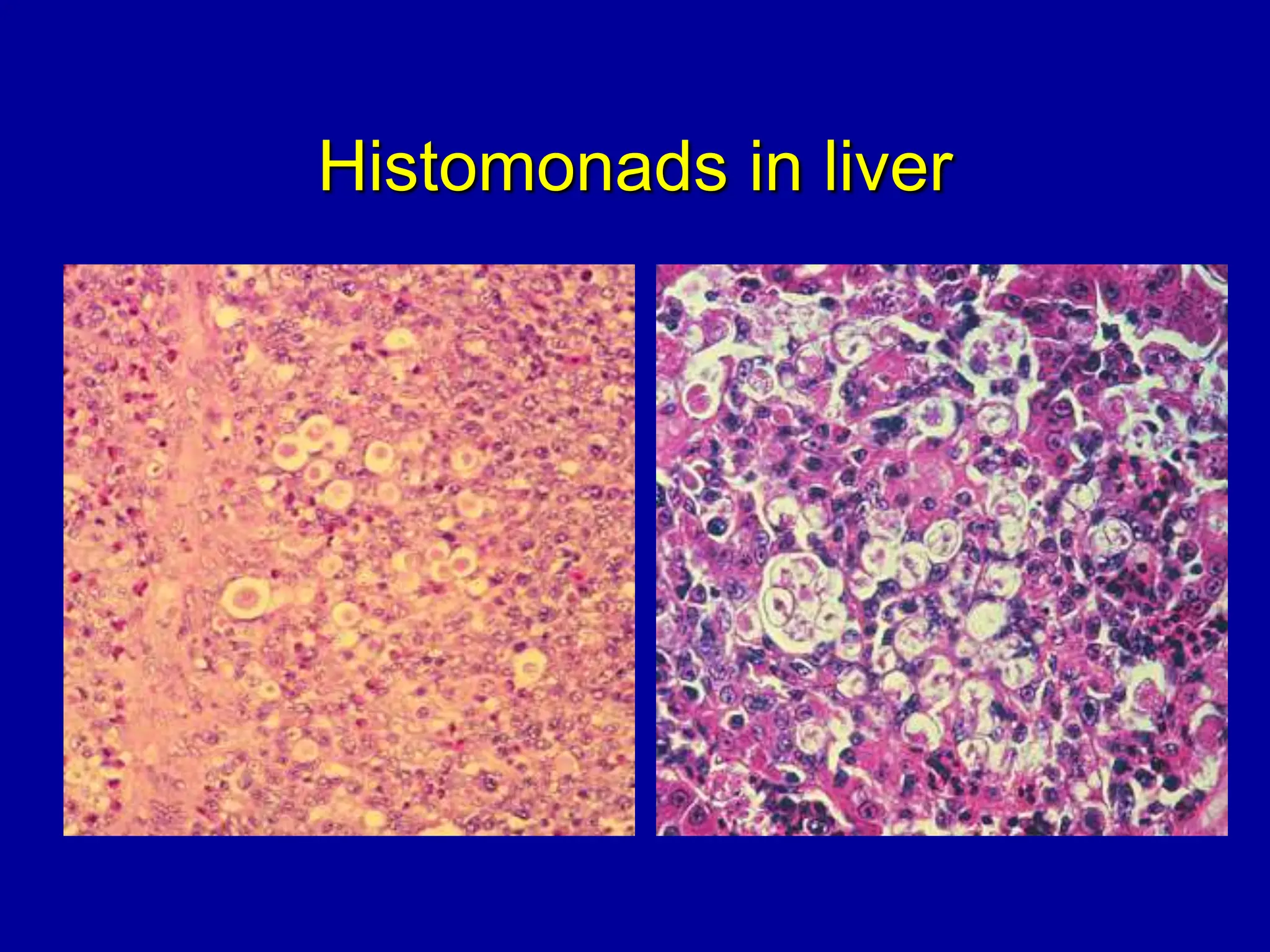
• Cannot isolate or propagate - will see
causative agent on histo in liver tissue
Histomonads in liver
TREATMENT
• Separate sick birds.
• Metronidazole 250 mg/gal-5 days.
• A liquid form is used in pet birds.
PREVENTION
• Separate turkeys and chickens
• Control cecal worms
• Continuous medication

Blackhead histomoniasis in turkey and.ppt

  • 1.
    University of Mosul Collegeof Veterinary Medicine Department of Pathology and Poultry Disease Black Head Prepared by MSc student Mohammed Sayfaden Supervisser Dr. Mohammed Ghasan
  • 2.
    Histomoniasis (Enterohepatitis, Blackhead) • Histomoniasisis caused by the protozoan mainly characterized by ulceration and inflammation of the cecal walls, engorgement of the ceca with large caseouse casts, inflammation of the mesenteries, and extensive focal necrosis of the liver. • Most important in turkeys.
  • 3.
    CAUSATIVE AGENT • Histomonasmeleagridis - a one-celled organism/parasite INCUBATION PERIOD • From 7–12 days and Death may occur 11–14 days post infection (PI)
  • 4.
    COURSE OF DISEASE •Subacute: 10 days to 2 weeks • Chronic: Several weeks METHOD OF SPREAD • The common cecal worm, H. gallinarum, is the only worm known to serve as an intermediate host. • Direct contact between susceptible and infected birds. • Earthworms can serve as transport hosts in which heterakid eggs hatch and survive.
  • 5.
  • 6.
    MORTALITY • Poults -may reach 80 to 90% when affected before 4 weeks of age • Older poults - 20-25% or less • Chicks and chickens - mortality varies
  • 7.
    CLINICAL SIGNS • Sulfurcolored droppings – yellow, foamy • Cyanotic head (turkeys) • Old birds lose weight • Dropping of the wings, head down close to the body or tucked under a wing, and anorexia. • Sick birds tend to huddle together. By 6–12 days PI, turkeys become emaciated. • Chickens may be mild drooping feathers, morbidity, closed eyes, and a drop in egg production in layers
  • 8.
  • 9.
  • 10.
    Multiple necrotic nodulesin the liver and caseouse cores in ceca
  • 11.
    DIAGNOSIS SUGGESTIVE DIAGNOSIS • Typicallesions in ceca and liver. POSITIVE DIAGNOSIS • Cannot isolate or propagate - will see causative agent on histo in liver tissue
  • 12.
  • 13.
    TREATMENT • Separate sickbirds. • Metronidazole 250 mg/gal-5 days. • A liquid form is used in pet birds. PREVENTION • Separate turkeys and chickens • Control cecal worms • Continuous medication