




How to prepare your manuscript for submission BJUI Author Workshop, Tuesday 23 rd  June 2009 Kilian Mellon
Should tell a good story Should have a good punch-line (have a message) Should not be long-winded BUT
GETTING STARTED


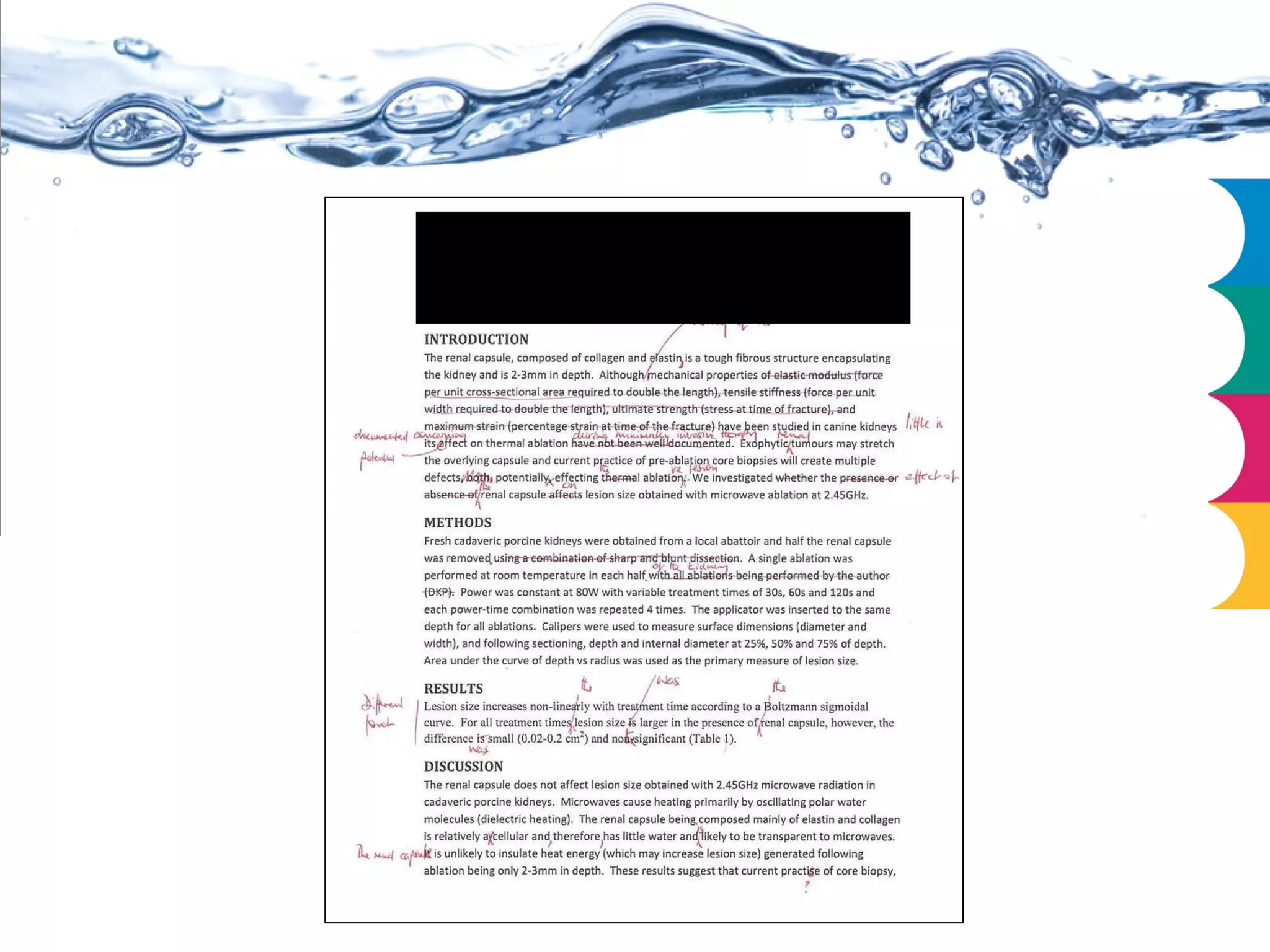
Try proof reading backwards
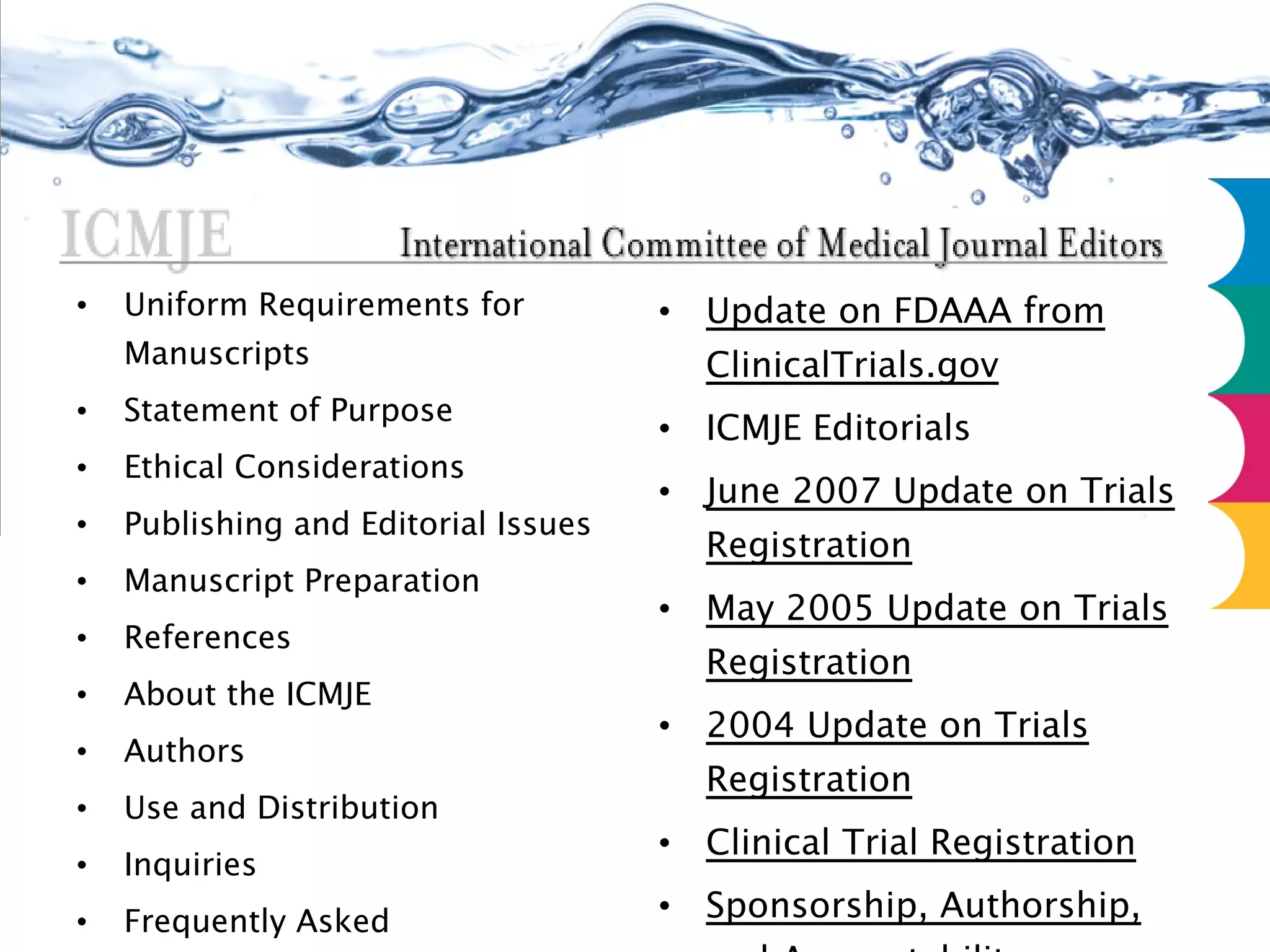
Uniform Requirements for Manuscripts Statement of Purpose Ethical Considerations Publishing and Editorial Issues Manuscript Preparation References About the ICMJE Authors Use and Distribution Inquiries Frequently Asked Questions Journals that Follow URM Update on FDAAA from ClinicalTrials.gov ICMJE Editorials June 2007 Update on Trials Registration May 2005 Update on Trials Registration 2004 Update on Trials Registration Clinical Trial Registration Sponsorship, Authorship, and Accountability
Uniform Requirements for Manuscripts Submitted to Biomedical Journals: Writing and Editing for Biomedical Publication Updated October 2008  Publication Ethics:  Sponsorship, Authorship, and Accountability   The following information is available to be viewed/printed in  Adobe Acrobat pdf format . International Committee of Medical Journal Editors I. Statement of Purpose About  the Uniform Requirements  Potential Users  of the Uniform Requirements  How to Use  the Uniform Requirements  II. Ethical Considerations in the Conduct and Reporting of Research Authorship and Contributorship   Byline Authors  Contributors Listed in Acknowledgements  Editorship   The Role of the Editor  Editorial Freedom  Peer Review   Conflicts of Interest   Potential Conflicts of Interest Related to Individual Authors' Commitments  Potential Conflicts of Interest Related to Project Support  Potential Conflicts of Interest Related to Commitments of Editors, Journal Staff, or Reviewers  Privacy and Confidentiality   Patients and Study Participants Authors and Reviewers  Protection  of Human Subjects and Animals in Research
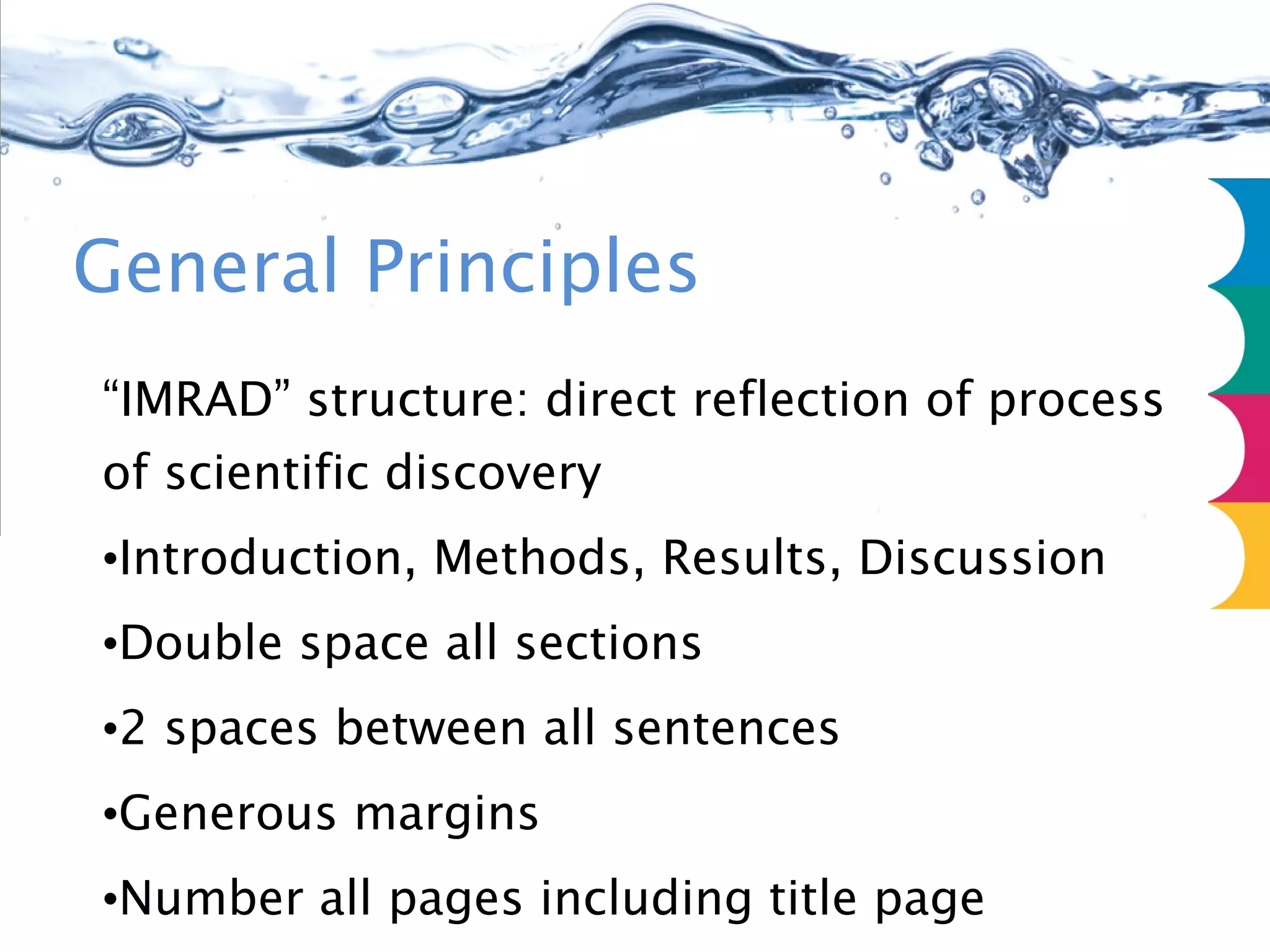
“ IMRAD” structure: direct reflection of process of scientific discovery Introduction, Methods, Results, Discussion Double space all sections 2 spaces between all sentences Generous margins Number all pages including title page Make every word meaningful/no redundancy General Principles
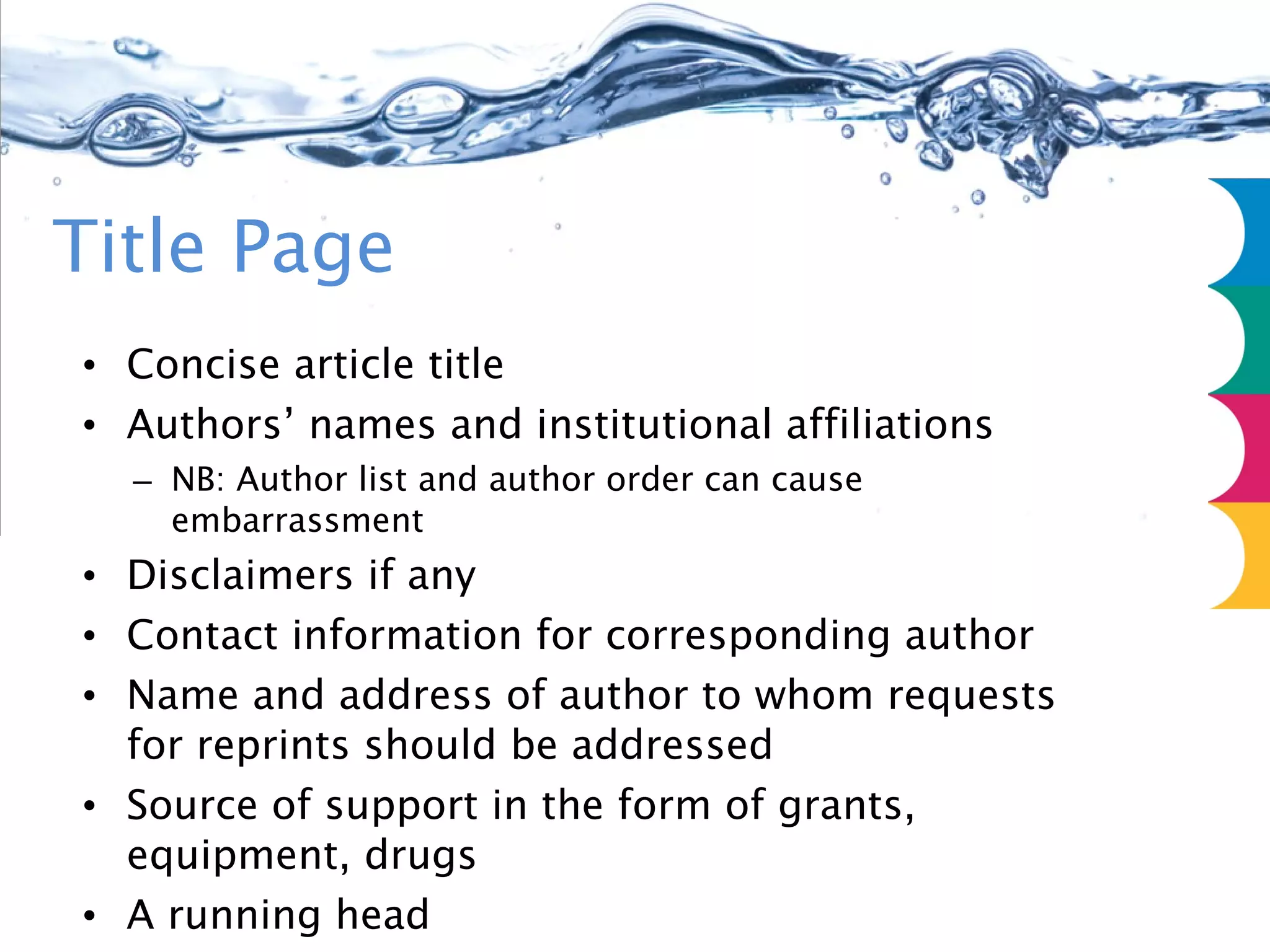
Title Page Concise article title Authors’ names and institutional affiliations NB: Author list and author order can cause embarrassment Disclaimers if any Contact information for corresponding author Name and address of author to whom requests for reprints should be addressed Source of support in the form of grants, equipment, drugs A running head Word count  Text only excl abstract, acknowledgements, references, legends
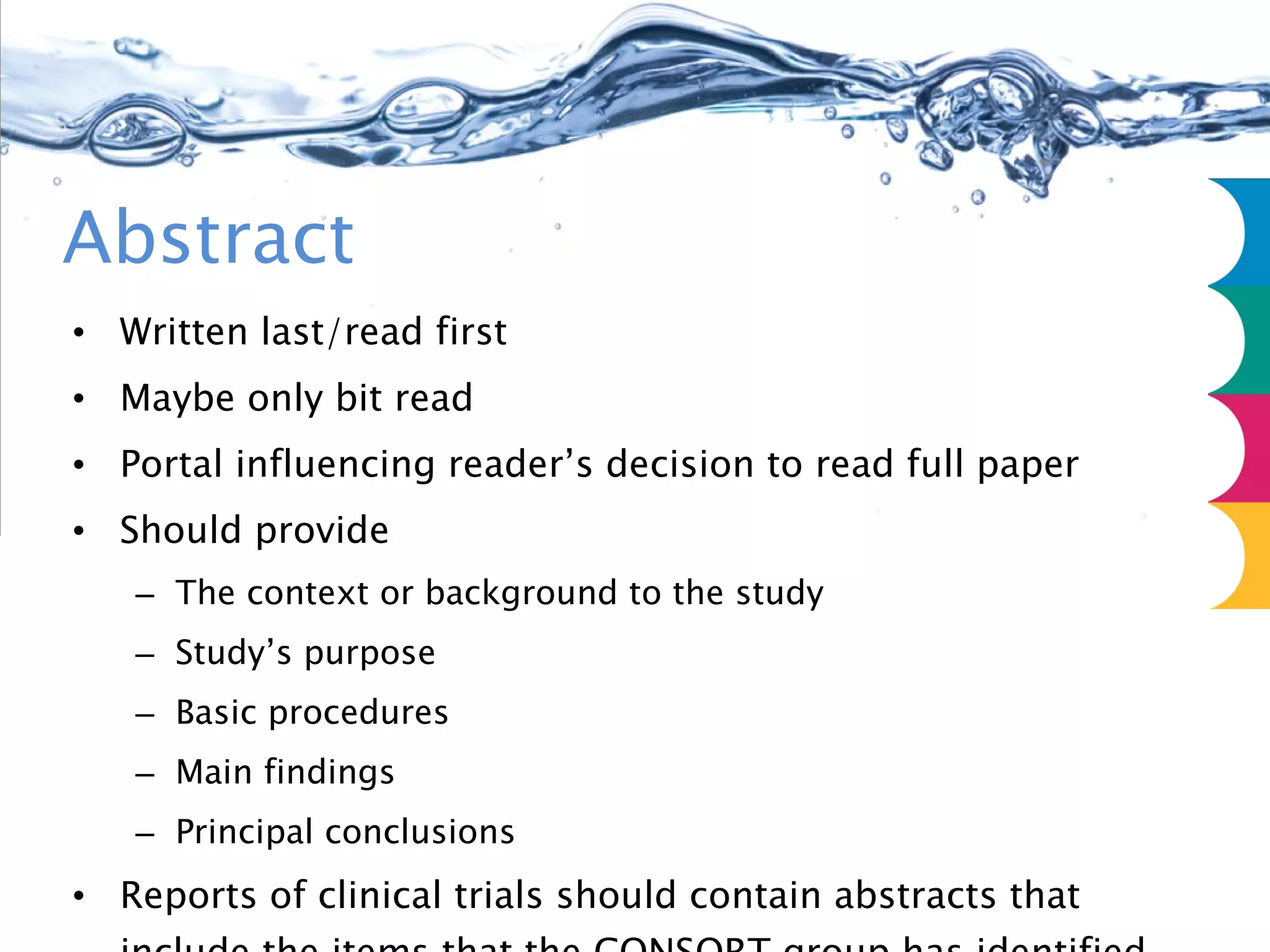
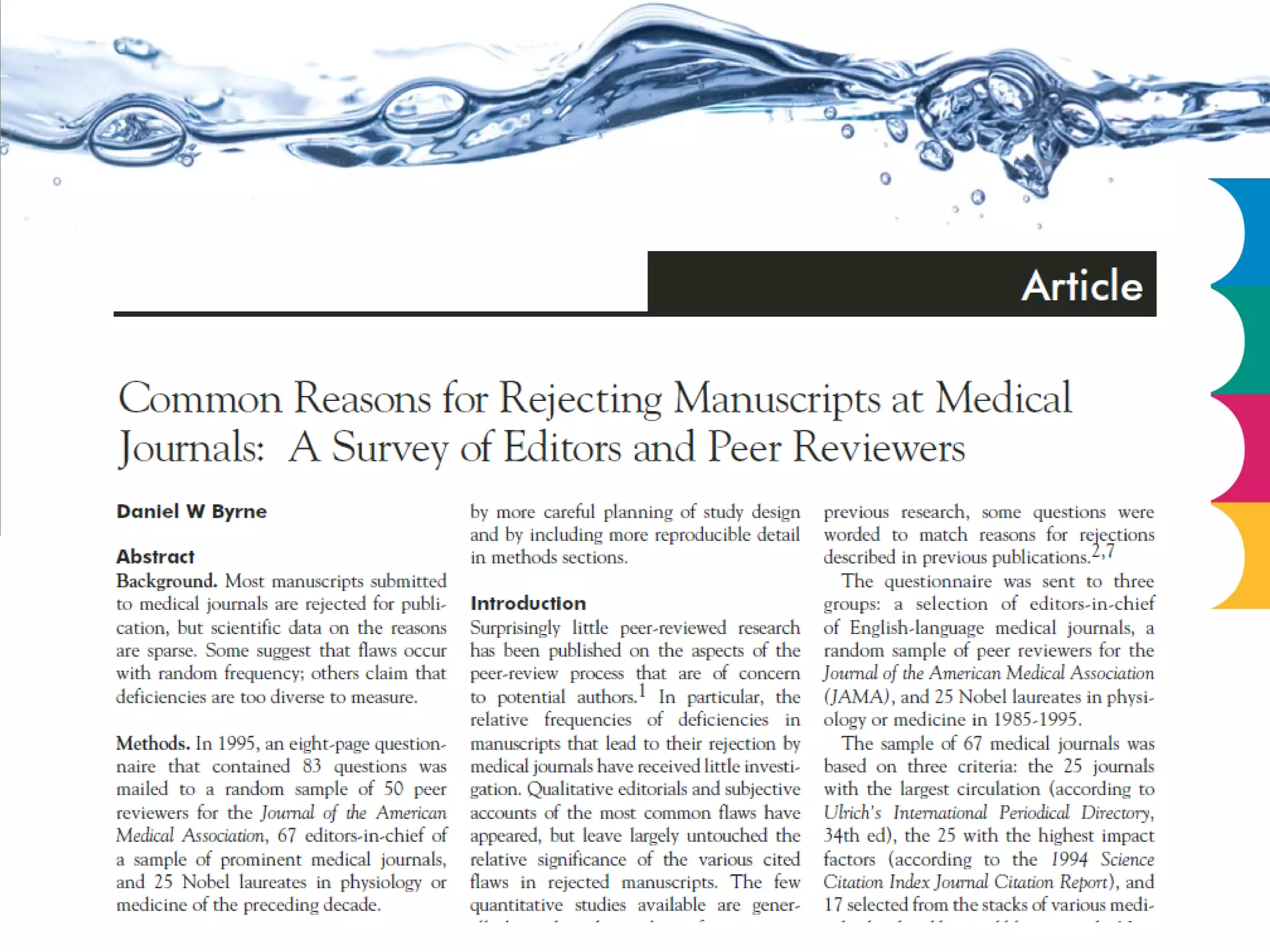
Abstract Written last/read first Maybe only bit read Portal influencing reader’s decision to read full paper Should provide The context or background to the study Study’s purpose Basic procedures Main findings Principal conclusions Reports of clinical trials should contain abstracts that include the items that the CONSORT group has identified as essential (http://www.consort-statement.org/?=1190)
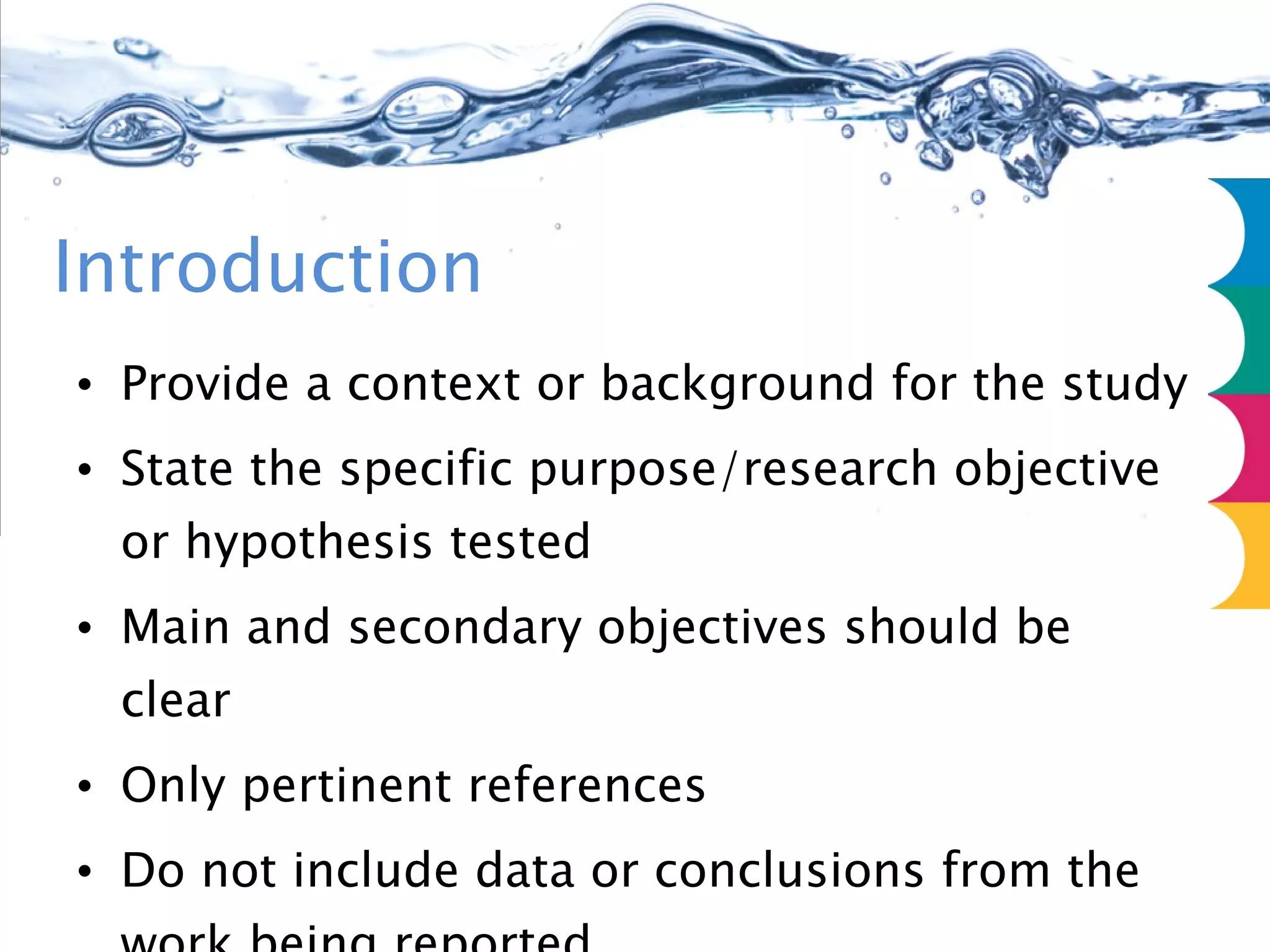
Introduction Provide a context or background for the study State the specific purpose/research objective or hypothesis tested Main and secondary objectives should be clear Only pertinent references Do not include data or conclusions from the work being reported
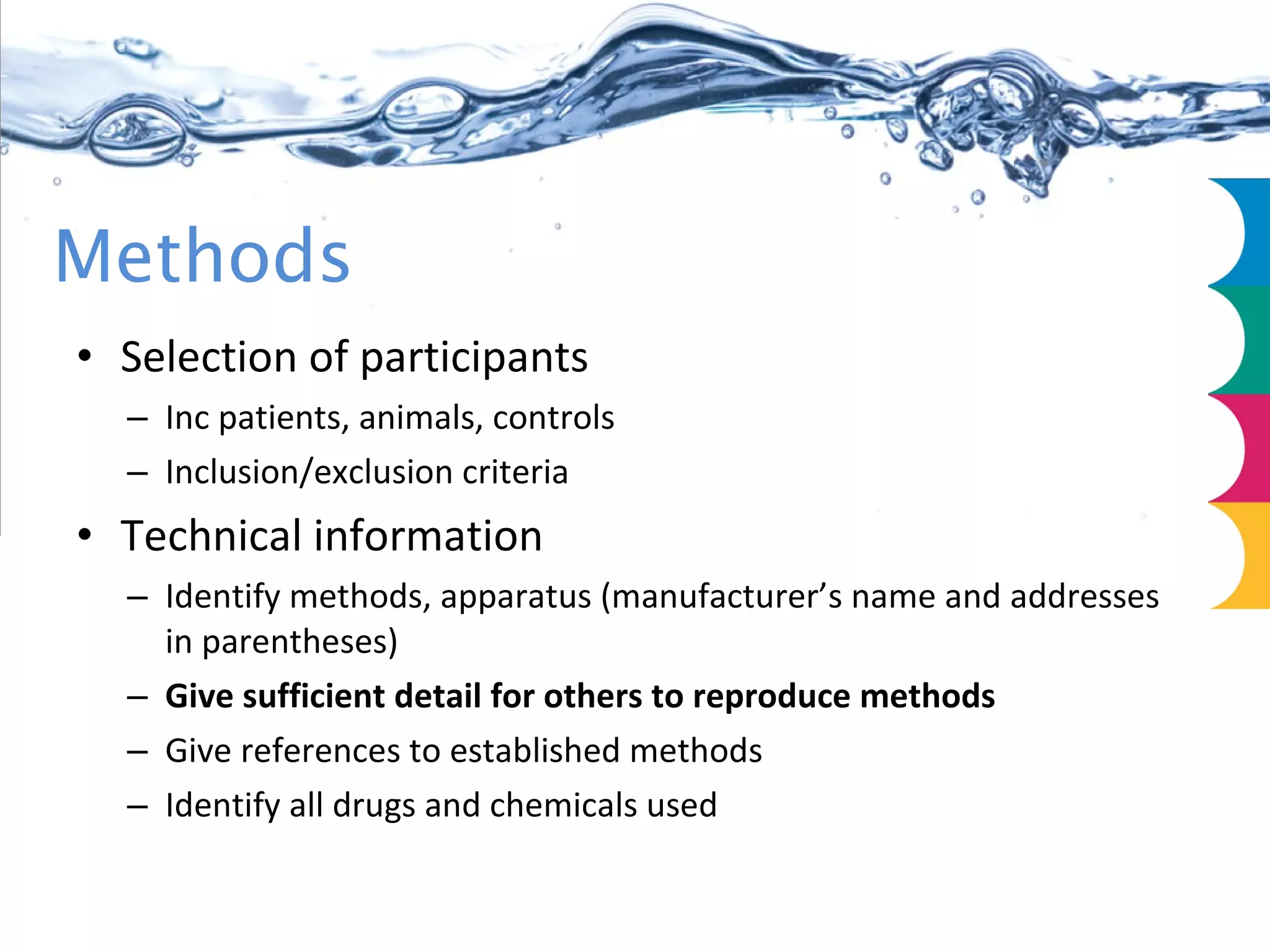
Methods Selection of participants Inc patients, animals, controls Inclusion/exclusion criteria Technical information Identify methods, apparatus (manufacturer’s name and addresses in parentheses) Give sufficient detail for others to reproduce methods Give references to established methods Identify all drugs and chemicals used
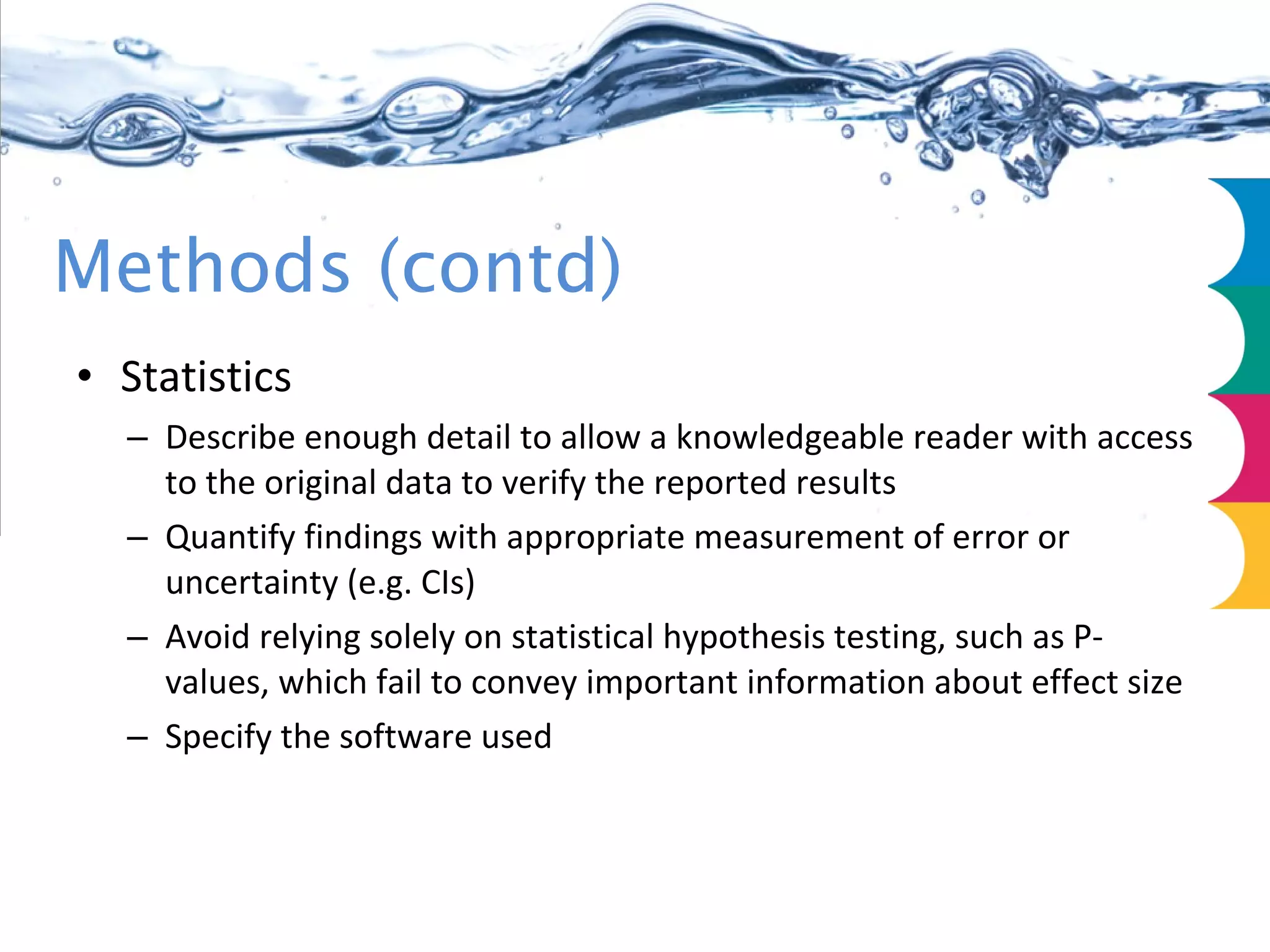
Methods (contd) Statistics Describe enough detail to allow a knowledgeable reader with access to the original data to verify the reported results Quantify findings with appropriate measurement of error or uncertainty (e.g. CIs) Avoid relying solely on statistical hypothesis testing, such as P-values, which fail to convey important information about effect size Specify the software used
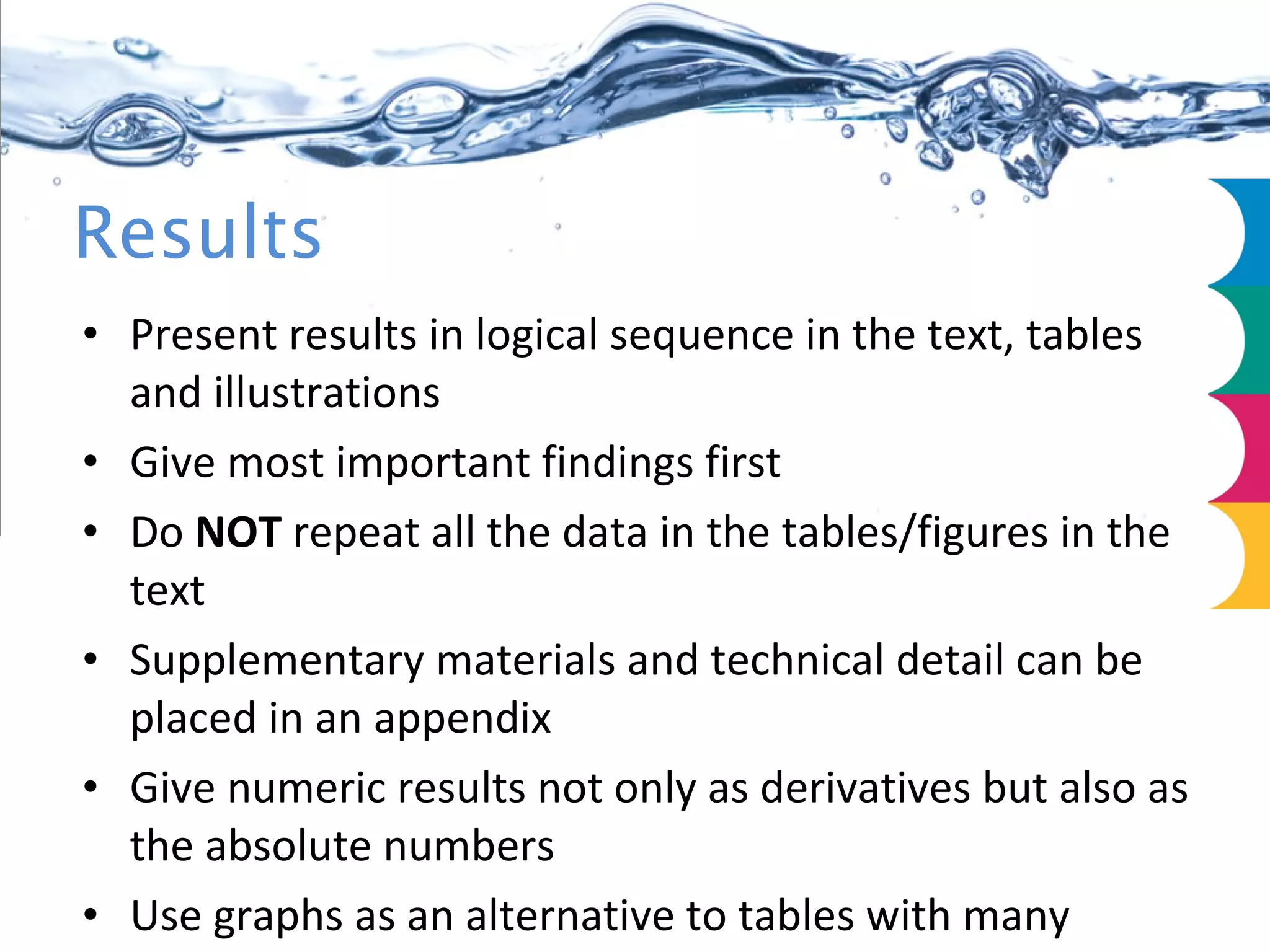
Results Present results in logical sequence in the text, tables and illustrations Give most important findings first Do  NOT  repeat all the data in the tables/figures in the text Supplementary materials and technical detail can be placed in an appendix Give numeric results not only as derivatives but also as the absolute numbers Use graphs as an alternative to tables with many entries
Journal of Negative Results All those disappointed about the outcome Impact Factor could be very high Volume x Issue x ISSN xxxx xxxx
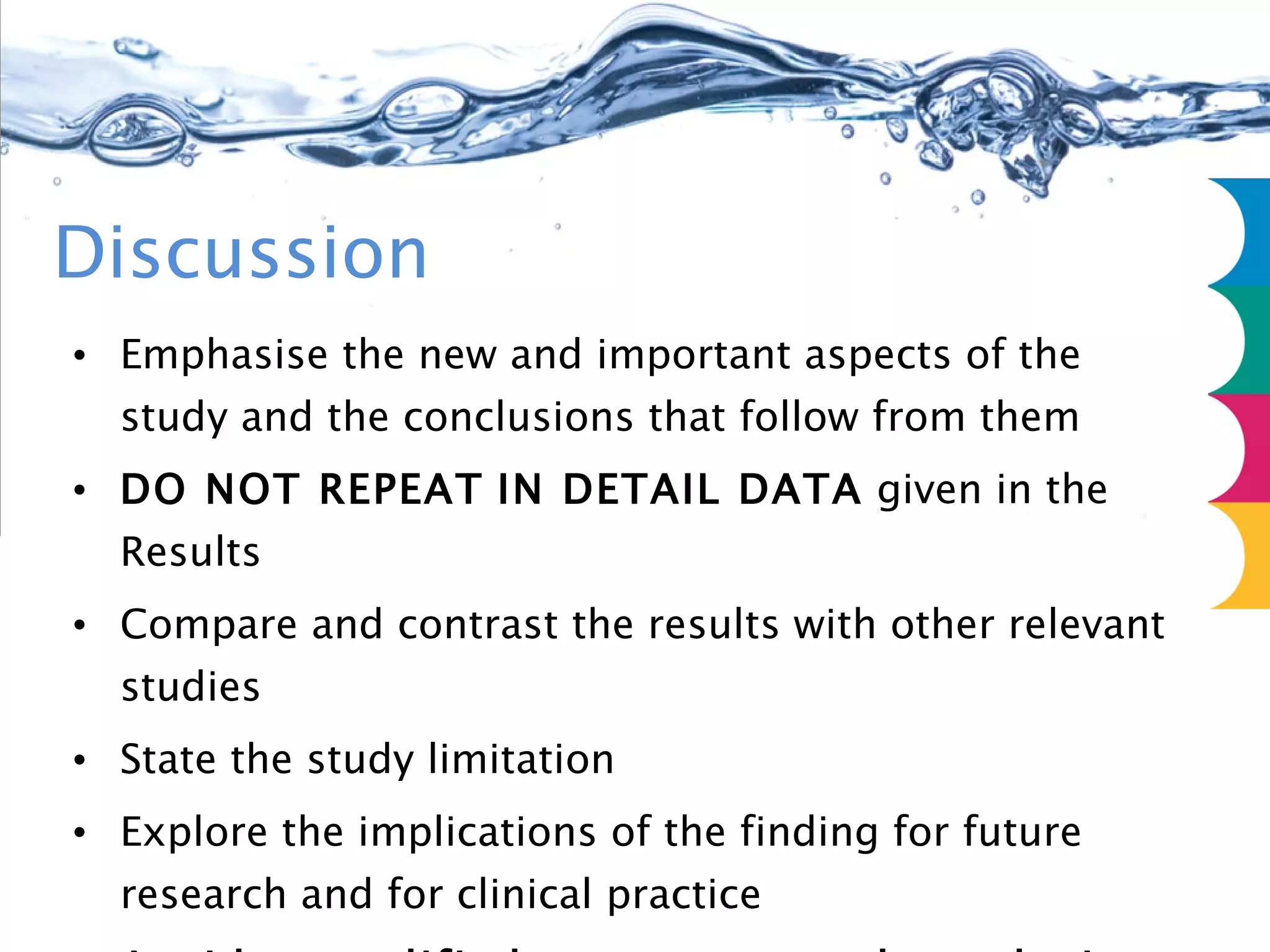
Discussion Emphasise the new and important aspects of the study and the conclusions that follow from them DO NOT REPEAT   IN DETAIL DATA  given in the Results Compare and contrast the results with other relevant studies State the study limitation Explore the implications of the finding for future research and for clinical practice Avoid unqualified statements and conclusions not adequately supported by the data Avoid claiming priority/”this is the first....................”
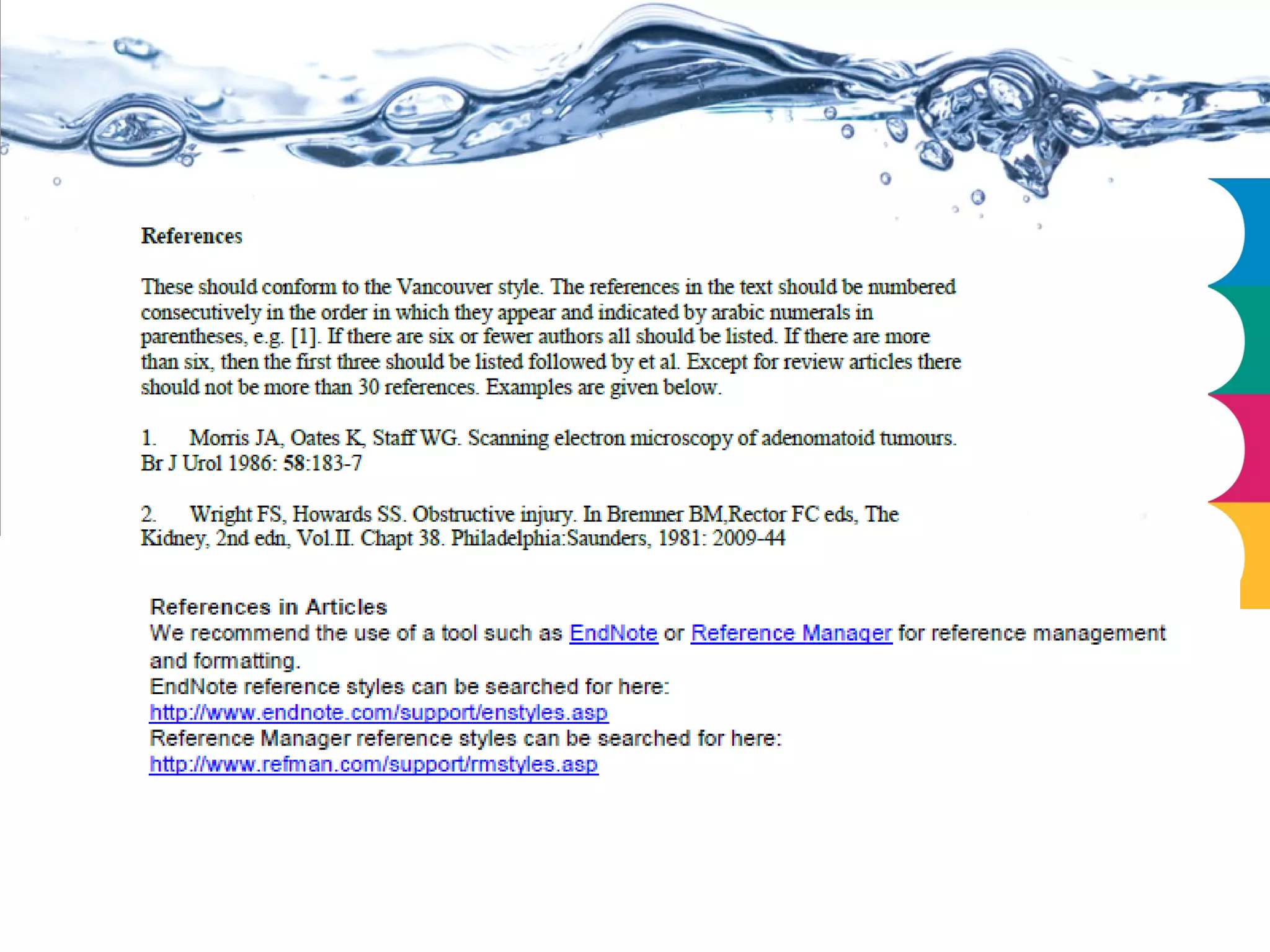
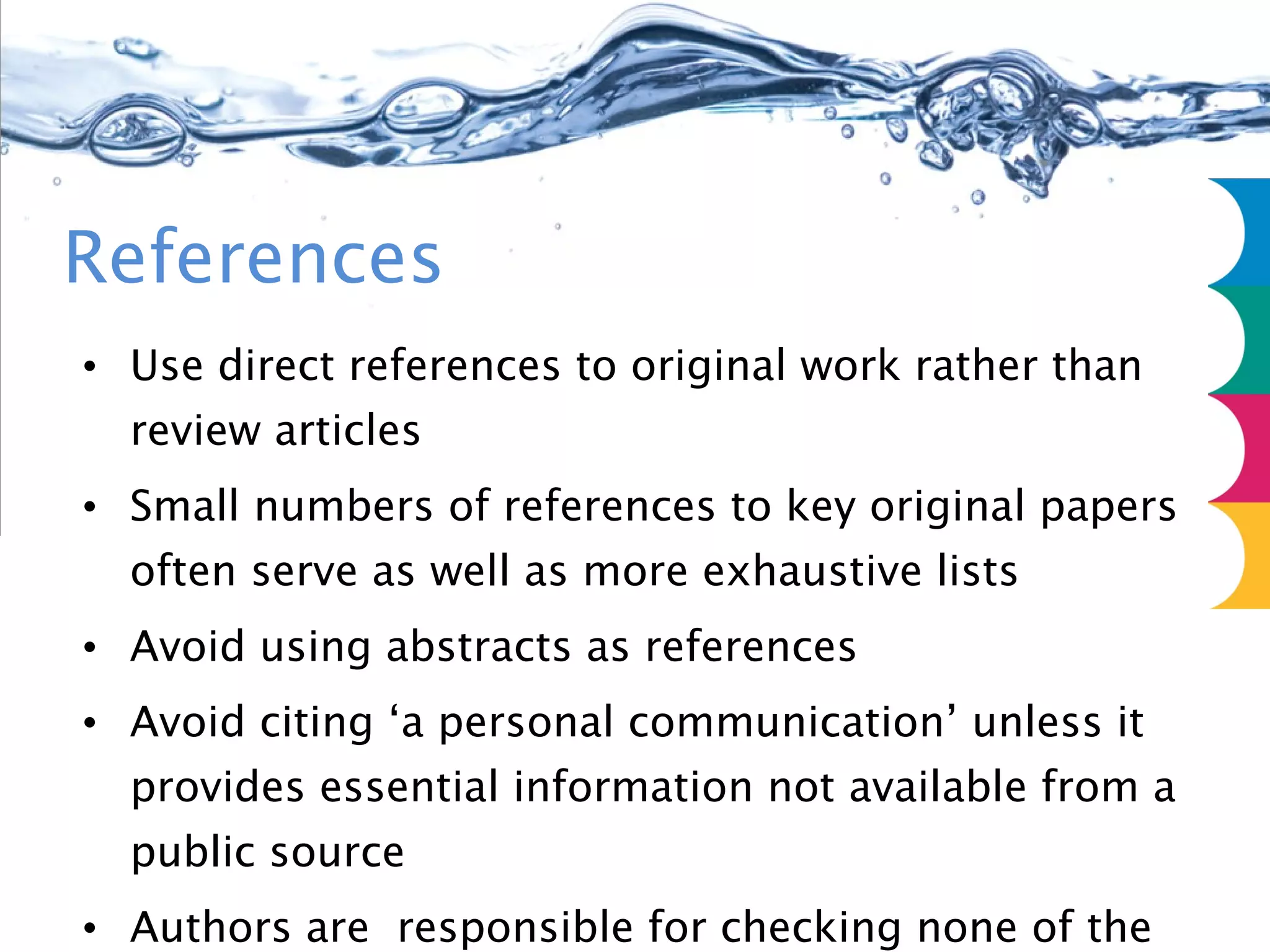
References Use direct references to original work rather than review articles Small numbers of references to key original papers often serve as well as more exhaustive lists Avoid using abstracts as references Avoid citing ‘a personal communication’ unless it provides essential information not available from a public source Authors are  responsible for checking none of the references cite retracted articles


Try to avoid studies suitable for publication in these journals/personal view/not yet on Medline Journal of Anecdotes Journal of Duplication/Journal of Duplication Journal of Small Studies Warranting further Investigation which We aren’t Prepared to do Journal of Studies Completed Many Years Ago but I’ve been Studying for the FRCS(Urol)

How to Prepare your Manuscript for Submission BJUI Author Workshop July 2009 Part Three Killian Mellon

  • 1.
    How to prepareyour manuscript for submission BJUI Author Workshop, Tuesday 23 rd June 2009 Kilian Mellon
  • 2.
    Should tell agood story Should have a good punch-line (have a message) Should not be long-winded BUT
  • 3.
  • 4.
  • 5.
  • 6.
  • 7.
  • 8.
  • 9.
    Uniform Requirements forManuscripts Statement of Purpose Ethical Considerations Publishing and Editorial Issues Manuscript Preparation References About the ICMJE Authors Use and Distribution Inquiries Frequently Asked Questions Journals that Follow URM Update on FDAAA from ClinicalTrials.gov ICMJE Editorials June 2007 Update on Trials Registration May 2005 Update on Trials Registration 2004 Update on Trials Registration Clinical Trial Registration Sponsorship, Authorship, and Accountability
  • 10.
    Uniform Requirements forManuscripts Submitted to Biomedical Journals: Writing and Editing for Biomedical Publication Updated October 2008 Publication Ethics: Sponsorship, Authorship, and Accountability The following information is available to be viewed/printed in Adobe Acrobat pdf format . International Committee of Medical Journal Editors I. Statement of Purpose About the Uniform Requirements Potential Users of the Uniform Requirements How to Use the Uniform Requirements II. Ethical Considerations in the Conduct and Reporting of Research Authorship and Contributorship Byline Authors Contributors Listed in Acknowledgements Editorship The Role of the Editor Editorial Freedom Peer Review Conflicts of Interest Potential Conflicts of Interest Related to Individual Authors' Commitments Potential Conflicts of Interest Related to Project Support Potential Conflicts of Interest Related to Commitments of Editors, Journal Staff, or Reviewers Privacy and Confidentiality Patients and Study Participants Authors and Reviewers Protection of Human Subjects and Animals in Research
  • 11.
    “ IMRAD” structure:direct reflection of process of scientific discovery Introduction, Methods, Results, Discussion Double space all sections 2 spaces between all sentences Generous margins Number all pages including title page Make every word meaningful/no redundancy General Principles
  • 12.
    Title Page Concisearticle title Authors’ names and institutional affiliations NB: Author list and author order can cause embarrassment Disclaimers if any Contact information for corresponding author Name and address of author to whom requests for reprints should be addressed Source of support in the form of grants, equipment, drugs A running head Word count Text only excl abstract, acknowledgements, references, legends
  • 13.
    Abstract Written last/readfirst Maybe only bit read Portal influencing reader’s decision to read full paper Should provide The context or background to the study Study’s purpose Basic procedures Main findings Principal conclusions Reports of clinical trials should contain abstracts that include the items that the CONSORT group has identified as essential (http://www.consort-statement.org/?=1190)
  • 14.
    Introduction Provide acontext or background for the study State the specific purpose/research objective or hypothesis tested Main and secondary objectives should be clear Only pertinent references Do not include data or conclusions from the work being reported
  • 15.
    Methods Selection ofparticipants Inc patients, animals, controls Inclusion/exclusion criteria Technical information Identify methods, apparatus (manufacturer’s name and addresses in parentheses) Give sufficient detail for others to reproduce methods Give references to established methods Identify all drugs and chemicals used
  • 16.
    Methods (contd) StatisticsDescribe enough detail to allow a knowledgeable reader with access to the original data to verify the reported results Quantify findings with appropriate measurement of error or uncertainty (e.g. CIs) Avoid relying solely on statistical hypothesis testing, such as P-values, which fail to convey important information about effect size Specify the software used
  • 17.
    Results Present resultsin logical sequence in the text, tables and illustrations Give most important findings first Do NOT repeat all the data in the tables/figures in the text Supplementary materials and technical detail can be placed in an appendix Give numeric results not only as derivatives but also as the absolute numbers Use graphs as an alternative to tables with many entries
  • 18.
    Journal of NegativeResults All those disappointed about the outcome Impact Factor could be very high Volume x Issue x ISSN xxxx xxxx
  • 19.
    Discussion Emphasise thenew and important aspects of the study and the conclusions that follow from them DO NOT REPEAT IN DETAIL DATA given in the Results Compare and contrast the results with other relevant studies State the study limitation Explore the implications of the finding for future research and for clinical practice Avoid unqualified statements and conclusions not adequately supported by the data Avoid claiming priority/”this is the first....................”
  • 20.
    References Use directreferences to original work rather than review articles Small numbers of references to key original papers often serve as well as more exhaustive lists Avoid using abstracts as references Avoid citing ‘a personal communication’ unless it provides essential information not available from a public source Authors are responsible for checking none of the references cite retracted articles
  • 21.
  • 22.
  • 23.
  • 24.
  • 25.
  • 26.
    Try to avoidstudies suitable for publication in these journals/personal view/not yet on Medline Journal of Anecdotes Journal of Duplication/Journal of Duplication Journal of Small Studies Warranting further Investigation which We aren’t Prepared to do Journal of Studies Completed Many Years Ago but I’ve been Studying for the FRCS(Urol)