GENERAL CHARACTERISTICS:
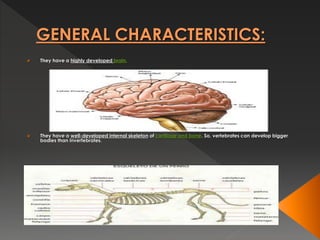
 They have a highly developed brain.
 They have a well-developed internal skeleton of cartilage and bone. So, vertebrates can develop bigger
bodies than invertebrates.
GENERAL CHARACTERISTIS:
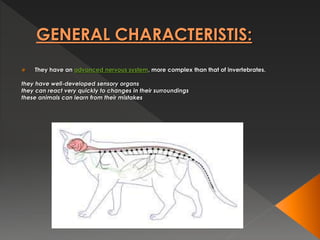
 They have an advanced nervous system, more complex than that of invertebrates.
they have well-developed sensory organs
they can react very quickly to changes in their surroundings
these animals can learn from their mistakes
GENERAL CHARACTERISTIS:
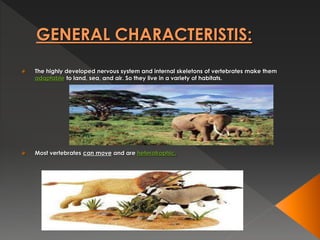
 The highly developed nervous system and internal skeletons of vertebrates make them
adaptable to land, sea, and air. So they live in a variety of habitats.
 Most vertebrates can move and are heterotrophic.
GENERAL CHARACTERISTIS:
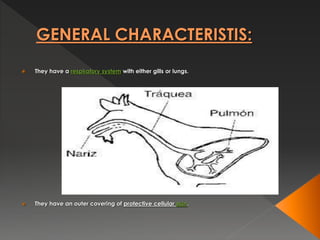
 They have a respiratory system with either gills or lungs.
 They have an outer covering of protective cellular skin.
GENERAL CHARACTERISTIS:
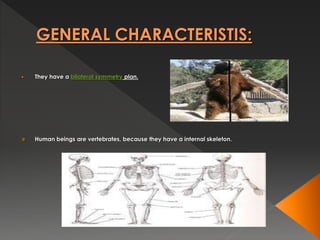
 They have a bilateral symmetry plan.
 Human beings are vertebrates, because they have a internal skeleton.
 Birds´bodies
 Their food
 Their temperature
 Their reproduction
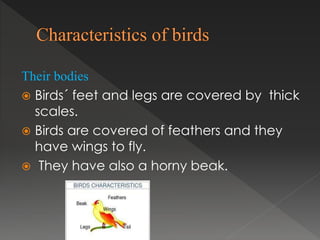
Their bodies
 Birds´ feet and legs are covered by thick
scales.
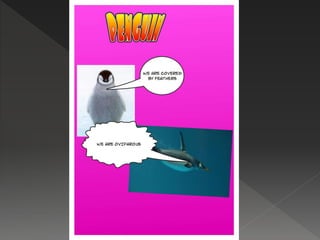
 Birds are covered of feathers and they
have wings to fly.
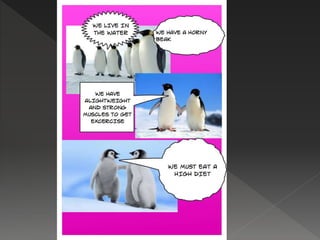
 They have also a horny beak.
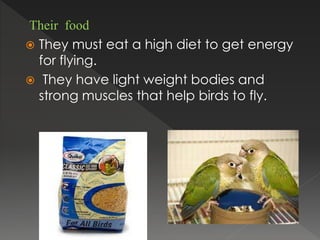
Their food
 They must eat a high diet to get energy
for flying.
 They have light weight bodies and
strong muscles that help birds to fly.
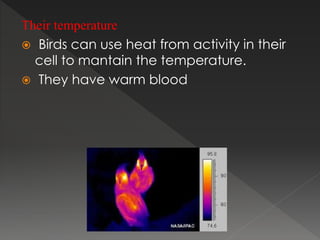
Their temperature
 Birds can use heat from activity in their
cell to mantain the temperature.
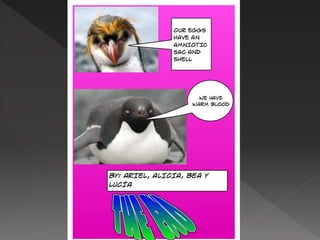
 They have warm blood
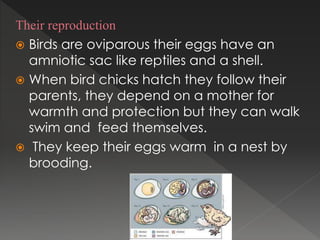
Their reproduction
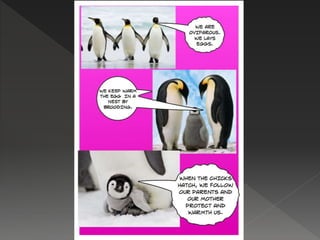
 Birds are oviparous their eggs have an
amniotic sac like reptiles and a shell.
 When bird chicks hatch they follow their
parents, they depend on a mother for
warmth and protection but they can walk
swim and feed themselves.
 They keep their eggs warm in a nest by
brooding.
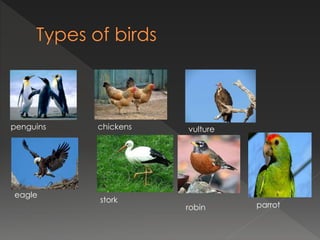
penguins chickens vulture
eagle
stork
robin parrot
Comic life
Birds (1)
Birds (1)
Birds (1)
Birds (1)

Birds (1)

  • 2.
    GENERAL CHARACTERISTICS:  Theyhave a highly developed brain.  They have a well-developed internal skeleton of cartilage and bone. So, vertebrates can develop bigger bodies than invertebrates.
  • 3.
    GENERAL CHARACTERISTIS:  Theyhave an advanced nervous system, more complex than that of invertebrates. they have well-developed sensory organs they can react very quickly to changes in their surroundings these animals can learn from their mistakes
  • 4.
    GENERAL CHARACTERISTIS:  Thehighly developed nervous system and internal skeletons of vertebrates make them adaptable to land, sea, and air. So they live in a variety of habitats.  Most vertebrates can move and are heterotrophic.
  • 5.
    GENERAL CHARACTERISTIS:  Theyhave a respiratory system with either gills or lungs.  They have an outer covering of protective cellular skin.
  • 6.
    GENERAL CHARACTERISTIS:  Theyhave a bilateral symmetry plan.  Human beings are vertebrates, because they have a internal skeleton.
  • 9.
     Birds´bodies  Theirfood  Their temperature  Their reproduction
  • 10.
    Their bodies  Birds´feet and legs are covered by thick scales.  Birds are covered of feathers and they have wings to fly.  They have also a horny beak.
  • 11.
    Their food  Theymust eat a high diet to get energy for flying.  They have light weight bodies and strong muscles that help birds to fly.
  • 12.
    Their temperature  Birdscan use heat from activity in their cell to mantain the temperature.  They have warm blood
  • 13.
    Their reproduction  Birdsare oviparous their eggs have an amniotic sac like reptiles and a shell.  When bird chicks hatch they follow their parents, they depend on a mother for warmth and protection but they can walk swim and feed themselves.  They keep their eggs warm in a nest by brooding.
  • 14.
  • 15.