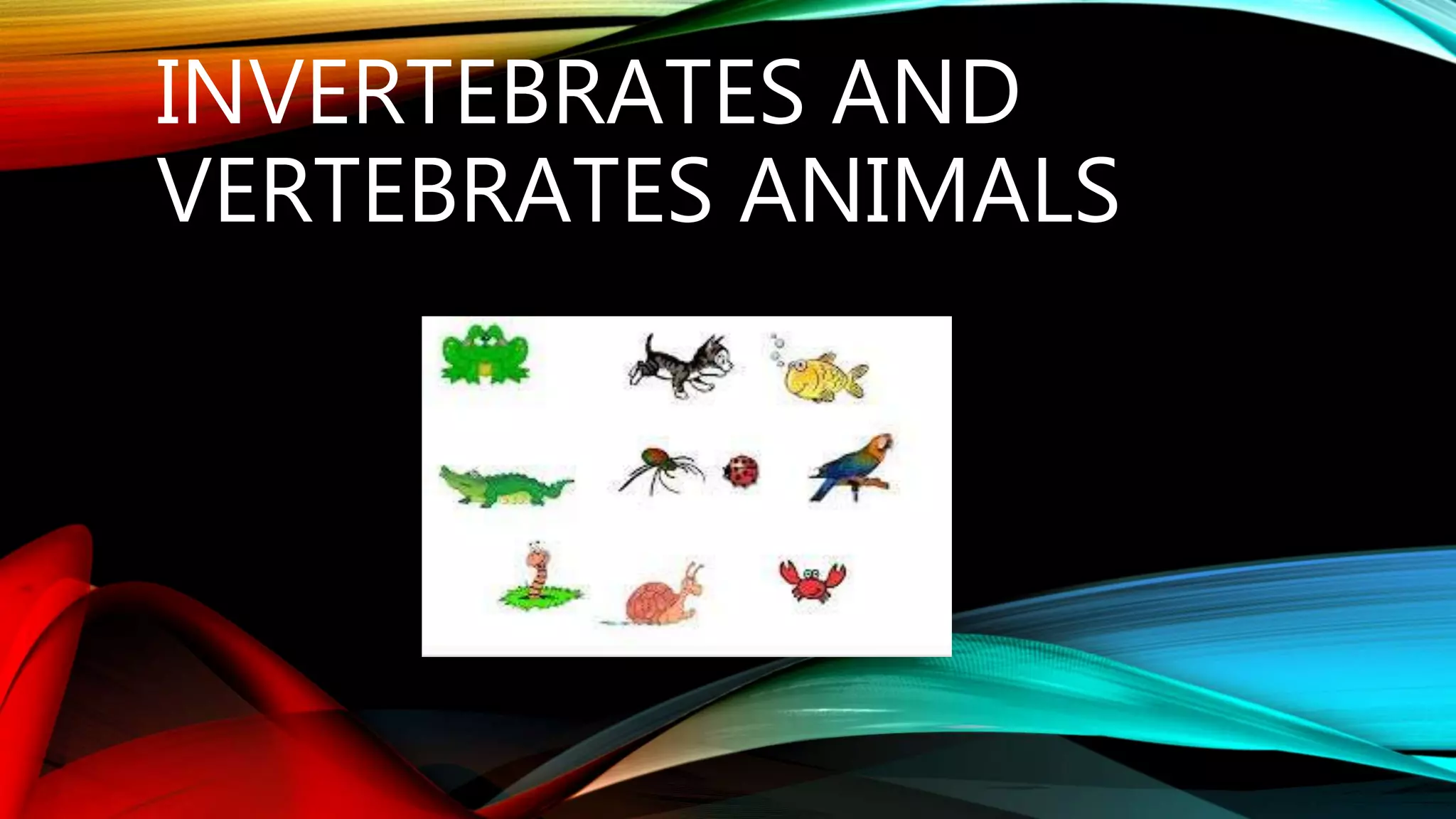
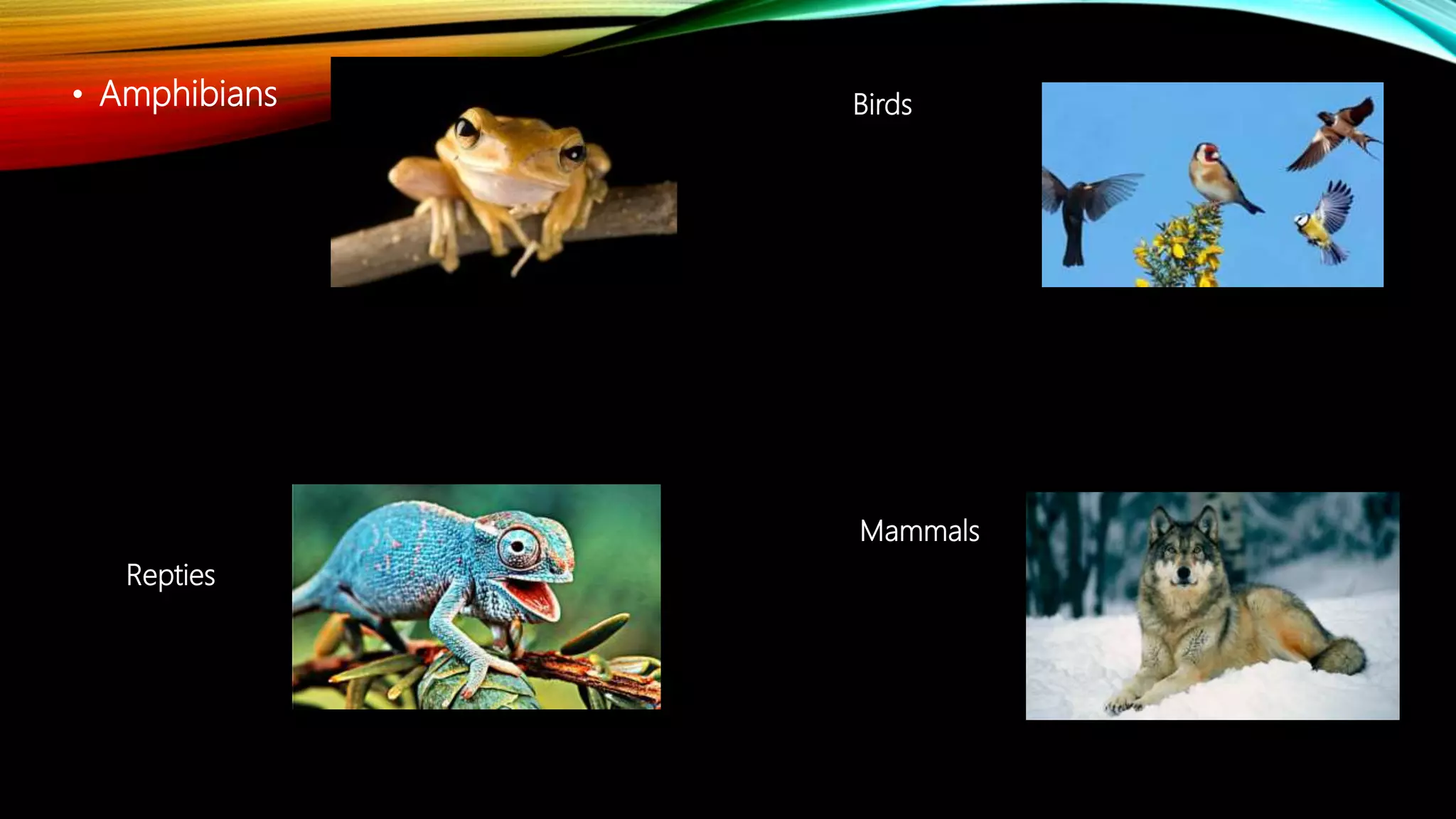
The document classifies animals into two main groups: invertebrates and vertebrates. Invertebrates do not have a bone skeleton, while vertebrates do. Invertebrates include worms, sea jellies, mollusks, arthropods, and sponges. Vertebrates include amphibians, reptiles, birds, and mammals. Amphibians can live on land and water and have gills and lungs, while reptiles have scales and lay eggs on land. Birds have feathers and wings and lay hard-shelled eggs, and mammals give birth to young, have hair/fur, and produce milk.