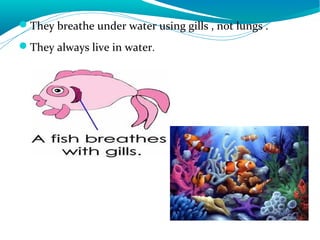
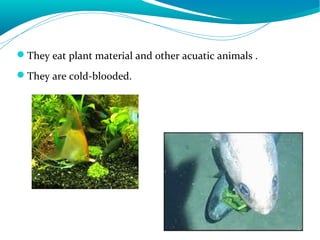
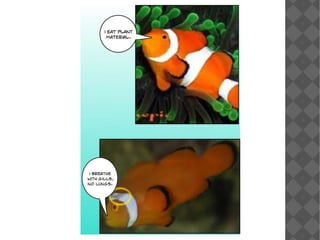
They breathe under water using gills , not lungs .
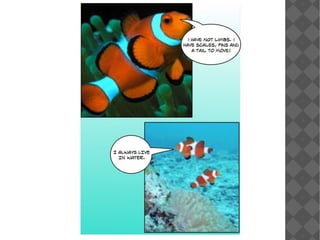
They always live in water.
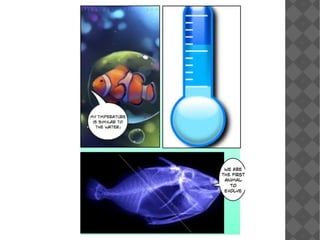
Their body temperature is similar to the temperature of
water .
Fish are the first animal to evolve jaws.
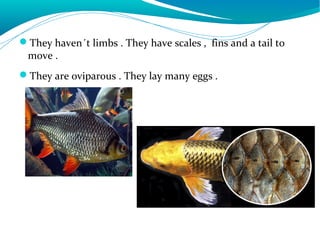
They haven´t limbs . They have scales , fins and a tail to
move .
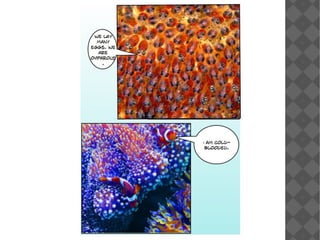
They are oviparous . They lay many eggs .
They eat plant material and other acuatic animals .
They are cold-blooded.
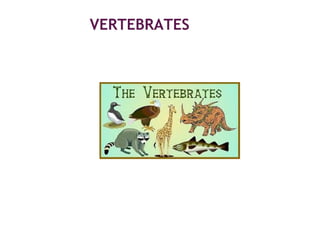
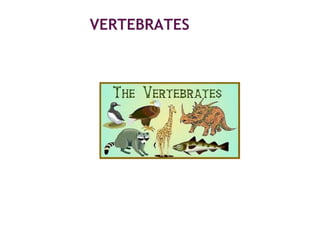
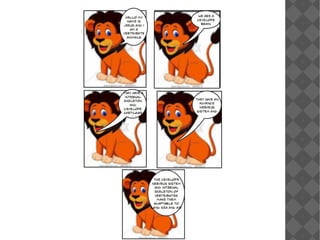
VERTEBRATES

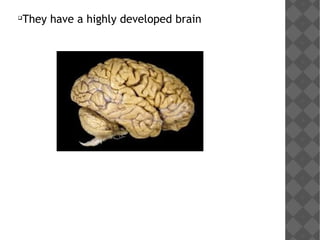
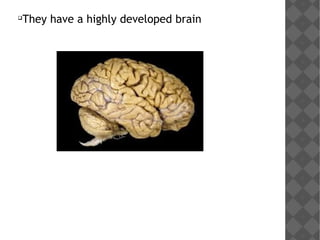
They have a highly developed brain

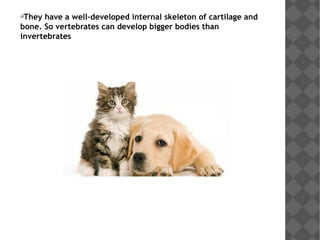
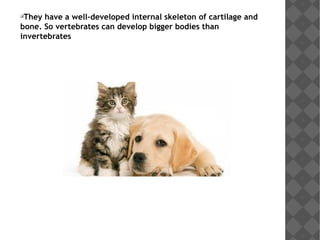
They have a well-developed internal skeleton of cartilage and
bone. So vertebrates can develop bigger bodies than
invertebrates

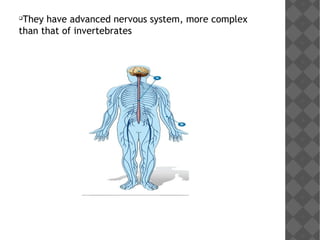
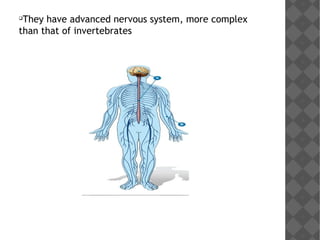
They have advanced nervous system, more complex
than that of invertebrates

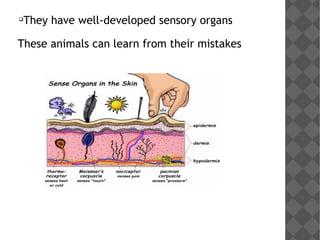
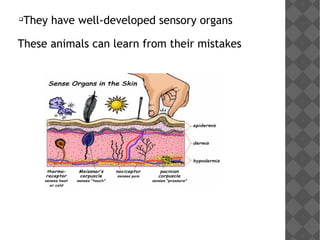
They have well-developed sensory organs
These animals can learn from their mistakes
VERTEBRATES

They have a highly developed brain

They have a well-developed internal skeleton of cartilage and
bone. So vertebrates can develop bigger bodies than
invertebrates

They have advanced nervous system, more complex
than that of invertebrates

They have well-developed sensory organs
These animals can learn from their mistakes

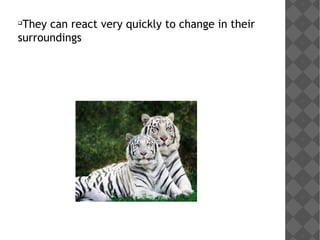
They can react very quickly to change in their
surroundings

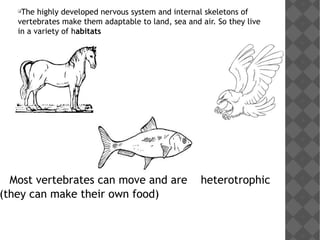
The highly developed nervous system and internal skeletons of
vertebrates make them adaptable to land, sea and air. So they live
in a variety of habitats
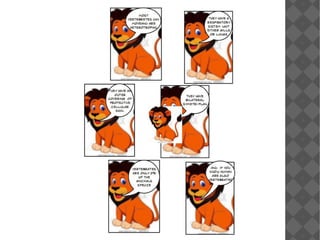
Most vertebrates can move and are heterotrophic
(they can make their own food)

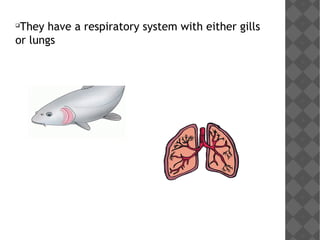
They have a respiratory system with either gills
or lungs

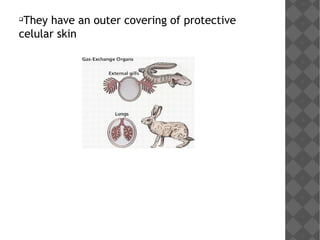
They have an outer covering of protective
celular skin

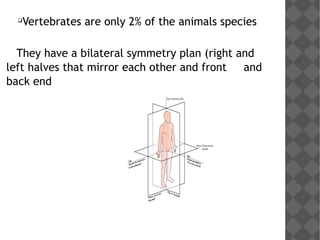
Vertebrates are only 2% of the animals species
They have a bilateral symmetry plan (right and
left halves that mirror each other and front and
back end

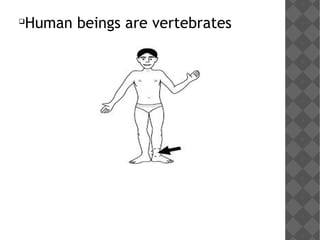
Human beings are vertebrates
Fish (1)
Fish (1)
Fish (1)
Fish (1)
Fish (1)
Fish (1)
Fish (1)
Fish (1)
Fish (1)
Fish (1)

Fish (1)