Biotransformation
Dr. Jervin Mano
Introduction
 Body treats most drugs as foreign substances and tries to
inactivate them and eliminate them.
 They convert the drugs into more polar , water soluble
compounds so that they can be easily excreted through the
kidneys.
Biotransformation of drugs
Chemical alteration of the drug in the body
Drugs may be
 Excreted unchanged
 Metabolized by enzymes
 Spontaneously changed
CONSEQUENCES
 Inactivation
 Paracetamol
 Lidocaine
 Propranolol
 Active metabolite from an active drug
 Codeine, Morphine
 Activation of an inactive drug
 Prodrug :- Initially inactive converted in body to active form
 Advantages – Stable, better bioavailability, less toxic
 Levodopa Dopamine
Sites of biotransformation-
Liver
Plasma, kidney, lung, gut wall
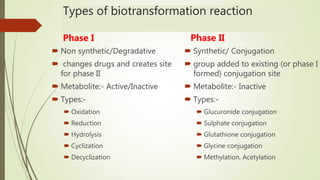
Types of biotransformation reaction
Phase I
 Non synthetic/Degradative
 changes drugs and creates site
for phase II
 Metabolite:- Active/Inactive
 Types:-
 Oxidation
 Reduction
 Hydrolysis
 Cyclization
 Decyclization
Phase II
 Synthetic/ Conjugation
 group added to existing (or phase I
formed) conjugation site
 Metabolite:- Inactive
 Types:-
 Glucuronide conjugation
 Sulphate conjugation
 Glutathione conjugation
 Glycine conjugation
 Methylation, Acetylation
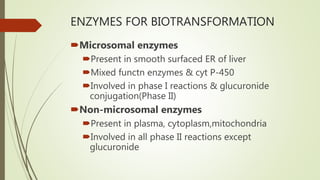
ENZYMES FOR BIOTRANSFORMATION
Microsomal enzymes
Present in smooth surfaced ER of liver
Mixed functn enzymes & cyt P-450
Involved in phase I reactions & glucuronide
conjugation(Phase II)
Non-microsomal enzymes
Present in plasma, cytoplasm,mitochondria
Involved in all phase II reactions except
glucuronide
Non enzymatic biotranformation
 Hoffman’s elimination
 Metabolised spontaneously in the plasma
 Eg ;- Atracurium
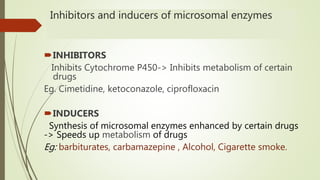
Inhibitors and inducers of microsomal enzymes
INHIBITORS
Inhibits Cytochrome P450-> Inhibits metabolism of certain
drugs
Eg. Cimetidine, ketoconazole, ciprofloxacin
INDUCERS
Synthesis of microsomal enzymes enhanced by certain drugs
-> Speeds up metabolism of drugs
Eg: barbiturates, carbamazepine , Alcohol, Cigarette smoke.
Factors affecting biotransformation
Race (CYP2C9; warfarin (bleeding) phenytoin (ataxia) Losartan
(less cleared but less activated as well); also fast and slow
isoniazid acetylators
Age (reduced in aged patients & children)
Sex (women slower ethanol metabolizers)
Species
Clinical or physiological condition
Other drug administration (induction or inhibition)
Food
charcoal grill ++CYP1A
grapefruit juice --CYP3A
 First-pass metabolism
Summary
 Definition of biotransformation
 Primary site of metabolism
 Prodrug
 Types of biotransformation reactions
 First pass metabolism
 Enzyme inducers
 Hoffman’s elimination

Biotransformation

  • 1.
  • 5.
    Introduction  Body treatsmost drugs as foreign substances and tries to inactivate them and eliminate them.  They convert the drugs into more polar , water soluble compounds so that they can be easily excreted through the kidneys.
  • 6.
    Biotransformation of drugs Chemicalalteration of the drug in the body Drugs may be  Excreted unchanged  Metabolized by enzymes  Spontaneously changed
  • 7.
    CONSEQUENCES  Inactivation  Paracetamol Lidocaine  Propranolol  Active metabolite from an active drug  Codeine, Morphine  Activation of an inactive drug  Prodrug :- Initially inactive converted in body to active form  Advantages – Stable, better bioavailability, less toxic  Levodopa Dopamine
  • 8.
  • 9.
    Types of biotransformationreaction Phase I  Non synthetic/Degradative  changes drugs and creates site for phase II  Metabolite:- Active/Inactive  Types:-  Oxidation  Reduction  Hydrolysis  Cyclization  Decyclization Phase II  Synthetic/ Conjugation  group added to existing (or phase I formed) conjugation site  Metabolite:- Inactive  Types:-  Glucuronide conjugation  Sulphate conjugation  Glutathione conjugation  Glycine conjugation  Methylation, Acetylation
  • 10.
    ENZYMES FOR BIOTRANSFORMATION Microsomalenzymes Present in smooth surfaced ER of liver Mixed functn enzymes & cyt P-450 Involved in phase I reactions & glucuronide conjugation(Phase II) Non-microsomal enzymes Present in plasma, cytoplasm,mitochondria Involved in all phase II reactions except glucuronide
  • 11.
    Non enzymatic biotranformation Hoffman’s elimination  Metabolised spontaneously in the plasma  Eg ;- Atracurium
  • 12.
    Inhibitors and inducersof microsomal enzymes INHIBITORS Inhibits Cytochrome P450-> Inhibits metabolism of certain drugs Eg. Cimetidine, ketoconazole, ciprofloxacin INDUCERS Synthesis of microsomal enzymes enhanced by certain drugs -> Speeds up metabolism of drugs Eg: barbiturates, carbamazepine , Alcohol, Cigarette smoke.
  • 13.
    Factors affecting biotransformation Race(CYP2C9; warfarin (bleeding) phenytoin (ataxia) Losartan (less cleared but less activated as well); also fast and slow isoniazid acetylators Age (reduced in aged patients & children) Sex (women slower ethanol metabolizers) Species Clinical or physiological condition Other drug administration (induction or inhibition) Food charcoal grill ++CYP1A grapefruit juice --CYP3A  First-pass metabolism
  • 14.
    Summary  Definition ofbiotransformation  Primary site of metabolism  Prodrug  Types of biotransformation reactions  First pass metabolism  Enzyme inducers  Hoffman’s elimination