Asenapine & Agomelatine
1
Dr. Jervin Mano, MD
Asenapine
2
Introduction
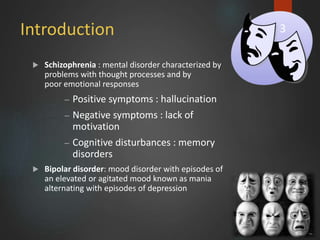
 Schizophrenia : mental disorder characterized by
problems with thought processes and by
poor emotional responses
– Positive symptoms : hallucination
– Negative symptoms : lack of
motivation
– Cognitive disturbances : memory
disorders
 Bipolar disorder: mood disorder with episodes of
an elevated or agitated mood known as mania
alternating with episodes of depression
3
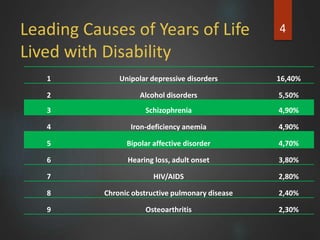
Leading Causes of Years of Life
Lived with Disability
1 Unipolar depressive disorders 16,40%
2 Alcohol disorders 5,50%
3 Schizophrenia 4,90%
4 Iron-deficiency anemia 4,90%
5 Bipolar affective disorder 4,70%
6 Hearing loss, adult onset 3,80%
7 HIV/AIDS 2,80%
8 Chronic obstructive pulmonary disease 2,40%
9 Osteoarthritis 2,30%
4
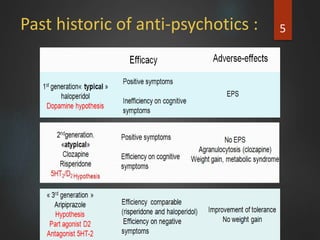
Past historic of anti-psychotics : 5
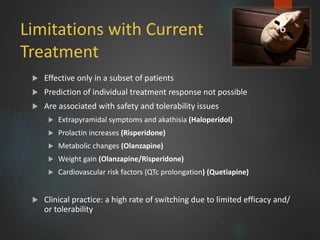
Limitations with Current
Treatment
 Effective only in a subset of patients
 Prediction of individual treatment response not possible
 Are associated with safety and tolerability issues
 Extrapyramidal symptoms and akathisia (Haloperidol)
 Prolactin increases (Risperidone)
 Metabolic changes (Olanzapine)
 Weight gain (Olanzapine/Risperidone)
 Cardiovascular risk factors (QTc prolongation) (Quetiapine)
 Clinical practice: a high rate of switching due to limited efficacy and/
or tolerability
6
ASENAPINE
 Important new treatment option for patients
with schizophrenia and bipolar disorder
 Psychotropic agent belonging to class of dibenzo-
oxepino pyrroles
 Approved by FDA in Aug 2009
7
MOA
 The mechanism of action is unclear
Acts on receptors:
 Serotonin :5-HT1A , 5-HT1B , 5-HT2A , 5-HT2B, 5-HT2C , 5-
HT5A , 5-HT6 , and 5-HT7
 Adrenergic: α1, α2A , α2B, and α2C
 Dopamine :D1 , D2 , D3 and D4
 Histamine :H1 and H2
 No appreciable affinity for muscarinic cholinergic receptors
8
Pharmacokinetics
Absorption
 Bioavailability: SL, 35%; swallowed, ≤2%
 Peak plasma time: 0.5-1.5 hr
 Peak plasma concentration: 4 ng/mL
Distribution
 Protein bound: 95%
 Vd: 20-25 L/kg
9
Pharmacokinetics
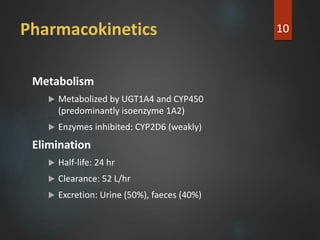
Metabolism
 Metabolized by UGT1A4 and CYP450
(predominantly isoenzyme 1A2)
 Enzymes inhibited: CYP2D6 (weakly)
Elimination
 Half-life: 24 hr
 Clearance: 52 L/hr
 Excretion: Urine (50%), faeces (40%)
10
TRADE NAME & COST
US/EUROPE
 Saphris, Sycrest
INDIA
 Asenapt marketed by Sun pharmaceuticals
 5mg 10 tabs - ₹55
11
DOSAGE FORMS
 5mg sublingual tablets
 10 mg sublingual tablets
12
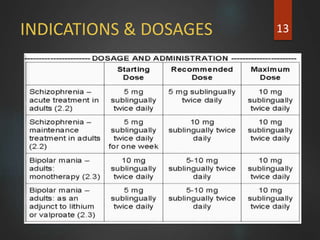
INDICATIONS & DOSAGES 13
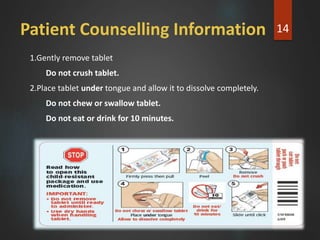
Patient Counselling Information
1.Gently remove tablet
Do not crush tablet.
2.Place tablet under tongue and allow it to dissolve completely.
Do not chew or swallow tablet.
Do not eat or drink for 10 minutes.
14
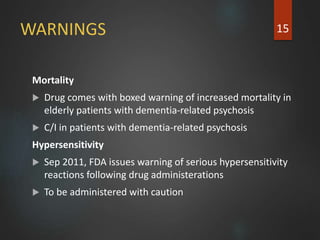
WARNINGS
Mortality
 Drug comes with boxed warning of increased mortality in
elderly patients with dementia-related psychosis
 C/I in patients with dementia-related psychosis
Hypersensitivity
 Sep 2011, FDA issues warning of serious hypersensitivity
reactions following drug administerations
 To be administered with caution
15
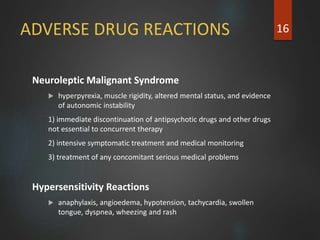
ADVERSE DRUG REACTIONS
Neuroleptic Malignant Syndrome
 hyperpyrexia, muscle rigidity, altered mental status, and evidence
of autonomic instability
1) immediate discontinuation of antipsychotic drugs and other drugs
not essential to concurrent therapy
2) intensive symptomatic treatment and medical monitoring
3) treatment of any concomitant serious medical problems
Hypersensitivity Reactions
 anaphylaxis, angioedema, hypotension, tachycardia, swollen
tongue, dyspnea, wheezing and rash
16
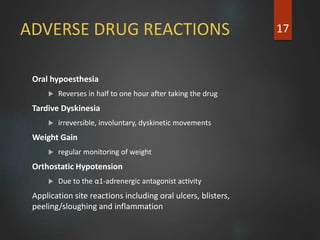
ADVERSE DRUG REACTIONS
Oral hypoesthesia
 Reverses in half to one hour after taking the drug
Tardive Dyskinesia
 irreversible, involuntary, dyskinetic movements
Weight Gain
 regular monitoring of weight
Orthostatic Hypotension
 Due to the α1-adrenergic antagonist activity
Application site reactions including oral ulcers, blisters,
peeling/sloughing and inflammation
17
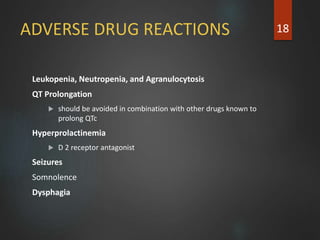
ADVERSE DRUG REACTIONS
Leukopenia, Neutropenia, and Agranulocytosis
QT Prolongation
 should be avoided in combination with other drugs known to
prolong QTc
Hyperprolactinemia
 D 2 receptor antagonist
Seizures
Somnolence
Dysphagia
18
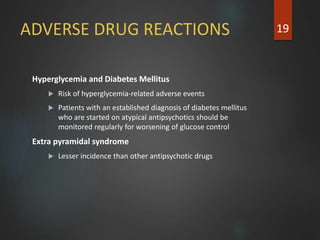
ADVERSE DRUG REACTIONS
Hyperglycemia and Diabetes Mellitus
 Risk of hyperglycemia-related adverse events
 Patients with an established diagnosis of diabetes mellitus
who are started on atypical antipsychotics should be
monitored regularly for worsening of glucose control
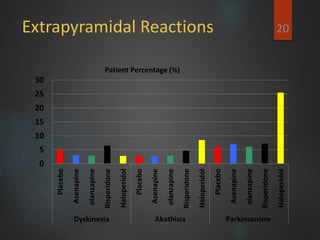
Extra pyramidal syndrome
 Lesser incidence than other antipsychotic drugs
19
Extrapyramidal Reactions 20
0
5
10
15
20
25
30
Placebo
Asenapine
olanzapine
Risperidone
Haloperidol
Placebo
Asenapine
olanzapine
Risperidone
Haloperidol
Placebo
Asenapine
olanzapine
Risperidone
Haloperidol
Dyskinesia Akathisia Parkinsonism
Patient Percentage (%)
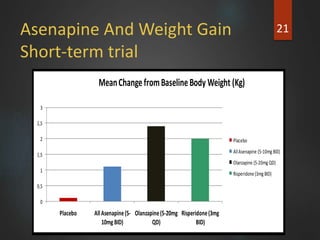
Asenapine And Weight Gain
Short-term trial
21
0
0,5
1
1,5
2
2,5
3
Placebo AllAsenapine(5-
10mg BID)
Olanzapine(5-20mg
QD)
Risperidone(3mg
BID)
MeanChangefromBaselineBody Weight (Kg)
Placebo
AllAsenapine (5-10mg BID)
Olanzapine (5-20mg QD)
Risperidone(3mg BID)
Baseline (kg):
P=81.7
A=78.5
R=86.8
O=78.4
21
Drug Interactions
 Asenapine weakly inhibits CYP2D6.
 Should be coadministered cautiously with drugs
that are both substrates and inhibitors for
CYP2D6
22
SPECIAL POPULATIONS
 Pregnancy: Risk of foetal toxicity category C
 Lactation : Excretion in is unknown
 Paediatric : Safety and effectiveness have not been
established
 Caution advised in geriatric age group
 Renal Impairment: No dose adjustment needed
 Hepatic Impairment:
 Mild to moderate impairment (Child-Pugh class A or B): Dose
adjustment not necessary
 Severe impairment (Child-Pugh class C): Not recommended
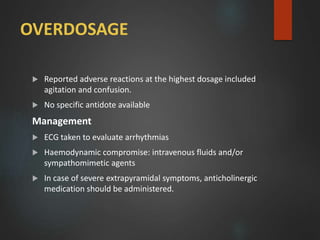
OVERDOSAGE
 Reported adverse reactions at the highest dosage included
agitation and confusion.
 No specific antidote available
Management
 ECG taken to evaluate arrhythmias
 Haemodynamic compromise: intravenous fluids and/or
sympathomimetic agents
 In case of severe extrapyramidal symptoms, anticholinergic
medication should be administered.
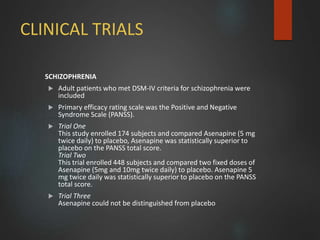
CLINICAL TRIALS
SCHIZOPHRENIA
 Adult patients who met DSM-IV criteria for schizophrenia were
included
 Primary efficacy rating scale was the Positive and Negative
Syndrome Scale (PANSS).
 Trial One
This study enrolled 174 subjects and compared Asenapine (5 mg
twice daily) to placebo, Asenapine was statistically superior to
placebo on the PANSS total score.
Trial Two
This trial enrolled 448 subjects and compared two fixed doses of
Asenapine (5mg and 10mg twice daily) to placebo. Asenapine 5
mg twice daily was statistically superior to placebo on the PANSS
total score.
 Trial Three
Asenapine could not be distinguished from placebo
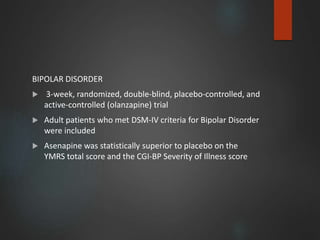
BIPOLAR DISORDER
 3-week, randomized, double-blind, placebo-controlled, and
active-controlled (olanzapine) trial
 Adult patients who met DSM-IV criteria for Bipolar Disorder
were included
 Asenapine was statistically superior to placebo on the
YMRS total score and the CGI-BP Severity of Illness score
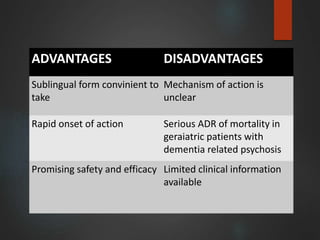
ADVANTAGES DISADVANTAGES
Sublingual form convinient to
take
Mechanism of action is
unclear
Rapid onset of action Serious ADR of mortality in
geraiatric patients with
dementia related psychosis
Promising safety and efficacy Limited clinical information
available
REFERENCES
 Potkin SG, Cohen M, Panagides J Efficacy and tolerability of
asenapine in acute schizophrenia: a placebo- and
risperidone-controlled trial. The Journal of Clinical
Psychiatry 2007 Oct;68(10):1492-500
 Marston HM, Young JW, Martin FD, Serpa KA, Moore CL,
Wong EH, Gold L, Meltzer LT, Azar MR, Geyer MA, Shahid
M Asenapine effects in animal models of psychosis and
cognitive function. Psychopharmacology 2009 May 22
Agomelatine
Depression
 Mood disorders is a major public health problem
 Ranked 2nd by WHO to all diseases in 2010.
 Depression : a major mood disorders affecting 340 million
people worldwide
 Chronic and recurrent depression : disrupts the normal
physical & social well being , drives individual to suicide
Goal of treatment of MDD:
 Remission of all symptoms
 Complete recovery of social & vocational dysfunction
Rx available
 SSRIs
 SNRIs
 TCAs
A new drug !!…but... Y?
 TCAs –
 poor tolerability & lethargy in high dose
 Reserved for non-responders to SSRIs, SNRIs
 SSRIs
 Mild to moderate depression
 Safe in overdose & cost effective
 ADRs – discontinuation , sexual dysfunction , GI
disturbances & wt. gain. – only 30-40% achieve
remission – increased risk of relapsing , worsening of
long term prognosis
Pathogenesis of depression
Monoamine hypothesis :
 Depletion of monoamines in hippocampus , limbic system
& frontal cortex
 SSRIs, SNRIs , TCAs – increases monoamines – only effective
in 50% of patients.
Melatonin hypothesis
 New evidence – disruption of circadian rhythm –
predisposes to depression
 Melatonin – hormone from pineal gland – regulates
circadian rhythm
 Patients with depression
 Low levels of melatonin
 Delayed onset of sleep
 Difficulty in maintaining sleep
 Early morning awakening
 MT1 & MT2 Rs
 MT1 – acute inhibition of neuronal firing within SCN
 MT2 – induces phase shifting of circadian rhythm
Chemistry
 Synthetic analog of the hormone melatonin
 N-[2-(7-methoxynaphthalen-1-yl) ethyl] acetamide
Mechanism of action
 Synthetic analogue of human hormone melatonin
 Actions on – MT1 & MT2 Rs
 Seratonin rs antagonists (5HT-2C)
 Neurogenesis
Pharmacokinetics
Metabolism :
 Metabolized by Cytochrome P450 1A2 to 7-O –
demethylated and hydroxylated inactive metabolites
Excretion :
 60-80% excreted as metabolites in urine
 Metabolised to 3,4 dihydrodiol which is excreted in
faeces
Dosage
 25 mg / day
 Given once at bed time for 2 weeks
 Dose increased to 50 mg if response is
inadequate
 Sublingual agomelatine 0.5-2mg – under trial
Precautions
 Hepatic impairment - ↑plasma levels upto 100
times
 Renal impairment - ↑ plasma levels by 25 %
 Pregnancy & lactation
 Pediatric
 ≥ 60 yrs of age
Drug interactions
 Does not inhibit or induce Cytochrome p450
enzymes
 Enzyme inducers like omeprazole and nicotine
decrease the serum levels of agomelatine.
 Enzyme inhibitors like Fluoxamine and oestrogens
increase the serum levels
Uses
 Major depressive disorder especially in non-responders and
intolerant to SSRIs
 Generalized anxiety disorder
 Bipolar depression
 Sleep disturbances
 Migraine and cluster headaches
Adverse drug reactions
 Well tolerated
 Adverse effect profile similar to placebo
 Headache, nausea, dry mouth, fatigue
 Dizziness †
 Diarrhea / constipation
 Insomnia, somnolence
 Upper abdominal pain
Overdose
 Well tolerated
 Reported overdoses up to 525mg have not resulted in
significant or serious sequelae.
 1200mg was taken in earliest clinical sstudies
 800mg – maximum tolerated dose
 LD50 in animals was 100 times greater than the human
dose
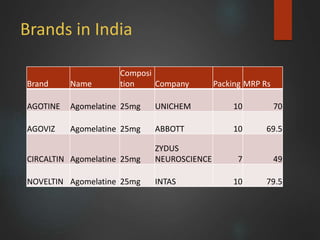
Brands in India
Brand Name
Composi
tion Company Packing MRP Rs
AGOTINE Agomelatine 25mg UNICHEM 10 70
AGOVIZ Agomelatine 25mg ABBOTT 10 69.5
CIRCALTIN Agomelatine 25mg
ZYDUS
NEUROSCIENCE 7 49
NOVELTIN Agomelatine 25mg INTAS 10 79.5
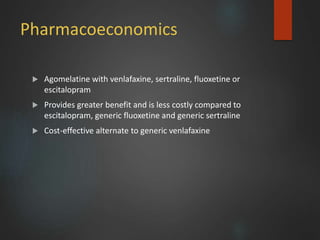
Pharmacoeconomics
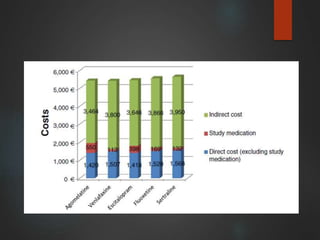
 Agomelatine with venlafaxine, sertraline, fluoxetine or
escitalopram
 Provides greater benefit and is less costly compared to
escitalopram, generic fluoxetine and generic sertraline
 Cost-effective alternate to generic venlafaxine
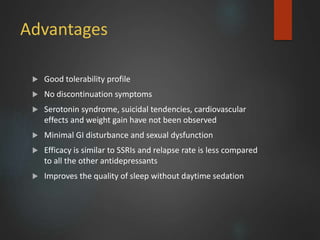
Advantages
 Good tolerability profile
 No discontinuation symptoms
 Serotonin syndrome, suicidal tendencies, cardiovascular
effects and weight gain have not been observed
 Minimal GI disturbance and sexual dysfunction
 Efficacy is similar to SSRIs and relapse rate is less compared
to all the other antidepressants
 Improves the quality of sleep without daytime sedation
Limitations
 Lack of long term active comparator controlled studies.
Approval status
 Europe & Australia – 2006 for major depression
 USA – yet to be approved
Clinical Trials
 Dose finding and efficacy study: 25mg – 50mg bed time dose
 Early onset of efficacy: Agomelatine has quick onset of action
detectable from 7th day after starting treatment as compared to
venlafaxine
 With active comparators: Agomelatine demonstrated greater
efficacy than venlafaxine and sertraline at 6 months
 Sleep and day time functioning: Agomelatine was superior to
venlafaxine and sertraline in “getting to sleep and quality of sleep”.
 Relapse and remission: Goodwin et al have shown significantly
lower relapse and remission rate vs placebo. An insignificant
difference between agomelatine and sertraline or venlafaxine was
observed
51

Asenapine & agomelatine

  • 1.
  • 2.
  • 3.
    Introduction  Schizophrenia :mental disorder characterized by problems with thought processes and by poor emotional responses – Positive symptoms : hallucination – Negative symptoms : lack of motivation – Cognitive disturbances : memory disorders  Bipolar disorder: mood disorder with episodes of an elevated or agitated mood known as mania alternating with episodes of depression 3
  • 4.
    Leading Causes ofYears of Life Lived with Disability 1 Unipolar depressive disorders 16,40% 2 Alcohol disorders 5,50% 3 Schizophrenia 4,90% 4 Iron-deficiency anemia 4,90% 5 Bipolar affective disorder 4,70% 6 Hearing loss, adult onset 3,80% 7 HIV/AIDS 2,80% 8 Chronic obstructive pulmonary disease 2,40% 9 Osteoarthritis 2,30% 4
  • 5.
    Past historic ofanti-psychotics : 5
  • 6.
    Limitations with Current Treatment Effective only in a subset of patients  Prediction of individual treatment response not possible  Are associated with safety and tolerability issues  Extrapyramidal symptoms and akathisia (Haloperidol)  Prolactin increases (Risperidone)  Metabolic changes (Olanzapine)  Weight gain (Olanzapine/Risperidone)  Cardiovascular risk factors (QTc prolongation) (Quetiapine)  Clinical practice: a high rate of switching due to limited efficacy and/ or tolerability 6
  • 7.
    ASENAPINE  Important newtreatment option for patients with schizophrenia and bipolar disorder  Psychotropic agent belonging to class of dibenzo- oxepino pyrroles  Approved by FDA in Aug 2009 7
  • 8.
    MOA  The mechanismof action is unclear Acts on receptors:  Serotonin :5-HT1A , 5-HT1B , 5-HT2A , 5-HT2B, 5-HT2C , 5- HT5A , 5-HT6 , and 5-HT7  Adrenergic: α1, α2A , α2B, and α2C  Dopamine :D1 , D2 , D3 and D4  Histamine :H1 and H2  No appreciable affinity for muscarinic cholinergic receptors 8
  • 9.
    Pharmacokinetics Absorption  Bioavailability: SL,35%; swallowed, ≤2%  Peak plasma time: 0.5-1.5 hr  Peak plasma concentration: 4 ng/mL Distribution  Protein bound: 95%  Vd: 20-25 L/kg 9
  • 10.
    Pharmacokinetics Metabolism  Metabolized byUGT1A4 and CYP450 (predominantly isoenzyme 1A2)  Enzymes inhibited: CYP2D6 (weakly) Elimination  Half-life: 24 hr  Clearance: 52 L/hr  Excretion: Urine (50%), faeces (40%) 10
  • 11.
    TRADE NAME &COST US/EUROPE  Saphris, Sycrest INDIA  Asenapt marketed by Sun pharmaceuticals  5mg 10 tabs - ₹55 11
  • 12.
    DOSAGE FORMS  5mgsublingual tablets  10 mg sublingual tablets 12
  • 13.
  • 14.
    Patient Counselling Information 1.Gentlyremove tablet Do not crush tablet. 2.Place tablet under tongue and allow it to dissolve completely. Do not chew or swallow tablet. Do not eat or drink for 10 minutes. 14
  • 15.
    WARNINGS Mortality  Drug comeswith boxed warning of increased mortality in elderly patients with dementia-related psychosis  C/I in patients with dementia-related psychosis Hypersensitivity  Sep 2011, FDA issues warning of serious hypersensitivity reactions following drug administerations  To be administered with caution 15
  • 16.
    ADVERSE DRUG REACTIONS NeurolepticMalignant Syndrome  hyperpyrexia, muscle rigidity, altered mental status, and evidence of autonomic instability 1) immediate discontinuation of antipsychotic drugs and other drugs not essential to concurrent therapy 2) intensive symptomatic treatment and medical monitoring 3) treatment of any concomitant serious medical problems Hypersensitivity Reactions  anaphylaxis, angioedema, hypotension, tachycardia, swollen tongue, dyspnea, wheezing and rash 16
  • 17.
    ADVERSE DRUG REACTIONS Oralhypoesthesia  Reverses in half to one hour after taking the drug Tardive Dyskinesia  irreversible, involuntary, dyskinetic movements Weight Gain  regular monitoring of weight Orthostatic Hypotension  Due to the α1-adrenergic antagonist activity Application site reactions including oral ulcers, blisters, peeling/sloughing and inflammation 17
  • 18.
    ADVERSE DRUG REACTIONS Leukopenia,Neutropenia, and Agranulocytosis QT Prolongation  should be avoided in combination with other drugs known to prolong QTc Hyperprolactinemia  D 2 receptor antagonist Seizures Somnolence Dysphagia 18
  • 19.
    ADVERSE DRUG REACTIONS Hyperglycemiaand Diabetes Mellitus  Risk of hyperglycemia-related adverse events  Patients with an established diagnosis of diabetes mellitus who are started on atypical antipsychotics should be monitored regularly for worsening of glucose control Extra pyramidal syndrome  Lesser incidence than other antipsychotic drugs 19
  • 20.
  • 21.
    Asenapine And WeightGain Short-term trial 21 0 0,5 1 1,5 2 2,5 3 Placebo AllAsenapine(5- 10mg BID) Olanzapine(5-20mg QD) Risperidone(3mg BID) MeanChangefromBaselineBody Weight (Kg) Placebo AllAsenapine (5-10mg BID) Olanzapine (5-20mg QD) Risperidone(3mg BID) Baseline (kg): P=81.7 A=78.5 R=86.8 O=78.4 21
  • 22.
    Drug Interactions  Asenapineweakly inhibits CYP2D6.  Should be coadministered cautiously with drugs that are both substrates and inhibitors for CYP2D6 22
  • 23.
    SPECIAL POPULATIONS  Pregnancy:Risk of foetal toxicity category C  Lactation : Excretion in is unknown  Paediatric : Safety and effectiveness have not been established  Caution advised in geriatric age group  Renal Impairment: No dose adjustment needed  Hepatic Impairment:  Mild to moderate impairment (Child-Pugh class A or B): Dose adjustment not necessary  Severe impairment (Child-Pugh class C): Not recommended
  • 24.
    OVERDOSAGE  Reported adversereactions at the highest dosage included agitation and confusion.  No specific antidote available Management  ECG taken to evaluate arrhythmias  Haemodynamic compromise: intravenous fluids and/or sympathomimetic agents  In case of severe extrapyramidal symptoms, anticholinergic medication should be administered.
  • 25.
    CLINICAL TRIALS SCHIZOPHRENIA  Adultpatients who met DSM-IV criteria for schizophrenia were included  Primary efficacy rating scale was the Positive and Negative Syndrome Scale (PANSS).  Trial One This study enrolled 174 subjects and compared Asenapine (5 mg twice daily) to placebo, Asenapine was statistically superior to placebo on the PANSS total score. Trial Two This trial enrolled 448 subjects and compared two fixed doses of Asenapine (5mg and 10mg twice daily) to placebo. Asenapine 5 mg twice daily was statistically superior to placebo on the PANSS total score.  Trial Three Asenapine could not be distinguished from placebo
  • 26.
    BIPOLAR DISORDER  3-week,randomized, double-blind, placebo-controlled, and active-controlled (olanzapine) trial  Adult patients who met DSM-IV criteria for Bipolar Disorder were included  Asenapine was statistically superior to placebo on the YMRS total score and the CGI-BP Severity of Illness score
  • 27.
    ADVANTAGES DISADVANTAGES Sublingual formconvinient to take Mechanism of action is unclear Rapid onset of action Serious ADR of mortality in geraiatric patients with dementia related psychosis Promising safety and efficacy Limited clinical information available
  • 28.
    REFERENCES  Potkin SG,Cohen M, Panagides J Efficacy and tolerability of asenapine in acute schizophrenia: a placebo- and risperidone-controlled trial. The Journal of Clinical Psychiatry 2007 Oct;68(10):1492-500  Marston HM, Young JW, Martin FD, Serpa KA, Moore CL, Wong EH, Gold L, Meltzer LT, Azar MR, Geyer MA, Shahid M Asenapine effects in animal models of psychosis and cognitive function. Psychopharmacology 2009 May 22
  • 29.
  • 30.
    Depression  Mood disordersis a major public health problem  Ranked 2nd by WHO to all diseases in 2010.  Depression : a major mood disorders affecting 340 million people worldwide  Chronic and recurrent depression : disrupts the normal physical & social well being , drives individual to suicide
  • 31.
    Goal of treatmentof MDD:  Remission of all symptoms  Complete recovery of social & vocational dysfunction Rx available  SSRIs  SNRIs  TCAs
  • 32.
    A new drug!!…but... Y?  TCAs –  poor tolerability & lethargy in high dose  Reserved for non-responders to SSRIs, SNRIs  SSRIs  Mild to moderate depression  Safe in overdose & cost effective  ADRs – discontinuation , sexual dysfunction , GI disturbances & wt. gain. – only 30-40% achieve remission – increased risk of relapsing , worsening of long term prognosis
  • 33.
    Pathogenesis of depression Monoaminehypothesis :  Depletion of monoamines in hippocampus , limbic system & frontal cortex  SSRIs, SNRIs , TCAs – increases monoamines – only effective in 50% of patients.
  • 34.
    Melatonin hypothesis  Newevidence – disruption of circadian rhythm – predisposes to depression  Melatonin – hormone from pineal gland – regulates circadian rhythm  Patients with depression  Low levels of melatonin  Delayed onset of sleep  Difficulty in maintaining sleep  Early morning awakening
  • 35.
     MT1 &MT2 Rs  MT1 – acute inhibition of neuronal firing within SCN  MT2 – induces phase shifting of circadian rhythm
  • 36.
    Chemistry  Synthetic analogof the hormone melatonin  N-[2-(7-methoxynaphthalen-1-yl) ethyl] acetamide
  • 37.
    Mechanism of action Synthetic analogue of human hormone melatonin  Actions on – MT1 & MT2 Rs  Seratonin rs antagonists (5HT-2C)  Neurogenesis
  • 38.
    Pharmacokinetics Metabolism :  Metabolizedby Cytochrome P450 1A2 to 7-O – demethylated and hydroxylated inactive metabolites Excretion :  60-80% excreted as metabolites in urine  Metabolised to 3,4 dihydrodiol which is excreted in faeces
  • 39.
    Dosage  25 mg/ day  Given once at bed time for 2 weeks  Dose increased to 50 mg if response is inadequate  Sublingual agomelatine 0.5-2mg – under trial
  • 40.
    Precautions  Hepatic impairment- ↑plasma levels upto 100 times  Renal impairment - ↑ plasma levels by 25 %  Pregnancy & lactation  Pediatric  ≥ 60 yrs of age
  • 41.
    Drug interactions  Doesnot inhibit or induce Cytochrome p450 enzymes  Enzyme inducers like omeprazole and nicotine decrease the serum levels of agomelatine.  Enzyme inhibitors like Fluoxamine and oestrogens increase the serum levels
  • 42.
    Uses  Major depressivedisorder especially in non-responders and intolerant to SSRIs  Generalized anxiety disorder  Bipolar depression  Sleep disturbances  Migraine and cluster headaches
  • 43.
    Adverse drug reactions Well tolerated  Adverse effect profile similar to placebo  Headache, nausea, dry mouth, fatigue  Dizziness †  Diarrhea / constipation  Insomnia, somnolence  Upper abdominal pain
  • 44.
    Overdose  Well tolerated Reported overdoses up to 525mg have not resulted in significant or serious sequelae.  1200mg was taken in earliest clinical sstudies  800mg – maximum tolerated dose  LD50 in animals was 100 times greater than the human dose
  • 45.
    Brands in India BrandName Composi tion Company Packing MRP Rs AGOTINE Agomelatine 25mg UNICHEM 10 70 AGOVIZ Agomelatine 25mg ABBOTT 10 69.5 CIRCALTIN Agomelatine 25mg ZYDUS NEUROSCIENCE 7 49 NOVELTIN Agomelatine 25mg INTAS 10 79.5
  • 46.
    Pharmacoeconomics  Agomelatine withvenlafaxine, sertraline, fluoxetine or escitalopram  Provides greater benefit and is less costly compared to escitalopram, generic fluoxetine and generic sertraline  Cost-effective alternate to generic venlafaxine
  • 48.
    Advantages  Good tolerabilityprofile  No discontinuation symptoms  Serotonin syndrome, suicidal tendencies, cardiovascular effects and weight gain have not been observed  Minimal GI disturbance and sexual dysfunction  Efficacy is similar to SSRIs and relapse rate is less compared to all the other antidepressants  Improves the quality of sleep without daytime sedation
  • 49.
    Limitations  Lack oflong term active comparator controlled studies.
  • 50.
    Approval status  Europe& Australia – 2006 for major depression  USA – yet to be approved
  • 51.
    Clinical Trials  Dosefinding and efficacy study: 25mg – 50mg bed time dose  Early onset of efficacy: Agomelatine has quick onset of action detectable from 7th day after starting treatment as compared to venlafaxine  With active comparators: Agomelatine demonstrated greater efficacy than venlafaxine and sertraline at 6 months  Sleep and day time functioning: Agomelatine was superior to venlafaxine and sertraline in “getting to sleep and quality of sleep”.  Relapse and remission: Goodwin et al have shown significantly lower relapse and remission rate vs placebo. An insignificant difference between agomelatine and sertraline or venlafaxine was observed 51

Editor's Notes

  • #24 Neonates exposed to antipsychotic drugs during 3rd trimester of pregnancy are at risk for EPS or withdrawal symptoms after delivery; these complications vary in severity, with some being self-limited and others requiring ICU unit support and prolonged hospitalization
  • #42 Other enzyme inhibitors like paroxetine, fluconazole, lithium, lorazepam, alcohol and valproic acid have insignificant interaction with Agomelatine