Biotechnology and
Genetic engineering
Compiled by: Hashmatullah
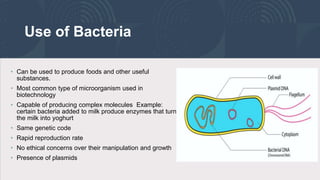
Use of Bacteria
‱ Can be used to produce foods and other useful
substances.
‱ Most common type of microorganism used in
biotechnology
‱ Capable of producing complex molecules Example:
certain bacteria added to milk produce enzymes that turn
the milk into yoghurt
‱ Same genetic code
‱ Rapid reproduction rate
‱ No ethical concerns over their manipulation and growth
‱ Presence of plasmids
Bio fuels
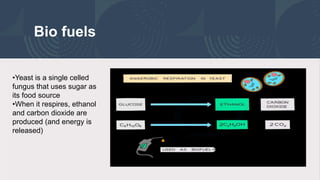
‱Yeast is a single celled
fungus that uses sugar as
its food source
‱When it respires, ethanol
and carbon dioxide are
produced (and energy is
released)
Bread Making
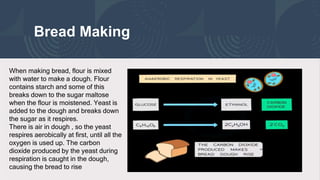
When making bread, flour is mixed
with water to make a dough. Flour
contains starch and some of this
breaks down to the sugar maltose
when the flour is moistened. Yeast is
added to the dough and breaks down
the sugar as it respires.
There is air in dough , so the yeast
respires aerobically at first, until all the
oxygen is used up. The carbon
dioxide produced by the yeast during
respiration is caught in the dough,
causing the bread to rise
Fruit Juice production
‱ Fruit juice is produced by squeezing the fruits to remove the juice
‱ Chopping the fruit up before squeezing helps to release a lot more juice, but this does not
break open all the cells so a lot of juice is lost
‱ By adding an enzyme called pectinase to the chopped up fruit, more juice is released
‱ Pectinase works by breaking down a chemical called pectin that is found inside plant cell
walls
‱ Once pectin is broken down, the cell walls break more easily and more juice can be
squeezed out of the fruit
‱ Adding pectinase to fruits also helps to produce a clearer juice as larger polysaccharides like
pectin can make the juice seem cloudy – once they are broken down into smaller molecules,
the juice becomes clearer. The sugars produced also makes the juice sweeter.
Biological Washing Powders
‱ Many stains on clothes are organic molecules – oil from skin, protein from blood, fat and protein from food
‱ Detergents that only contain soap can remove some of these stains when mixed with hot water, but it can
take a lot of time and effort and very high temperatures to remove the stains entirely
‱ Biological washing powders contain enzymes similar to the digestive enzymes produced in the alimentary
canal that help to break down large food molecules
‱ Using biological washing powders has several advantages, including:
‱ Quickly breaking down large, insoluble molecules such as fats and proteins into smaller, soluble
ones that will dissolve in washing water
‱ They are effective at lower temperatures, meaning less energy (and money) has to be used in order to
wash clothes to get them clean as washing water does not need to be heated to higher temperatures
‱ They can be used to clean delicate fabrics that would not be suitable for washing at high temperatures
Production of
Lactose-Free Milk
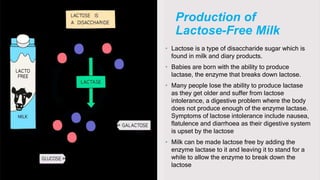
‱ Lactose is a type of disaccharide sugar which is
found in milk and diary products.
‱ Babies are born with the ability to produce
lactase, the enzyme that breaks down lactose.
‱ Many people lose the ability to produce lactase
as they get older and suffer from lactose
intolerance, a digestive problem where the body
does not produce enough of the enzyme lactase.
Symptoms of lactose intolerance include nausea,
flatulence and diarrhoea as their digestive system
is upset by the lactose
‱ Milk can be made lactose free by adding the
enzyme lactase to it and leaving it to stand for a
while to allow the enzyme to break down the
lactose
Genetic
Engineering
‱ Genetic engineering
is changing the genetic material
of an organism by removing,
changing or inserting individual
genes from another organism
‱ The organism receiving the
genetic material is said to
be genetically modified.
‱ The DNA of the organism that
now contains DNA from another
organism as well is known
as ‘recombinant DNA.
Applications of
Genetic
engineering
‱ The gene for human insulin has
been inserted into bacteria which
then produce human insulin
‱ Crop plants genetically modified to
contain a gene from a bacterium
that produces a poison that kills
insects.
‱ Crop plants have also been
genetically modified to make
them resistant to certain herbicides
‱ Insertion of genes into crop plants
to provide additional vitamins.
Example: Golden rice
Process of Genetic Engineering
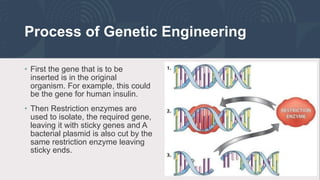
‱ First the gene that is to be
inserted is in the original
organism. For example, this could
be the gene for human insulin.
‱ Then Restriction enzymes are
used to isolate, the required gene,
leaving it with sticky genes and A
bacterial plasmid is also cut by the
same restriction enzyme leaving
sticky ends.
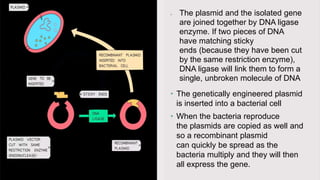
 The plasmid and the isolated gene
are joined together by DNA ligase
enzyme. If two pieces of DNA
have matching sticky
ends (because they have been cut
by the same restriction enzyme),
DNA ligase will link them to form a
single, unbroken molecule of DNA
‱ The genetically engineered plasmid
is inserted into a bacterial cell
‱ When the bacteria reproduce
the plasmids are copied as well and
so a recombinant plasmid
can quickly be spread as the
bacteria multiply and they will then
all express the gene.
Thank for
your attention
Presented by
Hashmatullah

Biotechnology and Genetic Engineering

  • 1.
  • 2.
    Use of Bacteria ‱Can be used to produce foods and other useful substances. ‱ Most common type of microorganism used in biotechnology ‱ Capable of producing complex molecules Example: certain bacteria added to milk produce enzymes that turn the milk into yoghurt ‱ Same genetic code ‱ Rapid reproduction rate ‱ No ethical concerns over their manipulation and growth ‱ Presence of plasmids
  • 3.
    Bio fuels ‱Yeast isa single celled fungus that uses sugar as its food source ‱When it respires, ethanol and carbon dioxide are produced (and energy is released)
  • 4.
    Bread Making When makingbread, flour is mixed with water to make a dough. Flour contains starch and some of this breaks down to the sugar maltose when the flour is moistened. Yeast is added to the dough and breaks down the sugar as it respires. There is air in dough , so the yeast respires aerobically at first, until all the oxygen is used up. The carbon dioxide produced by the yeast during respiration is caught in the dough, causing the bread to rise
  • 5.
    Fruit Juice production ‱Fruit juice is produced by squeezing the fruits to remove the juice ‱ Chopping the fruit up before squeezing helps to release a lot more juice, but this does not break open all the cells so a lot of juice is lost ‱ By adding an enzyme called pectinase to the chopped up fruit, more juice is released ‱ Pectinase works by breaking down a chemical called pectin that is found inside plant cell walls ‱ Once pectin is broken down, the cell walls break more easily and more juice can be squeezed out of the fruit ‱ Adding pectinase to fruits also helps to produce a clearer juice as larger polysaccharides like pectin can make the juice seem cloudy – once they are broken down into smaller molecules, the juice becomes clearer. The sugars produced also makes the juice sweeter.
  • 6.
    Biological Washing Powders ‱Many stains on clothes are organic molecules – oil from skin, protein from blood, fat and protein from food ‱ Detergents that only contain soap can remove some of these stains when mixed with hot water, but it can take a lot of time and effort and very high temperatures to remove the stains entirely ‱ Biological washing powders contain enzymes similar to the digestive enzymes produced in the alimentary canal that help to break down large food molecules ‱ Using biological washing powders has several advantages, including: ‱ Quickly breaking down large, insoluble molecules such as fats and proteins into smaller, soluble ones that will dissolve in washing water ‱ They are effective at lower temperatures, meaning less energy (and money) has to be used in order to wash clothes to get them clean as washing water does not need to be heated to higher temperatures ‱ They can be used to clean delicate fabrics that would not be suitable for washing at high temperatures
  • 7.
    Production of Lactose-Free Milk ‱Lactose is a type of disaccharide sugar which is found in milk and diary products. ‱ Babies are born with the ability to produce lactase, the enzyme that breaks down lactose. ‱ Many people lose the ability to produce lactase as they get older and suffer from lactose intolerance, a digestive problem where the body does not produce enough of the enzyme lactase. Symptoms of lactose intolerance include nausea, flatulence and diarrhoea as their digestive system is upset by the lactose ‱ Milk can be made lactose free by adding the enzyme lactase to it and leaving it to stand for a while to allow the enzyme to break down the lactose
  • 8.
    Genetic Engineering ‱ Genetic engineering ischanging the genetic material of an organism by removing, changing or inserting individual genes from another organism ‱ The organism receiving the genetic material is said to be genetically modified. ‱ The DNA of the organism that now contains DNA from another organism as well is known as ‘recombinant DNA.
  • 9.
    Applications of Genetic engineering ‱ Thegene for human insulin has been inserted into bacteria which then produce human insulin ‱ Crop plants genetically modified to contain a gene from a bacterium that produces a poison that kills insects. ‱ Crop plants have also been genetically modified to make them resistant to certain herbicides ‱ Insertion of genes into crop plants to provide additional vitamins. Example: Golden rice
  • 10.
    Process of GeneticEngineering ‱ First the gene that is to be inserted is in the original organism. For example, this could be the gene for human insulin. ‱ Then Restriction enzymes are used to isolate, the required gene, leaving it with sticky genes and A bacterial plasmid is also cut by the same restriction enzyme leaving sticky ends.
  • 11.
     The plasmidand the isolated gene are joined together by DNA ligase enzyme. If two pieces of DNA have matching sticky ends (because they have been cut by the same restriction enzyme), DNA ligase will link them to form a single, unbroken molecule of DNA ‱ The genetically engineered plasmid is inserted into a bacterial cell ‱ When the bacteria reproduce the plasmids are copied as well and so a recombinant plasmid can quickly be spread as the bacteria multiply and they will then all express the gene.
  • 12.