1. define genetics engineering;
2. discuss the applications of
recombinant DNA
3. outline the process involved in
genetic engineering;
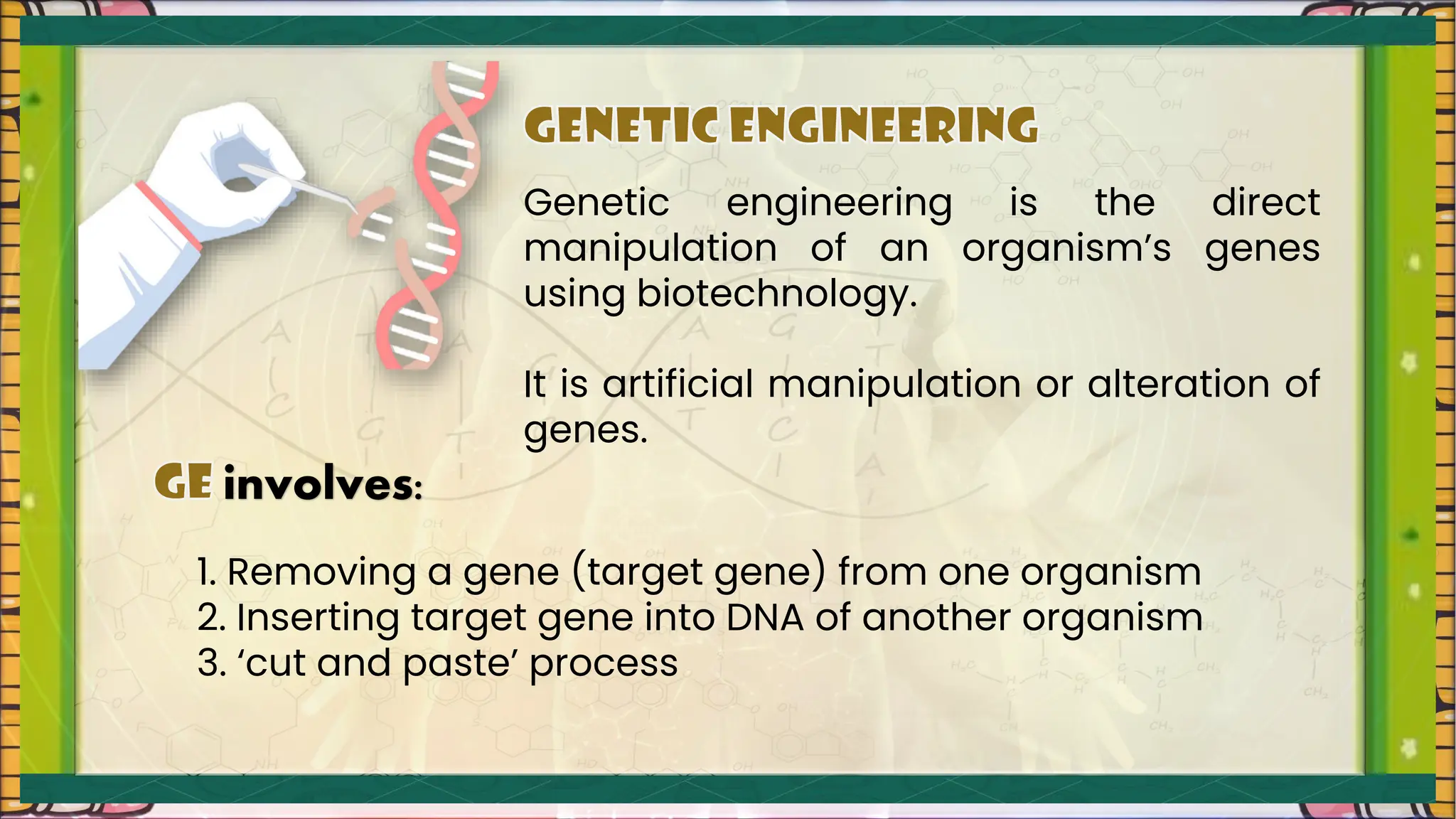
Genetic engineering is the direct
manipulation of an organism’s genes
using biotechnology.
It is artificial manipulation or alteration of
genes.
involves:
1. Removing a gene (target gene) from one organism
2. Inserting target gene into DNA of another organism
3. ‘cut and paste’ process
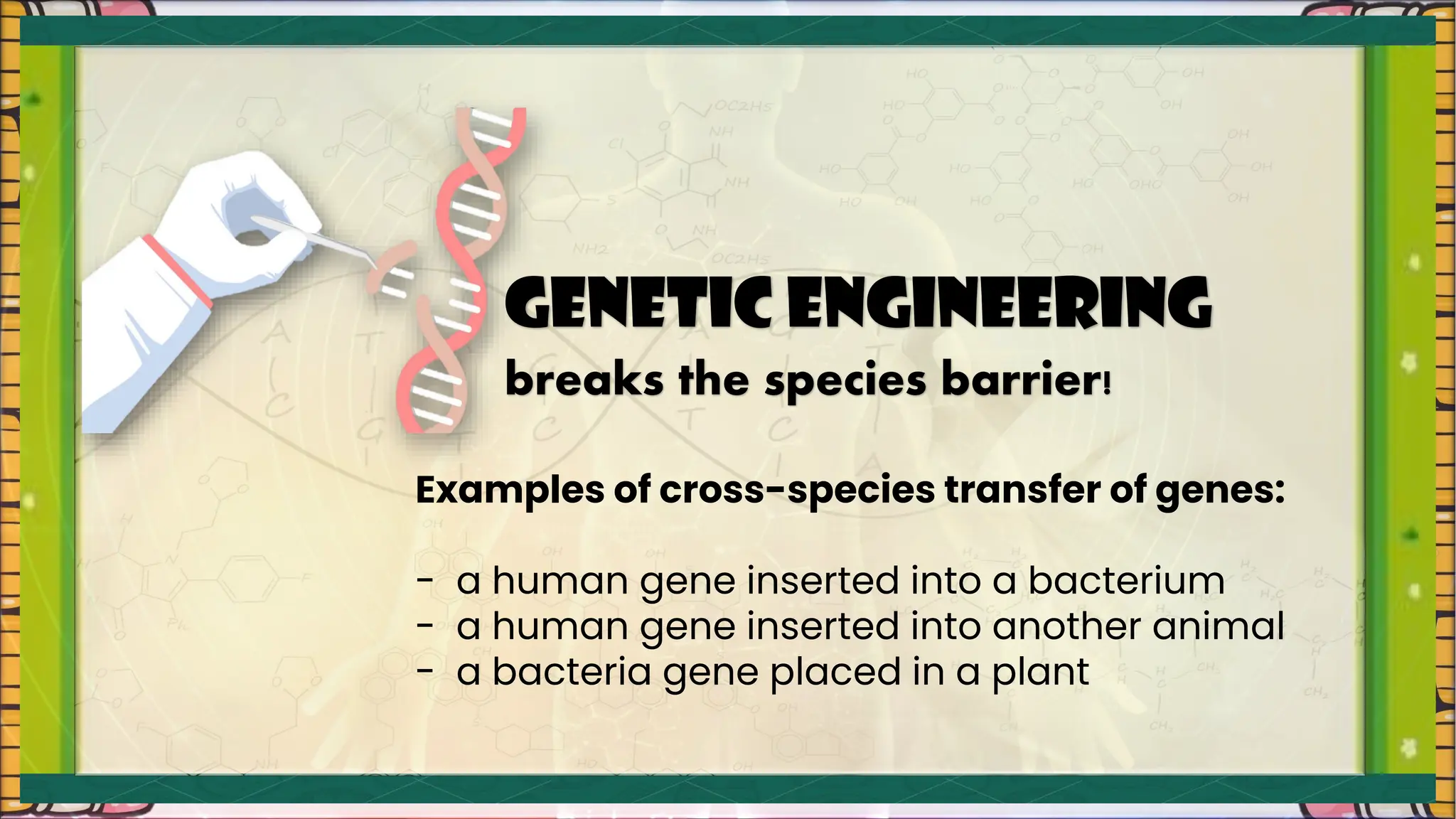
GENETIC engineering
breaks the species barrier!
Examples of cross-species transfer of genes:
- a human gene inserted into a bacterium
- a human gene inserted into another animal
- a bacteria gene placed in a plant
DNA TECHNOLOGY
 specialized area of biotechnology.
 focuses on the ability to analyze , manipulate and “cut
and paste” DNA pieces.
 used in medical diagnostic tests , PCR.
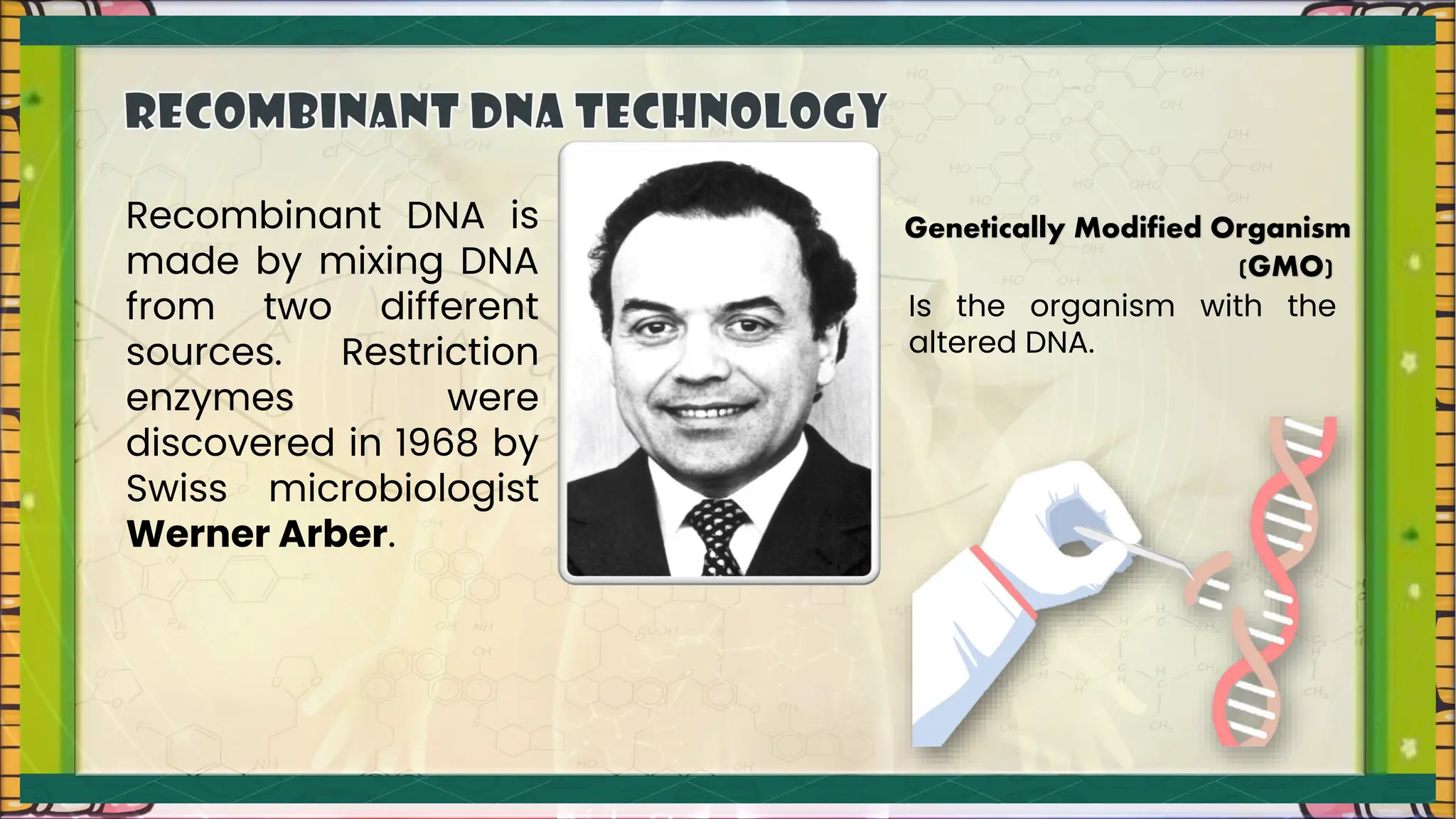
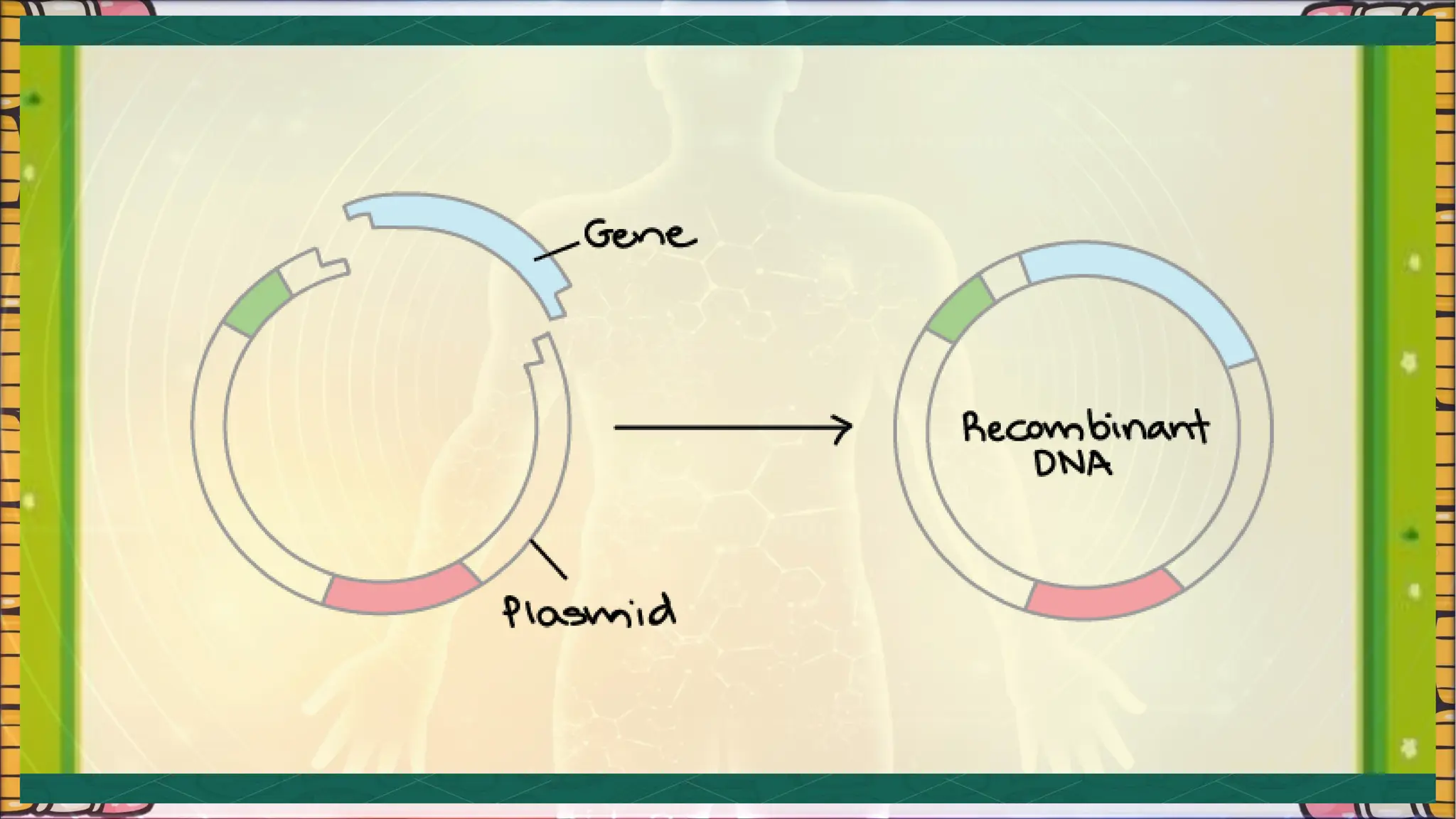
Recombinant DNA is
made by mixing DNA
from two different
sources. Restriction
enzymes were
discovered in 1968 by
Swiss microbiologist
Werner Arber.
Genetically Modified Organism
(GMO)
Is the organism with the
altered DNA.
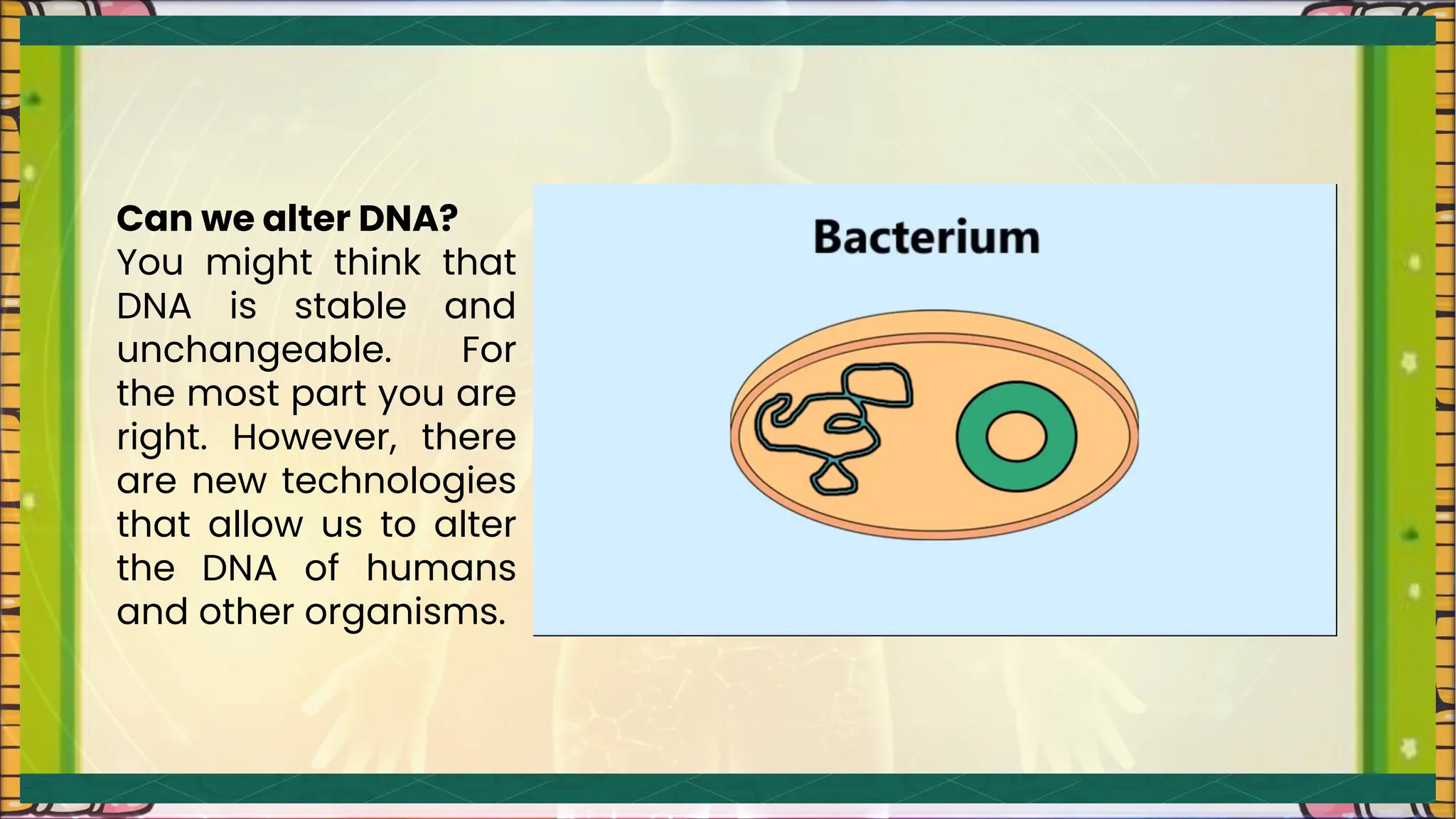
Can we alter DNA?
You might think that
DNA is stable and
unchangeable. For
the most part you are
right. However, there
are new technologies
that allow us to alter
the DNA of humans
and other organisms.
Recombinant DNA is the combination of
DNA from two different sources. For
example, it is possible to place a
human gene into bacterial DNA.
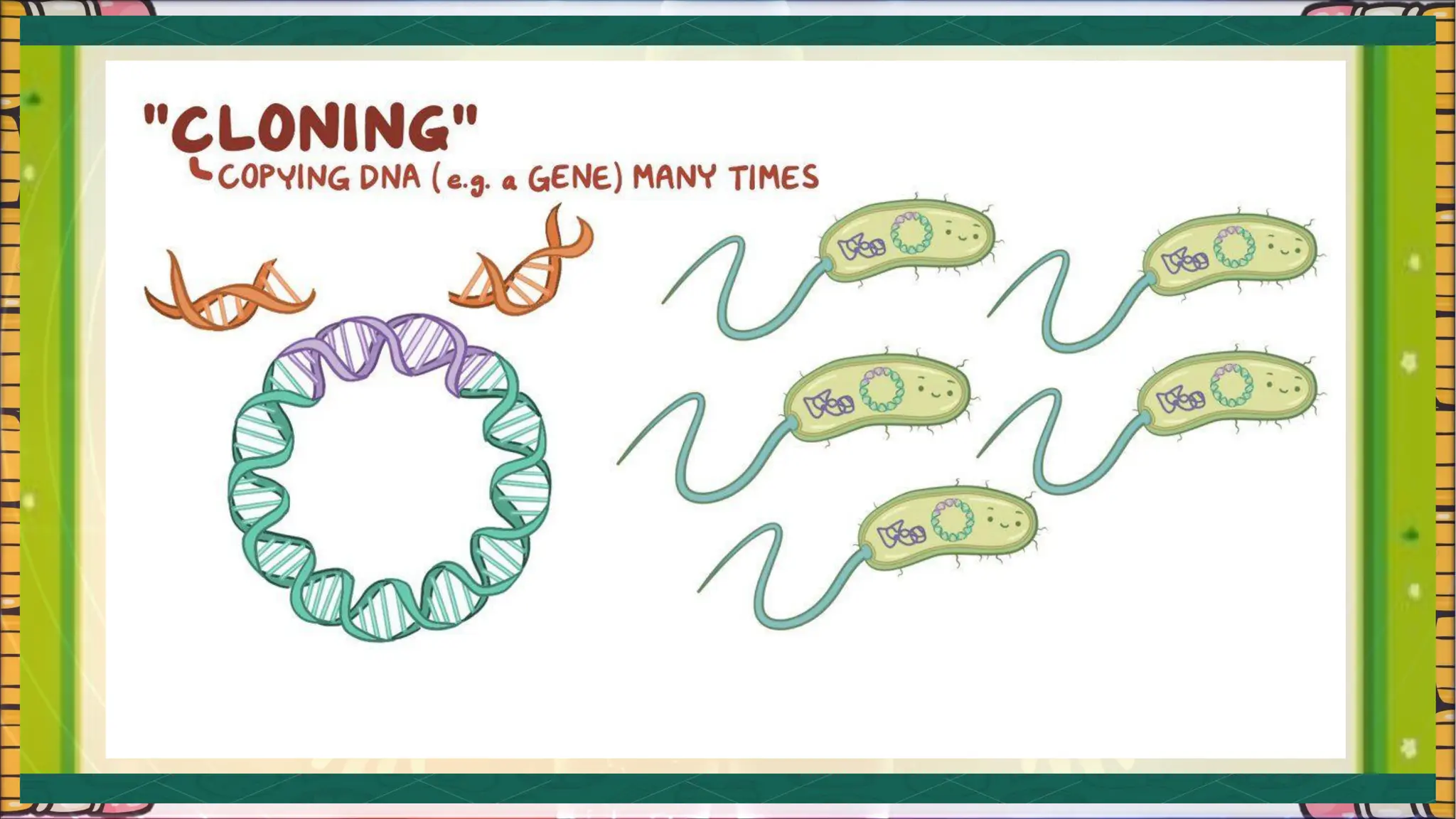
Recombinant DNA technology is useful in
gene cloning and in identifying the
function of a gene.
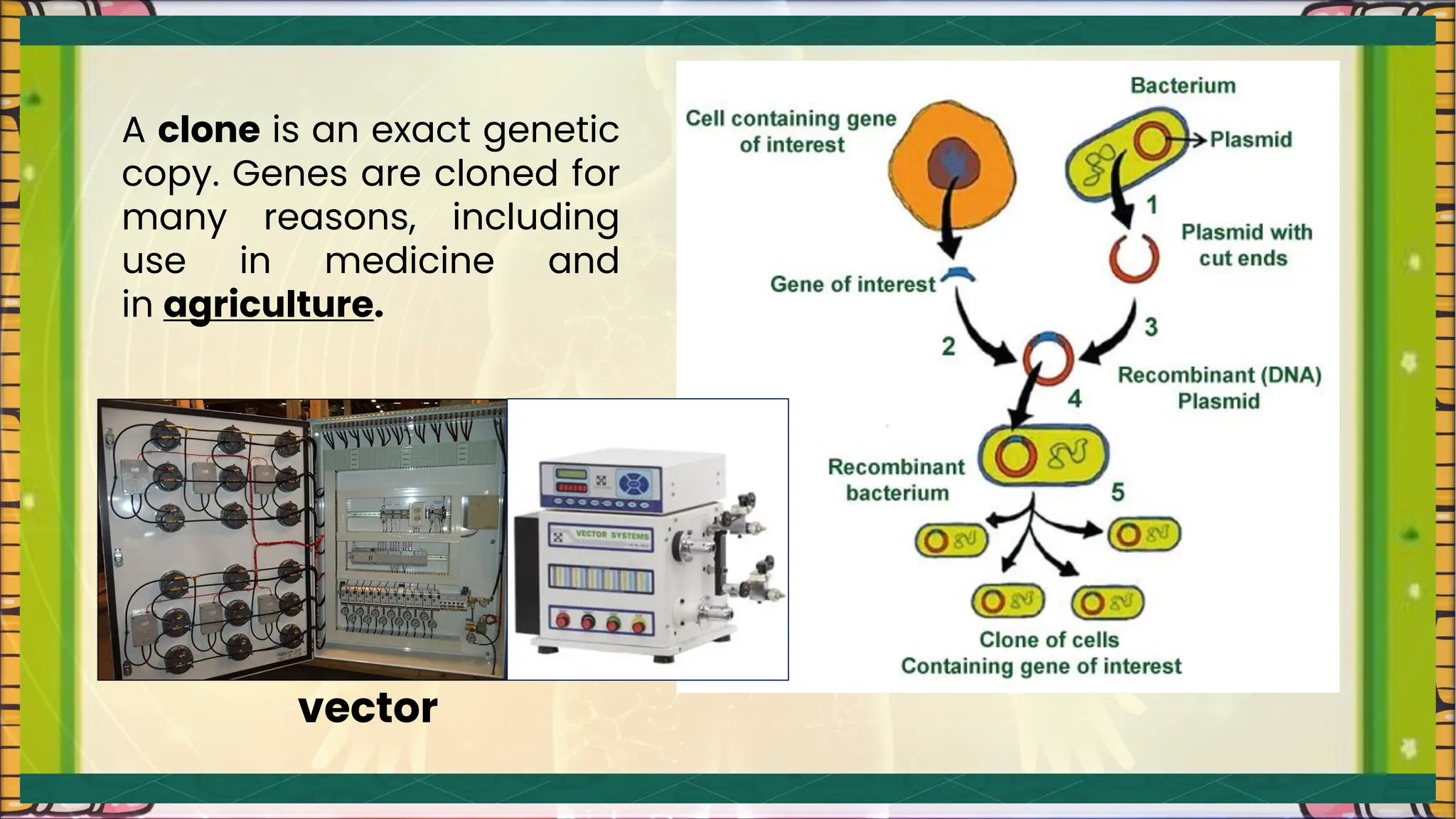
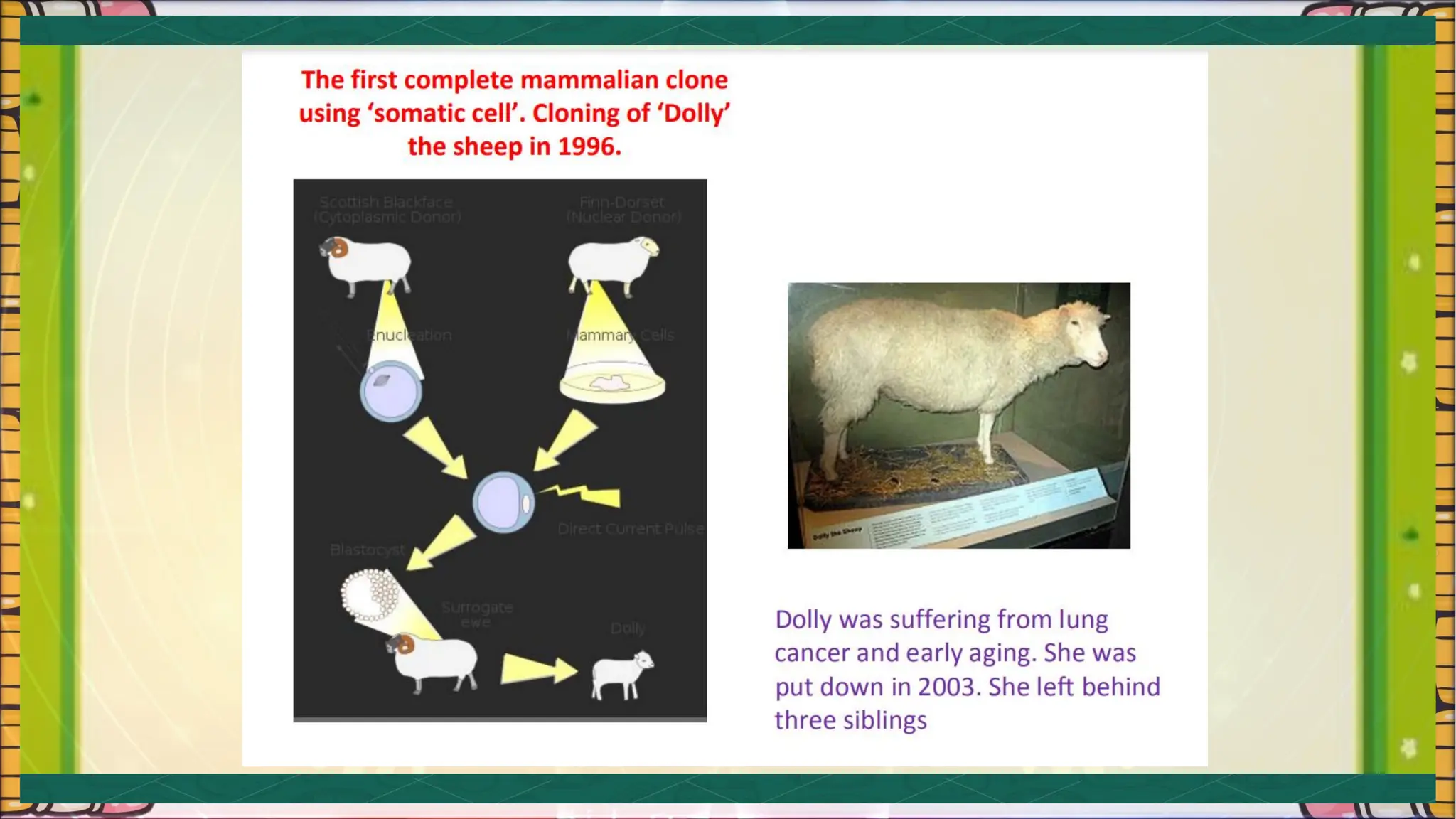
A clone is an exact genetic
copy. Genes are cloned for
many reasons, including
use in medicine and
in agriculture.
vector
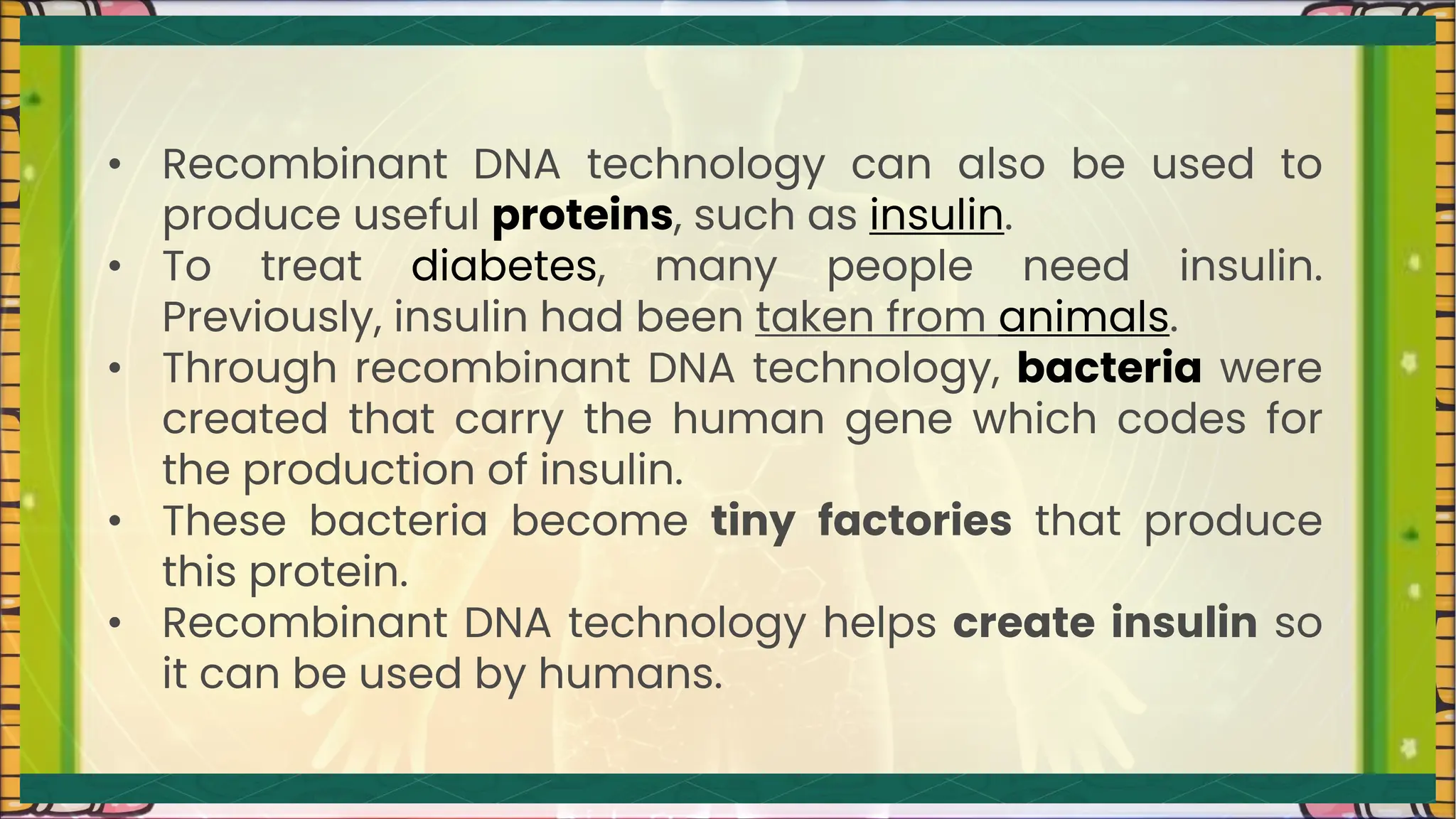
• Recombinant DNA technology can also be used to
produce useful proteins, such as insulin.
• To treat diabetes, many people need insulin.
Previously, insulin had been taken from animals.
• Through recombinant DNA technology, bacteria were
created that carry the human gene which codes for
the production of insulin.
• These bacteria become tiny factories that produce
this protein.
• Recombinant DNA technology helps create insulin so
it can be used by humans.
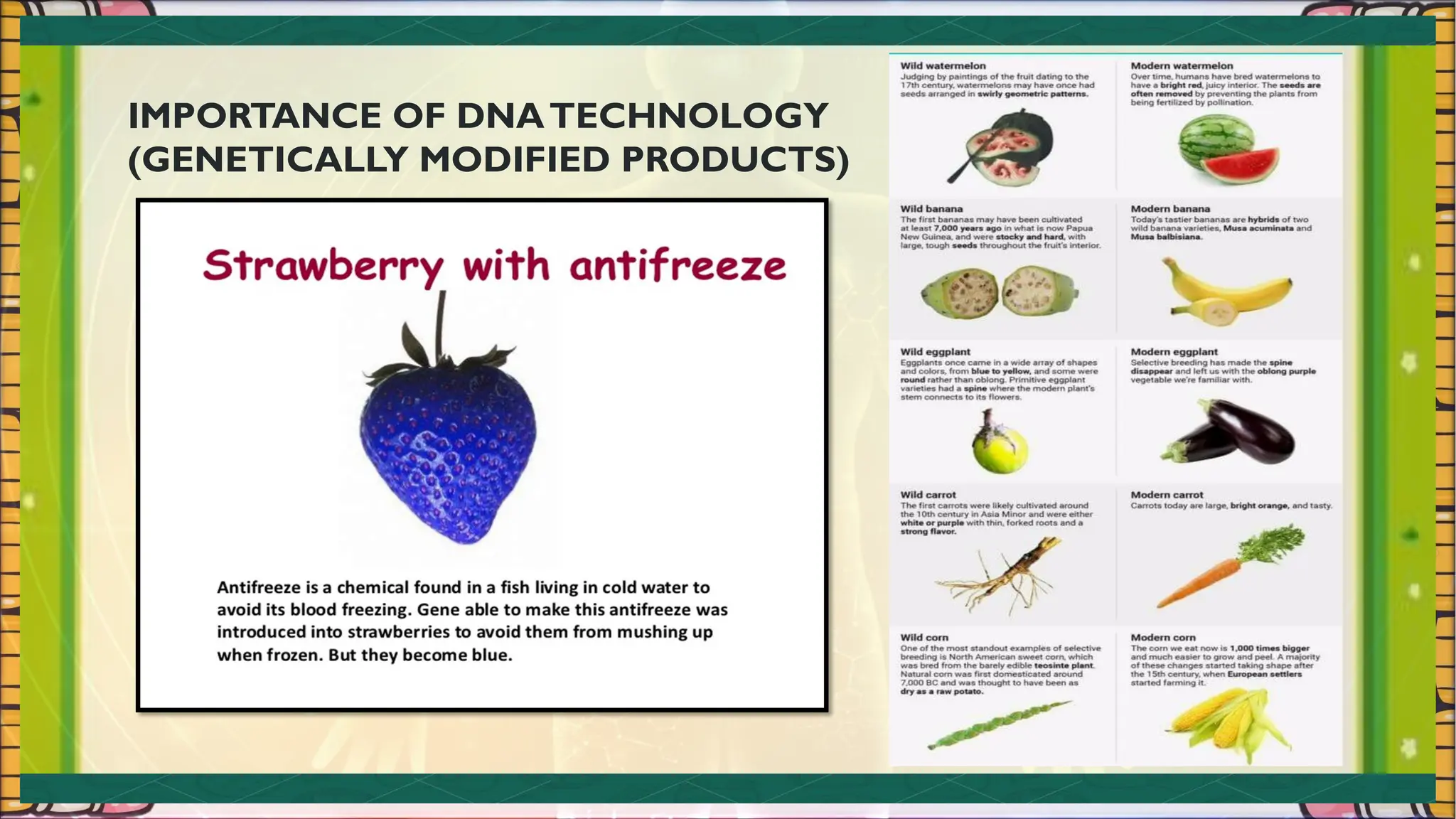
IMPORTANCE OF DNATECHNOLOGY
(GENETICALLY MODIFIED PRODUCTS)
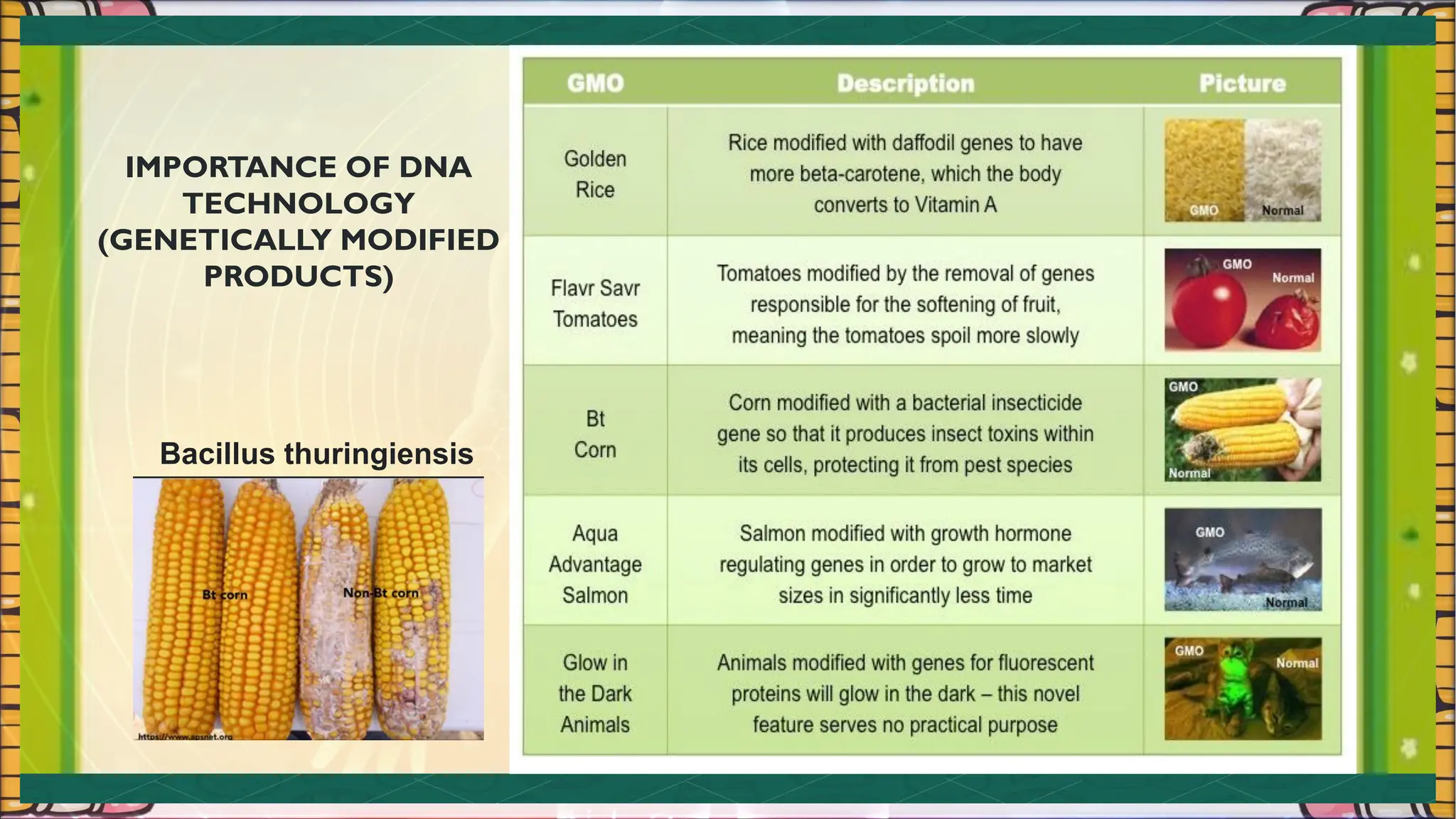
IMPORTANCE OF DNA
TECHNOLOGY
(GENETICALLY MODIFIED
PRODUCTS)
Bacillus thuringiensis
Genetic engineering refers
to those techniques used
to modify the genotype of
an organism to change its
phenotype.
Refers to the methods used to
modify, measure, manipulate
and manufacture within the
DNA molecule
Genetic Engineering
rDNA technology
RECOMBINANT-DNA SCIENCE TECHNOLOGY ENGINEERING AND MATHEMATICS STRAND

RECOMBINANT-DNA SCIENCE TECHNOLOGY ENGINEERING AND MATHEMATICS STRAND

  • 3.
    1. define geneticsengineering; 2. discuss the applications of recombinant DNA 3. outline the process involved in genetic engineering;
  • 4.
    Genetic engineering isthe direct manipulation of an organism’s genes using biotechnology. It is artificial manipulation or alteration of genes. involves: 1. Removing a gene (target gene) from one organism 2. Inserting target gene into DNA of another organism 3. ‘cut and paste’ process
  • 5.
    GENETIC engineering breaks thespecies barrier! Examples of cross-species transfer of genes: - a human gene inserted into a bacterium - a human gene inserted into another animal - a bacteria gene placed in a plant
  • 6.
    DNA TECHNOLOGY  specializedarea of biotechnology.  focuses on the ability to analyze , manipulate and “cut and paste” DNA pieces.  used in medical diagnostic tests , PCR.
  • 7.
    Recombinant DNA is madeby mixing DNA from two different sources. Restriction enzymes were discovered in 1968 by Swiss microbiologist Werner Arber. Genetically Modified Organism (GMO) Is the organism with the altered DNA.
  • 8.
    Can we alterDNA? You might think that DNA is stable and unchangeable. For the most part you are right. However, there are new technologies that allow us to alter the DNA of humans and other organisms.
  • 9.
    Recombinant DNA isthe combination of DNA from two different sources. For example, it is possible to place a human gene into bacterial DNA. Recombinant DNA technology is useful in gene cloning and in identifying the function of a gene.
  • 10.
    A clone isan exact genetic copy. Genes are cloned for many reasons, including use in medicine and in agriculture. vector
  • 15.
    • Recombinant DNAtechnology can also be used to produce useful proteins, such as insulin. • To treat diabetes, many people need insulin. Previously, insulin had been taken from animals. • Through recombinant DNA technology, bacteria were created that carry the human gene which codes for the production of insulin. • These bacteria become tiny factories that produce this protein. • Recombinant DNA technology helps create insulin so it can be used by humans.
  • 16.
  • 17.
    IMPORTANCE OF DNA TECHNOLOGY (GENETICALLYMODIFIED PRODUCTS) Bacillus thuringiensis
  • 18.
    Genetic engineering refers tothose techniques used to modify the genotype of an organism to change its phenotype. Refers to the methods used to modify, measure, manipulate and manufacture within the DNA molecule Genetic Engineering rDNA technology