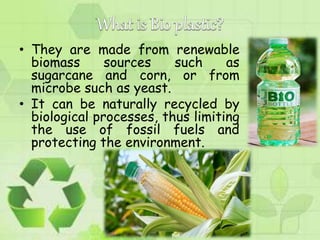
• They are made from renewable
biomass sources such as
sugarcane and corn, or from
microbe such as yeast.
• It can be naturally recycled by
biological processes, thus limiting
the use of fossil fuels and
protecting the environment.
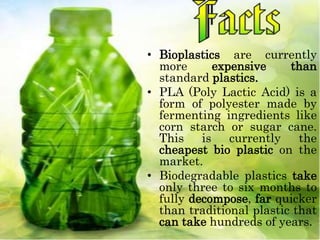
• Bioplastics are currently
more expensive than
standard plastics.
• PLA (Poly Lactic Acid) is a
form of polyester made by
fermenting ingredients like
corn starch or sugar cane.
This is currently the
cheapest bio plastic on the
market.
• Biodegradable plastics take
only three to six months to
fully decompose, far quicker
than traditional plastic that
can take hundreds of years.
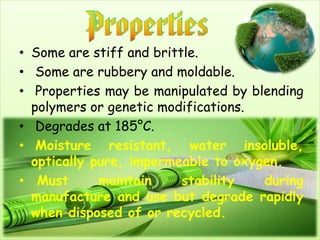
• Some are stiff and brittle.
• Some are rubbery and moldable.
• Properties may be manipulated by blending
polymers or genetic modifications.
• Degrades at 185°C.
• Moisture resistant, water insoluble,
optically pure, impermeable to oxygen.
• Must maintain stability during
manufacture and use but degrade rapidly
when disposed of or recycled.
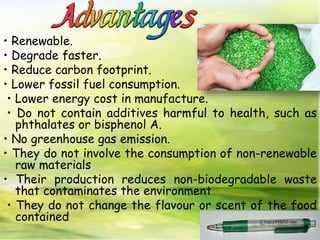
• Renewable.
• Degrade faster.
• Reduce carbon footprint.
• Lower fossil fuel consumption.
• Lower energy cost in manufacture.
• Do not contain additives harmful to health, such as
phthalates or bisphenol A.
• No greenhouse gas emission.
• They do not involve the consumption of non-renewable
raw materials
• Their production reduces non-biodegradable waste
that contaminates the environment
• They do not change the flavour or scent of the food
contained
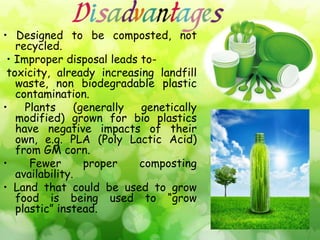
• Designed to be composted, not
recycled.
• Improper disposal leads to-
toxicity, already increasing landfill
waste, non biodegradable plastic
contamination.
• Plants (generally genetically
modified) grown for bio plastics
have negative impacts of their
own, e.g. PLA (Poly Lactic Acid)
from GM corn.
• Fewer proper composting
availability.
• Land that could be used to grow
food is being used to “grow
plastic” instead.
1. Conventional Plastics :
These are fossil fuel based and non-
biodegradable like Polyethylene.
2. Bio Plastics which are bio-based and non-
biodegradable :
Eg. Braskem from Brazil has
innovated and offers their I’m Green ™
Polyethylene product which is a plastic produced
from renewable resource like Sugarcane, which can
be regenerated over a short period of time. It also
helps conserve fossil fuels and reduce green house
gas emission.
3. Bio based And Bio Degradable :
These are usually materials made from
cellulose acetate (plant based) or lactic acid
based blends (or pure starch blends) and are
used for primarily single use plastics like cutlery
or some applications across pens / toys etc.
Some examples are : PLA (Poly Lactic Acid),
PHA (Poly Hydroxy Alkanoate).
Flower wrapping made of
PLA-blend bio-flex
Packaging peanuts made from
bioplastics (thermoplastic starch)
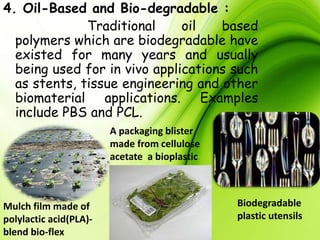
4. Oil-Based and Bio-degradable :
Traditional oil based
polymers which are biodegradable have
existed for many years and usually
being used for in vivo applications such
as stents, tissue engineering and other
biomaterial applications. Examples
include PBS and PCL.
Mulch film made of
polylactic acid(PLA)-
blend bio-flex
A packaging blister
made from cellulose
acetate a bioplastic
Biodegradable
plastic utensils
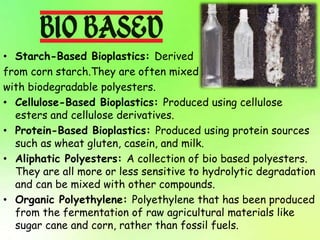
• Starch-Based Bioplastics: Derived
from corn starch.They are often mixed
with biodegradable polyesters.
• Cellulose-Based Bioplastics: Produced using cellulose
esters and cellulose derivatives.
• Protein-Based Bioplastics: Produced using protein sources
such as wheat gluten, casein, and milk.
• Aliphatic Polyesters: A collection of bio based polyesters.
They are all more or less sensitive to hydrolytic degradation
and can be mixed with other compounds.
• Organic Polyethylene: Polyethylene that has been produced
from the fermentation of raw agricultural materials like
sugar cane and corn, rather than fossil fuels.
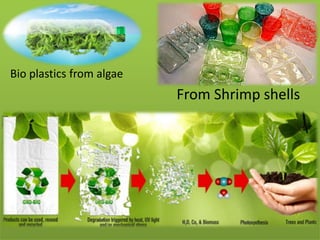
Bio plastics from algae
From Shrimp shells
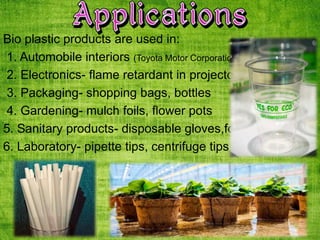
Bio plastic products are used in:
1. Automobile interiors (Toyota Motor Corporation)
2. Electronics- flame retardant in projectors
3. Packaging- shopping bags, bottles
4. Gardening- mulch foils, flower pots
5. Sanitary products- disposable gloves,foils
6. Laboratory- pipette tips, centrifuge tips
Bioplastics - biodegradable Plastics

Bioplastics - biodegradable Plastics

  • 2.
    • They aremade from renewable biomass sources such as sugarcane and corn, or from microbe such as yeast. • It can be naturally recycled by biological processes, thus limiting the use of fossil fuels and protecting the environment.
  • 4.
    • Bioplastics arecurrently more expensive than standard plastics. • PLA (Poly Lactic Acid) is a form of polyester made by fermenting ingredients like corn starch or sugar cane. This is currently the cheapest bio plastic on the market. • Biodegradable plastics take only three to six months to fully decompose, far quicker than traditional plastic that can take hundreds of years.
  • 5.
    • Some arestiff and brittle. • Some are rubbery and moldable. • Properties may be manipulated by blending polymers or genetic modifications. • Degrades at 185°C. • Moisture resistant, water insoluble, optically pure, impermeable to oxygen. • Must maintain stability during manufacture and use but degrade rapidly when disposed of or recycled.
  • 6.
    • Renewable. • Degradefaster. • Reduce carbon footprint. • Lower fossil fuel consumption. • Lower energy cost in manufacture. • Do not contain additives harmful to health, such as phthalates or bisphenol A. • No greenhouse gas emission. • They do not involve the consumption of non-renewable raw materials • Their production reduces non-biodegradable waste that contaminates the environment • They do not change the flavour or scent of the food contained
  • 7.
    • Designed tobe composted, not recycled. • Improper disposal leads to- toxicity, already increasing landfill waste, non biodegradable plastic contamination. • Plants (generally genetically modified) grown for bio plastics have negative impacts of their own, e.g. PLA (Poly Lactic Acid) from GM corn. • Fewer proper composting availability. • Land that could be used to grow food is being used to “grow plastic” instead.
  • 8.
    1. Conventional Plastics: These are fossil fuel based and non- biodegradable like Polyethylene. 2. Bio Plastics which are bio-based and non- biodegradable : Eg. Braskem from Brazil has innovated and offers their I’m Green ™ Polyethylene product which is a plastic produced from renewable resource like Sugarcane, which can be regenerated over a short period of time. It also helps conserve fossil fuels and reduce green house gas emission.
  • 9.
    3. Bio basedAnd Bio Degradable : These are usually materials made from cellulose acetate (plant based) or lactic acid based blends (or pure starch blends) and are used for primarily single use plastics like cutlery or some applications across pens / toys etc. Some examples are : PLA (Poly Lactic Acid), PHA (Poly Hydroxy Alkanoate). Flower wrapping made of PLA-blend bio-flex Packaging peanuts made from bioplastics (thermoplastic starch)
  • 10.
    4. Oil-Based andBio-degradable : Traditional oil based polymers which are biodegradable have existed for many years and usually being used for in vivo applications such as stents, tissue engineering and other biomaterial applications. Examples include PBS and PCL. Mulch film made of polylactic acid(PLA)- blend bio-flex A packaging blister made from cellulose acetate a bioplastic Biodegradable plastic utensils
  • 11.
    • Starch-Based Bioplastics:Derived from corn starch.They are often mixed with biodegradable polyesters. • Cellulose-Based Bioplastics: Produced using cellulose esters and cellulose derivatives. • Protein-Based Bioplastics: Produced using protein sources such as wheat gluten, casein, and milk. • Aliphatic Polyesters: A collection of bio based polyesters. They are all more or less sensitive to hydrolytic degradation and can be mixed with other compounds. • Organic Polyethylene: Polyethylene that has been produced from the fermentation of raw agricultural materials like sugar cane and corn, rather than fossil fuels.
  • 12.
    Bio plastics fromalgae From Shrimp shells
  • 13.
    Bio plastic productsare used in: 1. Automobile interiors (Toyota Motor Corporation) 2. Electronics- flame retardant in projectors 3. Packaging- shopping bags, bottles 4. Gardening- mulch foils, flower pots 5. Sanitary products- disposable gloves,foils 6. Laboratory- pipette tips, centrifuge tips