BIOPLASTICS
Presented by,
Shweta Chand
B.Sc Microbiology
5th sem
Noida International University
INTRODUCTION
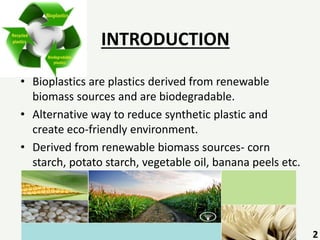
• Bioplastics are plastics derived from renewable
biomass sources and are biodegradable.
• Alternative way to reduce synthetic plastic and
create eco-friendly environment.
• Derived from renewable biomass sources- corn
starch, potato starch, vegetable oil, banana peels etc.
2
PRODUCTION
3
Continue…
4
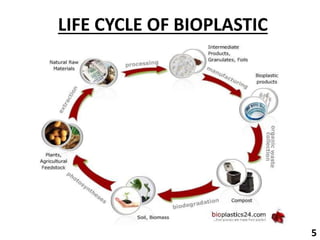
LIFE CYCLE OF BIOPLASTIC
5
BIOPLASTIC vs. CONVENTIONAL
PLASTIC
Conventional plastic
• Unsustainable
• Eco-toxic
• More energy usage during
production (about 65%)
• Increases global warming
• Leads to abiotic depletion
• Reduces soil fertility
Bioplastic
• More sustainable
• Non-toxic
• Less usage of energy
• Eco friendly
• No harm to abiotic factors
• Increases soil fertility
6
BIOPLASTIC AROUND
7
Bioplastic products:
1. Automobile interiors (Toyota Motor Corporation)
2. Electronics- flame retardant PLA in projectors
3. Packaging- shopping bags, soft drink bottles
4. Gardening- mulch foils, flower pots
5. Sanitary products- disposable gloves, diaper foils
6. Laboratory- pipette tips, centrifuge tips
ADVANTAGES
• Renewable.
• Degrade faster.
• Reduce carbon footprint.
• Lower fossil fuel consumption.
• Lower energy cost in manufacture.
• Do not contain additives harmful to health, such as
phthalates or bisphenol A.
• No greenhouse gas emission.
8
DISADVANTAGES
• Designed to be composted, not recycled.
• Improper disposal leads to-
 toxicity,
 already increasing landfill waste,
 non biodegradable plastic contamination.
• Plants (generally genetically modified) grown for
bioplastics have negative impacts of their own, e.g.
PLA (Poly Lactic Acid) from GM corn.
• Fewer proper composting availability.
• Land that could be used to grow food is being used
to “grow plastic” instead.
9
BIOPLASTICS- GLOBALLY
10
BIOPLASTICS- THREE CIRCLES OF
SUSTAINABILITY
• Bottle you can use and throw away without any
guilt.
• You leave a cleaner earth to your siblings.
• Products get the bioplastic aesthetic, thereby
more sales.
• Less expensive, absence of oil usage.
• Less waste produced at the production.
• Eco friendly. 11
Thank you

Bioplastic

  • 1.
    BIOPLASTICS Presented by, Shweta Chand B.ScMicrobiology 5th sem Noida International University
  • 2.
    INTRODUCTION • Bioplastics areplastics derived from renewable biomass sources and are biodegradable. • Alternative way to reduce synthetic plastic and create eco-friendly environment. • Derived from renewable biomass sources- corn starch, potato starch, vegetable oil, banana peels etc. 2
  • 3.
  • 4.
  • 5.
    LIFE CYCLE OFBIOPLASTIC 5
  • 6.
    BIOPLASTIC vs. CONVENTIONAL PLASTIC Conventionalplastic • Unsustainable • Eco-toxic • More energy usage during production (about 65%) • Increases global warming • Leads to abiotic depletion • Reduces soil fertility Bioplastic • More sustainable • Non-toxic • Less usage of energy • Eco friendly • No harm to abiotic factors • Increases soil fertility 6
  • 7.
    BIOPLASTIC AROUND 7 Bioplastic products: 1.Automobile interiors (Toyota Motor Corporation) 2. Electronics- flame retardant PLA in projectors 3. Packaging- shopping bags, soft drink bottles 4. Gardening- mulch foils, flower pots 5. Sanitary products- disposable gloves, diaper foils 6. Laboratory- pipette tips, centrifuge tips
  • 8.
    ADVANTAGES • Renewable. • Degradefaster. • Reduce carbon footprint. • Lower fossil fuel consumption. • Lower energy cost in manufacture. • Do not contain additives harmful to health, such as phthalates or bisphenol A. • No greenhouse gas emission. 8
  • 9.
    DISADVANTAGES • Designed tobe composted, not recycled. • Improper disposal leads to-  toxicity,  already increasing landfill waste,  non biodegradable plastic contamination. • Plants (generally genetically modified) grown for bioplastics have negative impacts of their own, e.g. PLA (Poly Lactic Acid) from GM corn. • Fewer proper composting availability. • Land that could be used to grow food is being used to “grow plastic” instead. 9
  • 10.
  • 11.
    BIOPLASTICS- THREE CIRCLESOF SUSTAINABILITY • Bottle you can use and throw away without any guilt. • You leave a cleaner earth to your siblings. • Products get the bioplastic aesthetic, thereby more sales. • Less expensive, absence of oil usage. • Less waste produced at the production. • Eco friendly. 11
  • 12.