Guided By Prepared By
Ms. Neha Raut Ms. Puja Basule
M-pharm 2nd Sem (2019-2020)
Pharmaceutical Chemistry Department
SKB College of Pharmacy, Kamptee.
1
INDEX
 Introduction
 Bioreactor/ Fermenters
 Types of Fermentation
1) Batch Fermentation
2) Continuous Fermentation
 Classification of Fermentation processes
 Aerobic & Anaerobic fermentation
 Production of
• Antibiotic: Penicillin & Streptomycin
• Vitamins: B2 & B12
• Statins: Lovastatin , Simvastatin
2
The word fermentation originates from a latin verb fervere
which literally means to boil.
During the production of alcohol (the frist truely industrialised
process), the gas bubbles (of CO2) appear at the surface of the
boiling liquid.
Fermentation in a strict sense is a biological process that
occurs in the absence of oxygen (anaerobic).
Definition:
“Any process mediated by or involving microorganism in which
a product of economic value is obtained” is called fermentation
.
INTRODUCTION
3
4
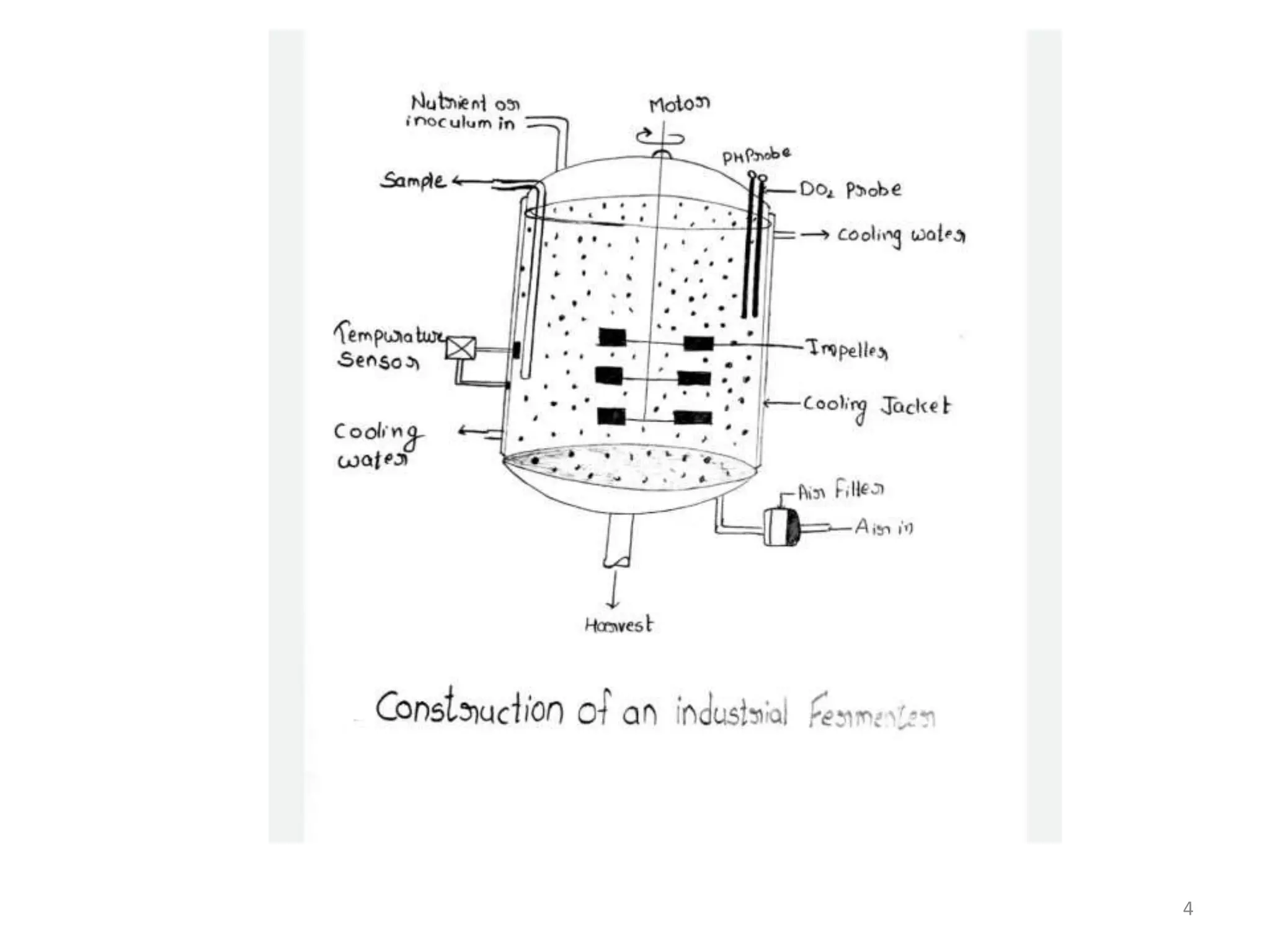
BIOREACTORS/ FERMENTERS
A bioreactor is basically a device in which the organisms
(cells) are cultivated and motivated to form the desired
product(s).
A fermenter usually refers to the containment system for the
cultivation of prokaryotic cells (bacteria, fungi), while a
bioreactor grows the eukaryotic cells (mammalian, insect).
5
Types of Fermenter
 Batch fermentation
 Continuous Fermentation
6
BATCH FERMENTATION
A batch fermentation is regarded as a closed system. The sterile
nutrient culture medium in the bioreactor is inoculated with
microorganisms.
The incubation carried out under optimal physiological conditions
(pH, Temperature, O2 supply, agitation etc.)
7
The following six typical phases of growth are observed in batch
fermentation
• Lag phase
• Acceleration phase
• Logarithmic (log) phase (exponential phase)
• Deceleration phase
• Stationary phase
• Death phase.
Lag Phase: The initial brief period of culturing after inoculation
is referred to as lag phase.
Acceleration Phase: This is a brief transient period during which
cells start growing slowly.
8
Log Phase: The most active growth of microorganism and
multiplication occur during log phase.
The number of cells or biomass is plotted against time on a
semilogarithmic graph, a straight line is obtained.
The specific growth rate of microorganism for simpler substrates
is greater than for long chain molecules.
Two log phases are observed when a complex nutrient medium
with to substrates is used in fermentation and this phenomenon is
referred to as diauxy.
9
Deceleration phase: As the growth rate of microorganism
during log phase decreases, they enter the deceleration phase.
This phase is usually very short-lived and may not be
observable.
Stationary phase: The substance in the growth medium get
depleted, & the metabolic end products that are formed inhibit
the growth, the cells enter the stationary phase. The microbial
growth may either slow down or completely stop.
The biomass may remain almost constant during stationary
phase. This phase frequently associated with dramatic changes in
the metabolism of the cells which may produce compounds
(secondary metabolites) of biotechnological importance e.g.
Production of antibiotics.
10
Death phase: This phase is associated with ceasation of
metabolic activity and depletion of energy reserves. The cells die
at an exponential rate.
In the commercial and industrial fermentations, the growth of
microorganisms is halted at the end of the log phase or just before
the death phase begins, and the cell are harvested.
11
Continuous Fermentation
Continuous fermentation is an open system. It involves
the removal of culture medium continuously and
replacement of this with a fresh sterile medium in a
bioreactor.
Both addition and removal are done at the same rate so
that the working volume remains constant.
To maintain a steady state condition in continuous
process, it is advisable that the cell loss as a result of
outflow is balanced by growth of the organisms.
12
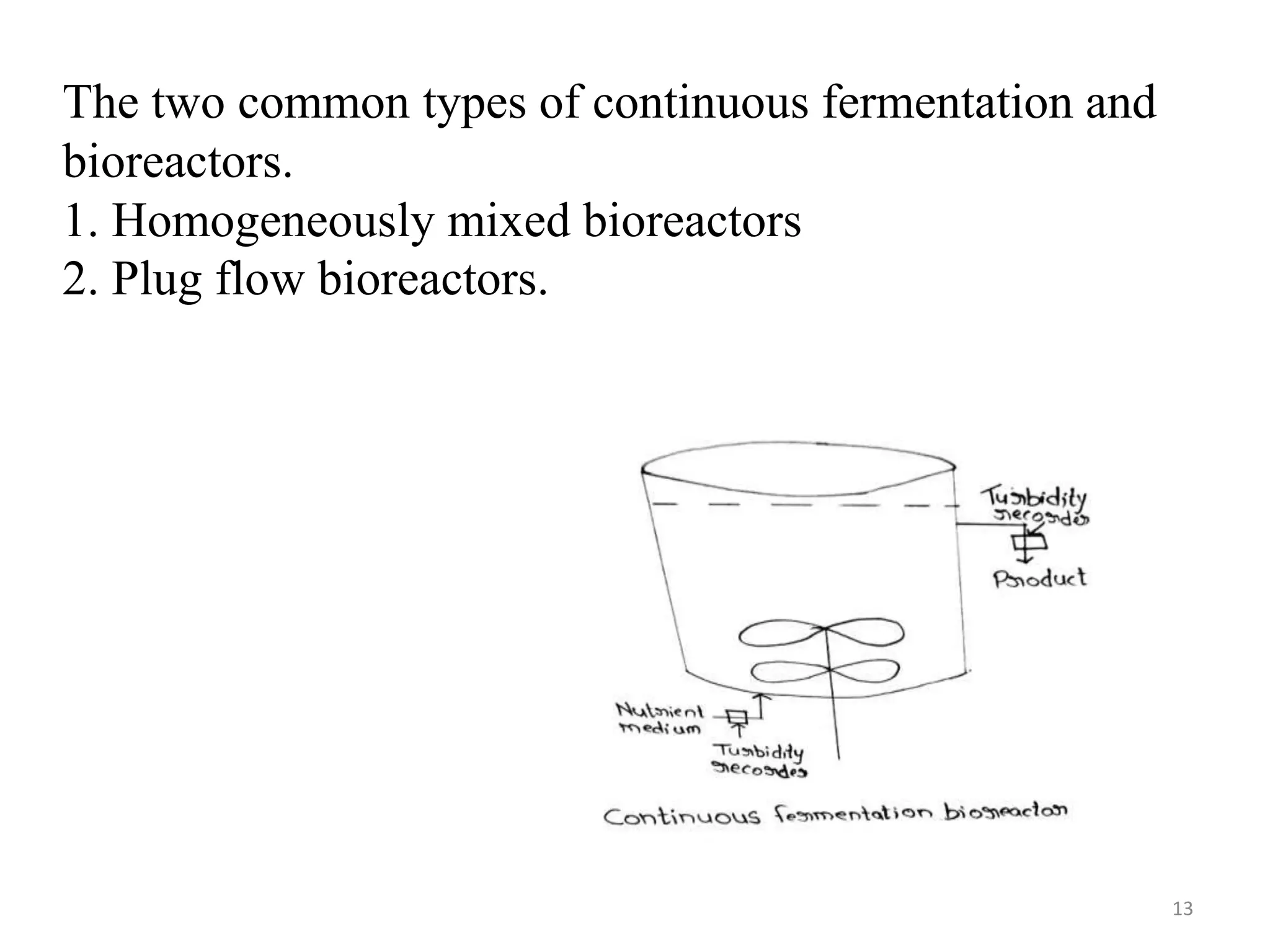
The two common types of continuous fermentation and
bioreactors.
1. Homogeneously mixed bioreactors
2. Plug flow bioreactors.
13
Homogeneously mixed bioreactor: In this type, the culture
solution is homogeneously mixed, and the bioreactor are two
type
Chemostat bioreactor: The concentration of any one of the
substrates (carbohydrate, nitrogen source, salts, O2 ) is adjust to
control the cell growth and maintain a steady state.
Turbidostat bioreactor: Turbidity measurement is used to
monitor the biomass concentration. The rate of addition of
nutrient solution can be appropriately adjusted to maintain a
constant cell growth.
14
Plug flow bioreactor: The culture solution flows through a
tubular reaction vessel without back mixing. The composition
of the medium, the quantity of cells, O2 supply and product
formation vary at different locations in the bioreactor.
Microorganisms along with nutrient medium are continuously
added at the entrance of the bioreactor.
Diagram
15
Classification of fermentation processes
There are different ways of classifying the fermentation processes.
Type I Fermentation :-
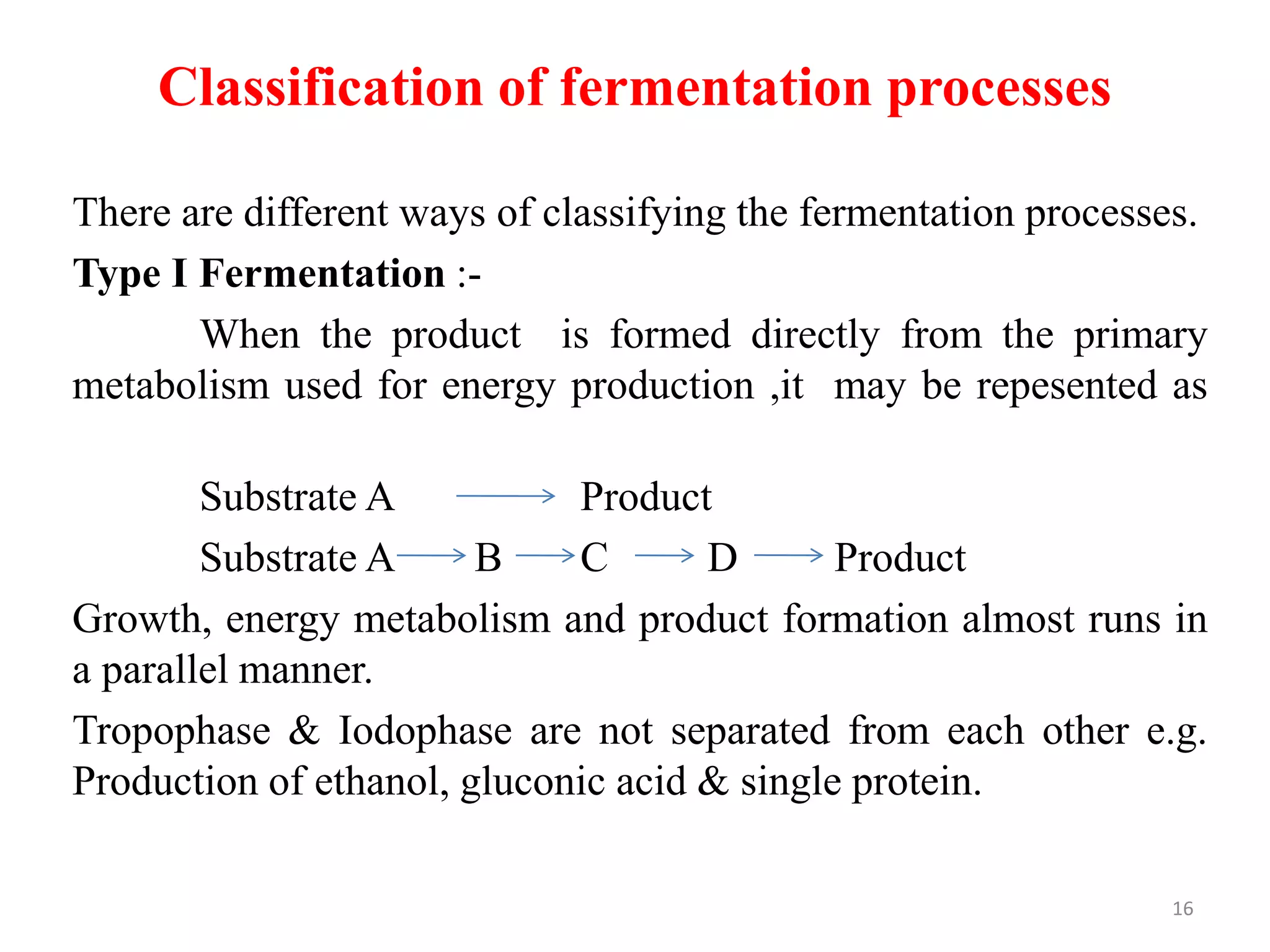
When the product is formed directly from the primary
metabolism used for energy production ,it may be repesented as
Substrate A Product
Substrate A B C D Product
Growth, energy metabolism and product formation almost runs in
a parallel manner.
Tropophase & Iodophase are not separated from each other e.g.
Production of ethanol, gluconic acid & single protein.
16
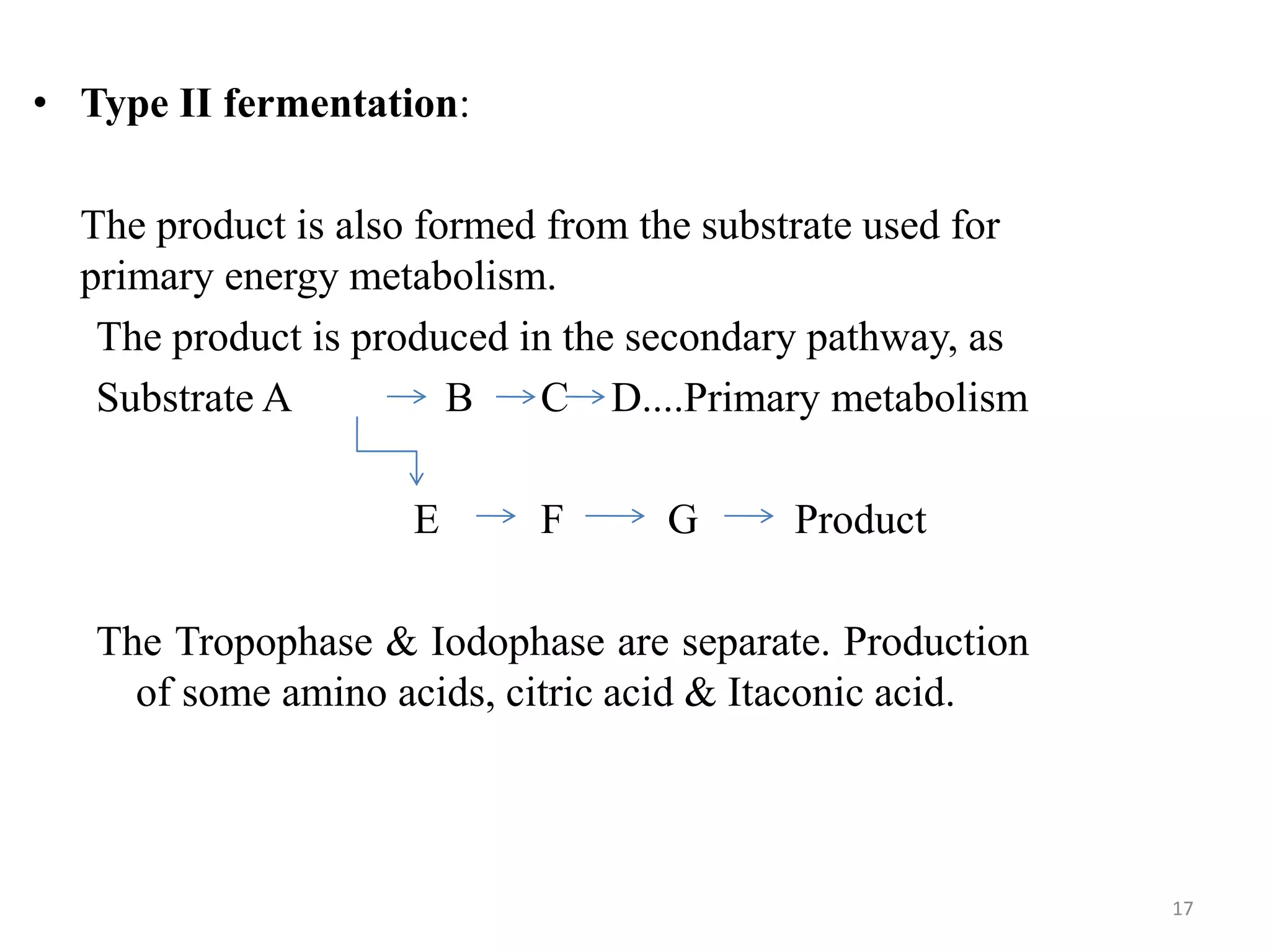
• Type II fermentation:
The product is also formed from the substrate used for
primary energy metabolism.
The product is produced in the secondary pathway, as
Substrate A B C D....Primary metabolism
E F G Product
The Tropophase & Iodophase are separate. Production
of some amino acids, citric acid & Itaconic acid.
17
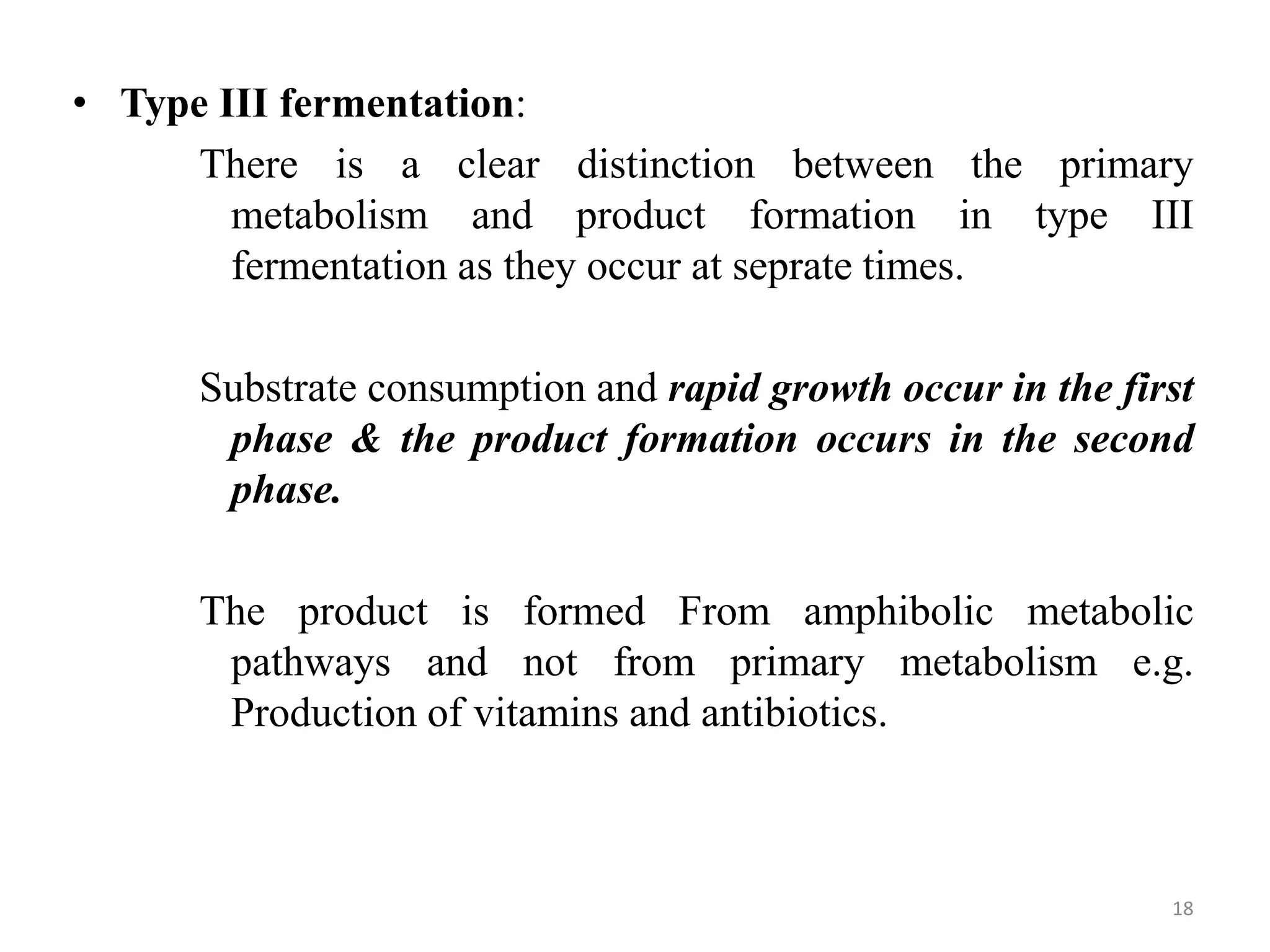
• Type III fermentation:
There is a clear distinction between the primary
metabolism and product formation in type III
fermentation as they occur at seprate times.
Substrate consumption and rapid growth occur in the first
phase & the product formation occurs in the second
phase.
The product is formed From amphibolic metabolic
pathways and not from primary metabolism e.g.
Production of vitamins and antibiotics.
18
19
Aerobic Fermentation
•“Aerobic” means ‘in the presence of oxygen”
•Aerobic fermentation is actually wrong term
•Organism use oxygen for the conversion of the complex
organic compounds, but process is known as aerobic
respiration
•Some types of fermentation processes require oxygen
•Oxygen is required for the production & growth of
microorganisms (yeast/ Bacteria etc)
•Yeast requires oxygen for a number of processes essential for
reproduction
• Most fermentation involves the initial introduction of oxygen
to ensure a strong yeast colony is established & yeast will
ferment without using oxygen even if oxygen is available.
20
• T
Aerobic Fermentation Anaerobic Fermentation
Set of chemical reaction involve
in the production of energy by
completely oxidizing food
Chemical breakdown of organic
substrates into ethanol or lactic
acid by microorganism in the
presence of oxygen
Occurs in both cytoplasm and
mitochondria
Occurs in the cytoplasm
Occurs in higher animals and
plants
Occurs in yeast, parasites and
bacteria
Uses molecular oxygen as the
final electron accepter in the
electron transport chain
Does not used oxygen
36 ATP is produced Only 2 ATP is produced
22
Produces 6 water molecules
per glucose molecule
Does not produces water
Glucose is completely broken
down into carbon dioxide and
oxygen
Glucose is incompletely
oxidized either into ethanol
and lactic acid
NAD +regeneration occur in
the electron transport chain
NAD+ regeneration occur
during the partial oxidation of
pyruvate
ATP is produces during the
NAD + regeneration
ATP is not produces during the
NAD + regeneration
Production of Antibiotics
• The commercial production of antibiotic is a highly profitable
industry world over. Annual sales of antibiotics will run into
several billion of dollars with an annual growth potential of
about 10%.
• Antibiotic may be produced by microbial fermentation, or
chemical synthesis, or a combination of both. For certain
antibiotic, the basic molecule is produced by fermentation and
its therapeutic value can be increased by chemical
modifications.
23
Penicillins
Penicillin's are a group of beta-lactam containing bactericidal
antibiotic. The structure of all the penicillin's consist of a lactum
ring & thizolidine ring fused together to form 6-
aminopenicillanic acid.
Action of antibiotic: Natural penicillin (penicillins V and G)
are effective against several Gram-positive bacteria. They
inhibit the bacterial cell wall (i.e. Peptoglycan) synthesis and
cause cell death. Some persons (approximately 0.5-2% of
population) are allergic to penicillin.
Natural penicillin are ineffective against microorganism that
produce beta-lactumase e.g. Staphylococcus aureus.
24
Production process of penicillin
An outline of flow chart for industrial production of penicillin is
depicted in chart
25
• The lyophophilized culture of spores is cultivated for inaculum
development which is transferred to preferment and then to
fermanter
• Penicillin production is an aerobic process & continuous
supply of O2 to the growing culture is very essential.
• The required aeration rate is 0.5 – 1.0 vvm.
• The pH is maintained around 6.5, & the optimal temperature
is in the range of 25 – 27 0C.
• Penicillin production is usually carried out by submerged
processes.
26
• The medium use for fermentation consist of corn steep liquor
(4-5% dry weight) and carbon source (usually lactose).
• An addition of yeast extract, soy meal or whey is done for a
good supply of nitrogen. Sometime ammonium sulphate is
added for the supply of nitrogen.
• Phenylacetic acid (or phenoxyacetic acid) which serves as a
precursor for penicillin biosynthesis is continuously fed.
• Continuous feeding of sugar is advantageous for a good yield
of penicillin. The penicillin production profiles are depicted.
27
28
• It is estimated that approximately 10% of the metabolised
carbon contributes to penicillin production, while 65% is
utilised toward energy supply & 25% for growth of organisms.
• The efficiency of penicillin production can be optimized by
adequate supply of carbon source. Thus, by adding glucose &
acetic acid, the yield can be increased by about 25%.
• The growth of the organism from spores must be in a loose
from & not as pellets. The growth phase is around 40hrs with a
doubling time of 6 – 8 hrs.
• After the growth phase is stabilized, the penicillin production
exponentially increases with appropriate culture condition. The
penicillin production phase can be extended to 150-180hrs.
29
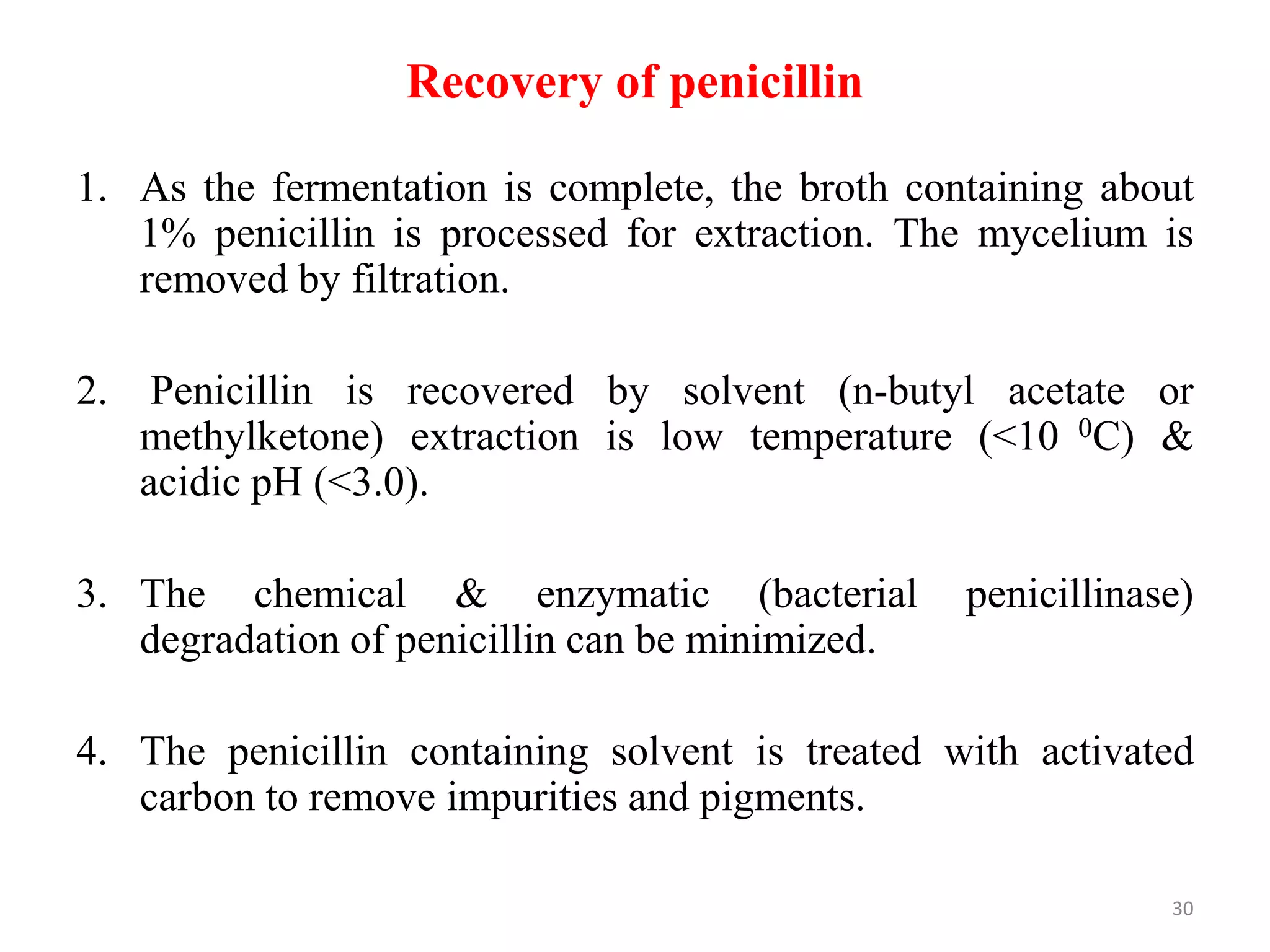
Recovery of penicillin
1. As the fermentation is complete, the broth containing about
1% penicillin is processed for extraction. The mycelium is
removed by filtration.
2. Penicillin is recovered by solvent (n-butyl acetate or
methylketone) extraction is low temperature (<10 0C) &
acidic pH (<3.0).
3. The chemical & enzymatic (bacterial penicillinase)
degradation of penicillin can be minimized.
4. The penicillin containing solvent is treated with activated
carbon to remove impurities and pigments.
30
• Penicillin can be recovered by adding potassium or sodium
acetate. The potassium or sodium salts of penicillin can be
further processed (in dry solvent such as n-butanol or
isopropannol) to remove impurities. The yield of penicillin
around 90%.
• As the water is totally removed, penicillin salt can be
crystallized and dried under required pressure. This can be
processed to finally produce the pharmaceutical dosage forms.
• Penicillin G and H are the fermented products obtained from
the fungus penicillium chrysogenum.
31
Streptomycin
• Broad spectrum antibiotic. Oligosaccharide antibiotic/
aminoglycoside family
• Discovered by Schatz, Bugie & Waksman in 1994 from
Streptomyces griseus isolated from soil
• First effective treatment against Mycobacterium tuberculosis.
• Also effective against some Gram positive bacteria primarily
staphylococcus
• Active against pasteurella pesties, Brucella abortus,
Francicella tularieusis
32
• Streptomycin has three constituent namely; N-methyl L-
glucosamine, streptose and streptidine
• Present day streptomycin producers are mutants of
Streptomyces derived from higher yield with yield as high as
25,000 unit per ml. Industrial production of streptomycin is
carried out using submerged fermentation processes
• Fermentation media consist of glucose, starch, dextrin, soy
meal, corn steep liquor, sodium sulphate. The streptomycin
fermentation requires high aeration and agitation.
• Fermentation is carried out at 28-30 0C with pH maintained at
7.6-8 for good productivity. The fermentation lasts for 5-7
days with of yield of 1-3 g/L of the fermentation broth.
33
Production Process of Streptomycin
• The medium used for streptomycin usually consist of soy meal
or soy flour or corn syrup that can supply glucose at a slow rate
(amylase activity is poor in streptomyces sp).
• The initial supply of nitrogen (NH3) and phosphate is also
obtained from soy meal. This is required since glucose,
ammonia & phosphate in high quantities inhibit streptomycin
synthesis.
• The fermentation conditions for optimal production of
streptomycin are temperature 27-30 0C, pH 6.5-7.5, aeration rate
0.5-1.0 vvm. The duration of fermentation process depends on
the strain used, and is between 6 to 8 days.
34
35
The process of fermentation is highly aerobic and lasts
approximately for 5 to 7 days and passes through 3 phases:
1. The first phase: It take about 24 hours to 48 hours. Rapid
growth and formation of abundant mycelium occur during
this phase.
The pH rises to 8.0 due to release of ammonia into medium,
due to proteolytic activity of S.griseus.
Glucose is utilized slowly and little production of
streptomycin is withnessed.
36
2. The second phase: It lasts for 2days. Streptomycin
production takes place at a rapid rate without increase in the
mycelial growth.
The ammonia released in the first phase is utilized, which
results in the decrease of pH to 7.6-8.0. glucose and oxygen
are required in large quantity during this phase.
3. Third phase: Cells undergo lysis, releasing ammonia &
increase in the pH, which falls again after a period of
continuous streptomycin production.
Requirement of oxygen decreases & the contents of the
medium including sugar get exhausted. The yield of 1200
microorganism per millititer of streptomycin is obtained.
37
Recovery of Streptomycin
• Streptomycin or other amino glycoside are basic in nature.
• They can be recovered by weak cationic exchange resins in an
ion exchange column.
• Treatment with activated carbon is often necessary to remove
impurities.
• Streptomycin can be precipitated in the form of sulfate salt.
38
Production of Vitamin B2
• Riboflavin (Vitamin B2 ) is water soluble vitamin, essential for
growth & reproduction in man & animal. Deficiency of
riboflavin in rats causes growth retardation, dermatitis & eye
lesions.
• In human, Vitamin B2 deficiency result in cheilosis (fissures at
the corner of mouth), glossitis (purplish tounge) and
dermatitis.
• Riboflavin exerts its biochemical functions through the
coenzymes namely flavin adenine dinucleotide (FAD) &
flavin mononucleotide (FMN).
39
Commercial Production of Riboflavin
• There are three processes employed for the large scale
production of riboflavin. The worldwide requirement of
riboflavin is estimated to be around 2500 tone per year.
1. Biotransformation: About 50% of the day world’s
requirement of riboflavin is produced by biotransformation,
followed by chemical synthesis. Glucose is first converted to
D-ribose by mutant strains of Bacillus pumilus. The D-ribose
so produced is converted to riboflavin by chemical reaction.
2. Chemical synthesis: Approximately 20% of the world’s
riboflavin is produced by direct chemical synthesis.
40
3. Fermentation: At least one third of world’s riboflavin
requirements are met by direct fermentation processes.
Production Process of Riboflavin
Industrial production of riboflavin is mostly carried out with
the organism, Ashbya gossypii by using simple sugar such as
glucose & corn steep liquor.
Glucose can be replaced by sucrose or maltose for the supply
of carbon source. In recent year, lipids such as corn oil, when
added to the medium for energy purpose, have a profound
influence on riboflavin production.
41
• Further, supplementation of the medium with yeast extract,
peptones, glycine, inositol, purines (not pyrimidines) also
increase the yield of riboflavin.
• The initial pH of the culture medium is adjusted to around 6-
7.5.
• The fermentation is conducted at temperature 26-28 0C with an
aeration rate 0.3 vvm.
• The process is carried out for about 5-7 days by submerged
aerated fermentation.
• Riboflavin fermentation by Eremothecium ashbyii is
comparable to that described above for Ashbya gossypii.
42
• Candida sp can also produce riboflavin, but this fermentation
process is extremely sensitive to the presence of iron.
• Consequently, iron or steel equipment cannot be used. Such
equipment have to be lined with plastic material.
Microorganism with corresponding yields of riboflavin
43
Microorganism Yield (mg/l)
Mycocandida riboflavina 0.200
Candida flareri 0.575
Eremothecium ashbyii 2.500
Ashbya gossypii 7.500
Vitamin B12
• This disease, pernicious anaemia, characterized by low levels
of haemoglobin, decreased number of erythrocytes and
neurological manifestation, has been known for several
decades
• The active principle was later identified as vitamin B12 a water
soluble B-complex vitamin
• Vitamin B12 is present in animal tissue at a very low
concentration (e.g. 1 ppm in the liver). It occur mostly
coenzyme forms methylcobalamib &
deoxyadenosylcobalamin. Isolation of vitamin B12 from
animal tissues is very expensive tedious.
44
Production of Vitamin B12
• Vitamin B12 is commercially produced by fermentation. It was
first obtained as a by-product of streptomyces fermentation in
the production of certain antibiotic (streptomycin,
chloramphenicol, or neomycin ) but the yield was very low.
• Vitamin B12 is entirely produced by fermentation. It is
estimated that the world’s annual production of vitamin B12 is
around 15,000 kg.
• High concentration of vitamin B12 are detected in sewage-
sludge solids. This is produced by microorganism.
• Recovery of vitamin B12 from sewage-sludge was carried out
in some part of united state.
45
• Unlike most other vitamin, the chemical synthesis of vitamin
B12 is not a practicable.
• About 20 complicated reaction step need to be carried out.
Microorganism with corresponding yields of vitamin B12
46
Microorganism Yield (mg/l)
Pseudomonas denitrificans 60.0
Propionibacterium shermanii 35.0
Micromonospora sp 11.5
Rhodopseudomonas protamicus 135.0
Production of Vitamin B12 Using Propionibacterium sp
• Propionibacterium freudenreichii & P.shermanii & their
mutant strains are commonly used for vitamin B12 production.
The process is carried out by adding cobalt in two phases.
• Anaerobic phase: This is a preliminary phase that may take 2-4
days. In the anaerobic phase 5’-deoxyadenosylcobinamide is
predominantly produced.
• Aerobic phase: In this phase, 5, 6-dimethylbenzimidazole is
produced from riboflavin which get incorporated to finally
from coenzyme of vitamin B12 namely 5’-
deoxyadenosylcobalamin.
47
• Some fermentation technologists have successfully clubbed
both an anaerobic and aerobic phases to carry out the operation
continuously in two reaction tanks.
• The bulk production of vitamin B12 is mostly done by
submerged bacterial fermentation with beet molasses
medium supplemented with cobalt chloride.
• Recovery of vitamin B12 : The cobalamins produced by
fermentation are mostly bound to the cells.
• They can be solubilized by heat treatment at 80 – 120 0C for
about 30 minutes at pH 6.5 - 8.5 .
48
• The solids and mycelium are filtered or centrifiged and the
fermentation broth collected. The cobalamins can be converted
to more stable cyanocobalamins.
• This vitamin B12 is around 80% purity and can be directly used
as feed additive.
Production of Vitamin B12 Using Pseudomonas sp
Pseudomonas denitrificans is also used for large scale production
of vitamin B12 in a cost-effective manner. Starting with a low
yield (0.6 mg/l) two decades ago, several improvement have
been made in the strains of P.denitrificants for a tremendous
improvement in the yield (60 mg/l).
49
• Addition of cobalt and 5, 6-dimethylbenzimidazole to the
medium is essential.
• The yield of vitamin B12 increases when the medium is
supplemented with betaine ( usual sources being sugar beet
molasses).
50
References
1. The text book of “Biotechnology” by ‘U. Satyanarayana’
Published by Book & Allied (p) LTD. Page no. 261, 331, 335
2. www.biotechnologynotes.com/antibiotics/streptomycin/strept
omycin-structure,biosynthesis,process-and-uses-of-
streptomycin-biotechnology/13848
51
52

Biopharmaceutics or Process Chemistry Fermentation

  • 1.
    Guided By PreparedBy Ms. Neha Raut Ms. Puja Basule M-pharm 2nd Sem (2019-2020) Pharmaceutical Chemistry Department SKB College of Pharmacy, Kamptee. 1
  • 2.
    INDEX  Introduction  Bioreactor/Fermenters  Types of Fermentation 1) Batch Fermentation 2) Continuous Fermentation  Classification of Fermentation processes  Aerobic & Anaerobic fermentation  Production of • Antibiotic: Penicillin & Streptomycin • Vitamins: B2 & B12 • Statins: Lovastatin , Simvastatin 2
  • 3.
    The word fermentationoriginates from a latin verb fervere which literally means to boil. During the production of alcohol (the frist truely industrialised process), the gas bubbles (of CO2) appear at the surface of the boiling liquid. Fermentation in a strict sense is a biological process that occurs in the absence of oxygen (anaerobic). Definition: “Any process mediated by or involving microorganism in which a product of economic value is obtained” is called fermentation . INTRODUCTION 3
  • 4.
  • 5.
    BIOREACTORS/ FERMENTERS A bioreactoris basically a device in which the organisms (cells) are cultivated and motivated to form the desired product(s). A fermenter usually refers to the containment system for the cultivation of prokaryotic cells (bacteria, fungi), while a bioreactor grows the eukaryotic cells (mammalian, insect). 5
  • 6.
    Types of Fermenter Batch fermentation  Continuous Fermentation 6
  • 7.
    BATCH FERMENTATION A batchfermentation is regarded as a closed system. The sterile nutrient culture medium in the bioreactor is inoculated with microorganisms. The incubation carried out under optimal physiological conditions (pH, Temperature, O2 supply, agitation etc.) 7
  • 8.
    The following sixtypical phases of growth are observed in batch fermentation • Lag phase • Acceleration phase • Logarithmic (log) phase (exponential phase) • Deceleration phase • Stationary phase • Death phase. Lag Phase: The initial brief period of culturing after inoculation is referred to as lag phase. Acceleration Phase: This is a brief transient period during which cells start growing slowly. 8
  • 9.
    Log Phase: Themost active growth of microorganism and multiplication occur during log phase. The number of cells or biomass is plotted against time on a semilogarithmic graph, a straight line is obtained. The specific growth rate of microorganism for simpler substrates is greater than for long chain molecules. Two log phases are observed when a complex nutrient medium with to substrates is used in fermentation and this phenomenon is referred to as diauxy. 9
  • 10.
    Deceleration phase: Asthe growth rate of microorganism during log phase decreases, they enter the deceleration phase. This phase is usually very short-lived and may not be observable. Stationary phase: The substance in the growth medium get depleted, & the metabolic end products that are formed inhibit the growth, the cells enter the stationary phase. The microbial growth may either slow down or completely stop. The biomass may remain almost constant during stationary phase. This phase frequently associated with dramatic changes in the metabolism of the cells which may produce compounds (secondary metabolites) of biotechnological importance e.g. Production of antibiotics. 10
  • 11.
    Death phase: Thisphase is associated with ceasation of metabolic activity and depletion of energy reserves. The cells die at an exponential rate. In the commercial and industrial fermentations, the growth of microorganisms is halted at the end of the log phase or just before the death phase begins, and the cell are harvested. 11
  • 12.
    Continuous Fermentation Continuous fermentationis an open system. It involves the removal of culture medium continuously and replacement of this with a fresh sterile medium in a bioreactor. Both addition and removal are done at the same rate so that the working volume remains constant. To maintain a steady state condition in continuous process, it is advisable that the cell loss as a result of outflow is balanced by growth of the organisms. 12
  • 13.
    The two commontypes of continuous fermentation and bioreactors. 1. Homogeneously mixed bioreactors 2. Plug flow bioreactors. 13
  • 14.
    Homogeneously mixed bioreactor:In this type, the culture solution is homogeneously mixed, and the bioreactor are two type Chemostat bioreactor: The concentration of any one of the substrates (carbohydrate, nitrogen source, salts, O2 ) is adjust to control the cell growth and maintain a steady state. Turbidostat bioreactor: Turbidity measurement is used to monitor the biomass concentration. The rate of addition of nutrient solution can be appropriately adjusted to maintain a constant cell growth. 14
  • 15.
    Plug flow bioreactor:The culture solution flows through a tubular reaction vessel without back mixing. The composition of the medium, the quantity of cells, O2 supply and product formation vary at different locations in the bioreactor. Microorganisms along with nutrient medium are continuously added at the entrance of the bioreactor. Diagram 15
  • 16.
    Classification of fermentationprocesses There are different ways of classifying the fermentation processes. Type I Fermentation :- When the product is formed directly from the primary metabolism used for energy production ,it may be repesented as Substrate A Product Substrate A B C D Product Growth, energy metabolism and product formation almost runs in a parallel manner. Tropophase & Iodophase are not separated from each other e.g. Production of ethanol, gluconic acid & single protein. 16
  • 17.
    • Type IIfermentation: The product is also formed from the substrate used for primary energy metabolism. The product is produced in the secondary pathway, as Substrate A B C D....Primary metabolism E F G Product The Tropophase & Iodophase are separate. Production of some amino acids, citric acid & Itaconic acid. 17
  • 18.
    • Type IIIfermentation: There is a clear distinction between the primary metabolism and product formation in type III fermentation as they occur at seprate times. Substrate consumption and rapid growth occur in the first phase & the product formation occurs in the second phase. The product is formed From amphibolic metabolic pathways and not from primary metabolism e.g. Production of vitamins and antibiotics. 18
  • 19.
  • 20.
    Aerobic Fermentation •“Aerobic” means‘in the presence of oxygen” •Aerobic fermentation is actually wrong term •Organism use oxygen for the conversion of the complex organic compounds, but process is known as aerobic respiration •Some types of fermentation processes require oxygen •Oxygen is required for the production & growth of microorganisms (yeast/ Bacteria etc) •Yeast requires oxygen for a number of processes essential for reproduction • Most fermentation involves the initial introduction of oxygen to ensure a strong yeast colony is established & yeast will ferment without using oxygen even if oxygen is available. 20
  • 21.
    • T Aerobic FermentationAnaerobic Fermentation Set of chemical reaction involve in the production of energy by completely oxidizing food Chemical breakdown of organic substrates into ethanol or lactic acid by microorganism in the presence of oxygen Occurs in both cytoplasm and mitochondria Occurs in the cytoplasm Occurs in higher animals and plants Occurs in yeast, parasites and bacteria Uses molecular oxygen as the final electron accepter in the electron transport chain Does not used oxygen 36 ATP is produced Only 2 ATP is produced
  • 22.
    22 Produces 6 watermolecules per glucose molecule Does not produces water Glucose is completely broken down into carbon dioxide and oxygen Glucose is incompletely oxidized either into ethanol and lactic acid NAD +regeneration occur in the electron transport chain NAD+ regeneration occur during the partial oxidation of pyruvate ATP is produces during the NAD + regeneration ATP is not produces during the NAD + regeneration
  • 23.
    Production of Antibiotics •The commercial production of antibiotic is a highly profitable industry world over. Annual sales of antibiotics will run into several billion of dollars with an annual growth potential of about 10%. • Antibiotic may be produced by microbial fermentation, or chemical synthesis, or a combination of both. For certain antibiotic, the basic molecule is produced by fermentation and its therapeutic value can be increased by chemical modifications. 23
  • 24.
    Penicillins Penicillin's are agroup of beta-lactam containing bactericidal antibiotic. The structure of all the penicillin's consist of a lactum ring & thizolidine ring fused together to form 6- aminopenicillanic acid. Action of antibiotic: Natural penicillin (penicillins V and G) are effective against several Gram-positive bacteria. They inhibit the bacterial cell wall (i.e. Peptoglycan) synthesis and cause cell death. Some persons (approximately 0.5-2% of population) are allergic to penicillin. Natural penicillin are ineffective against microorganism that produce beta-lactumase e.g. Staphylococcus aureus. 24
  • 25.
    Production process ofpenicillin An outline of flow chart for industrial production of penicillin is depicted in chart 25
  • 26.
    • The lyophophilizedculture of spores is cultivated for inaculum development which is transferred to preferment and then to fermanter • Penicillin production is an aerobic process & continuous supply of O2 to the growing culture is very essential. • The required aeration rate is 0.5 – 1.0 vvm. • The pH is maintained around 6.5, & the optimal temperature is in the range of 25 – 27 0C. • Penicillin production is usually carried out by submerged processes. 26
  • 27.
    • The mediumuse for fermentation consist of corn steep liquor (4-5% dry weight) and carbon source (usually lactose). • An addition of yeast extract, soy meal or whey is done for a good supply of nitrogen. Sometime ammonium sulphate is added for the supply of nitrogen. • Phenylacetic acid (or phenoxyacetic acid) which serves as a precursor for penicillin biosynthesis is continuously fed. • Continuous feeding of sugar is advantageous for a good yield of penicillin. The penicillin production profiles are depicted. 27
  • 28.
  • 29.
    • It isestimated that approximately 10% of the metabolised carbon contributes to penicillin production, while 65% is utilised toward energy supply & 25% for growth of organisms. • The efficiency of penicillin production can be optimized by adequate supply of carbon source. Thus, by adding glucose & acetic acid, the yield can be increased by about 25%. • The growth of the organism from spores must be in a loose from & not as pellets. The growth phase is around 40hrs with a doubling time of 6 – 8 hrs. • After the growth phase is stabilized, the penicillin production exponentially increases with appropriate culture condition. The penicillin production phase can be extended to 150-180hrs. 29
  • 30.
    Recovery of penicillin 1.As the fermentation is complete, the broth containing about 1% penicillin is processed for extraction. The mycelium is removed by filtration. 2. Penicillin is recovered by solvent (n-butyl acetate or methylketone) extraction is low temperature (<10 0C) & acidic pH (<3.0). 3. The chemical & enzymatic (bacterial penicillinase) degradation of penicillin can be minimized. 4. The penicillin containing solvent is treated with activated carbon to remove impurities and pigments. 30
  • 31.
    • Penicillin canbe recovered by adding potassium or sodium acetate. The potassium or sodium salts of penicillin can be further processed (in dry solvent such as n-butanol or isopropannol) to remove impurities. The yield of penicillin around 90%. • As the water is totally removed, penicillin salt can be crystallized and dried under required pressure. This can be processed to finally produce the pharmaceutical dosage forms. • Penicillin G and H are the fermented products obtained from the fungus penicillium chrysogenum. 31
  • 32.
    Streptomycin • Broad spectrumantibiotic. Oligosaccharide antibiotic/ aminoglycoside family • Discovered by Schatz, Bugie & Waksman in 1994 from Streptomyces griseus isolated from soil • First effective treatment against Mycobacterium tuberculosis. • Also effective against some Gram positive bacteria primarily staphylococcus • Active against pasteurella pesties, Brucella abortus, Francicella tularieusis 32
  • 33.
    • Streptomycin hasthree constituent namely; N-methyl L- glucosamine, streptose and streptidine • Present day streptomycin producers are mutants of Streptomyces derived from higher yield with yield as high as 25,000 unit per ml. Industrial production of streptomycin is carried out using submerged fermentation processes • Fermentation media consist of glucose, starch, dextrin, soy meal, corn steep liquor, sodium sulphate. The streptomycin fermentation requires high aeration and agitation. • Fermentation is carried out at 28-30 0C with pH maintained at 7.6-8 for good productivity. The fermentation lasts for 5-7 days with of yield of 1-3 g/L of the fermentation broth. 33
  • 34.
    Production Process ofStreptomycin • The medium used for streptomycin usually consist of soy meal or soy flour or corn syrup that can supply glucose at a slow rate (amylase activity is poor in streptomyces sp). • The initial supply of nitrogen (NH3) and phosphate is also obtained from soy meal. This is required since glucose, ammonia & phosphate in high quantities inhibit streptomycin synthesis. • The fermentation conditions for optimal production of streptomycin are temperature 27-30 0C, pH 6.5-7.5, aeration rate 0.5-1.0 vvm. The duration of fermentation process depends on the strain used, and is between 6 to 8 days. 34
  • 35.
  • 36.
    The process offermentation is highly aerobic and lasts approximately for 5 to 7 days and passes through 3 phases: 1. The first phase: It take about 24 hours to 48 hours. Rapid growth and formation of abundant mycelium occur during this phase. The pH rises to 8.0 due to release of ammonia into medium, due to proteolytic activity of S.griseus. Glucose is utilized slowly and little production of streptomycin is withnessed. 36
  • 37.
    2. The secondphase: It lasts for 2days. Streptomycin production takes place at a rapid rate without increase in the mycelial growth. The ammonia released in the first phase is utilized, which results in the decrease of pH to 7.6-8.0. glucose and oxygen are required in large quantity during this phase. 3. Third phase: Cells undergo lysis, releasing ammonia & increase in the pH, which falls again after a period of continuous streptomycin production. Requirement of oxygen decreases & the contents of the medium including sugar get exhausted. The yield of 1200 microorganism per millititer of streptomycin is obtained. 37
  • 38.
    Recovery of Streptomycin •Streptomycin or other amino glycoside are basic in nature. • They can be recovered by weak cationic exchange resins in an ion exchange column. • Treatment with activated carbon is often necessary to remove impurities. • Streptomycin can be precipitated in the form of sulfate salt. 38
  • 39.
    Production of VitaminB2 • Riboflavin (Vitamin B2 ) is water soluble vitamin, essential for growth & reproduction in man & animal. Deficiency of riboflavin in rats causes growth retardation, dermatitis & eye lesions. • In human, Vitamin B2 deficiency result in cheilosis (fissures at the corner of mouth), glossitis (purplish tounge) and dermatitis. • Riboflavin exerts its biochemical functions through the coenzymes namely flavin adenine dinucleotide (FAD) & flavin mononucleotide (FMN). 39
  • 40.
    Commercial Production ofRiboflavin • There are three processes employed for the large scale production of riboflavin. The worldwide requirement of riboflavin is estimated to be around 2500 tone per year. 1. Biotransformation: About 50% of the day world’s requirement of riboflavin is produced by biotransformation, followed by chemical synthesis. Glucose is first converted to D-ribose by mutant strains of Bacillus pumilus. The D-ribose so produced is converted to riboflavin by chemical reaction. 2. Chemical synthesis: Approximately 20% of the world’s riboflavin is produced by direct chemical synthesis. 40
  • 41.
    3. Fermentation: Atleast one third of world’s riboflavin requirements are met by direct fermentation processes. Production Process of Riboflavin Industrial production of riboflavin is mostly carried out with the organism, Ashbya gossypii by using simple sugar such as glucose & corn steep liquor. Glucose can be replaced by sucrose or maltose for the supply of carbon source. In recent year, lipids such as corn oil, when added to the medium for energy purpose, have a profound influence on riboflavin production. 41
  • 42.
    • Further, supplementationof the medium with yeast extract, peptones, glycine, inositol, purines (not pyrimidines) also increase the yield of riboflavin. • The initial pH of the culture medium is adjusted to around 6- 7.5. • The fermentation is conducted at temperature 26-28 0C with an aeration rate 0.3 vvm. • The process is carried out for about 5-7 days by submerged aerated fermentation. • Riboflavin fermentation by Eremothecium ashbyii is comparable to that described above for Ashbya gossypii. 42
  • 43.
    • Candida spcan also produce riboflavin, but this fermentation process is extremely sensitive to the presence of iron. • Consequently, iron or steel equipment cannot be used. Such equipment have to be lined with plastic material. Microorganism with corresponding yields of riboflavin 43 Microorganism Yield (mg/l) Mycocandida riboflavina 0.200 Candida flareri 0.575 Eremothecium ashbyii 2.500 Ashbya gossypii 7.500
  • 44.
    Vitamin B12 • Thisdisease, pernicious anaemia, characterized by low levels of haemoglobin, decreased number of erythrocytes and neurological manifestation, has been known for several decades • The active principle was later identified as vitamin B12 a water soluble B-complex vitamin • Vitamin B12 is present in animal tissue at a very low concentration (e.g. 1 ppm in the liver). It occur mostly coenzyme forms methylcobalamib & deoxyadenosylcobalamin. Isolation of vitamin B12 from animal tissues is very expensive tedious. 44
  • 45.
    Production of VitaminB12 • Vitamin B12 is commercially produced by fermentation. It was first obtained as a by-product of streptomyces fermentation in the production of certain antibiotic (streptomycin, chloramphenicol, or neomycin ) but the yield was very low. • Vitamin B12 is entirely produced by fermentation. It is estimated that the world’s annual production of vitamin B12 is around 15,000 kg. • High concentration of vitamin B12 are detected in sewage- sludge solids. This is produced by microorganism. • Recovery of vitamin B12 from sewage-sludge was carried out in some part of united state. 45
  • 46.
    • Unlike mostother vitamin, the chemical synthesis of vitamin B12 is not a practicable. • About 20 complicated reaction step need to be carried out. Microorganism with corresponding yields of vitamin B12 46 Microorganism Yield (mg/l) Pseudomonas denitrificans 60.0 Propionibacterium shermanii 35.0 Micromonospora sp 11.5 Rhodopseudomonas protamicus 135.0
  • 47.
    Production of VitaminB12 Using Propionibacterium sp • Propionibacterium freudenreichii & P.shermanii & their mutant strains are commonly used for vitamin B12 production. The process is carried out by adding cobalt in two phases. • Anaerobic phase: This is a preliminary phase that may take 2-4 days. In the anaerobic phase 5’-deoxyadenosylcobinamide is predominantly produced. • Aerobic phase: In this phase, 5, 6-dimethylbenzimidazole is produced from riboflavin which get incorporated to finally from coenzyme of vitamin B12 namely 5’- deoxyadenosylcobalamin. 47
  • 48.
    • Some fermentationtechnologists have successfully clubbed both an anaerobic and aerobic phases to carry out the operation continuously in two reaction tanks. • The bulk production of vitamin B12 is mostly done by submerged bacterial fermentation with beet molasses medium supplemented with cobalt chloride. • Recovery of vitamin B12 : The cobalamins produced by fermentation are mostly bound to the cells. • They can be solubilized by heat treatment at 80 – 120 0C for about 30 minutes at pH 6.5 - 8.5 . 48
  • 49.
    • The solidsand mycelium are filtered or centrifiged and the fermentation broth collected. The cobalamins can be converted to more stable cyanocobalamins. • This vitamin B12 is around 80% purity and can be directly used as feed additive. Production of Vitamin B12 Using Pseudomonas sp Pseudomonas denitrificans is also used for large scale production of vitamin B12 in a cost-effective manner. Starting with a low yield (0.6 mg/l) two decades ago, several improvement have been made in the strains of P.denitrificants for a tremendous improvement in the yield (60 mg/l). 49
  • 50.
    • Addition ofcobalt and 5, 6-dimethylbenzimidazole to the medium is essential. • The yield of vitamin B12 increases when the medium is supplemented with betaine ( usual sources being sugar beet molasses). 50
  • 51.
    References 1. The textbook of “Biotechnology” by ‘U. Satyanarayana’ Published by Book & Allied (p) LTD. Page no. 261, 331, 335 2. www.biotechnologynotes.com/antibiotics/streptomycin/strept omycin-structure,biosynthesis,process-and-uses-of- streptomycin-biotechnology/13848 51
  • 52.