BIOPHARMACEUTICALS
An overview
Dr. Nitin C. Salvi,
Haffkine Bio-Pharmaceutical Corporation Limited,
Pimpri, Pune- 411 018.
9552274460 / nitinvibha@yahoo.com
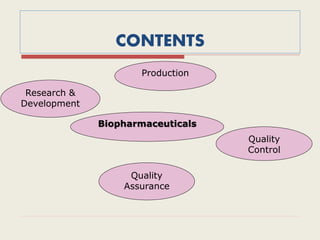
CONTENTS
Biopharmaceuticals
Quality
Assurance
Research &
Development
Quality
Control
Production
CONTENTS
Biopharmaceuticals
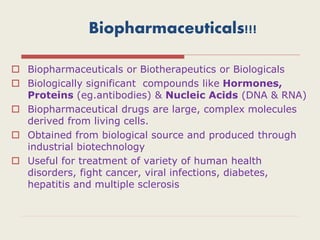
Biopharmaceuticals!!!
 Biopharmaceuticals or Biotherapeutics or Biologicals
 Biologically significant compounds like Hormones,
Proteins (eg.antibodies) & Nucleic Acids (DNA & RNA)
 Biopharmaceutical drugs are large, complex molecules
derived from living cells.
 Obtained from biological source and produced through
industrial biotechnology
 Useful for treatment of variety of human health
disorders, fight cancer, viral infections, diabetes,
hepatitis and multiple sclerosis
Biopharmaceuticals!!!
 These are medical drugs produced using
biotechnology especially
 genetic engineering or
 hybridoma technology or via
 biopharmaceutical techniques such as
recombinant DNA technology, gene transfer
 antibody production methods
 Conventional vaccines
 Insulin-
 First Recombinant Biopharmaceutical pdt
Classification of
Biopharmaceuticals
 First Generation Biopharmaceuticals
 unengineered murine monoclonal antibodies or simple
replacement proteins displaying an identical amino acid
sequence to a native human protein.
 Second Generation Biopharmaceuticals -
engineered, products.
 alteration of amino acid sequence, glycocomponent of a
glycosylated protein,
 covalent attachment of chemical moieties such as
polyethylene glycol.
 alter immunological or pharmacokinetic profile of protein,
or in order to generate novel fusion products
Types of Biopharmaceuticals
 Antisera
 Cytokines – Interferon, Interleukins
 Enzymes -
 Hormones
 Clotting factors
 Vaccines
 Monoclonal antibodies
 Cell therapies
 Antisense drugs
 Peptide therapeutics
Types of Biopharmaceuticals
 Enzymes –
 Activase, alteplase, TPA (dissolves blood clots)
 Pulmozyme, dornase alfa , (a recombinant DNAse I that
digests DNA in the mucous secretions in lungs)
 Cerezyme, imiglucerase, (a recombinant glucocereborsidase
for Gaucherûs disease, bone destruction and enlargement
of the liver and spleen)
 Alphanine SD, Benefix, Bebulin VH, Profilnine SD, Proplex T
Factor IX, belonging to peptidase family S1, is one of the
serine proteases of the coagulation system. Deficiency of this
protein causes hemophilia B
Types of Biopharmaceuticals
 Horomones –
 Insugen, Humulin, Novolin -- Insulin
 Ascellacrin, Crescormon --human growth
hormone
 Ovidrel– gonadotrophins
Types of Biopharmaceuticals
 MONOCLONAL ANTIBODIES
 Produced by using Hybridoma Technology
 Popularly known as “Magic bullets”
 Used for the treatment of Rheumatoid
Arthritis , cancers
 Antibody produced by a single clone of
cells
Types of Biopharmaceuticals
 VACCINES
 Biological preparation that improves
immunity to a particular disease
 They can be prophylactic or therapeutic
 e.g. HBV vaccine--a Subunit Vaccine
composed of only surface proteins, produced
in the yeast
 to respond to a human influenza
pandemic.

to respond to a human influenza pandemic.
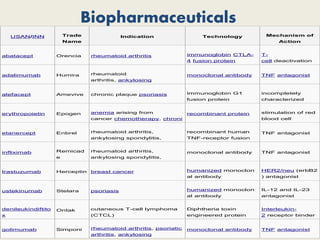
Biopharmaceuticals
USAN/INN Trade
Name
Indication Technology Mechanism of
Action
abatacept Orencia rheumatoid arthritis immunoglobin CTLA-
4 fusion protein
T-
cell deactivation
adalimumab Humira rheumatoid
arthritis, ankylosing
spondylitis, psoriatic arthritis,
psoriasis, Ulcerative
Colitis, Crohn's disease
monoclonal antibody TNF antagonist
alefacept Amevive chronic plaque psoriasis immunoglobin G1
fusion protein
incompletely
characterized
erythropoietin Epogen anemia arising from
cancer chemotherapy, chroni
c renal failure, etc.
recombinant protein stimulation of red
blood cell
production
etanercept Enbrel rheumatoid arthritis,
ankylosing spondylitis,
psoriatic arthritis, psoriasis
recombinant human
TNF-receptor fusion
protein
TNF antagonist
infliximab Remicad
e
rheumatoid arthritis,
ankylosing spondylitis,
psoriatic arthritis, psoriasis,
Ulcerative Colitus, Crohn's
disease
monoclonal antibody TNF antagonist
trastuzumab Herceptin breast cancer humanized monoclon
al antibody
HER2/neu (erbB2
) antagonist
ustekinumab Stelara psoriasis humanized monoclon
al antibody
IL-12 and IL-23
antagonist
denileukindiftito
x
Ontak cutaneous T-cell lymphoma
(CTCL)
Diphtheria toxin
engineered protein
combining Interleukin-
2 and Diphtheria toxin
Interleukin-
2 receptor binder
golimumab Simponi rheumatoid arthritis, psoriatic
arthritis, ankylosing
monoclonal antibody TNF antagonist
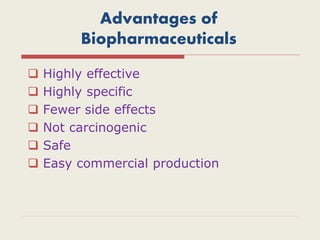
Advantages of
Biopharmaceuticals
 Highly effective
 Highly specific
 Fewer side effects
 Not carcinogenic
 Safe
 Easy commercial production
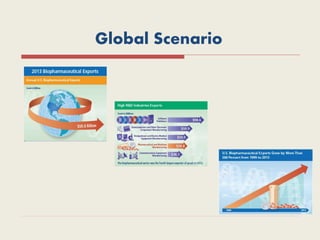
Global Scenario
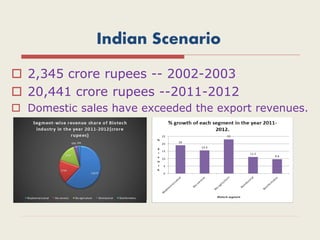
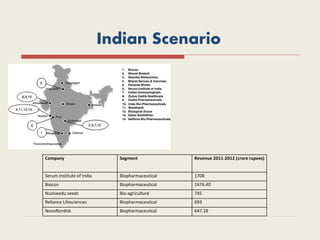
Indian Scenario
 2,345 crore rupees -- 2002-2003
 20,441 crore rupees --2011-2012
 Domestic sales have exceeded the export revenues.
Indian Scenario
Company Segment Revenue 2011-2012 (crore rupees)
Serum Institute of India Biopharmaceutical 1708
Biocon Biopharmaceutical 1676.40
Nuziveedu seeds Bio-agriculture 745
Reliance Lifesciences Biopharmaceutical 693
NovoNordisk Biopharmaceutical 647.28
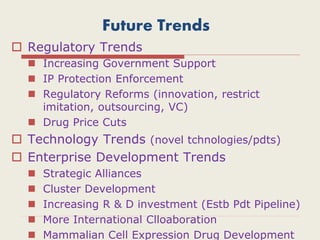
Future Trends
 Regulatory Trends
 Increasing Government Support
 IP Protection Enforcement
 Regulatory Reforms (innovation, restrict
imitation, outsourcing, VC)
 Drug Price Cuts
 Technology Trends (novel tchnologies/pdts)
 Enterprise Development Trends
 Strategic Alliances
 Cluster Development
 Increasing R & D investment (Estb Pdt Pipeline)
 More International Clloaboration
 Mammalian Cell Expression Drug Development
Key Factor
The main driver for FUTURE GROWTH
The key factor to compete and proper in the
21st century GLOBAL ECONOMY
INNOVATION
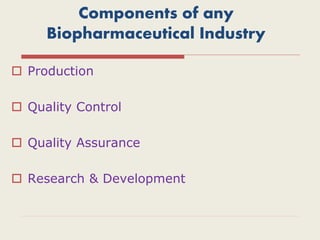
Components of any
Biopharmaceutical Industry
 Production
 Quality Control
 Quality Assurance
 Research & Development
CONTENTS
Production
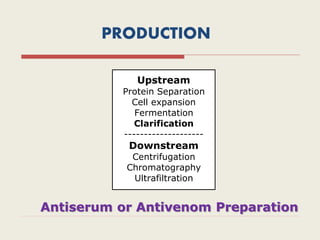
PRODUCTION
Upstream
Protein Separation
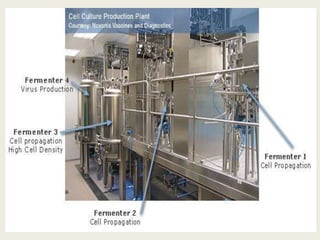
Cell expansion
Fermentation
Clarification
--------------------
Downstream
Centrifugation
Chromatography
Ultrafiltration
Antiserum or Antivenom Preparation
Venom !!!
 Biotoxins - highly complex or relatively
small protein. Two functions
 Vary greatly in functions& mechanism
 Predation –snakes, spider, scorpion,
jellyfish, wasp
 Defense – bee, ant, honeybee, frog, termite
 Typically injected into prey or aggressors by
biting or stinging or other sharp body
feature.
Snake Bite
 Snake bite is a acute life threatening
time limiting medical emergency a
occupational hazard often faced by
farm labourers and farmers. It is in
endemic form all over tropical
countries like India.
 WHO -Snake bite Neglected Tropical
Disease.
GRAVITY
 2.5 lakh snake bites per year in India.
 35,000 to 50,000 deaths per year due to
snake bite in India.
 High mortality in Maharashtra, up to 5000
deaths per year
 High mortality in rural population.
 Death figure may be high.
 3000 species of snakes are distributed
worldwide. 500 are venomous species. 52
venomous species are found in Indian
subcontinent.
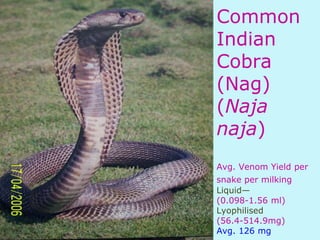
Common
Indian
Cobra
(Nag)
(Naja
naja)
Avg. Venom Yield per
snake per milking
Liquid—
(0.098-1.56 ml)
Lyophilised
(56.4-514.9mg)
Avg. 126 mg
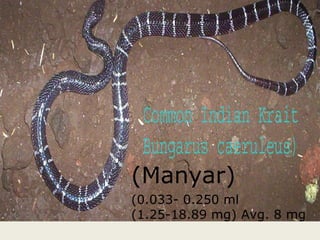
(Manyar)
(0.033- 0.250 ml
(1.25-18.89 mg) Avg. 8 mg
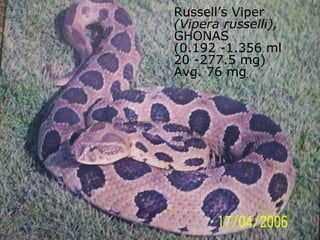
Russell’s Viper
(Vipera russelli),
GHONAS
(0.192 -1.356 ml
20 -277.5 mg)
Avg. 76 mg
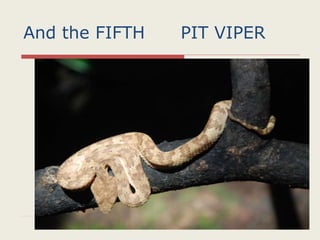
And the FIFTH PIT VIPER
KING
COBRA
Medically Important Snakes
 Dangerousness of snake species
 Venom Characteristics
 Lethality of the venom
 Key Variables
 Frequency of medical attention after a bite
 Local or systemic envenomation
 Fatal Bites
 Long term consequences
 Availability of antivenoms
 Size of population at risk
Snake Venoms
 Complex mixture of proteins and
peptides
 80-100 or more proteins
 Small number of superfamilies
 Enzymes
 Nonenzymatic proteins
Snake Venom
 Contains number of toxins and enzymes. It is a clear
transparent, amber tinted fluid and contains.
 1. Neurotoxin (Predominant in Elapids)
 2. Cholinesterase (Predominant in Elapids)
 3. Haemolysins (Predominant in Viper)
 4. Thromboplastin (Predominant in Viper)
 5. Fibrinolysins
 6. Proteolysins
 7. Cardiotoxin
 8. Agglutinins
 9. Coagulase, Hyaluronidase etc.
 10 out of 26 in each venom with seasonal & Regional
variations in potency.
Superfamilies of Enzymes
 Phospholipase A2 enzymes
 Proteases
 Serine proteases
 Metalloproteases
 Others
 Nucleotidases
 Amino acid oxidase
 Acetylcholinesterase
Non-enzymatic snake venom proteins
 Other than enzymes, snake venom contains
numerous non-enzymatic proteins, which
play an important role in toxicity of the
venom.
 Examples of non-enzymatic snake venom
toxins are- 1. Neurotoxins 2. Cardiotoxins
3. Haemorrhagins 4. Myotoxins
5. Haemolysins
Antivenoms
(Therapeutic Antibodies)
 Vaccination -Active immunization
 Hyperimmune sera Passive immunization
 Polyvalent
 Monovalent
 Homologous
 Heterologous
What is Antivenom ?
 Anti venoms are also known as
antivenenum, antivenine or antivenin
 Anti venoms are preparations of intact or
fragmented immunoglobulin G used for
treatment of human or animal suffering
from severe envenoming from the bites &
stings of various venomous animals.
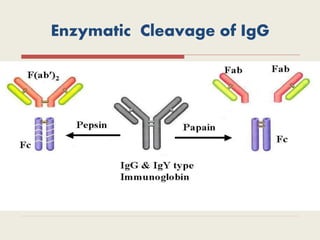
IgG
Large molecules -150 Kda
Four peptide chains. A tetrameric quaternary struct.
Linked by disulfide bonds.
The Fc regions of IgGs bear a highly conserved N-
glycosylation site.
History
 Anti venom is in existence for over a century.
 Dr. Albert Calmette in 1894 demonstrated that
protection could be imparted against venoms
by immunising animals with low doses of
venom.
 In 1895, he saved a life of a severely bitten
person by using anti venom raised in horses.
 In India, Central Research Institute,Kasauli &
Haffkine Institute, Mumbai have been
producing snake anti venoms since 1925.
Are Antivenoms Safe
 Adverse Reactions
 Early Anaphylactic reactions
 After 10-180 mins.
 Pryogenic (endotoxic) reactions
 After 1-2 hrs
 Late Anaphylaxis reactions
 After 1-12 days (mean 7 days)
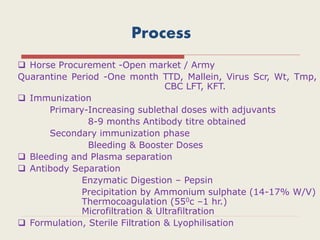
Process
 Horse Procurement -Open market / Army
Quarantine Period -One month TTD, Mallein, Virus Scr, Wt, Tmp,
CBC LFT, KFT.
 Immunization
Primary-Increasing sublethal doses with adjuvants
8-9 months Antibody titre obtained
Secondary immunization phase
Bleeding & Booster Doses
 Bleeding and Plasma separation
 Antibody Separation
Enzymatic Digestion – Pepsin
Precipitation by Ammonium sulphate (14-17% W/V)
Thermocoagulation (550c –1 hr.)
Microfiltration & Ultrafiltration
 Formulation, Sterile Filtration & Lyophilisation
Enzymatic Cleavage of IgG
WHY EQUINES ARE USED?
Easy to Handle
Large volume of blood/plasma can be
collected at periodic intervals
Well established and validated purification
process for over 100 years
Very sensitive for venoms/toxins, hence
excellent immuno conversion
90% of commercial therapeutic sera are
equine origin
Anti venoms available in India
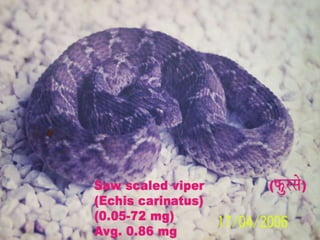
 Polyvalent Snake Antivenin,I.P.
Effective against the bites of Indian Cobra(Naja
naja), Russell’s Viper(Vipera russelli), Indian
Common Krait(Bangarus coeruleus) & Saw
Scaled Viper( Echis carinatus ).
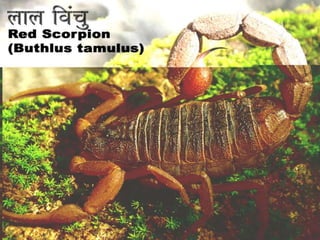
 Monovalent Scorpion Venom Antiserum,I.P.
Effective against the stings of Red Scorpion
( Buthus tamulus ).
CONTENTS
Quality
Control
QUALITY CONTROL
 Definition
 Process or system for monitoring the
quality of laboratory testing, and the
accuracy and precision of results
 Routinely collect and analyze data from
every test run or procedure
 Allows for immediate corrective action
QUALITY CONTROL
 Designing a QC Program
 Establish written policies and procedures
 Corrective action procedures
 Train all staff
 Design forms
 Assure complete documentation and review
QUALITY CONTROL
 Qualitative vs.Quantitative
 Quantitative test
 measures the amount of a substance
present
 Qualitative test
 determines whether the substance being
tested for is present or absent
QUALITY CONTROL (Biological)
 Microbiology
 Environmental
 Water analysis
 FP,RM analysis: Sterility ,Pathogen testing
 Biological Testing
 Potency Testing
 Abnormal toxicity
 Pyrogen testing
 BET
 Inprocess Quality checks
 Stability testing
QUALITY CONTROL (Chemical)
 Chemical and instrumental testing
 Water analysis
 WFI, PW, Steam and Raw water testing
 FP,RM,PM analysis
 Inprocess Quality checks
 Protein Estimation
 Phenol testing
 Stability testing
 Real time
 Accelerated studies
 Process validation studies
QUALITY CONTROL
 Data Analysis
 Select high quality controls
 Experimental Analysis
 Statistical analysis
 Central tendency (Mean, Median Mode)
 Variability (Range,Variance,SD, CV)
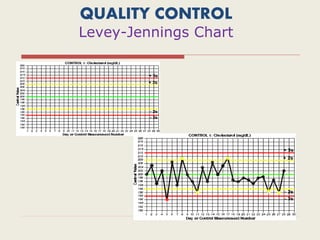
 Develop Levey-Jennings chart
 Monitor control values using the Levey-Jennings
chart and/or Westgard rules
 Take immediate corrective action, if needed
Record actions taken
QUALITY CONTROL
Levey-Jennings Chart
QUALITY CONTROL
 Quality Control is used to monitor both
the precision and the accuracy of the
assay in order to provide reliable results.
 Accuracy and Precision
 The degree of fluctuation in the
measurements is indicative of the “precision”
of the assay.
 The closeness of measurements to the true
value is indicative of the “accuracy” of the
assay.
QUALITY CONTROL
 Summary
 Establish written policies and procedures
 Assign responsibility for monitoring and
reviewing
 Train staff
 Obtain control materials
 Collect data
 Set target values (mean, SD)
 Establish Levey-Jennings charts
 Routinely plot control data
 Establish and implement troubleshooting and
corrective action protocols
 Establish and maintain system for
documentation
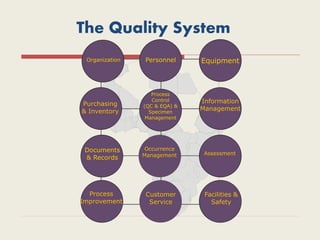
Purchasing
& Inventory
Assessment
Occurrence
Management
Information
Management
Process
Improvement
Customer
Service
Facilities &
Safety
The Quality System
Organization Personnel Equipment
Documents
& Records
Process
Control
(QC & EQA) &
Specimen
Management
CONTENTS
Quality
Assurance
QUALITY ASSURANCE
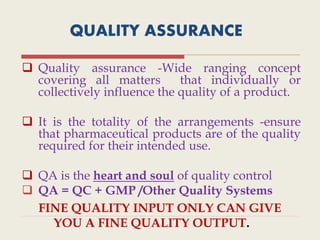
 Quality assurance -Wide ranging concept
covering all matters that individually or
collectively influence the quality of a product.
 It is the totality of the arrangements -ensure
that pharmaceutical products are of the quality
required for their intended use.
 QA is the heart and soul of quality control
 QA = QC + GMP /Other Quality Systems
FINE QUALITY INPUT ONLY CAN GIVE
YOU A FINE QUALITY OUTPUT.
QUALITY ASSURANCE
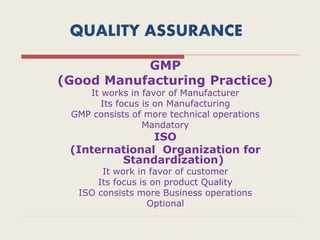
GMP
(Good Manufacturing Practice)
It works in favor of Manufacturer
Its focus is on Manufacturing
GMP consists of more technical operations
Mandatory
ISO
(International Organization for
Standardization)
It work in favor of customer
Its focus is on product Quality
ISO consists more Business operations
Optional
QUALITY ASSURANCE
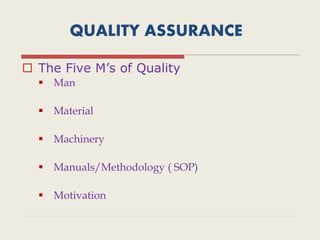
 The Five M’s of Quality
 Man
 Material
 Machinery
 Manuals/Methodology ( SOP)
 Motivation
QUALITY ASSURANCE
 Activities of QA
 Technology transfer
 Monitoring Production
 Validation
 Documentation
 Assuring quality of products
 Quality improvement plans
 Training
 Quality Risk Management
QUALITY ASSURANCE
 Technology transfer
 Checking and approval of documents
generated based on research centre
documents i.e. batch manufacturing record
 Scale-up and validation of product
QUALITY ASSURANCE
 Monitoring Production
 All the production activities
 Utility Systems- HVAC, WFI, PSG, etc
 Personnel
 Equipment, Operational & Process Qualification
 Validation & calibration
QUALITY ASSURANCE
 Validation
 Preparation of Validation Master plans for
facility/equipments/process Utility, Cleaning and all the
sections of the validation
 Approval of protocol for validation of facility/
equipment/product/ process/Utility
 Team member for execution of validation of
facility/equipment / product/ process
 Final approval of the facility/ equipment/product/
process/Utility validation
QUALITY ASSURANCE
 Documentation
 Standard operating procedures
 Protocols of tests,
 Results
 Reports
 Standard Operating Procedures
 An authorized written procedure giving instructions for
performing operations not necessarily specific to a given
process, product or material (e.g. equipment operation,
maintenance and cleaning; validation; cleaning of
premises and environmental control; sampling and
inspection).
QUALITY ASSURANCE
 Assuring Quality of products
 cGMP training
 SOP compliance
 Audit of facility for compliance
 Line clearance
 In-process counter checks
 Critical sampling
 Record verification
 Release of batch for marketing
 Investigation of market complaints
QUALITY ASSURANCE
 Quality improvement plan
 Feedback received from the compliance team
 Customer complaint history
 Proposals for corrective and preventive actions
 Annual Products review
 Trend analysis of various quality parameters for products,
environment and water
 Review of the Deviations, Change Controls, Out Of
Specifications and Failures.
QUALITY ASSURANCE
 Training
 Induction training program
 On the job training
 Quality Risk Management
 Assessment of risk analysis of every
process/activity in production QC
 Quantifying or grading the probablity of
occurrence of activities
 Taking measures to minimize the occurrence of
risks
Everyone is Quality Assurance
Quality Assurance is a dynamic process
Research areas in
Anti venom production
 Chicken Egg Yolk Antibodies
 High avidity antibodies
 Reduced cross reactivity
 Doesn’t bind to rheumatoid factors
 Applications mostly diagnostic rather than clinical.
 Camelid Antibodies Antibodies
 Antibodies devoid of Light Chains
 Less immunogenic- least complement activation
 Least anaphylactic & serum sickness reactions
 High Titres & Avidity
 Thermostable- supply chain
 Universal Antivenom
CONTENTS
Research &
Development
Recent trends in
Anti venom production
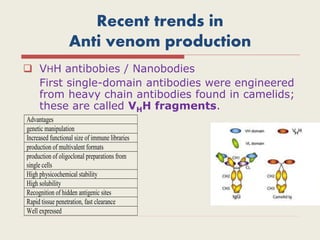
 VHH antibobies / Nanobodies
First single-domain antibodies were engineered
from heavy chain antibodies found in camelids;
these are called VHH fragments.
Advantages
genetic manipulation
Increased functional size of immune libraries
production of multivalent formats
production of oligoclonal preparations from
single cells
High physicochemical stability
High solubility
Recognition of hidden antigenic sites
Rapid tissue penetration, fast clearance
Well expressed
Research areas in
Anti venom production
 Equine Health
 Mapping of CBC, LFT, KFT
 Nutritional immunopotentiaters
 Control of equine diseases R.equii, Glanders
 Interlukine mapping studies
 Venomics
 Study of venoms
 Variability of venoms due to size, age, geographical
location
 Design of effective antivenom (Mono / polyspecific)
 Antivenoms may have paraspecific effects
--Cross neutralization
Research areas in
Anti venom production
 Immunization
 Science + Art
 Poorly immunogenic antigens – long immu. Sch.
 Variability immune response
 Toxic stress
 Increased cost of production
 Immunization protocols
 Low Dose Low volume multisite pro.with adjuvants
 Newer Adjuvants
 - Liquid, Emulsion, Nanoparticle
 Safety & Immunogenicity
Research areas in
Anti venom production
 Plasma Processcing
 Less Protein Aggregates
 Pyrogen Free Antisera
 Virus Free Antisera
 Chromatographically purified antivenoms
 Least protein & more neutralizing antibodies
 Safety & Efficacy
 Formulations
 Search of best stabilizers, preservatives
 Lyohilization
Research areas in
Anti venom production
 Quality Control
 Water Analysis – TOC, Rapid Tests
 Enviromental Monitoring – Rapid Tests
 Raw material analysis (Method val.)
 Sterility –Rapid tests
 Endotoxin testing
 Animal Testing 3 R’s (cytotoxic / ELISA/ LFA)
Research areas in
Anti venom production
Quality Control
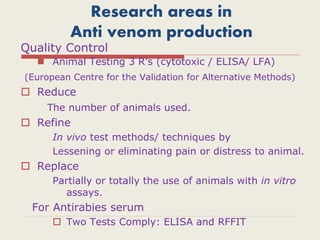
 Animal Testing 3 R’s (cytotoxic / ELISA/ LFA)
(European Centre for the Validation for Alternative Methods)
 Reduce
The number of animals used.
 Refine
In vivo test methods/ techniques by
Lessening or eliminating pain or distress to animal.
 Replace
Partially or totally the use of animals with in vitro
assays.
For Antirabies serum
 Two Tests Comply: ELISA and RFFIT
Summary of Research Areas
for Antivenoms
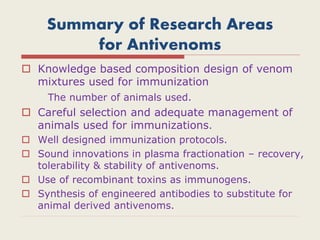
 Knowledge based composition design of venom
mixtures used for immunization
The number of animals used.
 Careful selection and adequate management of
animals used for immunizations.
 Well designed immunization protocols.
 Sound innovations in plasma fractionation – recovery,
tolerability & stability of antivenoms.
 Use of recombinant toxins as immunogens.
 Synthesis of engineered antibodies to substitute for
animal derived antivenoms.
Summary of Research Areas
for Antivenoms
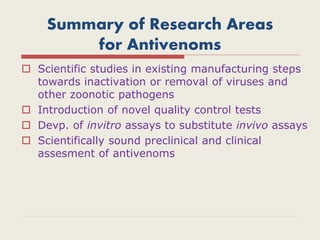
 Scientific studies in existing manufacturing steps
towards inactivation or removal of viruses and
other zoonotic pathogens
 Introduction of novel quality control tests
 Devp. of invitro assays to substitute invivo assays
 Scientifically sound preclinical and clinical
assesment of antivenoms
THANKS

Biopharmaceuticals (An Antivenom perspective)

  • 1.
    BIOPHARMACEUTICALS An overview Dr. NitinC. Salvi, Haffkine Bio-Pharmaceutical Corporation Limited, Pimpri, Pune- 411 018. 9552274460 / nitinvibha@yahoo.com
  • 2.
  • 3.
  • 4.
    Biopharmaceuticals!!!  Biopharmaceuticals orBiotherapeutics or Biologicals  Biologically significant compounds like Hormones, Proteins (eg.antibodies) & Nucleic Acids (DNA & RNA)  Biopharmaceutical drugs are large, complex molecules derived from living cells.  Obtained from biological source and produced through industrial biotechnology  Useful for treatment of variety of human health disorders, fight cancer, viral infections, diabetes, hepatitis and multiple sclerosis
  • 5.
    Biopharmaceuticals!!!  These aremedical drugs produced using biotechnology especially  genetic engineering or  hybridoma technology or via  biopharmaceutical techniques such as recombinant DNA technology, gene transfer  antibody production methods  Conventional vaccines  Insulin-  First Recombinant Biopharmaceutical pdt
  • 6.
    Classification of Biopharmaceuticals  FirstGeneration Biopharmaceuticals  unengineered murine monoclonal antibodies or simple replacement proteins displaying an identical amino acid sequence to a native human protein.  Second Generation Biopharmaceuticals - engineered, products.  alteration of amino acid sequence, glycocomponent of a glycosylated protein,  covalent attachment of chemical moieties such as polyethylene glycol.  alter immunological or pharmacokinetic profile of protein, or in order to generate novel fusion products
  • 7.
    Types of Biopharmaceuticals Antisera  Cytokines – Interferon, Interleukins  Enzymes -  Hormones  Clotting factors  Vaccines  Monoclonal antibodies  Cell therapies  Antisense drugs  Peptide therapeutics
  • 8.
    Types of Biopharmaceuticals Enzymes –  Activase, alteplase, TPA (dissolves blood clots)  Pulmozyme, dornase alfa , (a recombinant DNAse I that digests DNA in the mucous secretions in lungs)  Cerezyme, imiglucerase, (a recombinant glucocereborsidase for Gaucherûs disease, bone destruction and enlargement of the liver and spleen)  Alphanine SD, Benefix, Bebulin VH, Profilnine SD, Proplex T Factor IX, belonging to peptidase family S1, is one of the serine proteases of the coagulation system. Deficiency of this protein causes hemophilia B
  • 9.
    Types of Biopharmaceuticals Horomones –  Insugen, Humulin, Novolin -- Insulin  Ascellacrin, Crescormon --human growth hormone  Ovidrel– gonadotrophins
  • 10.
    Types of Biopharmaceuticals MONOCLONAL ANTIBODIES  Produced by using Hybridoma Technology  Popularly known as “Magic bullets”  Used for the treatment of Rheumatoid Arthritis , cancers  Antibody produced by a single clone of cells
  • 11.
    Types of Biopharmaceuticals VACCINES  Biological preparation that improves immunity to a particular disease  They can be prophylactic or therapeutic  e.g. HBV vaccine--a Subunit Vaccine composed of only surface proteins, produced in the yeast
  • 12.
     to respondto a human influenza pandemic.  to respond to a human influenza pandemic.
  • 13.
    Biopharmaceuticals USAN/INN Trade Name Indication TechnologyMechanism of Action abatacept Orencia rheumatoid arthritis immunoglobin CTLA- 4 fusion protein T- cell deactivation adalimumab Humira rheumatoid arthritis, ankylosing spondylitis, psoriatic arthritis, psoriasis, Ulcerative Colitis, Crohn's disease monoclonal antibody TNF antagonist alefacept Amevive chronic plaque psoriasis immunoglobin G1 fusion protein incompletely characterized erythropoietin Epogen anemia arising from cancer chemotherapy, chroni c renal failure, etc. recombinant protein stimulation of red blood cell production etanercept Enbrel rheumatoid arthritis, ankylosing spondylitis, psoriatic arthritis, psoriasis recombinant human TNF-receptor fusion protein TNF antagonist infliximab Remicad e rheumatoid arthritis, ankylosing spondylitis, psoriatic arthritis, psoriasis, Ulcerative Colitus, Crohn's disease monoclonal antibody TNF antagonist trastuzumab Herceptin breast cancer humanized monoclon al antibody HER2/neu (erbB2 ) antagonist ustekinumab Stelara psoriasis humanized monoclon al antibody IL-12 and IL-23 antagonist denileukindiftito x Ontak cutaneous T-cell lymphoma (CTCL) Diphtheria toxin engineered protein combining Interleukin- 2 and Diphtheria toxin Interleukin- 2 receptor binder golimumab Simponi rheumatoid arthritis, psoriatic arthritis, ankylosing monoclonal antibody TNF antagonist
  • 14.
    Advantages of Biopharmaceuticals  Highlyeffective  Highly specific  Fewer side effects  Not carcinogenic  Safe  Easy commercial production
  • 15.
  • 16.
    Indian Scenario  2,345crore rupees -- 2002-2003  20,441 crore rupees --2011-2012  Domestic sales have exceeded the export revenues.
  • 17.
    Indian Scenario Company SegmentRevenue 2011-2012 (crore rupees) Serum Institute of India Biopharmaceutical 1708 Biocon Biopharmaceutical 1676.40 Nuziveedu seeds Bio-agriculture 745 Reliance Lifesciences Biopharmaceutical 693 NovoNordisk Biopharmaceutical 647.28
  • 18.
    Future Trends  RegulatoryTrends  Increasing Government Support  IP Protection Enforcement  Regulatory Reforms (innovation, restrict imitation, outsourcing, VC)  Drug Price Cuts  Technology Trends (novel tchnologies/pdts)  Enterprise Development Trends  Strategic Alliances  Cluster Development  Increasing R & D investment (Estb Pdt Pipeline)  More International Clloaboration  Mammalian Cell Expression Drug Development
  • 19.
    Key Factor The maindriver for FUTURE GROWTH The key factor to compete and proper in the 21st century GLOBAL ECONOMY INNOVATION
  • 20.
    Components of any BiopharmaceuticalIndustry  Production  Quality Control  Quality Assurance  Research & Development
  • 21.
  • 22.
  • 23.
    Venom !!!  Biotoxins- highly complex or relatively small protein. Two functions  Vary greatly in functions& mechanism  Predation –snakes, spider, scorpion, jellyfish, wasp  Defense – bee, ant, honeybee, frog, termite  Typically injected into prey or aggressors by biting or stinging or other sharp body feature.
  • 24.
    Snake Bite  Snakebite is a acute life threatening time limiting medical emergency a occupational hazard often faced by farm labourers and farmers. It is in endemic form all over tropical countries like India.  WHO -Snake bite Neglected Tropical Disease.
  • 25.
    GRAVITY  2.5 lakhsnake bites per year in India.  35,000 to 50,000 deaths per year due to snake bite in India.  High mortality in Maharashtra, up to 5000 deaths per year  High mortality in rural population.  Death figure may be high.  3000 species of snakes are distributed worldwide. 500 are venomous species. 52 venomous species are found in Indian subcontinent.
  • 26.
    Common Indian Cobra (Nag) (Naja naja) Avg. Venom Yieldper snake per milking Liquid— (0.098-1.56 ml) Lyophilised (56.4-514.9mg) Avg. 126 mg
  • 27.
  • 28.
    Russell’s Viper (Vipera russelli), GHONAS (0.192-1.356 ml 20 -277.5 mg) Avg. 76 mg
  • 30.
    And the FIFTHPIT VIPER
  • 31.
  • 33.
    Medically Important Snakes Dangerousness of snake species  Venom Characteristics  Lethality of the venom  Key Variables  Frequency of medical attention after a bite  Local or systemic envenomation  Fatal Bites  Long term consequences  Availability of antivenoms  Size of population at risk
  • 34.
    Snake Venoms  Complexmixture of proteins and peptides  80-100 or more proteins  Small number of superfamilies  Enzymes  Nonenzymatic proteins
  • 35.
    Snake Venom  Containsnumber of toxins and enzymes. It is a clear transparent, amber tinted fluid and contains.  1. Neurotoxin (Predominant in Elapids)  2. Cholinesterase (Predominant in Elapids)  3. Haemolysins (Predominant in Viper)  4. Thromboplastin (Predominant in Viper)  5. Fibrinolysins  6. Proteolysins  7. Cardiotoxin  8. Agglutinins  9. Coagulase, Hyaluronidase etc.  10 out of 26 in each venom with seasonal & Regional variations in potency.
  • 36.
    Superfamilies of Enzymes Phospholipase A2 enzymes  Proteases  Serine proteases  Metalloproteases  Others  Nucleotidases  Amino acid oxidase  Acetylcholinesterase
  • 37.
    Non-enzymatic snake venomproteins  Other than enzymes, snake venom contains numerous non-enzymatic proteins, which play an important role in toxicity of the venom.  Examples of non-enzymatic snake venom toxins are- 1. Neurotoxins 2. Cardiotoxins 3. Haemorrhagins 4. Myotoxins 5. Haemolysins
  • 38.
    Antivenoms (Therapeutic Antibodies)  Vaccination-Active immunization  Hyperimmune sera Passive immunization  Polyvalent  Monovalent  Homologous  Heterologous
  • 39.
    What is Antivenom?  Anti venoms are also known as antivenenum, antivenine or antivenin  Anti venoms are preparations of intact or fragmented immunoglobulin G used for treatment of human or animal suffering from severe envenoming from the bites & stings of various venomous animals.
  • 40.
    IgG Large molecules -150Kda Four peptide chains. A tetrameric quaternary struct. Linked by disulfide bonds. The Fc regions of IgGs bear a highly conserved N- glycosylation site.
  • 41.
    History  Anti venomis in existence for over a century.  Dr. Albert Calmette in 1894 demonstrated that protection could be imparted against venoms by immunising animals with low doses of venom.  In 1895, he saved a life of a severely bitten person by using anti venom raised in horses.  In India, Central Research Institute,Kasauli & Haffkine Institute, Mumbai have been producing snake anti venoms since 1925.
  • 42.
    Are Antivenoms Safe Adverse Reactions  Early Anaphylactic reactions  After 10-180 mins.  Pryogenic (endotoxic) reactions  After 1-2 hrs  Late Anaphylaxis reactions  After 1-12 days (mean 7 days)
  • 43.
    Process  Horse Procurement-Open market / Army Quarantine Period -One month TTD, Mallein, Virus Scr, Wt, Tmp, CBC LFT, KFT.  Immunization Primary-Increasing sublethal doses with adjuvants 8-9 months Antibody titre obtained Secondary immunization phase Bleeding & Booster Doses  Bleeding and Plasma separation  Antibody Separation Enzymatic Digestion – Pepsin Precipitation by Ammonium sulphate (14-17% W/V) Thermocoagulation (550c –1 hr.) Microfiltration & Ultrafiltration  Formulation, Sterile Filtration & Lyophilisation
  • 44.
  • 45.
    WHY EQUINES AREUSED? Easy to Handle Large volume of blood/plasma can be collected at periodic intervals Well established and validated purification process for over 100 years Very sensitive for venoms/toxins, hence excellent immuno conversion 90% of commercial therapeutic sera are equine origin
  • 46.
    Anti venoms availablein India  Polyvalent Snake Antivenin,I.P. Effective against the bites of Indian Cobra(Naja naja), Russell’s Viper(Vipera russelli), Indian Common Krait(Bangarus coeruleus) & Saw Scaled Viper( Echis carinatus ).  Monovalent Scorpion Venom Antiserum,I.P. Effective against the stings of Red Scorpion ( Buthus tamulus ).
  • 47.
  • 48.
    QUALITY CONTROL  Definition Process or system for monitoring the quality of laboratory testing, and the accuracy and precision of results  Routinely collect and analyze data from every test run or procedure  Allows for immediate corrective action
  • 49.
    QUALITY CONTROL  Designinga QC Program  Establish written policies and procedures  Corrective action procedures  Train all staff  Design forms  Assure complete documentation and review
  • 50.
    QUALITY CONTROL  Qualitativevs.Quantitative  Quantitative test  measures the amount of a substance present  Qualitative test  determines whether the substance being tested for is present or absent
  • 51.
    QUALITY CONTROL (Biological) Microbiology  Environmental  Water analysis  FP,RM analysis: Sterility ,Pathogen testing  Biological Testing  Potency Testing  Abnormal toxicity  Pyrogen testing  BET  Inprocess Quality checks  Stability testing
  • 52.
    QUALITY CONTROL (Chemical) Chemical and instrumental testing  Water analysis  WFI, PW, Steam and Raw water testing  FP,RM,PM analysis  Inprocess Quality checks  Protein Estimation  Phenol testing  Stability testing  Real time  Accelerated studies  Process validation studies
  • 53.
    QUALITY CONTROL  DataAnalysis  Select high quality controls  Experimental Analysis  Statistical analysis  Central tendency (Mean, Median Mode)  Variability (Range,Variance,SD, CV)  Develop Levey-Jennings chart  Monitor control values using the Levey-Jennings chart and/or Westgard rules  Take immediate corrective action, if needed Record actions taken
  • 54.
  • 55.
    QUALITY CONTROL  QualityControl is used to monitor both the precision and the accuracy of the assay in order to provide reliable results.  Accuracy and Precision  The degree of fluctuation in the measurements is indicative of the “precision” of the assay.  The closeness of measurements to the true value is indicative of the “accuracy” of the assay.
  • 56.
    QUALITY CONTROL  Summary Establish written policies and procedures  Assign responsibility for monitoring and reviewing  Train staff  Obtain control materials  Collect data  Set target values (mean, SD)  Establish Levey-Jennings charts  Routinely plot control data  Establish and implement troubleshooting and corrective action protocols  Establish and maintain system for documentation
  • 57.
    Purchasing & Inventory Assessment Occurrence Management Information Management Process Improvement Customer Service Facilities & Safety TheQuality System Organization Personnel Equipment Documents & Records Process Control (QC & EQA) & Specimen Management
  • 58.
  • 59.
    QUALITY ASSURANCE  Qualityassurance -Wide ranging concept covering all matters that individually or collectively influence the quality of a product.  It is the totality of the arrangements -ensure that pharmaceutical products are of the quality required for their intended use.  QA is the heart and soul of quality control  QA = QC + GMP /Other Quality Systems FINE QUALITY INPUT ONLY CAN GIVE YOU A FINE QUALITY OUTPUT.
  • 60.
    QUALITY ASSURANCE GMP (Good ManufacturingPractice) It works in favor of Manufacturer Its focus is on Manufacturing GMP consists of more technical operations Mandatory ISO (International Organization for Standardization) It work in favor of customer Its focus is on product Quality ISO consists more Business operations Optional
  • 61.
    QUALITY ASSURANCE  TheFive M’s of Quality  Man  Material  Machinery  Manuals/Methodology ( SOP)  Motivation
  • 62.
    QUALITY ASSURANCE  Activitiesof QA  Technology transfer  Monitoring Production  Validation  Documentation  Assuring quality of products  Quality improvement plans  Training  Quality Risk Management
  • 63.
    QUALITY ASSURANCE  Technologytransfer  Checking and approval of documents generated based on research centre documents i.e. batch manufacturing record  Scale-up and validation of product
  • 64.
    QUALITY ASSURANCE  MonitoringProduction  All the production activities  Utility Systems- HVAC, WFI, PSG, etc  Personnel  Equipment, Operational & Process Qualification  Validation & calibration
  • 65.
    QUALITY ASSURANCE  Validation Preparation of Validation Master plans for facility/equipments/process Utility, Cleaning and all the sections of the validation  Approval of protocol for validation of facility/ equipment/product/ process/Utility  Team member for execution of validation of facility/equipment / product/ process  Final approval of the facility/ equipment/product/ process/Utility validation
  • 66.
    QUALITY ASSURANCE  Documentation Standard operating procedures  Protocols of tests,  Results  Reports  Standard Operating Procedures  An authorized written procedure giving instructions for performing operations not necessarily specific to a given process, product or material (e.g. equipment operation, maintenance and cleaning; validation; cleaning of premises and environmental control; sampling and inspection).
  • 67.
    QUALITY ASSURANCE  AssuringQuality of products  cGMP training  SOP compliance  Audit of facility for compliance  Line clearance  In-process counter checks  Critical sampling  Record verification  Release of batch for marketing  Investigation of market complaints
  • 68.
    QUALITY ASSURANCE  Qualityimprovement plan  Feedback received from the compliance team  Customer complaint history  Proposals for corrective and preventive actions  Annual Products review  Trend analysis of various quality parameters for products, environment and water  Review of the Deviations, Change Controls, Out Of Specifications and Failures.
  • 69.
    QUALITY ASSURANCE  Training Induction training program  On the job training  Quality Risk Management  Assessment of risk analysis of every process/activity in production QC  Quantifying or grading the probablity of occurrence of activities  Taking measures to minimize the occurrence of risks
  • 70.
    Everyone is QualityAssurance Quality Assurance is a dynamic process
  • 71.
    Research areas in Antivenom production  Chicken Egg Yolk Antibodies  High avidity antibodies  Reduced cross reactivity  Doesn’t bind to rheumatoid factors  Applications mostly diagnostic rather than clinical.  Camelid Antibodies Antibodies  Antibodies devoid of Light Chains  Less immunogenic- least complement activation  Least anaphylactic & serum sickness reactions  High Titres & Avidity  Thermostable- supply chain  Universal Antivenom
  • 72.
  • 73.
    Recent trends in Antivenom production  VHH antibobies / Nanobodies First single-domain antibodies were engineered from heavy chain antibodies found in camelids; these are called VHH fragments. Advantages genetic manipulation Increased functional size of immune libraries production of multivalent formats production of oligoclonal preparations from single cells High physicochemical stability High solubility Recognition of hidden antigenic sites Rapid tissue penetration, fast clearance Well expressed
  • 74.
    Research areas in Antivenom production  Equine Health  Mapping of CBC, LFT, KFT  Nutritional immunopotentiaters  Control of equine diseases R.equii, Glanders  Interlukine mapping studies  Venomics  Study of venoms  Variability of venoms due to size, age, geographical location  Design of effective antivenom (Mono / polyspecific)  Antivenoms may have paraspecific effects --Cross neutralization
  • 75.
    Research areas in Antivenom production  Immunization  Science + Art  Poorly immunogenic antigens – long immu. Sch.  Variability immune response  Toxic stress  Increased cost of production  Immunization protocols  Low Dose Low volume multisite pro.with adjuvants  Newer Adjuvants  - Liquid, Emulsion, Nanoparticle  Safety & Immunogenicity
  • 76.
    Research areas in Antivenom production  Plasma Processcing  Less Protein Aggregates  Pyrogen Free Antisera  Virus Free Antisera  Chromatographically purified antivenoms  Least protein & more neutralizing antibodies  Safety & Efficacy  Formulations  Search of best stabilizers, preservatives  Lyohilization
  • 77.
    Research areas in Antivenom production  Quality Control  Water Analysis – TOC, Rapid Tests  Enviromental Monitoring – Rapid Tests  Raw material analysis (Method val.)  Sterility –Rapid tests  Endotoxin testing  Animal Testing 3 R’s (cytotoxic / ELISA/ LFA)
  • 78.
    Research areas in Antivenom production Quality Control  Animal Testing 3 R’s (cytotoxic / ELISA/ LFA) (European Centre for the Validation for Alternative Methods)  Reduce The number of animals used.  Refine In vivo test methods/ techniques by Lessening or eliminating pain or distress to animal.  Replace Partially or totally the use of animals with in vitro assays. For Antirabies serum  Two Tests Comply: ELISA and RFFIT
  • 79.
    Summary of ResearchAreas for Antivenoms  Knowledge based composition design of venom mixtures used for immunization The number of animals used.  Careful selection and adequate management of animals used for immunizations.  Well designed immunization protocols.  Sound innovations in plasma fractionation – recovery, tolerability & stability of antivenoms.  Use of recombinant toxins as immunogens.  Synthesis of engineered antibodies to substitute for animal derived antivenoms.
  • 80.
    Summary of ResearchAreas for Antivenoms  Scientific studies in existing manufacturing steps towards inactivation or removal of viruses and other zoonotic pathogens  Introduction of novel quality control tests  Devp. of invitro assays to substitute invivo assays  Scientifically sound preclinical and clinical assesment of antivenoms
  • 81.