• PLASTIC SURGERY
Cosmetic or aesthetic
surgery
Reconstructive surgery
Craniofacial surgery
Hand surgery
Micro surgery
Treatment of burn
1. Silicone
2. Dacron
3. Cellulose
4. PMMA
5. Polyurethanes
6. Hydrogels
7. Stainless steel
8. Titanium
9. Alumina
10. Hydroxyapatite
11. Collagen
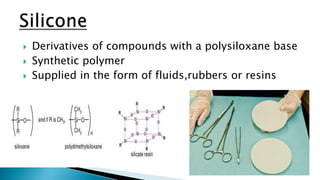
 Derivatives of compounds with a polysiloxane base
 Synthetic polymer
 Supplied in the form of fluids,rubbers or resins
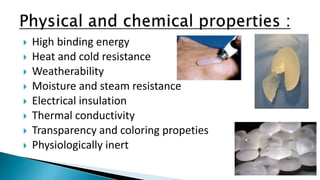
 High binding energy
 Heat and cold resistance
 Weatherability
 Moisture and steam resistance
 Electrical insulation
 Thermal conductivity
 Transparency and coloring propeties
 Physiologically inert
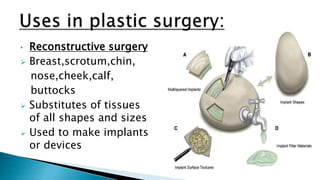
• Reconstructive surgery
 Breast,scrotum,chin,
nose,cheek,calf,
buttocks
 Substitutes of tissues
of all shapes and sizes
 Used to make implants
or devices
• BIODURABILITY :
 Strong stability in the body
 PDMS is added to increase the biodurability of other
polymers such as polyurethanes
• BIOCOMPATIBILITY :
 Intrinsically biocompatible due to their chemical stability
 Also due to low surface energy
• TOXICOLOGY :
 Are immunologically inert
 Production of antibodies does not occur in the implant
recipient
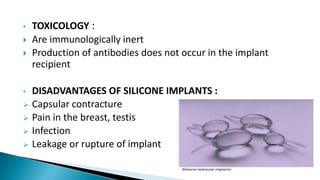
• DISADVANTAGES OF SILICONE IMPLANTS :
 Capsular contracture
 Pain in the breast, testis
 Infection
 Leakage or rupture of implant
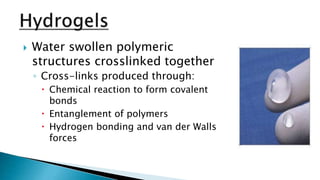
 Water swollen polymeric
structures crosslinked together
◦ Cross-links produced through:
 Chemical reaction to form covalent
bonds
 Entanglement of polymers
 Hydrogen bonding and van der Walls
forces
 Buttock implant
 Biomaterial, coatings for medical devices,
contact lenses
◦ Biologically compatible
 Drug delivery
◦ Degradable, swelling properties
 Many other biological applications
◦ Develop human tissues
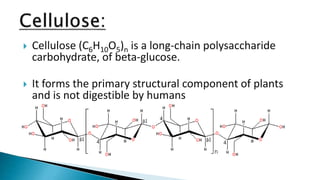
 Cellulose (C6H10O5)n is a long-chain polysaccharide
carbohydrate, of beta-glucose.
 It forms the primary structural component of plants
and is not digestible by humans
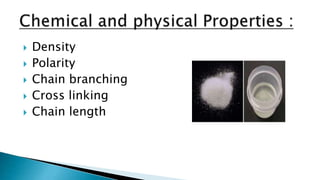
 Density
 Polarity
 Chain branching
 Cross linking
 Chain length
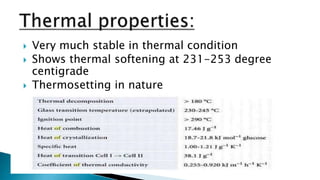
 Very much stable in thermal condition
 Shows thermal softening at 231-253 degree
centigrade
 Thermosetting in nature
 Low conductivity and high resistivity of electricity
 Relative humidity also affects the electrical
resistivity
Fatigue and Tribological Properties:
 Have good toughness,gloss,clarity ,
processability
 Excellent stiffness,hardness and dielectric
properties
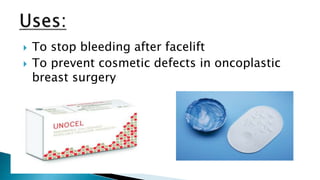
 To stop bleeding after facelift
 To prevent cosmetic defects in oncoplastic
breast surgery
-YADAV POOJA

Biomaterials in plastic surgery

  • 1.
    • PLASTIC SURGERY Cosmeticor aesthetic surgery Reconstructive surgery Craniofacial surgery Hand surgery Micro surgery Treatment of burn
  • 3.
    1. Silicone 2. Dacron 3.Cellulose 4. PMMA 5. Polyurethanes 6. Hydrogels 7. Stainless steel 8. Titanium 9. Alumina 10. Hydroxyapatite 11. Collagen
  • 4.
     Derivatives ofcompounds with a polysiloxane base  Synthetic polymer  Supplied in the form of fluids,rubbers or resins
  • 5.
     High bindingenergy  Heat and cold resistance  Weatherability  Moisture and steam resistance  Electrical insulation  Thermal conductivity  Transparency and coloring propeties  Physiologically inert
  • 6.
    • Reconstructive surgery Breast,scrotum,chin, nose,cheek,calf, buttocks  Substitutes of tissues of all shapes and sizes  Used to make implants or devices
  • 7.
    • BIODURABILITY : Strong stability in the body  PDMS is added to increase the biodurability of other polymers such as polyurethanes • BIOCOMPATIBILITY :  Intrinsically biocompatible due to their chemical stability  Also due to low surface energy
  • 8.
    • TOXICOLOGY : Are immunologically inert  Production of antibodies does not occur in the implant recipient • DISADVANTAGES OF SILICONE IMPLANTS :  Capsular contracture  Pain in the breast, testis  Infection  Leakage or rupture of implant
  • 9.
     Water swollenpolymeric structures crosslinked together ◦ Cross-links produced through:  Chemical reaction to form covalent bonds  Entanglement of polymers  Hydrogen bonding and van der Walls forces
  • 11.
     Buttock implant Biomaterial, coatings for medical devices, contact lenses ◦ Biologically compatible  Drug delivery ◦ Degradable, swelling properties  Many other biological applications ◦ Develop human tissues
  • 12.
     Cellulose (C6H10O5)nis a long-chain polysaccharide carbohydrate, of beta-glucose.  It forms the primary structural component of plants and is not digestible by humans
  • 13.
     Density  Polarity Chain branching  Cross linking  Chain length
  • 14.
     Very muchstable in thermal condition  Shows thermal softening at 231-253 degree centigrade  Thermosetting in nature
  • 15.
     Low conductivityand high resistivity of electricity  Relative humidity also affects the electrical resistivity Fatigue and Tribological Properties:  Have good toughness,gloss,clarity , processability  Excellent stiffness,hardness and dielectric properties
  • 16.
     To stopbleeding after facelift  To prevent cosmetic defects in oncoplastic breast surgery
  • 17.