Fat Grafting
DR. MUJTUBA PERVEZ KHAN
PLASTIC AND RECONSTRUCTIVE SURGERY
DUHS-CHK
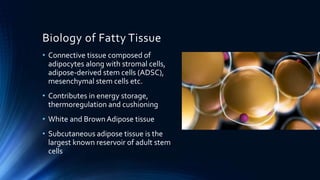
Biology of Fatty Tissue
• Connective tissue composed of
adipocytes along with stromal cells,
adipose-derived stem cells (ADSC),
mesenchymal stem cells etc.
• Contributes in energy storage,
thermoregulation and cushioning
• White and BrownAdipose tissue
• Subcutaneous adipose tissue is the
largest known reservoir of adult stem
cells
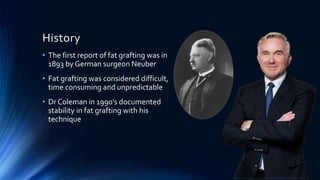
History
• The first report of fat grafting was in
1893 by German surgeon Neuber
• Fat grafting was considered difficult,
time consuming and unpredictable
• Dr Coleman in 1990’s documented
stability in fat grafting with his
technique
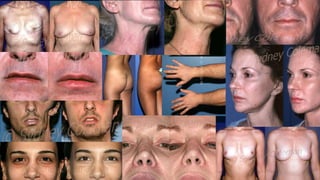
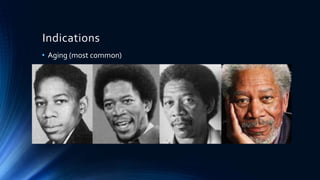
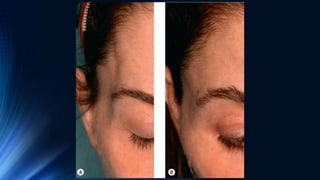
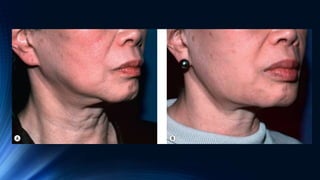
Indications
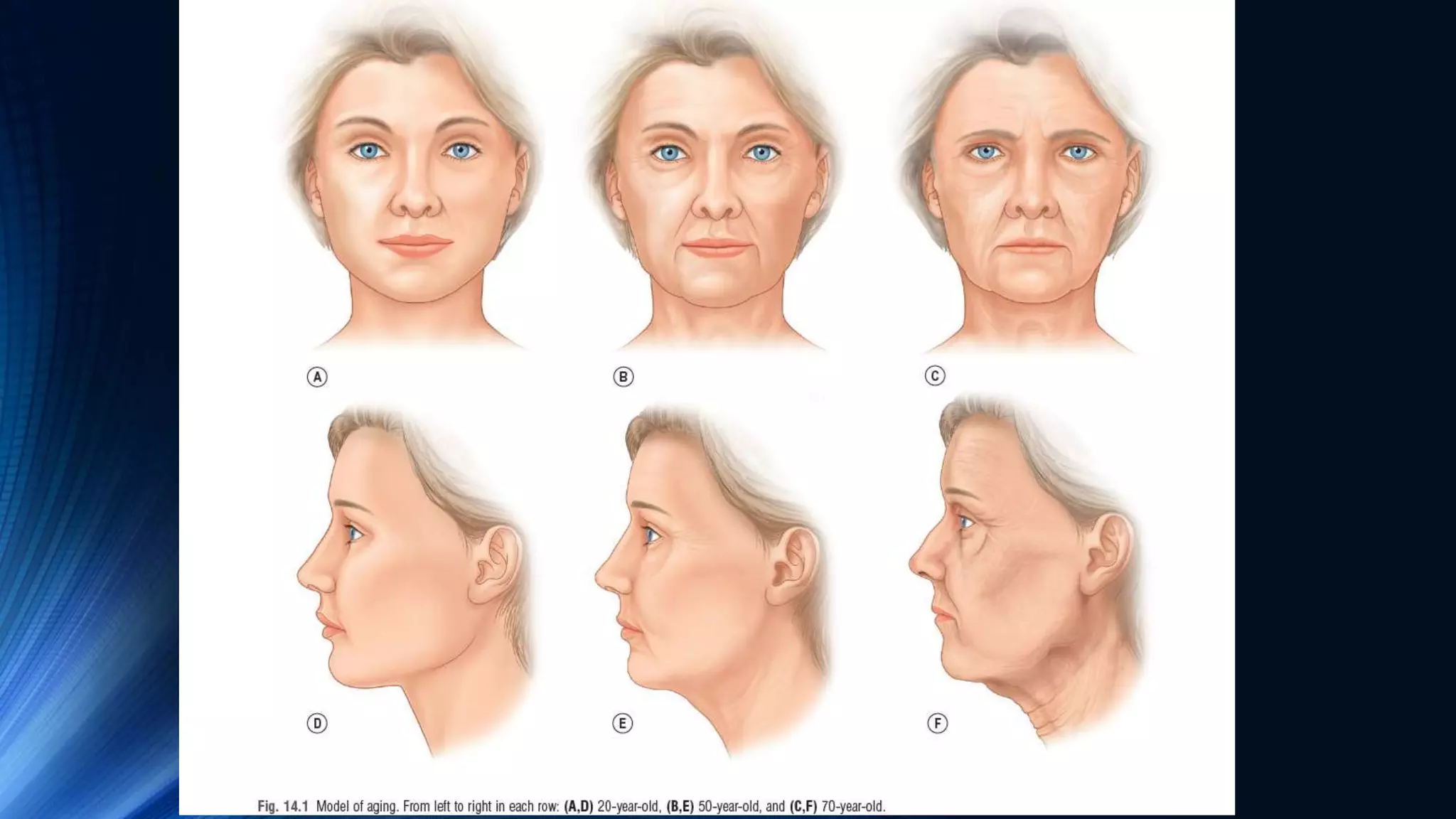
• Aging (most common)
Indications
• Aging (most common)
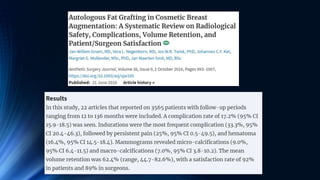
• Breast Augmentation
• Post Mastectomy breast
reconstruction
• Hand Augmentation
• ButtockAugmentation
• Hemifacial Microsomia
• Treacher Collins syndrome
• Filling of depressed areas
resulting from trauma/injury
• Liposuction deformities
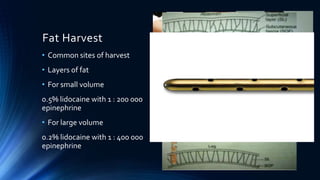
Fat Harvest
• Common sites of harvest
• Layers of fat
• For small volume
0.5% lidocaine with 1 : 200 000
epinephrine
• For large volume
0.2% lidocaine with 1 : 400 000
epinephrine
Fat Harvest
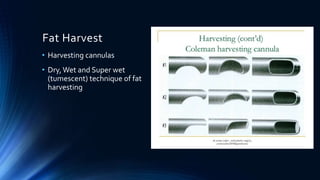
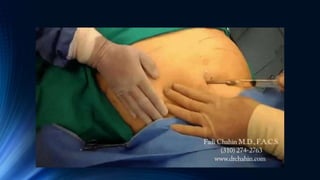
• Harvesting cannulas
• Dry,Wet and Super wet
(tumescent) technique of fat
harvesting
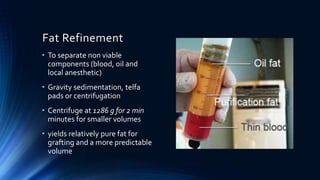
Fat Refinement
• To separate non viable
components (blood, oil and
local anesthetic)
• Gravity sedimentation, telfa
pads or centrifugation
• Centrifuge at 1286 g for 2 min
minutes for smaller volumes
• yields relatively pure fat for
grafting and a more predictable
volume
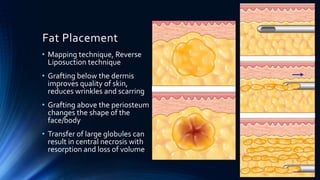
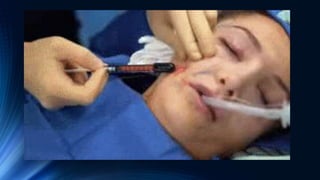
Fat Placement
• Mapping technique, Reverse
Liposuction technique
• Grafting below the dermis
improves quality of skin,
reduces wrinkles and scarring
• Grafting above the periosteum
changes the shape of the
face/body
• Transfer of large globules can
result in central necrosis with
resorption and loss of volume
Complications
• Aesthetic (commonest)
• Fat necrosis
• Contour irregularities due to
over grafting
• Intravascular embolization
• Weight gain can change the
size of the are grafted
• Infection
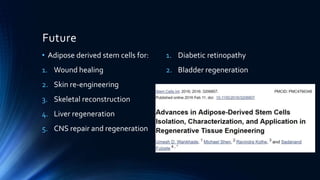
Future
• Adipose derived stem cells for:
1. Wound healing
2. Skin re-engineering
3. Skeletal reconstruction
4. Liver regeneration
5. CNS repair and regeneration
1. Diabetic retinopathy
2. Bladder regeneration
THANK YOU

Fat grafting in Plastic Surgery

  • 2.
    Fat Grafting DR. MUJTUBAPERVEZ KHAN PLASTIC AND RECONSTRUCTIVE SURGERY DUHS-CHK
  • 3.
    Biology of FattyTissue • Connective tissue composed of adipocytes along with stromal cells, adipose-derived stem cells (ADSC), mesenchymal stem cells etc. • Contributes in energy storage, thermoregulation and cushioning • White and BrownAdipose tissue • Subcutaneous adipose tissue is the largest known reservoir of adult stem cells
  • 4.
    History • The firstreport of fat grafting was in 1893 by German surgeon Neuber • Fat grafting was considered difficult, time consuming and unpredictable • Dr Coleman in 1990’s documented stability in fat grafting with his technique
  • 6.
  • 7.
    Indications • Aging (mostcommon) • Breast Augmentation • Post Mastectomy breast reconstruction • Hand Augmentation • ButtockAugmentation • Hemifacial Microsomia • Treacher Collins syndrome • Filling of depressed areas resulting from trauma/injury • Liposuction deformities
  • 8.
    Fat Harvest • Commonsites of harvest • Layers of fat • For small volume 0.5% lidocaine with 1 : 200 000 epinephrine • For large volume 0.2% lidocaine with 1 : 400 000 epinephrine
  • 9.
    Fat Harvest • Harvestingcannulas • Dry,Wet and Super wet (tumescent) technique of fat harvesting
  • 11.
    Fat Refinement • Toseparate non viable components (blood, oil and local anesthetic) • Gravity sedimentation, telfa pads or centrifugation • Centrifuge at 1286 g for 2 min minutes for smaller volumes • yields relatively pure fat for grafting and a more predictable volume
  • 12.
    Fat Placement • Mappingtechnique, Reverse Liposuction technique • Grafting below the dermis improves quality of skin, reduces wrinkles and scarring • Grafting above the periosteum changes the shape of the face/body • Transfer of large globules can result in central necrosis with resorption and loss of volume
  • 14.
    Complications • Aesthetic (commonest) •Fat necrosis • Contour irregularities due to over grafting • Intravascular embolization • Weight gain can change the size of the are grafted • Infection
  • 18.
    Future • Adipose derivedstem cells for: 1. Wound healing 2. Skin re-engineering 3. Skeletal reconstruction 4. Liver regeneration 5. CNS repair and regeneration 1. Diabetic retinopathy 2. Bladder regeneration
  • 19.