

Group 7
Stages Of
Mitosis
Group member: Lee Kang
Wenn, Lai Siew Kee, Lin Sing
Ka, Leonard Sie
Class: 4A
Teacher: Pn Ko Hui Ing
What is Mitosis?
 Mitosis is a form of nuclear division that
produces daughter nuclei containing the
same number of chromosomes as the
parent nuclues. The daughter nuclei are
genetically identical.
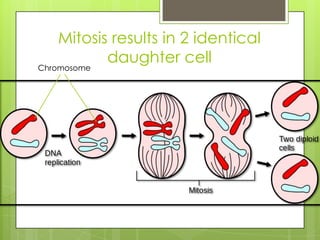
Mitosis results in 2 identical
daughter cell
Chromosome
Chromosome
 Chromosomes are made up of the
molecule deoxyribonuclei acid (DNA).
DNA stores all the information that a cell
needs in order to grow and to carry out
vital activities. This information is stored as
sections of DNA or genes. The daughter
cells produced by mitosis are genetically
identical to the parent cell.
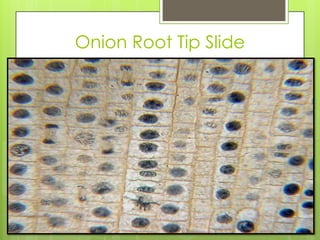
Onion Root Tip Slide
Stages Of Mitosis
 Process of mitosis can be divided into 4
stages:
1) Prophase
2) Metaphase
3) Anaphase
4) Telophase
The division is arbitary & whole process of
mitosis is continuous.
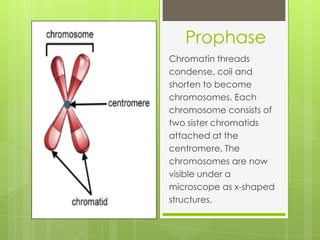
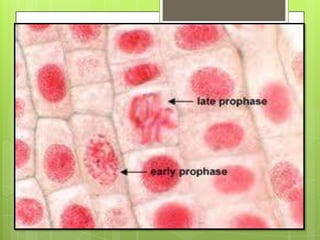
Prophase
Chromatin threads
condense, coil and
shorten to become
chromosomes. Each
chromosome consists of
two sister chromatids
attached at the
centromere. The
chromosomes are now
visible under a
microscope as x-shaped
structures.
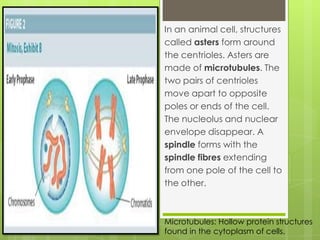
In an animal cell, structures
called asters form around
the centrioles. Asters are
made of microtubules. The
two pairs of centrioles
move apart to opposite
poles or ends of the cell.
The nucleolus and nuclear
envelope disappear. A
spindle forms with the
spindle fibres extending
from one pole of the cell to
the other.
Microtubules: Hollow protein structures
found in the cytoplasm of cells.
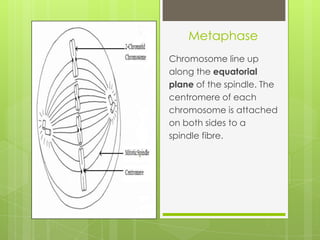
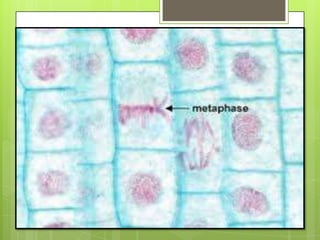
Metaphase
Chromosome line up
along the equatorial
plane of the spindle. The
centromere of each
chromosome is attached
on both sides to a
spindle fibre.
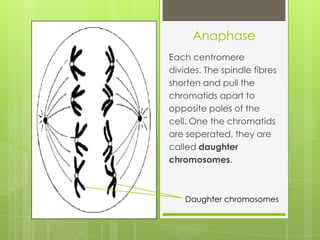
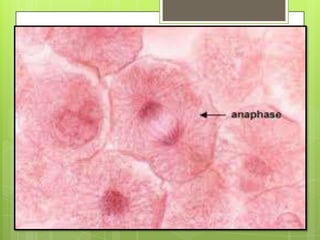
Anaphase
Each centromere
divides. The spindle fibres
shorten and pull the
chromatids apart to
opposite poles of the
cell. One the chromatids
are seperated, they are
called daughter
chromosomes.
Daughter chromosomes
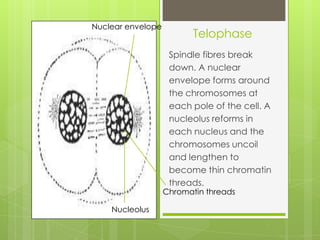
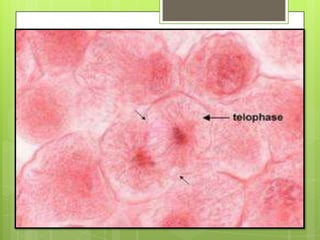
Telophase
Spindle fibres break
down. A nuclear
envelope forms around
the chromosomes at
each pole of the cell. A
nucleolus reforms in
each nucleus and the
chromosomes uncoil
and lengthen to
become thin chromatin
threads.
Chromatin threads
Nuclear envelope
Nucleolus
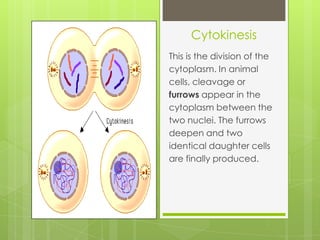
Cytokinesis
This is the division of the
cytoplasm. In animal
cells, cleavage or
furrows appear in the
cytoplasm between the
two nuclei. The furrows
deepen and two
identical daughter cells
are finally produced.
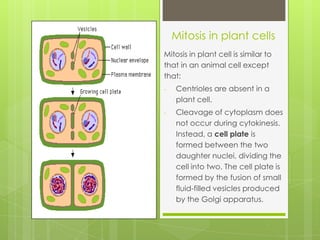
Mitosis in plant cells
Mitosis in plant cell is similar to
that in an animal cell except
that:
- Centrioles are absent in a
plant cell.
- Cleavage of cytoplasm does
not occur during cytokinesis.
Instead, a cell plate is
formed between the two
daughter nuclei, dividing the
cell into two. The cell plate is
formed by the fusion of small
fluid-filled vesicles produced
by the Golgi apparatus.
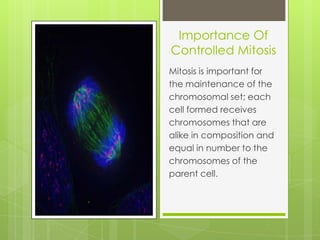
Importance Of
Controlled Mitosis
Mitosis is important for
the maintenance of the
chromosomal set; each
cell formed receives
chromosomes that are
alike in composition and
equal in number to the
chromosomes of the
parent cell.
Mitosis occurs in the following circumstances:
Development and growth
The number of cells within an organism increases by mitosis. This is the basis
of the development of a multicellular body from a single cell i.e., zygote
and also the basis of the growth of a multicellular body.
Cell replacement
In some parts of body, e.g. skin and digestive tract, cells are constantly
sloughed off and replaced by new ones. New cells are formed by mitosis
and so are exact copies of the cells being replaced. Similarly, RBCs (red
blood cells) have short life span (only about 4 months) and new RBCs are
formed by mitosis.
Regeneration
Some organisms can regenerate body parts. The production of new cells
in such instances is achieved by mitosis. For example, starfish regenerate
lost arms through mitosis.
Asexual reproduction
Some organisms produce genetically similar offspring through asexual
reproduction. For example, the hydra reproduces asexually by budding.
The cells at the surface of hydra undergo mitosis and form a mass called a
bud. Mitosis continues in the cells of the bud and this grows into a new
individual. The same division happens during asexual reproduction or
vegetative propagation in plants.
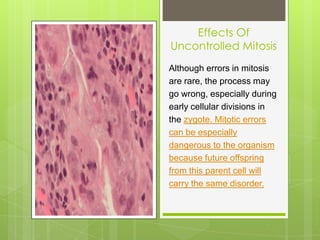
Effects Of
Uncontrolled Mitosis
Although errors in mitosis
are rare, the process may
go wrong, especially during
early cellular divisions in
the zygote. Mitotic errors
can be especially
dangerous to the organism
because future offspring
from this parent cell will
carry the same disorder.
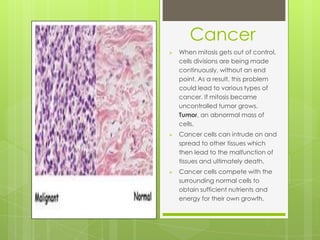
Cancer
 When mitosis gets out of control,
cells divisions are being made
continuously, without an end
point. As a result, this problem
could lead to various types of
cancer. If mitosis became
uncontrolled tumor grows.
Tumor, an abnormal mass of
cells.
 Cancer cells can intrude on and
spread to other tissues which
then lead to the malfunction of
tissues and ultimately death.
 Cancer cells compete with the
surrounding normal cells to
obtain sufficient nutrients and
energy for their own growth.
THE END

Biology f4 c5n7

  • 1.
    Group 7 Stages Of Mitosis Groupmember: Lee Kang Wenn, Lai Siew Kee, Lin Sing Ka, Leonard Sie Class: 4A Teacher: Pn Ko Hui Ing
  • 2.
    What is Mitosis? Mitosis is a form of nuclear division that produces daughter nuclei containing the same number of chromosomes as the parent nuclues. The daughter nuclei are genetically identical.
  • 3.
    Mitosis results in2 identical daughter cell Chromosome
  • 4.
    Chromosome  Chromosomes aremade up of the molecule deoxyribonuclei acid (DNA). DNA stores all the information that a cell needs in order to grow and to carry out vital activities. This information is stored as sections of DNA or genes. The daughter cells produced by mitosis are genetically identical to the parent cell.
  • 5.
  • 6.
    Stages Of Mitosis Process of mitosis can be divided into 4 stages: 1) Prophase 2) Metaphase 3) Anaphase 4) Telophase The division is arbitary & whole process of mitosis is continuous.
  • 7.
    Prophase Chromatin threads condense, coiland shorten to become chromosomes. Each chromosome consists of two sister chromatids attached at the centromere. The chromosomes are now visible under a microscope as x-shaped structures.
  • 8.
    In an animalcell, structures called asters form around the centrioles. Asters are made of microtubules. The two pairs of centrioles move apart to opposite poles or ends of the cell. The nucleolus and nuclear envelope disappear. A spindle forms with the spindle fibres extending from one pole of the cell to the other. Microtubules: Hollow protein structures found in the cytoplasm of cells.
  • 10.
    Metaphase Chromosome line up alongthe equatorial plane of the spindle. The centromere of each chromosome is attached on both sides to a spindle fibre.
  • 12.
    Anaphase Each centromere divides. Thespindle fibres shorten and pull the chromatids apart to opposite poles of the cell. One the chromatids are seperated, they are called daughter chromosomes. Daughter chromosomes
  • 14.
    Telophase Spindle fibres break down.A nuclear envelope forms around the chromosomes at each pole of the cell. A nucleolus reforms in each nucleus and the chromosomes uncoil and lengthen to become thin chromatin threads. Chromatin threads Nuclear envelope Nucleolus
  • 16.
    Cytokinesis This is thedivision of the cytoplasm. In animal cells, cleavage or furrows appear in the cytoplasm between the two nuclei. The furrows deepen and two identical daughter cells are finally produced.
  • 17.
    Mitosis in plantcells Mitosis in plant cell is similar to that in an animal cell except that: - Centrioles are absent in a plant cell. - Cleavage of cytoplasm does not occur during cytokinesis. Instead, a cell plate is formed between the two daughter nuclei, dividing the cell into two. The cell plate is formed by the fusion of small fluid-filled vesicles produced by the Golgi apparatus.
  • 18.
    Importance Of Controlled Mitosis Mitosisis important for the maintenance of the chromosomal set; each cell formed receives chromosomes that are alike in composition and equal in number to the chromosomes of the parent cell.
  • 19.
    Mitosis occurs inthe following circumstances: Development and growth The number of cells within an organism increases by mitosis. This is the basis of the development of a multicellular body from a single cell i.e., zygote and also the basis of the growth of a multicellular body. Cell replacement In some parts of body, e.g. skin and digestive tract, cells are constantly sloughed off and replaced by new ones. New cells are formed by mitosis and so are exact copies of the cells being replaced. Similarly, RBCs (red blood cells) have short life span (only about 4 months) and new RBCs are formed by mitosis. Regeneration Some organisms can regenerate body parts. The production of new cells in such instances is achieved by mitosis. For example, starfish regenerate lost arms through mitosis. Asexual reproduction Some organisms produce genetically similar offspring through asexual reproduction. For example, the hydra reproduces asexually by budding. The cells at the surface of hydra undergo mitosis and form a mass called a bud. Mitosis continues in the cells of the bud and this grows into a new individual. The same division happens during asexual reproduction or vegetative propagation in plants.
  • 20.
    Effects Of Uncontrolled Mitosis Althougherrors in mitosis are rare, the process may go wrong, especially during early cellular divisions in the zygote. Mitotic errors can be especially dangerous to the organism because future offspring from this parent cell will carry the same disorder.
  • 21.
    Cancer  When mitosisgets out of control, cells divisions are being made continuously, without an end point. As a result, this problem could lead to various types of cancer. If mitosis became uncontrolled tumor grows. Tumor, an abnormal mass of cells.  Cancer cells can intrude on and spread to other tissues which then lead to the malfunction of tissues and ultimately death.  Cancer cells compete with the surrounding normal cells to obtain sufficient nutrients and energy for their own growth.
  • 23.