BIO INFORMATICS
PRESENTED BY : DHARAL MISTRY
SUBJECT: PRINCIPLES OF DRUG DISCOVERY (MPL 203 T)
K.B.I.P.E.R
What is Bioinformatics
 The application of computer technology to the
management of biological information. Specifically, it
is the science of developing computer databases,
algorithms and software’s to facilitate and expedite
biological research.
Goals of Bioinformatics
 To uncover the wealth of Biological information
hidden in the mass of sequence, structure, literature
and biological data.
 It is being used now and in the foreseeable future in
the areas of molecular medicine.
 It has environmental benefits in identifying waste
and clean up bacteria.
 In agriculture, it can be used to produce high yield,
low maintenance crops.
Commonly used software tools/ Techniques
 MSEQ-In production and display of protein structure.
 NAMOT-Nucleic Acid Modeling Tool : Structure modification of single
or double stranded DNA or RNA.
 PEPTOOL- Identification of protein functions.
 RAPTOR-Prediction of protein structures.
 GENE JOKEY-Editing manipulation and analysis of Nucleic Acid and
protein sequence.
 PAP-Analysis of protein structures.
 BLAST-Structures and functions of genes and proteins.
Fields of Bioinformatics
 Molecular Medicine
 Gene Therapy
 Drug Development
 Microbial genome applications
 Crop Improvement
 Forensic Analysis of Microbes
 Biotechnology
 Evolutionary Studies
 Bio-Weapon Creation
Where Bioinformatics helps?
 In Experimental Molecular Biology
 In Genetics and Genomics
 In generating Biological Data
 Analysis of gene and protein expression
 Comparison of genomic data
 Understanding of evolutionary aspect of Evolution
 Understanding biological pathways and networks in System Biology
 In Simulation & Modeling of DNA, RNA & Protein.
Role of Bioinformatics
 1. Drug target identification
 One of the major thrusts of current bioinformatics
approaches is the prediction and identification of
biologically active candidates, and mining and
storage of related information.
 Drugs are usually only developed when the
particular drug target for those drugs actions have
been identified and studied.
 The number of potential targets for drug discovery
process is increasing exponentially.
 Mining and warehousing of the human genome
sequence using bioinformatics has helped to define
and classify the nucleotide compositions of those
genes, which are responsible for the coding of target
proteins, in addition to identifying new targets that
offer more potential for new drugs.
 Bioinformatics allows the identification and analysis
of more and more biological drug targets.
2. Drug target validation
 Bioinformatics also provides strategies and
algorithm to p new drug targets and to store and
manage available drug target information.
 After the discovery of “potential” drug targets, there
is an inappreciable need to establish a strong
association between a putative target and disease of
interest.
 The establishment of such a key association provides
justification for the drug development process. This
process, known as target validation,
 Target validation is an area where bioinformatics is
playing a significant role.
 Drug target validation helps to moderate the
potential for failure in the clinical testing and
approval phases.
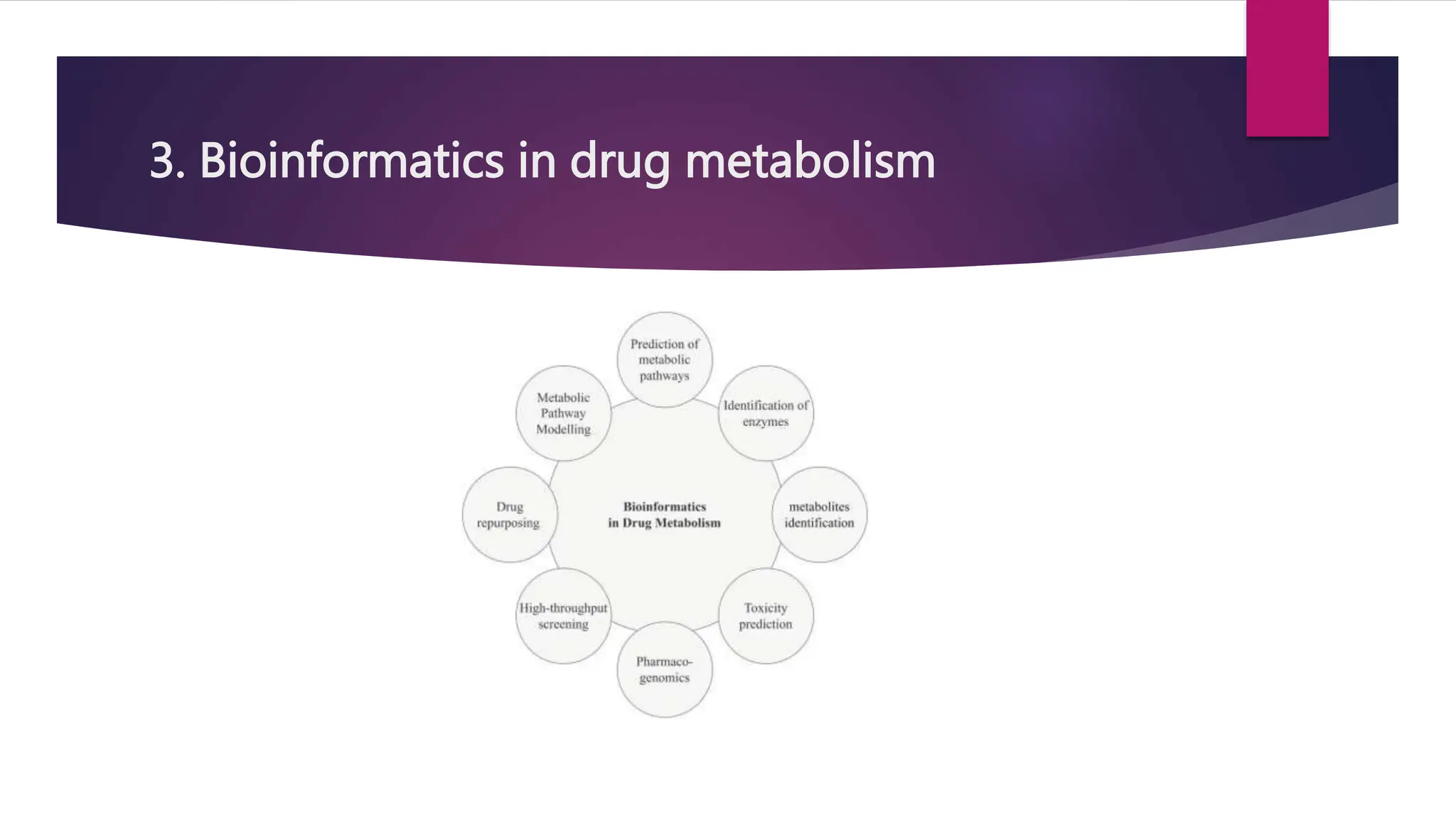
3. Bioinformatics in drug metabolism
 Bioinformatics tools play a crucial role in the analysis of
high-throughput screening data for drug discovery.
These tools assist in the identification of prospective
medication candidates and the prioritization of
compounds for subsequent testing, utilizing their
metabolic profiles.
 The identification of the specific enzymes involved in the
metabolism of a drug is of utmost importance in the
anticipation of drug-drug interactions and the potential
manifestation of adverse effects.
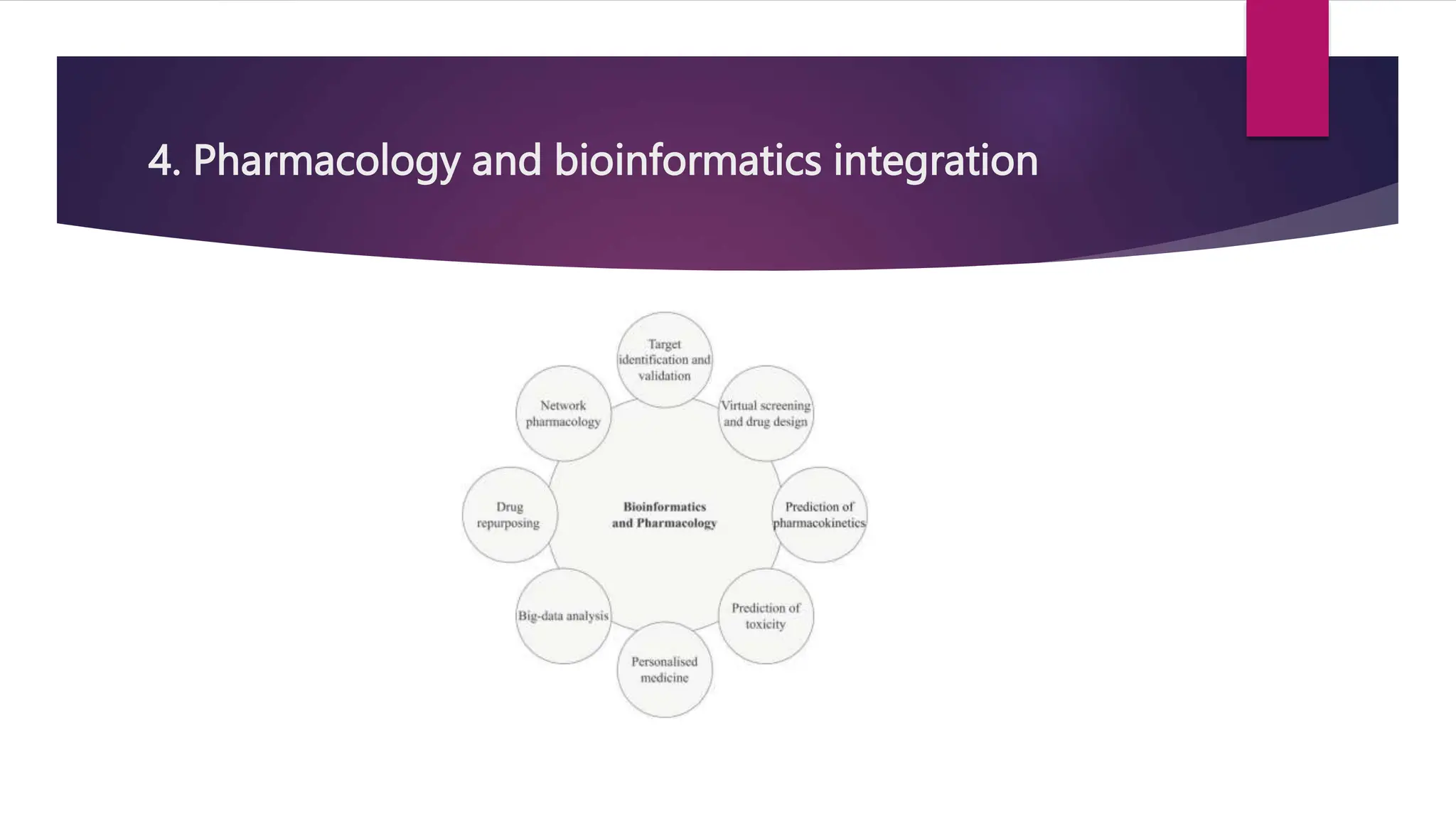
4. Pharmacology and bioinformatics integration
 Targets undergo a comprehensive pharmacological
validation process to verify their significance and
appropriateness for therapeutic intervention.
 Bioinformatics-driven computational techniques,
such as molecular docking and molecular dynamics
simulations, are utilized for the purpose of virtual
screening and the generation of prospective drug
candidates.
 Bioinformatics plays a crucial role in the
prioritization of candidate drugs based on their
binding affinity and specificity toward target
proteins through the utilization of predictive models.
 Evaluate the possible toxicity and unwanted effects,
assisting in the identification of safer and more
efficacious medication candidates prior to their
advancement into expensive experimental stages.
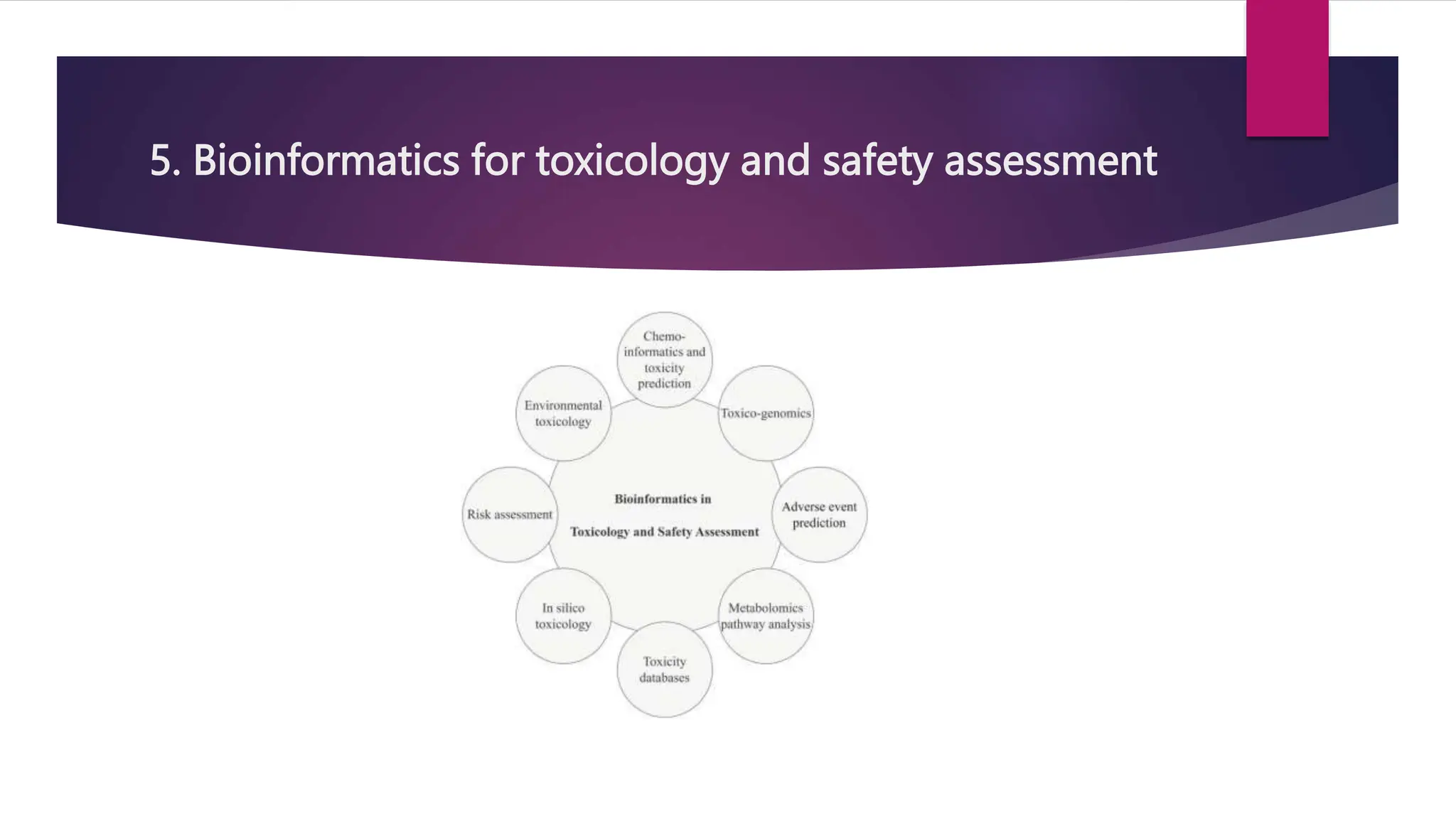
5. Bioinformatics for toxicology and safety assessment
 Toxico-genomics is an interdisciplinary field that
integrates genomics and toxicology to investigate
the impact of toxic chemicals on genes and gene
expression.
 Bioinformatics techniques are utilized to evaluate
adverse event reports derived from clinical trials and
post-market surveillance databases, with the aim of
identifying patterns of toxicity that are linked to
medications and other items.
 Bioinformatics technologies are utilized for the
purpose of analyzing this data and establishing
connections between modifications in metabolic
pathways and distinct harmful consequences.
 The field of in silico toxicology encompasses the
application of computer simulations to forecast the
toxicological characteristics of chemical substances.
REFRENCE
 Bayat, A. (2002). Science, medicine, and the future: Bioinformatics. BMJ : British Medical Journal.
 Articles. (n.d.). BioMed Central. Retrieved March, 25, 2024, from https://bmcbioinformatics.
 Xia, X. (2017). Bioinformatics and drug discovery.Current Topics in Medicinal Chemistry.
Bioinformatics ( Dharal Mistry ) M.Pharm

Bioinformatics ( Dharal Mistry ) M.Pharm

  • 1.
    BIO INFORMATICS PRESENTED BY: DHARAL MISTRY SUBJECT: PRINCIPLES OF DRUG DISCOVERY (MPL 203 T) K.B.I.P.E.R
  • 2.
    What is Bioinformatics The application of computer technology to the management of biological information. Specifically, it is the science of developing computer databases, algorithms and software’s to facilitate and expedite biological research.
  • 3.
    Goals of Bioinformatics To uncover the wealth of Biological information hidden in the mass of sequence, structure, literature and biological data.  It is being used now and in the foreseeable future in the areas of molecular medicine.  It has environmental benefits in identifying waste and clean up bacteria.
  • 4.
     In agriculture,it can be used to produce high yield, low maintenance crops.
  • 5.
    Commonly used softwaretools/ Techniques  MSEQ-In production and display of protein structure.  NAMOT-Nucleic Acid Modeling Tool : Structure modification of single or double stranded DNA or RNA.  PEPTOOL- Identification of protein functions.  RAPTOR-Prediction of protein structures.  GENE JOKEY-Editing manipulation and analysis of Nucleic Acid and protein sequence.  PAP-Analysis of protein structures.  BLAST-Structures and functions of genes and proteins.
  • 6.
    Fields of Bioinformatics Molecular Medicine  Gene Therapy  Drug Development  Microbial genome applications  Crop Improvement  Forensic Analysis of Microbes  Biotechnology  Evolutionary Studies  Bio-Weapon Creation
  • 7.
    Where Bioinformatics helps? In Experimental Molecular Biology  In Genetics and Genomics  In generating Biological Data  Analysis of gene and protein expression  Comparison of genomic data  Understanding of evolutionary aspect of Evolution  Understanding biological pathways and networks in System Biology  In Simulation & Modeling of DNA, RNA & Protein.
  • 8.
    Role of Bioinformatics 1. Drug target identification  One of the major thrusts of current bioinformatics approaches is the prediction and identification of biologically active candidates, and mining and storage of related information.  Drugs are usually only developed when the particular drug target for those drugs actions have been identified and studied.
  • 9.
     The numberof potential targets for drug discovery process is increasing exponentially.  Mining and warehousing of the human genome sequence using bioinformatics has helped to define and classify the nucleotide compositions of those genes, which are responsible for the coding of target proteins, in addition to identifying new targets that offer more potential for new drugs.
  • 10.
     Bioinformatics allowsthe identification and analysis of more and more biological drug targets.
  • 11.
    2. Drug targetvalidation  Bioinformatics also provides strategies and algorithm to p new drug targets and to store and manage available drug target information.  After the discovery of “potential” drug targets, there is an inappreciable need to establish a strong association between a putative target and disease of interest.
  • 12.
     The establishmentof such a key association provides justification for the drug development process. This process, known as target validation,  Target validation is an area where bioinformatics is playing a significant role.  Drug target validation helps to moderate the potential for failure in the clinical testing and approval phases.
  • 13.
    3. Bioinformatics indrug metabolism
  • 14.
     Bioinformatics toolsplay a crucial role in the analysis of high-throughput screening data for drug discovery. These tools assist in the identification of prospective medication candidates and the prioritization of compounds for subsequent testing, utilizing their metabolic profiles.  The identification of the specific enzymes involved in the metabolism of a drug is of utmost importance in the anticipation of drug-drug interactions and the potential manifestation of adverse effects.
  • 15.
    4. Pharmacology andbioinformatics integration
  • 16.
     Targets undergoa comprehensive pharmacological validation process to verify their significance and appropriateness for therapeutic intervention.  Bioinformatics-driven computational techniques, such as molecular docking and molecular dynamics simulations, are utilized for the purpose of virtual screening and the generation of prospective drug candidates.
  • 17.
     Bioinformatics playsa crucial role in the prioritization of candidate drugs based on their binding affinity and specificity toward target proteins through the utilization of predictive models.  Evaluate the possible toxicity and unwanted effects, assisting in the identification of safer and more efficacious medication candidates prior to their advancement into expensive experimental stages.
  • 18.
    5. Bioinformatics fortoxicology and safety assessment
  • 19.
     Toxico-genomics isan interdisciplinary field that integrates genomics and toxicology to investigate the impact of toxic chemicals on genes and gene expression.  Bioinformatics techniques are utilized to evaluate adverse event reports derived from clinical trials and post-market surveillance databases, with the aim of identifying patterns of toxicity that are linked to medications and other items.
  • 20.
     Bioinformatics technologiesare utilized for the purpose of analyzing this data and establishing connections between modifications in metabolic pathways and distinct harmful consequences.  The field of in silico toxicology encompasses the application of computer simulations to forecast the toxicological characteristics of chemical substances.
  • 21.
    REFRENCE  Bayat, A.(2002). Science, medicine, and the future: Bioinformatics. BMJ : British Medical Journal.  Articles. (n.d.). BioMed Central. Retrieved March, 25, 2024, from https://bmcbioinformatics.  Xia, X. (2017). Bioinformatics and drug discovery.Current Topics in Medicinal Chemistry.