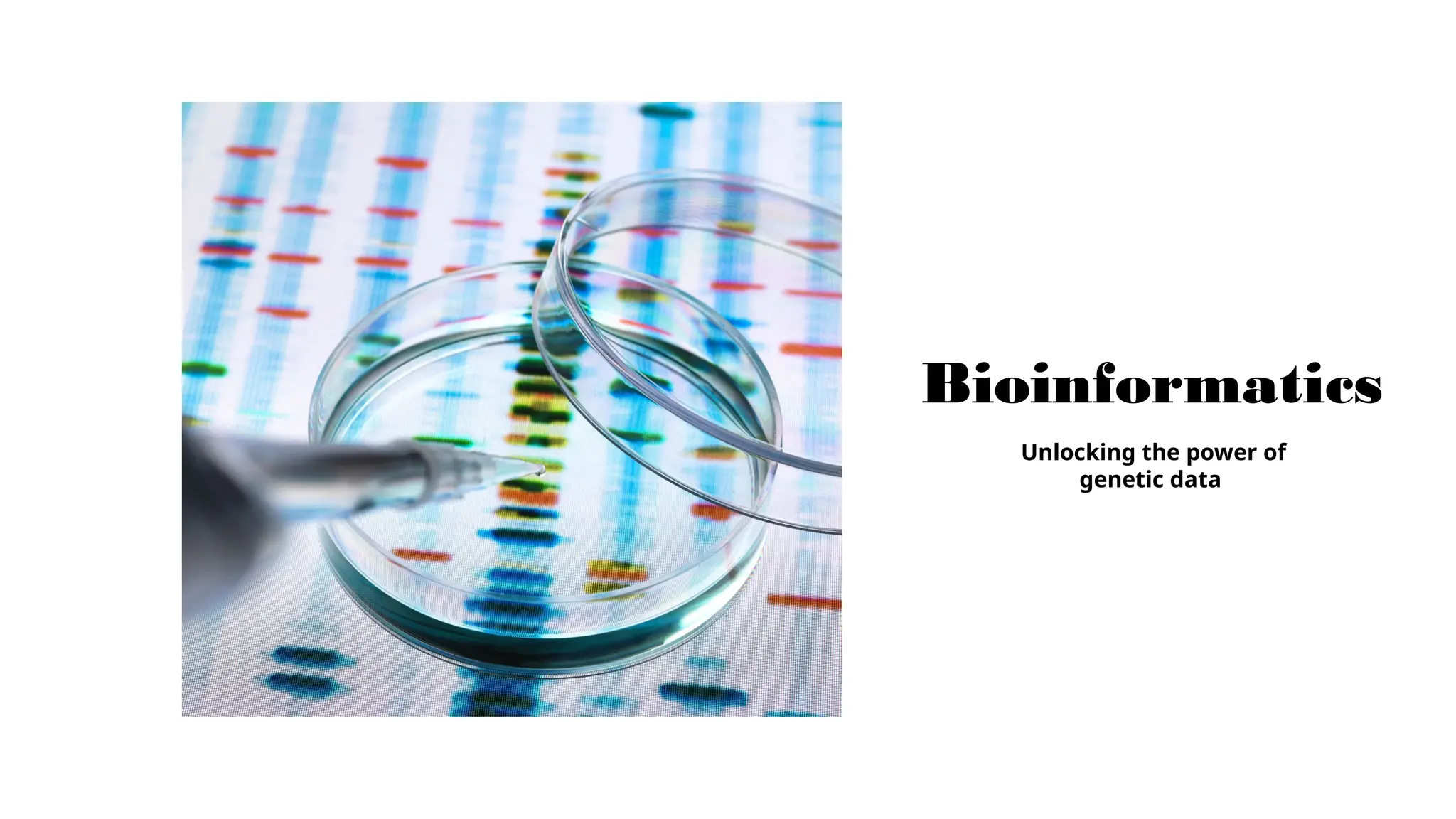
Bioinformatics
Unlocking the power of
genetic data
3
INTRODUCTION:
Bioinformatics provides the tools and techniques
to extract valuable insights from genetic data,
accelerating research in fields like genetics,
genomics, and personalized medicine. It
empowers scientists and healthcare
professionals to make data-driven decisions and
discoveries based on the information encoded in
our genes.
In next slides, Prominent operations of Genetic
data are given in the Field of Bioinformatics;
Data Analysis:
Bioinformatics tools and algorithms are used to process
and analyze vast amounts of genetic data, such as DNA
sequences, RNA sequences, and protein sequences. This
analysis helps identify patterns, mutations, and functional
elements within the genetic material.
Example:
For instance, the Human Genome Project utilized
bioinformatics to assemble, annotate, and compare the
entire human genome.
Structural Biology:
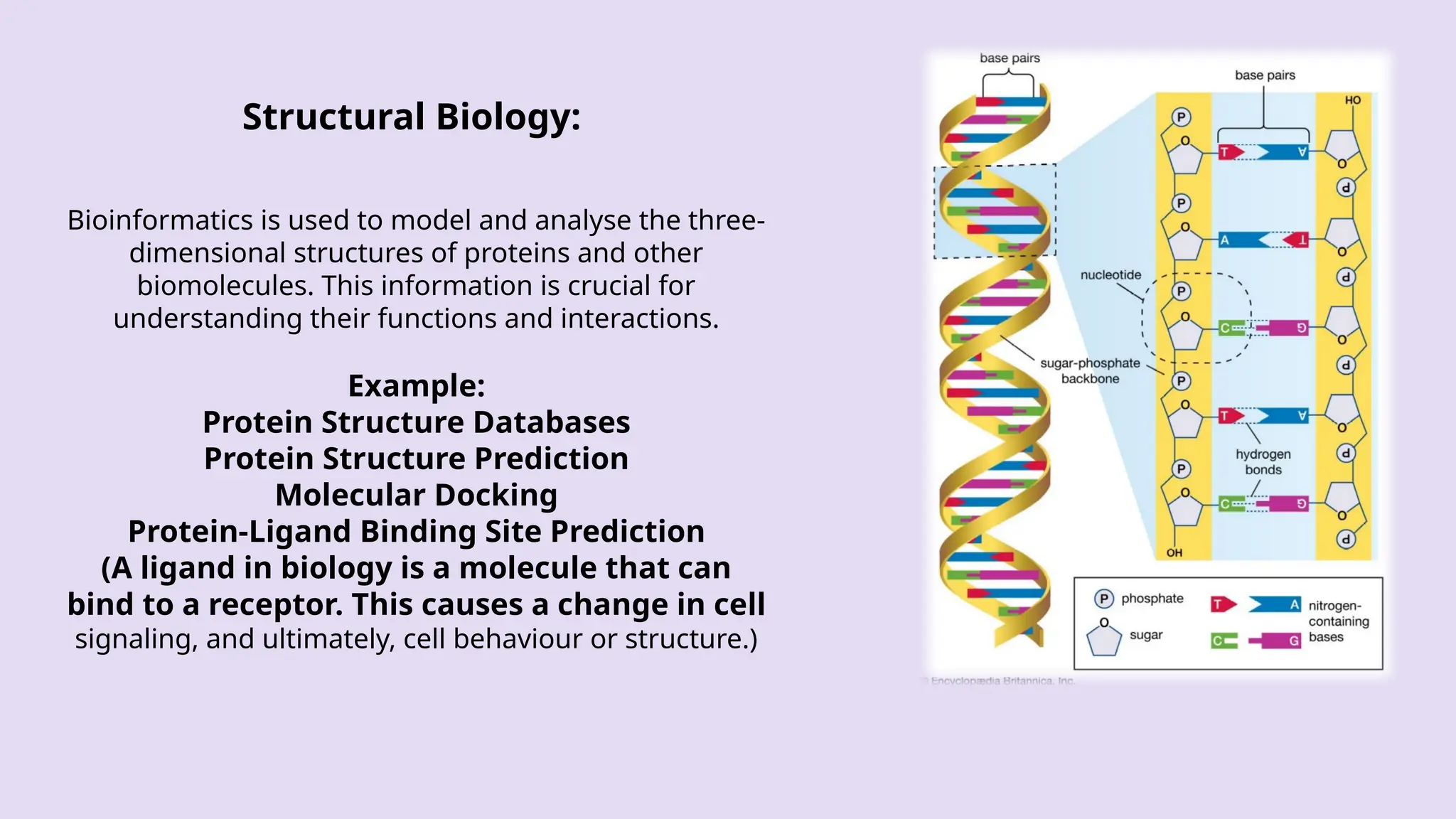
Bioinformatics is used to model and analyse the three-
dimensional structures of proteins and other
biomolecules. This information is crucial for
understanding their functions and interactions.
Example:
Protein Structure Databases
Protein Structure Prediction
Molecular Docking
Protein-Ligand Binding Site Prediction
(A ligand in biology is a molecule that can
bind to a receptor. This causes a change in cell
signaling, and ultimately, cell behaviour or structure.)
Personalized Medicine:
Genetic data, combined with bioinformatics,
can be used to tailor medical treatments to
an individual's genetic makeup, leading to
more effective and personalized
healthcare.Example:Disease Risk Assessment
Treatment selection Disease monitoring
Electronic Health records
Functional Annotation:
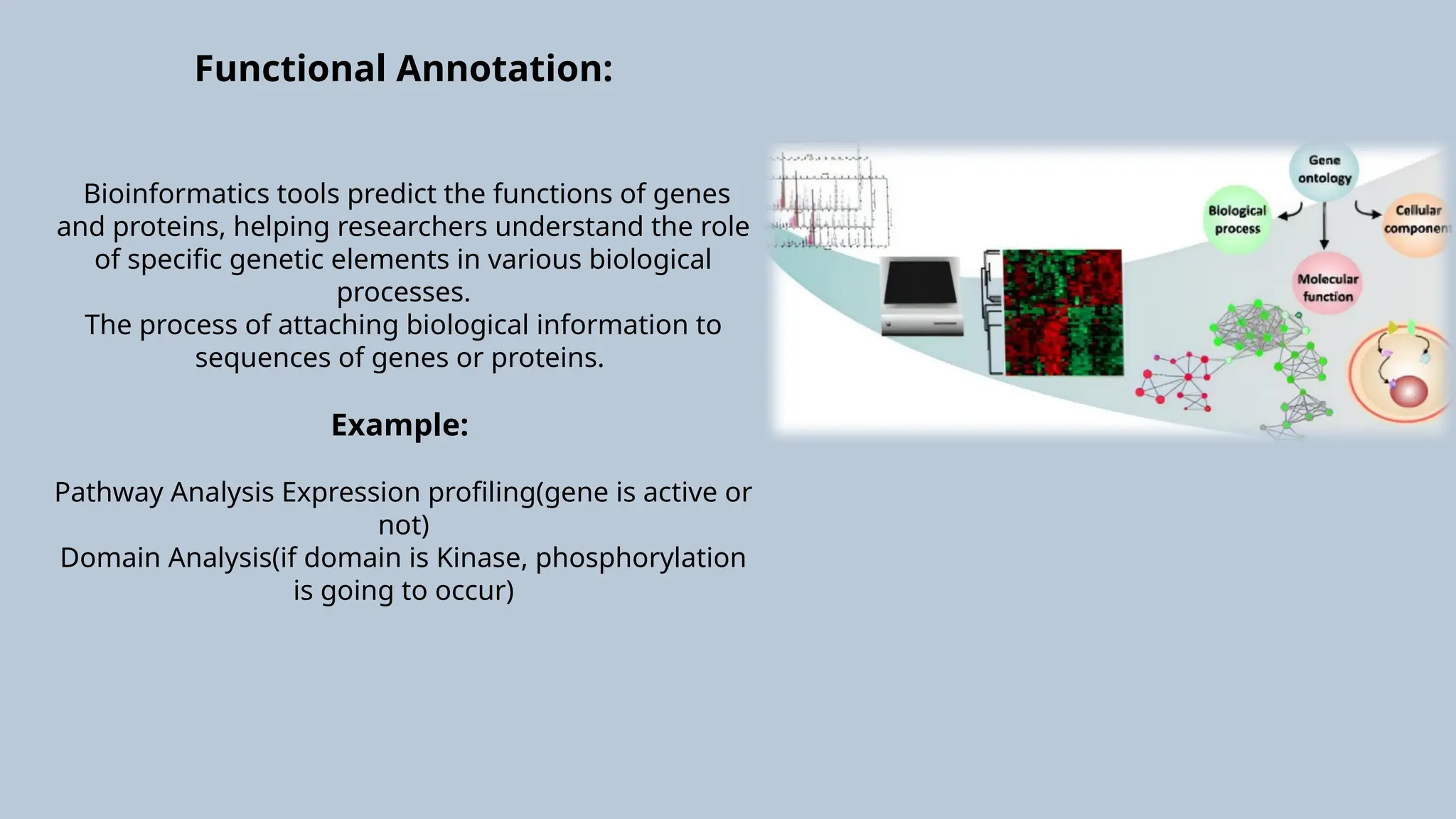
Bioinformatics tools predict the functions of genes
and proteins, helping researchers understand the role
of specific genetic elements in various biological
processes.
The process of attaching biological information to
sequences of genes or proteins.
Example:
Pathway Analysis Expression profiling(gene is active or
not)
Domain Analysis(if domain is Kinase, phosphorylation
is going to occur)
Disease Genetics:
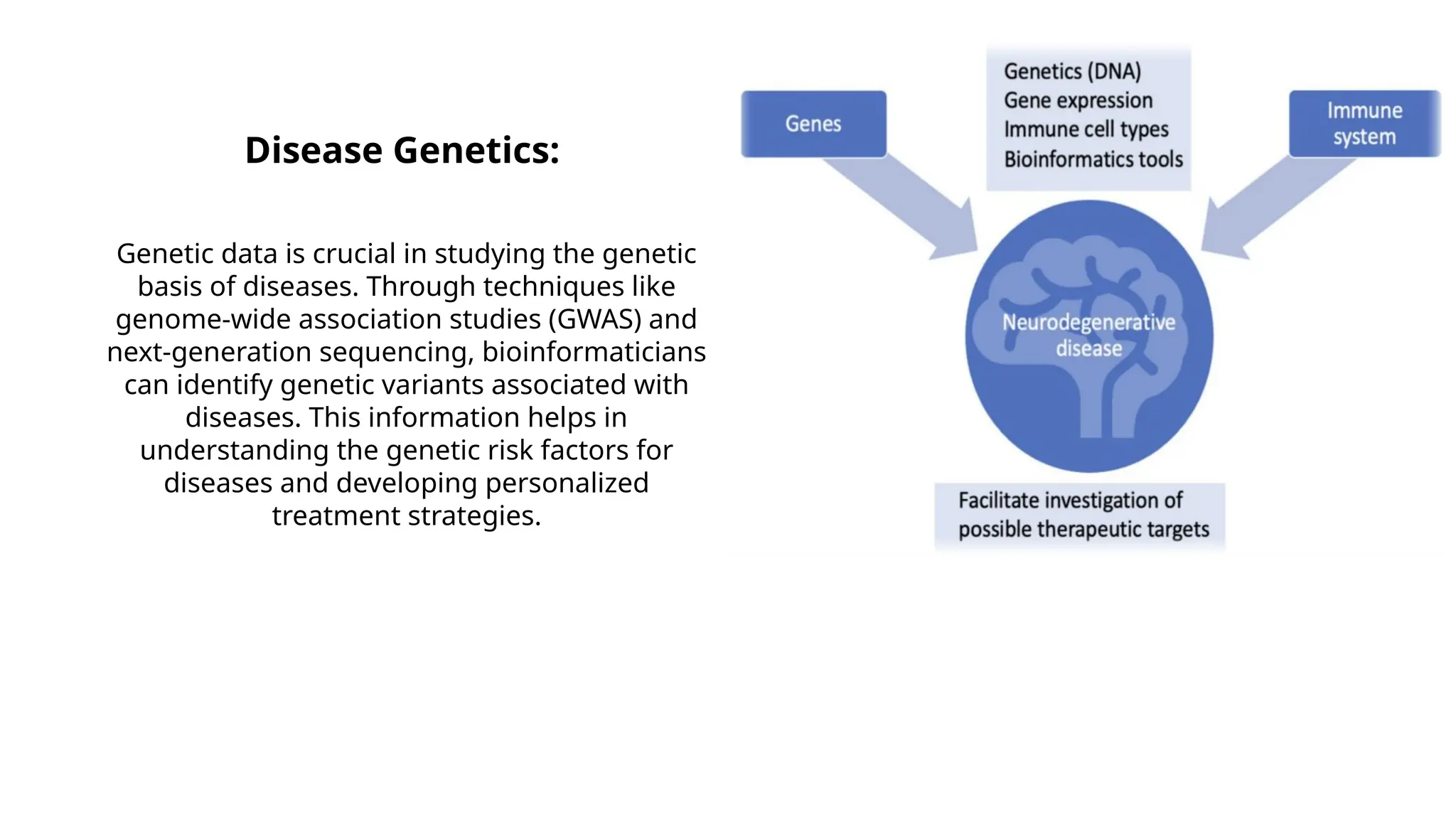
Genetic data is crucial in studying the genetic
basis of diseases. Through techniques like
genome-wide association studies (GWAS) and
next-generation sequencing, bioinformaticians
can identify genetic variants associated with
diseases. This information helps in
understanding the genetic risk factors for
diseases and developing personalized
treatment strategies.
Metagenomics:
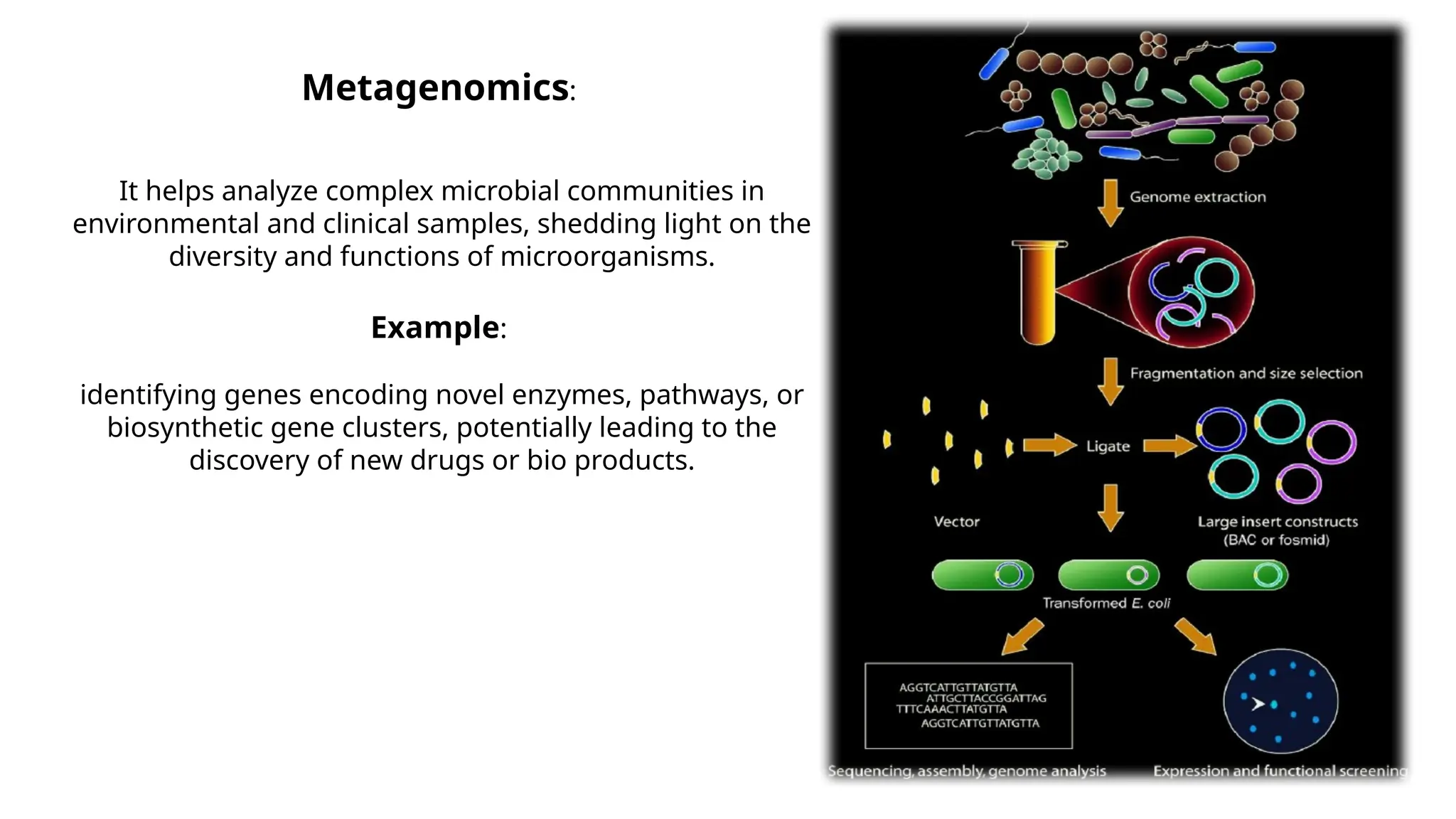
It helps analyze complex microbial communities in
environmental and clinical samples, shedding light on the
diversity and functions of microorganisms.
Example:
identifying genes encoding novel enzymes, pathways, or
biosynthetic gene clusters, potentially leading to the
discovery of new drugs or bio products.
Evolutionary Studies:
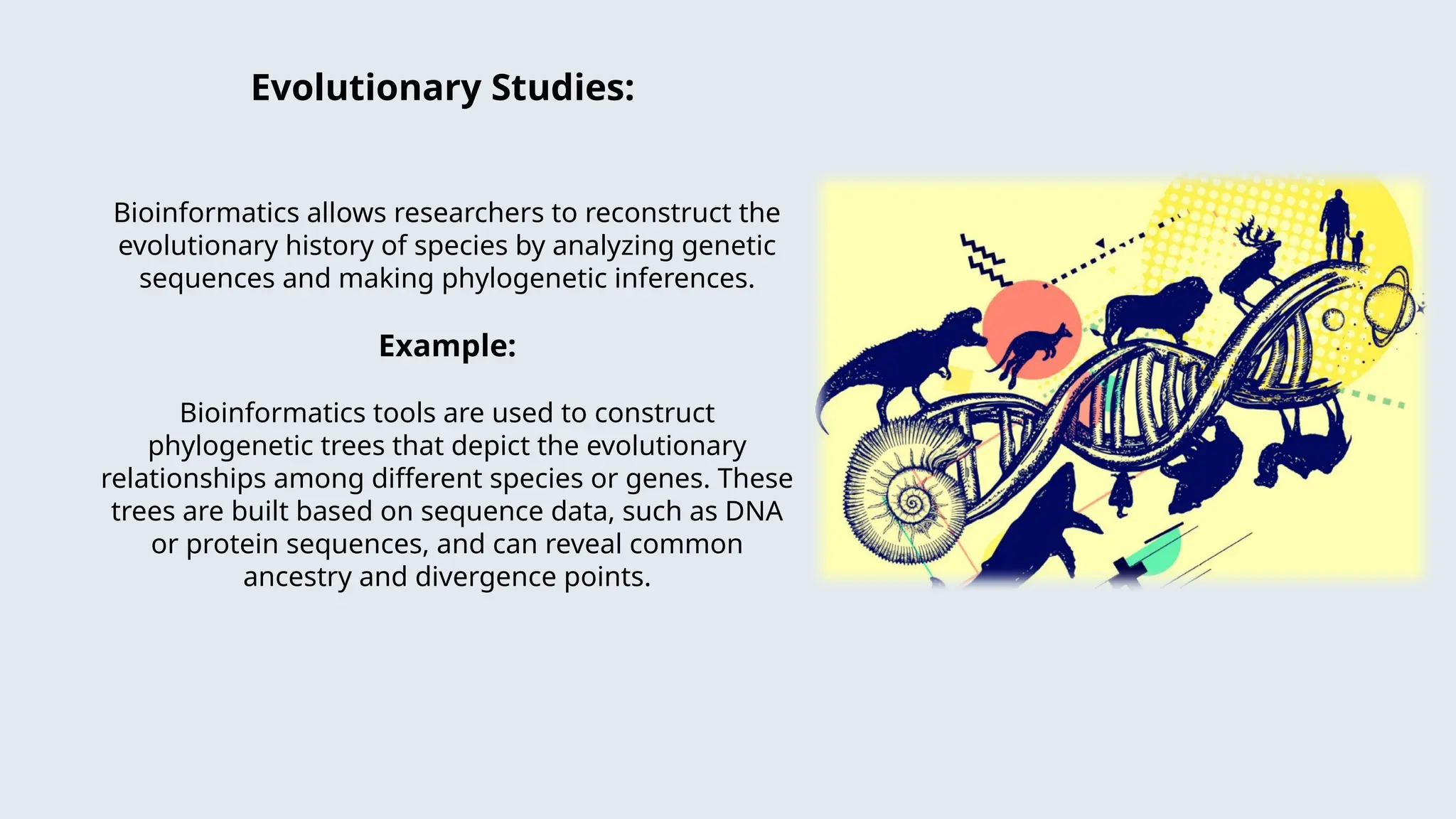
Bioinformatics allows researchers to reconstruct the
evolutionary history of species by analyzing genetic
sequences and making phylogenetic inferences.
Example:
Bioinformatics tools are used to construct
phylogenetic trees that depict the evolutionary
relationships among different species or genes. These
trees are built based on sequence data, such as DNA
or protein sequences, and can reveal common
ancestry and divergence points.
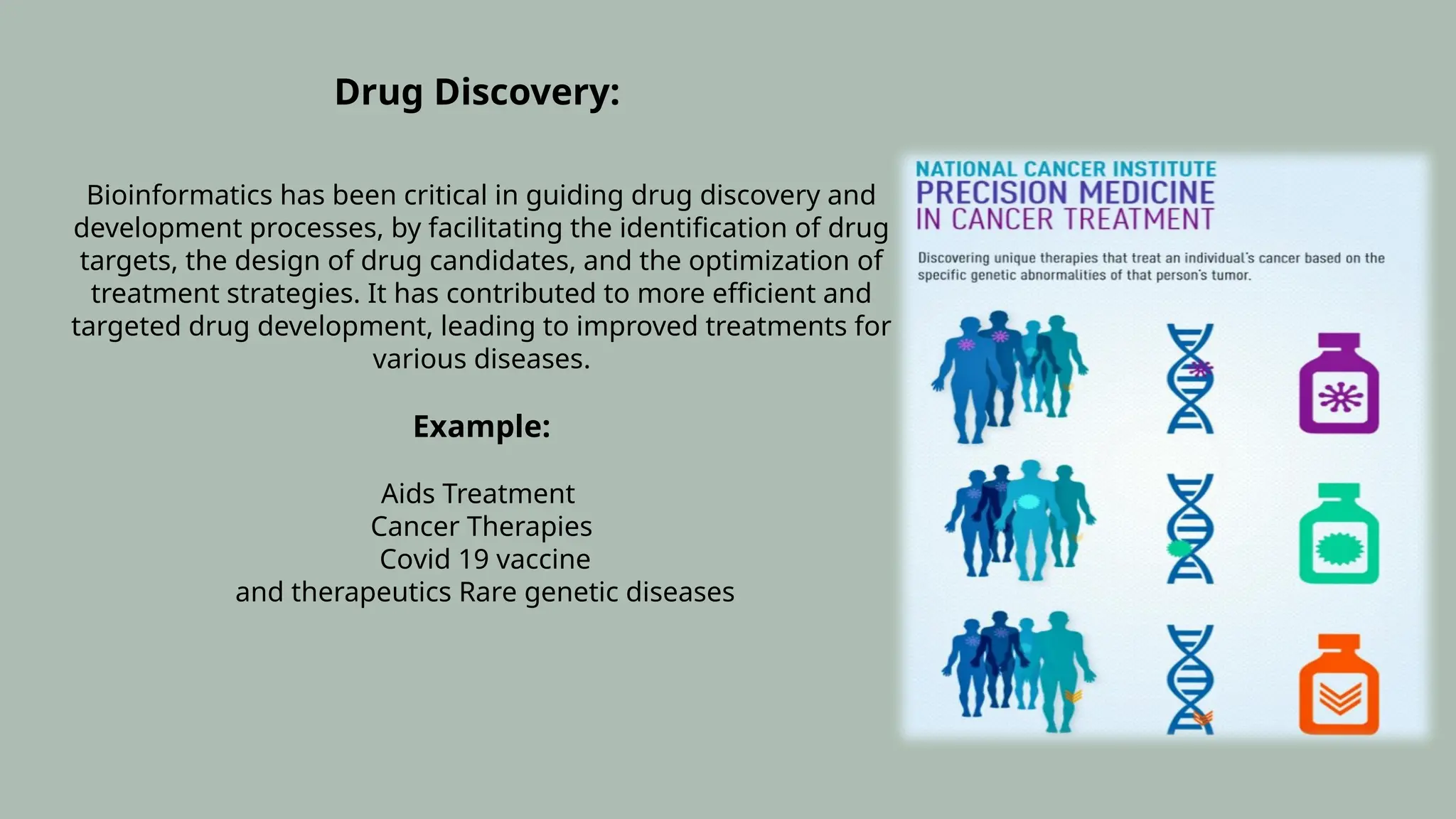
Drug Discovery:
Bioinformatics has been critical in guiding drug discovery and
development processes, by facilitating the identification of drug
targets, the design of drug candidates, and the optimization of
treatment strategies. It has contributed to more efficient and
targeted drug development, leading to improved treatments for
various diseases.
Example:
Aids Treatment
Cancer Therapies
Covid 19 vaccine
and therapeutics Rare genetic diseases
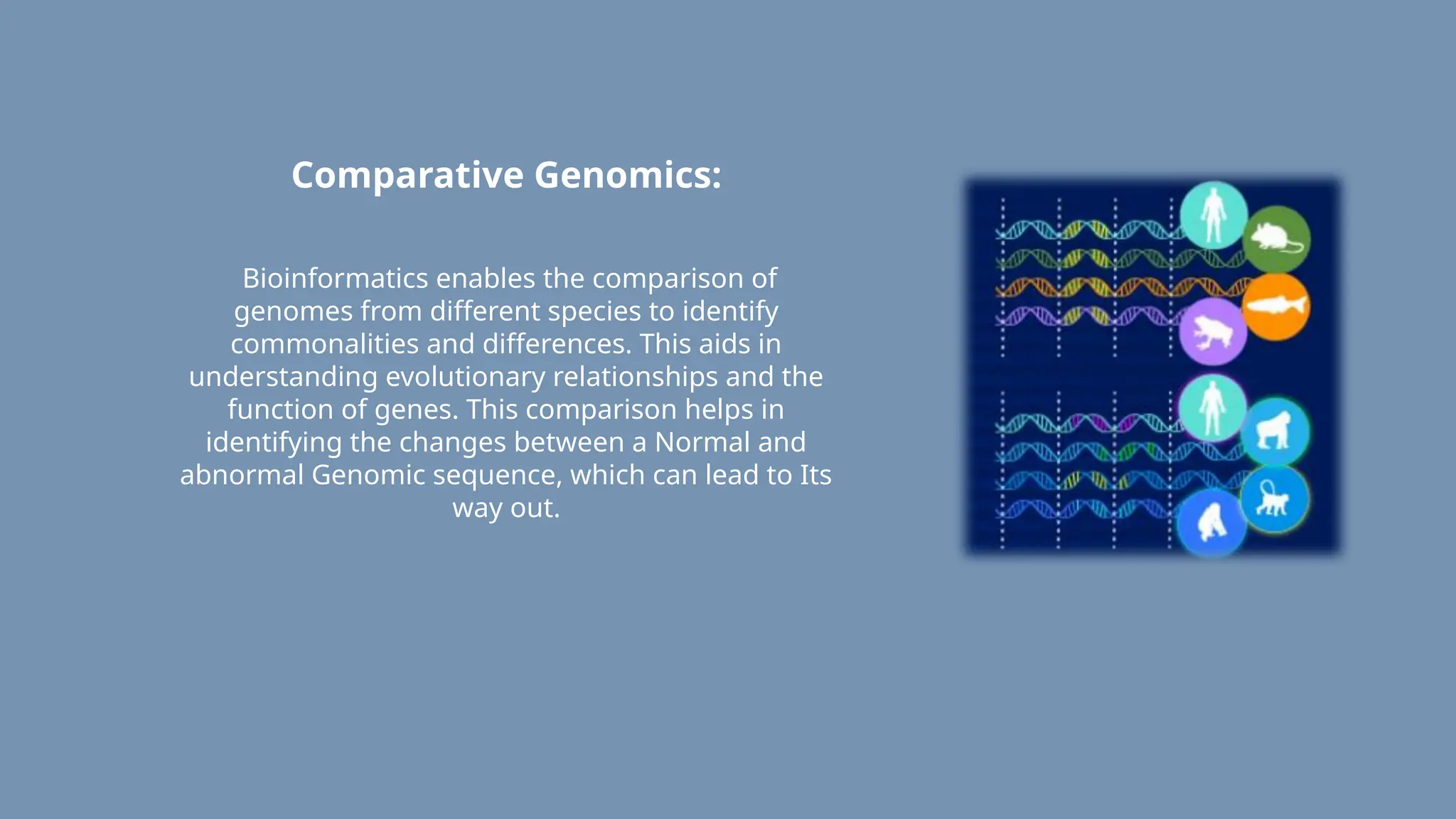
Comparative Genomics:
Bioinformatics enables the comparison of
genomes from different species to identify
commonalities and differences. This aids in
understanding evolutionary relationships and the
function of genes. This comparison helps in
identifying the changes between a Normal and
abnormal Genomic sequence, which can lead to Its
way out.
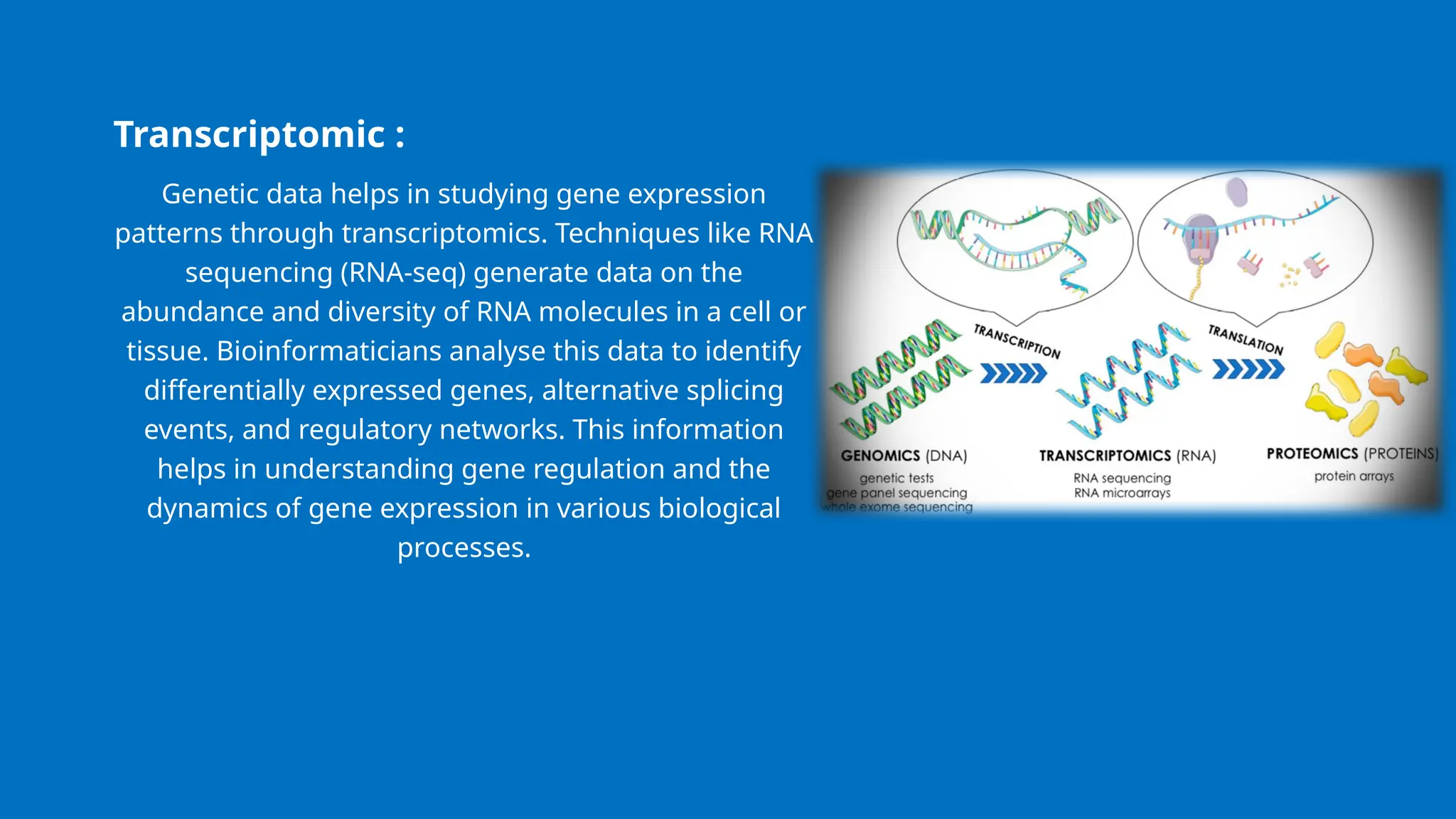
Transcriptomic :
Genetic data helps in studying gene expression
patterns through transcriptomics. Techniques like RNA
sequencing (RNA-seq) generate data on the
abundance and diversity of RNA molecules in a cell or
tissue. Bioinformaticians analyse this data to identify
differentially expressed genes, alternative splicing
events, and regulatory networks. This information
helps in understanding gene regulation and the
dynamics of gene expression in various biological
processes.
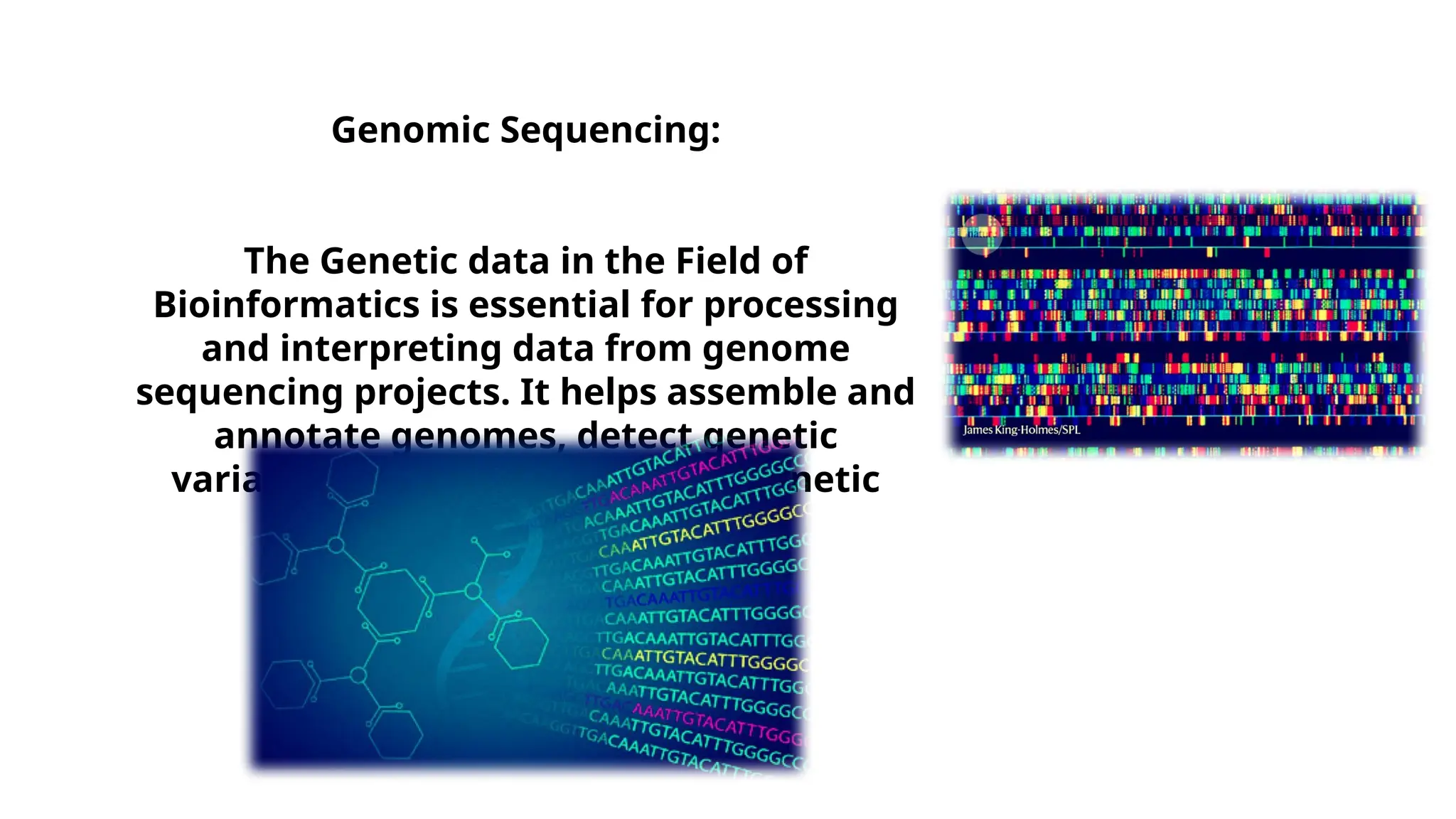
Genomic Sequencing:
The Genetic data in the Field of
Bioinformatics is essential for processing
and interpreting data from genome
sequencing projects. It helps assemble and
annotate genomes, detect genetic
variations, and understand the genetic
basis of diseases.
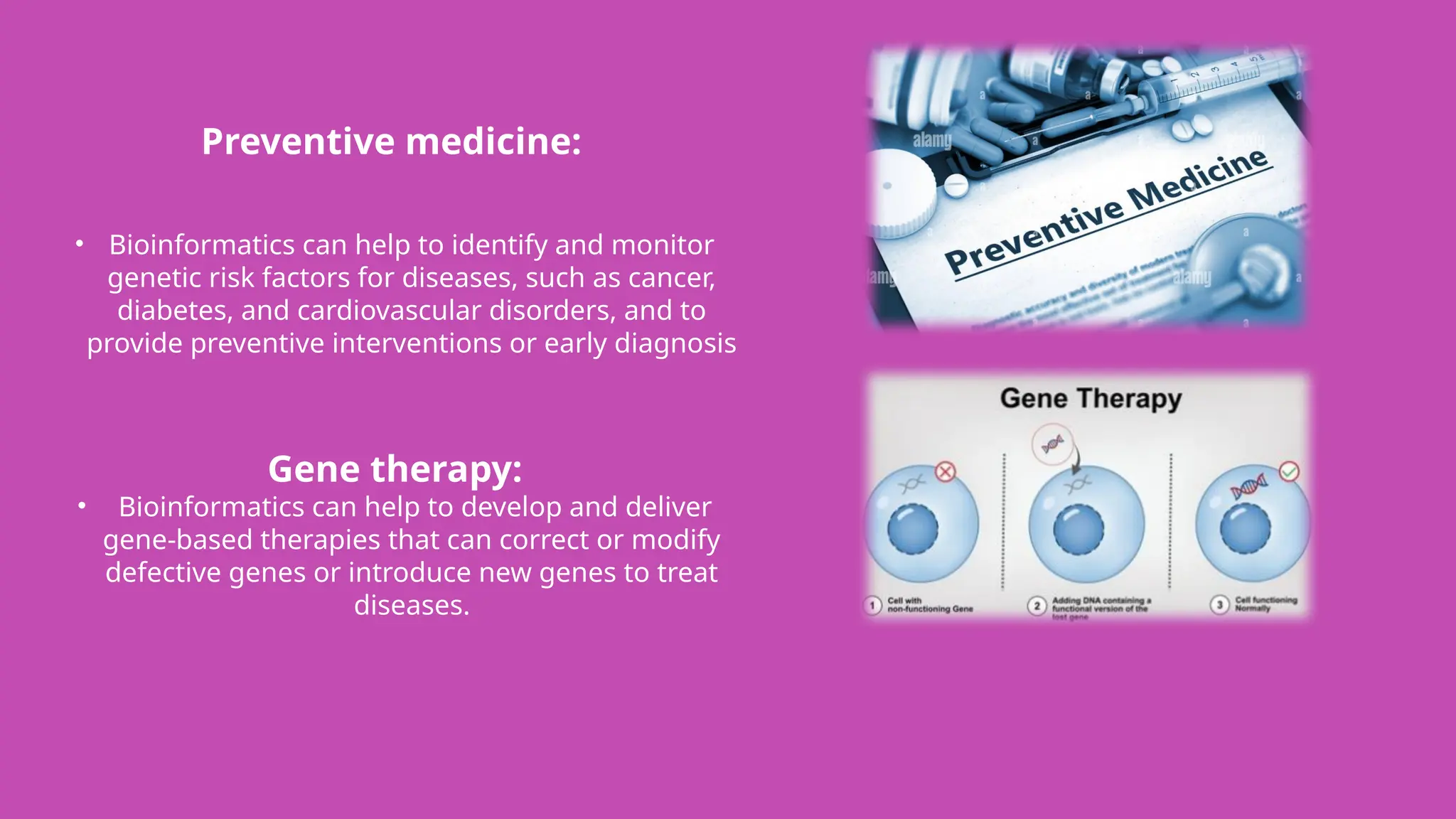
Preventive medicine:
• Bioinformatics can help to identify and monitor
genetic risk factors for diseases, such as cancer,
diabetes, and cardiovascular disorders, and to
provide preventive interventions or early diagnosis
Gene therapy:
• Bioinformatics can help to develop and deliver
gene-based therapies that can correct or modify
defective genes or introduce new genes to treat
diseases.
“Your attentiveness means a lot. I’m
ready for any questions.”

Bioinformatics Presentation.pptxjnnknknnm

  • 2.
  • 3.
    3 INTRODUCTION: Bioinformatics provides thetools and techniques to extract valuable insights from genetic data, accelerating research in fields like genetics, genomics, and personalized medicine. It empowers scientists and healthcare professionals to make data-driven decisions and discoveries based on the information encoded in our genes. In next slides, Prominent operations of Genetic data are given in the Field of Bioinformatics;
  • 4.
    Data Analysis: Bioinformatics toolsand algorithms are used to process and analyze vast amounts of genetic data, such as DNA sequences, RNA sequences, and protein sequences. This analysis helps identify patterns, mutations, and functional elements within the genetic material. Example: For instance, the Human Genome Project utilized bioinformatics to assemble, annotate, and compare the entire human genome.
  • 5.
    Structural Biology: Bioinformatics isused to model and analyse the three- dimensional structures of proteins and other biomolecules. This information is crucial for understanding their functions and interactions. Example: Protein Structure Databases Protein Structure Prediction Molecular Docking Protein-Ligand Binding Site Prediction (A ligand in biology is a molecule that can bind to a receptor. This causes a change in cell signaling, and ultimately, cell behaviour or structure.)
  • 6.
    Personalized Medicine: Genetic data,combined with bioinformatics, can be used to tailor medical treatments to an individual's genetic makeup, leading to more effective and personalized healthcare.Example:Disease Risk Assessment Treatment selection Disease monitoring Electronic Health records
  • 7.
    Functional Annotation: Bioinformatics toolspredict the functions of genes and proteins, helping researchers understand the role of specific genetic elements in various biological processes. The process of attaching biological information to sequences of genes or proteins. Example: Pathway Analysis Expression profiling(gene is active or not) Domain Analysis(if domain is Kinase, phosphorylation is going to occur)
  • 8.
    Disease Genetics: Genetic datais crucial in studying the genetic basis of diseases. Through techniques like genome-wide association studies (GWAS) and next-generation sequencing, bioinformaticians can identify genetic variants associated with diseases. This information helps in understanding the genetic risk factors for diseases and developing personalized treatment strategies.
  • 9.
    Metagenomics: It helps analyzecomplex microbial communities in environmental and clinical samples, shedding light on the diversity and functions of microorganisms. Example: identifying genes encoding novel enzymes, pathways, or biosynthetic gene clusters, potentially leading to the discovery of new drugs or bio products.
  • 10.
    Evolutionary Studies: Bioinformatics allowsresearchers to reconstruct the evolutionary history of species by analyzing genetic sequences and making phylogenetic inferences. Example: Bioinformatics tools are used to construct phylogenetic trees that depict the evolutionary relationships among different species or genes. These trees are built based on sequence data, such as DNA or protein sequences, and can reveal common ancestry and divergence points.
  • 11.
    Drug Discovery: Bioinformatics hasbeen critical in guiding drug discovery and development processes, by facilitating the identification of drug targets, the design of drug candidates, and the optimization of treatment strategies. It has contributed to more efficient and targeted drug development, leading to improved treatments for various diseases. Example: Aids Treatment Cancer Therapies Covid 19 vaccine and therapeutics Rare genetic diseases
  • 12.
    Comparative Genomics: Bioinformatics enablesthe comparison of genomes from different species to identify commonalities and differences. This aids in understanding evolutionary relationships and the function of genes. This comparison helps in identifying the changes between a Normal and abnormal Genomic sequence, which can lead to Its way out.
  • 13.
    Transcriptomic : Genetic datahelps in studying gene expression patterns through transcriptomics. Techniques like RNA sequencing (RNA-seq) generate data on the abundance and diversity of RNA molecules in a cell or tissue. Bioinformaticians analyse this data to identify differentially expressed genes, alternative splicing events, and regulatory networks. This information helps in understanding gene regulation and the dynamics of gene expression in various biological processes.
  • 14.
    Genomic Sequencing: The Geneticdata in the Field of Bioinformatics is essential for processing and interpreting data from genome sequencing projects. It helps assemble and annotate genomes, detect genetic variations, and understand the genetic basis of diseases.
  • 15.
    Preventive medicine: • Bioinformaticscan help to identify and monitor genetic risk factors for diseases, such as cancer, diabetes, and cardiovascular disorders, and to provide preventive interventions or early diagnosis Gene therapy: • Bioinformatics can help to develop and deliver gene-based therapies that can correct or modify defective genes or introduce new genes to treat diseases.
  • 16.
    “Your attentiveness meansa lot. I’m ready for any questions.”