Zeshan haider
MPhil-Biotechnology
CABB,UAF
Contents
 Introduction
 Wheat straw production
 Steps of bioethanol production
 Conclusions
 References
Introduction
Bioethanol is produced from agricultural waste (sugar cane,
wheat straw) is substitute of fuel.
Bioethanol is:
Colourless liquid
Low in toxicity
Eco-friendly
Contin….
 Global demand for energy continues to grow
 Growing demand for human food, as it is for energy,
would make sugar and starch expensive as compared to
lignocellulosic materials.
 Lignocellulosic waste materials obtained from energy
crops and agricultural residues, represent the most
abundant global source of renewable biomass. Wheat
straw being one of the most prominent crops.
Wheat straw: Production and fate
 Wheat is the world’s most grown crop, cultivated in over
115 nations under a wide range of environment conditions.
 Annual global production of wheat is 2 million metric
tonnes.
 More than 430 Tg of wheat straw is available to produce
120 GL of ethanol which can repalce about 93 (±3) GL of
gasoline.
Wheat straw source of 2nd
generation bioethanol
 Cellulose, hemicellulose and lignin content of wheat straw
are in range of 33-40,20-25, and 15-20 (%w/w),
respectively (Prasad et al.,2007).
 Due to structural complexity of the lignocellulosic matrix,
ethanol production from wheat straw requires at least four
major unit operations:
 Pretreatment
 Hydrolysis
 Fermentation
 Distillation
Pretreatment
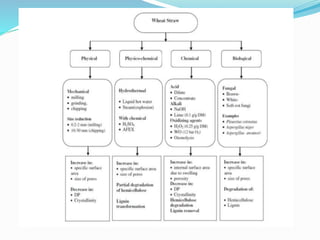
 The objectives of pretreatment are to increase the surface
area and porosity of the substrate, reduce the crystallinity
of cellulose and disrupt the heterogeneous structure of
cellulosic materials.
Physical
Physico-chemical
Chemical
Biological
Hydrolysis
 Most effective method to liberate simple sugars from
cellulosic materials.
 For cellulolytic enzymes production the T.ressei strain
SVG17 was applied.
 In most research for commercial cellulase production has
focused on fungi(S.cerevisiae)
Fermentation
 The ideal micro-organism should have broad substrate
utilization, high ethanol yield and productivity, tolerance
to inhibitors present in the hydrolyzates and to high
concentrations of ethanol, cellulolytic activity and ability
for sugar fermentation at high temperatures
Distillation
 From the fermented substrate the ethanol is recovered by
evaporation/distillation at low temperature under vacuum.
 Sugar and other metabolites were analyzed by HPLC.
 The sugars (arabinose and galactose) were present in less
amount(<0.5 g/L).
Conclusions
 By using the hydrolysis and co-fermentation the yield of
ethanol was increased upto 19%.
 By addition of beta-glucosidases to the fermented media
the fermentation can reach to full conversion.
References
I. Chen H, Qiu W. Key technologies for bioethanol
production from lignocellulose. Biotechnol Adv.
2010;28:556–62
II. Novy V., K.Longus, B.Nidetzky 2015.From wheat
straw to bioethanol: integrative analysis of a separate
hydrolys and co-fermentation process with implemented
enzyme production.Biotechnol Biofuels 8:46
Bioethano

Bioethano

  • 1.
  • 2.
    Contents  Introduction  Wheatstraw production  Steps of bioethanol production  Conclusions  References
  • 3.
    Introduction Bioethanol is producedfrom agricultural waste (sugar cane, wheat straw) is substitute of fuel. Bioethanol is: Colourless liquid Low in toxicity Eco-friendly
  • 4.
    Contin….  Global demandfor energy continues to grow  Growing demand for human food, as it is for energy, would make sugar and starch expensive as compared to lignocellulosic materials.  Lignocellulosic waste materials obtained from energy crops and agricultural residues, represent the most abundant global source of renewable biomass. Wheat straw being one of the most prominent crops.
  • 5.
    Wheat straw: Productionand fate  Wheat is the world’s most grown crop, cultivated in over 115 nations under a wide range of environment conditions.  Annual global production of wheat is 2 million metric tonnes.  More than 430 Tg of wheat straw is available to produce 120 GL of ethanol which can repalce about 93 (±3) GL of gasoline.
  • 6.
    Wheat straw sourceof 2nd generation bioethanol  Cellulose, hemicellulose and lignin content of wheat straw are in range of 33-40,20-25, and 15-20 (%w/w), respectively (Prasad et al.,2007).  Due to structural complexity of the lignocellulosic matrix, ethanol production from wheat straw requires at least four major unit operations:  Pretreatment  Hydrolysis  Fermentation  Distillation
  • 7.
    Pretreatment  The objectivesof pretreatment are to increase the surface area and porosity of the substrate, reduce the crystallinity of cellulose and disrupt the heterogeneous structure of cellulosic materials. Physical Physico-chemical Chemical Biological
  • 9.
    Hydrolysis  Most effectivemethod to liberate simple sugars from cellulosic materials.  For cellulolytic enzymes production the T.ressei strain SVG17 was applied.  In most research for commercial cellulase production has focused on fungi(S.cerevisiae)
  • 10.
    Fermentation  The idealmicro-organism should have broad substrate utilization, high ethanol yield and productivity, tolerance to inhibitors present in the hydrolyzates and to high concentrations of ethanol, cellulolytic activity and ability for sugar fermentation at high temperatures
  • 11.
    Distillation  From thefermented substrate the ethanol is recovered by evaporation/distillation at low temperature under vacuum.  Sugar and other metabolites were analyzed by HPLC.  The sugars (arabinose and galactose) were present in less amount(<0.5 g/L).
  • 12.
    Conclusions  By usingthe hydrolysis and co-fermentation the yield of ethanol was increased upto 19%.  By addition of beta-glucosidases to the fermented media the fermentation can reach to full conversion.
  • 13.
    References I. Chen H,Qiu W. Key technologies for bioethanol production from lignocellulose. Biotechnol Adv. 2010;28:556–62 II. Novy V., K.Longus, B.Nidetzky 2015.From wheat straw to bioethanol: integrative analysis of a separate hydrolys and co-fermentation process with implemented enzyme production.Biotechnol Biofuels 8:46