PROJECT
NAME –NITINJAY SINGH
ID - 17BTBIOCE011
SUBJECT- BIOPROCESS
PLANT DESIGN
(BCBE 610)
Criteria for Process Flow Design of Ethanol Producing Plant
using Lignocellulosic Substrates
CONTENT
• What is bioethanol ?
• 1G V/S 2G ETHANOL PRODUCTION
• Lignocellulosic Biomass
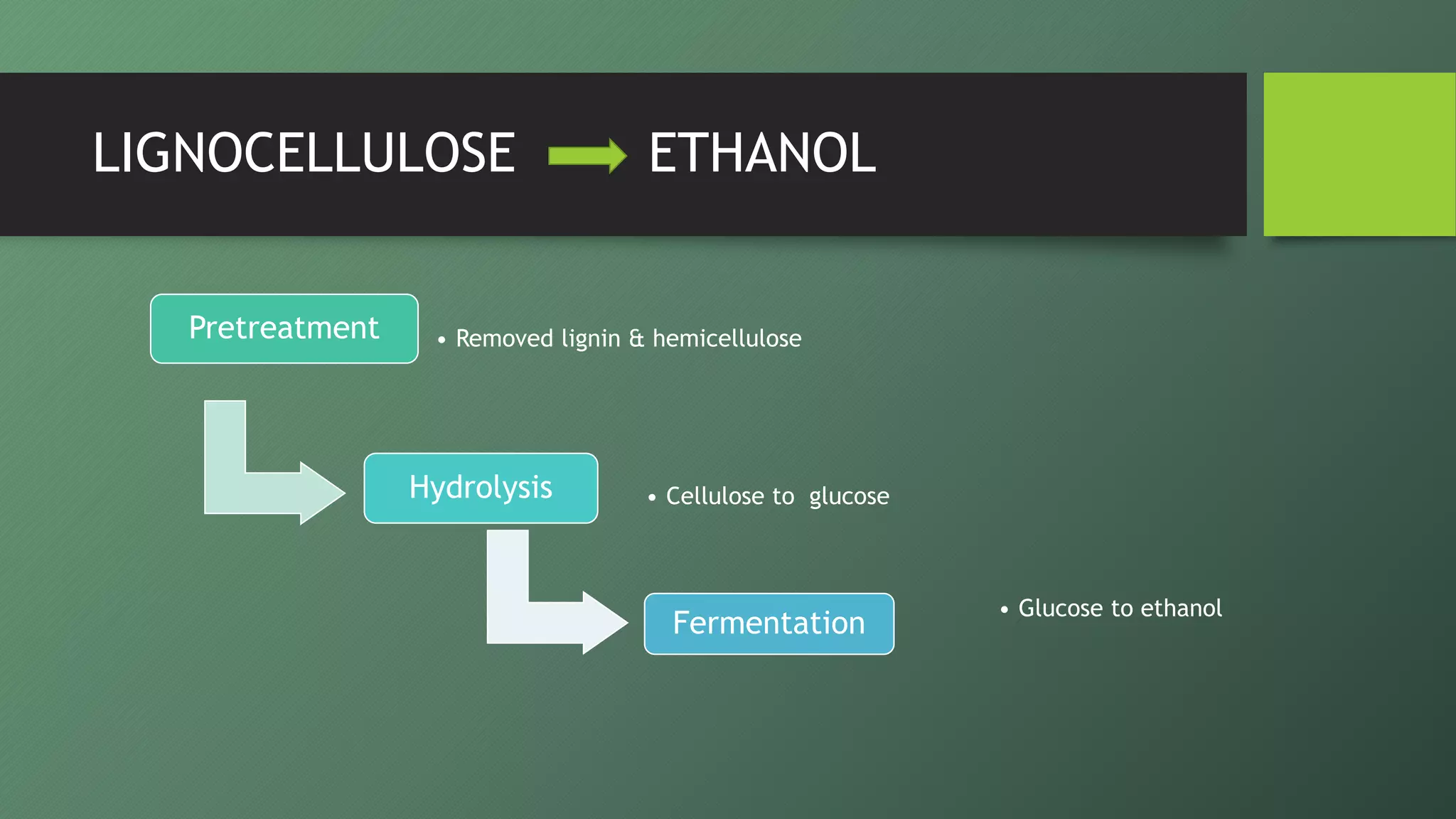
• Lignocellulose to Ethanol
• Process flowsheet
• UTILIZATION OF BY-PRODUCTS AND RESIDUE
SR. NO. DESCRIPTION PAGE NO
Section 1 Project Overview 3
Section 2 Process Description 8
Section 3 Utilization of by-
products and residue
18
WHAT IS BIOETHANOL ?
• Bioethanol has been recognized as a potential alternative to
petroleum-derived transportation fuel.
Advantages
• Global warming and energy security.
• High octane number
• Low cetane number
• High heat of vaporization
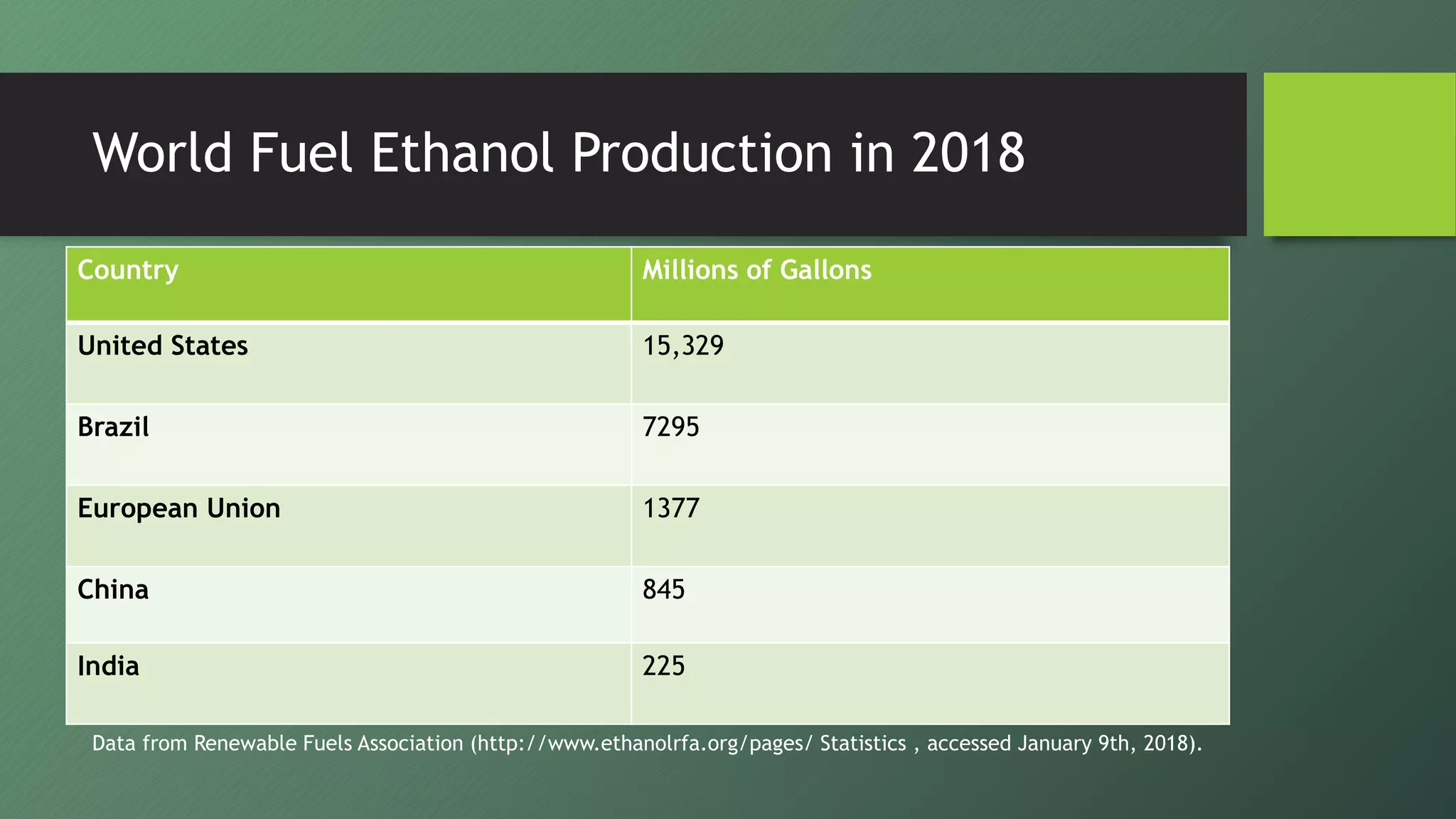
World Fuel Ethanol Production in 2018
Country Millions of Gallons
United States 15,329
Brazil 7295
European Union 1377
China 845
India 225
Data from Renewable Fuels Association (http://www.ethanolrfa.org/pages/ Statistics , accessed January 9th, 2018).
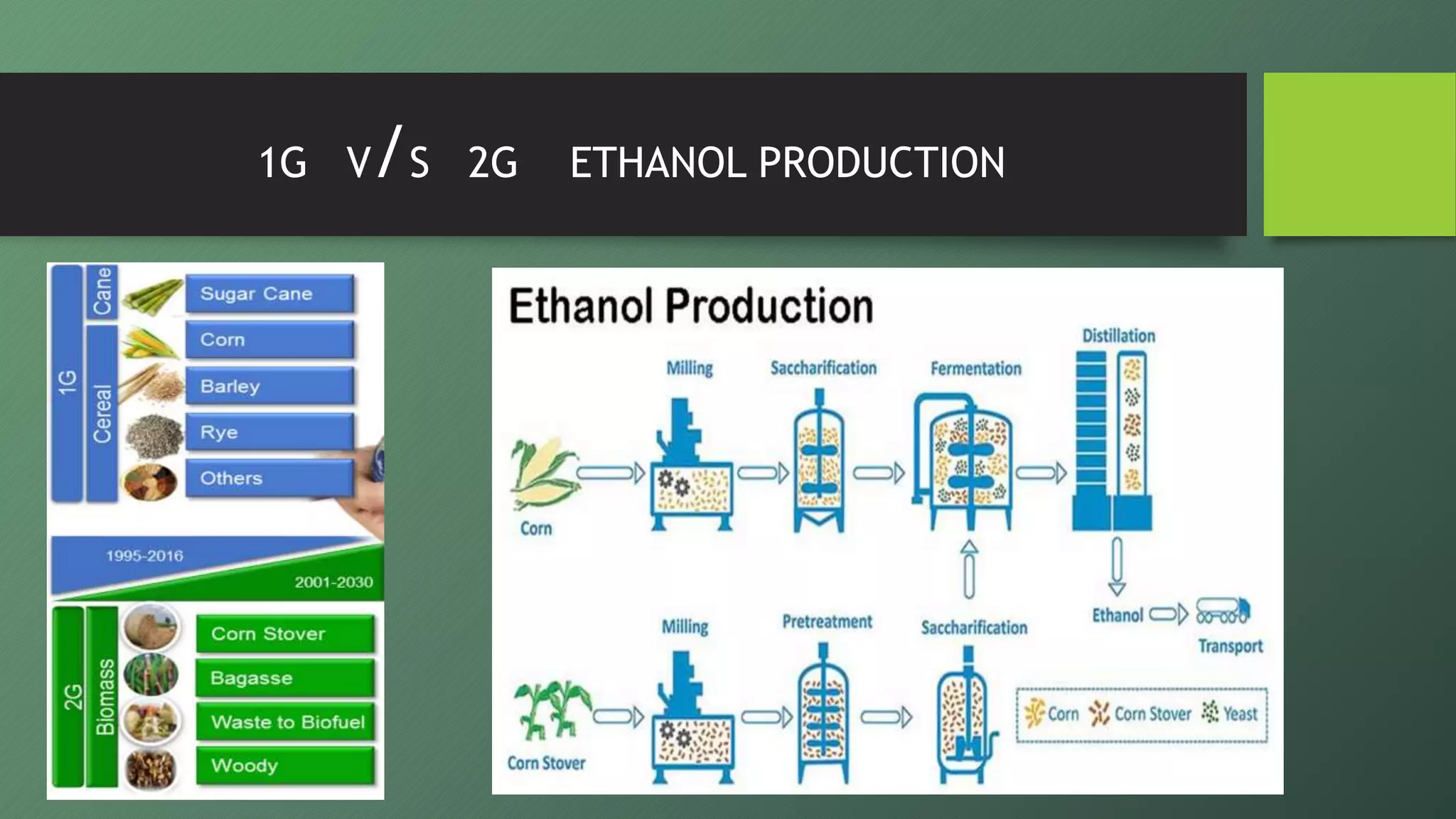
1G V/S 2G ETHANOL PRODUCTION
Lignocellulosic Biomass
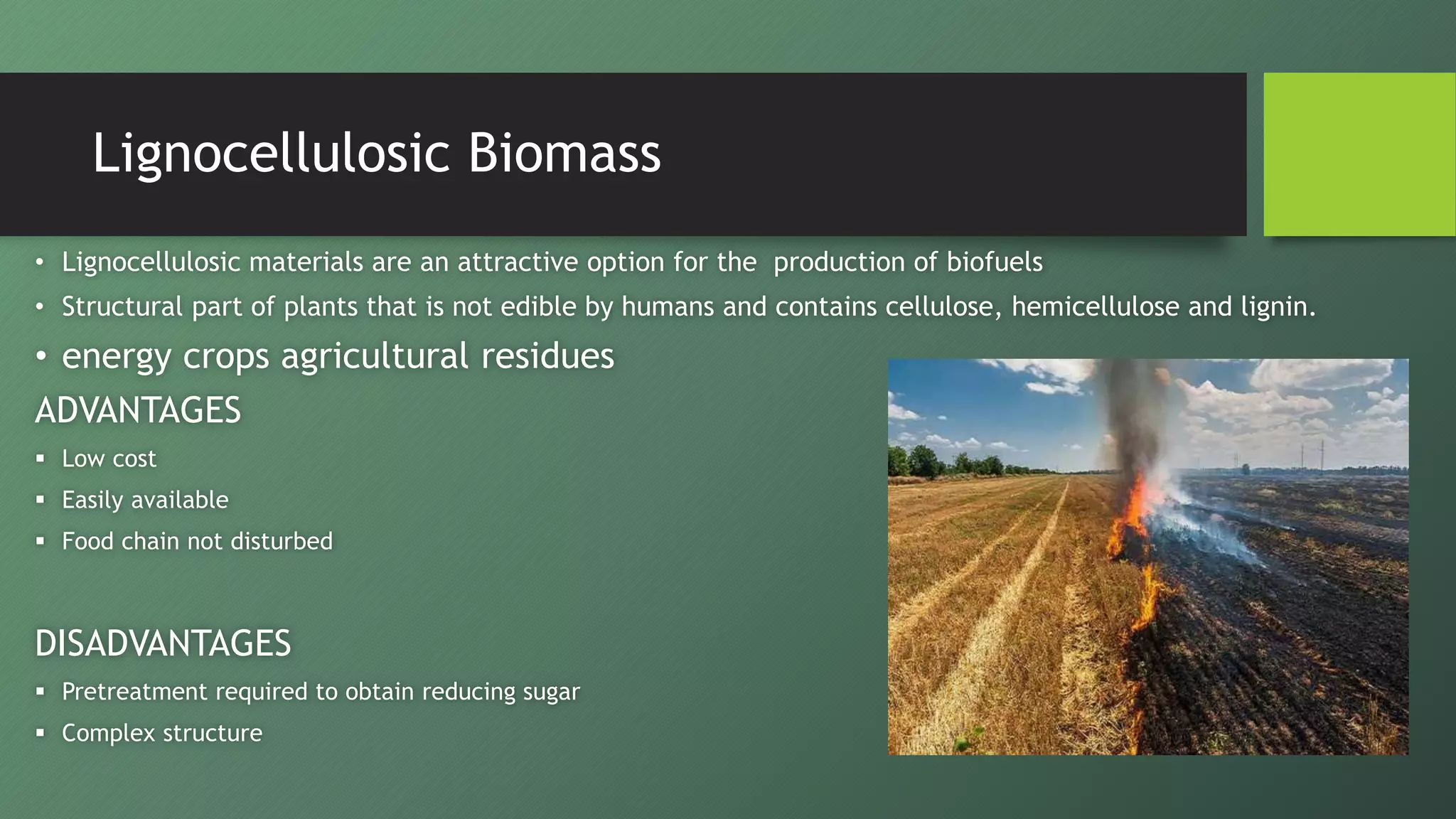
• Lignocellulosic materials are an attractive option for the production of biofuels
• Structural part of plants that is not edible by humans and contains cellulose, hemicellulose and lignin.
• energy crops agricultural residues
ADVANTAGES
 Low cost
 Easily available
 Food chain not disturbed
DISADVANTAGES
 Pretreatment required to obtain reducing sugar
 Complex structure
LIGNOCELLULOSE ETHANOL
Pretreatment • Removed lignin & hemicellulose
Hydrolysis • Cellulose to glucose
Fermentation
• Glucose to ethanol
Process flowsheet for Biomass-to-Ethanol conversion
MATERIAL HANDLING PRETREATMENT HYDROLYSIS FERMENTATION
DISTILLATION
MATERIAL HANDLING
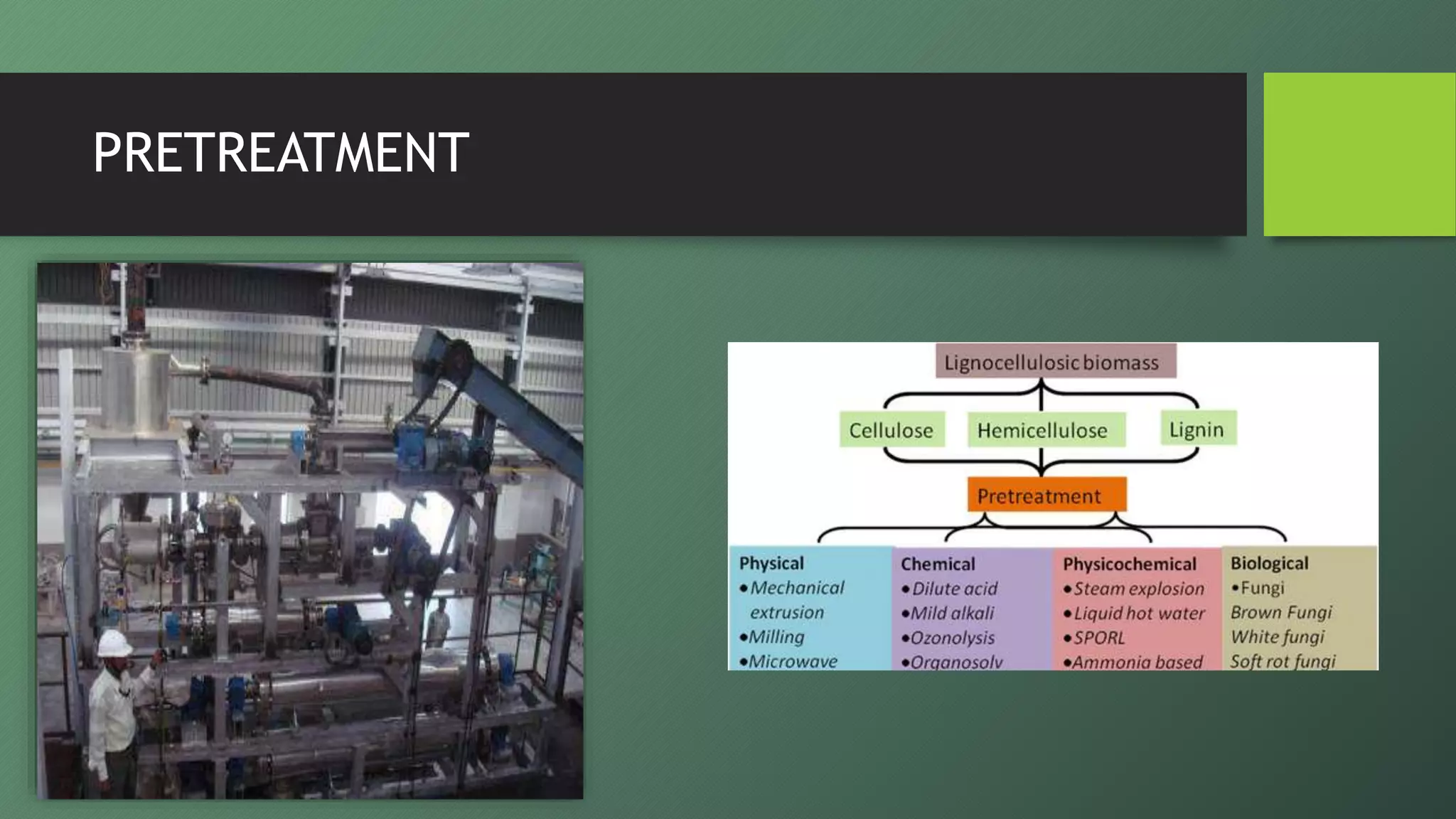
PRETREATMENT
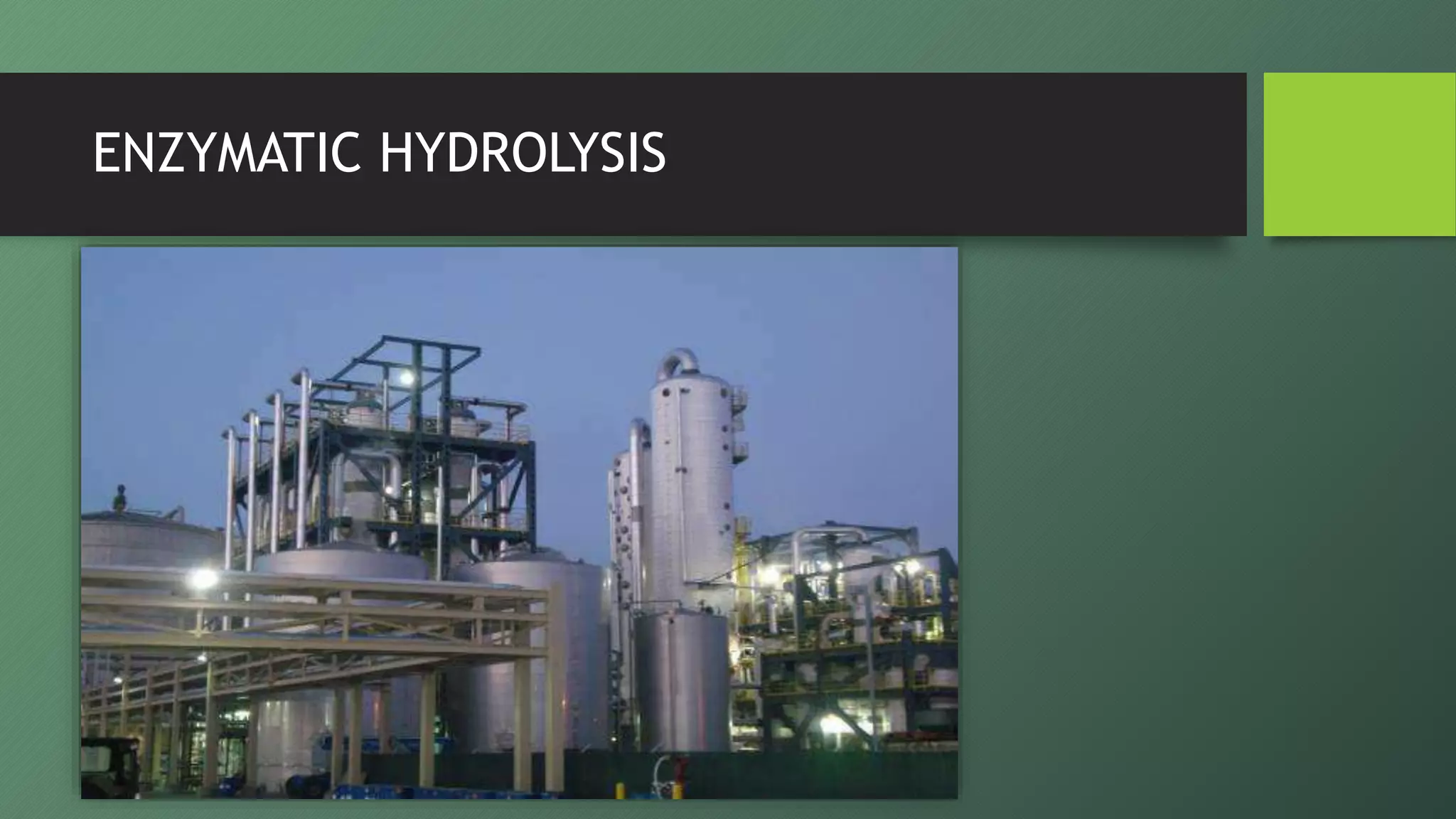
ENZYMATIC HYDROLYSIS
HYDROLYSIS COMPARISION
FERMENTATION SECTION
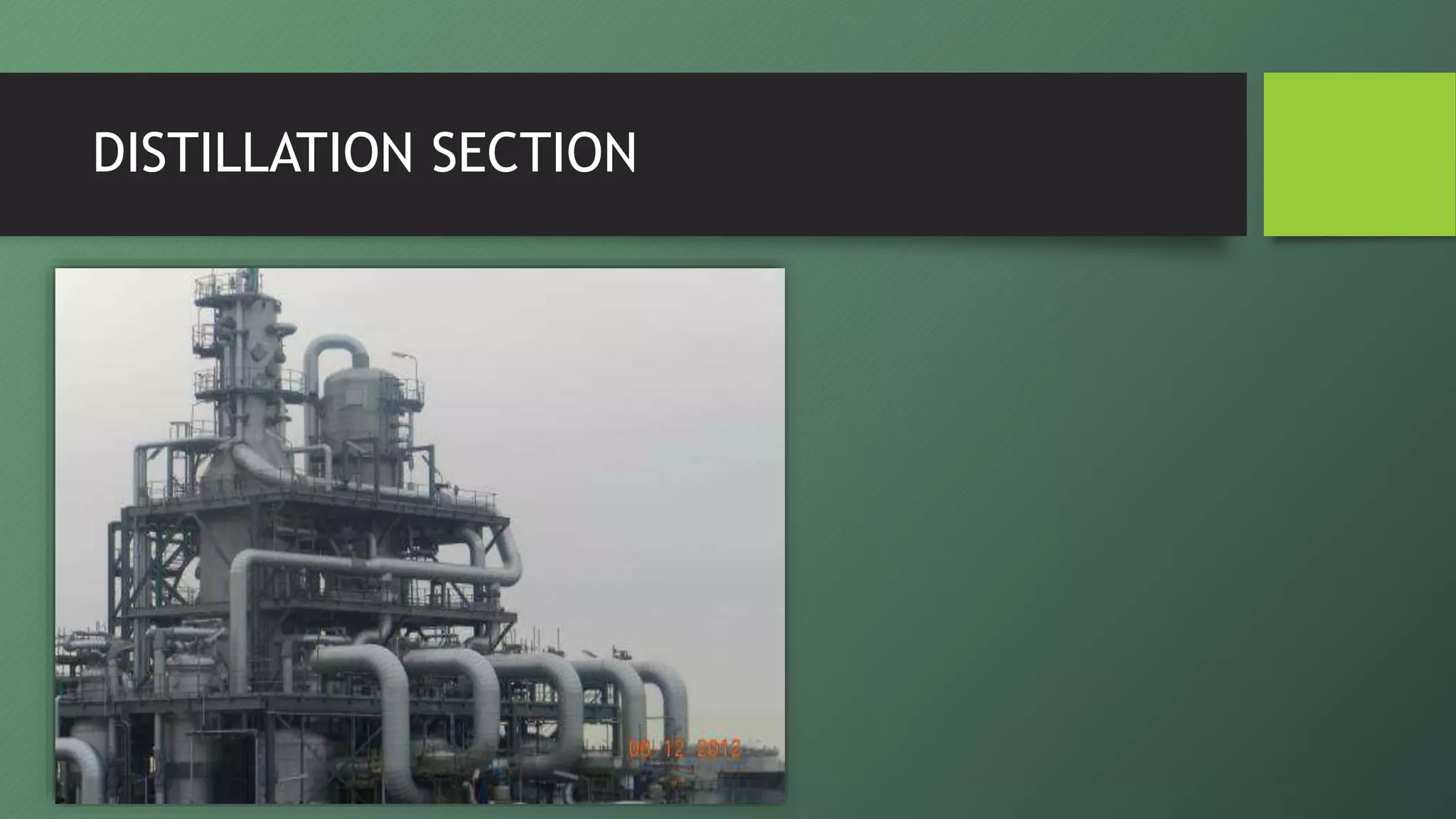
DISTILLATION SECTION
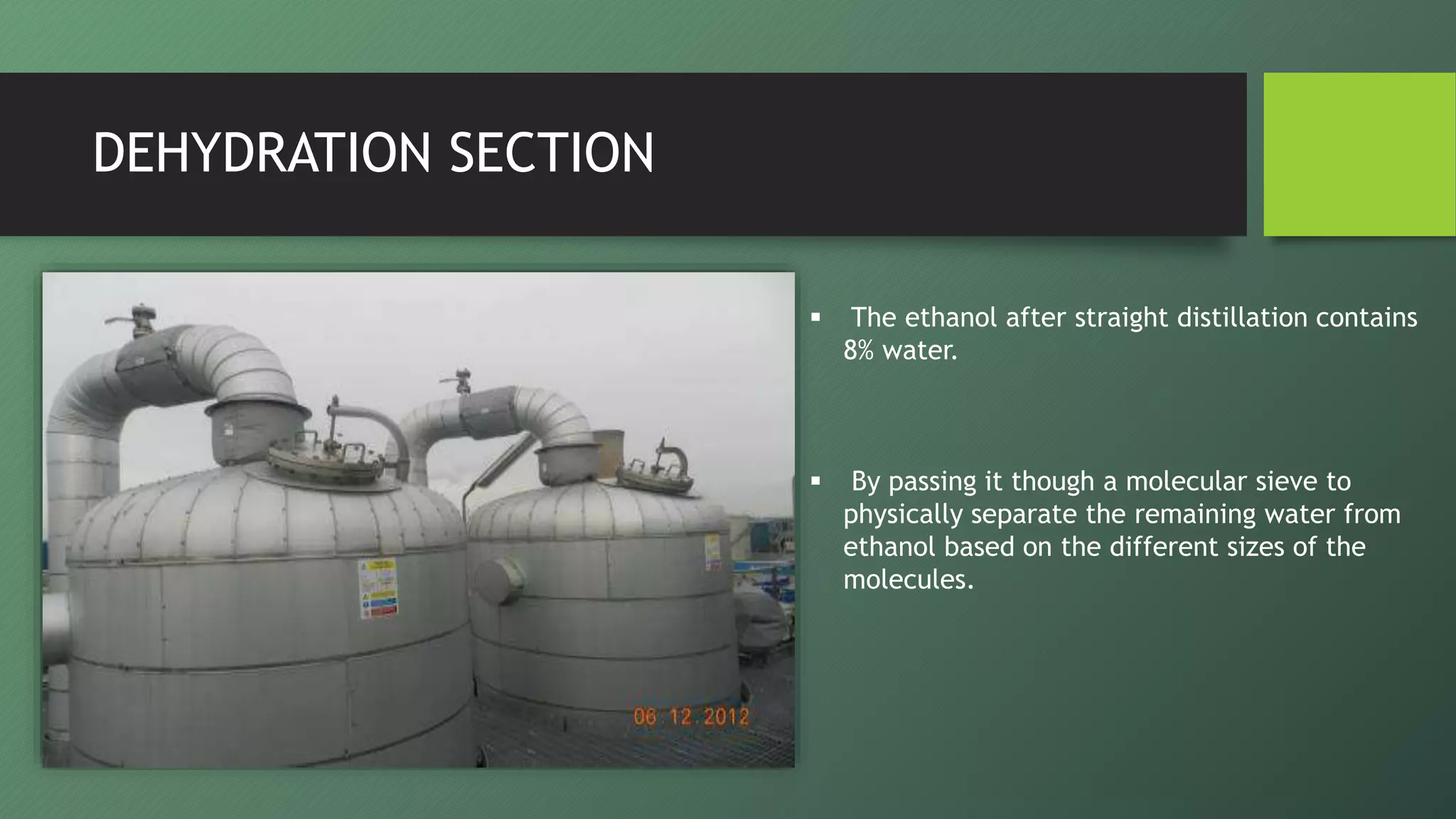
DEHYDRATION SECTION
 The ethanol after straight distillation contains
8% water.
 By passing it though a molecular sieve to
physically separate the remaining water from
ethanol based on the different sizes of the
molecules.
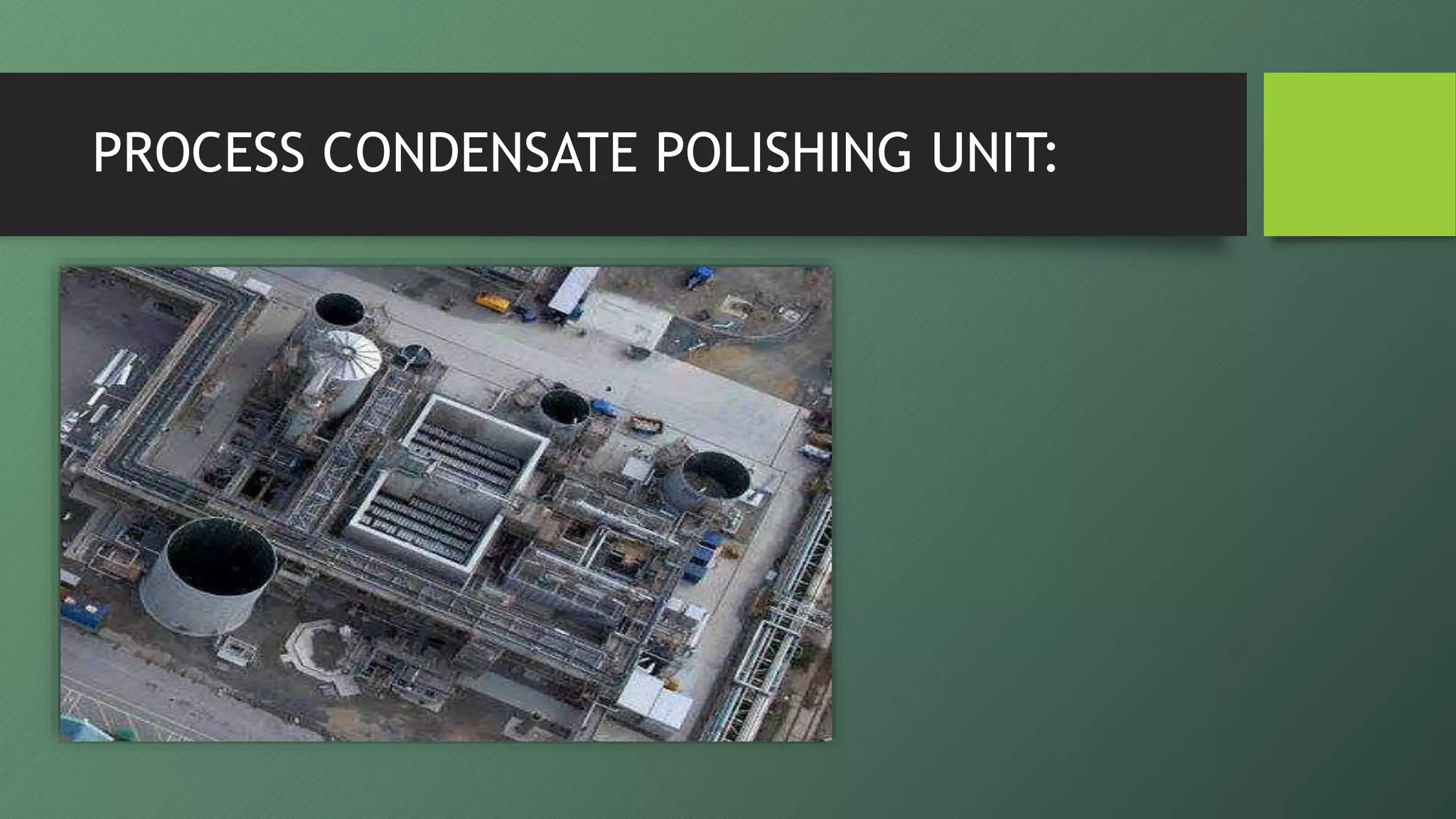
PROCESS CONDENSATE POLISHING UNIT:
UTILIZATION OF BY-PRODUCTS AND RESIDUE
• Lignin rich cake
• Raw CO2 gas
• Technical Alcohol (Impure Spirit)
• Fusel Oils
• Sludge from Process Condensate Treatment Plant
• Ash
• Biogas
REFERENCE
• Fuel ethanol production: Process design trends and integration opportunities
Carlos A. Cardona a,*, O´ scar J. Sanchez

Bioethanol plant design

  • 1.
    PROJECT NAME –NITINJAY SINGH ID- 17BTBIOCE011 SUBJECT- BIOPROCESS PLANT DESIGN (BCBE 610) Criteria for Process Flow Design of Ethanol Producing Plant using Lignocellulosic Substrates
  • 2.
    CONTENT • What isbioethanol ? • 1G V/S 2G ETHANOL PRODUCTION • Lignocellulosic Biomass • Lignocellulose to Ethanol • Process flowsheet • UTILIZATION OF BY-PRODUCTS AND RESIDUE SR. NO. DESCRIPTION PAGE NO Section 1 Project Overview 3 Section 2 Process Description 8 Section 3 Utilization of by- products and residue 18
  • 3.
    WHAT IS BIOETHANOL? • Bioethanol has been recognized as a potential alternative to petroleum-derived transportation fuel. Advantages • Global warming and energy security. • High octane number • Low cetane number • High heat of vaporization
  • 4.
    World Fuel EthanolProduction in 2018 Country Millions of Gallons United States 15,329 Brazil 7295 European Union 1377 China 845 India 225 Data from Renewable Fuels Association (http://www.ethanolrfa.org/pages/ Statistics , accessed January 9th, 2018).
  • 5.
    1G V/S 2GETHANOL PRODUCTION
  • 6.
    Lignocellulosic Biomass • Lignocellulosicmaterials are an attractive option for the production of biofuels • Structural part of plants that is not edible by humans and contains cellulose, hemicellulose and lignin. • energy crops agricultural residues ADVANTAGES  Low cost  Easily available  Food chain not disturbed DISADVANTAGES  Pretreatment required to obtain reducing sugar  Complex structure
  • 7.
    LIGNOCELLULOSE ETHANOL Pretreatment •Removed lignin & hemicellulose Hydrolysis • Cellulose to glucose Fermentation • Glucose to ethanol
  • 8.
    Process flowsheet forBiomass-to-Ethanol conversion MATERIAL HANDLING PRETREATMENT HYDROLYSIS FERMENTATION DISTILLATION
  • 9.
  • 10.
  • 11.
  • 12.
  • 13.
  • 14.
  • 15.
    DEHYDRATION SECTION  Theethanol after straight distillation contains 8% water.  By passing it though a molecular sieve to physically separate the remaining water from ethanol based on the different sizes of the molecules.
  • 16.
  • 17.
    UTILIZATION OF BY-PRODUCTSAND RESIDUE • Lignin rich cake • Raw CO2 gas • Technical Alcohol (Impure Spirit) • Fusel Oils • Sludge from Process Condensate Treatment Plant • Ash • Biogas
  • 18.
    REFERENCE • Fuel ethanolproduction: Process design trends and integration opportunities Carlos A. Cardona a,*, O´ scar J. Sanchez