ETHANOL PRODUCTION
By
S.VEDANARAYANA
Mechanical Engineer
INTRODUCTION
 Ethanol fuel is also called as ethyl alcohol fuel, the same type of alcohol found
in alcoholic beverages, used as fuel.
 It is most often used as a motor fuel, mainly as a biofuel additive for gasoline.
 Bioethanol is a form of renewable energy that can be produced from
agricultural feedstock. It can be made from very common crops such
as sugarcane, potato, and corn.
 Cellulosic ethanol offers promise because cellulose fibers, a major and universal
component in plant cells walls, can be used to produce ethanol.
 Although there are various ways to produce ethanol fuel, the most common way is via
fermentation.
CHEMICAL REACTION
 During ethanol fermentation, glucose and other sugars in the corn (or) sugarcane (or) other crops are
converted into ethanol and carbon dioxide.
 C6H12O6 → 2 C2H5OH+ 2 CO2 + heat
 During combustion, ethanol reacts with oxygen to produce carbon dioxide,
water, and heat.
 C2H5OH + 3 O2 → 2 CO2 + 3 H2O + heat
 Starch and cellulose molecules are strings of glucose molecules. It is also possible to generate ethanol out
of cellulosic materials.
 A pre-treatment that splits the cellulose into glucose molecules and other sugars that subsequently can be
fermented. The resulting product is called cellulosic ethanol.
 Ethanol is also produced industrially from ethylene by hydration of the double bond in the presence of a
catalyst and high temperature.
 C2H4 + H2O → C2H5OH
 Most ethanol is produced by fermentation.
 Although there are various ways ethanol fuel can be produced, the most common way is via fermentation.
 The basic steps for large-scale production of ethanol are: microbial (yeast), fermentation of
sugars, distillation, dehydration. Enzymes are used to convert starch into sugar.
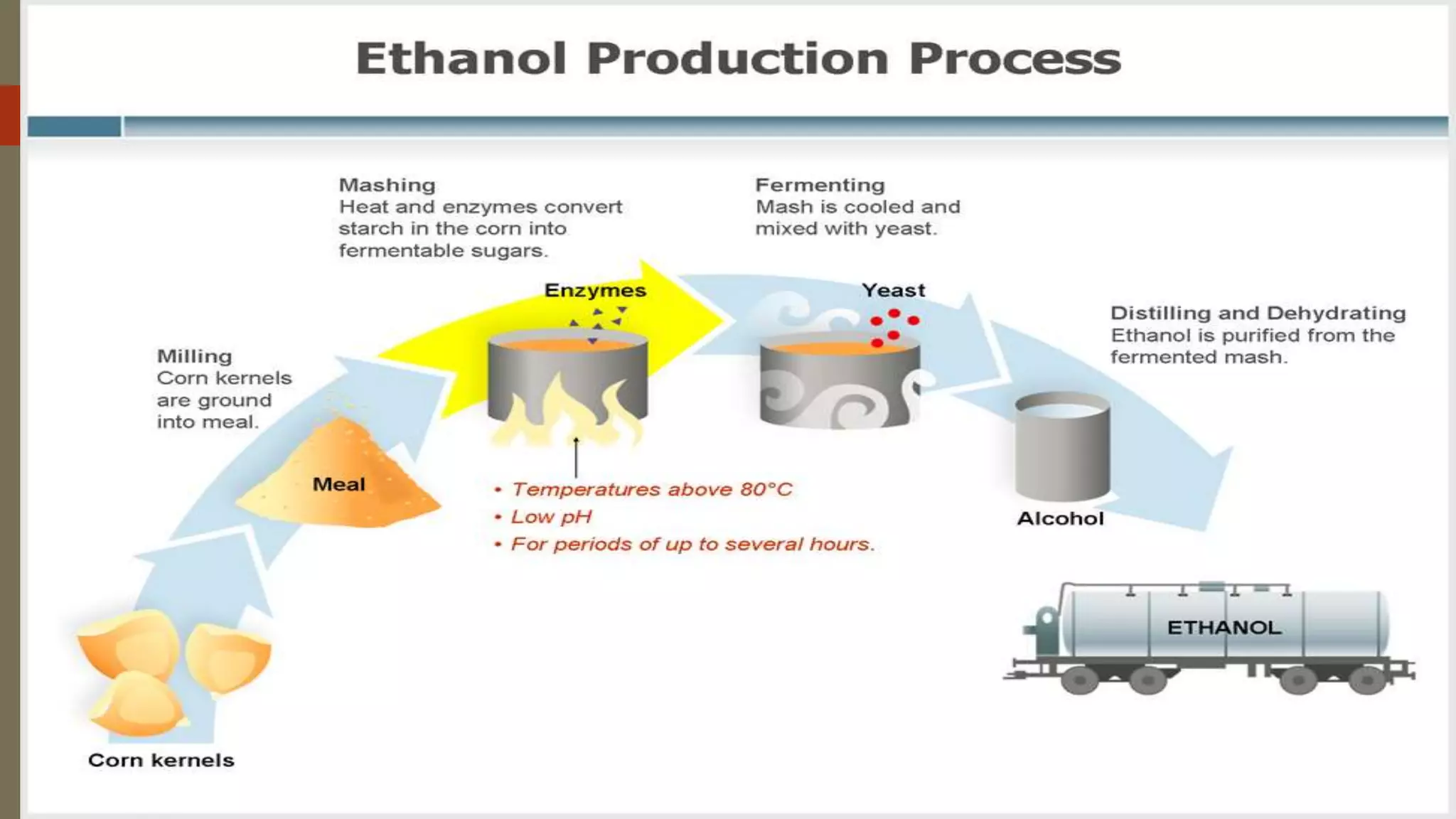
 Milling:
 All grains must be ground before mashing to expose the starch granules and help them remain in suspension
in a water solution. The grain should be ground into a meal not a flour that will pass a 20-mesh screen.
 Potatoes and similar high-moisture starch crops should be sliced or finely chopped. Since potato starch
granules are large and easily ruptured, it isn't necessary to maintain the hard rapid boil which is required of
the tougher, dryer hard starches found in grains.
 MASHING:
 Mashing is the process of combining a mix of grains with supplementary grains such as corn, sorghum, rye,
or wheat known as the "grain bill" with water and then heating the mixture.
 Mashing allows the enzymes in the malt (primarily, α-amylase and β-amylase) to break down the starch in the
grain into sugars, typically maltose to create a malty liquid called wort.
 Heating and addition of water and enzymes for conversion into fermentable sugar.
 By adding enzymes the starch contained in the wheat is converted into fermentable carbohydrates, which can
then be fermented into alcohol. Sugar syrups can be fermented directly.
PRODUCTION
 Fermentation:
 Fermentation is a metabolic process that produces chemical changes in organic substrates through the
action of enzymes.
 Fermentation is a chemical process and produces heat.
 In concentrated or particularly large mashes, the temperature can actually rise to levels dangerous to
yeast. Since the ideal temperature for yeast is around 85 0F, it's best to maintain that temperature by
utilizing cooling coils or keeping the water-to-grain ratio at about 40 gallons.
 There is much activity in the area of cellulosic ethanol, where the cellulose part of a plant is broken
to sugars and subsequently converted to ethanol.
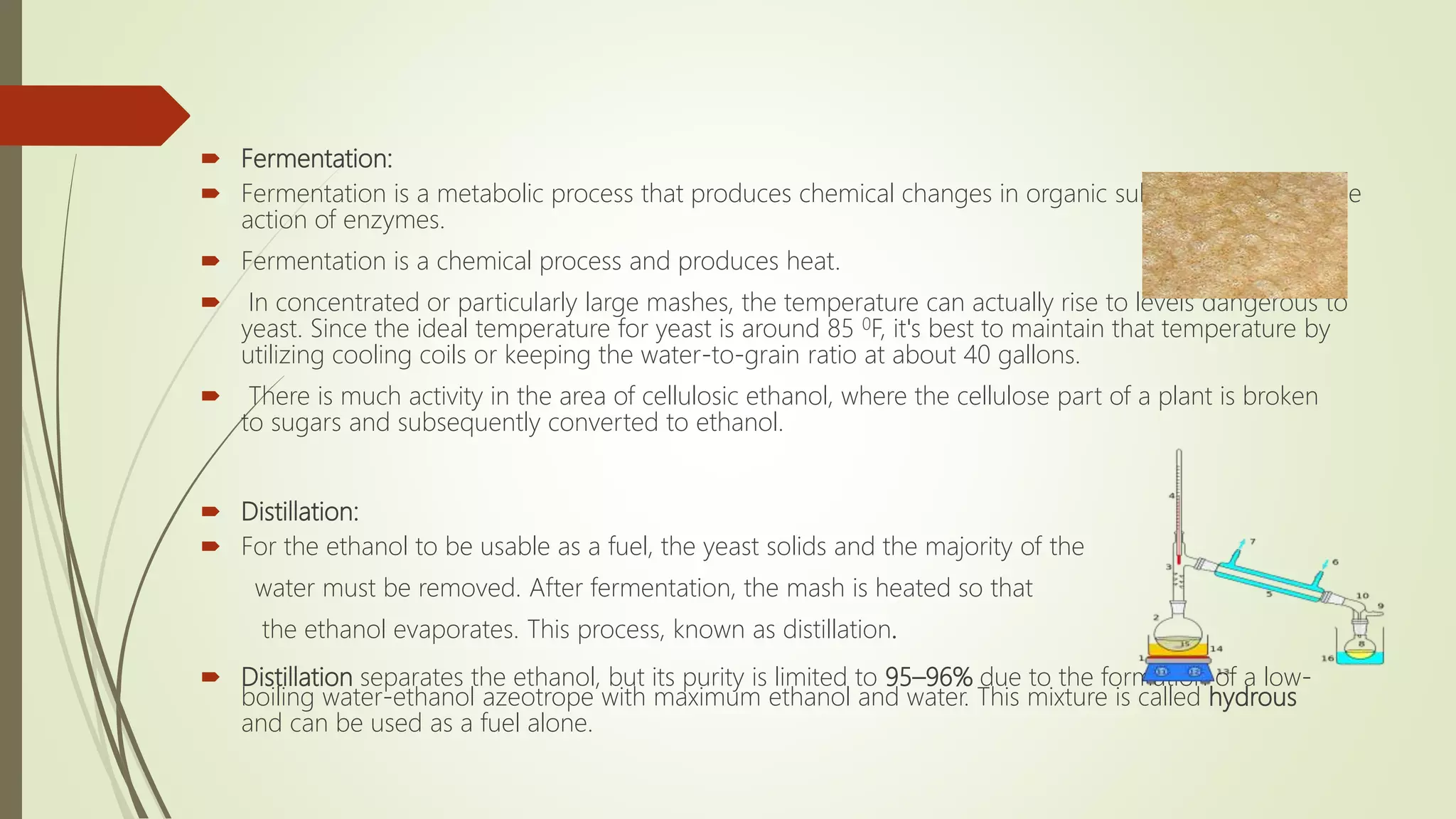
 Distillation:
 For the ethanol to be usable as a fuel, the yeast solids and the majority of the
water must be removed. After fermentation, the mash is heated so that
the ethanol evaporates. This process, known as distillation.
 Distillation separates the ethanol, but its purity is limited to 95–96% due to the formation of a low-
boiling water-ethanol azeotrope with maximum ethanol and water. This mixture is called hydrous
and can be used as a fuel alone.
 Dehydration:
 There are three dehydration processes to remove the water from an azeotropic ethanol/water mixture.
 The first process, used in many early fuel ethanol plants, is called azeotropic distillation and consists of
adding benzene or cyclohexane to the mixture.
 When these components are added to the mixture, it forms a heterogeneous azeotropic mixture
liquid-liquid equilibrium, which when distilled produces anhydrous ethanol in the column bottom, and a
vapour mixture of water, ethanol, and cyclohexane/benzene.
 When condensed, this becomes a two-phase liquid mixture. The heavier phase, poor in the entrainer
(benzene or cyclohexane), is stripped of the entrainer and recycled to the feed. while the lighter phase,
condensate from the stripping, is recycled to the second column.
 Another early method, called extractive distillation, consists of adding a ternary component that increases
ethanol's relative volatility. When the ternary mixture is distilled, it produces anhydrous ethanol on the top
stream of the column.
 Filling:
 After the dehydration process the ethanol is extracted. The extracted ethanol is filled into the fuel tanks for
transportation and is used as a fuel for various processes.
SCHEMATIC DIAGRAM OF PRODUCTION PROCESS OF BIOETHANOL
FROM PLANTS
 Advantages of Ethanol:
 Ethanol burns cleaner than gasoline, reducing Green House Gases (GHG) emissions.
 Ethanol does not contain significant amounts of toxic materials such as lead (Pb) and benzene (C6H6).
 It is a Renewable source of energy extracted from plants.
 All petrol engines can utilize the mixture of ethanol and needs no alterations. This decrease the
emission of hydrocarbons that deplete the ozone layer.
 Disadvantages of Ethanol:
 Lower heat of combustion.
 Requires lot of land to be produced.
 More expensive than MTBE ( Methyl Tert-Butyl Ether [CH3)3COCH3 ] ) or gasoline.
 Decreases the mileage of vehicles.
ADVANTAGES &
DISADVANTAGES
Applications of Ethanol:
 Transport fuel to replace gasoline.
 Fuel for power generation by thermal combustion.
 Fuel for fuel cells by thermochemical reaction.
 Fuel in cogeneration systems.
 Feedstock in the chemicals industry.
Ethanol production

Ethanol production

  • 1.
  • 2.
    INTRODUCTION  Ethanol fuelis also called as ethyl alcohol fuel, the same type of alcohol found in alcoholic beverages, used as fuel.  It is most often used as a motor fuel, mainly as a biofuel additive for gasoline.  Bioethanol is a form of renewable energy that can be produced from agricultural feedstock. It can be made from very common crops such as sugarcane, potato, and corn.  Cellulosic ethanol offers promise because cellulose fibers, a major and universal component in plant cells walls, can be used to produce ethanol.  Although there are various ways to produce ethanol fuel, the most common way is via fermentation.
  • 4.
    CHEMICAL REACTION  Duringethanol fermentation, glucose and other sugars in the corn (or) sugarcane (or) other crops are converted into ethanol and carbon dioxide.  C6H12O6 → 2 C2H5OH+ 2 CO2 + heat  During combustion, ethanol reacts with oxygen to produce carbon dioxide, water, and heat.  C2H5OH + 3 O2 → 2 CO2 + 3 H2O + heat  Starch and cellulose molecules are strings of glucose molecules. It is also possible to generate ethanol out of cellulosic materials.  A pre-treatment that splits the cellulose into glucose molecules and other sugars that subsequently can be fermented. The resulting product is called cellulosic ethanol.  Ethanol is also produced industrially from ethylene by hydration of the double bond in the presence of a catalyst and high temperature.  C2H4 + H2O → C2H5OH  Most ethanol is produced by fermentation.
  • 5.
     Although thereare various ways ethanol fuel can be produced, the most common way is via fermentation.  The basic steps for large-scale production of ethanol are: microbial (yeast), fermentation of sugars, distillation, dehydration. Enzymes are used to convert starch into sugar.  Milling:  All grains must be ground before mashing to expose the starch granules and help them remain in suspension in a water solution. The grain should be ground into a meal not a flour that will pass a 20-mesh screen.  Potatoes and similar high-moisture starch crops should be sliced or finely chopped. Since potato starch granules are large and easily ruptured, it isn't necessary to maintain the hard rapid boil which is required of the tougher, dryer hard starches found in grains.  MASHING:  Mashing is the process of combining a mix of grains with supplementary grains such as corn, sorghum, rye, or wheat known as the "grain bill" with water and then heating the mixture.  Mashing allows the enzymes in the malt (primarily, α-amylase and β-amylase) to break down the starch in the grain into sugars, typically maltose to create a malty liquid called wort.  Heating and addition of water and enzymes for conversion into fermentable sugar.  By adding enzymes the starch contained in the wheat is converted into fermentable carbohydrates, which can then be fermented into alcohol. Sugar syrups can be fermented directly. PRODUCTION
  • 6.
     Fermentation:  Fermentationis a metabolic process that produces chemical changes in organic substrates through the action of enzymes.  Fermentation is a chemical process and produces heat.  In concentrated or particularly large mashes, the temperature can actually rise to levels dangerous to yeast. Since the ideal temperature for yeast is around 85 0F, it's best to maintain that temperature by utilizing cooling coils or keeping the water-to-grain ratio at about 40 gallons.  There is much activity in the area of cellulosic ethanol, where the cellulose part of a plant is broken to sugars and subsequently converted to ethanol.  Distillation:  For the ethanol to be usable as a fuel, the yeast solids and the majority of the water must be removed. After fermentation, the mash is heated so that the ethanol evaporates. This process, known as distillation.  Distillation separates the ethanol, but its purity is limited to 95–96% due to the formation of a low- boiling water-ethanol azeotrope with maximum ethanol and water. This mixture is called hydrous and can be used as a fuel alone.
  • 7.
     Dehydration:  Thereare three dehydration processes to remove the water from an azeotropic ethanol/water mixture.  The first process, used in many early fuel ethanol plants, is called azeotropic distillation and consists of adding benzene or cyclohexane to the mixture.  When these components are added to the mixture, it forms a heterogeneous azeotropic mixture liquid-liquid equilibrium, which when distilled produces anhydrous ethanol in the column bottom, and a vapour mixture of water, ethanol, and cyclohexane/benzene.  When condensed, this becomes a two-phase liquid mixture. The heavier phase, poor in the entrainer (benzene or cyclohexane), is stripped of the entrainer and recycled to the feed. while the lighter phase, condensate from the stripping, is recycled to the second column.  Another early method, called extractive distillation, consists of adding a ternary component that increases ethanol's relative volatility. When the ternary mixture is distilled, it produces anhydrous ethanol on the top stream of the column.  Filling:  After the dehydration process the ethanol is extracted. The extracted ethanol is filled into the fuel tanks for transportation and is used as a fuel for various processes.
  • 8.
    SCHEMATIC DIAGRAM OFPRODUCTION PROCESS OF BIOETHANOL FROM PLANTS
  • 9.
     Advantages ofEthanol:  Ethanol burns cleaner than gasoline, reducing Green House Gases (GHG) emissions.  Ethanol does not contain significant amounts of toxic materials such as lead (Pb) and benzene (C6H6).  It is a Renewable source of energy extracted from plants.  All petrol engines can utilize the mixture of ethanol and needs no alterations. This decrease the emission of hydrocarbons that deplete the ozone layer.  Disadvantages of Ethanol:  Lower heat of combustion.  Requires lot of land to be produced.  More expensive than MTBE ( Methyl Tert-Butyl Ether [CH3)3COCH3 ] ) or gasoline.  Decreases the mileage of vehicles. ADVANTAGES & DISADVANTAGES
  • 10.
    Applications of Ethanol: Transport fuel to replace gasoline.  Fuel for power generation by thermal combustion.  Fuel for fuel cells by thermochemical reaction.  Fuel in cogeneration systems.  Feedstock in the chemicals industry.