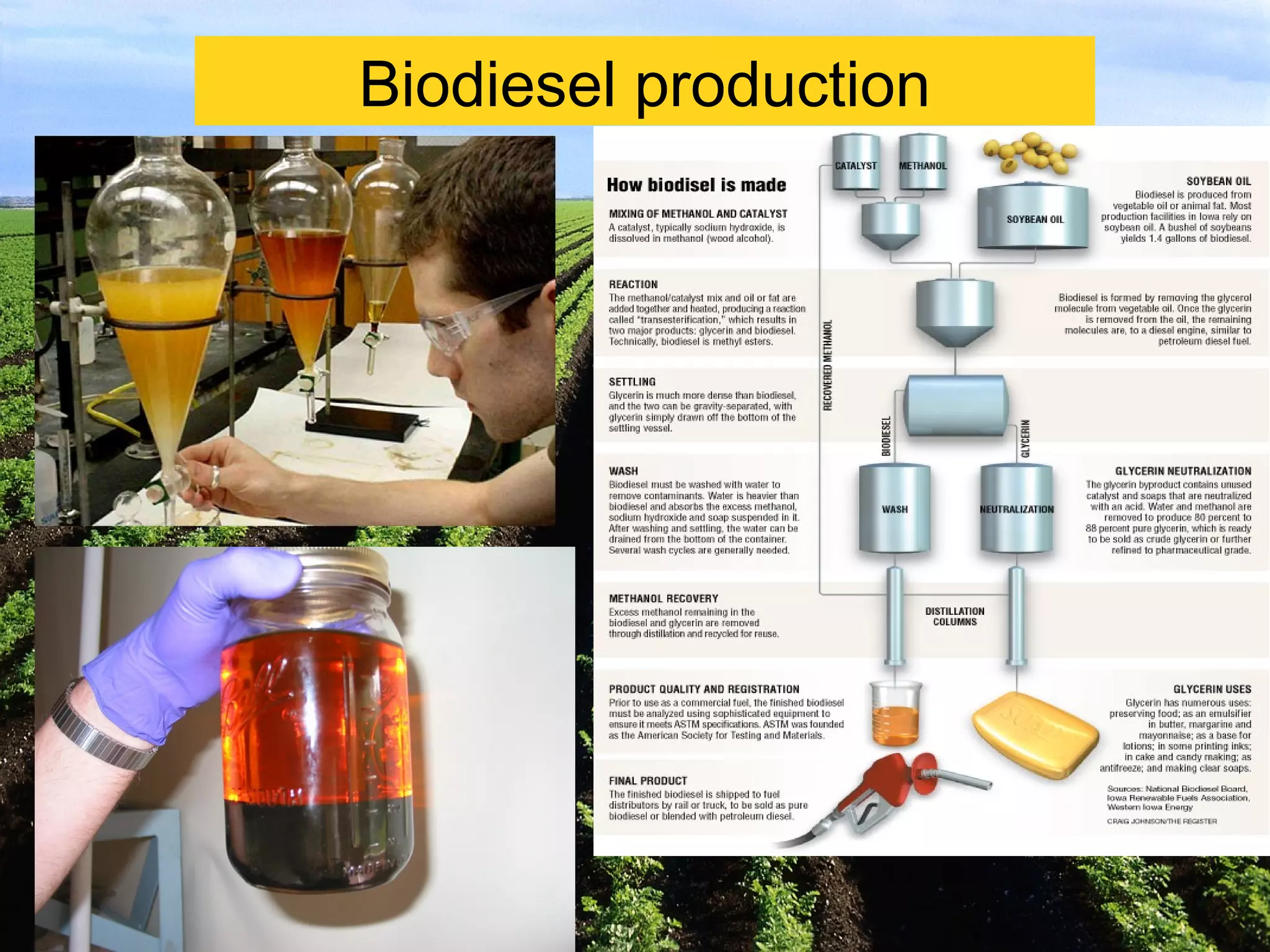
Biodiesel production
The processing rape into fuel includes the following steps:
• oil extrusion
• preparation of oil to transesterification process,
• preparing potassium methoxide (the catalyst mixture),
• transesterification process,
• separating ester fraction from glycero fractionl,
• filtration (cleaning, esters rinsing)
• drainage,
• finished biodiesel.
Biodiesel production
Rapeseed
oil
Machine
press
Press
cake
Reactor
Methanol
Catalyst
Separator
Glycerin phase
Washer
Water
BIODIESEL
Transesterification of rapeseed oil
A process of obtaining a biodiesel is a transesterification reaction,
involving the conversion of glycerol contained in vegetable oil
into a low molecular weight alcohol, ie., methanol, ethanol or another.
It proceeds according to the reaction shown in the scheme.
Biodiesel production
The advantages of using biodiesel
• reduction of sulfur emissions,
• reduction of carbon dioxide, carbon monoxide and particulate
matter emissions,
• the lowering of smoke opacity level,
• there is no sulfur compounds and carcinogenic, mutagenic
compounds and other hydrocarbons,
• explosion-proof features,
• biodegradable,
• while using biodiesel the power and the torque for most
engines do not change,
• the addition of fatty acid methyl esters to sulfur-free fuel oils
improves lubricating properties of oil.
The advantages of using biodiesel
Disadvantages of using
biodiesel
The disadvantages of using biodiesel include the presence in the
exhaust gas of acrylic aldehyde or acrolein, which is responsible for the
smell of French fries of exhaust fumes. However, it is possible to
eliminate the acrolein from the exhaust gas by using the catalyst.
The adverse effect observed during storage of both rapeseed oil methyl
ester, and the oil is instability. Methyl esters of fatty acids having ester
bonds, as well as fatty acids having unsaturated bonds in carbon chain
undergo changes such us hydrolysis, polymerization. Hydrolysis of the
methyl esters of fatty acids depends mainly on the presence of water,
wherein the biodiesel ability to bind water is approx. 40 times higher than
that of diesel. During the storage of these fuels microbial growth and
slime substances forming can also be observed. They can accumulate in
the car tank and mesh filter or on the walls of fuel lines hindering the flow
of fuel.
Feedstock
Oil
Methanol
Catalyst
Raw
Biodiesel
Fuel-Grade
Biodiesel
Water
Wash
WaterGlycerol
(with methanol)
Glycerin
Drier
Reactor
Washer
Separator
ReferencesReferences
1. Estry metylowe kwasów tłuszczowych – instrukcja do ćwiczeń laboratoryjnych.
Politechnika Gdańska, Wydział Chemiczny, Katedra Technologii Chemicznej.
2. Transestryfikacja w syntezie estrów metylowych oleju rzepakowego - instrukcja
do ćwiczeń laboratoryjnych. Politechnika Śląska, Wydział Chemiczny, Katedra
Technologii Chemicznej Organicznej i Petrochemii.
3. Biopaliwa - instrukcja do ćwiczeń laboratoryjnych. Politechnika Śląska, Wydział
Chemiczny, Katedra Technologii Chemicznej Organicznej i Petrochemii.
4. Biopaliwa - transestryfikacja oleju rzepakowego - instrukcja do ćwiczeń
laboratoryjnych. Uniwersytet Marii Curie-Skłodowskiej, Wydział Chemii, Zakład
Technologii Chemicznej.

Biodiesel ang

  • 1.
  • 2.
    The processing rapeinto fuel includes the following steps: • oil extrusion • preparation of oil to transesterification process, • preparing potassium methoxide (the catalyst mixture), • transesterification process, • separating ester fraction from glycero fractionl, • filtration (cleaning, esters rinsing) • drainage, • finished biodiesel. Biodiesel production Rapeseed oil Machine press Press cake Reactor Methanol Catalyst Separator Glycerin phase Washer Water BIODIESEL
  • 3.
    Transesterification of rapeseedoil A process of obtaining a biodiesel is a transesterification reaction, involving the conversion of glycerol contained in vegetable oil into a low molecular weight alcohol, ie., methanol, ethanol or another. It proceeds according to the reaction shown in the scheme.
  • 4.
  • 6.
    The advantages ofusing biodiesel • reduction of sulfur emissions, • reduction of carbon dioxide, carbon monoxide and particulate matter emissions, • the lowering of smoke opacity level, • there is no sulfur compounds and carcinogenic, mutagenic compounds and other hydrocarbons, • explosion-proof features, • biodegradable, • while using biodiesel the power and the torque for most engines do not change, • the addition of fatty acid methyl esters to sulfur-free fuel oils improves lubricating properties of oil.
  • 7.
    The advantages ofusing biodiesel
  • 8.
    Disadvantages of using biodiesel Thedisadvantages of using biodiesel include the presence in the exhaust gas of acrylic aldehyde or acrolein, which is responsible for the smell of French fries of exhaust fumes. However, it is possible to eliminate the acrolein from the exhaust gas by using the catalyst. The adverse effect observed during storage of both rapeseed oil methyl ester, and the oil is instability. Methyl esters of fatty acids having ester bonds, as well as fatty acids having unsaturated bonds in carbon chain undergo changes such us hydrolysis, polymerization. Hydrolysis of the methyl esters of fatty acids depends mainly on the presence of water, wherein the biodiesel ability to bind water is approx. 40 times higher than that of diesel. During the storage of these fuels microbial growth and slime substances forming can also be observed. They can accumulate in the car tank and mesh filter or on the walls of fuel lines hindering the flow of fuel.
  • 9.
  • 10.
    ReferencesReferences 1. Estry metylowekwasów tłuszczowych – instrukcja do ćwiczeń laboratoryjnych. Politechnika Gdańska, Wydział Chemiczny, Katedra Technologii Chemicznej. 2. Transestryfikacja w syntezie estrów metylowych oleju rzepakowego - instrukcja do ćwiczeń laboratoryjnych. Politechnika Śląska, Wydział Chemiczny, Katedra Technologii Chemicznej Organicznej i Petrochemii. 3. Biopaliwa - instrukcja do ćwiczeń laboratoryjnych. Politechnika Śląska, Wydział Chemiczny, Katedra Technologii Chemicznej Organicznej i Petrochemii. 4. Biopaliwa - transestryfikacja oleju rzepakowego - instrukcja do ćwiczeń laboratoryjnych. Uniwersytet Marii Curie-Skłodowskiej, Wydział Chemii, Zakład Technologii Chemicznej.