Downloaded 93 times
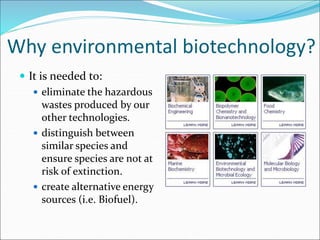

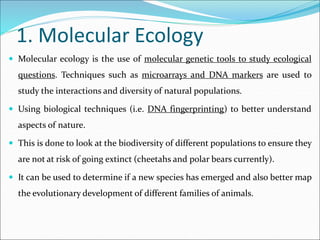
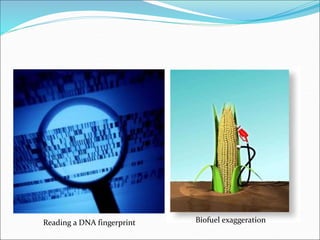
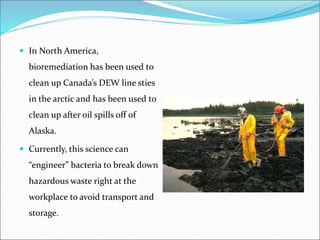
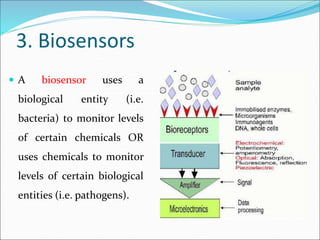
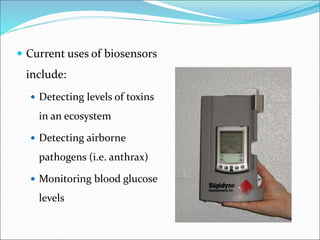

This document discusses environmental biotechnology and environmental microbiology. Environmental biotechnology uses biotechnology to solve environmental problems, while environmental microbiology studies microbial interactions and communities in the environment. The document then provides examples of areas within environmental biotechnology and microbiology, including molecular ecology, bioremediation, biosensors, and biofuels. Molecular ecology uses genetic tools to study ecology and biodiversity. Bioremediation uses bacteria or fungi to break down hazardous waste. Biosensors use biological entities like bacteria to monitor chemical or biological levels. Biofuels are plant-derived fuels seen as more environmentally friendly alternatives to traditional fuels.


![environmental_biotechnology_and_sustainable_development_ppt[1].pptx](https://cdn.slidesharecdn.com/ss_thumbnails/environmentalbiotechnologyandsustainabledevelopmentppt1-250831151014-2033b167-thumbnail.jpg?width=640&height=640&fit=bounds)


