Water Pollution
• Waterpollution occurs when harmful substances, such as chemicals,
pathogens, and waste products, contaminate water bodies like rivers,
lakes, oceans, and groundwater.
• It refers to the contamination of water bodies (e.g., rivers, lakes,
oceans, and groundwater) by harmful substances, making the water
unsafe for human use and aquatic life.
3.
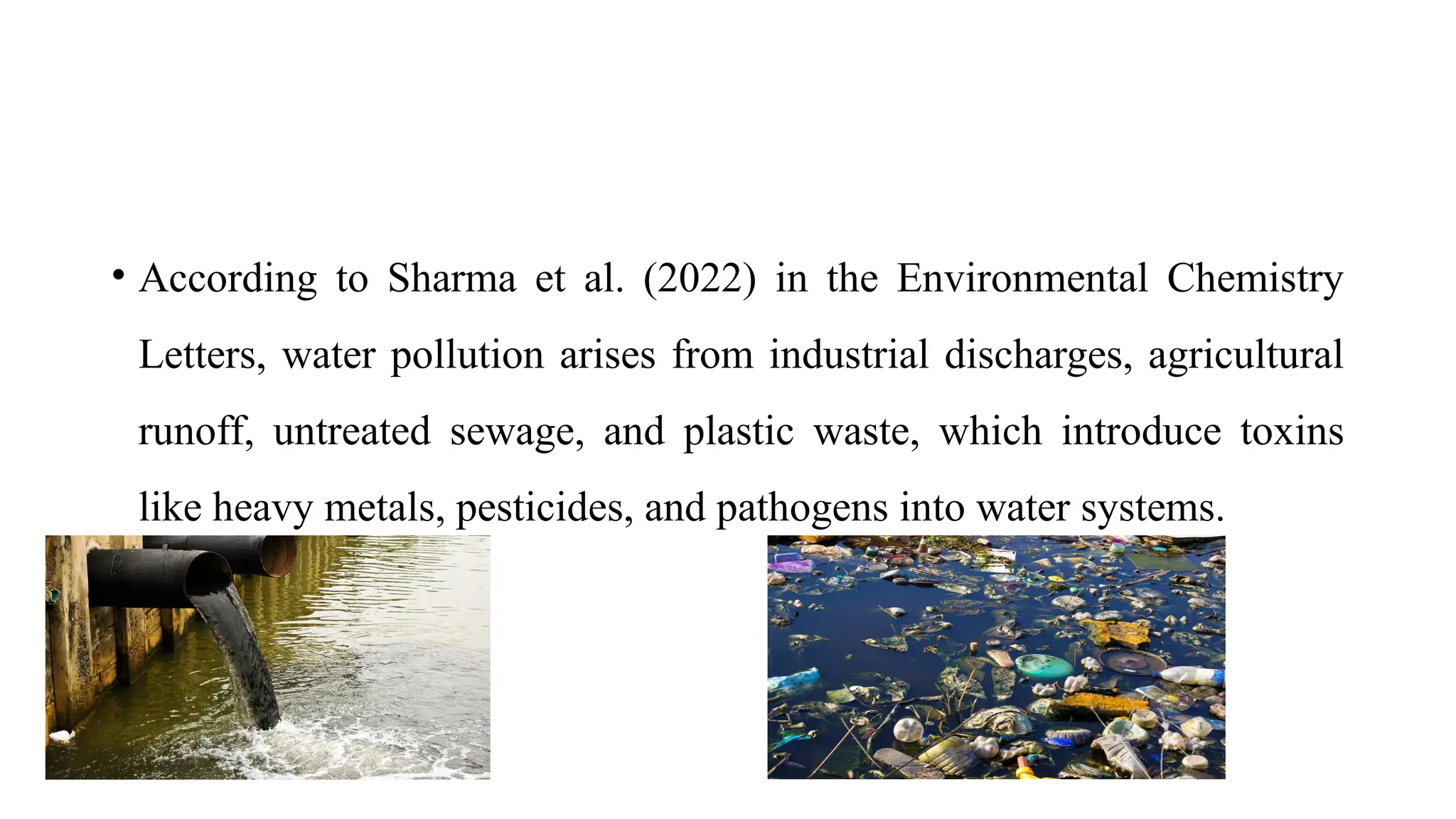
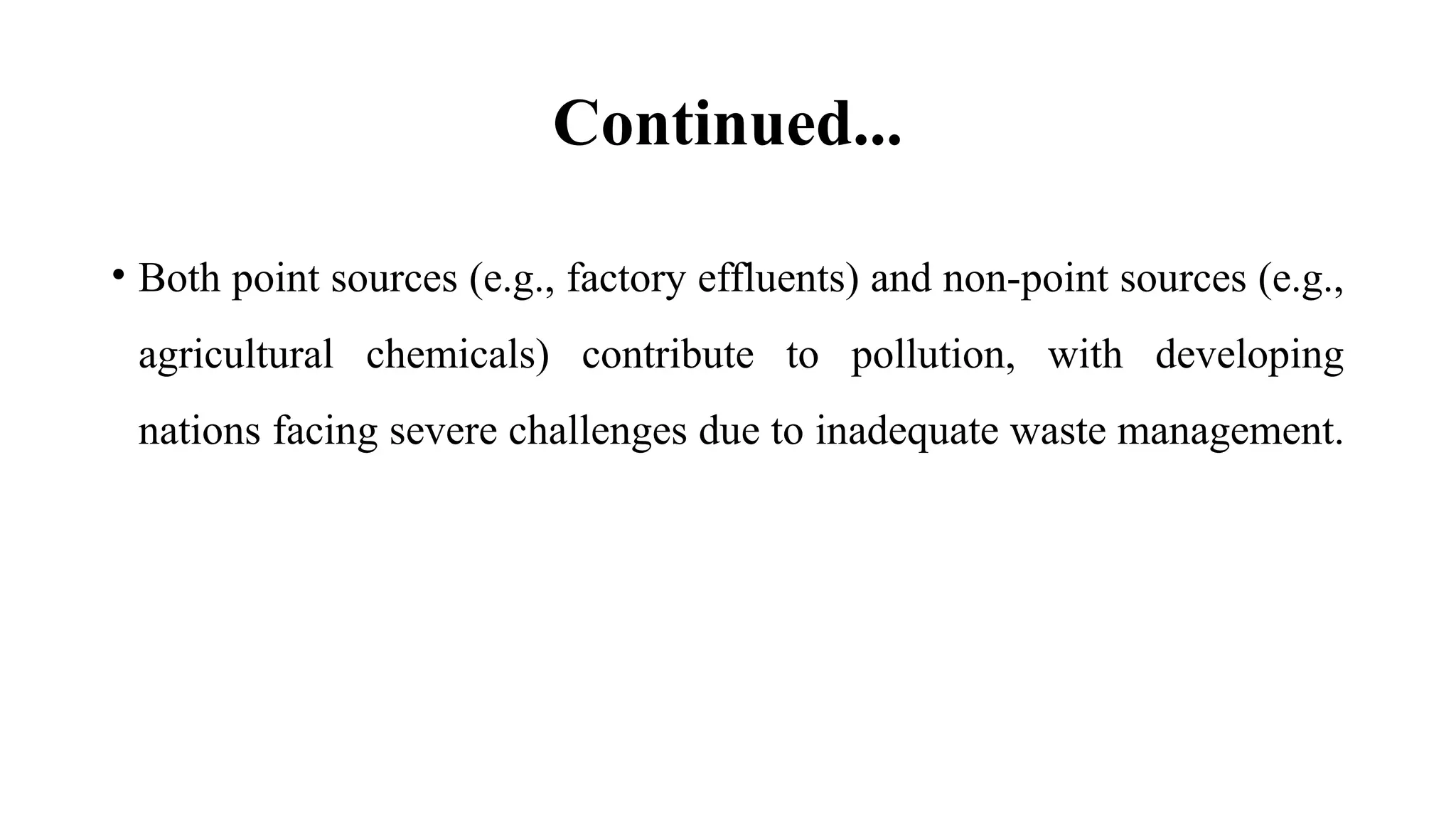
• According toSharma et al. (2022) in the Environmental Chemistry
Letters, water pollution arises from industrial discharges, agricultural
runoff, untreated sewage, and plastic waste, which introduce toxins
like heavy metals, pesticides, and pathogens into water systems.
4.
Continued...
• Both pointsources (e.g., factory effluents) and non-point sources (e.g.,
agricultural chemicals) contribute to pollution, with developing
nations facing severe challenges due to inadequate waste management.
5.
Continued...
• The Frontiersin Environmental Science article by Khan et al. (2022) adds
that emerging contaminants, such as pharmaceuticals and microplastics,
further exacerbate pollution, as they are not fully removed by conventional
treatment methods (Khan et al., 2022).
• The IJCBS paper emphasizes that natural processes like erosion can also
contribute, but human activities remain the primary cause of water pollution
(IJCBS, 2023).
6.
Water Pollution: Sources
ChemicalPollution
• Harmful chemicals like heavy metals (lead, mercury), pesticides
(DDT, glyphosate), and oil enter water systems through industrial
discharge or runoff from farmland.
• These chemicals may remain in the water for long periods,
accumulating in sediments, and can poison aquatic life and humans.
7.
Continued...
Nutrient Pollution (Eutrophication)
•Excessive nutrients like nitrogen and phosphorus (from fertilizers or
untreated sewage) enter water bodies, leading to eutrophication.
• This process encourages the rapid growth of algae (algal blooms), which
deplete oxygen levels in the water when they decay.
• Oxygen depletion creates dead zones, where aquatic life cannot survive.
These areas disrupt ecosystems and can cause fish kills.
8.
Continued...
Pathogen Pollution
• Pathogenicmicrobes (bacteria, viruses, protozoa) enter water from
human or animal waste
• . When water is consumed or used in recreational activities, these
pathogens can cause diseases like cholera, dysentery, and typhoid
fever.
9.
Continued...
Plastic Pollution
• Plasticwaste enters waterways through litter, improper disposal, and waste
mismanagement. Over time, plastics break into smaller particles called
microplastics, which contaminate rivers, lakes, and oceans.
• Plastics physically harm aquatic animals (through ingestion or entanglement)
and break down into microplastics, which can enter the food chain.
10.
Continued...
Oil Spills
• Petroleumhydrocarbons from oil spills coat marine animals, plants,
and shorelines, poisoning organisms and disrupting ecosystems.
• Oil spills lead to long-term environmental damage, including the death
of marine life, destruction of coral reefs, and economic losses in
fisheries and tourism.
11.
Microbes in WaterPollution
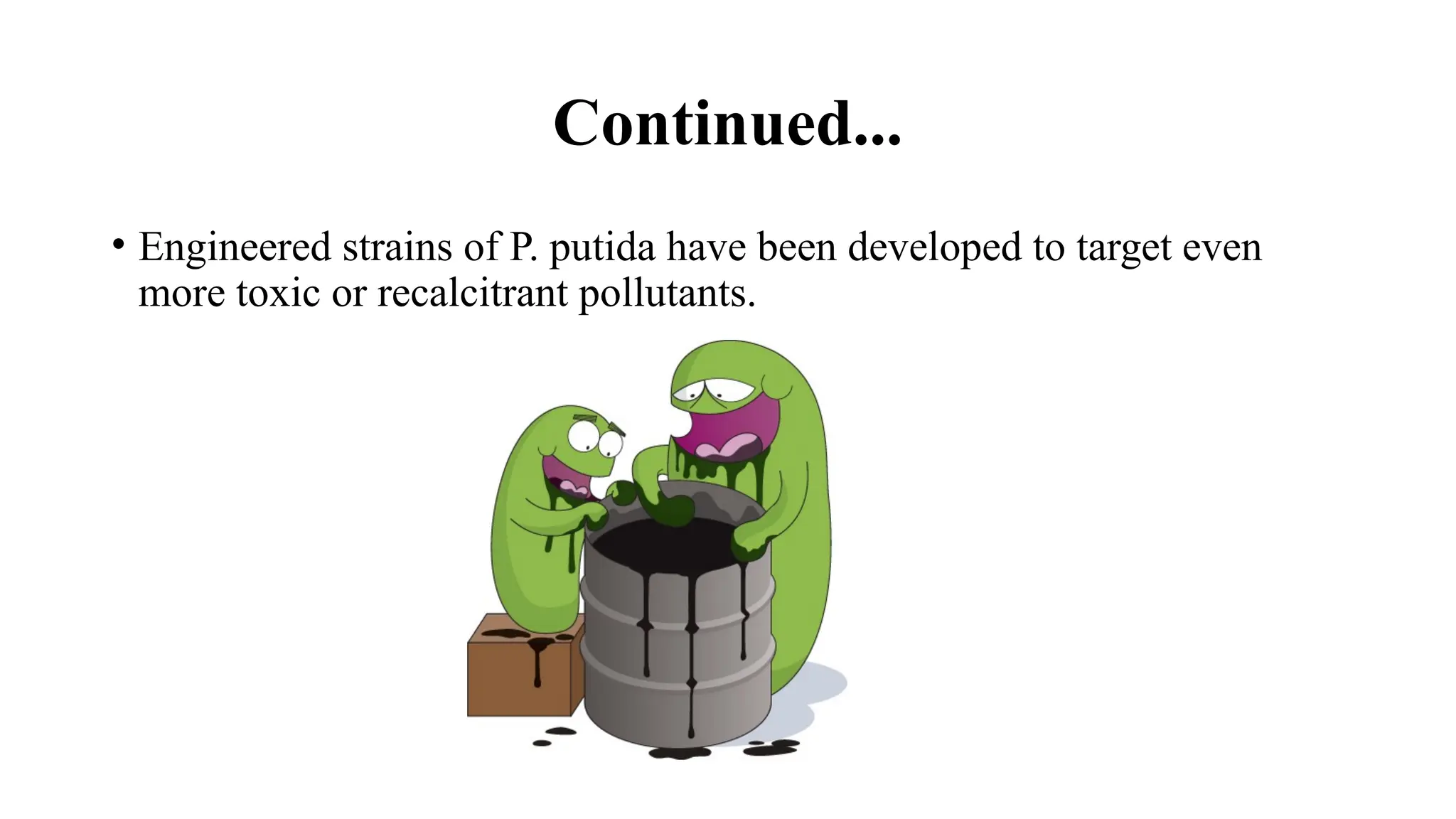
Pseudomonas putida
• Hydrocarbon Degradation: Pseudomonas putida is a gram-negative, rod-
shaped bacterium known for its metabolic versatility, it can degrade a wide
variety of toxic organic compounds, especially hydrocarbons, which are major
components of oil and fuel.
• P. putida produces oxygenase enzymes (e.g., toluene dioxygenase) that break
down complex hydrocarbons into simpler, less toxic compounds.
12.
Continued...
• These enzymesinsert oxygen into the hydrocarbon molecules,
enabling them to be used as carbon and energy sources by the bacteria.
• The hydrocarbons are ultimately converted into carbon dioxide and
water, especially under aerobic conditions.
• Environmental Application: Used in oil spill bioremediation, industrial
waste treatment, and soil decontamination.
Heavy Metal Remediation
MicroorganismsInvolved in Heavy Metal Remediation
• Microbial species are effective in heavy metal removal. These include
bacteria (Pseudomonas, Bacillus), fungi (Aspergillus, Penicillium),
and algae (Chlorella, Spirulina).
• Kumar et al. (2022) found Pseudomonas aeruginosa is particularly
effective in cadmium and lead removal through biosorption.
15.
Biosorption
• Biosorption isa physicochemical process by which biological
materials, particularly non-living biomass,passively adsorb and bind
contaminants, especially heavy metals, from aqueous solutions.
• Fungal species like Aspergillus niger show remarkable chromium(VI)
reduction capabilities due to their high surface area and functional
groups.
Case Study
• Ina study conducted in Singapore, Utomo et al. (2016) investigated the
use of non-living algal biomass for the biosorption of heavy metals from
surface water. The biomass, composed of common freshwater algal
species such as Chlorella and Scenedesmus, which were dried and
applied to contaminated water samples containing lead (Pb²⁺), cadmium
(Cd²⁺), zinc (Zn²⁺), and copper (Cu²⁺).
18.
Continued...
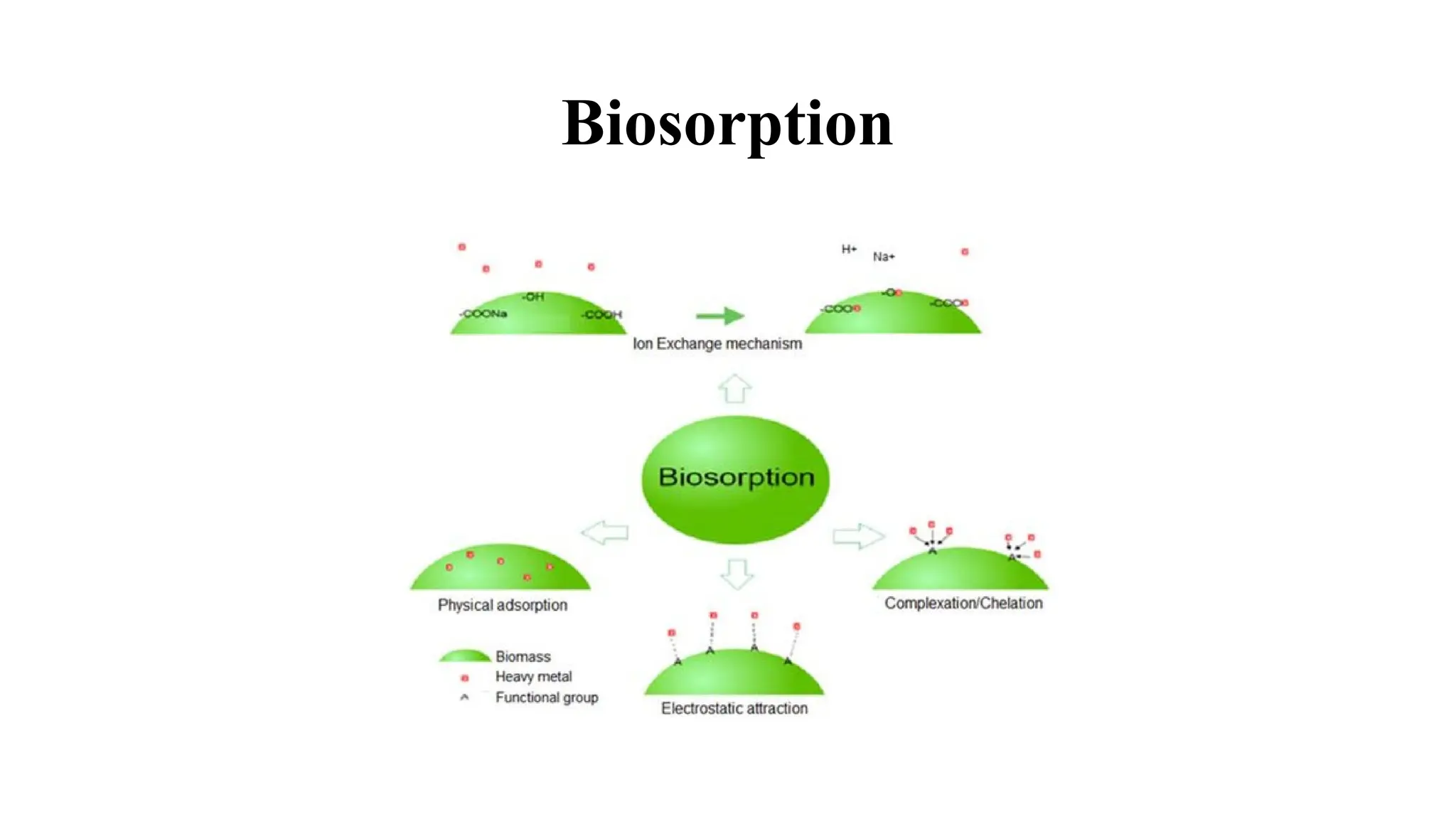
• Metal removaloccurred through passive mechanisms, including
adsorption, ion exchange, and surface complexation, primarily
involving functional groups such as carboxyl, hydroxyl, phosphate, and
amino groups on the algal cell wall. The study demonstrated that algal
biosorption is a sustainable and low-cost method for treating metal-
contaminated surface waters in tropical urban environments.
19.
Bioaccumulation
• Bioaccumulation isthe process by which living organisms absorb and
retain substances, such as toxic chemicals or heavy metals, from their
environment at a rate faster than they can eliminate them.
• Bioaccumulation involves two major pathways, direct uptake and
trophic transfer.
20.
Continued...
• Direct Uptakefrom the environment:
• Organisms absorb pollutants directly from water, soil, or air through
their skin, gills, or membranes. For example, fish can absorb mercury
or cadmium through their gills from contaminated water.
21.
Continued...
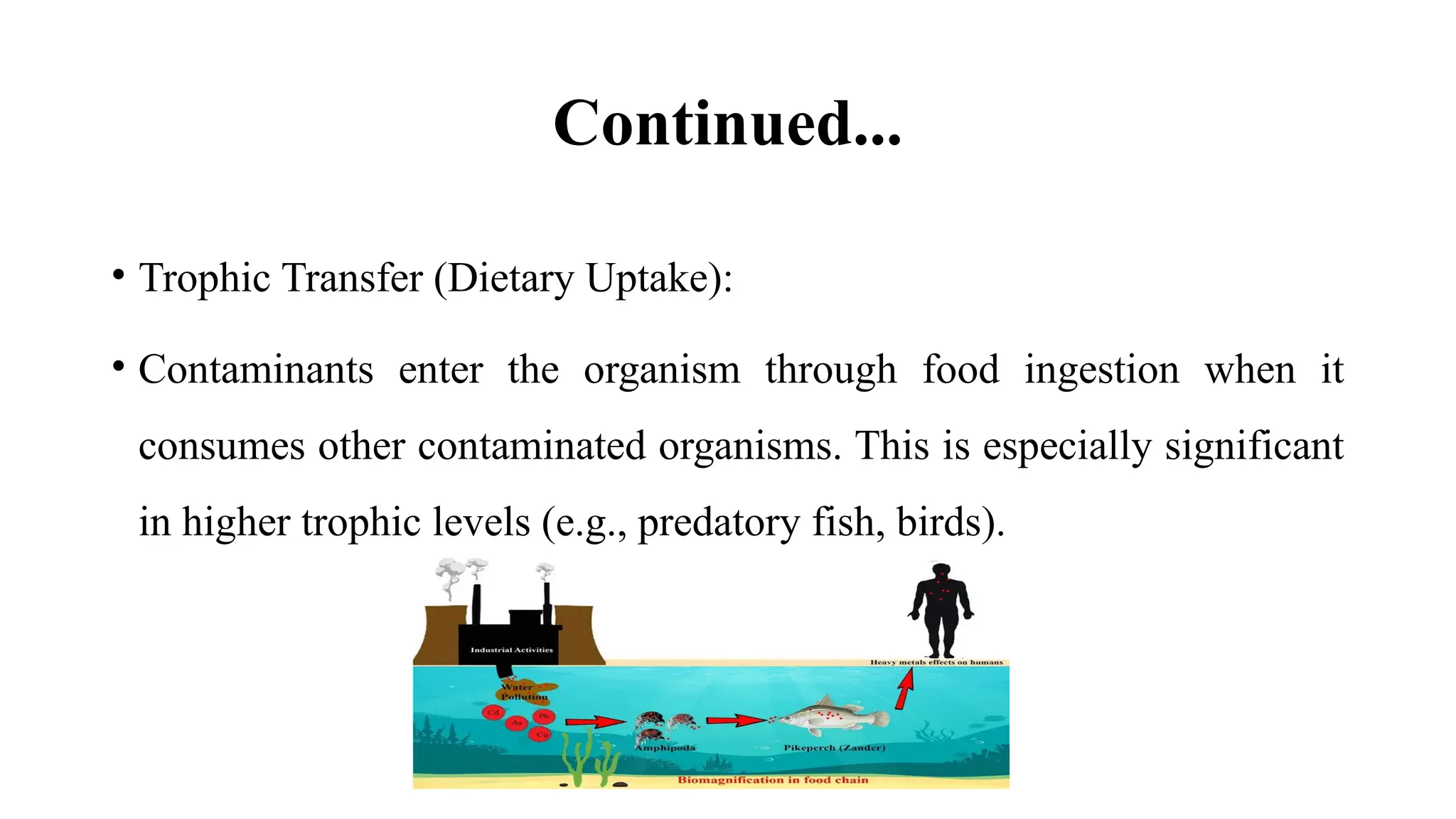
• Trophic Transfer(Dietary Uptake):
• Contaminants enter the organism through food ingestion when it
consumes other contaminated organisms. This is especially significant
in higher trophic levels (e.g., predatory fish, birds).
22.
Biochemical Transformation
• Microorganismsfacilitate metal transformation through redox reactions.
• Gupta et al. (2022) studied on how Chromobacterium violaceum reduces
toxic Cr(VI) to less mobile Cr(III).
• The bacterium expresses chromate reductase enzymes, which catalyze
the reduction of Cr(VI) to Cr(III). These enzymes use NADH or NADPH
as electron donors.
23.
Continued...
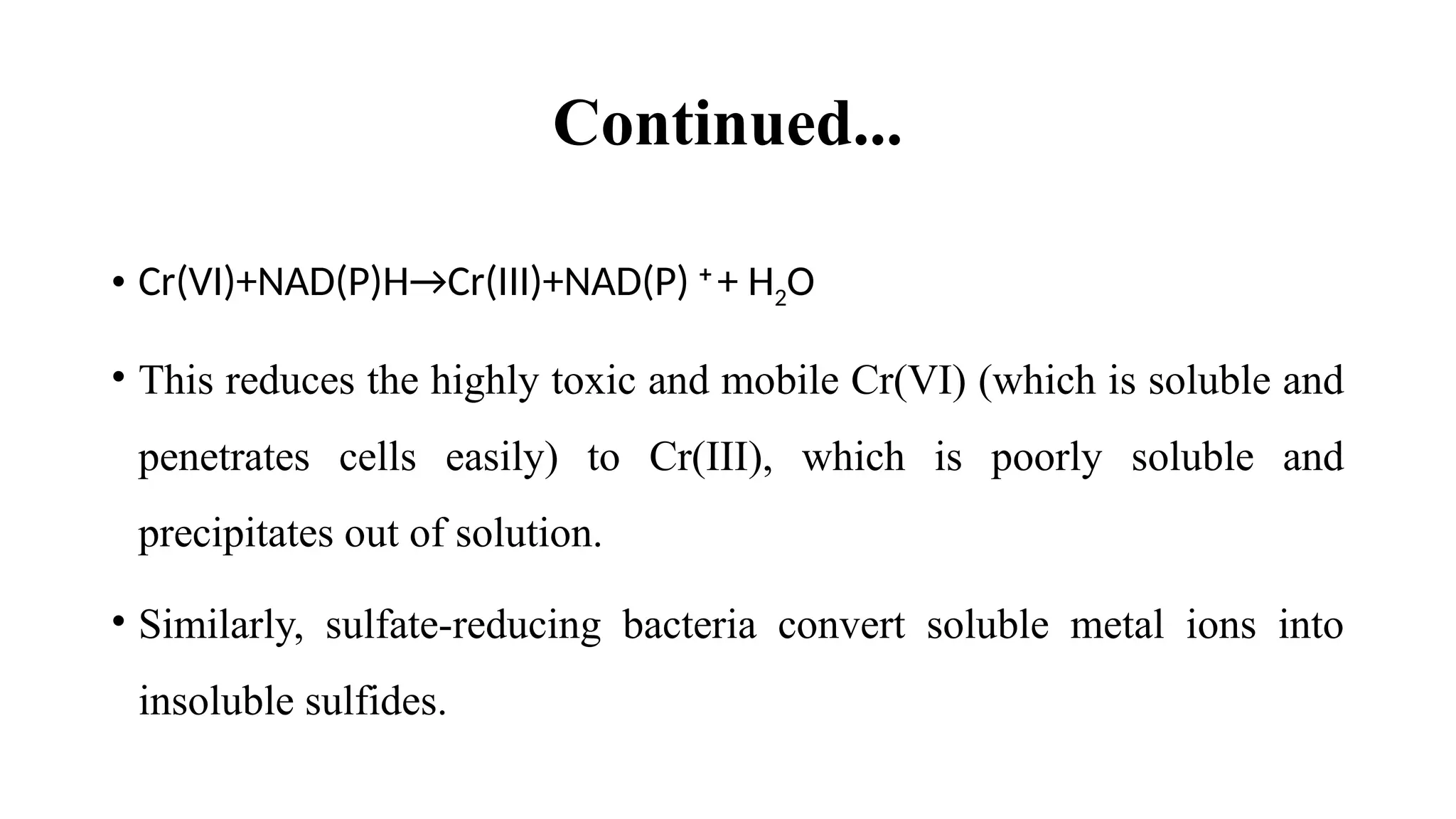
• Cr(VI)+NAD(P)H→Cr(III)+NAD(P) +
+H2O
• This reduces the highly toxic and mobile Cr(VI) (which is soluble and
penetrates cells easily) to Cr(III), which is poorly soluble and
precipitates out of solution.
• Similarly, sulfate-reducing bacteria convert soluble metal ions into
insoluble sulfides.
24.
Organic Pollutant Degradation
•Pseudomonas species are aerobic, gram-negative bacteria with
exceptional metabolic flexibility.
• They can utilize hydrocarbons (e.g., alkanes, toluene, benzene, xylene)
from petroleum as carbon and energy sources.
• This makes them essential players in bioremediation of oil-
contaminated environments.
25.
Continued...
• Pseudomonas speciesare the first-line enzymes in hydrocarbon
degradation.
• They incorporate oxygen atoms into hydrocarbon molecules,
increasing solubility and making them more reactive for further
breakdown.
26.
Monooxygenases
Add one oxygenatom to the substrate, for example Pseudomonas
putida (Toluene monooxygenases-Degrades Toluene, benzene, xylene)
• Example equation: Toluene monooxygenase adds oxygen to
toluene → benzyl alcohol.
27.
Dioxygenases
• Add twooxygen atoms across a double bond.
• Example: Naphthalene dioxygenase breaks aromatic rings (e.g.,
benzene, naphthalene).
28.
Dehydrogenases
• These enzymesoxidize the intermediates formed by oxygenases.
• Dehydrogenases are a class of oxidoreductase enzymes that catalyze
oxidation-reduction (redox) reactions by removing hydrogen atoms
(protons and electrons) from a substrate and transferring them to an
electron acceptor, usually NAD⁺, NADP⁺, FAD, or quinones.
29.
Continued...
• Example ofmicroorganisms involved include: Escherichia coli, which
uses lactate dehydrogenase in TCA cycle. Pseudomonas putida uses
dehydrogenase in biodegradation of hydrocarbons, Rhodococcus
erythropolis uses aromatic compound dehydrogenases in
biotransformation, and bioremediation of xenobiotics.
30.
Bioaugmentation in Water
•Bioaugmentation in Water refers to the process of introducing specific
microorganisms into a polluted water system to enhance the breakdown
of contaminants and improve water quality.
How It Works:
• Selection of Microbes: Specialized or engineered bacteria (e.g.,
Pseudomonas, Bacillus, Alcaligenes) are chosen for their ability to
degrade specific pollutants (like oil, nitrates, or heavy metals).
31.
Continued...
• Application: Thesemicrobes are added directly to wastewater
treatment plants, rivers, lakes, or groundwater.
• Action: The introduced microbes boost biodegradation, working
alongside native microbes to remove toxins faster and more
completely.
32.
Case Study: Bioremediation
•A study conducted in Harare assessed the effectiveness of a bio gel
containing indigenous microorganisms in degrading petroleum
hydrocarbons in contaminated soils. The bio gel was applied to sites such
as old generator areas and fuel storage zones. The bio gel contains
bacterial species such as Pseudomonas, Acinetobacter, Rhodococcus,
Gordonia, and Bacillus. They are known for their ability to produce
enzymes like monooxygenases, dioxygenases, and dehydrogenases,
which facilitate the breakdown of complex hydrocarbons into simpler,
less harmful compounds.Results showed a significant reduction in Total
Petroleum Hydrocarbons (TPH), with the highest degradation observed
between weeks 6 and 8 at soil depths of 0–30 cm.
33.
Bioremediation Case study
•Details: The Shagashe River, polluted by raw sewage from Masvingo City's
treatment works, was studied for bioremediation using the water
hyacinth (Eichhornia crassipes). While laboratory experiments indicated
the plant's potential in absorbing pollutants like nitrates and phosphates,
field studies showed limited effectiveness, possibly due to factors like
water flow reducing contact time between the plant and pollutants.
34.
Bioaugmentation
• The studyinvestigated the potential of Chlorella vulgaris to eliminate
Vibrio cholerae from raw sewage collected in Chegutu. The sewage was
inoculated with C. vulgaris cultures and monitored over a three-week
period. Results indicated a continuous decrease in V. cholerae
concentrations, with complete elimination observed within 21 days. This
suggests that C. vulgaris can be effectively used in bioaugmentation
strategies to treat sewage contaminated with pathogenic bacteria.
35.
References
• Sharma, R.,Kumar, R., Satapathy, S.C., Al-Ansari, N., Singh, K.K.,
Mahapatra, R.P., Agarwal, A.K., Le, H.V. and Pham, B.T. (2022)
'Analysis of water pollution using different physicochemical
parameters: a study of Yamuna River', Environmental Chemistry
Letters, 20(4), pp. 2349-2366. Available at:
https://doi.org/10.1007/s10311-022-01447-4 (Accessed: 1 May 2025).
36.
Continued...
• Khan, S.,Naushad, M., Iqbal, J., Bathula, C. and Al-Muhtaseb, A.H.
(2022) 'Emerging contaminants of high concern for the environment:
current trends and future research', Frontiers in Environmental Science,
10, 880246. Available at: https://doi.org/10.3389/fenvs.2022.880246
(Accessed: 1 May 2025).
37.
Continued...
• International Journalof Chemical and Biochemical Sciences (IJCBS)
(2023) 'Impact of industrial effluents on water quality and human
health: a review', International Journal of Chemical and Biochemical
Sciences, 23, pp. 23-24. Available at: https://www.iscientific.org/wp-
content/uploads/2023/05/19-IJCBS-23-23-24.pdf (Accessed: 1 May
2025).
38.
Continued...
• Sreedevi, P.R.,Suresh, K. and Jiang, G., 2022. Bacterial bioremediation
of heavy metals in wastewater: a review of processes and applications.
Journal of Water Process Engineering, 48, p.102884.
• Irvine, K.N., Ho, H.L. and Chua, L.H., 2023. Dynamics of runoff quality
associated with an urban park and WSUD treatment train in a tropical
climate. Environmental Technology, 44(4), pp.512-527.
39.
Continued...
• Violet, D.,Masamha, B., Mapfaire, L., Machingure, B., and
Chivuraise, G., 2013. Environmental Management and Sustainable
Development: Onsite Bioremediation Using Bio Gel on Petroleum
Hydrocarbons Contaminated Soil in Zimbabwe. 2,
10.5296/emsd.v2i1.3472