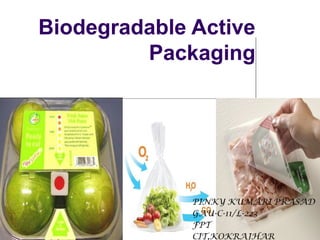
Biodegradable Active 
Packaging
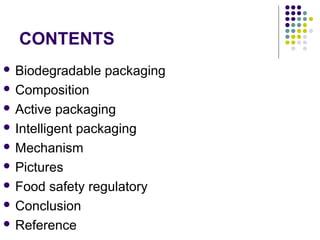
CONTENTS 
 Biodegradable packaging 
 Composition 
 Active packaging 
 Intelligent packaging 
Mechanism 
 Pictures 
 Food safety regulatory 
 Conclusion 
 Reference
BIODEGRADABLE 
PACKAGING 
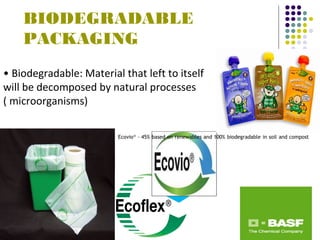
• Biodegradable: Material that left to itself 
will be decomposed by natural processes 
( microorganisms)
COMPOSITION 
Bioplastics can be made from many different sources 
and materials: 
 Plant Oil 
 Cellulose 
 Corn Starch 
 Potato Starch 
 Sugarcane
ACTIVE PACKAGING 
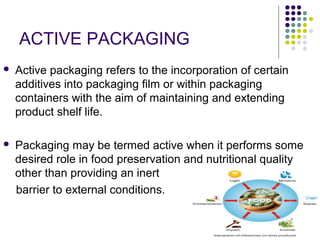
 Active packaging refers to the incorporation of certain 
additives into packaging film or within packaging 
containers with the aim of maintaining and extending 
product shelf life. 
 Packaging may be termed active when it performs some 
desired role in food preservation and nutritional quality 
other than providing an inert 
barrier to external conditions.
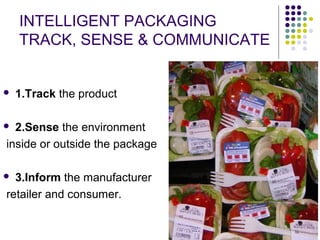
INTELLIGENT PACKAGING 
TRACK, SENSE & COMMUNICATE 
 1.Track the product 
 2.Sense the environment 
inside or outside the package 
 3.Inform the manufacturer 
retailer and consumer.
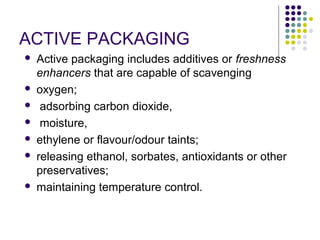
ACTIVE PACKAGING 
 Active packaging includes additives or freshness 
enhancers that are capable of scavenging 
 oxygen; 
 adsorbing carbon dioxide, 
 moisture, 
 ethylene or flavour/odour taints; 
 releasing ethanol, sorbates, antioxidants or other 
preservatives; 
 maintaining temperature control.
Selected examples of active 
packaging systems 
Active packaging 
system 
Oxygen 
scavengers 
Mechanisms 
1. iron based 
2. metal/acid 
3. metal (e.g. 
platinum) 
catalyst 
4. Ascorbate 
metallic salts 
5. enzyme based 
Food application 
bread, cakes, 
cooked rice, 
biscuits, pizza, 
pasta, cheese, 
cured meats and 
fish, coffee, 
snack foods, 
dried foods and 
Beverages.
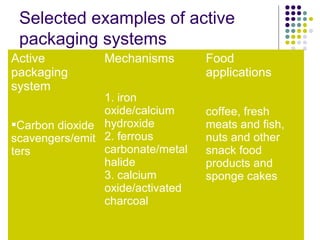
Selected examples of active 
packaging systems 
Active 
packaging 
system 
Carbon dioxide 
scavengers/emit 
ters 
Mechanisms 
1. iron 
oxide/calcium 
hydroxide 
2. ferrous 
carbonate/metal 
halide 
3. calcium 
oxide/activated 
charcoal 
Food 
applications 
coffee, fresh 
meats and fish, 
nuts and other 
snack food 
products and 
sponge cakes
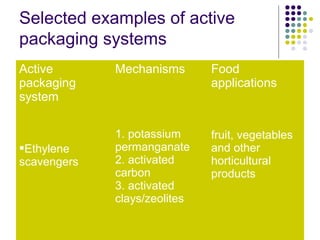
Selected examples of active 
packaging systems 
Active 
packaging 
system 
Ethylene 
scavengers 
Mechanisms 
1. potassium 
permanganate 
2. activated 
carbon 
3. activated 
clays/zeolites 
Food 
applications 
fruit, vegetables 
and other 
horticultural 
products
Selected examples of active 
packaging systems 
Active 
packaging 
system 
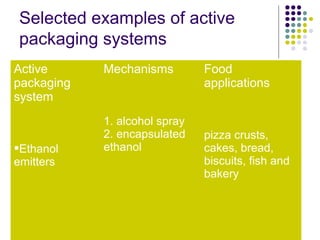
Ethanol 
emitters 
Mechanisms 
1. alcohol spray 
2. encapsulated 
ethanol 
Food 
applications 
pizza crusts, 
cakes, bread, 
biscuits, fish and 
bakery
CO2 EMITTERS: 
ULTRAZAPXTENDAPAK
ETHYLENE ABSORBER: SCA 
PACKAGING 
The fruit crate “fruit fresh”, made of 
corrugated cardboard, uses the 
hollow spaces between the 
corrugations to apply active 
materials (Kaolin & Zeolithe), in 
this case an ethylene absorber .
SELECTIVE PERMEABILITY: 
Cauliflower & broccoli: 5 days 
extension 
2 days shelf-life for cabbages, 
leeks and carrots. 
Green beans shelf life 
extension of more than 20 days 
Asparagus shelf life extension 
by an extra 2 days.
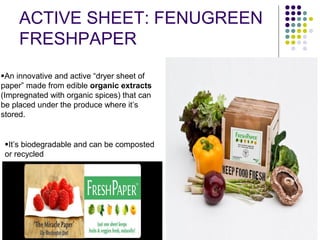
ACTIVE SHEET: FENUGREEN 
FRESHPAPER 
An innovative and active “dryer sheet of 
paper” made from edible organic extracts 
(Impregnated with organic spices) that can 
be placed under the produce where it’s 
stored. 
It’s biodegradable and can be composted 
or recycled
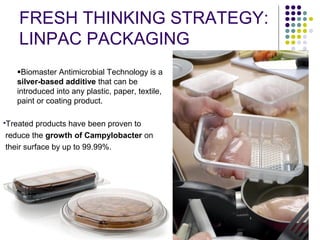
FRESH THINKING STRATEGY: 
LINPAC PACKAGING 
Biomaster Antimicrobial Technology is a 
silver-based additive that can be 
introduced into any plastic, paper, textile, 
paint or coating product. 
Treated products have been proven to 
reduce the growth of Campylobacter on 
their surface by up to 99.99%.
Food safety, consumer acceptability 
and regulatory issues 
 Food safety and regulatory issues related to active 
packaging of foods need to be addressed. 
 First, any need for food contact approval must be 
established before any form of active packaging is used. 
 Second, it is important to consider environmental 
regulations covering active-packaging
Food safety, consumer acceptability 
and regulatory issues 
 Third, there may be a need for labelling in cases where 
active packaging may give rise to consumer confusion. 
 Fourth, it is pertinent to consider the effects of active 
packaging on the microbial ecology and safety of foods.
Conclusions 
 The objectives of this technology are to maintain 
sensory quality and extend the shelf life of foods 
whilst at the same time maintaining nutritional 
quality and ensuring microbial safety. 
 Active packaging is an emerging and exciting area 
of food technology that can confer many 
preservation benefits on a wide range of food 
products.
References 
 Abeles, F.B., Morgan, P.W. and Saltveit, M.E. (1992) Ethylene in Plant 
Biology, Academic Press Ltd, 
 London, UK. 
 Ahvenainen, R. and Hurme, E. (1997) Active and smart packaging for 
meeting consumer demands for 
 quality and safety. Food Additives Contaminants, 14, 753–763. 
 Anon (1994) Fresh produce is keen as mustard to last longer. Packaging 
Week, 10(21), 6. 
 Anon (1995) Scavenger solution. Packaging News, December edn, p. 20
THANK YOU !!!

Biodegradable active packaging(mechanism)

  • 1.
  • 2.
    CONTENTS  Biodegradablepackaging  Composition  Active packaging  Intelligent packaging Mechanism  Pictures  Food safety regulatory  Conclusion  Reference
  • 3.
    BIODEGRADABLE PACKAGING •Biodegradable: Material that left to itself will be decomposed by natural processes ( microorganisms)
  • 4.
    COMPOSITION Bioplastics canbe made from many different sources and materials:  Plant Oil  Cellulose  Corn Starch  Potato Starch  Sugarcane
  • 5.
    ACTIVE PACKAGING Active packaging refers to the incorporation of certain additives into packaging film or within packaging containers with the aim of maintaining and extending product shelf life.  Packaging may be termed active when it performs some desired role in food preservation and nutritional quality other than providing an inert barrier to external conditions.
  • 6.
    INTELLIGENT PACKAGING TRACK,SENSE & COMMUNICATE  1.Track the product  2.Sense the environment inside or outside the package  3.Inform the manufacturer retailer and consumer.
  • 7.
    ACTIVE PACKAGING Active packaging includes additives or freshness enhancers that are capable of scavenging  oxygen;  adsorbing carbon dioxide,  moisture,  ethylene or flavour/odour taints;  releasing ethanol, sorbates, antioxidants or other preservatives;  maintaining temperature control.
  • 8.
    Selected examples ofactive packaging systems Active packaging system Oxygen scavengers Mechanisms 1. iron based 2. metal/acid 3. metal (e.g. platinum) catalyst 4. Ascorbate metallic salts 5. enzyme based Food application bread, cakes, cooked rice, biscuits, pizza, pasta, cheese, cured meats and fish, coffee, snack foods, dried foods and Beverages.
  • 9.
    Selected examples ofactive packaging systems Active packaging system Carbon dioxide scavengers/emit ters Mechanisms 1. iron oxide/calcium hydroxide 2. ferrous carbonate/metal halide 3. calcium oxide/activated charcoal Food applications coffee, fresh meats and fish, nuts and other snack food products and sponge cakes
  • 10.
    Selected examples ofactive packaging systems Active packaging system Ethylene scavengers Mechanisms 1. potassium permanganate 2. activated carbon 3. activated clays/zeolites Food applications fruit, vegetables and other horticultural products
  • 11.
    Selected examples ofactive packaging systems Active packaging system Ethanol emitters Mechanisms 1. alcohol spray 2. encapsulated ethanol Food applications pizza crusts, cakes, bread, biscuits, fish and bakery
  • 13.
  • 14.
    ETHYLENE ABSORBER: SCA PACKAGING The fruit crate “fruit fresh”, made of corrugated cardboard, uses the hollow spaces between the corrugations to apply active materials (Kaolin & Zeolithe), in this case an ethylene absorber .
  • 15.
    SELECTIVE PERMEABILITY: Cauliflower& broccoli: 5 days extension 2 days shelf-life for cabbages, leeks and carrots. Green beans shelf life extension of more than 20 days Asparagus shelf life extension by an extra 2 days.
  • 16.
    ACTIVE SHEET: FENUGREEN FRESHPAPER An innovative and active “dryer sheet of paper” made from edible organic extracts (Impregnated with organic spices) that can be placed under the produce where it’s stored. It’s biodegradable and can be composted or recycled
  • 17.
    FRESH THINKING STRATEGY: LINPAC PACKAGING Biomaster Antimicrobial Technology is a silver-based additive that can be introduced into any plastic, paper, textile, paint or coating product. Treated products have been proven to reduce the growth of Campylobacter on their surface by up to 99.99%.
  • 18.
    Food safety, consumeracceptability and regulatory issues  Food safety and regulatory issues related to active packaging of foods need to be addressed.  First, any need for food contact approval must be established before any form of active packaging is used.  Second, it is important to consider environmental regulations covering active-packaging
  • 19.
    Food safety, consumeracceptability and regulatory issues  Third, there may be a need for labelling in cases where active packaging may give rise to consumer confusion.  Fourth, it is pertinent to consider the effects of active packaging on the microbial ecology and safety of foods.
  • 20.
    Conclusions  Theobjectives of this technology are to maintain sensory quality and extend the shelf life of foods whilst at the same time maintaining nutritional quality and ensuring microbial safety.  Active packaging is an emerging and exciting area of food technology that can confer many preservation benefits on a wide range of food products.
  • 21.
    References  Abeles,F.B., Morgan, P.W. and Saltveit, M.E. (1992) Ethylene in Plant Biology, Academic Press Ltd,  London, UK.  Ahvenainen, R. and Hurme, E. (1997) Active and smart packaging for meeting consumer demands for  quality and safety. Food Additives Contaminants, 14, 753–763.  Anon (1994) Fresh produce is keen as mustard to last longer. Packaging Week, 10(21), 6.  Anon (1995) Scavenger solution. Packaging News, December edn, p. 20
  • 22.