Recent Trends in
Fish Packaging
Presented by- Shelke Jayshri S.
Purpose :
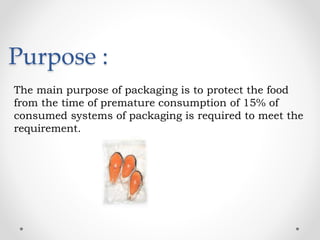
The main purpose of packaging is to protect the food
from the time of premature consumption of 15% of
consumed systems of packaging is required to meet the
requirement.
Why Packaging is needed ???
Fresh fish is highly susceptible to spoilage due to
chemical changes and microbial growth. The high
ambient temperature of our country favours rapid
growth of microorganisms.
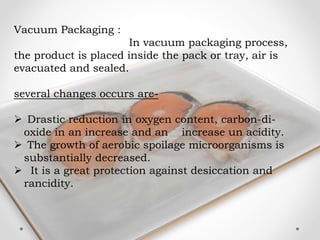
Vacuum Packaging :
In vacuum packaging process,
the product is placed inside the pack or tray, air is
evacuated and sealed.
several changes occurs are-
 Drastic reduction in oxygen content, carbon-di-
oxide in an increase and an increase un acidity.
 The growth of aerobic spoilage microorganisms is
substantially decreased.
 It is a great protection against desiccation and
rancidity.
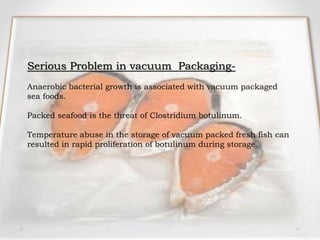
Serious Problem in vacuum Packaging-
Anaerobic bacterial growth is associated with vacuum packaged
sea foods.
Packed seafood is the threat of Clostridium botulinum.
Temperature abuse in the storage of vacuum packed fresh fish can
resulted in rapid proliferation of botulinum during storage.
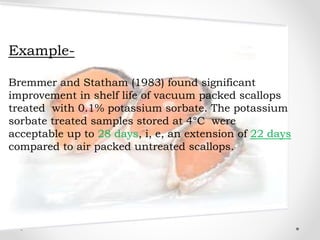
Example-
Bremmer and Statham (1983) found significant
improvement in shelf life of vacuum packed scallops
treated with 0.1% potassium sorbate. The potassium
sorbate treated samples stored at 4°C were
acceptable up to 28 days, i, e, an extension of 22 days
compared to air packed untreated scallops.
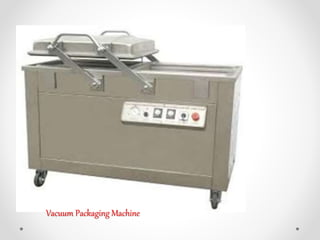
Vacuum Packaging Machine
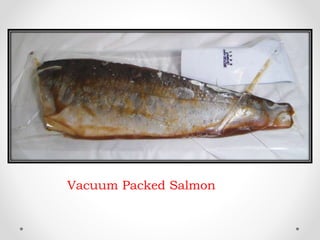
Vacuum Packed Salmon
Modified Atmosphere Packaging (MAP) :
 presently ice and mechanical refrigeration are the
most common mean of retarding microbial and
chemical spoilage in fresh seafood during
distribution & marketing.
 Modified atmosphere packaging, a
technologically viable method has been
developed as a supplement to ice or mechanical
refrigeration to reduce the losses and extend the
storage life of fresh seafood products.
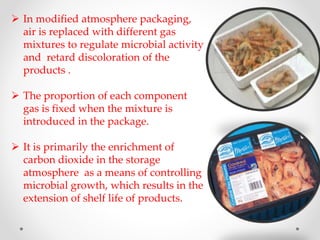
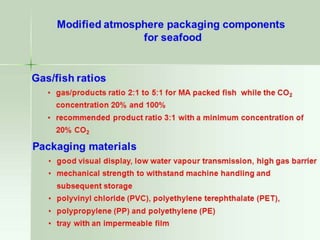
 In modified atmosphere packaging,
air is replaced with different gas
mixtures to regulate microbial activity
and retard discoloration of the
products .
 The proportion of each component
gas is fixed when the mixture is
introduced in the package.
 It is primarily the enrichment of
carbon dioxide in the storage
atmosphere as a means of controlling
microbial growth, which results in the
extension of shelf life of products.
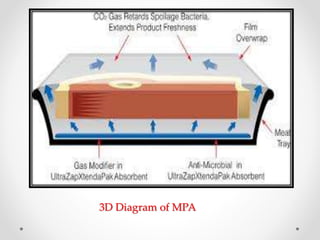
3D Diagram of MPA
Shrink Packaging:
Shrink wrapping is method of shrinking film around an article or a
group of articles in the form of a shrink wrapping involves the use
thermoplastic films that have been stretched or oriented during
manufacturing.
Material have property shrinking with the application of heat in the
packaging the product wrapped in shrink polythene or in shrink PVC
film and the ends are sealed with the help of a sealer.
The film is shrunk by hot air circulation.
In the shrink tunnel to form a snug tight fitting wrap around the pack,
thereby preventing movement within the pack, and any consequent
damage to the product.
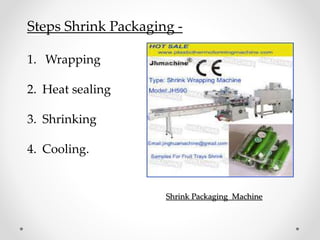
Steps Shrink Packaging -
1. Wrapping
2. Heat sealing
3. Shrinking
4. Cooling.
Shrink Packaging Machine
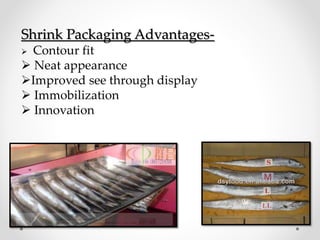
Shrink Packaging Advantages-
 Contour fit
 Neat appearance
Improved see through display
 Immobilization
 Innovation
Aseptic packaging:
 Aseptic packaging implies sterilization of the package or the
packaging material and filling the cold, commercially sterile food
into it under conditions which prevent re-infection during the filling,
closing and sealing operations.
 The aseptic process involves separate sterilization of the product and
container causing less thermal damage to the product and less stress
on the packaging .
Advantage-
Improve product quality.
it allows other materials to be used as a traditional
metal can or glass jar.
Packages of laminated paper board or plastic
containers of different shapes can be used instead of
cans and jars, and this usually reduces the cost of the
materials.
Active Packaging:
 Active Packaging incorporation of certain components in
packaging system that releases or absorb substances from
or into the packed food or surrounding environment so
as to prolong shelf life and sustain the quality safety and
sensory characteristics of the food.
 The condition of the food determined by various aspects
as physiological, chemical, physical, microbiological and
infestation can be regulated in many manners through
the application of appropriate active packaging systems.
Active Packaging systems can be classified as-
1) active scavenging systems (absorber)
2)Active releasing systems (emitters) .
 Scavenging systems remove undesirable compounds such
as oxygen, excessive water, ethylene, carbon dioxide,
taints and other specific food compounds.
 Releasing systems actively add compounds to the
packaged food such as carbon dioxide, water, antioxidants
or preservatives. Both absorbing and releasing systems
aim at extending shelf life and improving food quality.
Other Active
Packaging Systems
1)Intelligent Packaging
It is a loose term used to describe technologies from storage of extra
product data in remotely sensed labels and brand protection, but also
brand enhancement, such as device revealing when food is fresh or
when it is properly cooked.
In intelligent packaging, the package function itches on and off in
response to changing external / internal conditions, and can include a
communication to the end user as to the status of the product.
Intelligent packaging system combines the advances in polymer
science, biotechnology and electronics, Combination of these
customers is a possibility of product safety, cost efficiency and
convenience
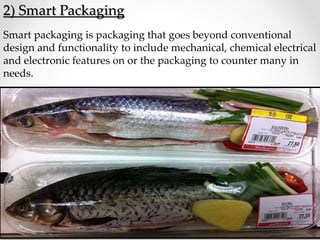
2) Smart Packaging
Smart packaging is packaging that goes beyond conventional
design and functionality to include mechanical, chemical electrical
and electronic features on or the packaging to counter many in
needs.
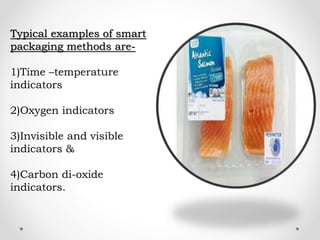
Typical examples of smart
packaging methods are-
1)Time –temperature
indicators
2)Oxygen indicators
3)Invisible and visible
indicators &
4)Carbon di-oxide
indicators.
Conti…
 Efforts have also been made to develop spoilage
or quality indicators which react with volatile
substances from chemical, enzymatic and
microbiological spoilage reactions released from
food.
 These types of indicators could be called
interactive, smart indicators , because they are
active reacting with compounds from originating
food.
recent trends in fish packaging

recent trends in fish packaging

  • 1.
    Recent Trends in FishPackaging Presented by- Shelke Jayshri S.
  • 2.
    Purpose : The mainpurpose of packaging is to protect the food from the time of premature consumption of 15% of consumed systems of packaging is required to meet the requirement.
  • 3.
    Why Packaging isneeded ??? Fresh fish is highly susceptible to spoilage due to chemical changes and microbial growth. The high ambient temperature of our country favours rapid growth of microorganisms.
  • 4.
    Vacuum Packaging : Invacuum packaging process, the product is placed inside the pack or tray, air is evacuated and sealed. several changes occurs are-  Drastic reduction in oxygen content, carbon-di- oxide in an increase and an increase un acidity.  The growth of aerobic spoilage microorganisms is substantially decreased.  It is a great protection against desiccation and rancidity.
  • 5.
    Serious Problem invacuum Packaging- Anaerobic bacterial growth is associated with vacuum packaged sea foods. Packed seafood is the threat of Clostridium botulinum. Temperature abuse in the storage of vacuum packed fresh fish can resulted in rapid proliferation of botulinum during storage.
  • 6.
    Example- Bremmer and Statham(1983) found significant improvement in shelf life of vacuum packed scallops treated with 0.1% potassium sorbate. The potassium sorbate treated samples stored at 4°C were acceptable up to 28 days, i, e, an extension of 22 days compared to air packed untreated scallops.
  • 7.
  • 8.
  • 9.
    Modified Atmosphere Packaging(MAP) :  presently ice and mechanical refrigeration are the most common mean of retarding microbial and chemical spoilage in fresh seafood during distribution & marketing.  Modified atmosphere packaging, a technologically viable method has been developed as a supplement to ice or mechanical refrigeration to reduce the losses and extend the storage life of fresh seafood products.
  • 10.
     In modifiedatmosphere packaging, air is replaced with different gas mixtures to regulate microbial activity and retard discoloration of the products .  The proportion of each component gas is fixed when the mixture is introduced in the package.  It is primarily the enrichment of carbon dioxide in the storage atmosphere as a means of controlling microbial growth, which results in the extension of shelf life of products.
  • 12.
  • 13.
    Shrink Packaging: Shrink wrappingis method of shrinking film around an article or a group of articles in the form of a shrink wrapping involves the use thermoplastic films that have been stretched or oriented during manufacturing. Material have property shrinking with the application of heat in the packaging the product wrapped in shrink polythene or in shrink PVC film and the ends are sealed with the help of a sealer. The film is shrunk by hot air circulation. In the shrink tunnel to form a snug tight fitting wrap around the pack, thereby preventing movement within the pack, and any consequent damage to the product.
  • 14.
    Steps Shrink Packaging- 1. Wrapping 2. Heat sealing 3. Shrinking 4. Cooling. Shrink Packaging Machine
  • 15.
    Shrink Packaging Advantages- Contour fit  Neat appearance Improved see through display  Immobilization  Innovation
  • 16.
    Aseptic packaging:  Asepticpackaging implies sterilization of the package or the packaging material and filling the cold, commercially sterile food into it under conditions which prevent re-infection during the filling, closing and sealing operations.  The aseptic process involves separate sterilization of the product and container causing less thermal damage to the product and less stress on the packaging .
  • 17.
    Advantage- Improve product quality. itallows other materials to be used as a traditional metal can or glass jar. Packages of laminated paper board or plastic containers of different shapes can be used instead of cans and jars, and this usually reduces the cost of the materials.
  • 18.
    Active Packaging:  ActivePackaging incorporation of certain components in packaging system that releases or absorb substances from or into the packed food or surrounding environment so as to prolong shelf life and sustain the quality safety and sensory characteristics of the food.  The condition of the food determined by various aspects as physiological, chemical, physical, microbiological and infestation can be regulated in many manners through the application of appropriate active packaging systems.
  • 19.
    Active Packaging systemscan be classified as- 1) active scavenging systems (absorber) 2)Active releasing systems (emitters) .  Scavenging systems remove undesirable compounds such as oxygen, excessive water, ethylene, carbon dioxide, taints and other specific food compounds.  Releasing systems actively add compounds to the packaged food such as carbon dioxide, water, antioxidants or preservatives. Both absorbing and releasing systems aim at extending shelf life and improving food quality.
  • 20.
  • 21.
    1)Intelligent Packaging It isa loose term used to describe technologies from storage of extra product data in remotely sensed labels and brand protection, but also brand enhancement, such as device revealing when food is fresh or when it is properly cooked. In intelligent packaging, the package function itches on and off in response to changing external / internal conditions, and can include a communication to the end user as to the status of the product. Intelligent packaging system combines the advances in polymer science, biotechnology and electronics, Combination of these customers is a possibility of product safety, cost efficiency and convenience
  • 23.
    2) Smart Packaging Smartpackaging is packaging that goes beyond conventional design and functionality to include mechanical, chemical electrical and electronic features on or the packaging to counter many in needs.
  • 24.
    Typical examples ofsmart packaging methods are- 1)Time –temperature indicators 2)Oxygen indicators 3)Invisible and visible indicators & 4)Carbon di-oxide indicators.
  • 25.
    Conti…  Efforts havealso been made to develop spoilage or quality indicators which react with volatile substances from chemical, enzymatic and microbiological spoilage reactions released from food.  These types of indicators could be called interactive, smart indicators , because they are active reacting with compounds from originating food.

Editor's Notes

  • #9 Vacuum Packaging